A dental abscess in Vietnam is a severe medical emergency requiring immediate clinical intervention. It involves a localized collection of pus caused by bacterial infection, leading to intense pain, swelling, and potential systemic complications if not promptly drained by a qualified dental professional.
Clinical Summary:
A dental abscess is an acute polymicrobial infection that demands urgent surgical drainage and source control. In Ho Chi Minh City, emergency protocols prioritize immediate pain relief, infection containment through incision and drainage (I&D), and targeted antibiotic therapy. Delaying treatment can lead to life-threatening conditions such as sepsis, cavernous sinus thrombosis, or airway obstruction. Definitive care, including endodontic therapy or extraction, must follow the initial emergency stabilization to prevent recurrence.
Key Takeaways:
- A dental abscess is a progressive bacterial infection that will not resolve without professional physical intervention.
- Immediate incision and drainage is the primary emergency treatment to relieve hydrostatic pressure and acute pain.
- Systemic antibiotics are adjunctive and cannot cure an abscess without physical source control.
- Facial swelling that approaches the eye, neck, or compromises breathing requires immediate hospital or emergency dental care.
- Follow-up treatment, such as root canal therapy or extraction, is mandatory to eradicate the necrotic tissue and prevent infection recurrence.
What Is a Dental Abscess?
A dental abscess is a localized pocket of pus resulting from a bacterial infection, typically occurring at the root tip or in the surrounding periodontal tissues.
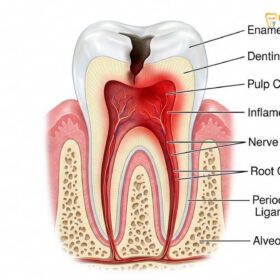
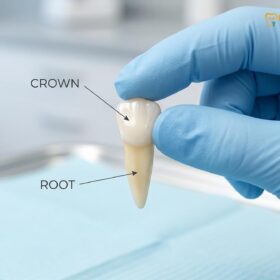
In clinical dentistry, an abscess represents the body’s acute inflammatory response to a massive bacterial invasion. When bacteria breach the protective enamel and dentin layers—usually due to deep caries, severe trauma, or failing restorations—they infiltrate the sterile pulp chamber. The pulp tissue, which contains nerves and blood vessels, undergoes necrosis (death) due to the overwhelming infection and subsequent inflammatory pressure. Because the tooth is a rigid structure, the inflammatory exudate has nowhere to expand, forcing the infection out through the apical foramen (the opening at the tip of the root) and into the surrounding alveolar bone.
There are two primary classifications of dental abscesses encountered in emergency settings. A periapical abscess originates from within the tooth’s pulp and manifests at the apex of the root. This is the most common type and is a direct consequence of untreated dental caries or trauma. Conversely, a periodontal abscess originates in the supporting gum tissues and bone, often resulting from advanced periodontal disease where deep pockets allow bacteria to become trapped and proliferate. Both conditions require immediate periapical abscess treatment to halt tissue destruction and alleviate severe discomfort [1].
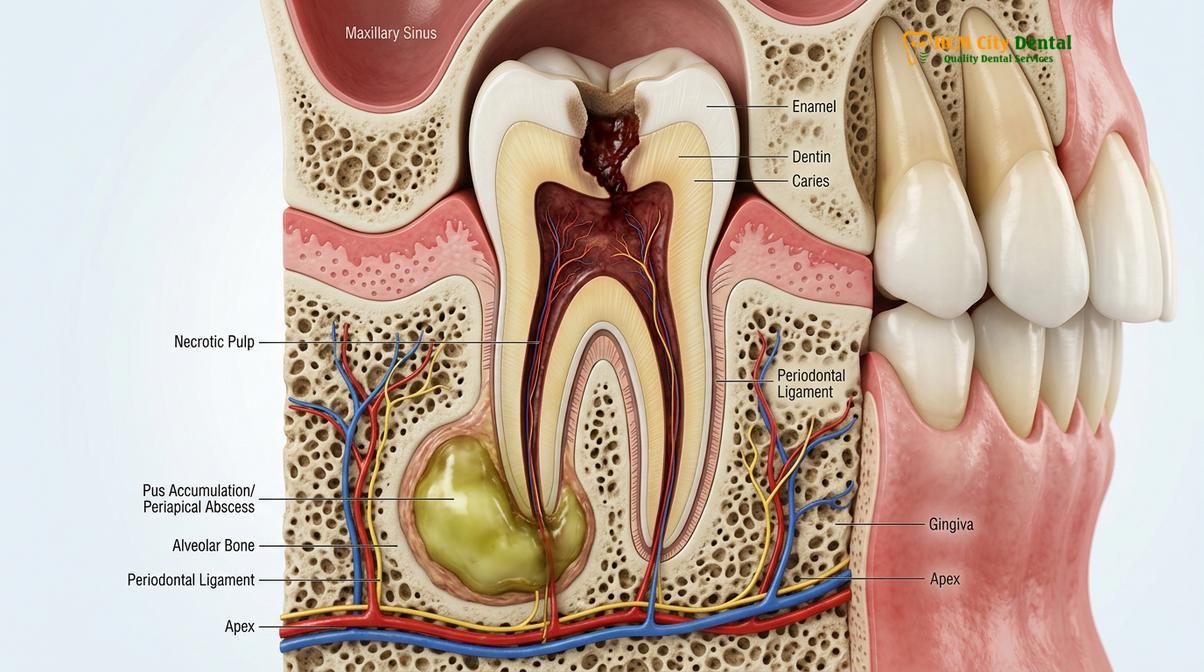
The pathophysiology of a dental abscess is driven by a complex, polymicrobial biofilm. The dominant pathogens are typically obligate anaerobes, including species of Prevotella, Porphyromonas, and Fusobacterium. These bacteria thrive in the oxygen-depleted environment of a necrotic root canal system. As they multiply, they release toxins and enzymes that break down bone and connective tissue, leading to the formation of pus—a thick fluid composed of dead white blood cells, tissue debris, and bacteria. The accumulation of this purulent exudate creates immense hydrostatic pressure within the bone, which is the primary cause of the excruciating pain associated with a dental infection emergency.
Emergency Warning Signs
Recognizing the acute symptoms of a dental infection, such as severe throbbing pain, facial swelling, and fever, is crucial for timely and effective intervention.
The clinical presentation of a dental abscess is typically dramatic and rapidly progressive. Patients often report a sudden onset of intense, throbbing pain that radiates to the jawbone, ear, or neck on the affected side. Unlike reversible pulpitis, where pain is triggered by stimuli (like cold or sweets), the pain of an acute abscess is spontaneous, continuous, and often exacerbates when lying down due to increased blood flow to the head.
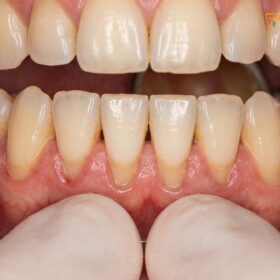
Localized swelling is a hallmark sign. The gingival tissue adjacent to the affected tooth may appear erythematous (red), engorged, and highly sensitive to palpation. In some cases, a parulis—commonly known as a “gum boil”—may form. This is a localized outcropping of the abscess that may spontaneously rupture, releasing foul-tasting pus into the mouth and temporarily relieving the pressure and pain. However, a ruptured parulis does not mean the infection is cured; the source remains active within the tooth.
Clinical Warning: Never apply a warm compress or heat pad to the outside of your face if you suspect a dental abscess. Heat causes vasodilation, which can draw the infection outward into the facial tissues, rapidly worsening the swelling and increasing the risk of systemic spread.
Systemic involvement indicates that the infection is overwhelming the body’s localized defenses. Symptoms such as a high-grade fever, chills, malaise, and lymphadenopathy (swollen, tender lymph nodes in the neck or under the jaw) require immediate medical attention. Trismus, or difficulty opening the mouth, suggests that the infection has spread to the masticatory muscles, a severe complication that complicates airway management and requires urgent intervention.
When Abscess Becomes Life-Threatening
If left untreated, a dental abscess can spread rapidly through fascial spaces, causing airway obstruction, cavernous sinus thrombosis, or systemic sepsis.
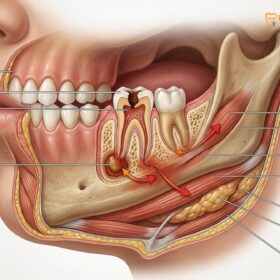
The anatomical pathways of the head and neck offer little resistance to the spread of aggressive bacterial infections. When a dental abscess breaches the cortical plate of the jawbone, it enters the soft tissue fascial spaces. The direction of spread is dictated by the relationship of the tooth’s root apices to the surrounding muscle attachments. For example, infections from mandibular (lower) molars frequently spread into the submandibular, sublingual, and submental spaces.
A critical and potentially fatal complication is Ludwig’s angina. This is a rapidly progressing, bilateral cellulitis of the submandibular and sublingual spaces. As the infection causes massive swelling of the floor of the mouth, the tongue is elevated and displaced posteriorly, which can rapidly occlude the airway, leading to asphyxiation. Patients presenting with a “bull neck” appearance, drooling, dysphagia (difficulty swallowing), and respiratory distress require immediate emergency hospital admission for airway management and aggressive intravenous antibiotic therapy [2].
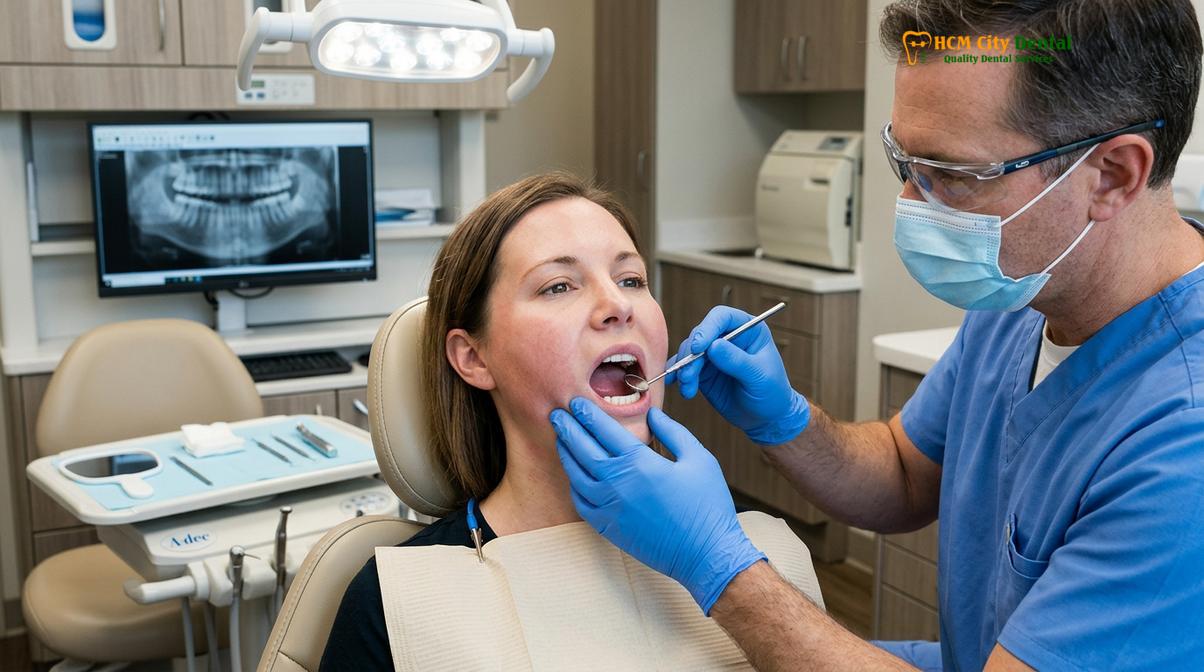
Infections originating from maxillary (upper) teeth pose a different set of severe risks. These infections can spread superiorly toward the orbital region or the cavernous sinus. Cavernous sinus thrombosis is a rare but highly lethal complication where the infection causes a blood clot in the venous sinus at the base of the brain. Symptoms include severe headaches, bulging eyes (proptosis), paralysis of cranial nerves controlling eye movement, and vision loss. Furthermore, any uncontrolled dental infection can seed bacteria into the bloodstream, triggering systemic inflammatory response syndrome (SIRS) and progressing to septic shock, characterized by dangerous drops in blood pressure and multi-organ failure.
When to See a Doctor
Navigating a dental abscess vietnam emergency requires understanding when to seek immediate care. You must contact an emergency dental clinic or proceed to a hospital emergency department immediately if you experience any of the following “red flag” symptoms:
- Compromised Airway: Any difficulty breathing, swallowing, or a sensation that your throat is closing.
- Severe Facial Swelling: Swelling that extends to the eye, causes the eye to close, or spreads down the neck.
- High Fever: A body temperature exceeding 38.5°C (101.3°F) accompanied by chills or confusion.
- Severe Trismus: Inability to open your mouth more than a few millimeters.
- Unmanageable Pain: Pain that is not relieved by maximum doses of over-the-counter analgesics.
For expatriates and travelers, experiencing a tooth abscess saigon can be highly distressing. It is imperative to seek care at a facility equipped with modern diagnostic imaging (such as CBCT) and strict sterilization protocols. At HCMC Dental Clinic, our emergency protocols are designed to triage severe infections immediately, ensuring that patients receive prompt diagnosis and stabilization before complications arise.
Emergency Drainage Procedure
The primary clinical objective is to establish drainage through an incision or the tooth itself, immediately relieving hydrostatic pressure and reducing bacterial load.
The cornerstone of treating an acute dental abscess is achieving physical drainage and removing the source of the infection. Without drainage, antibiotics are largely ineffective because they cannot penetrate the avascular (bloodless) necrotic tissue where the bacteria are multiplying. The clinical workflow for abscess drainage hcmc involves several precise steps to ensure patient safety and profound pain relief.
The first challenge in the emergency drainage procedure is achieving profound local anesthesia. The purulent exudate of an abscess is highly acidic (low pH). Local anesthetics are weak bases; in an acidic environment, the anesthetic molecules become ionized and cannot penetrate the nerve membrane to block pain signals (a phenomenon known as ion trapping). To overcome this, skilled clinicians utilize regional nerve blocks—depositing the anesthetic at a nerve trunk distant from the infected site—rather than infiltrating directly into the inflamed tissue [3].
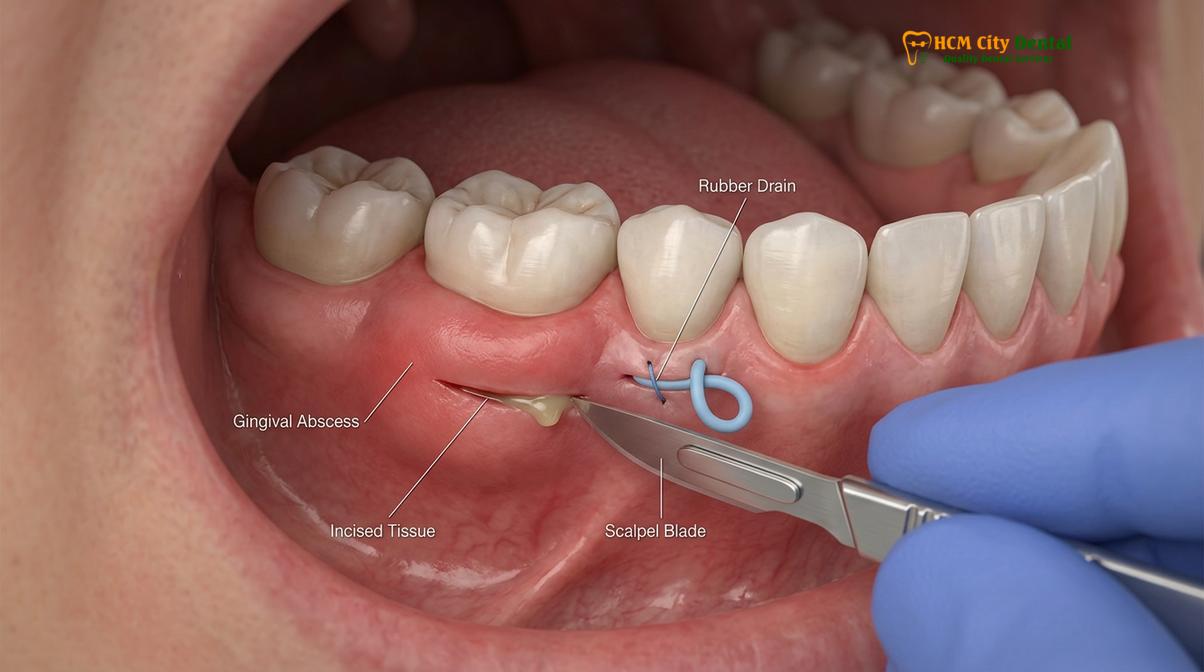
Once profound anesthesia is confirmed, the dentist determines the optimal route for drainage. There are two primary methods:
- Endodontic Access (Through the Tooth): If the abscess is periapical and confined within the bone, the dentist will use a high-speed handpiece to drill a small access cavity through the crown of the tooth into the pulp chamber. This often results in an immediate release of purulent exudate and gas, providing instant relief of pressure. The root canals are then irrigated with antimicrobial solutions like sodium hypochlorite to flush out necrotic debris.
- Incision and Drainage (I&D): If the infection has spread into the soft tissues causing a fluctuant (fluid-filled) swelling, a surgical I&D is indicated. The dentist makes a small incision through the mucosa directly over the most dependent part of the swelling. A hemostat is gently inserted and opened to break up loculations (pockets of pus) and allow complete evacuation. In cases of extensive swelling, a small sterile rubber drain (such as a Penrose drain) may be sutured into the incision site for 24 to 48 hours to prevent premature closure and ensure continuous drainage.
| Clinical Presentation | Primary Drainage Method | Objective | Follow-Up Requirement |
|---|---|---|---|
| Pain with no visible soft tissue swelling | Endodontic Access | Release pressure from within the bone/tooth | Complete Root Canal Therapy |
| Fluctuant, localized gum swelling | Incision & Drainage (I&D) | Evacuate pus from soft tissues | Endodontic Access or Extraction |
| Severe tooth mobility and bone loss | Tooth Extraction | Remove the source and drain the socket | Socket preservation, Implant planning |
“In the management of acute odontogenic infections, establishing drainage is non-negotiable. Releasing the hydrostatic pressure not only provides immediate pain relief for the patient but also shifts the environment from anaerobic to aerobic, drastically reducing the virulence of the offending bacteria.”
— Dr. Nguyen Van Cuong, Lead Clinician
Antibiotics and Pain Management
Antibiotics serve as an adjunct to physical drainage to prevent systemic spread, while NSAIDs and acetaminophen are utilized for acute pain control.
Pharmacological management is a critical component of treating a dental abscess, but it must be understood that medications are supportive, not curative. The American Dental Association guidelines strictly advise against prescribing antibiotics for irreversible pulpitis or localized periapical abscesses without systemic involvement, as this contributes to antibiotic resistance without providing clinical benefit [4].
However, systemic antibiotics are strongly indicated when there is evidence of spreading infection (cellulitis), lymph node involvement, fever, or in immunocompromised patients. The first-line antibiotic of choice is typically Amoxicillin, due to its broad spectrum and efficacy against oral flora. For more severe infections, or if beta-lactamase-producing bacteria are suspected, Amoxicillin combined with Clavulanate (Augmentin) is prescribed. For patients with penicillin allergies, Clindamycin or Azithromycin are effective alternatives. Metronidazole may be added to the regimen to specifically target aggressive obligate anaerobes.
Clinical Case Study: A 45-year-old expatriate presented to HCMC Dental Clinic with severe left-sided facial swelling, trismus, and a temperature of 38.8°C. Dr. Nguyen Van Cuong diagnosed an acute exacerbation of a chronic periapical abscess originating from a necrotic lower molar. Immediate regional anesthesia was administered, followed by surgical incision and drainage which yielded significant purulent discharge. The patient was prescribed a 7-day course of Amoxicillin/Clavulanate and NSAIDs. Within 48 hours, the systemic symptoms resolved, allowing for definitive endodontic therapy to save the tooth.
Pain management relies heavily on non-steroidal anti-inflammatory drugs (NSAIDs). Ibuprofen is highly effective for dental pain because it directly inhibits the synthesis of prostaglandins, the chemical mediators responsible for inflammation and pain sensitization in the periapical tissues. For severe pain, a staggered regimen of Ibuprofen (e.g., 600mg) and Acetaminophen (e.g., 1000mg) taken at alternating intervals provides superior analgesia compared to opioid medications, with fewer side effects.
Follow-Up Treatment After Drainage
Once the acute infection is stabilized, definitive treatment such as root canal therapy or tooth extraction is required to eradicate the source.
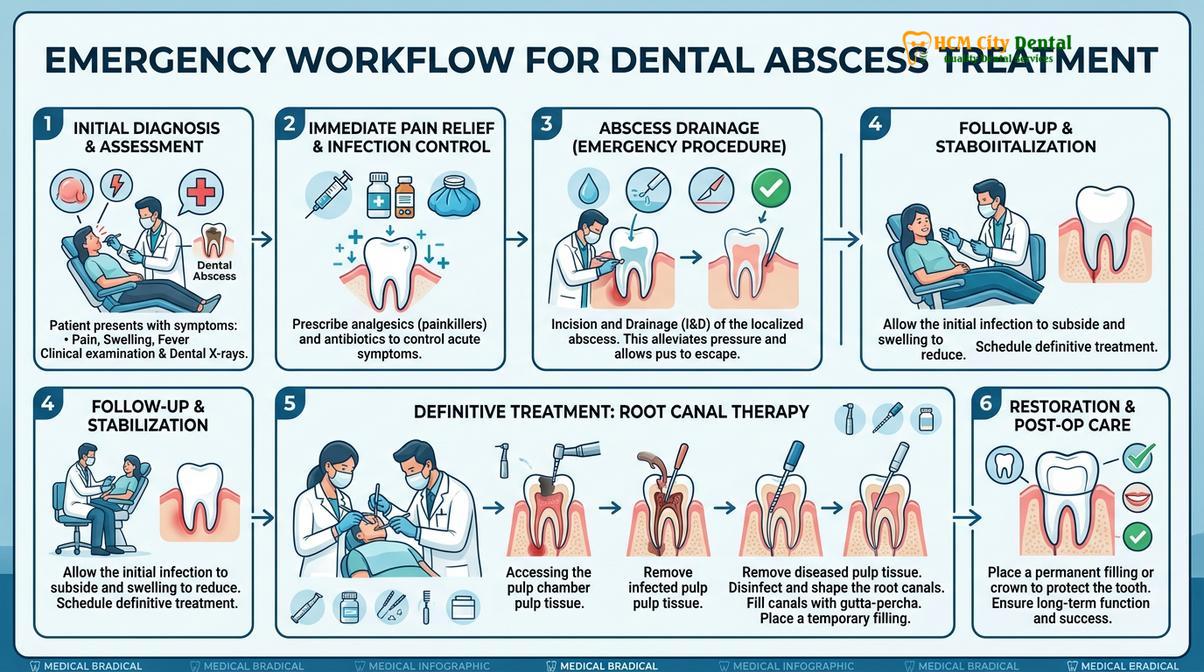
Emergency drainage and antibiotic therapy represent only the first phase of treatment. If the patient does not return for definitive care, the abscess will inevitably recur once the antibiotics are finished, often presenting more aggressively than the initial episode. The goal of follow-up treatment is to completely remove the necrotic tissue and seal the pathways that allow bacteria to enter the bone.
If the tooth is structurally sound and restorable, Root Canal Therapy (Endodontics) is the treatment of choice. During this procedure, the dentist meticulously cleans and shapes the complex root canal system using specialized rotary files and copious irrigation with antimicrobial solutions. An intracanal medicament, such as calcium hydroxide, may be placed inside the canals for 1-2 weeks to ensure complete bacterial eradication before the canals are permanently sealed with gutta-percha. Following successful endodontic therapy, the tooth usually requires a full-coverage porcelain crown to restore its structural integrity and prevent future fractures [5].
If the tooth is severely decayed, fractured below the gumline, or has extensive periodontal bone loss, it may be deemed non-restorable. In such cases, Tooth Extraction is necessary. Extracting the tooth simultaneously removes the source of the infection and provides a large pathway for drainage. Following extraction, the socket is thoroughly curetted (scraped) to remove any infected granulation tissue or cysts. Patients can later explore options for tooth replacement, such as dental implants or bridges, once the bone has fully healed.
For comprehensive management of acute dental infections and to explore all restorative options following an emergency, patients are encouraged to review our complete protocols for emergency dental care. Timely intervention not only relieves pain but is essential for preserving your overall health and dentition.
“The relief a patient feels after an abscess is drained is profound, but it can create a false sense of security. The infection is managed, not cured. Completing the prescribed root canal or extraction is the only way to guarantee the infection does not return to threaten the patient’s health.”
— Clinical Advisory, HCMC Dental
Frequently Asked Questions
Can a dental abscess kill you?
Yes, if left untreated, a severe dental abscess can be fatal. The bacterial infection can spread to the fascial spaces of the neck, causing airway obstruction (Ludwig’s angina), or enter the bloodstream, leading to systemic sepsis and multi-organ failure. Immediate clinical intervention is mandatory to prevent these life-threatening complications.
Should I go to the hospital for a tooth abscess?
You should go to a hospital emergency room immediately if you experience difficulty breathing, swallowing, severe facial swelling approaching your eye, or a high fever. For localized pain and swelling without systemic symptoms, an emergency dental clinic is equipped to perform the necessary incision and drainage procedure safely and effectively.
How do dentists drain a dental abscess?
Dentists drain an abscess by administering local anesthesia, making a small incision in the swollen gum tissue, and allowing the pus to evacuate. In some cases, drainage is achieved by drilling directly into the infected tooth (endodontic access) to release the pressure and flush the root canal system with antimicrobial solutions.
How long does abscess drainage take to heal?
The initial incision site typically heals within one to two weeks following the drainage procedure. However, complete resolution of the underlying bone infection requires definitive treatment, such as root canal therapy or tooth extraction, which dictates the long-term healing timeline of the surrounding tissues and bone regeneration.
Can I treat a dental abscess with antibiotics alone?
No, antibiotics alone cannot cure a dental abscess. Because the blood supply to a necrotic tooth is destroyed, systemic antibiotics cannot reach the source of the infection inside the tooth. Physical removal of the infected tissue through drainage, root canal therapy, or extraction is clinically required to achieve a cure.
References
- Journal of Endodontics. Microbiology and treatment of acute apical abscesses. (2020).
- International Journal of Oral and Maxillofacial Surgery. Management of severe odontogenic infections. (2019).
- American Dental Association. Clinical practice guidelines on the use of systemic antibiotics for pulpal and periapical conditions. (2019).
- British Dental Journal. Local anaesthesia in the presence of inflammation and infection. (2021).
- Journal of Clinical Pediatric Dentistry. Emergency management of dental trauma and infections. (2018).