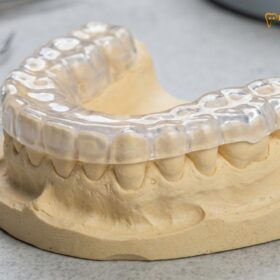
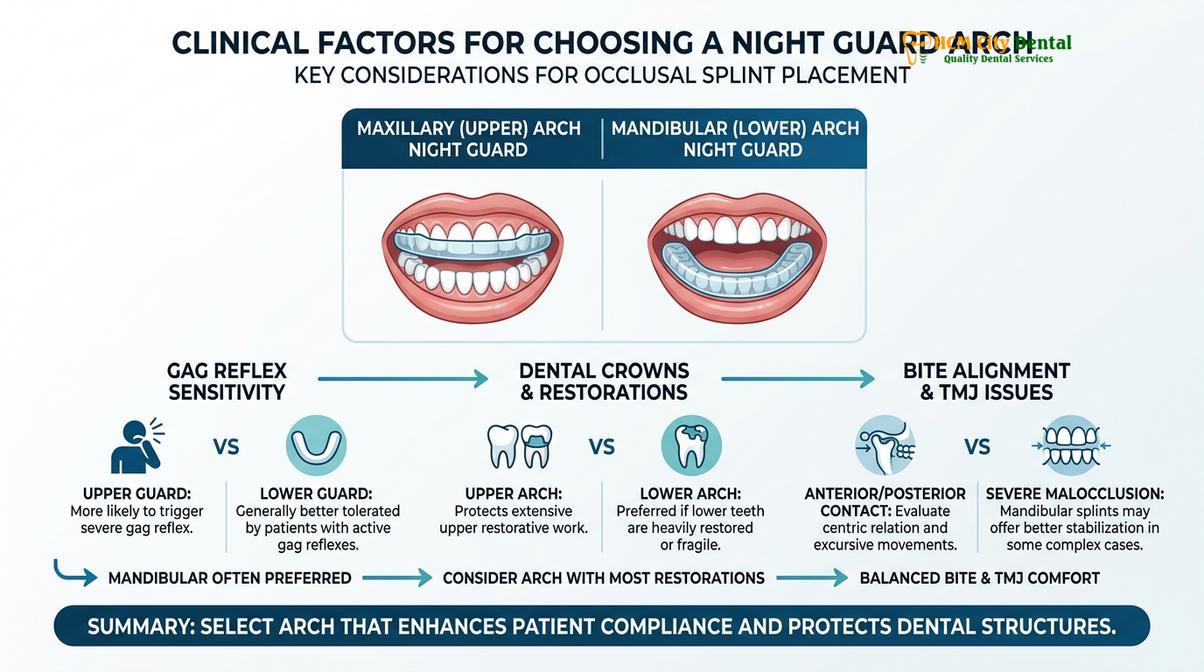
When choosing between an upper or lower night guard, the decision depends on your bite alignment, existing dental restorations, and personal comfort preferences. While upper guards are the traditional standard offering excellent stability, lower guards are often preferred for patients with a sensitive gag reflex or extensive upper dental work.
Clinical Summary:
The selection of an occlusal splint arch is a critical component in the management of sleep bruxism and temporomandibular joint (TMJ) disorders. Maxillary (upper) night guards are historically the most prescribed due to their broad surface area, which provides superior retention and optimal distribution of occlusal forces across the palate and teeth. Conversely, mandibular (lower) night guards are clinically indicated for patients exhibiting a hyperactive gag reflex, those with a large tongue, or individuals possessing complex restorative work on the lower arch. The ultimate clinical objective is to provide a protective barrier that mitigates enamel attrition, reduces muscle hyperactivity, and ensures long-term patient compliance through maximized comfort. A comprehensive clinical evaluation of the patient’s periodontium, occlusal scheme, and airway patency is required to determine the most biomechanically appropriate appliance.
Key Takeaways:
- Upper Guards: Provide maximum stability and retention due to palatal coverage, making them the standard choice for heavy clenchers.
- Lower Guards: Ideal for patients with a sensitive gag reflex, as they leave the roof of the mouth completely unobstructed.
- Restorative Protection: The guard is typically placed on the arch with the most dental work (crowns, veneers) to protect the porcelain from opposing natural teeth.
- Single Arch Rule: Wearing guards on both arches simultaneously is generally avoided to prevent excessive TMJ strain and bite alteration.
- Custom Fit: Professionally fabricated guards ensure proper occlusal geometry, unlike over-the-counter boil-and-bite alternatives.
Upper Guards: The Traditional Choice
Upper night guards are the most frequently prescribed occlusal splints because the maxillary arch provides a larger surface area for superior retention and stability during sleep.
In the realm of dental sleep medicine and bruxism management, the maxillary (upper) night guard has long been considered the gold standard. The anatomical structure of the upper jaw provides a broad, stable foundation for an occlusal appliance. Because the maxilla is a fixed bone fused to the skull, it does not move during mastication or bruxing episodes. This immobility allows the upper night guard to act as a stable striking surface for the dynamic movements of the lower jaw.
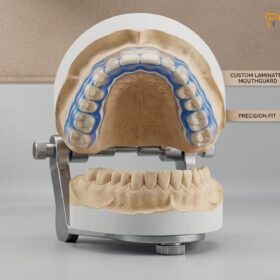
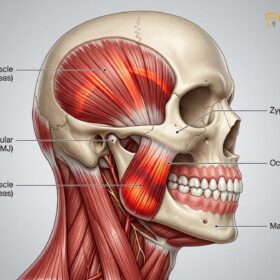
One of the primary biomechanical advantages of an upper night guard is its ability to utilize the hard palate for retention. By extending the acrylic slightly onto the palatal tissue, the appliance gains significant resistance against dislodgement. This is particularly crucial for patients who exhibit severe nocturnal grinding, as the lateral forces generated during sleep can easily dislodge a poorly retained appliance. The broad surface area also allows the treating dentist to meticulously design the occlusal scheme, ensuring that all lower teeth contact the guard simultaneously and with equal intensity. This even distribution of force is vital for deprogramming the hyperactive masticatory muscles, specifically the masseter and temporalis muscles [1].
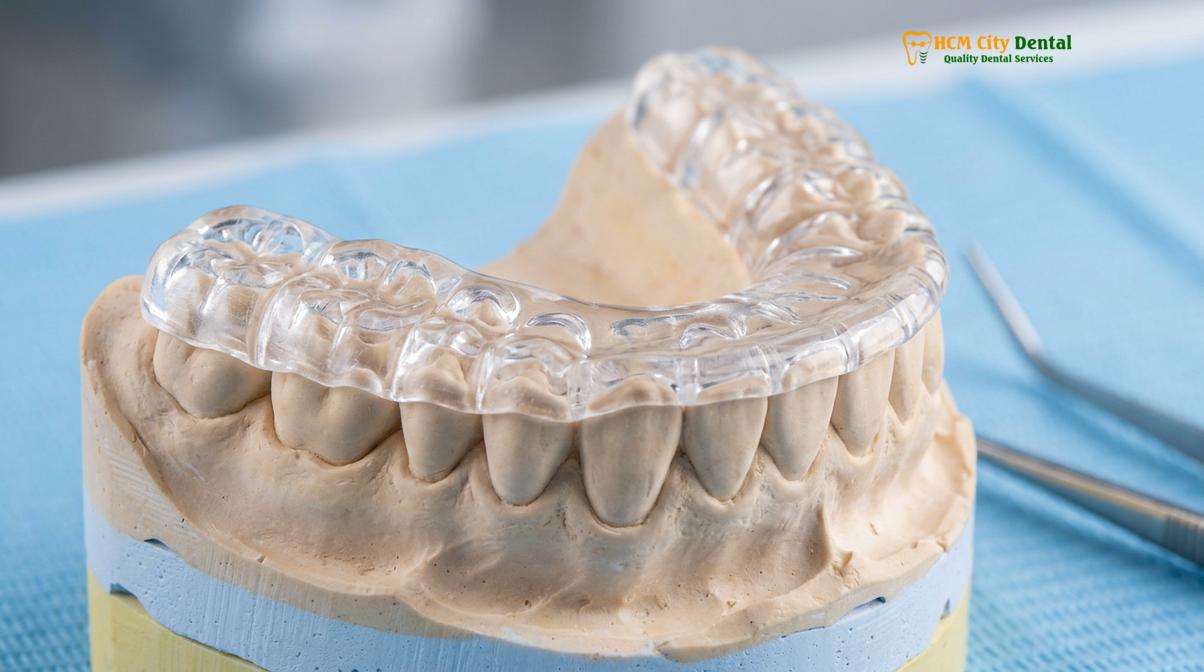
Furthermore, the design of a maxillary splint allows for the incorporation of anterior guidance or a canine rise. When the patient grinds their teeth side-to-side (lateral excursions), the lower canines glide against a specifically designed ramp on the upper guard. This action immediately separates (disoccludes) the posterior teeth, which neurologically signals the jaw muscles to relax, thereby reducing the overall force of the bruxism event. For patients exploring comprehensive Nightguards, the upper arch often provides the most versatile platform for these complex occlusal adjustments.
However, the upper night guard is not without its challenges. The coverage of the palatal tissue can alter the tactile sensation in the mouth and temporarily affect speech, particularly the pronunciation of “s” and “th” sounds. While speech is not typically a concern during sleep, the initial sensation of bulkiness can be off-putting for some patients during the adaptation phase. Additionally, the upper guard must be carefully contoured to avoid encroaching on the free gingival margin, ensuring that the periodontal tissues remain healthy and uninflamed during long-term wear.
Lower Guards: When They’re Better
Lower night guards are clinically indicated for patients who suffer from a severe gag reflex, mouth breathers, or those with complex dental restorations on their upper teeth.
While the upper arch is the traditional default, the mandibular (lower) night guard offers distinct clinical advantages that make it the superior choice for a specific subset of patients. The most prominent indication for a lower guard is a hyperactive gag reflex. Because a lower splint is horseshoe-shaped and leaves the palate completely exposed, it rarely triggers the gag response. For patients who have historically failed to tolerate an upper appliance, switching to a lower guard often results in immediate compliance and relief.
The anatomy of the mandible dictates a different design philosophy. The lower guard relies primarily on the undercuts of the teeth and the friction against the lingual and buccal surfaces for retention. Because it lacks palatal support, a lower guard must be fabricated with high precision to ensure it does not become dislodged by the tongue or the movement of the jaw during sleep. Modern digital scanning techniques have vastly improved the fit and retention of mandibular appliances, making them a highly reliable option for bruxism management [2].
Another critical factor in choosing a lower guard is the resting posture of the tongue. In a healthy airway, the tongue should rest against the roof of the mouth. An upper guard, if excessively bulky, can displace the tongue downward and backward, potentially narrowing the airway. For patients with mild sleep-disordered breathing or those who are obligate mouth breathers, a lower guard is often preferred as it minimizes interference with the palatal tongue posture. When patients ask their dentist about which arch night guard is best, airway considerations are increasingly becoming a primary diagnostic factor.
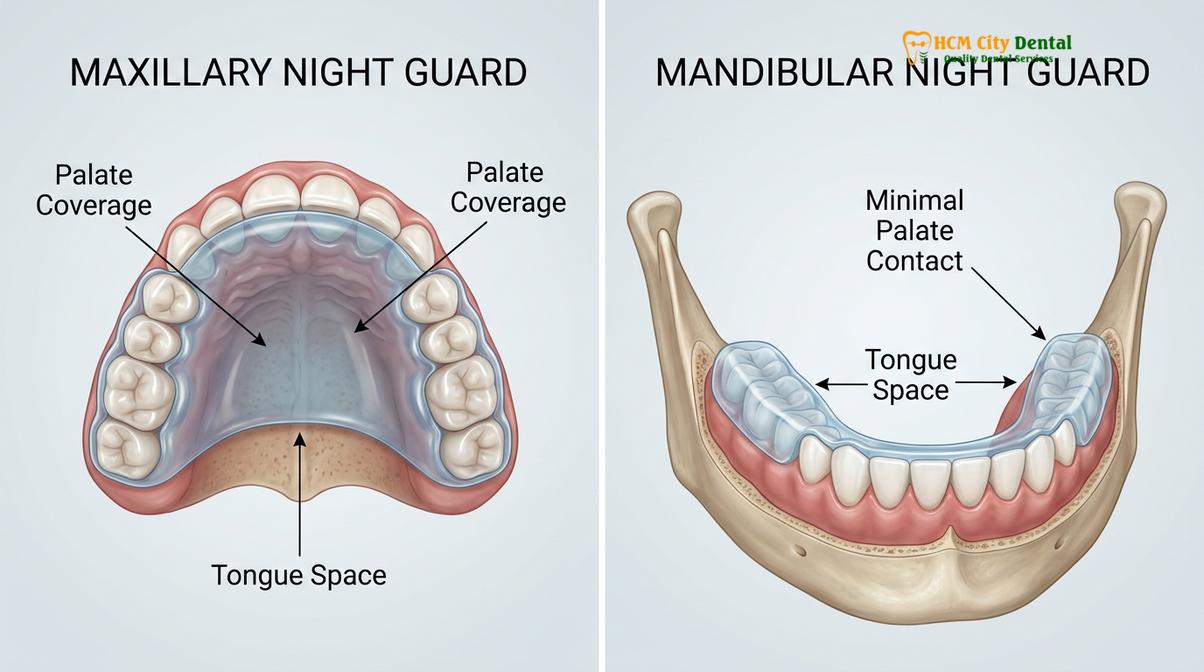
Furthermore, lower guards are frequently recommended when a patient has extensive, fragile restorations on the mandibular arch. If a patient has lower anterior porcelain veneers or a lower implant-supported bridge, placing the protective acrylic directly over these restorations shields them from the sheer forces of the opposing natural teeth. The acrylic absorbs the impact, protecting the costly dental work from micro-fractures and catastrophic failure.
Clinical Factors in Arch Selection
Dentists evaluate periodontal health, the presence of crowns or implants, and the pattern of tooth wear to determine the optimal arch for a protective splint.
The decision between an upper and lower night guard is rarely arbitrary; it is a calculated clinical decision based on a thorough examination of the patient’s stomatognathic system. One of the primary considerations is the periodontal status of the teeth. Teeth that exhibit mobility due to bone loss or periodontal disease should generally not be used as the primary retentive anchors for a night guard. If the upper teeth are periodontally compromised, a lower guard may be selected to prevent exacerbating the mobility of the maxillary dentition, and vice versa.
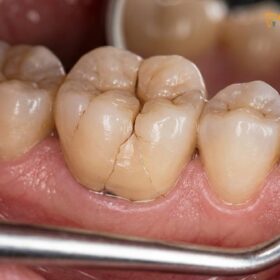
The presence and location of dental restorations play a monumental role in arch selection. The general clinical rule is to cover and protect the arch that contains the most extensive or vulnerable restorative work. Porcelain crowns, veneers, and composite bondings are susceptible to chipping under the immense pressure of sleep bruxism. By placing the night guard over these restorations, the dentist ensures that the acrylic—rather than the porcelain—takes the brunt of the wear. If a patient has a full-arch implant prosthesis on the maxilla, a specialized upper guard is almost always fabricated to protect the acrylic or zirconia framework from the opposing natural teeth [3].
Tooth morphology and the presence of missing teeth (edentulism) also dictate the design. An arch with multiple missing teeth may lack the necessary undercuts to retain a guard securely. In such cases, the opposing, more intact arch is chosen. Additionally, the presence of mandibular tori—benign bony growths on the lingual aspect of the lower jaw—can make the fabrication and insertion of a lower guard exceedingly difficult and painful for the patient. In the presence of large tori, an upper guard is the definitive choice.
| Clinical Factor | Upper Night Guard (Maxillary) | Lower Night Guard (Mandibular) |
|---|---|---|
| Retention & Stability | Excellent; utilizes palatal surface area. | Good; relies strictly on tooth undercuts. |
| Gag Reflex Trigger | Higher risk due to palatal extension. | Very low risk; palate remains exposed. |
| Tongue Space | May slightly encroach on resting tongue posture. | Leaves palate free for natural tongue resting position. |
| Restorative Protection | Ideal for protecting upper veneers and crowns. | Ideal for protecting lower anterior restorations. |
| Airway Impact | Can be problematic for severe mouth breathers. | Generally preferred for airway patency. |
It is also crucial to differentiate between professionally fabricated custom guards and over-the-counter alternatives. A custom guard is fabricated from a precise impression or digital scan, allowing the dentist to control the thickness, the occlusal contacts, and the retentive clasping. Over-the-counter boil-and-bite guards lack this precision, often resulting in uneven bite forces that can exacerbate TMJ pain and cause unwanted tooth movement. Understanding the Nightguards differences is essential for long-term oral health.
Bite Geometry Considerations
The geometric relationship between the upper and lower jaws dictates how the night guard must be designed to ensure balanced occlusal contacts and proper canine guidance.
The study of occlusion—how the upper and lower teeth meet and interact—is perhaps the most complex aspect of designing a night guard. A night guard is not merely a piece of plastic; it is an orthopedic device that alters the resting posture of the mandible and the functional dynamics of the temporomandibular joint. When a patient closes their mouth against a night guard, the goal is to achieve “mutually protected occlusion.” This means that all posterior teeth should contact the guard simultaneously with equal force, while the anterior teeth have slightly lighter contact.
If a night guard is improperly adjusted and features a “high spot” (a premature contact point), the proprioceptive nerve fibers in the periodontal ligament of that specific tooth will send distress signals to the brain. This can trigger increased muscle hyperactivity, effectively worsening the bruxism the guard was meant to treat. Furthermore, a premature contact acts as a fulcrum, potentially distracting the TMJ condyle from its proper position in the glenoid fossa, leading to joint pain and clicking [4].
“The primary objective of an occlusal splint is not merely to protect the enamel, but to provide a biomechanically stable platform that deprograms the masticatory musculature and allows the temporomandibular joint to seat in its most orthopedically stable position.”
The choice between an upper and lower guard influences how this occlusal scheme is established. With an upper guard, the dentist creates a flat, smooth surface for the lower cusps to glide against. This freedom of movement is essential for patients who grind laterally. If the guard locks the teeth into a specific groove, the lateral forces will be transferred directly to the teeth and the TMJ, causing significant discomfort. The management of these forces is a critical component of mitigating the Nightguards damage associated with chronic clenching.
Additionally, the vertical dimension of occlusion (VDO)—the degree of separation between the upper and lower jaws—must be carefully managed. A guard that is too thick will stretch the masseter muscles beyond their resting length, potentially causing muscle spasms and fatigue. A guard that is too thin may not provide adequate separation to disengage the proprioceptive feedback loop that drives bruxism. The treating clinician must carefully calibrate the thickness of the acrylic based on the patient’s specific muscular tolerance and freeway space.
Patient Comfort Preferences
Long-term compliance relies heavily on patient comfort, making the subjective feel, tongue space, and ease of breathing critical factors in choosing the right guard.
Despite the most meticulous biomechanical planning, a night guard is entirely ineffective if the patient refuses to wear it. Patient compliance is the ultimate hurdle in bruxism management, and comfort is the primary driver of compliance. The subjective experience of wearing an appliance varies wildly from patient to patient. Some individuals adapt to an upper guard within a single night, while others experience claustrophobia or a persistent gag reflex that makes sleep impossible.
During the initial adaptation period, it is entirely normal for patients to experience an increase in salivary flow. The brain interprets the presence of the night guard as food, triggering the salivary glands. This hypersalivation typically subsides within three to five nights as the central nervous system acclimates to the appliance. Patients may also experience mild, transient tooth sensitivity or muscle fatigue upon waking during the first week. These symptoms usually resolve as the muscles adapt to the new vertical dimension.
Clinical Warning: Patients should never attempt to wear both an upper and lower night guard simultaneously unless specifically prescribed a dual-arch appliance for sleep apnea. Wearing two standard guards drastically over-opens the bite, strains the TMJ ligaments, and can lead to severe, irreversible changes in jaw alignment.
When discussing whether a top or bottom guard is more comfortable, the conversation often centers around tongue space. The tongue is a powerful muscle that requires adequate room to rest and function during swallowing. A bulky upper guard can restrict this space, leading to a feeling of confinement. Conversely, a lower guard, while freeing the palate, can sometimes irritate the lateral borders of the tongue if the acrylic is not polished to a high shine. The dentist must carefully evaluate the patient’s intraoral volume and tongue size when making the arch recommendation [5].
Material selection also plays a significant role in comfort. While hard acrylic is the standard for durability and precise occlusal adjustment, some patients find it too rigid. In specific cases, a dual-laminate guard—featuring a hard outer shell for durability and a soft inner lining for comfort—may be prescribed. However, purely soft, rubbery guards are generally contraindicated for severe bruxers, as the squishy material can actually stimulate the desire to chew and clench, exacerbating muscle fatigue.
Dr. Cuong’s Approach
Dr. Nguyen Van Cuong utilizes comprehensive digital scanning and dynamic bite analysis to prescribe the most biomechanically appropriate night guard for each individual patient.
At HCMC Dental Clinic, the process of selecting and fabricating a night guard is treated with the same level of clinical rigor as a complex restorative procedure. Dr. Nguyen Van Cuong emphasizes that there is no universal “best” arch for a night guard; the optimal choice is entirely dependent on the individual’s unique anatomical and functional presentation. The workflow begins with a comprehensive evaluation of the patient’s TMJ health, masticatory muscle tone, and patterns of occlusal wear.
Instead of relying on traditional, uncomfortable alginate impressions, Dr. Cuong utilizes advanced intraoral digital scanners to capture a highly accurate 3D model of the patient’s dentition. This digital workflow not only enhances patient comfort but also provides a level of precision that is impossible to achieve with analog methods. The digital models are then articulated in a virtual environment, allowing Dr. Cuong to analyze the bite geometry and simulate the jaw’s movements. This dynamic analysis is crucial for determining whether an upper or lower guard will provide the most stable and protective occlusal scheme.
Clinical Case Study: A 34-year-old patient presented to HCMC Dental Clinic in Ho Chi Minh City complaining of chronic morning headaches and severe wear on her lower anterior teeth. She had previously abandoned an upper night guard due to a severe gag reflex. Dr. Cuong performed a digital occlusal analysis and prescribed a custom-milled hard acrylic lower night guard. The appliance was designed with precise anterior guidance to disocclude the posterior teeth during lateral excursions. Within two weeks of consistent wear, the patient reported a complete cessation of morning headaches and excellent sleep compliance, noting that the lower guard felt significantly less intrusive than her previous upper appliance.
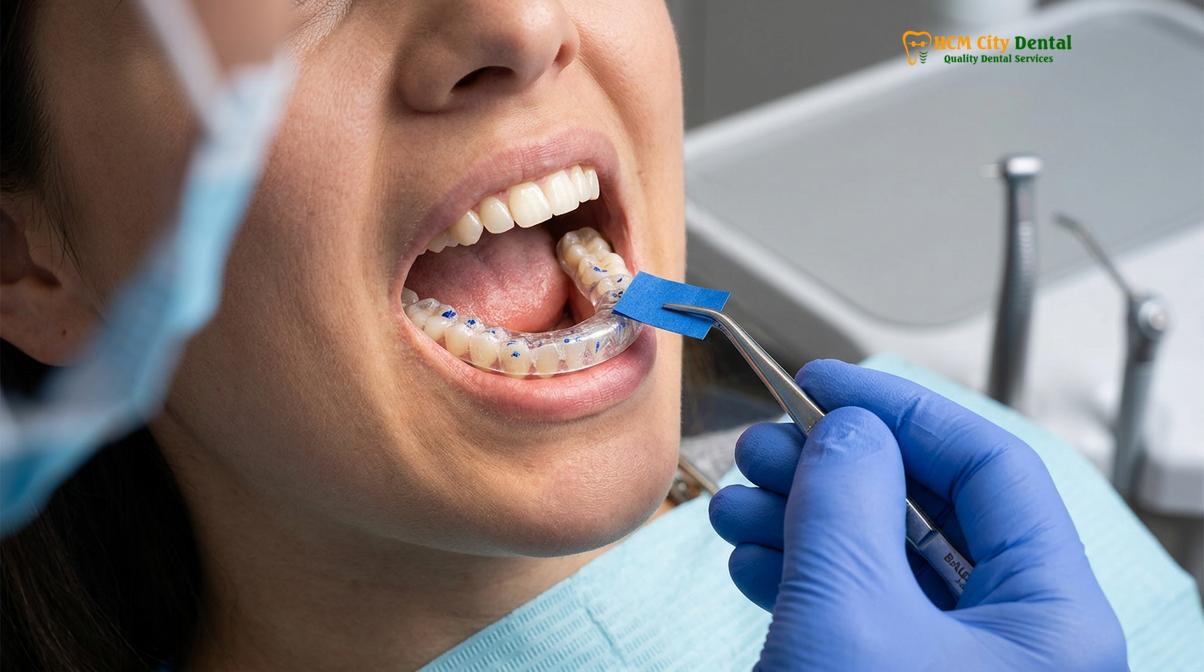
Once the appliance is fabricated, the delivery appointment is a critical step in Dr. Cuong’s protocol. The night guard is seated, and the retention is verified. Dr. Cuong then uses ultra-thin articulating paper to map the occlusal contacts while the patient simulates grinding movements. Any premature contacts or interferences are meticulously adjusted using an acrylic bur until a state of mutually protected occlusion is achieved. This precise calibration is what separates a therapeutic medical device from a simple piece of plastic.
“The success of a night guard is not measured solely by its ability to protect enamel, but by its capacity to integrate seamlessly into the patient’s sleep architecture. If the appliance is not comfortable, it will remain in the case, rendering our clinical efforts useless.” — Dr. Nguyen Van Cuong

Patient education is also a cornerstone of the treatment philosophy at HCMC Dental Clinic. Patients are instructed on proper appliance hygiene, the expected adaptation timeline, and the importance of bringing the guard to all future dental checkups for evaluation and adjustment. As the dentition naturally shifts over time, the night guard may require periodic recalibration to maintain its therapeutic efficacy. For patients seeking comprehensive strategies on Nightguards management, this ongoing clinical oversight is essential.
When to See a Doctor
While occasional teeth grinding during periods of high stress is common, chronic bruxism requires professional medical intervention to prevent irreversible damage to the stomatognathic system. You should schedule a comprehensive clinical evaluation with a dental professional if you experience any of the following symptoms:
- Chronic Jaw Pain: Persistent aching or stiffness in the jaw muscles, particularly upon waking in the morning.
- TMJ Dysfunction: Clicking, popping, or a grating sensation in the temporomandibular joint when opening or closing the mouth, especially if accompanied by pain or limited range of motion (locked jaw).
- Tooth Damage: Visible flattening, chipping, or fracturing of the teeth, or an increase in generalized tooth sensitivity to hot and cold stimuli due to enamel attrition.
- Unexplained Headaches: Frequent tension-type headaches originating in the temples or radiating down the neck and shoulders.
- Soft Tissue Trauma: Chronic indentations on the lateral borders of the tongue (scalloped tongue) or a raised white line on the inner cheek (linea alba) caused by chronic clenching.
A dentist can perform a thorough occlusal analysis, evaluate the health of your TMJ, and determine the most appropriate intervention, which may include a custom-fabricated occlusal splint, physical therapy, or restorative dental work to rebuild lost vertical dimension. Do not rely on over-the-counter appliances if you are experiencing acute pain, as improperly fitted guards can exacerbate joint pathology.
Frequently Asked Questions
Is upper or lower night guard better?
Neither arch is universally better; the optimal choice depends entirely on your specific dental anatomy, bite alignment, and personal comfort. Upper guards offer superior retention and stability, while lower guards are often preferred for patients with a sensitive gag reflex or extensive maxillary restorations. A clinical evaluation is necessary to determine the most biomechanically appropriate option for your specific bruxism pattern.
Why do most dentists recommend upper guards?
Dentists frequently recommend upper guards because the maxillary arch provides a larger surface area, allowing for better appliance retention and a more stable distribution of occlusal forces. Additionally, an upper splint typically avoids interfering with the natural resting position of the tongue. The upper jaw is also fixed to the skull, providing a stable platform against which the lower jaw can move during nocturnal grinding episodes.
Can you wear guards on both arches?
Wearing night guards on both arches simultaneously is generally contraindicated for standard bruxism treatment, as it excessively opens the vertical dimension of occlusion and can strain the temporomandibular joint. Dual-arch appliances are typically reserved for specific sleep apnea treatments under strict medical supervision. For teeth grinding, a single, well-adjusted guard on either the upper or lower arch is sufficient to protect all teeth.
Does a lower guard feel more comfortable?
Many patients find a lower guard more comfortable because it leaves the palate completely exposed, which significantly reduces the likelihood of triggering a gag reflex. It also tends to feel less bulky, making it easier for some individuals to speak and swallow naturally before falling asleep. However, comfort is highly subjective, and some patients prefer the secure, locked-in feeling of an upper palatal appliance.
What if I have restorations on one arch?
If you have extensive restorations like porcelain crowns, veneers, or dental implants on one arch, your dentist will typically design the night guard to cover and protect that specific arch. This prevents the opposing natural teeth from exerting direct, damaging friction against your valuable dental work. The acrylic of the guard is designed to absorb the occlusal forces, thereby extending the lifespan of your restorations.
References
- Journal of Prosthetic Dentistry. Occlusal splint design and arch selection in bruxism management. (2021).
- International Journal of Prosthodontics. Patient compliance and comfort with maxillary versus mandibular night guards. (2020).
- Journal of Oral Rehabilitation. Biomechanical distribution of forces in hard acrylic occlusal devices. (2019).
- American Dental Association. Clinical guidelines for the management of sleep bruxism and temporomandibular disorders. (2022).
- Cranio: The Journal of Craniomandibular & Sleep Practice. The effect of occlusal splint thickness on TMJ loading. (2018).