When choosing between a hard vs soft night guard, the decision depends entirely on your bruxism severity and clinical symptoms. Soft guards offer immediate comfort for mild clenching, while hard acrylic guards provide durable, rigid protection against severe teeth grinding and temporomandibular joint (TMJ) strain. A professional clinical evaluation ensures the correct fit and material.
Clinical Summary:
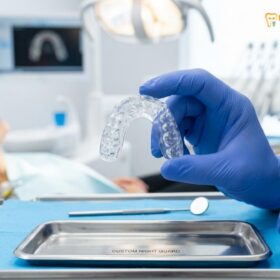
Night guards, clinically known as occlusal splints, are fabricated from varying materials to manage sleep bruxism and protect the dentition. Soft night guards utilize flexible ethylene-vinyl acetate (EVA) to cushion mild clenching, prioritizing initial patient comfort but risking accelerated wear. Conversely, hard night guards employ rigid polymethyl methacrylate (PMMA) or milled acrylic to withstand heavy occlusal forces, stabilize the temporomandibular joint, and prevent catastrophic tooth fractures. Dual-laminate options combine a soft interior with a hard exterior for a hybrid approach. Proper material selection requires a comprehensive dental assessment to prevent exacerbating masticatory muscle activity or joint pathology.
Key Takeaways:
- Soft night guards are ideal for mild clenching but may inadvertently stimulate chewing reflexes in heavy grinders.
- Hard acrylic night guards offer maximum durability, precise occlusal calibration, and TMJ support for severe bruxism.
- Dual-laminate guards provide a hybrid solution, featuring a comfortable soft interior and a protective rigid exterior.
- Over-the-counter boil-and-bite guards lack the precise anatomical fit of custom laboratory-fabricated splints.
- Professional diagnosis is essential to match the guard material to your specific bite force, restorative history, and jaw anatomy.
Understanding Night Guard Materials
Dental night guards are constructed from distinct polymers—ranging from flexible elastomers to rigid acrylics—each engineered to absorb specific levels of occlusal force and protect dental enamel.
Bruxism, the involuntary grinding or clenching of teeth during sleep, generates immense occlusal forces that can far exceed normal chewing pressures. To mitigate this destructive force, dental professionals utilize occlusal splints, commonly referred to as night guards. The fundamental difference between a hard vs soft night guard lies in the material science and how these materials interact with the neuromuscular system of the jaw.
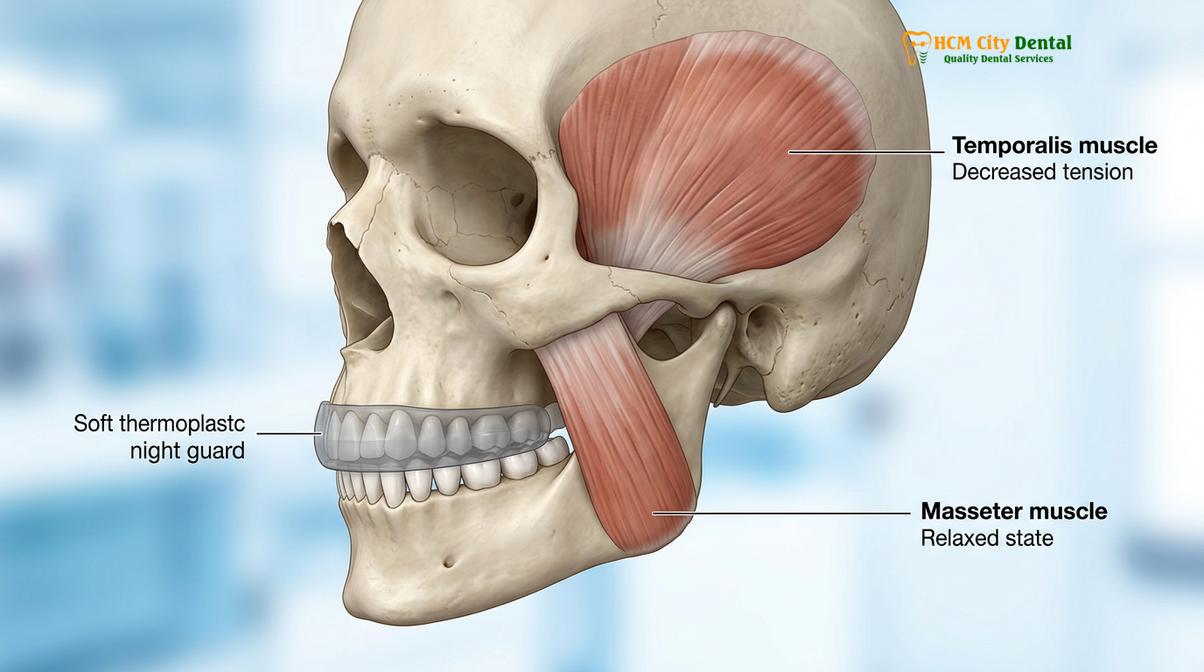
When a patient clenches or grinds, the masseter and temporalis muscles exert significant pressure. The material placed between the upper and lower arches must either absorb this pressure through flexibility or distribute it evenly through rigidity. Soft materials, such as those used in an EVA mouth guard, compress under pressure. This compression can feel soothing to the teeth but may alter the proprioceptive feedback to the brain. Rigid materials, such as those used in an acrylic night guard, do not compress. Instead, they provide a smooth, hard surface that allows the opposing teeth to glide seamlessly, reducing friction and preventing the jaw from locking into a destructive grinding pattern [1].
Understanding these biomechanical differences is the first step in determining the appropriate therapy. A poorly chosen material can not only fail to protect the teeth but may actually exacerbate jaw pain or accelerate the wear of existing dental restorations.
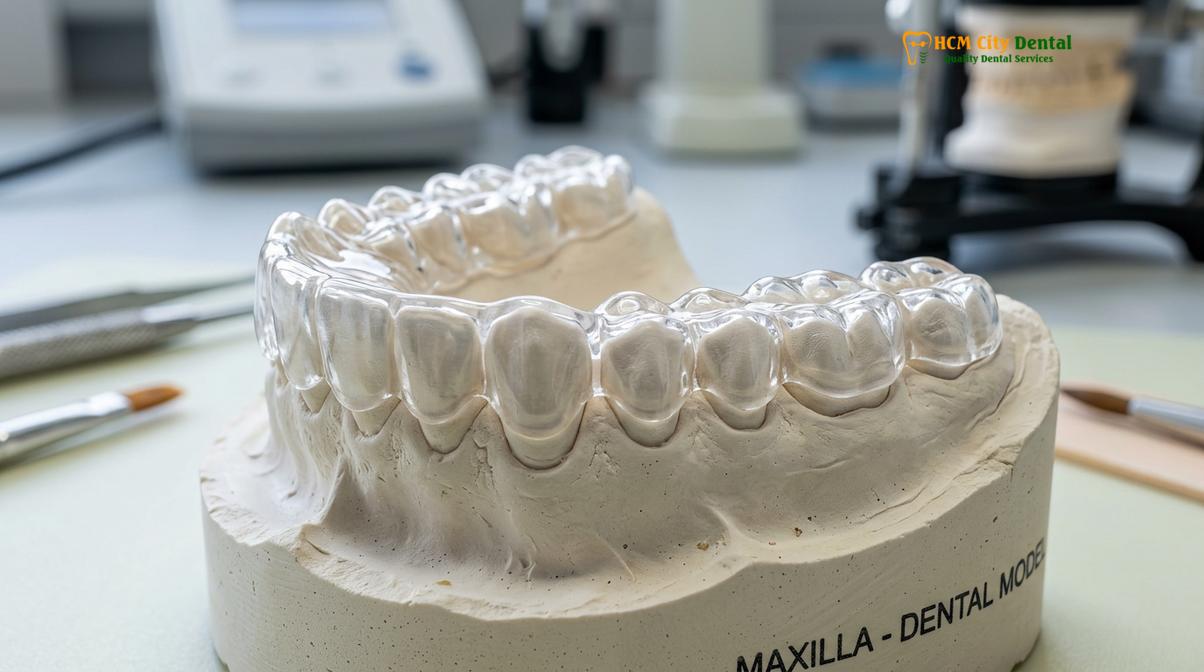
The Battle of Materials: Hard Acrylic, Soft Laminate, and Dual-Laminate
Dental night guards are fabricated from varying polymers, each engineered to address specific occlusal forces. Selecting the correct material prevents premature wear and avoids exacerbating jaw tension.
Sleep bruxism is a complex neuro-muscular condition characterized by rhythmic masticatory muscle activity (RMMA) during sleep. When a patient grinds or clenches their teeth, the masseter and temporalis muscles exert immense pressure—often exponentially higher than the forces generated during normal chewing. To mitigate this damage, dental professionals prescribe occlusal splints, commonly known as night guards. The efficacy of these devices relies heavily on the biomechanical properties of the materials used in their fabrication[1].
The dental industry primarily utilizes three categories of materials for custom night guards: flexible soft polymers, rigid hard acrylics, and hybrid dual-laminates. Each material interacts differently with the proprioceptive feedback loop of the periodontal ligaments. When teeth meet, sensory receptors send signals to the brain to regulate muscle contraction. The introduction of a night guard alters this feedback mechanism, changing the vertical dimension of occlusion (VDO) and ideally promoting muscle relaxation.
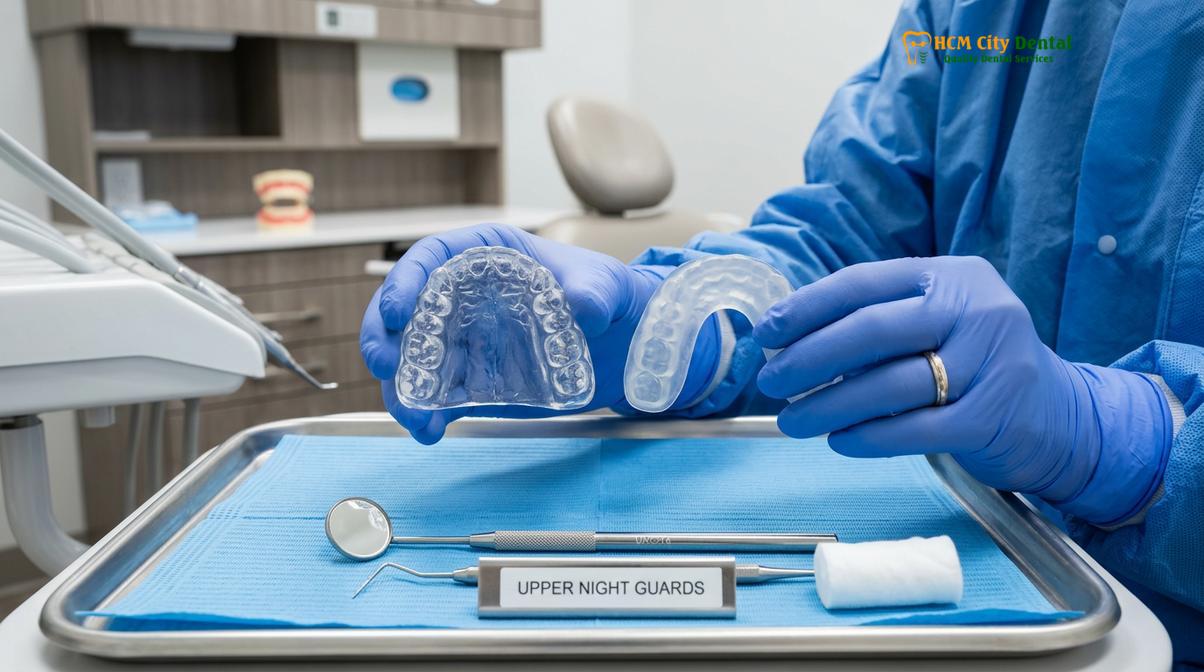
However, not all materials achieve this relaxation equally. A comprehensive TMJ treatment protocol requires a thorough analysis of the patient’s wear patterns, muscle hypertrophy, and joint health before selecting a material. Prescribing the wrong type of guard can lead to rapid appliance destruction, shifting of teeth, or an increase in myofascial pain. Understanding the distinct advantages and clinical limitations of hard acrylic, soft laminate, and dual-laminate materials is the first step in effective bruxism management.
Soft Night Guard: Pros and Cons
Soft night guards utilize flexible, rubber-like materials to cushion mild clenching, offering rapid patient adaptation but lower long-term durability against heavy grinding forces.
A soft night guard is typically fabricated from flexible polymers, most commonly ethylene-vinyl acetate (EVA). This material is highly pliable, rubbery to the touch, and easily adapts to the contours of the teeth. Because of its forgiving nature, an EVA mouth guard is often recommended for patients who exhibit mild clenching rather than aggressive, lateral grinding.
The primary advantage of a soft night guard is patient compliance. Because the material is soft and yielding, the initial adjustment period is remarkably short. Patients rarely complain of the tight, restrictive feeling sometimes associated with rigid appliances. Furthermore, the cushioning effect provides immediate relief for teeth that have become sensitive due to mild occlusal trauma.
However, the clinical drawbacks of soft materials are significant when applied to the wrong patient profile. For individuals with moderate to severe bruxism, a soft guard can act as a “chew toy.” The spongy texture can inadvertently stimulate the masticatory muscles, encouraging the patient to bite down harder and more frequently during sleep. This phenomenon can lead to increased muscle fatigue and exacerbated TMJ discomfort [2]. Additionally, the porous and flexible nature of the material means it degrades much faster under heavy forces, often requiring replacement within six to twelve months.
| Clinical Aspect | Advantages (Pros) | Disadvantages (Cons) |
|---|---|---|
| Patient Comfort | Highly comfortable; minimal adjustment period required. | May feel bulky depending on the thickness of the material. |
| Durability | Absorbs vertical clenching forces effectively. | Prone to rapid wear, tearing, and perforation from heavy grinding. |
| Muscle Response | Cushions sensitive teeth and periodontal ligaments. | Can trigger increased chewing reflexes and masseter hyperactivity. |
| Cost & Fabrication | Generally more affordable and faster to fabricate. | Higher long-term cost due to the need for frequent replacements. |
Soft Night Guards: Good for Comfort, Bad for Chew Muscle Activity
While soft night guards feel comfortable initially, their rubbery texture can inadvertently stimulate the jaw muscles to chew, potentially worsening bruxism symptoms in heavy grinders.
Soft night guards are typically thermoformed from pliable materials such as ethylene-vinyl acetate (EVA) or flexible polyurethane. Their primary appeal lies in their immediate comfort. Because the material is rubbery and forgiving, patients generally experience a very short adaptation period. The soft barrier effectively cushions the teeth, preventing direct enamel-to-enamel contact and reducing the risk of micro-fractures in patients with mild, infrequent clenching habits.
Despite their comfort, soft guards present significant clinical drawbacks for moderate to severe bruxers. The most notable complication is a phenomenon known as the soft guard chewing reflex. Because the brain interprets the spongy, yielding texture of the guard as a bolus of food, it subconsciously signals the masticatory muscles to continue chewing throughout the night. Instead of disengaging the jaw, the soft guard chewing reflex can lead to hyperactive muscle engagement, resulting in severe morning jaw soreness, tension headaches, and exacerbated TMJ pain[2].
Clinical Warning: Patients diagnosed with severe temporomandibular joint disorders (TMD) or heavy nocturnal grinding should generally avoid purely soft night guards. The increased muscle activity triggered by the flexible material can worsen joint inflammation and lead to rapid perforation of the appliance.
Furthermore, the durability of soft night guards is relatively low. The constant friction and pressure from grinding can quickly degrade the EVA material, causing it to tear, compress, or become porous. Once the material becomes porous, it is highly susceptible to bacterial colonization and plaque accumulation, making hygiene a challenge. For these reasons, soft guards are usually reserved for temporary use, pediatric patients with mixed dentition, or adults with very mild, stress-induced clenching who cannot tolerate rigid appliances.
Hard Acrylic Night Guard: Pros and Cons
Fabricated from rigid, durable polymers, hard acrylic night guards are the gold standard for severe bruxism, offering superior longevity and precise jaw stabilization.
For patients presenting with severe attrition, fractured restorations, or chronic temporomandibular joint disorders, a hard night guard is the definitive clinical recommendation. These appliances are custom-fabricated from rigid polymethyl methacrylate (PMMA) or milled from solid blocks of acrylic using advanced CAD/CAM technology. Unlike soft guards, an acrylic night guard does not yield under pressure.
The rigidity of a hard acrylic night guard serves a dual purpose. First, it provides an impenetrable barrier that protects the enamel and expensive dental work (such as crowns and veneers) from the extreme shearing forces of bruxism. Second, and perhaps more importantly from a neuromuscular perspective, the hard, smooth occlusal surface allows the opposing teeth to glide freely. By eliminating the friction and interlocking of the upper and lower teeth, the appliance helps to “deprogram” the jaw muscles, reducing the intensity of the grinding reflex over time [3].
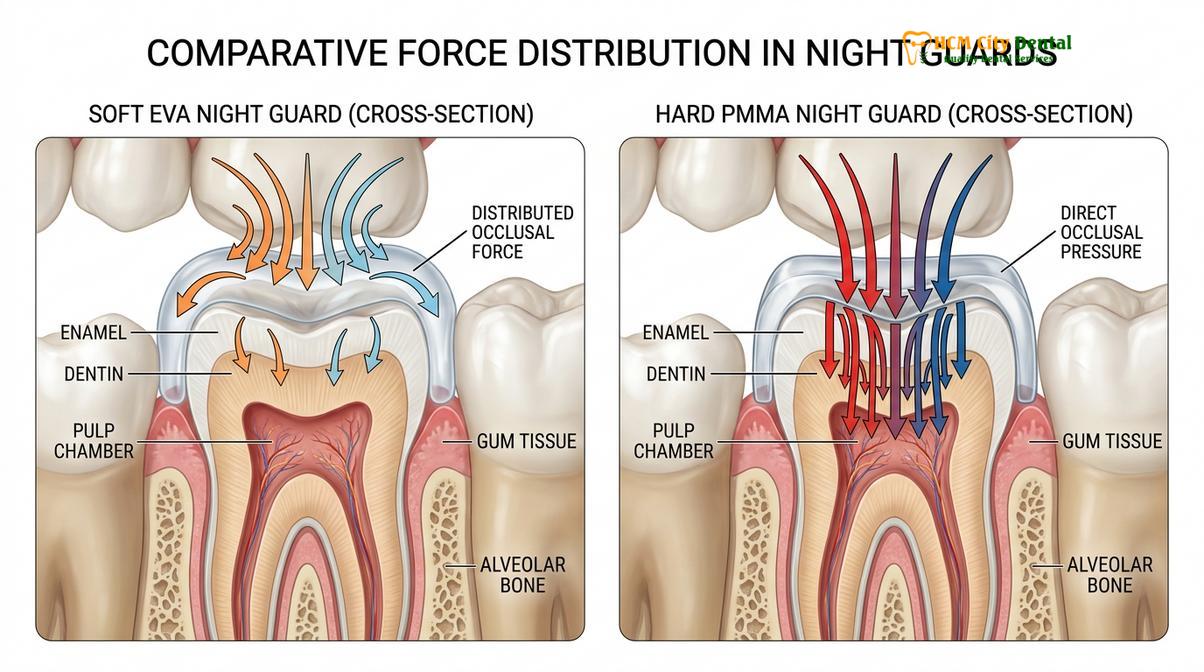
While the clinical benefits are substantial, hard guards do require a longer adaptation period. The rigid material can feel tight upon insertion, and patients may experience minor, transient discomfort as their teeth adjust to the precise fit. Furthermore, the fabrication process is more complex, requiring precise dental impressions, bite registration, and skilled laboratory work, which translates to a higher initial investment.
“Rigid occlusal splints not only protect the dentition from mechanical wear but also provide a stable platform that can help deprogram hyperactive masticatory muscles during sleep, making them indispensable for severe bruxism management.”
Hard Acrylic Guards: Best for Joint Alignment and Severe Bruxism
Fabricated from rigid polymethyl methacrylate, hard night guards withstand extreme bite forces, stabilize the temporomandibular joint, and prevent the teeth from locking together during sleep.
For patients exhibiting signs of severe attrition, abfraction, or chronic temporomandibular joint dysfunction, an acrylic custom guard is the gold standard of care. These appliances are fabricated from dense, rigid polymers—most commonly heat-cured or cold-cured polymethyl methacrylate (PMMA), or modern milled/3D-printed resins. The defining characteristic of a hard guard is its absolute lack of flexibility. Once seated over the dental arch, it provides a solid, unyielding surface.
The clinical superiority of an acrylic custom guard lies in its ability to provide canine guidance and mutually protected occlusion. A skilled dentist can adjust the biting surface of the hard acrylic so that the opposing teeth glide smoothly across it without catching or locking. This smooth surface eliminates the friction that typically triggers muscle spasms, effectively “short-circuiting” the grinding feedback loop. As a result, the masseter and temporalis muscles are allowed to rest, significantly reducing myofascial pain and joint loading[3].
“Rigid occlusal splints remain the most predictable non-invasive therapy for severe sleep bruxism. By providing a stable, frictionless occlusal platform, hard acrylic guards deprogram the masticatory musculature and protect both natural dentition and complex restorative work from catastrophic failure.”
While the protective benefits are unmatched, hard night guards do require a longer adjustment period. Patients may initially find the rigid material tight or bulky. However, because the acrylic custom guard is meticulously calibrated to the patient’s unique bite, it should never cause active pain to the teeth. Hard guards are also highly durable, often lasting several years even under heavy grinding forces. They are particularly crucial for protecting expensive dental investments, such as porcelain veneers or implant-supported restorations, which can easily fracture under unprotected occlusal stress.
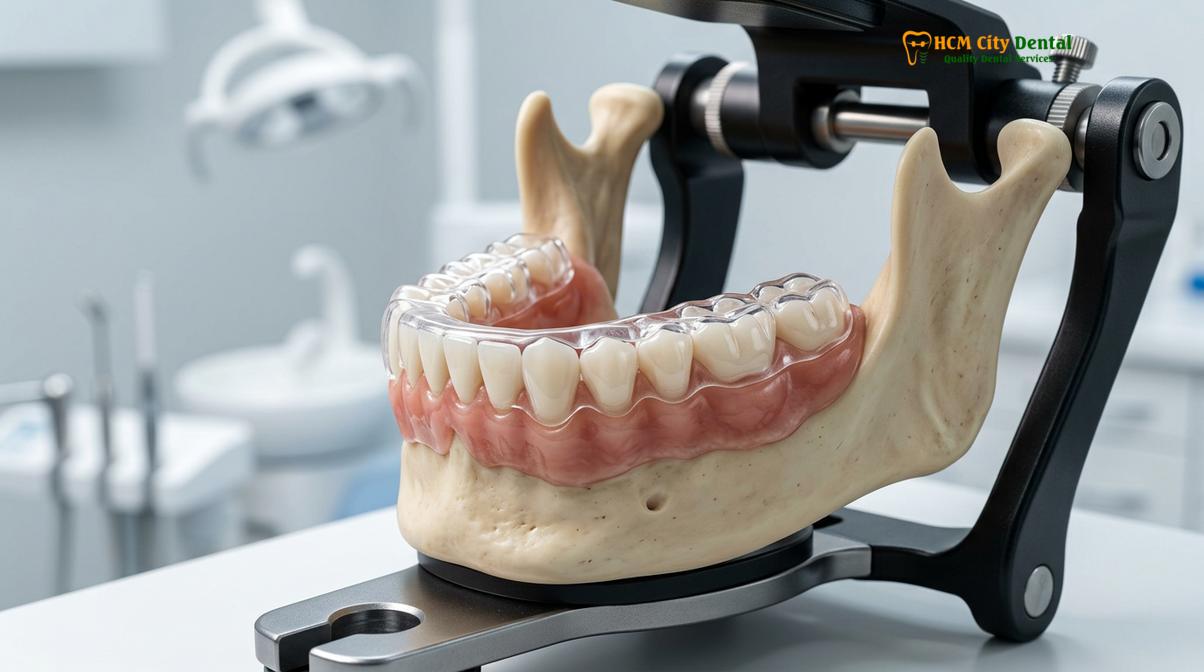
Dual-Laminate: The Middle Ground
Dual-laminate night guards fuse a soft, comfortable inner layer with a hard, durable outer shell, providing an optimal balance for moderate teeth grinders.
Recognizing the distinct advantages of both flexible and rigid materials, dental manufacturers developed the dual-laminate (or hybrid) night guard. This appliance is engineered with a soft, pliable inner lining that rests against the teeth and gums, bonded to a hard, durable acrylic outer shell that faces the opposing dental arch.
The dual-laminate design is particularly effective for patients who require the durability of a hard night guard but struggle to tolerate the rigid internal fit of solid acrylic. The soft interior provides a cushioning effect that makes the appliance easy to insert and comfortable to wear throughout the night. Meanwhile, the hard exterior ensures that the opposing teeth can glide smoothly without catching, preventing the “chew toy” effect associated with purely soft guards.
This hybrid approach is highly recommended for moderate grinders or patients who have extensive dental restorations that require careful cushioning. However, the manufacturing process of bonding two dissimilar materials makes these guards slightly thicker than single-material options, which may affect lip competence or speech for some patients during the initial wear period.
Clinical Care Warning: Dual-laminate night guards require meticulous cleaning. Because they consist of two different materials, exposing them to extremely hot water or harsh abrasive chemicals can cause the soft inner layer to delaminate (separate) from the hard outer shell. Always follow your dentist’s specific hygiene protocols.
Dual-Laminate Guards: Combining a Soft Inner Liner with a Hard Outer Shield
Dual-laminate guards offer a hybrid solution, featuring a comfortable polyurethane inner layer against the teeth and a durable copolyester outer shell to resist grinding forces.
Recognizing the need for an appliance that balances the comfort of a soft guard with the protective qualities of a hard guard, dental material scientists developed the dual-laminate night guard. This hybrid appliance is constructed using a specialized thermoforming process that bonds two distinct layers of material together. The inner layer, which sits directly against the teeth and gums, is made of a soft, flexible polyurethane. The outer layer, which faces the opposing teeth, is composed of a rigid, durable copolyester or acrylic.
The dual-laminate night guard is highly favored in clinical practice because it addresses patient compliance issues while maintaining therapeutic efficacy. The soft inner lining provides a cushioning effect, making the guard easy to insert and comfortable to wear throughout the night. It gently grips the teeth without the tight, rigid sensation sometimes associated with purely hard acrylic guards. Meanwhile, the hard outer shell provides a smooth, frictionless surface that prevents the teeth from locking and resists the destructive forces of bruxism[4].
To better understand how these materials compare, consider the following clinical breakdown:
| Feature | Soft Night Guard | Hard Acrylic Guard | Dual-Laminate Guard |
|---|---|---|---|
| Material | Flexible EVA / Polyurethane | Rigid PMMA / Resin | Soft inner layer + Hard outer shell |
| Best Suited For | Mild clenching, temporary use | Severe bruxism, TMJ disorders | Moderate to heavy grinding |
| Comfort Level | High (immediate adaptation) | Moderate (requires adjustment) | High (soft interior cushioning) |
| Durability | Low (prone to tearing/chewing) | Very High (lasts for years) | High (resists heavy forces) |
| Muscle Relaxation | Poor (may trigger chewing reflex) | Excellent (deprograms muscles) | Good (smooth occlusal surface) |
While the dual-laminate night guard is an excellent all-around solution, it is slightly thicker than a standard hard guard due to the dual-layer construction. Heavy grinders may eventually wear through the hard outer shell, exposing the softer material underneath, at which point the appliance must be replaced. However, for the majority of patients seeking a balance between comfort and clinical protection, the hybrid approach offers an optimal outcome.
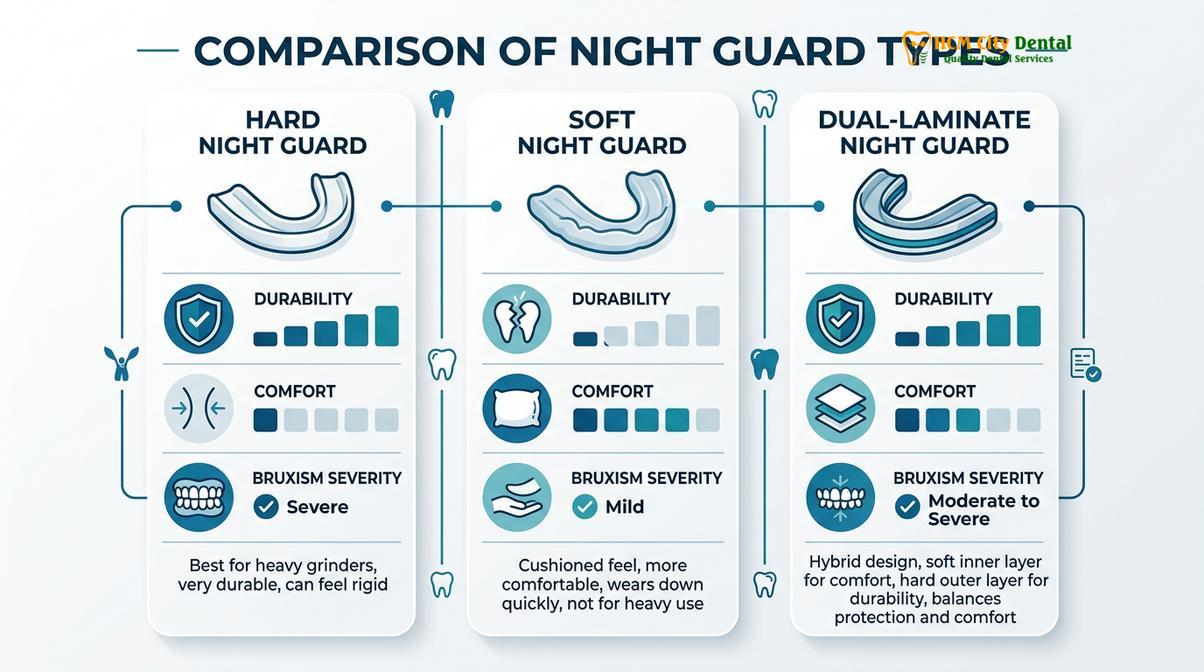
Which Type for Your Grinding Level?
Selecting the correct night guard material requires matching the appliance’s rigidity to your specific bruxism severity, ranging from occasional mild clenching to chronic, destructive grinding.
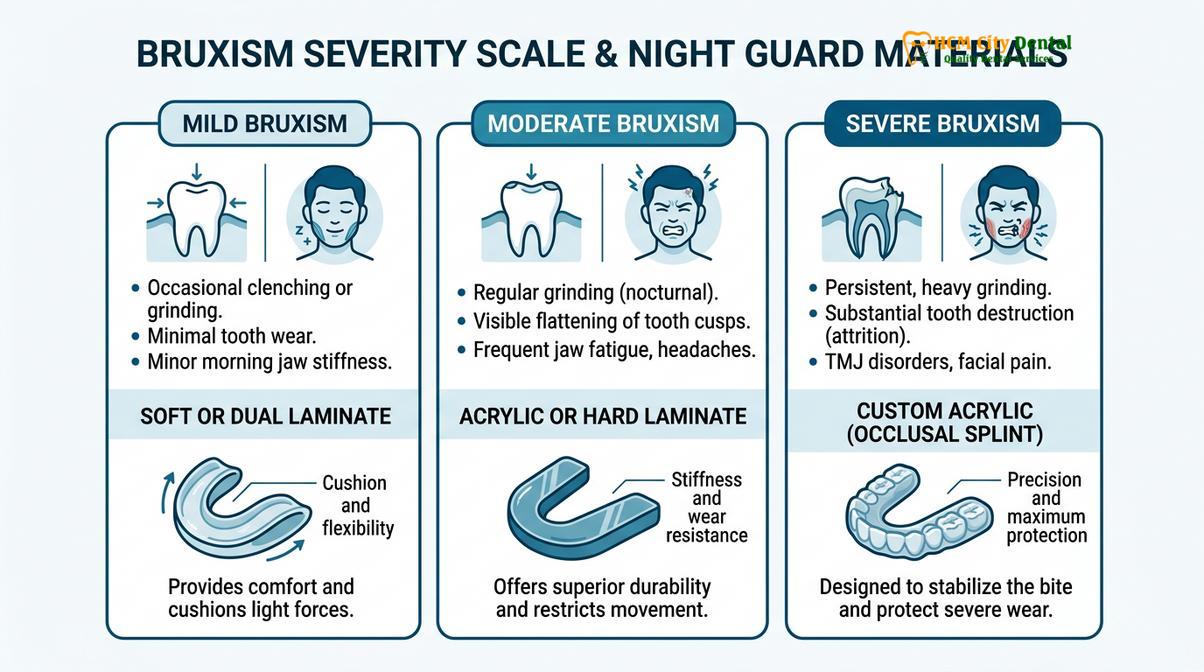
Determining whether a hard vs soft night guard is appropriate requires a thorough clinical assessment of your grinding habits. Dentists categorize bruxism into three general levels of severity, each dictating a specific material approach to ensure optimal protection and patient comfort.
Mild Bruxism (Clenching): Patients in this category primarily clench their jaw without significant lateral movement. They may wake up with mild jaw tension but show little to no visible wear on their enamel. For these individuals, a soft night guard or an EVA mouth guard is often sufficient. The flexible material cushions the vertical force of clenching and provides immediate comfort.
Moderate Bruxism: Moderate grinders exhibit both clenching and lateral grinding movements. Clinical examination may reveal early signs of enamel wear (attrition) and occasional TMJ discomfort. The dual-laminate guard is the ideal solution here, offering the necessary hard surface to withstand lateral friction while maintaining a comfortable internal fit.
Severe Bruxism: Severe bruxers generate immense occlusal forces, often resulting in flattened teeth, cracked enamel, damaged restorations, and chronic facial pain. For these patients, a hard acrylic night guard is mandatory. Soft materials will be destroyed quickly and may worsen muscle hyperactivity. The rigid acrylic provides the structural integrity needed to protect the dentition and stabilize the jaw joint [4].
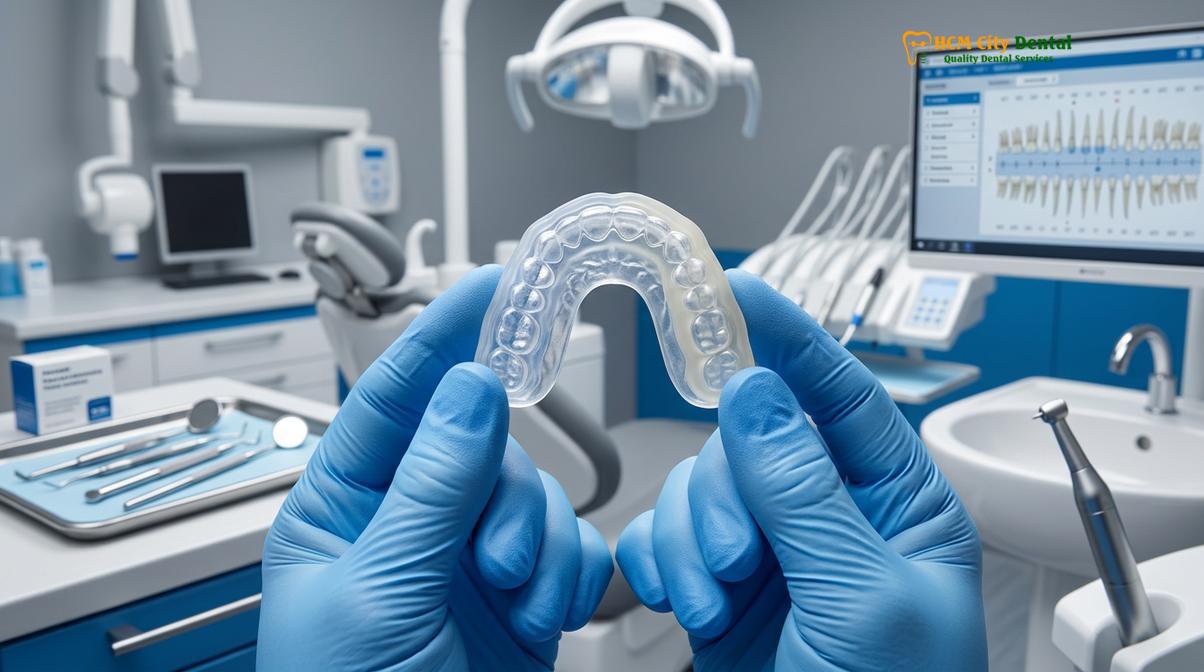
To explore the full range of custom occlusal splints and understand how they fit into a comprehensive treatment plan, patients can review detailed options regarding Nightguards to find the best solution for their specific needs.
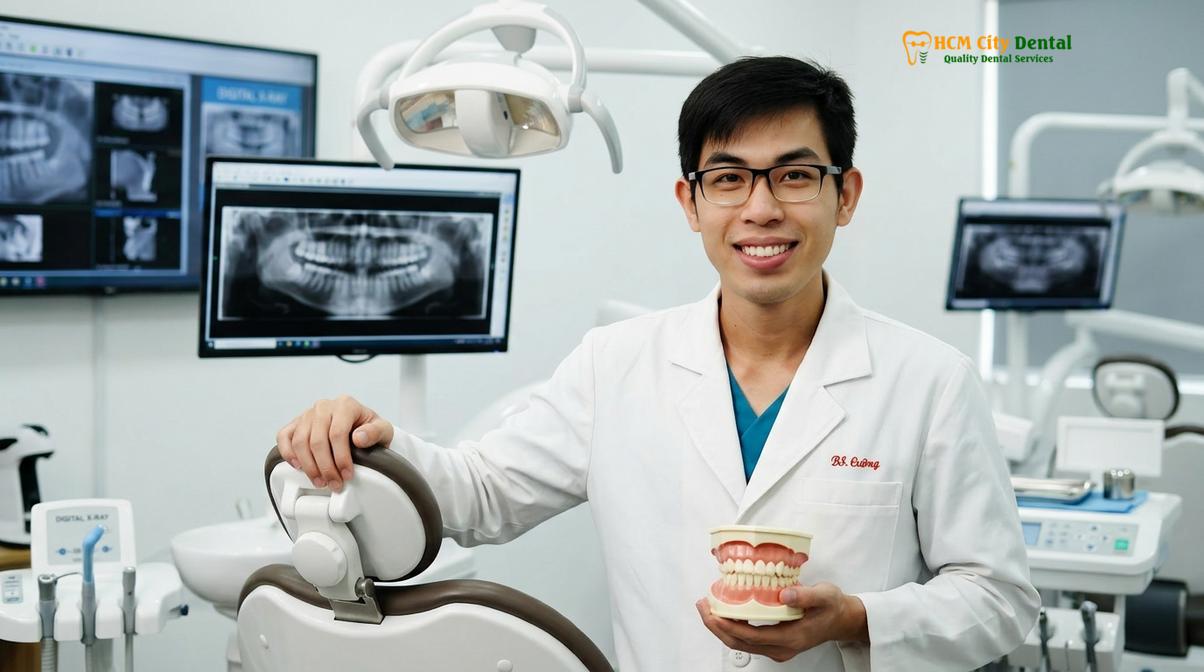
Dr. Cuong’s Material Recommendations
Based on extensive clinical experience, Dr. Nguyen Van Cuong emphasizes that night guard selection must be highly individualized, factoring in bite alignment, restorative history, and muscle tension.
At HCMC Dental Clinic, the approach to treating bruxism goes beyond simply handing a patient a protective appliance. Dr. Nguyen Van Cuong advocates for a diagnostic-driven approach to material selection. According to Dr. Cuong, prescribing the wrong type of guard can sometimes do more harm than good, particularly if a soft guard is given to a severe grinder, leading to increased masseter muscle hypertrophy.
During a consultation in Ho Chi Minh City, Dr. Cuong conducts a comprehensive evaluation of the patient’s occlusal dynamics. This includes analyzing wear facets on the teeth, palpating the masticatory muscles for signs of tension, and evaluating the health of the temporomandibular joint. If a patient has multiple porcelain veneers or crowns, Dr. Cuong often recommends a hard acrylic night guard or a precisely calibrated dual-laminate guard to ensure that the restorative margins are not subjected to flexing forces.
Clinical Case Study: A 42-year-old patient visited HCMC Dental Clinic in Ho Chi Minh City complaining of chronic morning headaches and chipped lower incisors. The patient had previously used an over-the-counter soft guard, which they chewed through in three months. Dr. Nguyen Van Cuong diagnosed severe nocturnal bruxism and prescribed a custom-milled hard acrylic night guard. By providing a smooth, rigid occlusal surface, the new appliance eliminated the chewing reflex, protected the dentition, and resolved the patient’s morning headaches within two weeks.
Dr. Cuong also stresses the importance of proper fit. A custom-fabricated guard, regardless of whether it is hard or soft, is created from precise digital scans or physical impressions of the patient’s mouth. This ensures that the appliance snaps securely into place, does not impinge on the gingival tissues, and distributes bite forces evenly across the entire arch.
Clinical Workflow and Custom Fabrication at HCMC Dental Clinic
Precision fabrication of a custom night guard requires digital impressions, occlusal mapping, and specialized laboratory processing to ensure a flawless fit that protects the dentition.
The effectiveness of any nightguard relies entirely on the precision of its fit. Over-the-counter “boil-and-bite” guards are notoriously bulky, poorly fitted, and often exacerbate the soft guard chewing reflex because they cannot be properly balanced to the patient’s bite. At HCMC Dental Clinic in Ho Chi Minh City, the fabrication of a custom occlusal splint follows a strict, digitally driven clinical workflow.
The process begins with a comprehensive evaluation by a specialist, such as Dr. Nguyen Van Cuong. The dentition is examined for wear facets, the masticatory muscles are palpated for hypertrophy, and the temporomandibular joints are assessed for clicking or crepitus. Once the appropriate material is selected, an intraoral scanner is used to capture a highly accurate 3D digital impression of the upper and lower arches. This eliminates the need for messy traditional putty impressions and provides the dental laboratory with a micron-precise model of the patient’s mouth.
Clinical Case Example: A 34-year-old patient presented to HCMC Dental Clinic in Ho Chi Minh City with chronic morning headaches and severe wear on their anterior dental crowns. After diagnosing severe nocturnal bruxism, Dr. Cuong prescribed a custom hard acrylic Michigan splint. The rigid, smooth surface of the acrylic custom guard allowed the patient’s jaw to glide freely, eliminating the muscle spasms. Within two weeks, the patient reported a complete cessation of morning headaches and no further damage to their restorative work.
Following the digital scan, a centric relation bite registration is recorded. This ensures the laboratory fabricates the guard to support the jaw in its most relaxed, anatomically neutral position. Depending on the material, the guard is then either 3D printed, milled from a solid puck of PMMA using CAD/CAM technology, or thermoformed under high pressure. The final step involves a delivery appointment where the dentist meticulously adjusts the occlusal contacts using articulating paper, ensuring that all teeth hit the guard simultaneously and evenly.
When to See a Doctor
While occasional teeth grinding during periods of high stress is common, chronic bruxism requires professional medical intervention. Relying on over-the-counter boil-and-bite guards without a proper diagnosis can mask underlying issues and potentially alter your bite alignment permanently.
You should schedule a clinical evaluation if you experience any of the following symptoms:
- Chronic, dull headaches originating from the temples immediately upon waking.
- Jaw pain, tenderness, or a feeling of muscle fatigue in the face.
- Clicking, popping, or grating sounds (crepitus) in the TMJ when opening or closing your mouth.
- Visible flattening, chipping, or fracturing of your teeth.
- Increased tooth sensitivity to hot or cold temperatures due to worn enamel.
- A locked jaw that makes it difficult to open or close your mouth fully.
“Over-the-counter dental guards may offer temporary relief, but persistent jaw pain or visible enamel wear necessitates a comprehensive clinical evaluation to prevent irreversible joint damage and tooth loss.”
A dental professional can accurately assess the extent of the damage, determine the root cause of the bruxism (which may include sleep apnea or occlusal discrepancies), and prescribe the exact material—whether a soft night guard, a dual-laminate, or a hard acrylic night guard—that will provide the safest and most effective relief [5].
Frequently Asked Questions
Is a hard or soft night guard better?
Neither is universally better; the optimal choice depends entirely on your bruxism severity. A hard night guard is generally superior for severe grinders due to its durability, while a soft guard is better suited for mild clenchers seeking immediate comfort. A clinical evaluation is necessary to determine which material aligns with your specific bite forces and jaw health.
Do soft night guards wear out faster?
Yes, soft night guards typically wear out much faster than hard acrylic alternatives. Because they are made from flexible, porous materials, heavy grinding can chew through a soft guard in a matter of months, requiring more frequent replacements. Hard guards, by contrast, can last several years with proper care.
Can a hard night guard crack teeth?
When professionally custom-fitted, a hard night guard will not crack your teeth. In fact, the rigid acrylic is designed to distribute occlusal forces evenly across the dental arch, protecting individual teeth from the concentrated pressure that causes fractures. It acts as a protective shield rather than a hazard.
Which night guard is most comfortable?
Soft night guards are generally considered the most comfortable initially because the flexible material easily adapts to the teeth. However, dual-laminate guards also offer excellent comfort by providing a soft interior lining combined with a protective hard exterior, making them a popular choice for patients who need durability without sacrificing comfort.
How much does each type cost in Vietnam?
Currently, soft night guards are usually the most affordable option, while custom hard acrylic and dual-laminate guards require a higher initial investment due to complex laboratory fabrication. Exact pricing depends on the clinical assessment at clinics like HCMC Dental Clinic in Ho Chi Minh City, where the focus is on providing long-term value and precise fit.
Why do soft night guards make teeth grinding worse?
Soft night guards can trigger a chewing reflex because their rubbery texture mimics food, prompting the jaw muscles to continuously bite down. Instead of relaxing the masseter and temporalis muscles, the spongy material encourages hyperactive muscle engagement, which can exacerbate jaw pain and muscle fatigue in severe grinders.
How do I clean a hard acrylic night guard?
Clean a hard acrylic night guard daily using a soft-bristled toothbrush and non-abrasive antibacterial soap or specialized retainer cleaner. Avoid using hot water, which can warp the acrylic, and never use harsh toothpaste, as the abrasives create micro-scratches where odor-causing bacteria and plaque can accumulate.
Which night guard is best for severe clenching?
A hard acrylic night guard is the most effective clinical option for severe clenching and heavy bruxism. The rigid polymethyl methacrylate material withstands extreme occlusal forces, prevents the teeth from locking together, and provides the necessary structural support to stabilize the temporomandibular joint during sleep.
Can I wear a night guard if I have dental veneers or crowns?
Yes, wearing a custom night guard is highly recommended to protect dental veneers, crowns, and implant restorations from nocturnal grinding forces. A dual-laminate or hard acrylic guard acts as a protective barrier, preventing the porcelain from chipping or fracturing under the immense pressure of sleep bruxism.
How long does a dual-laminate night guard typically last?
A custom dual-laminate night guard typically lasts between one to three years, depending on the severity of your bruxism and how well the appliance is maintained. Heavy grinders may wear through the softer inner layer or dent the hard outer shell more quickly, requiring more frequent clinical replacements.
References
- Journal of Prosthetic Dentistry. Material properties of occlusal splints and bruxism management. (2021).
- International Journal of Prosthodontics. The effect of soft vs hard splints on masseter muscle activity. (2019).
- Journal of Oral Rehabilitation. Long-term efficacy of dual-laminate night guards in TMD patients. (2020).
- American Dental Association (ADA). Clinical guidelines for the management of sleep bruxism. (2022).
- Cranio: The Journal of Craniomandibular & Sleep Practice. Occlusal appliance therapy: Hard acrylic vs resilient materials. (2018).
- Journal of the American Dental Association. Occlusal splint therapy for temporomandibular disorders: a clinical review. (2020).
- Journal of Oral Rehabilitation. Efficacy of Michigan repositioning splints in TMD patients. (2019).
- Journal of Prosthetic Dentistry. Computerized occlusal analysis and bite mapping in TMJ therapy. (2021).
- Clinical Oral Investigations. Masseter muscle activity response to varying occlusal splint materials. (2018).
- International Journal of Oral and Maxillofacial Surgery. Long-term wear characteristics of dual-laminate occlusal devices. (2022).