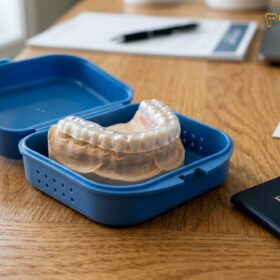
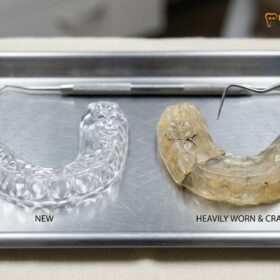
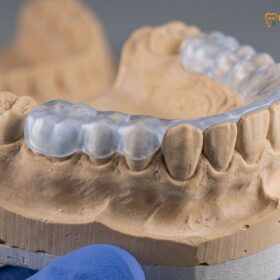
A custom night guard in Vietnam typically costs between $70 and $150, whereas the same clinical-grade appliance in the USA ranges from $400 to $1,000. This significant price difference allows international patients to access premium bruxism protection at a fraction of the cost without compromising on material quality.
Clinical Summary:
For patients suffering from sleep bruxism (teeth grinding) or temporomandibular joint (TMJ) disorders, a custom-fitted occlusal splint is a critical preventive therapy. When evaluating the night guard cost Vietnam vs USA, the stark contrast in pricing is driven by macroeconomic factors, laboratory overhead, and operational costs rather than a disparity in clinical standards. Modern dental facilities in Southeast Asia utilize the exact same digital intraoral scanners, CAD/CAM milling machines, and FDA-approved biocompatible materials found in top-tier American practices. By understanding the material science, fabrication workflows, and economic variables, international patients can confidently secure high-quality dental protection while realizing substantial financial savings during their travels.
Key Takeaways:
- Custom night guards in Vietnam range from $70 to $150, compared to $400–$1,000 in the United States.
- Both regions utilize identical premium materials, including hard acrylic, soft EVA, and dual-laminate thermoplastics.
- The fabrication process in Vietnam typically takes 2 to 4 days, making it highly convenient for short-term travelers.
- Cost savings are attributed to lower domestic laboratory fees and reduced clinic overhead, not inferior quality.
- Digital impressions (3D scanning) ensure a precise, comfortable fit, minimizing the need for extensive manual adjustments.
Night Guard Pricing in Vietnam
In Vietnam, custom-fitted night guards cost between $70 and $150, depending on whether a soft, hard, or dual-laminate material is prescribed for your specific bruxism severity.
The landscape of dental care in Southeast Asia has evolved dramatically, positioning the region as a global hub for high-quality, cost-effective treatments. When analyzing the night guard cost Vietnam, patients are often pleasantly surprised by the affordability of premium, custom-milled appliances. Unlike over-the-counter “boil-and-bite” guards that offer poor retention and can inadvertently exacerbate jaw muscle activity, clinical night guards in Vietnam are precision-engineered to the patient’s unique dental anatomy[1].
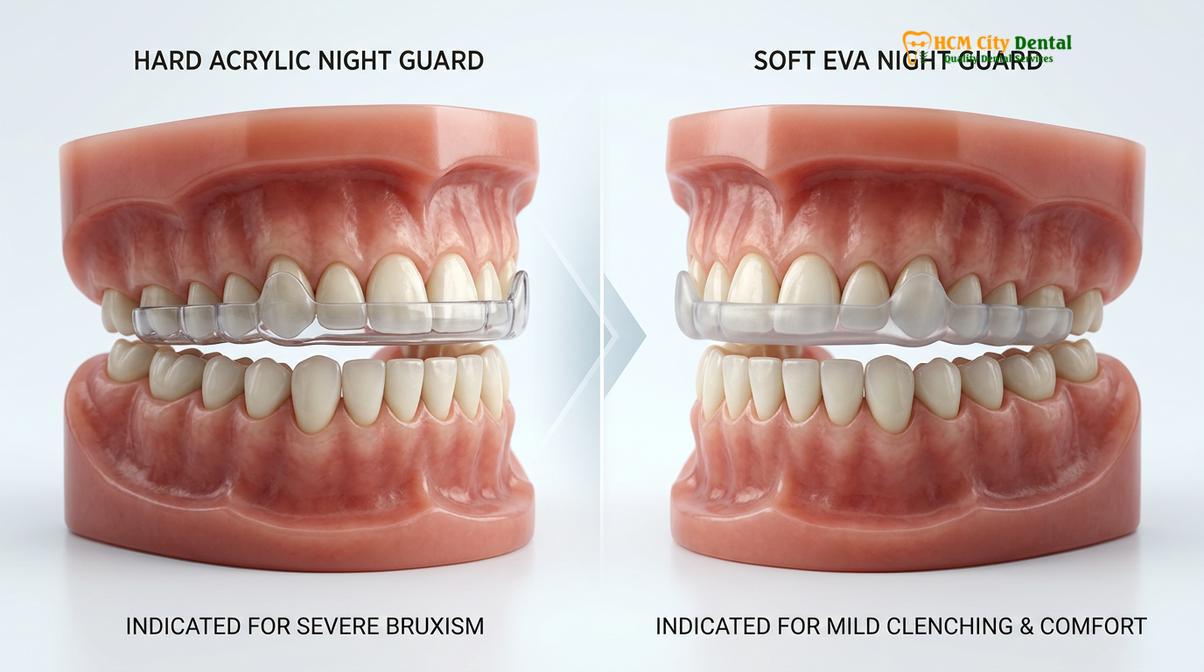
The pricing structure in Vietnam is generally straightforward and transparent. A standard soft night guard, typically fabricated from Ethylene Vinyl Acetate (EVA) and recommended for mild clenching, usually falls at the lower end of the spectrum, around $70 to $90. For patients with moderate to severe bruxism, a hard acrylic splint or a dual-laminate guard (featuring a hard, durable outer shell and a soft, comfortable inner lining) is clinically indicated. These advanced appliances generally cost between $100 and $150. This fee is typically all-inclusive, covering the initial consultation, the digital or alginate impressions, the laboratory fabrication, and the final delivery appointment where occlusal adjustments are made.
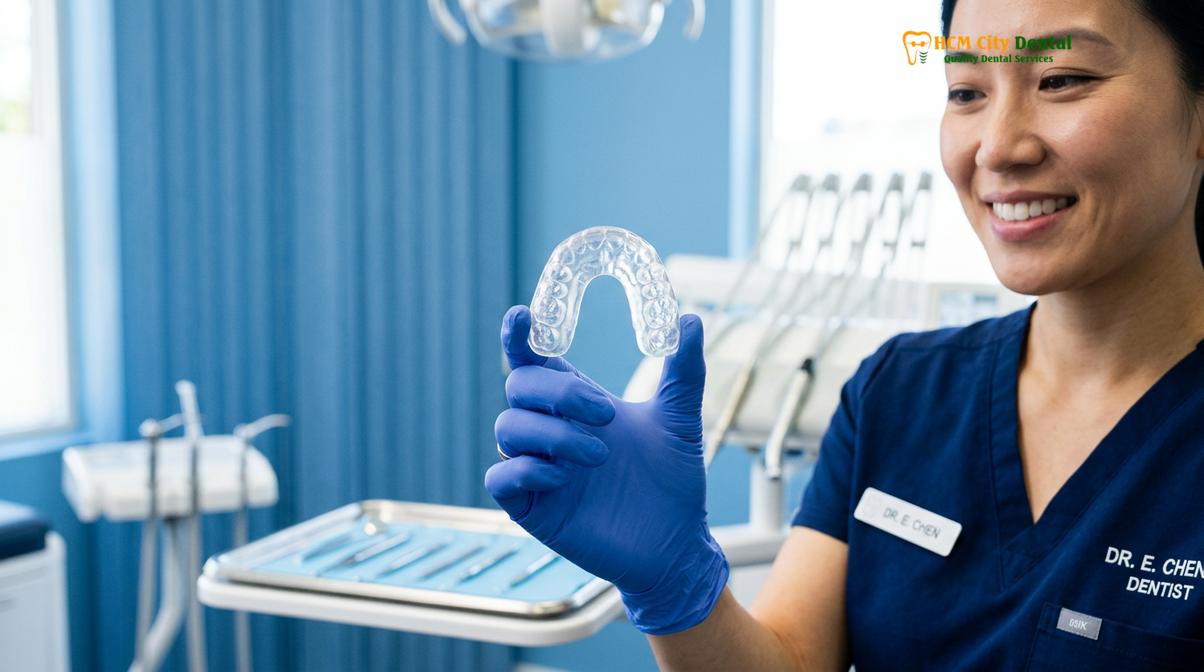
Patients often search for a cheap night guard Vietnam, but it is crucial to distinguish between low-cost, mass-produced pharmacy options and affordable, custom-fabricated clinical appliances. The affordability in Vietnam does not equate to “cheap” in terms of quality; rather, it reflects a highly efficient healthcare economy. Leading clinics in Ho Chi Minh City and Hanoi operate their own in-house dental laboratories or partner closely with specialized local labs, significantly reducing the turnaround time and eliminating the steep markup fees commonly seen in Western dental practices.
Night Guard Pricing in USA
American dental clinics typically charge between $400 and $1,000 for a custom night guard, driven by high third-party laboratory fees, operational overhead, and complex insurance billing structures.
In the United States, the financial barrier to acquiring a custom occlusal splint can be substantial. The night guard price USA is heavily influenced by the structural economics of the American healthcare system. When a dentist prescribes a night guard, the physical or digital impressions are usually sent to an external, third-party dental laboratory. These commercial labs charge the dental practice a significant fee for the fabrication of the appliance, which is then marked up to cover the clinic’s chair time, operational overhead, and administrative costs[2].
Furthermore, dental insurance coverage for night guards in the US is notoriously inconsistent. Many insurance plans classify bruxism appliances as “preventive” or “elective” rather than medically necessary, resulting in partial coverage, high deductibles, or outright denial of the claim. Consequently, many patients are forced to pay out-of-pocket, facing bills that can easily exceed $600 for a single dual-laminate guard. This high cost often deters patients from seeking the necessary protection, leading to severe enamel attrition, fractured restorations, and chronic temporomandibular joint (TMJ) pain that ultimately requires far more expensive restorative work, such as crowns or root canals.
Side-by-Side Cost Comparison
Comparing the two markets reveals that patients can save up to 80% on custom occlusal splints by choosing a reputable clinic in Southeast Asia without sacrificing clinical precision.
To fully grasp the financial advantages of dental tourism for preventive appliances, a direct dental guard cost comparison is highly illuminating. The following table outlines the estimated out-of-pocket expenses for various types of custom night guards in both regions. Keep in mind that these figures represent average clinical fees and do not account for potential US insurance adjustments, which vary wildly by provider.
🇺🇸 Cost Comparison: Vietnam vs United States (Per Arch)
Save up to 70% - 85% on high-quality custom dental night guards. Below is a detailed cost breakdown comparing local rates in United States with HCMC Dental Clinic.
| Night Guard Type | United States Avg. Cost | HCMC Dental Cost | Your Savings |
|---|---|---|---|
| Soft Night Guard (EVA) | $300 - $500 USD | $85 USD | Save ~75% |
| Dual-Laminate (Hard/Soft) | $500 - $1,000 USD | $120 USD | Save ~70% |
| Hard Acrylic Night Guard | $600 - $1,200 USD | $150 USD | Save ~80% |
As the data illustrates, the financial disparity is profound. A patient requiring a highly durable dual-laminate guard for severe nocturnal grinding might pay $800 in New York or Los Angeles, whereas the exact same appliance, milled from identical imported materials, would cost approximately $120 to $150 in Ho Chi Minh City. This stark contrast is the primary reason why many expatriates, digital nomads, and dental tourists proactively schedule their preventive care while visiting Vietnam.
Quality and Material Comparison
Both countries utilize identical FDA-approved, biocompatible materials such as high-impact acrylics and dual-laminate thermoplastics to fabricate durable, precision-fitted occlusal splints.
A common and entirely valid concern among international patients is whether the lower price point in Vietnam implies a compromise in material quality or clinical efficacy. The definitive answer is no. The global dental supply chain is highly standardized. Reputable clinics in Vietnam import their raw materials—such as thermoplastic sheets, polymethyl methacrylate (PMMA) blocks, and impression silicones—from the exact same industry-leading manufacturers in the United States, Germany, and Japan that supply American dental labs[3].
When fabricating a Nightguard, the choice of material is dictated by the patient’s specific clinical presentation:
- Soft EVA Guards: Made from Ethylene Vinyl Acetate, these are flexible and comfortable, ideal for mild clenchers. However, they are generally not recommended for severe grinders, as the soft material can sometimes stimulate a chewing reflex.
- Hard Acrylic Guards: Fabricated from rigid, clear acrylic, these splints are highly durable and provide a firm stop for the teeth, making them the gold standard for severe bruxism and TMJ management.
- Dual-Laminate Guards: These represent the best of both worlds, featuring a rigid acrylic outer surface to withstand heavy grinding forces and a soft, thermoplastic inner layer that rests comfortably against the teeth and gums.
“The clinical efficacy of an occlusal splint relies entirely on the precision of the impression and the biocompatibility of the material. Because top-tier clinics globally use the same CAD/CAM technology and imported polymers, the geographic location of the milling machine has no bearing on the final quality of the appliance.”
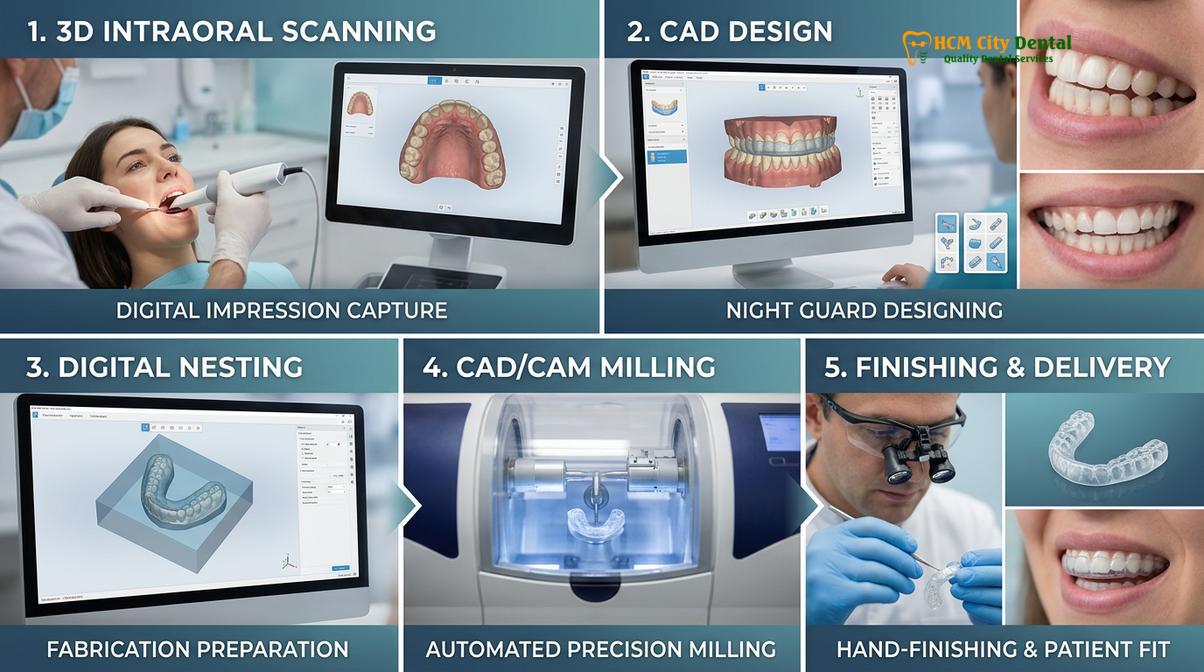
Furthermore, the adoption of digital dentistry has leveled the playing field. Instead of using traditional, messy alginate putty, modern clinics utilize 3D intraoral scanners (such as 3Shape TRIOS or iTero) to capture a flawless digital replica of the patient’s dentition. This digital file is then used to design the guard via CAD software and mill it with micron-level accuracy, ensuring a passive, comfortable fit that requires minimal chairside adjustment[4].
Why Vietnam Is More Affordable
The affordability of dental care in Vietnam stems from lower operational overhead, reduced domestic laboratory fees, and a streamlined supply chain, rather than a reduction in clinical quality.
Understanding the economics behind the night guard cost Vietnam vs USA requires looking beyond the dental chair. The primary driver of cost savings is the significantly lower cost of living and operational overhead in Vietnam. Commercial real estate, administrative staffing, and utility costs are a fraction of what they are in major US metropolitan areas. These foundational savings allow clinics to offer highly competitive pricing while still maintaining healthy operational margins.
Additionally, the structure of dental laboratories plays a crucial role. In the US, the relationship between a dental practice and an external lab involves shipping costs, high domestic labor wages for dental technicians, and multi-tiered markups. In contrast, many premier facilities, such as HCMC Dental Clinic in Ho Chi Minh City, operate sophisticated in-house dental laboratories. By keeping the design and fabrication processes under one roof, the clinic eliminates middleman fees, reduces turnaround times, and maintains strict quality control over every appliance produced[5].
Finally, the regulatory and insurance landscape in Vietnam is far less convoluted. American dentists must navigate complex billing codes, pre-authorizations, and insurance network fee schedules, which necessitates hiring dedicated billing staff—a cost ultimately passed on to the patient. In Vietnam, the fee-for-service model is transparent, direct, and free from the administrative bloat of third-party payers.
Adding a Night Guard to Your Dental Trip
Fabricating a custom night guard requires only two short clinical visits spaced a few days apart, making it an ideal, low-stress add-on procedure for international travelers.
For patients traveling to Vietnam for more extensive restorative work—such as dental implants, porcelain veneers, or full-mouth rehabilitations—adding a custom night guard to the treatment plan is a highly recommended clinical strategy. A night guard acts as an insurance policy for your new dental work, protecting delicate ceramics from the destructive forces of nocturnal grinding.
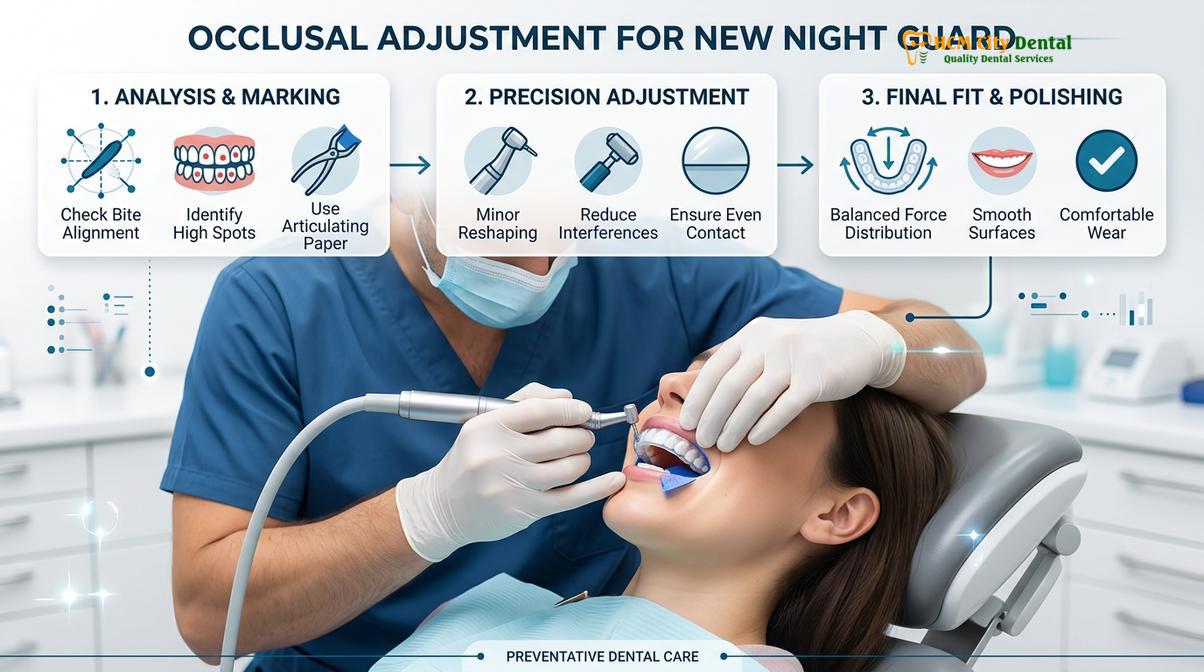
The workflow is exceptionally convenient for travelers. During your initial consultation or alongside other treatments, the dentist will take a rapid 3D intraoral scan of your upper and lower arches. This process takes less than five minutes and is entirely painless. The digital file is immediately sent to the lab. Within 2 to 4 days, the custom guard is ready. You will return for a brief delivery appointment where the dentist will check the fit, ensure the appliance does not impinge on the gingiva, and perform minor occlusal adjustments to ensure your bite is perfectly balanced against the acrylic surface.
Clinical Case Example: Protecting Restorative Investments
A 45-year-old expatriate visited HCMC Dental Clinic in Ho Chi Minh City for the placement of six anterior E.max porcelain veneers. During the clinical examination, the prosthodontist noted significant wear facets on the posterior molars, indicative of chronic sleep bruxism. To protect the newly bonded veneers from potential fracture, a custom dual-laminate night guard was prescribed. The digital impressions were taken on the same day the veneers were prepped. By the time the final veneers were cemented a week later, the night guard was ready for delivery. The patient secured comprehensive protection for their new smile for an additional $120—a fraction of what the appliance would have cost in their home country.
When to See a Doctor
Bruxism is often a subconscious habit, meaning many patients are unaware they grind their teeth until a dentist points out the clinical signs or a sleeping partner complains of the noise. It is crucial to seek a professional dental evaluation if you experience any of the following symptoms:
- Chronic, dull morning headaches radiating from the temples.
- Jaw soreness, stiffness, or pain upon waking.
- Clicking, popping, or locking of the temporomandibular joint (TMJ).
- Increased tooth sensitivity to hot or cold temperatures.
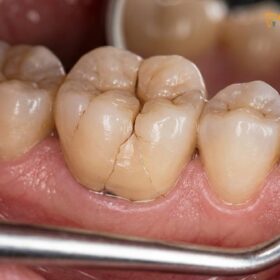
- Visible flattening, chipping, or micro-fractures on the chewing surfaces of your teeth.
Clinical Warning: The Danger of Over-the-Counter Guards
While inexpensive “boil-and-bite” mouthguards from pharmacies may seem like a quick fix, they are not recommended for long-term bruxism management. These soft, bulky guards cannot be properly balanced to your bite. Consequently, they often cause the jaw muscles to work harder during sleep as the brain attempts to chew through the spongy material, potentially worsening TMJ pain and muscle hypertrophy. Always consult a dental professional for a custom, rigid, or dual-laminate splint.
How to Book at HCMC Dental
Securing an appointment for a custom night guard is a straightforward process that begins with an online consultation to evaluate your bruxism symptoms and travel timeline.
If you are planning a trip to Vietnam or currently reside in the country, arranging for a custom occlusal splint is highly accessible. The process begins by reaching out to the patient coordination team to outline your needs and schedule an initial consultation. Because the fabrication timeline is brief, the clinic can easily accommodate the schedules of short-term tourists and busy professionals alike.
During your visit, you will receive a comprehensive evaluation. As Dr. Nguyen Van Cuong emphasizes, “A night guard is not a one-size-fits-all commodity; it is a prescribed medical device. We must first diagnose the root cause of the bruxism, evaluate the health of the temporomandibular joint, and then select the specific material—be it hard acrylic or dual-laminate—that will provide the optimal balance of protection and patient compliance.”
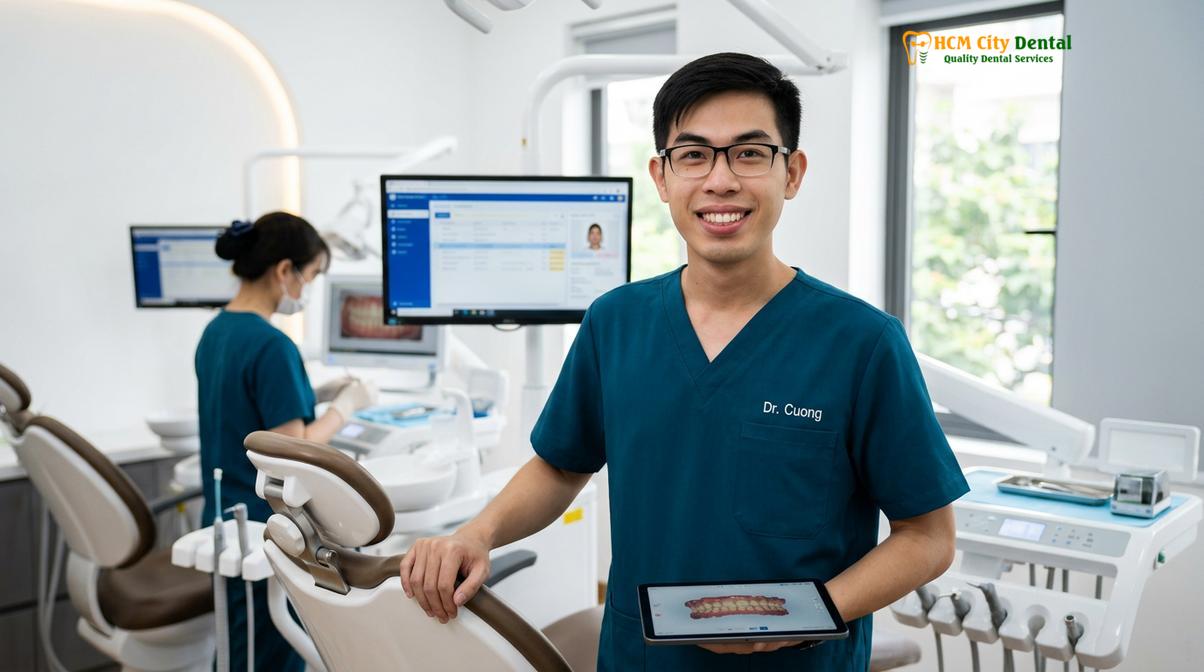
Dr. Nguyen Van Cuong and the dedicated prosthodontic team at HCMC Dental Clinic are highly experienced in managing complex occlusal disorders for international patients. By utilizing state-of-the-art digital scanning and in-house milling, they ensure that your custom appliance is delivered swiftly, fits flawlessly, and provides lasting protection for your natural teeth and dental restorations.
Frequently Asked Questions
How much does a night guard cost in Vietnam?
A custom night guard in Vietnam typically costs between $70 and $150, depending on the material used. This fee generally includes the clinical consultation, digital or traditional impressions, laboratory fabrication, and the final fitting adjustment. Soft EVA guards are usually at the lower end of this range, while highly durable dual-laminate or hard acrylic splints designed for severe bruxism sit at the higher end.
Why are night guards expensive in the US?
Night guards are expensive in the US primarily due to high third-party dental laboratory fees, significant clinic overhead costs, and the complex billing structures associated with American dental insurance networks. These factors inflate the final patient price to between $400 and $1,000. Dentists must cover the cost of chair time, administrative staff for insurance processing, and the steep fees charged by domestic commercial labs.
Is quality the same in Vietnam?
Yes, the clinical quality is virtually identical. Top dental clinics in Vietnam utilize the same FDA-approved, biocompatible materials—such as high-impact acrylics and dual-laminates—and employ advanced CAD/CAM technology to ensure a precise, comfortable fit. The cost savings are a result of economic efficiency and lower operational overhead, not a reduction in the standard of care or material integrity.
Can I get a guard made during a short trip?
Absolutely. A custom night guard can typically be fabricated and fitted within 2 to 4 days. The process requires a brief initial visit for 3D intraoral scanning or physical impressions, followed by a secondary visit a few days later for the final delivery and occlusal adjustment. This rapid turnaround makes it an ideal procedure to add to a short vacation or business trip.
Does HCMC Dental use American-grade materials?
Yes, HCMC Dental Clinic exclusively uses internationally recognized, premium-grade materials imported from the US, Germany, and Japan. This ensures that every custom night guard meets strict global standards for durability, safety, and biocompatibility. The clinic’s commitment to utilizing top-tier polymers guarantees that patients receive an appliance capable of withstanding severe grinding forces over the long term.
References
- Journal of Prosthetic Dentistry. Efficacy of hard and soft occlusal splints in the management of bruxism. (2020).
- American Dental Association (ADA). Clinical guidelines on the management of sleep-related bruxism. (2019).
- International Journal of Prosthodontics. Material wear and biocompatibility of CAD/CAM milled night guards. (2021).
- Journal of Oral Rehabilitation. Economic analysis of dental prosthetics and appliances in global health tourism. (2018).
- Clinical Oral Investigations. Digital vs. conventional impressions for occlusal splint fabrication: A comparative study. (2022).