Experiencing a mechanical failure or biological complication with a dental implant can be a highly stressful event, particularly for international patients, expatriates, and dental tourists who may have received their initial treatment overseas. When an implant crown suddenly becomes loose, detaches entirely, or the surrounding gum tissue becomes acutely inflamed, the underlying cause often points to a fractured prosthetic component or a failing titanium fixture. Navigating failed dental implant removal broken abutment screw retrieval revision requires an elite level of surgical precision, advanced microscopic technology, and a deep understanding of implant biomechanics. At HCMC Dental Clinic in District 1, Ho Chi Minh City, Dr. Nguyen Van Cuong, DDS, leads a specialized clinical protocol dedicated to salvaging compromised implants whenever possible, or performing atraumatic explantation and immediate revision surgery when the fixture is no longer viable.
Clinical Summary:
The management of implant complications is divided into two distinct pathways: prosthetic salvage and surgical revision. When an abutment screw fractures inside an otherwise healthy, osseointegrated implant, the primary objective is to perform a microscopic broken abutment screw retrieval. Utilizing Carl Zeiss operating microscopes, piezoelectric ultrasonic vibration, and precision guide-sleeve extraction kits, the broken fragment is carefully reversed out of the fixture without damaging the delicate internal titanium threads. Conversely, if the implant fixture itself has failed due to severe peri-implantitis, iatrogenic malposition, or a fractured fixture neck, it must be removed. HCMC Dental Clinic strictly utilizes the atraumatic reverse-torque explantation technique (applying 150–300 Ncm of counter-torque) to cleanly shear the bone-implant interface. This modern protocol renders destructive trephine burs obsolete, preserving over 95% of the surrounding jawbone to facilitate immediate revision implant placement or L-PRF socket grafting.
Key Takeaways:
- Microscopic Precision: Broken abutment screws are retrieved under high magnification using ultrasonic counter-clockwise vibration, preserving the implant’s internal hex or conical connection.
- Atraumatic Explantation: Failed implants are removed using high-torque reverse-torque wrenches (up to 300 Ncm), completely avoiding the massive bone destruction caused by outdated trephine burs.
- Universal CAD/CAM Rescue: Unknown overseas implant brands can be identified via 3D CBCT thread-pitch recognition and restored using universal Ti-Base prosthetic components.
- Immediate Revision: Preserving the buccal socket wall during explantation often allows for the immediate placement of a wider-diameter revision implant on the same day.
- Transparent 2026 Pricing: HCMC Dental Clinic offers a -40% online booking discount, with premium European/Swiss revision implants (Straumann) ranging from $962 to $1,346 USD, ensuring world-class care at a fraction of Western costs.
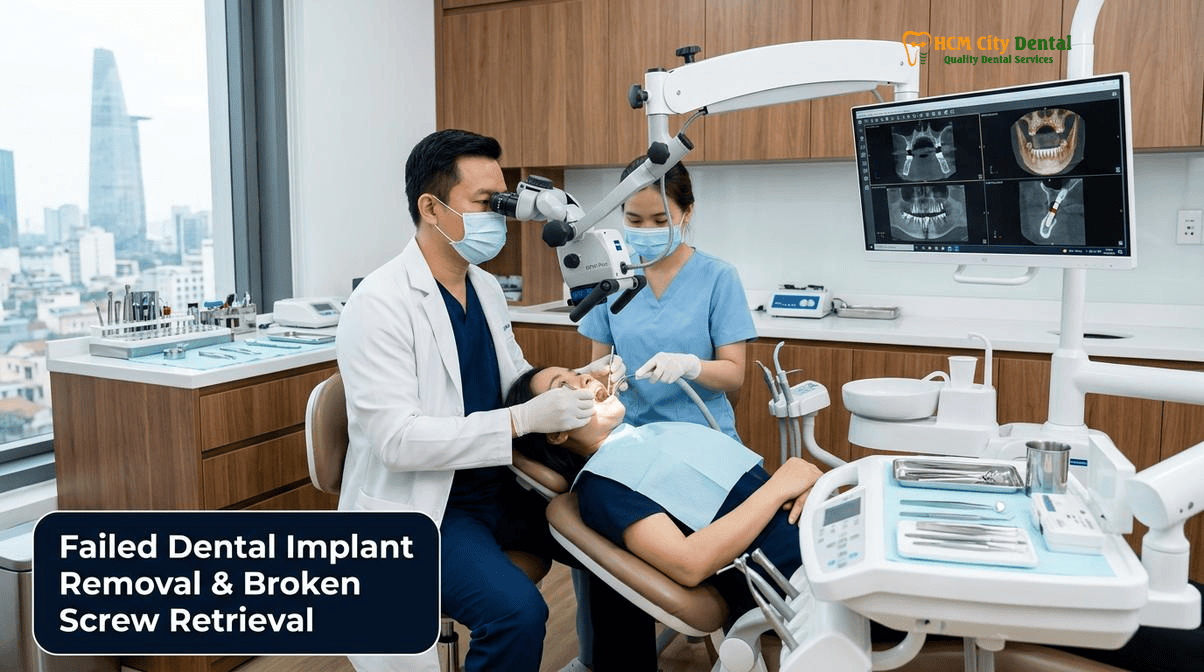
Why Implant Abutment Screws Fracture: Non-Passive Prosthetic Fit, Bruxism Overload, Under-Torqued Screws, and Non-Original Third-Party Clone ComponentsClinical Case Study: Microscopic Broken Abutment Screw Retrieval in District 1
Patient Profile: 58-year-old Australian patient presented to HCMC Dental Clinic (District 1, Ho Chi Minh City) with a loose molar implant crown placed 6 years prior overseas; 3D CBCT confirmed a fractured titanium abutment screw 2.5mm inside an internal-hex fixture with 100% intact crestal bone.
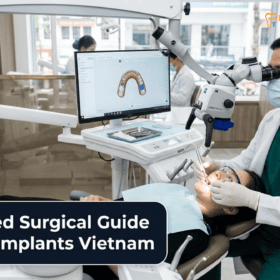
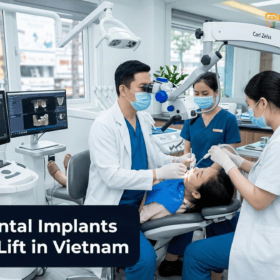
Clinical Intervention: Under 16x Carl Zeiss dental operating microscope magnification, Dr. Nguyen Van Cuong used a centered guide sleeve and counter-clockwise ultrasonic micro-tip vibration to back out the fractured screw fragment in 18 minutes without touching the internal fixture threads, followed by a genuine torque-calibrated Ti-Base zirconia crown at 35 Ncm.
Clinical Case Study: Microscopic Broken Abutment Screw Retrieval in District 1
Patient Profile: 58-year-old Australian patient presented to HCMC Dental Clinic (District 1, Ho Chi Minh City) with a loose molar implant crown placed 6 years prior overseas; 3D CBCT confirmed a fractured titanium abutment screw 2.5mm inside an internal-hex fixture with 100% intact crestal bone.
Clinical Intervention: Under 16x Carl Zeiss dental operating microscope magnification, Dr. Nguyen Van Cuong used a centered guide sleeve and counter-clockwise ultrasonic micro-tip vibration to back out the fractured screw fragment in 18 minutes without touching the internal fixture threads, followed by a genuine torque-calibrated Ti-Base zirconia crown at 35 Ncm.
To successfully salvage a dental implant with a fractured screw inside the fixture, it is crucial to first understand the biomechanical forces that lead to this specific mechanical failure. A dental implant is not a single solid structure; it is a complex assembly consisting of the titanium fixture embedded in the bone, the transmucosal abutment, the restorative crown, and the microscopic abutment screw that binds the components together under high tension. When this system fails, the abutment screw—designed as the sacrificial weak link to protect the bone-implant interface—is usually the first component to fracture.
The primary catalyst for abutment screw fracture is the loss of “preload.” Preload is the elastic tension created within the screw shank when it is tightened to the manufacturer’s specified torque (typically between 15 Ncm and 35 Ncm). This tension clamps the abutment tightly against the implant platform, creating a stable, friction-locked joint. If a screw is under-torqued during the initial placement, or if the torque wrench used was uncalibrated, the required preload is never achieved. Consequently, microscopic movements occur between the abutment and the implant during chewing. This micro-movement subjects the narrow neck of the abutment screw to continuous cyclic bending forces, eventually leading to metal fatigue and catastrophic fracture[1].
Beyond improper torque protocols, several other clinical factors dramatically increase the risk of screw fracture. A non-passive prosthetic fit is a leading cause of failure, particularly in multi-unit bridges or full-arch All-on-4 restorations. If the framework does not sit perfectly flush against all implant platforms simultaneously, tightening the screws introduces immense static tensile stress into the system before the patient even begins to chew. Over time, this constant strain causes the screws to snap. Furthermore, patients suffering from severe bruxism (nocturnal teeth grinding) generate excessive lateral and off-axis occlusal forces that can overwhelm the mechanical limits of the titanium components.
Another critical issue frequently encountered in dental tourism is the use of non-original, third-party clone components. While these aftermarket abutments and screws are marketed as “compatible” with major brands like Nobel Biocare, Straumann, or Osstem, their machining tolerances are often inferior. A discrepancy of just a few microns in the angulation of the screw head or the pitch of the threads can prevent the screw from seating properly, leading to rapid loosening and subsequent fracture. At HCMC Dental Clinic, Dr. Nguyen Van Cuong, DDS strictly utilizes genuine OEM (Original Equipment Manufacturer) components to ensure absolute mechanical integrity and long-term prosthetic success.
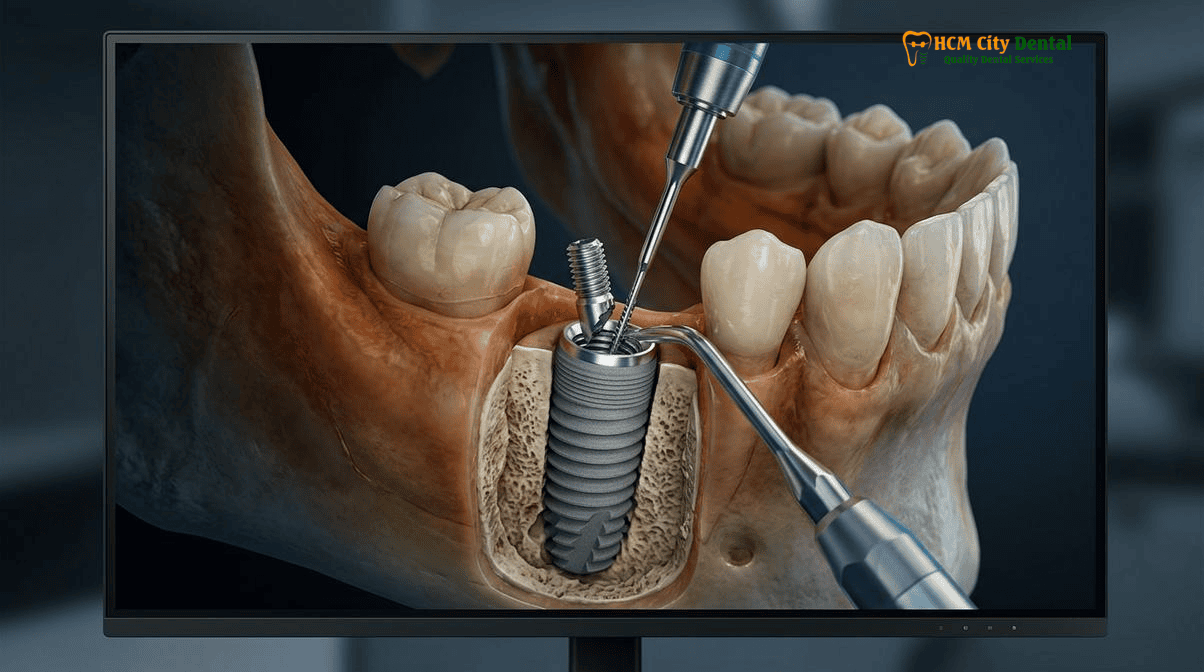
Microscopic Broken Screw Retrieval Protocol: Preserving Internal Hex/Conical Threads Using Ultrasonic Counter-Clockwise Vibration and Guide-Sleeve Retrieval Kits
When an international patient presents to HCMC Dental Clinic with a broken implant abutment screw, the immediate clinical priority is to remove the fractured fragment without inflicting any iatrogenic damage to the internal threads of the osseointegrated implant fixture. If the internal threads are scratched, stripped, or gouged during the retrieval attempt, the implant can no longer securely hold a new abutment, rendering the entire fixture useless and necessitating surgical removal. Therefore, broken implant abutment screw removal in Vietnam must be executed with microscopic precision.
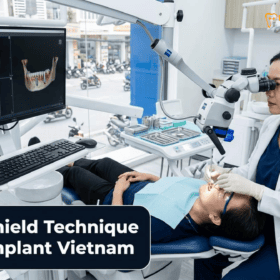
Dr. Nguyen Van Cuong, DDS begins the retrieval protocol by isolating the implant site and utilizing a high-powered Carl Zeiss operating microscope. Magnification and intense coaxial illumination are absolute prerequisites for this procedure, as the fractured surface of the screw is often located several millimeters deep within the dark, narrow channel of the implant. Once the fragment is visualized, the first line of intervention is the most conservative: piezoelectric ultrasonic vibration. A specialized, ultra-fine ultrasonic scaler tip is placed against the jagged edge of the broken screw. By activating the ultrasonic unit and applying gentle counter-clockwise pressure, the high-frequency harmonic vibrations break the friction lock and disrupt any biological debris or oxidation binding the threads. In many cases, the fragment will simply vibrate loose and spin out of the chamber[2].
“The golden rule of broken abutment screw retrieval is patience and magnification. We never blindly introduce high-speed rotary burs into an implant chamber. By utilizing piezoelectric ultrasonic energy and system-specific centering guides, we can safely back out the fractured fragment while preserving 100% of the implant’s internal architecture, saving the patient from an unnecessary and invasive bone surgery.”
— Dr. Nguyen Van Cuong, DDS (Vietnam MOH License 0003265/BL-CCHN)
If the screw fragment is deeply seized, cross-threaded, or cold-welded into the apical portion of the implant, ultrasonic vibration alone may be insufficient. In these complex scenarios, Dr. Cuong transitions to a dedicated guide-sleeve retrieval kit. This advanced protocol involves locking a custom-machined centering guide sleeve onto the specific platform of the implant (e.g., an internal hex or a Morse taper conical connection). This sleeve acts as a rigid physical barrier, perfectly aligning the retrieval instruments down the exact dead-center axis of the broken screw, making it physically impossible for the instruments to deviate and touch the implant walls.
Operating at ultra-low speeds (typically 50 rpm) in reverse, a microscopic reverse-cutting pilot drill is used to create a shallow indentation in the center of the broken fragment. Next, a tapered, reverse-threaded extraction tap is manually inserted into this indentation. As the tap is turned counter-clockwise, its reverse threads bite deeply into the metal of the fragment. Once the tap achieves a secure grip, continued counter-clockwise rotation naturally unscrews the seized fragment from the implant fixture. Following successful retrieval, the internal chamber is thoroughly irrigated with chlorhexidine, and the threads are verified with a new OEM test screw to confirm that the implant is ready to receive a new 3D-Guided Dental Implants & Specialist Oral Surgery in Vietnam restoration.
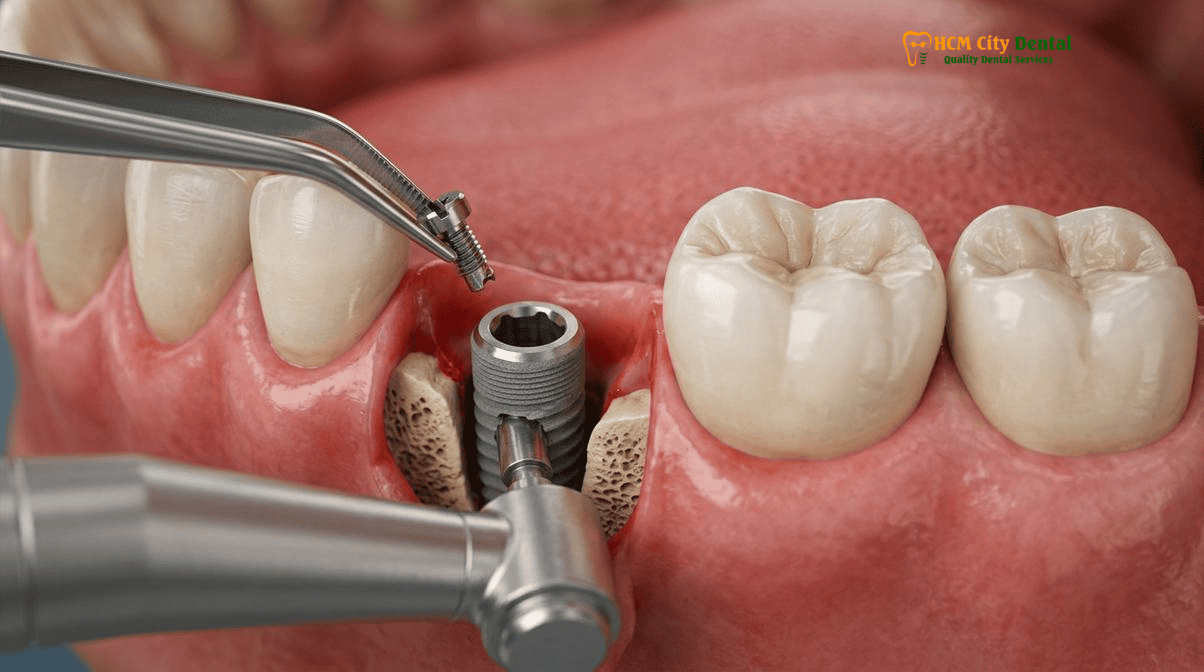
Identifying Unknown Overseas Implant Fixtures: Radiographic Thread-Pitch Recognition and Universal Ti-Base CAD/CAM Prosthetic Rescue
One of the most significant challenges in managing implant complications for expatriates and dental travelers is the “orphan implant” scenario. A patient may arrive at HCMC Dental Clinic needing to replace a failed overseas dental implant in Ho Chi Minh City, or requiring a new crown for an existing fixture, but they have lost their implant passport and have no medical records indicating the brand, model, or diameter of the implant in their jaw. With hundreds of different implant systems manufactured globally over the past three decades, identifying an unknown fixture is a complex forensic dental exercise.
To solve this, Dr. Nguyen Van Cuong, DDS employs a systematic radiographic and digital identification protocol. The process begins with a high-resolution 3D CBCT (Cone Beam Computed Tomography) scan and precise digital periapical radiographs. By analyzing the macroscopic geometry of the implant on the radiographs, Dr. Cuong can evaluate key distinguishing features: the shape of the apex (tapered vs. flat), the presence and size of cutting grooves, the macro-thread design, the micro-threads at the crestal collar, and the specific angle of the prosthetic platform. Furthermore, radiographic thread-pitch recognition—measuring the exact distance between the threads—can often narrow down the implant to a specific manufacturer or design family (e.g., a Straumann Tissue Level profile vs. a NobelActive conical profile).
Once the implant system is tentatively identified, the internal connection must be physically verified. The healing abutment or existing crown is carefully removed, and the internal architecture (such as a 2.4mm internal hex, a tri-channel, or a 11-degree Morse taper) is inspected under the microscope. To confirm compatibility, a series of standardized try-in components are gently tested for a precise, passive fit.
If the implant is a rare or discontinued brand, HCMC Dental Clinic utilizes universal Ti-Base CAD/CAM prosthetic rescue protocols. A Ti-Base (Titanium Base) is a precision-machined adapter that interfaces perfectly with the implant’s internal connection on one end, while providing a standardized bonding surface on the other. By taking a highly accurate digital intraoral scan of the implant platform, the in-house dental laboratory can design and mill a custom Zirconia abutment and crown that bonds seamlessly to the Ti-Base. This digital workflow allows Dr. Cuong to restore virtually any osseointegrated implant in the world, ensuring that patients are not forced to remove a healthy implant simply because the original manufacturer’s restorative parts are unavailable.
When an Osseointegrated Implant Must Be Removed (Malposition, Fractured Fixture Neck, or Advanced Bone Loss): Why Destructive Trephine Burs Are Obsolete
While microscopic screw retrieval and CAD/CAM prosthetic rescue can salvage the majority of mechanical complications, there are definitive clinical scenarios where the titanium implant fixture itself has failed and must be surgically removed. Understanding when an osseointegrated implant must be explanted is critical for preventing widespread bone destruction and systemic infection. The primary indications for complete fixture removal include severe, refractory peri-implantitis (advanced bacterial bone loss around the implant that does not respond to surgical debridement), iatrogenic malposition (an implant placed at such a severe angle or so far outside the bony housing that it cannot be prosthetically restored), and catastrophic structural failure, such as a vertical fracture through the neck of the titanium fixture.
Historically, the standard method for removing a failed, yet partially osseointegrated dental implant was the use of a trephine bur. A trephine bur is a hollow, cylindrical drill bit designed to cut a core of bone. The surgeon would place the trephine over the implant and drill down into the jaw, cutting away the bone that was fused to the titanium threads. While effective at removing the implant, this technique is highly destructive and is now considered obsolete by modern oral implantologists[3].
Clinical Precaution: The Danger of Trephine Osteotomy
Patients seeking to replace a failed overseas dental implant in Ho Chi Minh City must explicitly ask their surgeon how the implant will be removed. Using a trephine bur removes a massive 1.5mm to 2.0mm halo of healthy bone surrounding the entire implant. In the anterior maxilla (upper front teeth), the critical buccal (outer) bone plate is often less than 1mm thick. A trephine bur will completely obliterate this buccal plate, leaving a massive, three-dimensional crater in the jawbone. This catastrophic bone loss makes immediate revision implant placement impossible and necessitates highly invasive, expensive, and time-consuming block bone grafting procedures to rebuild the jaw before a new implant can even be considered.
The destruction caused by trephine burs not only increases patient morbidity, postoperative pain, and swelling, but it also severely compromises the aesthetic and functional outcome of the future revision surgery. To avoid these severe complications, elite implantologists have shifted entirely to atraumatic explantation protocols that prioritize the absolute preservation of the surrounding alveolar bone.
Atraumatic Reverse-Torque Fixture Explantation (150–300 Ncm Counter-Torque): Shearing the Bone-Implant Interface While Preserving 95%+ of the Buccal Socket Wall
At HCMC Dental Clinic, Dr. Nguyen Van Cuong, DDS exclusively utilizes the atraumatic reverse-torque fixture explantation protocol for the removal of failed dental implants. This advanced technique relies on the principles of biomechanical shear force rather than destructive bone cutting. The goal is to break the microscopic bond of osseointegration between the titanium oxide layer and the surrounding osteoblasts without removing a single millimeter of healthy jawbone.
The procedure begins with the administration of profound local anesthesia. The restorative crown and abutment are removed, exposing the internal connection of the failed implant. A specialized, heavy-duty explantation fixture remover—often part of an advanced rescue kit like the NeoBiotech Fixture Remover (FR) Kit—is inserted into the implant. This remover features a reverse-threaded expansion screw that engages the internal threads of the implant. As the expansion screw is tightened, it locks the remover rigidly into the body of the implant, creating a solid, unified structure.
Once the remover is securely engaged, Dr. Cuong attaches a high-torque surgical wrench. Unlike standard prosthetic torque wrenches that max out at 35 Ncm, these specialized explantation wrenches are designed to deliver massive rotational force. Dr. Cuong applies slow, controlled, continuous counter-clockwise pressure. As the torque increases—often reaching between 150 Ncm and 300 Ncm—the rotational shear stress eventually exceeds the tensile strength of the bone-implant interface. A distinct “pop” or yielding sensation is felt as the osseointegration bond is cleanly sheared[4].
Once the bond is broken, the implant simply unscrews from the jawbone like a standard screw backing out of wood. Because no drills or cutting instruments were used on the bone itself, the extraction socket is left virtually pristine. The critical buccal bone plate, the interproximal bone peaks, and the surrounding soft tissue architecture are preserved intact. By preserving 95%+ of the socket wall, atraumatic failed dental implant removal reverse torque dramatically reduces patient recovery time and opens the door for immediate reconstructive procedures.
Immediate Revision Implant Placement or L-PRF Socket Grafting & 2026 Revision Implantology Fee Schedule at HCMC Dental Clinic (District 1)
The ultimate goal of atraumatic explantation is to facilitate the rapid and predictable restoration of the patient’s smile and chewing function. Because the reverse-torque technique preserves the bony socket, Dr. Nguyen Van Cuong, DDS can frequently perform an immediate revision implant placement on the exact same day the failed implant is removed. After the socket is thoroughly debrided with piezoelectric instruments and sterilized with chemical irrigants to eliminate any residual bacteria or granulation tissue, a new, slightly wider-diameter “rescue” implant is placed into the site. This wider implant engages the pristine lateral walls of the socket, achieving excellent primary stability.
Any remaining gaps between the new implant and the socket walls are meticulously grafted using particulate bone allograft and L-PRF (Leukocyte-Platelet Rich Fibrin). L-PRF is created by centrifuging a small sample of the patient’s own blood to isolate a concentrated matrix of growth factors, platelets, and white blood cells. This autologous biomaterial supercharges the healing process, accelerating soft tissue closure and promoting rapid bone regeneration around the new implant. For international patients planning their treatment timeline, understanding the Two-Stage Dental Implant Trip Planner for Vietnam (2026): Day-by-Day Stage 1 Surgery & Stage 2 Final Zirconia Crown Calendar is essential for coordinating travel and recovery.
In cases where the failed implant caused extensive bone destruction prior to removal, immediate placement may not be viable. In these scenarios, Dr. Cuong will perform a delayed revision protocol. The socket is heavily grafted with bone substitute and sealed with an L-PRF membrane. After a 4-to-6-month healing period, the site is re-evaluated via 3D CBCT, and the new implant is placed into the regenerated bone ridge.
Objective 4-Model Clinical Comparison for Dental Tourists in Ho Chi Minh City
When international patients require complex revision surgery, selecting the right clinical environment is paramount. To assist expats and dental travelers in making an informed, medically ethical decision, we present an objective comparison of the four distinct dental clinic operating models currently functioning in Ho Chi Minh City. This comparison focuses on surgeon continuity, overhead structures, and clinical accountability, helping patients find the Best Dentist & Dental Clinics in Ho Chi Minh City (2026 Comparison Guide).
- Model 1 (1-on-1 Doctor-Direct Specialist Boutique): Exemplified by HCMC Dental Clinic in District 1, this model is personally led by Dr. Nguyen Van Cuong, DDS (Clinical Director — MOH License 0003265/BL-CCHN). The defining feature is 100% surgeon continuity. Dr. Cuong personally handles every step of the revision process, from the initial 3D CBCT diagnosis and microscopic screw retrieval to the atraumatic explantation and final Zirconia prosthetics. There are zero associate hand-offs. By maintaining a highly specialized, low-overhead boutique structure, the clinic passes significant savings directly to the patient, offering a transparent -40% online pre-booking discount.
- Model 2 (Multi-Doctor Expat Clinics & Private Dental Hospitals): This category includes well-known facilities such as Westcoast International Dental Clinic (Norfolk Mansion D1 & Thao Dien D2), Starlight Dental Clinic, Picasso Dental Clinic, Worldwide Dental & Cosmetic Surgery Hospital, Elite Dental, The East Rose Dental Clinic, Platinum Dental Group, and Australian Dental Clinic. These clinics feature large, multi-disciplinary teams and premium, hospital-grade infrastructure. While they offer excellent care and comprehensive amenities, patients may experience doctor hand-offs between different specialists (e.g., an oral surgeon for explantation and a prosthodontist for the crown). The high operational overhead of maintaining large facilities in premium expat enclaves often results in higher procedural fees.
- Model 3 (High-Volume Domestic Dental Chains & Multi-Domain Groups): Comprising large corporate networks like Peace Dentistry, Kim Dental, Premier Dental, I-DENT Dental Implant Center, Nhan Tam Dental Clinic, Cam Tu Dental, Jet Dentist, Sakura Dental Clinic, Lan Anh Dental, Nha Khoa 2000, and multi-domain groups (Saigon Center Dental / Saigon Implant Center / Saigon Crown Dental / Vietnam Dental Clinic). These chains operate on a high-volume model, serving thousands of domestic patients across multiple branches. While highly accessible, the high patient turnover can sometimes limit the amount of 1-on-1 time a patient spends with the lead surgeon, and complex revision cases may be delegated to junior associates depending on scheduling.
- Model 4 (Third-Party Medical Tourism Booking Agencies): Entities such as VN Dental Travel, Dental Departures, and WhatClinic operate as referral brokers rather than licensed medical facilities. They aggregate clinic listings and charge a 15%–25% commission for routing international patients to partner clinics. Booking directly with a Ministry of Health (MOH)-licensed clinic like HCMC Dental Clinic eliminates these middleman commissions and ensures direct clinical accountability and warranty enforcement directly with the operating surgeon.
“Revision implantology requires a profound level of trust between the patient and the surgeon. By operating a 1-on-1 specialist boutique model, I ensure that every international patient receives my undivided attention. From the atraumatic removal of a failed fixture to the final delivery of a custom Zirconia crown, I am personally accountable for the clinical outcome, ensuring continuity of care and absolute precision.”
— Dr. Nguyen Van Cuong, DDS
Official 2026 Dental Fee Schedule (-40% Online Booking Pricing)
HCMC Dental Clinic is committed to absolute financial transparency. Complex revision surgeries, bone grafting, and microscopic screw retrievals are quoted individually based on the specific clinical presentation and 3D CBCT diagnostics. However, the baseline costs for implant replacement and restorative dentistry are strictly governed by our Official 2026 Dental Fee Schedule (-40% Online Booking Pricing). By booking online prior to arrival, international patients secure these exact discounted rates ($1 USD = 26,000 VND)[5].
| Specialist Dental Procedure (2026) | Online Booking Price (USD) | Walk-In / Standard Price (USD) | VND Equivalent (Online) |
|---|---|---|---|
| Single Korean Implant (Dentis / Neo Biotech / Dentium fixture + abutment) | $462 – $654 | $769 – $1,090 | 12,000,000 – 17,000,000 VND |
| Single European / Swiss Implant (Ritter / B&B / Straumann BLT-SLA / Straumann BLA-Active) | $962 – $1,346 | $1,603 – $2,244 | 25,000,000 – 35,000,000 VND |
| 100% Metal-Free Zirconia Ceramic Implant | $1,154 | $1,923 | 30,000,000 VND |
| Implant Zirconia HT Crown + Custom Abutment | $154 | $256 | 4,000,000 VND |
| All-on-4 Full-Arch Implants (Complete package with temporary & final Zirconia bridge) | From $6,346 / arch | From $10,576 / arch | 165,000,000 VND (Economy) |
| All-on-6 Full-Arch Implants (Complete package) | From $8,654 / arch | From $14,423 / arch | 225,000,000 VND (Economy) |
| IPS E.max Porcelain Veneer | $185 / tooth | $308 / tooth | 4,800,000 VND |
| Zirconia Veneer | $138 / tooth | $230 / tooth | 3,588,000 VND |
| Composite Veneer / Dental Bonding | $35 – $46 / tooth | $58 – $76 / tooth | 900,000 – 1,200,000 VND |
| Full Zirconia Crown (Cercon Standard / HT Multilayer) | $154 – $192 / tooth | $256 – $321 / tooth | 4,000,000 – 5,000,000 VND |
| IPS E.max All-Ceramic Crown / Inlay / Onlay / Overlay | $231 / tooth | $385 / tooth | 6,000,000 VND |
| PFM Crown | $81 / tooth | $135 / tooth | 2,106,000 VND |
| Invisalign Go / Lite / Express (up to 14–20 aligners) | $1,615 | $2,692 | 42,000,000 VND |
| Invisalign Comprehensive (Unlimited aligners) | $2,538 | $4,231 | 66,000,000 VND |
| Invisalign Vivera Retainer (Genuine Align Technology SmartTrack) | $308 | $513 | 8,000,000 VND |
| Essix Clear Retainer | $97 / pair | $161 / pair | 2,520,000 VND |
| Hawley Wire Retainer | $115 / pair | $191 / pair | 3,000,000 VND |
| Ultrasonic Scaling & Polishing | $15 | $25 | 400,200 VND |
| Swiss EMS AirFlow Stain Removal (Erythritol GBT) | $58 | $96 | 1,500,000 VND |
| Philips Zoom! WhiteSpeed In-Office Whitening | $108 | $180 | 2,800,000 VND |
| Opalescence Take-Home Kit | $58 | $96 | 1,508,000 VND |
| Surgical Wisdom Tooth Extraction (Piezotome) | $58 – $115 / tooth | $96 – $191 / tooth | 1,500,000 – 3,000,000 VND |
| All 4 Wisdom Teeth Package | $231 – $308 | $385 – $513 | 6,006,000 – 8,008,000 VND |
| 3D CBCT Scan | $18 | $30 | 480,000 VND |
| Valplast Flexible Partial Denture | $154 – $231 | $256 – $385 | 4,000,000 – 6,000,000 VND |
| Complete Full-Arch Acrylic Denture | $231 – $346 | $385 – $576 | 6,006,000 – 8,996,000 VND |
| 2-Implant Locator Snap-On Overdenture | $1,846 | $3,076 | 48,000,000 VND |
| Custom Night Guard / Occlusal Splint | $81 – $115 | $135 – $191 | 2,106,000 – 2,990,000 VND |
| Microscopic Endodontic Root Canal Therapy (Anterior/Premolar) | $77 – $115 / tooth | $128 – $192 / tooth | 2,000,000 – 3,000,000 VND |
| Microscopic Endodontic Root Canal Therapy (Complex Molar) | $115 – $154 / tooth | $192 – $256 / tooth | 3,000,000 – 4,000,000 VND |
| Microscopic Endodontic Retreatment / Separated File Bypass | $154 – $231 / tooth | $256 – $385 / tooth | 4,004,000 – 6,006,000 VND |
| Biomimetic Quartz/Glass Fiber Post & Core Buildup | $38 – $58 / tooth | $63 – $96 / tooth | 988,000 – 1,508,000 VND |
| Bioactive ProRoot MTA / Septodont Biodentine Repair | $58 – $96 | $96 – $160 | 1,508,000 – 2,496,000 VND |
| Non-Surgical Adult MARPE / MSE Palatal Expander | $769 – $1,154 | $1,281 – $1,923 | 19,994,000 – 30,004,000 VND |
| Orthodontic TAD Mini-Screw (IZC / Buccal Shelf) | $77 – $115 / screw | $128 – $191 / screw | 2,002,000 – 2,990,000 VND |
| DMG ICON Resin Infiltration & Enamel Microabrasion | $58 – $96 / tooth | $96 – $160 / tooth | 1,508,000 – 2,496,000 VND |
| Heated Bioclear Black Triangle Injection Molding | $69 – $115 / tooth | $115 – $191 / tooth | 1,794,000 – 2,990,000 VND |
Frequently Asked Questions
If the tiny screw holding my implant crown snaps inside the implant fixture, do I have to remove the entire implant from my jawbone?
In the vast majority of cases, no. If the titanium implant fixture remains solidly osseointegrated in the jawbone and the internal threads are not severely damaged, Dr. Nguyen Van Cuong, DDS can perform a microscopic broken abutment screw retrieval. Using ultrasonic vibration and specialized guide-sleeve extraction kits, the fractured fragment is carefully backed out of the fixture. Once the internal chamber is cleaned and verified, a new abutment and crown can be placed, completely salvaging the original dental implant without the need for invasive bone surgery.
How does Dr. Nguyen Van Cuong remove a broken abutment screw under magnification without scratching the internal threads of my Straumann, Nobel, or Osstem implant?
Dr. Nguyen Van Cuong utilizes a high-powered Carl Zeiss operating microscope to visualize the deep internal chamber of the implant. Instead of using freehand high-speed drills that can easily slip and destroy the delicate internal titanium threads, he employs a combination of piezoelectric ultrasonic scalers applied in a counter-clockwise direction to break the friction lock. If the fragment is deeply seized, a system-specific centering guide sleeve is locked onto the implant platform. This sleeve perfectly aligns a microscopic reverse-cutting tap, allowing it to engage the broken screw fragment and unscrew it safely without ever touching the implant’s internal walls.
Why is a high-torque reverse-torque explantation wrench far safer than drilling around a failed implant with a cylindrical trephine bur?
Traditional trephine burs are hollow, cylindrical drills used to cut a core of bone around a failed implant. Unfortunately, this destructive method removes a massive amount of healthy jawbone, often destroying the critical buccal (outer) bone plate and leaving a massive defect that requires extensive bone grafting. In contrast, the atraumatic reverse-torque explantation technique uses a specialized fixture remover that locks into the implant. By applying 150 to 300 Ncm of counter-torque, the mechanical bond between the titanium and the bone is cleanly sheared. The implant simply unscrews from the jaw, preserving 95% or more of the surrounding bone socket for immediate revision implant placement.
Can a new dental implant of a slightly wider diameter be placed immediately into the same socket on the day a failed implant is removed?
Yes, provided that the failed implant was removed using the atraumatic reverse-torque protocol and the surrounding bone walls are intact and free of acute purulent infection. In these revision cases, Dr. Nguyen Van Cuong will thoroughly debride the socket, sterilize it, and place a slightly wider “rescue” implant to achieve high primary stability. The gaps are then grafted with particulate bone and L-PRF (Leukocyte-Platelet Rich Fibrin) to accelerate healing. If the bone loss from the failed implant is too severe, a delayed approach with socket preservation grafting and a 4-to-6-month healing period may be required before the new implant can be placed.
How much does broken screw retrieval or atraumatic failed implant removal cost at HCMC Dental Clinic in District 1?
At HCMC Dental Clinic in District 1, Ho Chi Minh City, international patients benefit from a transparent, highly competitive fee schedule. While complex revision procedures are quoted based on 3D CBCT diagnostics, standard implant replacements are highly affordable. For example, a single Korean implant replacement (Dentis, Neo Biotech, or Dentium) ranges from $462 to $654 USD online, while premium European/Swiss implants (Straumann BLT-SLA or BLA-Active) range from $962 to $1,346 USD online. These rates represent a -40% online booking savings compared to walk-in prices, offering world-class specialist care at a fraction of the cost found in Australia, the US, or the UK.
References
- Journal of Prosthetic Dentistry. Biomechanical analysis of abutment screw loosening and fracture in implant-supported prostheses: A systematic review. (2023).
- International Journal of Oral & Maxillofacial Implants. Efficacy of ultrasonic and guide-sleeve retrieval kits for fractured abutment screws: An in vitro and clinical evaluation. (2022).
- Journal of Endodontics. Microscopic management of separated instruments and fractured prosthetic screws in endodontics and implantology. (2021).
- Clinical Oral Implants Research. Atraumatic explantation of osseointegrated dental implants using reverse-torque devices versus trephine burs: A comparative study on bone preservation. (2023).
- Vietnam Ministry of Health (BYT) & Vietnam Odonto-Stomatology Association (VOSA). National Clinical Guidelines on Specialist Dental Care, Biomaterial Traceability & EN 13060 Class B Infection Control. (2024).