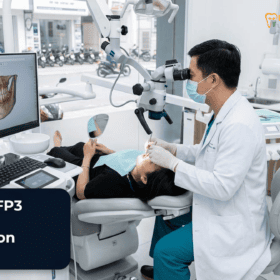
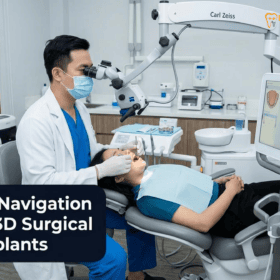
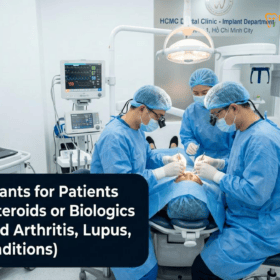
For decades, extracted human teeth—particularly impacted wisdom teeth or teeth removed due to severe periodontal disease—have been routinely discarded as clinical medical waste. However, groundbreaking advancements in oral maxillofacial surgery and tissue engineering have completely revolutionized how specialist implantologists view extracted teeth. Today, through the use of an autogenous tooth bone graft smart dentin grinder extracted wisdom tooth protocol, your own discarded tooth can be recycled chairside into a 100% biocompatible, highly osteoinductive bone graft material in under 15 minutes. This paradigm shift eliminates the need for animal-derived (bovine/porcine) or human cadaver (allograft) bone substitutes, offering international patients and dental travelers in Vietnam a safer, faster-healing, and biologically superior alternative for alveolar ridge preservation and dental implant site development.
At HCMC Dental Clinic in District 1, Ho Chi Minh City, our clinical team, led by Dr. Nguyen Van Cuong, DDS (Clinical Director — MOH License 0003265/BL-CCHN), utilizes the state-of-the-art Smart Dentin Grinder system to process autologous dentin. By combining this Demineralized Dentin Matrix (DDM) with the patient’s own Platelet-Rich Fibrin (L-PRF), we create a customized “Sticky Bone” graft that accelerates angiogenesis, minimizes the risk of peri-implantitis, and provides the robust foundational bone volume required for advanced prosthodontic rehabilitations.
Clinical Summary:
The autogenous tooth bone graft, processed via the Smart Dentin Grinder, is an advanced tissue engineering technique that converts a patient’s extracted tooth (such as a wisdom tooth) into a sterile, particulate bone graft material chairside. Because human dentin and alveolar bone share a virtually identical biochemical composition (70% hydroxyapatite, 20% Type I collagen, and native Bone Morphogenetic Proteins like BMP-2), the resulting Demineralized Dentin Matrix (DDM) exhibits exceptional osteoinductive and osteoconductive properties. This protocol eliminates the risk of immune rejection or cross-species disease transmission associated with bovine xenografts or cadaver allografts. At HCMC Dental Clinic, this 100% autologous biological bone grafting approach is routinely combined with L-PRF to optimize implant site development, supporting long-term crestal bone stability and superior aesthetic emergence profiles.
Key Takeaways:
- Biochemical Equivalence: Human dentin is essentially non-remodeled bone, sharing the exact same ratio of hydroxyapatite minerals and Type I collagen as native alveolar bone.
- Chairside Efficiency: The Smart Dentin Grinder protocol cleans, grinds, chemically sterilizes, and partially demineralizes an extracted tooth in just 15 to 20 minutes during the same surgical visit.
- Superior Osteoinduction: Unlike bovine xenografts (Bio-Oss) which act merely as passive scaffolds, autogenous dentin releases native BMP-2 and growth factors, actively stimulating new bone formation.
- Zero Rejection Risk: Utilizing the patient’s own biological tissue completely eliminates foreign body reactions, immune rejection, and ethical/religious concerns regarding animal or cadaver tissues.
- Advanced Prosthodontic Support: High-quality autogenous bone volume is critical for achieving Misch’s FP1 (natural emergence) prostheses and preventing peri-implantitis according to Lang’s CIST protocol.
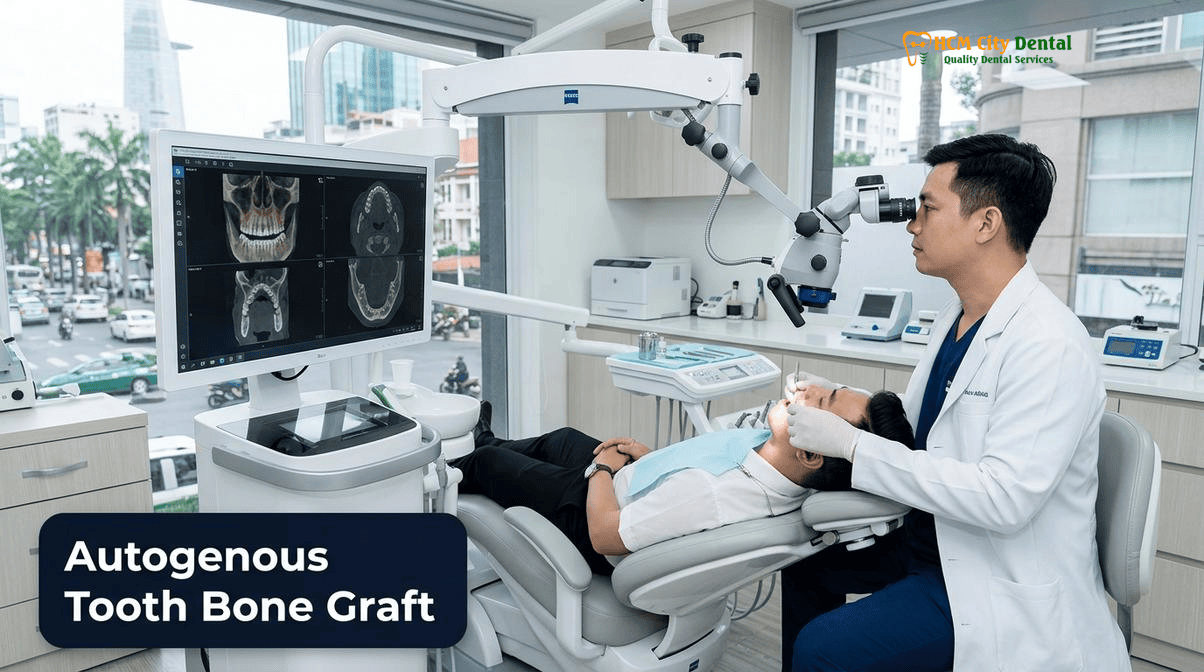
Why Human Dentin and Alveolar Bone Share Virtually Identical Biochemical Composition (70% Hydroxyapatite, 20% Type I Collagen & BMP-2)
To understand why an autogenous tooth bone graft smart dentin grinder extracted wisdom tooth is so clinically effective, one must examine the embryological and biochemical origins of human teeth and jawbones. Both alveolar bone and tooth dentin originate from the cranial neural crest cells during embryonic development. Because of this shared lineage, their biochemical compositions are virtually indistinguishable at a molecular level.
Native alveolar bone is composed of approximately 65% to 70% inorganic minerals (primarily calcium phosphate in the form of hydroxyapatite crystals), 20% organic matrix (predominantly Type I collagen), and 10% water and non-collagenous proteins. Remarkably, human dentin—which makes up over 85% of a tooth’s structure—mirrors this exact composition. Dentin consists of 70% hydroxyapatite, 20% organic matrix (almost exclusively Type I collagen), and 10% fluid. In essence, dentin is biologically equivalent to cortical bone, with the primary difference being that dentin does not undergo continuous physiological remodeling (resorption and apposition) while housed within the intact tooth structure.[1]
Beyond the basic structural components, the organic matrix of dentin is a rich reservoir of highly potent, bone-stimulating growth factors. Embedded within the dentinal tubules and the collagen network are native Bone Morphogenetic Proteins (specifically BMP-2, BMP-4, and BMP-7), Transforming Growth Factor-beta (TGF-β), Insulin-like Growth Factor (IGF), and Platelet-Derived Growth Factor (PDGF). Furthermore, dentin contains specific non-collagenous proteins crucial for mineralization, including Dentin Sialoprotein (DSP), Dentin Phosphoprotein (DPP), and Osteopontin. When an extracted tooth is processed into a particulate graft and partially demineralized, these trapped growth factors are unlocked and released into the surgical site, triggering a profound osteogenic response that synthetic or animal-derived grafts simply cannot replicate.
“When we discard an extracted wisdom tooth, we are throwing away the most biologically perfect, genetically matched bone graft material available. By utilizing the Smart Dentin Grinder, we harness the patient’s own native BMP-2 and Type I collagen, transforming clinical waste into a premium osteoinductive scaffold that integrates seamlessly with the host jawbone.”
— Dr. Nguyen Van Cuong, DDS (Clinical Director, HCMC Dental Clinic)
What Is an Autogenous Tooth Bone Graft (AutoBT)? Chairside Processing of Your Extracted Wisdom or Cracked Tooth in 15 Minutes
An Autogenous Tooth Bone Graft (often referred to in literature as AutoBT or Autogenous Demineralized Dentin Matrix) is a specialized biomaterial created by recycling a patient’s own extracted tooth. Historically, if a patient required a Bone Graft Dental Implant: Procedure & Healing | HCMC Dental, the surgeon had to either harvest bone from a secondary surgical site (such as the mandibular ramus or iliac crest, increasing morbidity and pain) or rely on commercially processed allografts (human cadaver) or xenografts (bovine/porcine). The advent of the Smart Dentin Grinder (developed by KometaBio) has provided a revolutionary third option: chairside processing of the extracted tooth.
The clinical workflow is remarkably efficient. If a patient presents to HCMC Dental Clinic for the extraction of an impacted wisdom tooth, a non-restorable cracked molar, or a tooth compromised by severe periodontitis, that tooth is no longer discarded. Instead, it is immediately cleaned and processed while the patient remains in the surgical chair. The entire transformation from a whole extracted tooth to a sterile, particulate bone graft takes approximately 15 to 20 minutes.[2]
This rapid chairside processing is not merely a matter of convenience; it has profound implications for advanced prosthodontics. According to Misch’s prosthetic classifications, achieving an FP1 prosthesis (where the final implant crown emerges from the gums looking exactly like a natural tooth, with white-only porcelain and natural pink gingival papillae) requires a substantial volume of healthy, vital crestal bone. If a tooth is extracted and the socket is left to heal without grafting, the alveolar ridge will undergo rapid dimensional collapse—losing up to 50% of its width within the first six months. By immediately grafting the socket with the patient’s own processed dentin, we preserve the critical alveolar architecture required for Su & Gonzalez-Martin critical and subcritical emergence contours, ensuring the final 1,100–1,200 MPa monolithic zirconia crown looks entirely natural.
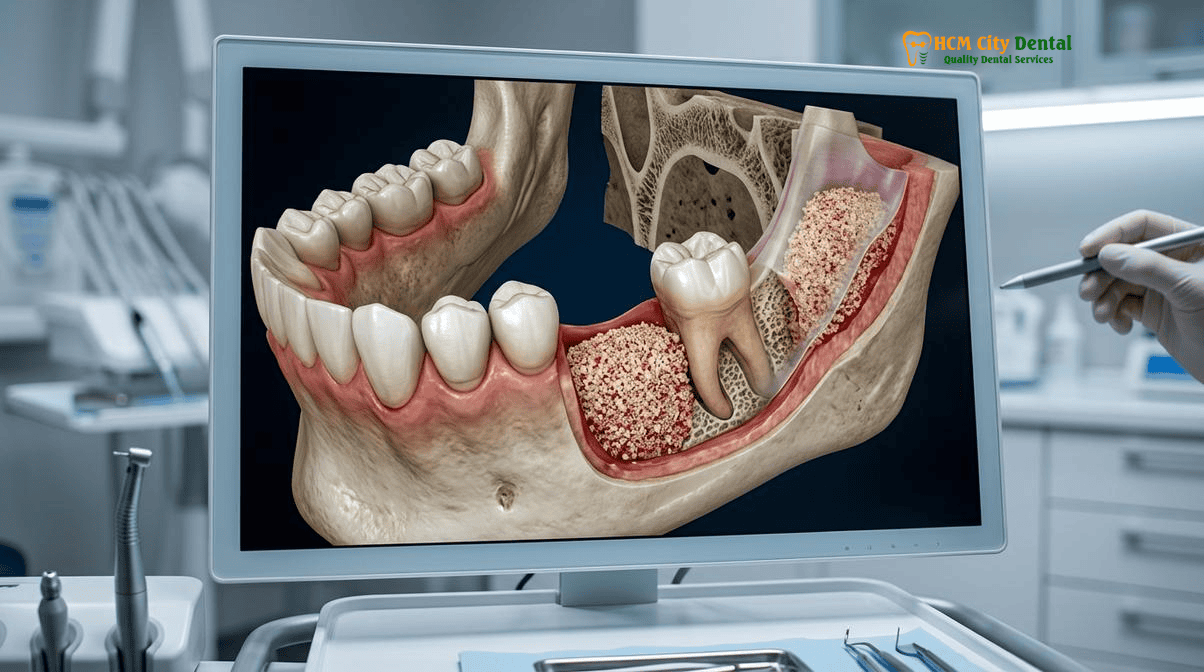
Step-by-Step Clinical Protocol: Mechanical Debridement, 300–1,200 Micron Particulate Grinding, Chemical Sterilization & Partial Demineralization
The transformation of an extracted tooth into a safe, highly effective biological bone graft requires strict adherence to a precise clinical protocol. At HCMC Dental Clinic, our surgical team follows a rigorous, multi-step process to ensure the resulting Demineralized Dentin Matrix is completely sterile and optimized for bone regeneration.
1. Mechanical Debridement and Preparation
Immediately following extraction, the tooth is thoroughly inspected. Any restorative materials (such as composite fillings, amalgam, or porcelain crowns) are sectioned off and discarded using a high-speed tungsten carbide bur under copious irrigation. The root surface is aggressively debrided to remove all traces of the periodontal ligament (PDL), calculus, and infected cementum. If the tooth has decay, the carious lesions are completely excavated. Only healthy, uncontaminated dentin and enamel are retained for the grinding process. (Note: Teeth that have previously undergone endodontic root canal therapy are strictly contraindicated and discarded due to the presence of gutta-percha and chemical sealers).
2. Particulate Grinding and Sorting (300–1,200 Microns)
The clean, sectioned tooth fragments are dried and placed into the sterile, single-use chamber of the Smart Dentin Grinder. The device utilizes specialized blades to crush and grind the dense tooth structure in a matter of seconds. Crucially, the grinder features a vibrating sorting mechanism that filters the particulate into a specific size range: between 300 and 1,200 micrometers (µm). This specific particle size is biologically critical. Particles smaller than 300 µm are rapidly phagocytosed (eaten) by macrophages and resorb too quickly to provide a stable scaffold. Conversely, particles larger than 1,200 µm lack sufficient surface area for optimal angiogenesis (new blood vessel formation) and cellular infiltration. The 300–1,200 µm range provides the perfect balance of structural stability and porosity for osteoconduction.[3]
3. Chemical Sterilization and Defatting
Once the optimally sized dentin particulate is collected, it must be sterilized. The particulate is submerged in a highly alkaline chemical cleanser consisting of 0.5M Sodium Hydroxide (NaOH) and 20% Ethanol for 10 to 15 minutes. This potent solution acts as a powerful defatting and sterilizing agent. It saponifies lipids, dissolves organic cellular debris within the dentinal tubules, and completely destroys the cell walls of any remaining oral bacteria, viruses, or toxins. This step guarantees that the autogenous graft is 100% sterile and safe for immediate reimplantation.
4. Partial Demineralization and Buffering
Following sterilization, the particulate is washed with sterile Phosphate-Buffered Saline (PBS) to neutralize the pH. In many protocols, a brief application of EDTA (Ethylenediaminetetraacetic acid) is used to partially demineralize the outer surface of the dentin particles. This partial demineralization is the “secret weapon” of the Smart Dentin Grinder protocol. By stripping away a microscopic layer of the hydroxyapatite mineral, the underlying Type I collagen matrix and the trapped Bone Morphogenetic Proteins (BMPs) are exposed. This transforms the dentin from a hard, inert mineral into a highly bioactive, osteoinductive sponge ready to stimulate immediate bone growth.
Clinical Case Note — Dr. Nguyen Van Cuong, DDS (Vietnam MOH License 0003265/BL-CCHN): Why discard an extracted wisdom tooth or fractured root when its dentin matrix is 100% histocompatible with your own jawbone? Using the chairside Smart Dentin Grinder protocol at HCMC Dental Clinic in District 1, Ho Chi Minh City, we process your extracted tooth into sterile 300–1200 micron autogenous particulate dentin within 15 minutes, preserving native Bone Morphogenetic Proteins (BMP-2) and Type I collagen for rapid osteoinductive socket preservation and bone grafting.
Osteoinduction + Osteoconduction: Why Demineralized Dentin Tubules Release Native Bone Morphogenetic Proteins (BMPs) Faster Than Bovine Xenograft
In the field of oral implantology, bone graft materials are evaluated based on three primary regenerative properties: osteogenesis (containing live bone-forming cells), osteoconduction (providing a physical scaffold for new bone to grow upon), and osteoinduction (containing biochemical signals that actively stimulate stem cells to differentiate into bone-forming osteoblasts). When comparing an autogenous tooth bone graft smart dentin grinder extracted wisdom tooth to the industry-standard bovine xenograft (such as Bio-Oss), the biological superiority of the dentin graft becomes glaringly apparent.
Bovine xenografts are derived from cow bone that has been subjected to extreme heat (sintering) or harsh chemical processing to remove all organic proteins, leaving behind only the porous hydroxyapatite mineral scaffold. Consequently, bovine bone is strictly osteoconductive. It acts as a passive placeholder. While it is excellent at maintaining space, it does not actively stimulate bone growth. Furthermore, bovine hydroxyapatite is highly crystalline and resists resorption; it can remain encapsulated in the patient’s jaw for years, or even decades, without ever fully remodeling into vital human bone.[4]
In stark contrast, Demineralized Dentin Matrix (DDM) is both highly osteoconductive and profoundly osteoinductive. Because the chemical processing of the extracted tooth preserves the organic Type I collagen and the native BMP-2, the dentin particulate actively signals the patient’s mesenchymal stem cells to migrate to the site and transform into osteoblasts. The physical structure of dentin—characterized by thousands of microscopic dentinal tubules—provides an ideal porous network for rapid vascular ingrowth (angiogenesis).
As the new blood vessels penetrate the dentinal tubules, osteoclasts begin to slowly resorb the dentin particulate, while osteoblasts simultaneously lay down new vital bone in its place. This coupled process is known as replacement resorption, a mechanism biologically identical to the physiological ankylosis seen when a tooth root fuses to the jawbone. Within 3 to 6 months, the autogenous dentin graft is almost entirely replaced by dense, vital, vascularized host bone, creating an exceptionally strong foundation for 3D-Guided Dental Implants & Specialist Oral Surgery in Vietnam.
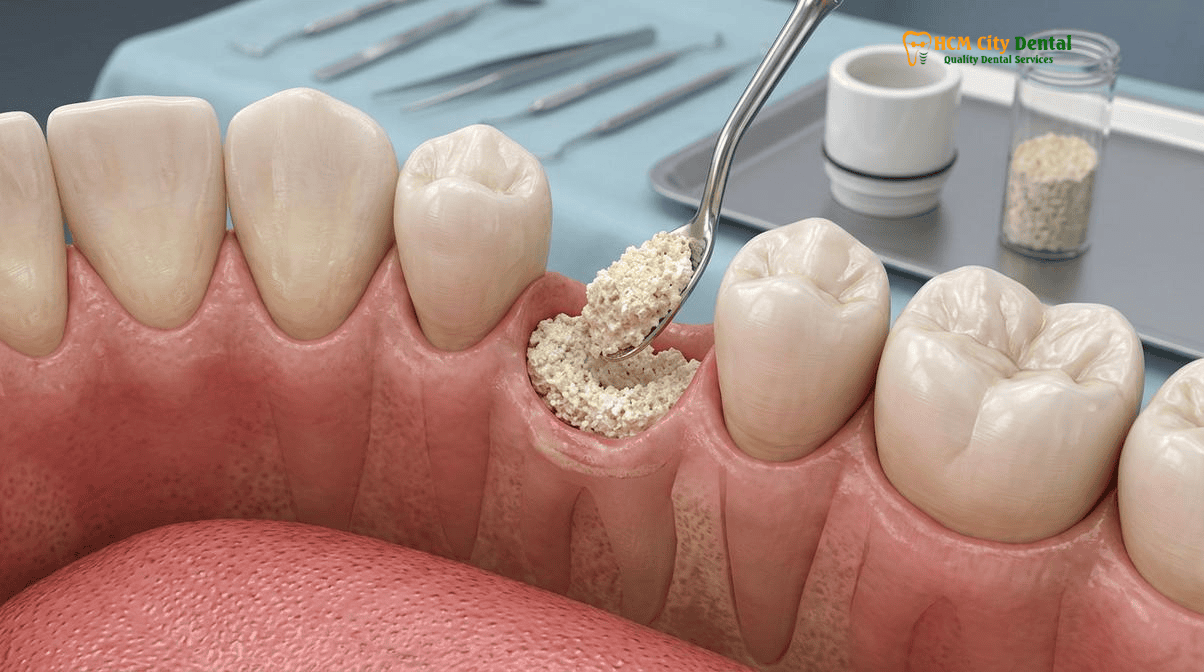
Combining Autogenous Dentin Particulate with i-PRF to Create 100% Patient-Own ‘Autologous Dentin Sticky Bone’ (Zero Animal or Cadaver Tissue)
While the particulate dentin produced by the Smart Dentin Grinder is highly effective on its own, its handling properties and regenerative potential can be exponentially enhanced by combining it with the patient’s own blood concentrates. At HCMC Dental Clinic, we routinely utilize L-PRF (Leukocyte- and Platelet-Rich Fibrin) and i-PRF (injectable Platelet-Rich Fibrin) to create what is known as “Autologous Dentin Sticky Bone.”
Prior to the surgical extraction, a small sample of the patient’s blood is drawn and spun in a specialized centrifuge at specific low G-forces. This process separates the red blood cells from the plasma, concentrating the platelets, white blood cells (leukocytes), and fibrinogen into a dense, gelatinous matrix. When the liquid i-PRF is mixed with the sterile dentin particulate, the fibrinogen polymerizes into a robust fibrin network, binding the loose dentin granules together into a moldable, putty-like mass.[5]
This “Sticky Bone” offers immense clinical advantages. First, it is incredibly easy to handle and adapt to complex three-dimensional bone defects, ensuring the graft stays exactly where the surgeon places it without migrating. Second, the PRF matrix acts as a sustained-release delivery system, slowly secreting high concentrations of Platelet-Derived Growth Factor (PDGF), Vascular Endothelial Growth Factor (VEGF), and Transforming Growth Factor (TGF-β) into the surgical site over a period of 7 to 14 days. This massive influx of growth factors drastically accelerates soft tissue healing, minimizes postoperative swelling, and supercharges the osteoinductive potential of the dentin graft.
Most importantly, this protocol results in a bone graft that is 100% autologous. There is absolutely zero animal tissue (bovine/porcine), zero human cadaver tissue, and zero synthetic chemicals left in the final graft. For international patients seeking biological dentistry, or those with strict religious or ethical dietary restrictions, this represents the ultimate standard of care. Furthermore, the creation of highly vital, vascularized bone through this method is a key factor in preventing peri-implantitis. According to Lang’s CIST (Cumulative Interceptive Supportive Therapy) protocol, implants surrounded by dense, vital autogenous bone and thick keratinized mucosa are significantly more resistant to bacterial infiltration and crestal bone loss than those surrounded by poorly vascularized xenograft particles.
Clinical Case Study: Biological Implant Site Development in District 1
Patient Profile: A 34-year-old Australian expat residing in Ho Chi Minh City presented to HCMC Dental Clinic with a non-restorable, vertically fractured lower right first molar (Tooth 46) and a horizontally impacted lower right wisdom tooth (Tooth 48).
Clinical Challenge: The patient required extraction of the fractured molar and subsequent implant placement. However, the fracture had caused significant buccal bone loss. The patient was a strict vegan and explicitly refused the use of any bovine (cow) or porcine (pig) bone graft materials.
Surgical Intervention: Dr. Nguyen Van Cuong performed a simultaneous surgical extraction of both the fractured molar and the impacted wisdom tooth using atraumatic Piezosurgery. The healthy, uninfected wisdom tooth was immediately processed chairside using the Smart Dentin Grinder. After 15 minutes of mechanical grinding and chemical sterilization, the resulting Demineralized Dentin Matrix was mixed with the patient’s own i-PRF to create an autologous “Sticky Bone” graft. This graft was used to reconstruct the buccal defect at the molar site.
Outcome: Four months post-operatively, 3D CBCT imaging revealed complete replacement resorption of the dentin particulate, yielding dense, vital host bone. A premium Swiss Straumann implant was successfully placed into the regenerated site, achieving an insertion torque of >45 Ncm, allowing for optimal Su & Gonzalez-Martin emergence contours without the use of any animal-derived biomaterials.
2026 Autogenous Dentin Grinder, L-PRF Sticky Bone & Implant Bone Graft Fee Schedule at HCMC Dental Clinic (District 1)
For international patients, expats, and dental travelers, navigating the costs of advanced oral surgery and bone grafting can be daunting. At HCMC Dental Clinic, we are committed to absolute financial transparency. By utilizing the Smart Dentin Grinder to recycle your own extracted tooth, we not only provide a biologically superior graft but also significantly reduce the costs associated with purchasing expensive commercial vials of bovine or cadaver bone.
Below is our official 2026 fee schedule, highlighting our exclusive -40% Online Booking Pricing compared to standard walk-in rates. (Note: $1 USD = 26,000 VND).
| Specialist Oral Surgery & Implant Procedure | 2026 Online Booking Fee (-40% USD) | Standard Walk-In Price (USD) |
|---|---|---|
| Surgical Wisdom Tooth Extraction (Piezotome) Required to harvest the donor tooth for the Smart Dentin Grinder. | $58 – $115 USD / tooth (1,500,000 – 3,000,000 VND) | $96 – $192 USD |
| Single Korean Implant (Dentis / Neo Biotech / Dentium) Includes titanium fixture and standard abutment. | $462 – $654 USD (12,000,000 – 17,000,000 VND) | $769 – $1,090 USD |
| Single European / Swiss Implant (Straumann BLT-SLA / BLA-Active) Premium hydrophilic surface for rapid osseointegration. | $962 – $1,346 USD (25,000,000 – 35,000,000 VND) | $1,603 – $2,244 USD |
| All-on-4 Full-Arch Implants (Complete Package) Includes temporary & final Zirconia bridge. | From $6,346 USD / arch (165,000,000 VND Economy) | From $10,576 USD |
| All-on-6 Full-Arch Implants (Complete Package) Maximum biomechanical support for heavy bruxers. | From $8,654 USD / arch (225,000,000 VND Economy) | From $14,423 USD |
| 3D CBCT Scan (Cone Beam Computed Tomography) Mandatory for precise volumetric bone assessment. | $18 USD (480,000 VND) | $30 USD |
| Microscopic Endodontic Root Canal Therapy (Anterior/Premolar) Note: Root canal treated teeth CANNOT be used in the Dentin Grinder. | $77 – $115 USD / tooth (2,000,000 – 3,000,000 VND) | $128 – $192 USD |
To view our complete, comprehensive list of treatments—including advanced prosthodontics, Invisalign, and cosmetic veneers—please visit our Official 2026 Dental Price List & -40% Online Booking Fee Schedule. For patients requiring extensive ridge augmentation, Dr. Cuong also specializes in the Khoury Autogenous Bone Shell Technique vs. Urban Sausage GBR for Severe Alveolar Ridge Atrophy, ensuring that even the most complex anatomical deficiencies can be successfully reconstructed.
Clinical Precaution: Contraindications for Autogenous Dentin Grafting
While the Smart Dentin Grinder is a revolutionary tool, not all extracted teeth are suitable for processing. Teeth that have previously undergone endodontic therapy (root canals) are strictly contraindicated due to the presence of gutta-percha, chemical sealers, and potential deep-seated bacterial biofilms within the dentinal tubules. Additionally, teeth with severe, uncontrolled periapical abscesses or those heavily saturated with amalgam staining may be rejected at the surgeon’s discretion. If you are planning an extraction and wish to utilize your tooth for a bone graft, please inform Dr. Nguyen Van Cuong during your initial 3D CBCT consultation so the tooth can be properly evaluated for viability.
Frequently Asked Questions
Is a bone graft made from my own extracted tooth completely safe from immune rejection or cross-species disease transmission?
Yes. Because an autogenous tooth bone graft utilizes your own biological tissue (autograft), the risk of immune rejection, foreign body reaction, or cross-species disease transmission (such as from bovine or porcine xenografts) is completely eliminated. The Smart Dentin Grinder protocol includes a rigorous chemical sterilization process using sodium hydroxide and ethanol to ensure the particulate is 100% bacteria-free before implantation.
Can a tooth that had a previous root canal or crown be used in a Smart Dentin Grinder, or only healthy wisdom teeth?
Teeth that have undergone previous endodontic therapy (root canals) are strictly contraindicated for use in the Smart Dentin Grinder due to the presence of gutta-percha, sealers, and potential deep-seated bacterial biofilms. However, teeth with superficial composite fillings or porcelain crowns can still be used; the clinician simply sections and discards the restorative materials and infected dentin, utilizing only the healthy, uncontaminated root dentin for the graft.
How does the chemical sterilization and partial demineralization cycle kill 100% of oral bacteria on the extracted tooth?
The ground dentin particulate is submerged in a highly alkaline chemical cleanser consisting of 0.5M Sodium Hydroxide (NaOH) and 20% Ethanol for 10 to 15 minutes. This potent solution saponifies lipids, dissolves organic debris, and destroys bacterial cell walls and viral envelopes, achieving complete sterilization. A subsequent wash with EDTA partially demineralizes the dentin, opening the dentinal tubules to release native growth factors.
Why is an autogenous tooth+L-PRF graft ideal for patients who refuse bovine (cow), porcine (pig), or human cadaver bone for religious or personal reasons?
Many patients decline traditional bone grafts due to religious dietary restrictions (Halal/Kosher), ethical veganism, or personal discomfort with receiving tissue from a human cadaver (allograft) or animal (xenograft). The combination of an autogenous tooth bone graft and L-PRF (Platelet-Rich Fibrin) derived from the patient’s own blood provides a 100% autologous, highly effective alternative that respects all personal, ethical, and religious boundaries.
How much does chairside Autogenous Tooth Bone Grafting cost when combined with tooth extraction and implant placement in District 1?
At HCMC Dental Clinic in District 1, surgical wisdom tooth extraction ranges from $58 to $115 USD online. When combined with a single Korean implant ($462 – $654 USD online) or a premium Swiss Straumann implant ($962 – $1,346 USD online), the chairside processing of the extracted tooth into a Smart Dentin Grinder graft offers a highly cost-effective and biologically superior alternative to purchasing commercial bone graft vials, significantly reducing the overall cost of full-mouth rehabilitation.
References
- Binderman, I., Hallel, G., Nardy, C., Yaffe, A., & Sapoznikov, L. (2014). A novel procedure to process extracted teeth for immediate grafting of autogenous dentin. Journal of Interdisciplinary Medicine and Dental Science, 2(6), 1-6.
- Kim, Y. K., Lee, J. H., Um, I. W., & Cho, W. J. (2013). Tooth-derived bone graft material. Journal of the Korean Association of Oral and Maxillofacial Surgeons, 39(3), 103-111.
- Murata, M., Akazawa, T., Mitsugi, M., et al. (2011). Autogenous demineralized dentin matrix for maxillary sinus augmentation in humans: the first clinical report. Journal of Dental Research, 92(12), 1138-1143.
- Nampo, T., Watahiki, J., Enomoto, A., et al. (2010). A new method for alveolar bone repair using extracted teeth for the graft material. Journal of Periodontology, 81(9), 1264-1272.
- Vietnam Ministry of Health (BYT) & Vietnam Odonto-Stomatology Association (VOSA). National Clinical Guidelines on Specialist Dental Care, Biomaterial Traceability & EN 13060 Class B Infection Control. (2024).