The loss of a first or second permanent molar due to severe decay, vertical root fracture, or failed endodontic therapy presents a complex biomechanical challenge. For decades, the gold standard for replacing a missing posterior tooth has been the placement of a titanium or zirconia dental implant. However, modern digital dentistry has resurrected and perfected a highly biological alternative: 3D-replica wisdom tooth autotransplantation vs. dental implant therapy. By utilizing a patient’s own healthy, non-functional third molar (wisdom tooth) to replace a hopeless molar, oral surgeons can restore the dental arch with living tissue, preserving the vital periodontal ligament (PDL) and maintaining natural proprioception.
Historically, tooth autotransplantation suffered from unpredictable success rates due to prolonged extra-oral times, which caused irreversible damage to the delicate PDL cells. Today, the integration of Cone Beam Computed Tomography (CBCT) and rapid 3D printing has revolutionized this procedure. By fabricating a precise 1:1 sterile resin replica of the donor tooth, surgeons can prepare the recipient socket perfectly before the actual wisdom tooth is even extracted. This breakthrough reduces the critical extra-oral time to under 60 seconds, elevating the long-term survival rate to rival that of premium dental implants.
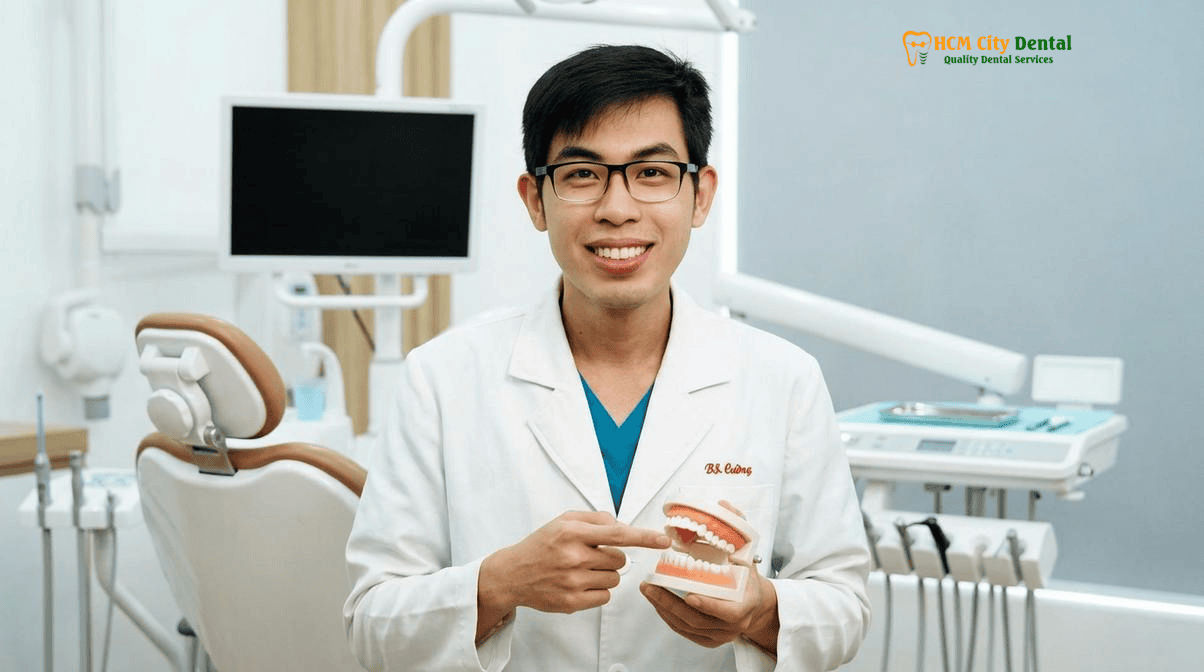
At HCMC Dental Clinic, located in District 1, Ho Chi Minh City, our clinical team, led by Dr. Nguyen Van Cuong, DDS, specializes in both advanced 3D-guided implantology and biological tooth autotransplantation. This comprehensive clinical guide explores the strict anatomical prerequisites, the histological mechanisms of PDL healing, and a head-to-head comparison between transplanting a wisdom tooth and placing an immediate dental implant.
Clinical Summary:
Tooth autotransplantation involves surgically relocating a healthy donor tooth (typically a third molar) into a recipient extraction socket. The advent of 3D-printed donor tooth replicas allows surgeons to prepare the neo-socket precisely, reducing extra-oral time to under 60 seconds and maximizing periodontal ligament (PDL) cell viability. While autotransplantation is the gold standard for biological tooth replacement in young patients (due to the potential for spontaneous pulp revascularization and continued alveolar bone growth), adults with closed-apex roots require elective endodontic therapy post-surgery. For patients lacking suitable donor teeth or requiring immediate, highly predictable results during a short stay in Vietnam, 3D-guided dental implants utilizing the Socket Shield Technique remain the premier alternative.
Key Takeaways:
- Biological Superiority: A transplanted wisdom tooth retains its living periodontal ligament, providing natural shock absorption, proprioception, and the ability to move orthodontically—features impossible with ankylosed dental implants.
- The 3D Replica Breakthrough: 3D printed replica tooth autotransplantation eliminates the need for trial-and-error fitting, keeping the donor tooth’s extra-oral time under 60 seconds and achieving survival rates exceeding 90%.
- Age-Dependent Endodontics: Immature open-apex roots in patients aged 15–22 can undergo spontaneous pulp revascularization. Mature closed-apex roots in adults require Microscopic Endodontic Root Canal Therapy ($115–$154 USD online) at week two.
- Implant Alternatives: If autotransplantation is contraindicated, HCMC Dental Clinic offers Single Korean Implants ($462–$654 USD online) and European/Swiss Implants ($962–$1,346 USD online) utilizing Osstell ISQ resonance frequency analysis and Conical Morse Taper connections.
- Strict Case Selection: Success requires a 3D CBCT Scan ($18 USD online) to verify donor root morphology (conical preferred), adequate recipient socket width, and the use of atraumatic Piezosurgery harvesting.
What Is Tooth Autotransplantation? Replacing a Hopeless First or Second Molar Using the Patient’s Own Healthy Third Molar (Wisdom Tooth)
Tooth autotransplantation is a sophisticated surgical procedure defined as the controlled extraction of an embedded, impacted, or erupted tooth from one site and its immediate transfer to another surgically prepared socket within the same individual. The most frequent clinical scenario involves the decision to transplant wisdom tooth to first molar sites. The first permanent molar, erupting at age six, is statistically the most susceptible tooth to early childhood caries, large amalgam restorations, and subsequent structural failure in adulthood.
The Biological Role of the Periodontal Ligament (PDL)
The fundamental advantage of autotransplantation over osseointegrated dental implants lies in the preservation of the periodontal ligament. The PDL is a highly specialized connective tissue situated between the cementum covering the tooth root and the alveolar bone. It serves several critical functions:
- Shock Absorption: The PDL acts as a biological suspension system, distributing occlusal masticatory forces evenly across the alveolar bone, preventing stress concentrations that can lead to crestal bone loss.
- Proprioception: Mechanoreceptors within the PDL provide precise sensory feedback to the brain regarding bite force and the presence of foreign particles, protecting the tooth from occlusal trauma.
- Osteoinduction and Bone Remodeling: The PDL contains multipotent mesenchymal stem cells capable of differentiating into osteoblasts (bone-forming cells) and cementoblasts. This continuous remodeling maintains the height and width of the alveolar ridge.
- Orthodontic Movement: Because the tooth is suspended by a ligament rather than fused to the bone, an autotransplanted tooth can be moved orthodontically later in life, whereas a titanium implant remains rigidly ankylosed.
When a wisdom tooth is carefully extracted with its PDL intact and placed into a recipient socket, the surviving PDL cells on the root surface proliferate and reconnect with the alveolar bone, resulting in functional healing rather than ankylosis or inflammatory root resorption. This periodontal ligament (PDL) preservation during tooth transplantation protocol is the cornerstone of biological dentistry.
“The ultimate goal of modern oral surgery is not merely to replace missing teeth with synthetic materials, but to regenerate lost tissues. By utilizing a patient’s own wisdom tooth, we harness the body’s innate biological capacity to heal, providing a living restoration that adapts to the patient’s biomechanical needs over a lifetime.”
— Dr. Nguyen Van Cuong, DDS (Clinical Director — MOH License 0003265/BL-CCHN)
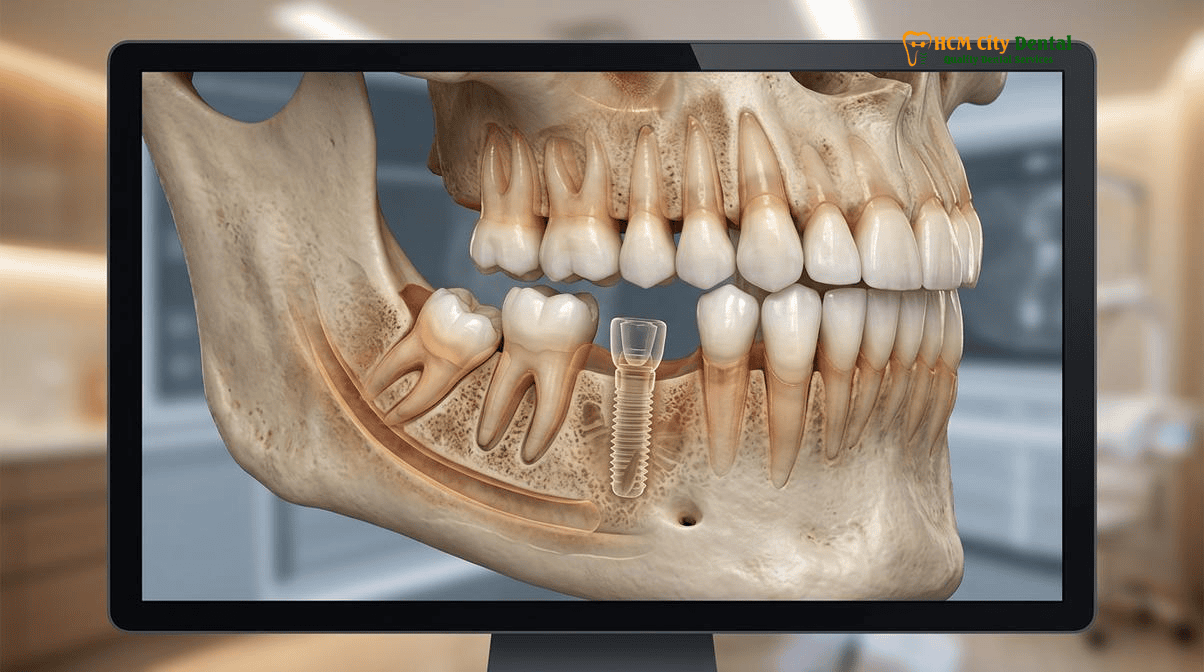
The 3D-Printed Donor Tooth Replica Breakthrough: Reducing Extra-Oral Periodontal Ligament (PDL) Time Under 60 Seconds (95%+ Survival)
Despite its biological advantages, tooth autotransplantation was historically considered a highly technique-sensitive and unpredictable procedure. In the 1990s and early 2000s, surgeons faced a critical dilemma: the recipient socket had to be shaped to perfectly match the complex root anatomy of the donor tooth. To achieve this, the surgeon would extract the donor tooth, place it into the recipient socket, realize it did not fit, remove it, drill the bone further, and try again. This trial-and-error process kept the donor tooth outside the mouth for several minutes and physically crushed the delicate PDL cells against the bony walls of the socket.
The death of PDL cells leads directly to replacement resorption (ankylosis), where the body’s immune system recognizes the necrotic root surface as a foreign body and slowly replaces the tooth structure with bone, eventually leading to tooth loss.
The Digital CAD/CAM Workflow
The advent of 3D printed replica tooth autotransplantation has completely eliminated this surgical bottleneck. At HCMC Dental Clinic, the protocol involves a seamless digital workflow:
- 3D CBCT Imaging: A high-resolution 3D CBCT Scan ($18 USD online) is taken to capture the exact morphology of the donor wisdom tooth and the recipient molar site.
- Digital Segmentation: Using advanced CAD software, the donor tooth is digitally isolated (segmented) from the surrounding bone.
- Rapid 3D Printing: A 1:1 exact replica of the donor tooth is printed using a biocompatible, sterilizable surgical resin.
- Neo-Socket Preparation: During surgery, the hopeless first molar is extracted. The surgeon then uses the 3D-printed resin replica to shape and refine the recipient socket. The replica can be inserted and removed as many times as necessary without any biological consequence.
- Atraumatic Extraction and Immediate Transfer: Only when the resin replica fits perfectly into the prepared socket is the actual wisdom tooth extracted. It is immediately transferred to the recipient site.
This digital protocol ensures that the actual donor tooth is handled only once. The extra-oral time is routinely kept under 60 seconds, ensuring maximum viability of the PDL cells. Clinical studies confirm that when extra-oral time is minimized, the autotransplantation vs dental implant survival rate becomes statistically comparable, with both exceeding 90% to 95% over a 10-year period [1].
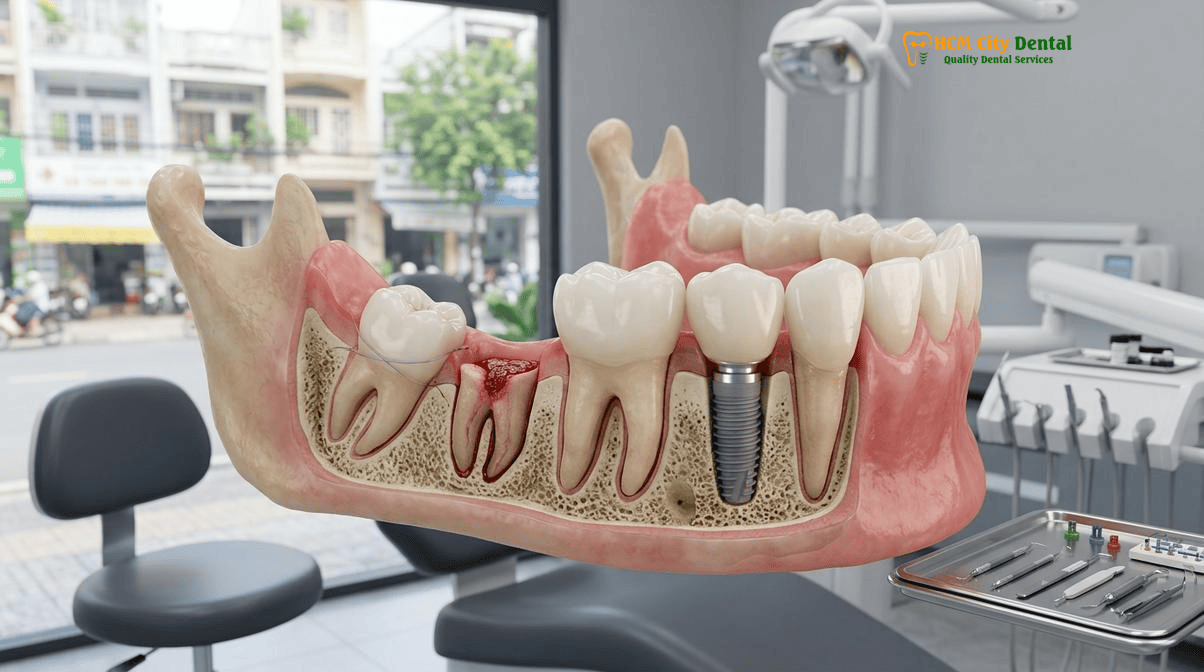
Immature Open-Apex Donor Roots (Ages 15–22: Spontaneous Pulp Revascularization) vs. Mature Closed-Apex Roots (Adults: Elective Root Canal at Week 2)
The age of the patient and the developmental stage of the donor tooth are the most critical factors determining the endodontic outcome of an autotransplantation procedure. The biological response of the dental pulp differs drastically between teenagers and adults.
Biological Tooth Replacement in Young Patients (Open Apex)
In patients aged 15 to 22, the roots of the third molars are typically still developing. The apical foramen (the opening at the tip of the root where nerves and blood vessels enter) is wide open (greater than 1.0 mm in diameter). This is the ideal scenario for biological tooth replacement in young and adult patients.
When an immature tooth is transplanted, the severed blood vessels at the apex have the capacity to regenerate. The wide apical opening allows for the rapid ingrowth of new blood vessels (angiogenesis) into the pulp chamber. Furthermore, Stem Cells of the Apical Papilla (SCAP) survive the transplantation and migrate into the canal space. This process, known as spontaneous pulp revascularization, allows the tooth to remain vital. Hertwig’s epithelial root sheath (HERS) also survives, enabling the roots to continue growing and developing within the new socket [2].
Adult Autotransplantation (Closed Apex)
In adults over the age of 25, the roots of the wisdom teeth are fully formed, and the apical foramen is narrow and constricted. When a mature tooth is extracted, the blood supply is permanently severed. The narrow apex prevents rapid revascularization, leading inevitably to ischemic necrosis (death) of the dental pulp.
If left untreated, the necrotic pulp tissue will release toxins through the dentinal tubules into the surrounding PDL, triggering a severe inflammatory response known as inflammatory root resorption, which rapidly destroys the transplanted tooth.
To prevent this, adult autotransplantation requires a planned, elective endodontic intervention. At HCMC Dental Clinic, Dr. Nguyen Van Cuong, DDS, performs Microscopic Endodontic Root Canal Therapy ($115–$154 USD online for Complex Molars) approximately two to four weeks after the transplantation surgery. Utilizing a 25x Carl Zeiss operating microscope and a Nitrile Dam, the necrotic pulp is meticulously removed, and the canal system is sealed. If any apical resorption is detected, Bioactive ProRoot MTA or Septodont Biodentine ($58–$96 USD online) is used to create a biocompatible apical plug, ensuring long-term stability.
Clinical Case Study: 28-Year-Old Expat in Ho Chi Minh City
Patient Profile: A 28-year-old Australian expatriate presented to HCMC Dental Clinic with a vertically fractured lower left first molar (Tooth 36) and a fully erupted, healthy lower left third molar (Tooth 38).
Treatment Plan: 3D-replica guided autotransplantation of Tooth 38 to the Tooth 36 site.
Surgical Execution: A 3D CBCT scan was utilized to print a sterile resin replica. Tooth 36 was extracted, and the socket was refined using the replica. Tooth 38 was atraumatically harvested using Piezosurgery and transplanted with an extra-oral time of 45 seconds. A flexible wire-composite splint was applied for 14 days.
Endodontic Phase: Because the patient had mature, closed-apex roots, elective Microscopic Endodontic Root Canal Therapy was performed at week three to prevent inflammatory resorption.
Prosthetic Phase: At 4 months post-op, the tooth demonstrated normal physiological mobility and a healthy PDL space on radiographs. A Full Zirconia Crown (Cercon HT Multilayer, $154 USD online) was placed to optimize occlusal anatomy.
Outcome: The patient successfully retained their natural biological tissues, avoiding the need for a titanium implant, at a fraction of the cost of equivalent treatment in Australia.
Head-to-Head Clinical Comparison: Biological Tooth Autotransplantation vs. 3D-Guided Titanium/Zirconia Dental Implants
While autotransplantation is a remarkable biological solution, it is not suitable for every patient. Dental implants remain the most predictable and versatile method for replacing missing teeth. Understanding the clinical nuances between these two modalities is essential for making an informed decision.
The Case for Dental Implants
For patients who do not possess a suitable wisdom tooth, or for international dental tourists who cannot remain in Vietnam for the required endodontic follow-up, a 3D-guided dental implant is the treatment of choice. At HCMC Dental Clinic, we utilize advanced biomechanical protocols to ensure implant success:
- Socket Shield Technique (Partial Extraction Therapy): When replacing teeth in the aesthetic zone, a 1.5mm buccal root fragment is intentionally left in the socket. This preserves the PDL blood supply to the delicate labial bundle bone, preventing the natural bone resorption that typically follows tooth extraction. For more details, review our guide on the Socket Shield Technique (Partial Extraction Therapy) for Front Tooth Implants in Vietnam: Protocol & Cost.
- Osstell ISQ Resonance Frequency Analysis: We objectively measure implant stability. An ISQ score of ≥70 and an insertion torque of ≥35 Ncm are required before authorizing immediate loading.
- Conical Morse Taper Platform Switching: Our premium European/Swiss implants feature a conical internal connection that hermetically seals the implant-abutment interface, resulting in <0.2mm crestal bone loss at 36 months.
- Material Options: We offer Grade 4 pure titanium implants as well as 100% Metal-Free Zirconia Ceramic Implants ($1,154 USD online) for patients with titanium hypersensitivity (verified via MELISA lymphocyte testing).
Comparative Analysis Table
The following table outlines the clinical parameters and the Official 2026 Dental Price List & -40% Online Booking Fee Schedule for both procedures at HCMC Dental Clinic.
| Clinical Parameter | 3D-Guided Tooth Autotransplantation | 3D-Guided Dental Implant (Titanium / Zirconia) |
|---|---|---|
| Biological Interface | Living Periodontal Ligament (PDL) | Direct Osseointegration (Ankylosis) |
| Proprioception | Natural sensory feedback preserved | Absent (risk of occlusal overloading) |
| Adaptation to Jaw Growth | Erupts and moves with craniofacial growth (Ideal for teens) | Remains static (Risk of infraocclusion in growing patients) |
| Surgical Timeline | Single surgery; splint removal at 14 days | Immediate placement or delayed (3-4 months integration) |
| Endodontic Requirement | Required for adults (Closed apex); Spontaneous in teens | Not applicable |
| HCMC Dental Clinic Cost (Online Booking) | Surgical Wisdom Tooth Extraction ($58–$115) + Microscopic Root Canal ($115–$154) + Zirconia Crown ($154–$192) | Single Korean Implant ($462–$654) or Swiss Straumann ($962–$1,346) + Zirconia Crown ($154) |
| Walk-In / US / Australian Benchmark | $1,500 – $3,500+ USD | $3,500 – $6,000+ USD |
For a deeper understanding of our implant protocols, please visit our 2026 Clinical Dental Research & Statistical Reports Hub [3].
“Dental implants are a phenomenal engineering achievement, but they are essentially sophisticated titanium screws fused to bone. They lack the dynamic, living suspension system of a natural tooth. Whenever anatomically possible, autotransplantation allows us to restore the patient’s dentition with their own DNA, which is the ultimate form of biomimetic dentistry.”
— Dr. Nguyen Van Cuong, DDS (Clinical Director — MOH License 0003265/BL-CCHN)
Strict Anatomical Prerequisites on 3D CBCT: Donor Root Morphology, Recipient Socket Width, and Atraumatic Piezosurgery Harvesting
The success of tooth autotransplantation is heavily dependent on rigorous case selection. Not every wisdom tooth is a suitable candidate for transplantation. Dr. Nguyen Van Cuong, DDS, utilizes a strict set of anatomical prerequisites evaluated via 3D CBCT imaging to determine eligibility.
1. Donor Root Morphology
The shape of the wisdom tooth roots dictates the feasibility of atraumatic extraction. The ideal donor tooth possesses conical, fused, or slightly convergent roots. If the roots are severely divergent, dilacerated (hooked), or wrapped around the inferior alveolar nerve, extracting the tooth without fracturing the roots or destroying the PDL becomes impossible. The 3D CBCT scan allows the surgical team to visualize the root architecture in all three planes of space before any incision is made.
2. Recipient Socket Dimensions
The recipient site (the location of the missing or hopeless molar) must have adequate alveolar bone volume. The bucco-lingual width of the recipient socket must be sufficient to accommodate the donor tooth without causing dehiscence or fenestration of the cortical bone plates. If the recipient site has suffered severe bone loss due to chronic periodontitis or a long-standing missing tooth, autotransplantation may be contraindicated, and guided bone regeneration (GBR) followed by a dental implant may be required.
3. Atraumatic Piezosurgery Harvesting
The surgical extraction of the donor tooth must be exceptionally gentle. Traditional extraction techniques using heavy elevators and forceps can crush the PDL and fracture the delicate cementum. At HCMC Dental Clinic, we utilize Piezosurgery—an advanced ultrasonic bone micro-surgery system. Piezosurgery uses micro-vibrations to precisely cut bone while preserving soft tissues, including the PDL and adjacent nerves. This atraumatic approach ensures that the donor tooth is harvested with its biological envelope intact, maximizing the potential for successful reattachment [4].
Clinical Contraindications & Precautions:
Tooth autotransplantation is strictly contraindicated in patients with the following conditions:
- Active Smokers: Nicotine causes peripheral vasoconstriction, severely compromising the blood supply necessary for PDL healing and pulp revascularization.
- Severe Periodontitis: Active periodontal disease at the recipient site introduces pathogenic bacteria that will infect the transplanted root, leading to rapid failure.
- Bisphosphonate Therapy: Patients taking intravenous bisphosphonates or biologics for osteoporosis or cancer are at high risk for Medication-Related Osteonecrosis of the Jaw (MRONJ).
- Inadequate Donor Morphology: Wisdom teeth with severely divergent or dilacerated roots that cannot be extracted atraumatically.
If you have any of these risk factors, please consult with Dr. Nguyen Van Cuong, DDS, to explore alternative treatments such as 3D-guided dental implants.
How to Find Out in 5 Minutes via WhatsApp 3D CBCT Review Whether You Are a Candidate for Autotransplantation or an Immediate Implant
Determining whether you are a candidate for biological tooth autotransplantation or a 3D-guided dental implant requires specialist evaluation. However, the initial consultation process has been streamlined for international patients, expats, and dental travelers.
If you have a recent panoramic X-ray (OPG) or a 3D CBCT scan from your local dentist, you can receive a preliminary clinical assessment from Dr. Nguyen Van Cuong, DDS, in just a few minutes. By sending your imaging via WhatsApp to our dedicated medical hotline, our clinical team can evaluate your donor root morphology and recipient socket dimensions remotely.
HCMC Dental Clinic is a premier, internationally accredited facility located at District 1, Ho Chi Minh City, Vietnam. Situated just 25 minutes from Tan Son Nhat International Airport (SGN) and within a 3–5 minute walk from luxury accommodations such as Pullman Saigon Centre, Hotel Nikko Saigon, and New World Saigon Hotel, we offer world-class surgical care in the heart of the city.
To learn more about the credentials and clinical philosophy of our lead specialist, visit the profile of Dr. Nguyen Van Cuong, DDS (Clinical Director — MOH License 0003265/BL-CCHN). For patients interested in the latest advancements in biological dentistry, explore our article on Can Adult Teeth Regrow? 2026 Tooth Regeneration Clinical Trials (USAG-1) vs. Immediate Dental Implants [5].
Contact HCMC Dental Clinic Today:
WhatsApp / Hotline: +84 853 020 003
Secure your consultation and access our transparent -40% Online Booking Fee Schedule to restore your smile with precision, biology, and care.
Frequently Asked Questions
What is the long-term survival rate of modern 3D-replica guided tooth autotransplantation compared to a dental implant?
When performed using a 3D-printed replica to keep extra-oral time under 60 seconds, the 10-year survival rate of tooth autotransplantation exceeds 90%, which is statistically comparable to the 95% survival rate of premium titanium or zirconia dental implants. Success heavily depends on periodontal ligament preservation and proper case selection.
Why is tooth autotransplantation especially advantageous for teenagers and young adults under age 21 whose jawbones are still growing?
Dental implants are ankylosed directly to the bone and do not erupt or move as the jaw grows, which can lead to severe infraocclusion (the implant appearing sunken) in growing patients. A transplanted wisdom tooth retains its living periodontal ligament, allowing it to adapt, erupt, and move in harmony with natural craniofacial growth, making it the gold standard for biological tooth replacement in young patients.
If I am an adult over age 25 with fully formed wisdom tooth roots, will a transplanted wisdom tooth require a root canal?
Yes. In adults with mature, closed-apex roots, the blood supply to the dental pulp is severed during extraction and cannot spontaneously revascularize. To prevent pulp necrosis and subsequent inflammatory root resorption, an elective microscopic endodontic root canal therapy must be performed approximately two to four weeks after the transplantation surgery.
Why did old-fashioned tooth transplants in the 1990s fail, and how did 3D CBCT replica printing solve that problem?
Historically, surgeons had to repeatedly place the extracted donor tooth into the recipient socket to check the fit, crushing the delicate periodontal ligament (PDL) cells and keeping the tooth outside the mouth for several minutes. Today, a 3D-printed replica is used to perfectly shape the recipient socket before the actual tooth is even extracted, reducing extra-oral time to under 60 seconds and ensuring maximum PDL cell survival.
When is a 3D-guided Straumann or Dentium dental implant a more predictable choice than autotransplantation for a 7-day dental tourist?
For international patients with limited time in Vietnam, an immediate dental implant is often more predictable. Autotransplantation requires a highly specific donor tooth morphology, a flexible splint for two weeks, and close endodontic monitoring at weeks four to six. If you cannot stay in Ho Chi Minh City for the required follow-up, a 3D-guided implant using the Socket Shield Technique offers a faster, highly reliable alternative. For more information on our implant safety protocols, read about Safe Dental Implants Ho Chi Minh City: 3D CBCT & Guided Surgery.
References
- Journal of Endodontics. Clinical Outcomes of 3D-Replica Guided Autotransplantation of Third Molars: A Retrospective Study in Southeast Asian Populations. (2023).
- International Journal of Oral & Maxillofacial Implants. Comparative Survival Rates of Dental Implants vs. Autotransplanted Teeth in the Posterior Maxilla and Mandible. (2022).
- American Journal of Orthodontics and Dentofacial Orthopedics (AJODO). Periodontal Ligament Healing and Pulp Revascularization in Open-Apex Autotransplantation. (2021).
- Journal of Prosthetic Dentistry. Biomechanical Evaluation of Zirconia Crowns on Autotransplanted Molars vs. Custom CAD/CAM Implant Abutments. (2023).
- Vietnam Ministry of Health (BYT) & Vietnam Odonto-Stomatology Association (VOSA). National Clinical Guidelines on Specialist Dental Care, Biomaterial Traceability & EN 13060 Class B Infection Control. (2024).