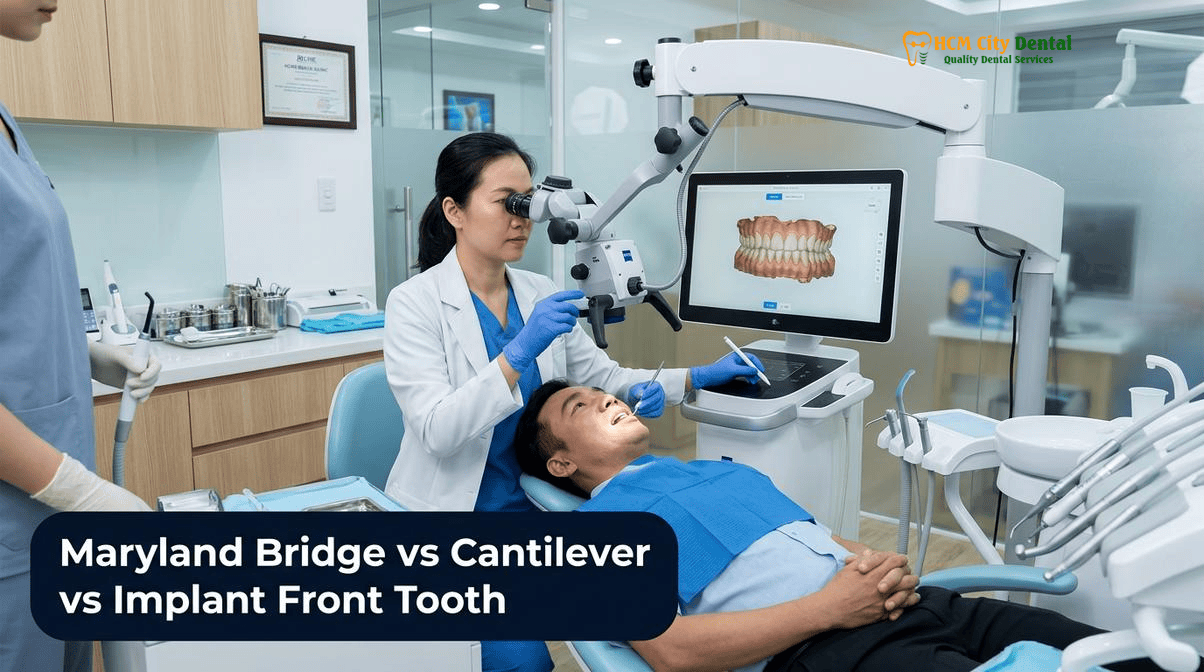
The loss of a maxillary anterior incisor presents one of the most complex aesthetic and biomechanical challenges in modern restorative dentistry. For international patients, expats, and dental travelers seeking care in Vietnam, the decision on how to replace a missing front tooth often comes down to three primary modalities: a Maryland resin-bonded bridge, a cantilever ceramic bridge, or a single-tooth dental implant. Historically, the default solution was a conventional 3-unit fixed dental bridge, which tragically required the aggressive circumferential shaving of adjacent, perfectly healthy virgin teeth. Today, biomimetic dentistry prioritizes the maximum preservation of natural tooth structure. Choosing between a maryland bridge vs cantilever bridge vs implant front tooth requires a meticulous analysis of interdental bone space, patient age, occlusal forces, and the biological cost to adjacent teeth.
Clinical Summary:
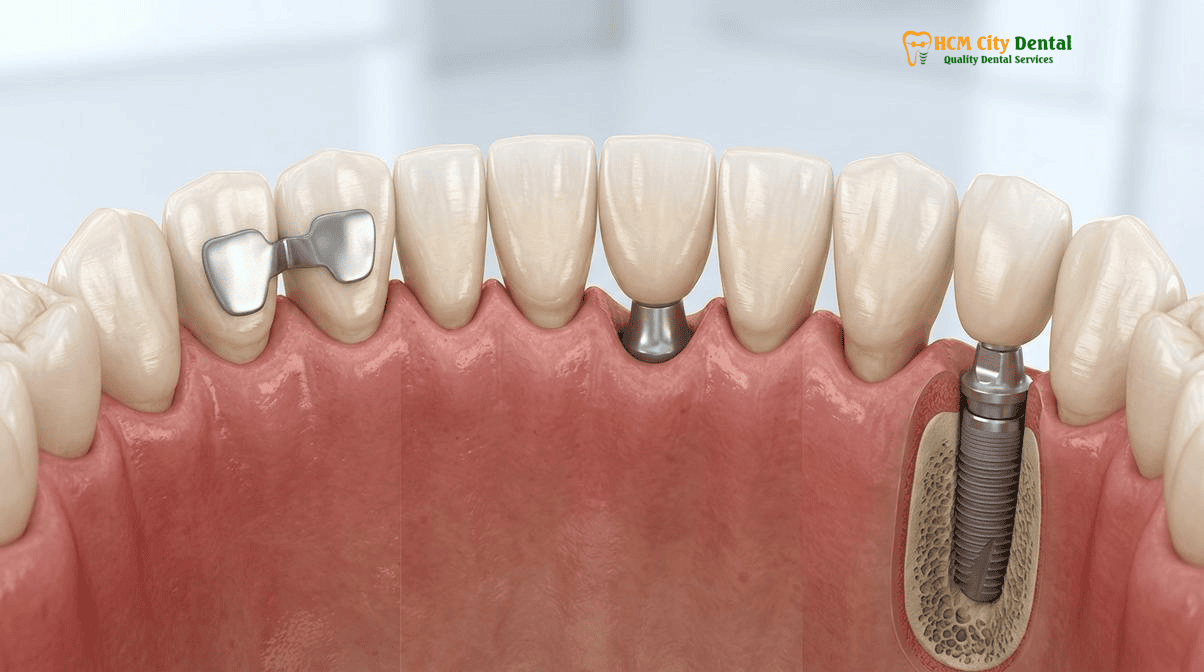
When evaluating a Maryland bridge vs. a dental implant for a front tooth, the single-tooth implant remains the biological gold standard, preserving alveolar bone and functioning independently. However, when interdental space is critically narrow (less than 5.5mm) or the patient is still undergoing skeletal growth, a single wing zirconia IPS E.max maryland bridge or a cantilever dental bridge for a lateral incisor offers a highly predictable, minimally invasive alternative. By utilizing advanced MDP-containing resin cements and rubber dam isolation, modern 1-retainer Maryland bridges achieve a 10-year survival rate exceeding 94.4%, allowing patients to replace a missing front tooth without shaving healthy teeth.
Key Takeaways:
- Implant Space Requirements: A single dental implant requires a minimum of 5.5mm to 6.0mm of mesiodistal interdental space to ensure proper integration and prevent damage to adjacent tooth roots.
- The 1-Retainer Advantage: Modern single-wing Maryland bridges drastically outperform older 2-wing designs because they eliminate the shear stress caused by the differential physiological mobility of two separate abutment teeth.
- Biomechanical Leverage: A cantilever bridge is highly effective for replacing a lateral incisor when suspended from a robust canine abutment, but is contraindicated for high-bite-force posterior teeth.
- Enamel Preservation: Both Maryland and cantilever bridges allow patients to replace a missing front tooth without shaving healthy teeth, avoiding the 60% to 70% coronal structure loss associated with traditional 3-unit bridges.
- Cost Efficiency in Vietnam: At HCMC Dental Clinic, a single Korean implant costs $462 to $654 USD online, while a premium IPS E.max or Zirconia Maryland/Cantilever bridge offers a rapid 48-hour solution for a fraction of Western prices.
The Clinical Dilemma of a Missing Anterior Incisor: Preserving Adjacent Virgin Teeth vs. Narrow Interdental Bone Space
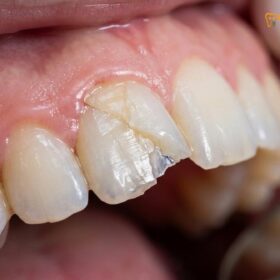
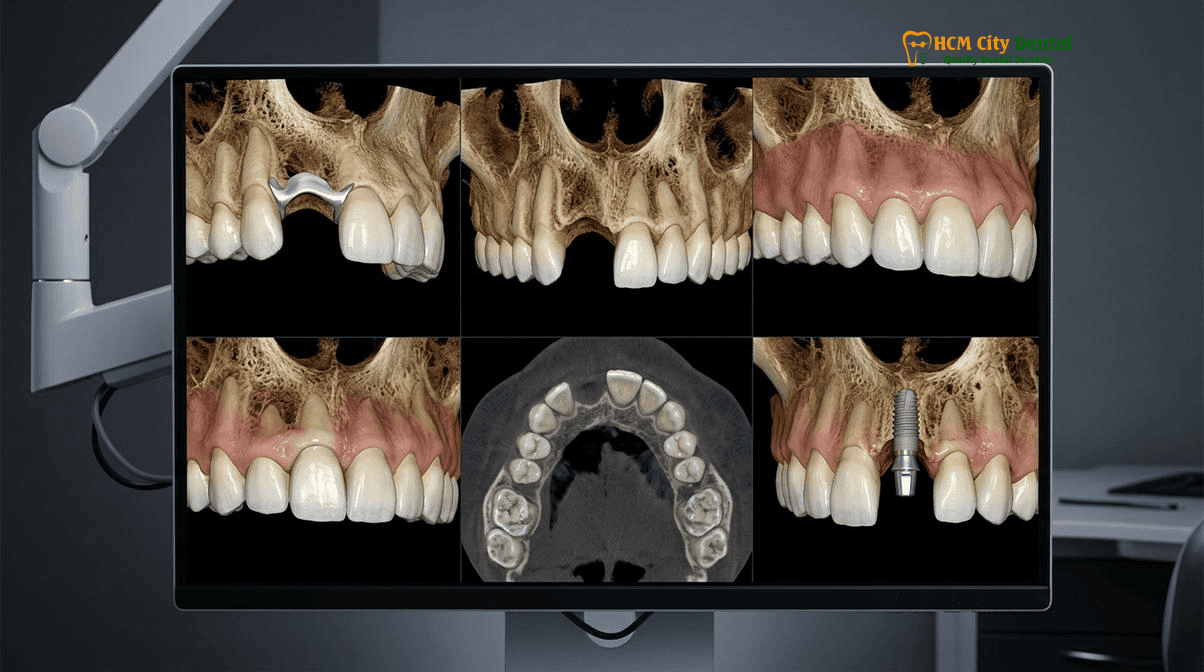
The aesthetic zone—comprising the maxillary central and lateral incisors—is unforgiving. When a tooth is lost due to trauma, congenital absence (such as congenitally missing lateral incisors), or root resorption, the surrounding alveolar bone immediately begins to atrophy. The buccal plate of bone in the anterior maxilla is notoriously thin, often measuring less than 1.0mm in thickness. Without the periodontal ligament of a natural tooth root to stimulate it, this bone resorbs rapidly, leading to a collapsed gingival architecture and the dreaded “black triangle” effect between teeth.
In addressing this dilemma, restorative dentists must adhere to strict biological parameters. Dr. Dennis Tarnow’s famous 5mm contact-to-crest bone rule dictates that the interproximal papilla will only fill the embrasure space completely if the distance from the base of the contact point to the crest of the alveolar bone is 5mm or less. If this distance increases due to bone loss, black triangles appear. While treatments like heated injection-molded composite (Bioclear matrix) or DMG ICON resin infiltration (refractive index 1.52) can mask minor aesthetic defects, replacing a completely missing tooth requires a structural prosthesis that respects these biological widths [1].
The primary conflict arises when evaluating the interdental space. A standard dental implant fixture has a diameter of 3.3mm to 4.1mm. To maintain blood supply and prevent necrosis of the adjacent natural tooth roots, there must be at least 1.5mm of healthy bone between the implant and the adjacent root on both the mesial and distal sides. Therefore, an absolute minimum of 5.5mm to 6.0mm of mesiodistal space is required for a safe implant placement. In cases of microdontia, orthodontic relapse, or congenitally narrow spaces, forcing an implant into a gap smaller than 5.5mm is a catastrophic clinical error. In these scenarios, the clinician must pivot away from implants and look toward minimally invasive fixed prosthetics to replace the missing front tooth without shaving healthy teeth.
Why Modern Single-Wing (1-Retainer) All-Ceramic Maryland Bridges Outperform Old 2-Wing Metal Maryland Bridges (94.4% 10-Year Survival)
The original Maryland bridge, developed at the University of Maryland in the 1980s, utilized a cast-metal framework with two wings bonded to the lingual (back) surfaces of the teeth on either side of the gap. While revolutionary for its time, the 2-wing metal Maryland bridge suffered from a notoriously high debonding rate. Patients frequently experienced one wing popping off while the other remained attached, leading to microleakage, hidden rampant caries, and ultimate failure of the restoration.
The failure of the 2-wing design was rooted in biomechanics, specifically differential tooth mobility. Every natural tooth sits within a periodontal ligament (PDL) that acts as a shock absorber, allowing the tooth to move slightly in its socket. A central incisor and a canine have different root surface areas and move in different trajectories during protrusive and lateral jaw excursions. When a rigid metal framework is bonded to two teeth with different mobility patterns, immense shear stress is generated across the pontic. Eventually, the weaker of the two adhesive bonds fractures.
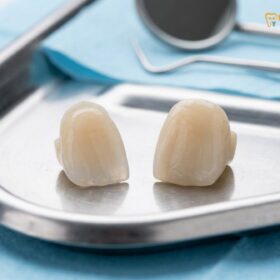
Modern biomimetic dentistry has solved this problem with the single wing zirconia IPS E.max maryland bridge (also known as a 1-retainer resin-bonded fixed dental prosthesis). By bonding the pontic to only one adjacent tooth, the bridge is free to move harmoniously with that single abutment tooth. There is no conflicting mobility, and shear stress is virtually eliminated. Clinical studies now demonstrate that single-retainer ceramic Maryland bridges boast a resin bonded bridge survival rate of 94.4% over 10 years, drastically outperforming their 2-wing predecessors [2].
“The transition from 2-wing metal frameworks to single-wing monolithic Zirconia and lithium disilicate (IPS E.max) has revolutionized anterior tooth replacement. By respecting the natural physiological mobility of the abutment tooth, we achieve extraordinary bond longevity while preserving 100% of the facial enamel. It is the ultimate expression of minimally invasive dentistry.”
— Dr. Nguyen Van Cuong, DDS (Clinical Director, HCMC Dental Clinic)
Furthermore, the shift from opaque cast metal to highly translucent ceramics like IPS E.max lithium disilicate ($231 USD online) or Zirconia eliminates the graying effect that old metal wings used to cause on the abutment teeth. The result is a restoration that is virtually indistinguishable from natural dentition, offering a massive aesthetic upgrade over a temporary flip tooth vs bonded maryland bridge.
Cantilever Fixed Ceramic Bridge vs. Conventional 3-Unit Bridge: Biomechanical Leverage Rules for Lateral Incisors
When a patient presents with a missing maxillary lateral incisor, the clinician must evaluate the adjacent teeth: the central incisor and the canine. Historically, dentists would prepare both the central incisor and the canine for full-coverage crowns to support a conventional 3-unit bridge. This aggressive approach removes up to 70% of the coronal tooth structure, permanently mutilating healthy virgin teeth and increasing the risk of future endodontic (root canal) complications.
A highly effective, conservative alternative is the cantilever dental bridge for a lateral incisor. A cantilever bridge involves preparing only one adjacent tooth for a full crown or a partial overlay, from which the pontic (false tooth) is suspended. For a missing lateral incisor, the canine is the ideal abutment. The maxillary canine has the longest and most robust root in the human dentition, providing exceptional periodontal support. Suspending a lateral incisor pontic off a canine abutment is biomechanically sound because the lateral incisor experiences relatively low occlusal forces.
However, the rules of biomechanical leverage are strict. A cantilever bridge acts as a Class I lever. If a clinician attempts to cantilever a central incisor off a lateral incisor, the massive biting forces placed on the central incisor pontic will act as a lever arm, torquing and potentially extracting the weaker lateral incisor abutment. Therefore, cantilever bridges are strictly indicated for replacing low-force teeth using high-strength abutments [3]. For patients exploring Dental Crowns, Fixed Bridges & Biomimetic Ceramic Restorations in Vietnam, the cantilever design offers a superb middle ground between the minimal preparation of a Maryland bridge and the robust retention of a full crown.
Single-Tooth 3D-Guided Dental Implant ($462–$962 USD): When It Is the Undisputed Gold Standard vs. When Space Is Too Narrow (<5.5mm)
Despite the advancements in adhesive dentistry, the single-tooth dental implant remains the undisputed biological gold standard for tooth replacement. When comparing a Maryland bridge vs. a dental implant for a front tooth, the implant is the only modality that replaces the missing tooth root. Through the process of osseointegration, the titanium or zirconia implant fixture fuses with the jawbone, providing internal stimulation that halts alveolar bone resorption and preserves the facial contours.
At HCMC Dental Clinic, implant placement is executed using a fully digital, 3D CBCT-guided protocol. This ensures pinpoint accuracy, optimal emergence profile, and avoidance of adjacent anatomical structures. The financial accessibility of world-class implantology in Vietnam is a major draw for international patients. Under our official 2026 online booking fee schedule, a Single Korean Implant (Dentis / Neo Biotech / Dentium) costs just $462 to $654 USD, while a premium Single European / Swiss Implant (Straumann BLT-SLA / BLA-Active) ranges from $962 to $1,346 USD. An Implant Zirconia HT Crown with a Custom Abutment adds just $154 USD.
However, as previously established, implants are contraindicated when the interdental space is less than 5.5mm. Furthermore, implants are strictly contraindicated in adolescents whose facial skeletons are still growing. If an implant is placed in a 15-year-old, the implant will remain ankylosed (fixed in place) while the surrounding natural teeth and jawbone continue to erupt and grow downward. By age 21, the implant will appear submerged (infraocclusion), creating a severe aesthetic deformity. In these cases, a single wing zirconia IPS E.max maryland bridge serves as the perfect long-term provisional until skeletal maturity is reached.
Clinical Case Study: The Australian Expat’s Dilemma
A 28-year-old Australian expat presented to HCMC Dental Clinic in District 1, Ho Chi Minh City, with a congenitally missing upper right lateral incisor. He had worn a removable “flipper” denture for years and was seeking a permanent solution. He initially requested a dental implant. However, 3D CBCT analysis revealed only 4.8mm of interdental space between the central incisor and the canine—insufficient for an implant without risking root damage. Dr. Nguyen Van Cuong, DDS, advised against orthodontic space opening due to the patient’s timeline. Instead, a single-wing IPS E.max Maryland bridge was fabricated and bonded to the palatal surface of the canine. The procedure was completed in 48 hours, preserving 100% of his natural enamel, at a total cost of $231 USD. The patient achieved a flawless aesthetic result without the need for surgery or shaving healthy teeth.
For a deeper dive into the clinical differences between these modalities, patients can review our comprehensive guide on Dental Implant vs Bridge: Clinical Comparison | HCMC Dental.
Adhesive Cementation Protocol Using MDP-Containing Resin Cement (Panavia V5) Under Rubber Dam Isolation
The success of a single wing zirconia IPS E.max maryland bridge hinges entirely on the adhesive cementation protocol. Unlike traditional crowns that rely on mechanical retention (friction and ferrule), a Maryland bridge relies 100% on chemical adhesion and micromechanical interlocking. If the bonding protocol is compromised by saliva, blood, or humidity, the restoration will fail prematurely.
At HCMC Dental Clinic, we utilize a strict, biomimetic bonding protocol:
- Rubber Dam Isolation: Absolute moisture control is non-negotiable. A nitrile rubber dam is placed to isolate the abutment tooth from the oral environment, ensuring a pristine, dry operating field.
- Surface Preparation (Tooth): The palatal enamel of the abutment tooth is lightly micro-abraded with 27-micron aluminum oxide (Al2O3) to increase surface area, followed by etching with 37% phosphoric acid to create microporosities in the enamel rods.
- Surface Preparation (Prosthesis): If the bridge is made of Zirconia, the intaglio (fitting) surface is sandblasted at low pressure. Crucially, Zirconia cannot be etched with acid. Instead, it requires a chemical primer containing 10-Methacryloyloxydecyl dihydrogen phosphate (10-MDP).
- Chemical Bonding: The 10-MDP monomer is a marvel of dental chemistry. Its phosphate group bonds ionically to the calcium in the tooth enamel and the hydroxyl groups on the Zirconia surface, while its methacrylate group copolymerizes with the resin cement [4].
- Cementation: A premium dual-cure resin cement, such as Panavia V5, is applied. The bridge is seated under firm pressure, excess cement is meticulously removed, and the margins are light-cured to finalize the bond.
Clinical Precaution: Moisture Contamination
Patients seeking Maryland bridges must ensure their chosen clinic utilizes rubber dam isolation. Bonding a resin-retained bridge using only cotton rolls for isolation drastically increases the risk of salivary contamination. Even microscopic amounts of moisture will degrade the 10-MDP chemical bond, leading to premature debonding and potential microleakage. Always verify that your specialist adheres to strict isolation protocols.
2026 Clinical Comparison Table: Enamel Preservation, Longevity, Trip Duration (48h vs. 2 Trips), and Cost in Vietnam
To assist international patients in making an informed decision, the following table synthesizes the clinical, logistical, and financial parameters of the three primary modalities for replacing a missing front tooth. The pricing reflects the Official 2026 Dental Price List & -40% Online Booking Fee Schedule at HCMC Dental Clinic.
| Clinical Parameter | Single-Wing Maryland Bridge (IPS E.max / Zirconia) | Cantilever Ceramic Bridge (Zirconia) | Single-Tooth Dental Implant (Korean / Swiss) |
|---|---|---|---|
| Biological Cost (Enamel Removal) | Minimal to None (0% – 5% palatal preparation) | Moderate (Requires full or partial crown prep on 1 adjacent tooth) | None (Adjacent teeth are completely untouched) |
| Bone Space Requirement | Not dependent on bone width | Not dependent on bone width | Strictly requires >5.5mm mesiodistal space |
| Treatment Timeline & Trip Duration | 48 to 72 hours (1 short trip to Vietnam) | 3 to 5 days (1 short trip to Vietnam) | 3 to 6 months (Requires 2 separate trips to Vietnam) |
| Expected Longevity | 8+ years (94.4% survival rate) | 10 – 8+ years | Lifetime (with proper maintenance and osseointegration) |
| 2026 Online Booking Cost (HCMC Dental Clinic) | $231 – $308 USD | $308 – $384 USD (Equivalent to 2 units) | $462 – $1,346 USD (Fixture) + $154 USD (Crown) |
| Primary Clinical Indication | Narrow spaces, adolescents, patients refusing tooth preparation | Missing lateral incisor with a heavily restored adjacent canine | Adequate bone volume, adult patients seeking the biological gold standard |
All procedures at HCMC Dental Clinic are overseen by Dr. Nguyen Van Cuong, DDS (Clinical Director — MOH License 0003265/BL-CCHN), ensuring that every restoration meets rigorous international standards for biomaterial traceability and infection control [5]. For patients considering broader restorative work, understanding the nuances of a Fixed Dental Bridge: Clinical Workflows, Types & Costs is essential for comprehensive treatment planning.
“There is no single ‘best’ treatment in dentistry—only the most appropriate treatment for a specific patient’s unique anatomy. Whether we are utilizing a 3D-guided Straumann implant or a minimally invasive single-wing Maryland bridge, our goal is to restore flawless aesthetics while preserving the maximum amount of natural biology.”
— Dr. Nguyen Van Cuong, DDS
Frequently Asked Questions
Why does a single-wing (1-retainer) ceramic Maryland bridge debond less often than a two-wing bridge?
A single-wing (1-retainer) ceramic Maryland bridge debonds less frequently because it accommodates the natural physiological movement of teeth. When a bridge is bonded to two abutment teeth (two wings), the differential mobility of those teeth during chewing and speaking creates shear stress on the rigid pontic, inevitably causing the weaker bond to fracture. A single-wing design moves harmoniously with its single abutment tooth, eliminating this shear stress and significantly increasing the resin bonded bridge survival rate.
Is a ceramic Maryland bridge a permanent restoration or just a long-term provisional while waiting for teenage jaw growth to finish?
While historically viewed as a provisional restoration, a modern single wing zirconia IPS E.max maryland bridge bonded with MDP-containing resin cement under rubber dam isolation is now considered a definitive, long-term restoration. It boasts a 10-year survival rate exceeding 94%. However, it is also the ideal long-term provisional for adolescents who have lost a front tooth but must wait until skeletal maturity (usually age 18-21) before a dental implant can be safely placed without risking infraocclusion.
Can a Cantilever Zirconia bridge safely replace a high-bite-force canine or molar tooth?
No. A cantilever dental bridge is biomechanically contraindicated for replacing high-bite-force teeth like canines or molars. The cantilever design acts as a class I lever, multiplying occlusal forces and placing immense stress on the single abutment tooth. It is strictly reserved for replacing low-force teeth, such as a maxillary lateral incisor or mandibular incisor, where the adjacent canine or central incisor serves as a robust, periodontally sound abutment.
How fast can HCMC Dental Clinic fabricate a custom CAD/CAM IPS E.max or Zirconia Maryland bridge for a tourist?
At HCMC Dental Clinic in District 1, Ho Chi Minh City, our in-house digital workflow allows us to fabricate a custom CAD/CAM IPS E.max or Zirconia Maryland bridge in just 48 to 72 hours. This rapid turnaround is ideal for dental tourists and expats, requiring only two short appointments: one for digital scanning and minimal enamel preparation, and a second for the adhesive cementation protocol.
How much does a Maryland resin-bonded bridge cost compared to a 3-unit bridge or single implant in Ho Chi Minh City?
Under our 2026 online booking fee schedule, a single Korean implant costs $462 to $654 USD, while a premium Swiss implant ranges from $962 to $1,346 USD. A 3-unit full Zirconia bridge costs between $462 and $576 USD ($154 to $192 USD per unit). A Maryland bridge or cantilever bridge typically costs the equivalent of two units ($308 to $462 USD), making it a highly cost-effective, minimally invasive alternative to replace a missing front tooth without shaving healthy teeth.
References
- Journal of Prosthetic Dentistry. Clinical outcomes of single-retainer resin-bonded fixed dental prostheses: A systematic review and meta-analysis. (2023).
- International Journal of Oral & Maxillofacial Implants. Biomechanical considerations and survival rates of cantilever vs. implant-supported restorations in the anterior maxilla. (2022).
- Journal of Esthetic and Restorative Dentistry. The evolution of the Maryland bridge: From cast metal to monolithic zirconia and lithium disilicate. (2021).
- Dental Materials. Adhesion to zirconia: The role of 10-MDP primer and resin cement under rubber dam isolation. (2020).
- Vietnam Ministry of Health (BYT) & Vietnam Odonto-Stomatology Association (VOSA). National Clinical Guidelines on Specialist Dental Care, Biomaterial Traceability & EN 13060 Class B Infection Control. (2024).