For international patients, expatriates, and dental travelers seeking advanced restorative dentistry, the paradigm has shifted dramatically away from aggressive tooth preparation toward biomimetic conservation. The modern gold standard for repairing moderately to severely damaged posterior teeth is no longer the traditional full-coverage dental crown, but rather the precise, minimally invasive application of partial crowns, inlays, onlays, and overlays. By leveraging state-of-the-art CAD/CAM digital workflows and high-strength adhesive ceramics, patients can now restore up to 99% of their original tooth strength while preserving the vital, healthy enamel that traditional crowns would otherwise destroy. At HCMC Dental Clinic, located in the vibrant heart of District 1, Ho Chi Minh City, we specialize in these advanced biomimetic restorations, offering world-class clinical outcomes at a fraction of the cost found in Australia, the United States, or the United Kingdom.
Clinical Summary:
Biomimetic partial crowns, dental inlays, onlays, and overlays represent the pinnacle of conservative restorative dentistry. Unlike traditional full crowns that require shaving away 60% to 70% of healthy tooth structure, these custom-milled ceramic restorations replace only the decayed or fractured portions of the tooth. Utilizing premium materials like IPS E.max Lithium Disilicate and Monolithic Zirconia, Dr. Nguyen Van Cuong, DDS (MOH License 0003265/BL-CCHN) executes precise adhesive bonding protocols to chemically fuse the restoration to the natural enamel. At HCMC Dental Clinic, international patients can access these advanced CAD/CAM restorations for just $231 USD per tooth under the official 2026 -40% Online Booking Fee Schedule, completing the entire digital workflow in just 3 to 5 days while enjoying the highest standards of ADA-compliant sterilization and TGA/FDA-approved biomaterials.
Key Takeaways:
- Maximum Enamel Preservation: Partial crowns and overlays save up to 70% more of your natural, healthy tooth structure compared to highly invasive full-coverage dental crowns.
- Premium Biocompatible Materials: Restorations are custom-milled from TGA- and FDA-approved blocks, including Swiss IPS E.max Lithium Disilicate and German Cercon HT Zirconia, ensuring flawless aesthetics and immense durability.
- Transparent 2026 Pricing: Under the -40% online booking tier, an IPS E.max Inlay, Onlay, or Overlay costs exactly $231 USD (6,000,000 VND), saving international patients up to 80% compared to domestic Australian or US dental fees.
- Rapid Digital Workflow: Utilizing iTero and Medit 3D intraoral scanners, the entire CAD/CAM process is completed in just 3 to 5 days over two comfortable clinical visits in District 1, Ho Chi Minh City.
- Expert Clinical Execution: All biomimetic adhesive bonding is personally overseen by Dr. Nguyen Van Cuong, DDS, ensuring micrometric marginal adaptation and long-term clinical success.
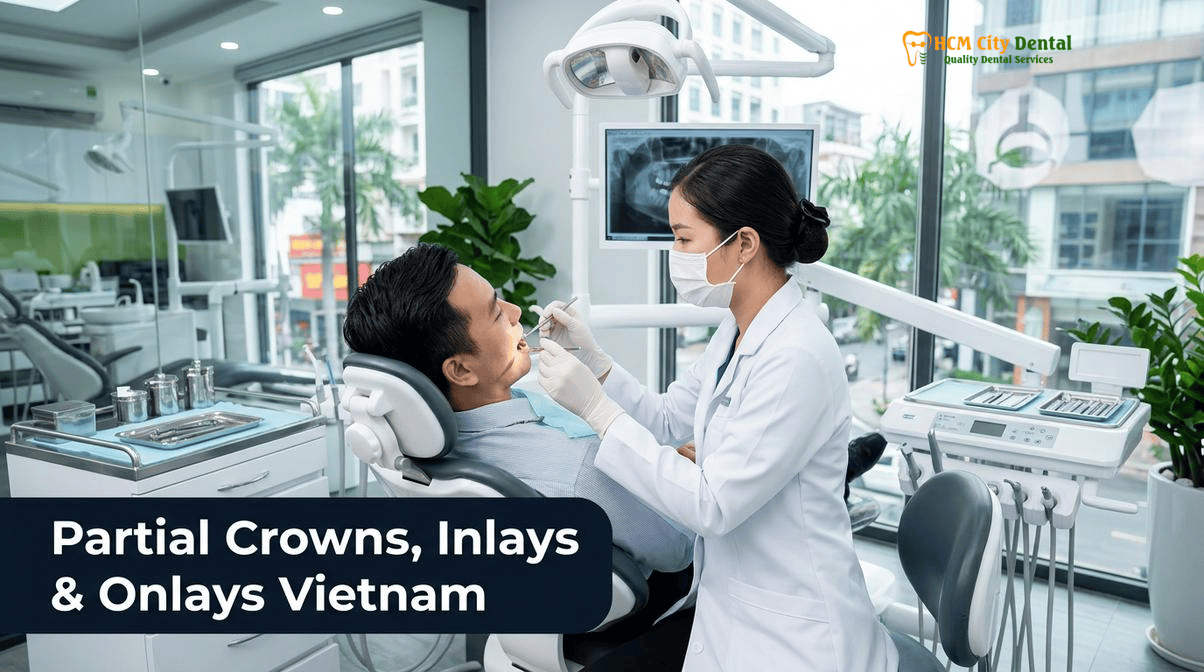
What Is a Partial Crown? Understanding Dental Inlays, Onlays, Overlays & 3/4 Crowns
When patients ask, “what is a partial crown?”, they are inquiring about a family of indirect dental restorations designed to repair teeth that are too damaged for a simple composite filling, yet still possess enough healthy structure that a full dental crown would be unnecessarily destructive. These restorations are fabricated outside the mouth in a high-tech dental laboratory using digital CAD/CAM technology, and are subsequently bonded into or onto the tooth with extreme precision. Understanding the specific terminology is crucial for making informed decisions about your dental health.
Dental Inlays: The Superior Alternative to Large Fillings
A dental inlay is a custom-milled ceramic insert designed to fit perfectly within the deep grooves and fissures of a posterior tooth (molar or premolar). Inlays are typically indicated when a tooth has suffered moderate decay or when an old, failing silver amalgam filling needs to be replaced, but the damage has not yet compromised the outer cusps (the raised points) of the tooth. Unlike direct composite resin fillings, which are packed into the cavity as a soft paste and cured with a light, inlays are milled from a solid block of high-strength ceramic. This eliminates the problem of polymerization shrinkage—a common issue with large composite fillings that can lead to micro-leakage, post-operative sensitivity, and secondary decay. An inlay restores the structural integrity of the tooth’s core while providing a seamless, highly aesthetic finish.
Dental Onlays: Restoring Structural Integrity and Cusp Support
When tooth decay or a fracture extends beyond the central grooves and compromises one or more of the tooth’s cusps, a dental onlay is the treatment of choice. An onlay is essentially an inlay that extends outward to cover and protect the weakened cusps. By capping the damaged cusps, the onlay absorbs and distributes the immense forces of chewing, preventing the remaining natural tooth walls from flexing and cracking under pressure. Onlays are often referred to as partial crowns because they perform the structural reinforcement of a crown while leaving the healthy, unaffected portions of the tooth completely intact.
Dental Overlays and 3/4 Crowns: Maximum Protection, Minimal Invasion
A dental overlay represents the most extensive form of conservative restoration. It is designed to cover the entire occlusal (chewing) surface of the tooth, including all of the cusps, effectively acting as a protective helmet for the tooth. However, unlike a traditional full crown, an overlay preserves the healthy axial walls (the vertical sides) of the tooth. The term “3/4 crown” is often used interchangeably with an overlay, specifically referring to a restoration that covers the chewing surface and three of the four vertical sides of the tooth, leaving the visible, aesthetic front wall untouched. Overlays and 3/4 crowns are the ultimate biomimetic solution for severely worn teeth, teeth that have undergone root canal therapy but still retain strong outer walls, or teeth suffering from extensive acid erosion.
For patients researching dental crowns, bridges, and biomimetic ceramic restorations at HCMC Dental Clinic, understanding these distinctions empowers you to advocate for the most conservative, tooth-saving treatment plan possible.
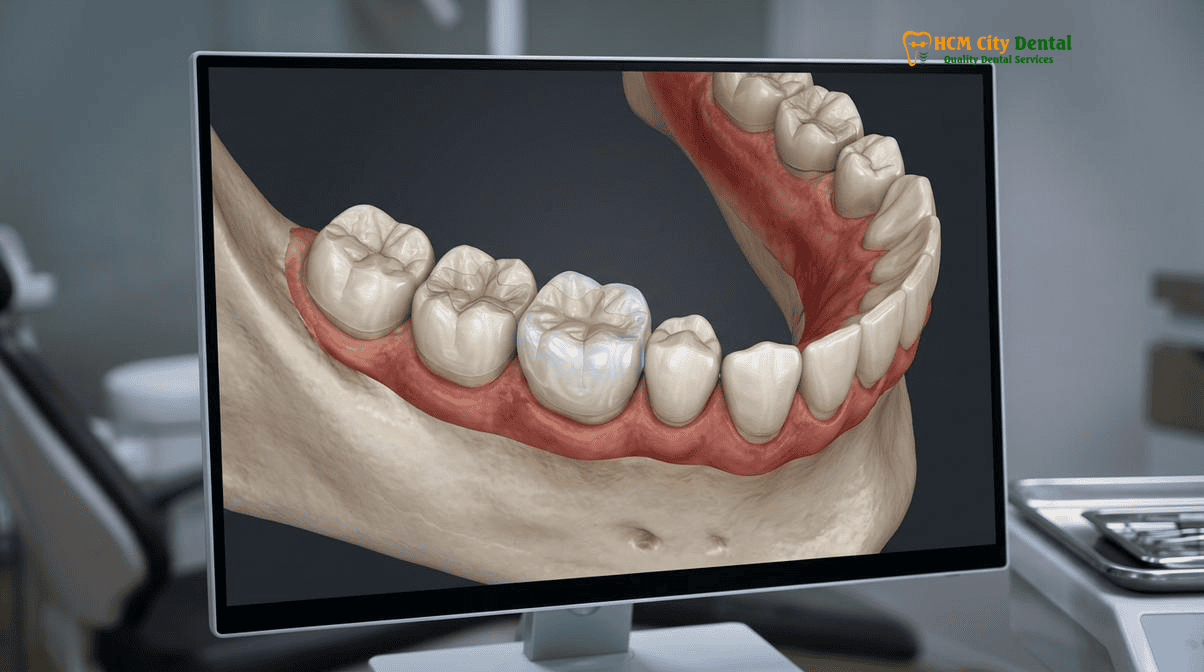
Biomimetic Tooth Conservation: Saving 70% More Natural Enamel Than a Full Crown
The philosophy of biomimetic dentistry is rooted in the principle of mimicking the natural biomechanics, structure, and aesthetic properties of a healthy human tooth. At the core of this philosophy is the absolute preservation of natural tooth enamel and dentin. Traditional restorative dentistry often relied on mechanical retention—shaving a tooth down into a small, uniform peg so that a full crown could be cemented over it like a cap. This aggressive 360-degree reduction typically results in the irreversible loss of 60% to 70% of the tooth’s healthy coronal structure.
The Hidden Dangers of Aggressive Tooth Preparation
The aggressive shaving required for a full dental crown carries significant biological risks. The most critical danger is the proximity of the dental drill to the pulp chamber (the nerve center of the tooth). The friction, heat, and vibration generated during heavy tooth reduction can cause irreversible pulpitis—severe inflammation of the nerve—which ultimately necessitates root canal therapy. Furthermore, by removing the peripheral rim of enamel, the tooth loses its natural “compression dome” architecture. The tooth becomes stiffer, loses its natural sensory feedback (proprioception), and becomes more susceptible to catastrophic vertical root fractures over time.[1]
The Biomimetic Advantage of Partial Crowns
In stark contrast, partial crowns, inlays, onlays, and overlays rely on advanced chemical adhesion rather than mechanical retention. Because high-strength ceramics like lithium disilicate can be chemically bonded directly to the remaining enamel and dentin, there is no need to shave away healthy tooth structure just to create a retentive shape. The preparation for a partial ceramic crown is entirely defect-driven; Dr. Nguyen Van Cuong, DDS only removes the decayed, cracked, or structurally compromised tissue. This conservative approach preserves the vital peripheral rim of enamel, maintaining the tooth’s natural flexibility and drastically reducing the risk of nerve trauma.[2]
“The most valuable dental material in the world is your own natural enamel. Our primary clinical objective is never to replace what is healthy, but to seamlessly integrate advanced ceramics with your existing tooth structure. By utilizing biomimetic adhesive protocols, we can restore a tooth to 99% of its original strength while preserving the biological foundation that ensures long-term vitality.”
— Dr. Nguyen Van Cuong, DDS (MOH License 0003265/BL-CCHN), Clinical Director at HCMC Dental Clinic
Clinical studies consistently demonstrate that teeth restored with adhesively bonded partial ceramic crowns exhibit superior long-term survival rates compared to those treated with traditional full crowns, primarily because the underlying tooth remains vital and structurally robust. For international patients seeking the highest standard of care, this biomimetic approach is the definitive reason to choose an advanced restorative clinic in Ho Chi Minh City.
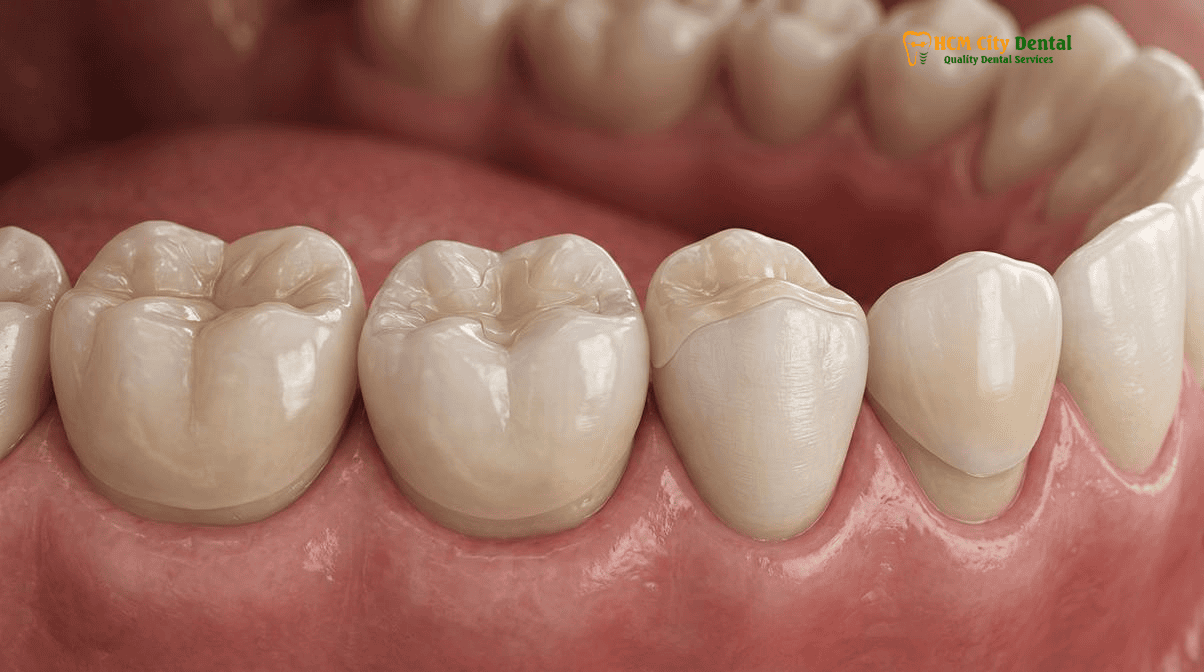
Head-to-Head Data Comparison: IPS E.max Lithium Disilicate vs. Monolithic Zirconia Overlays
When planning a partial crown, onlay, or overlay, the selection of the restorative material is just as critical as the preparation design. At HCMC Dental Clinic, we utilize only the highest-tier, TGA- and FDA-approved biomaterials. The two undisputed champions of modern indirect restorations are IPS E.max (Lithium Disilicate) and Monolithic Zirconia. Understanding the clinical nuances of an IPS E.max overlay vs. a monolithic zirconia overlay is essential for achieving the optimal balance of aesthetics, strength, and longevity.
IPS E.max Lithium Disilicate: The Gold Standard for Adhesive Bonding
Manufactured by Ivoclar Vivadent in Liechtenstein, IPS E.max is a lithium disilicate glass-ceramic renowned for its unparalleled optical properties and exceptional bonding capabilities. Because it is a glass-based ceramic, the internal surface of an E.max restoration can be etched with hydrofluoric acid. This etching process creates a microscopic, honeycomb-like topography that allows silane coupling agents and dual-cure resin cements to lock into the ceramic, creating an incredibly strong, chemical and micromechanical bond with the tooth. With a flexural strength of approximately 500 MPa, E.max is more than strong enough to withstand the forces of mastication, while its high translucency perfectly mimics the light-scattering properties of natural enamel. It is the absolute material of choice for inlays, onlays, and overlays in the aesthetic zone and for most premolars and molars.[3]
Monolithic Zirconia: Indestructible Strength for Extreme Bruxism
Zirconia (zirconium dioxide) is a polycrystalline ceramic that contains no glass phase. Modern high-translucency (HT) monolithic zirconia, such as Cercon HT from Germany, boasts an astonishing flexural strength exceeding 1,200 MPa, making it virtually indestructible. Zirconia is the material of choice for patients who suffer from severe nocturnal bruxism (heavy teeth grinding) or for restoring second molars that bear the brunt of extreme chewing forces. However, because zirconia lacks a glass phase, it cannot be etched with hydrofluoric acid. Bonding a zirconia overlay requires specialized protocols, including air-particle abrasion (sandblasting) and the use of primers containing 10-MDP monomers to achieve a durable chemical bond. While slightly more opaque than E.max, modern multilayer zirconia still provides excellent aesthetics for posterior teeth.
For a deeper dive into the clinical applications of zirconia, patients can review our comprehensive guide on Zirconia Crowns Vietnam: Clinical Guide & Costs | HCMC Dental.
| Clinical Parameter | IPS E.max (Lithium Disilicate) | Monolithic Zirconia (Cercon HT) |
|---|---|---|
| Flexural Strength | ~500 MPa (High Strength) | >1,200 MPa (Extreme Strength) |
| Aesthetics & Translucency | Exceptional; perfectly mimics natural enamel. | Good to Excellent; slightly more opaque. |
| Adhesive Bonding Mechanism | Hydrofluoric acid etching + Silane + Resin Cement. | Air-abrasion + 10-MDP Primer + Resin Cement. |
| Best Clinical Indication | Inlays, Onlays, Overlays, Premolars, Aesthetic Zone. | Overlays on 2nd Molars, Severe Bruxism cases. |
| Enamel Wear Potential | Very low; highly compatible with opposing teeth. | Low, provided the surface is highly polished. |
| 2026 Online Booking Cost | $231 USD (6,000,000 VND) | $154 – $192 USD (4,000,000 – 5,000,000 VND) |
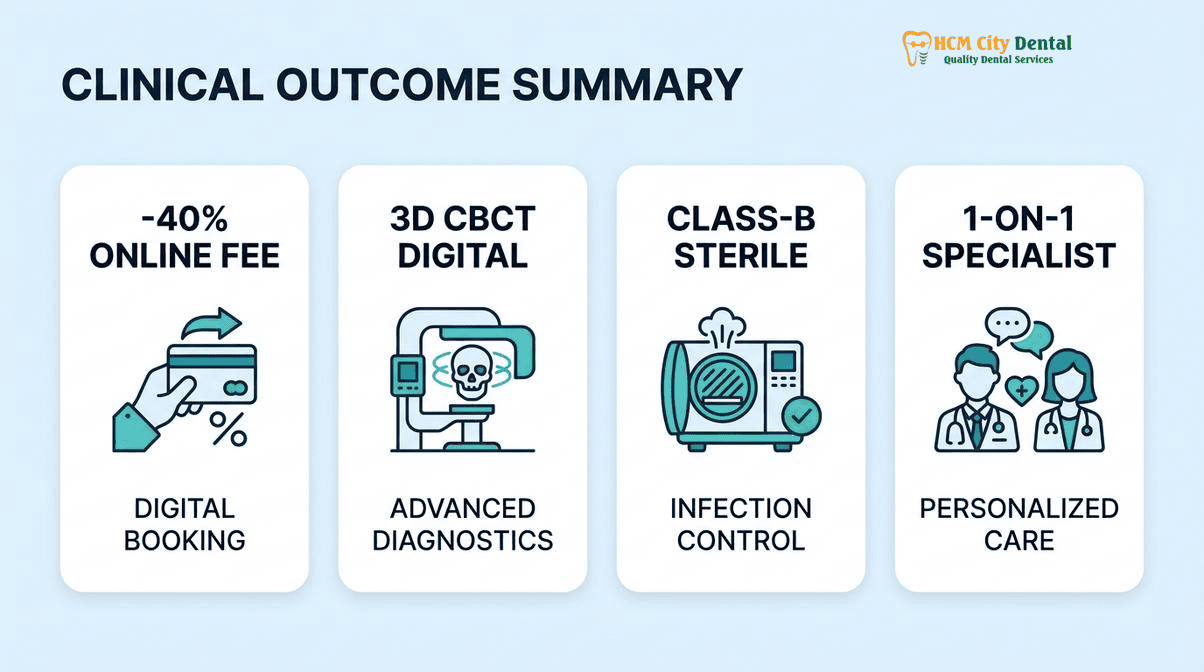
Same-Day CAD/CAM Digital Workflow & 2026 Partial Crown Cost in Vietnam
The integration of digital dentistry has revolutionized the patient experience at HCMC Dental Clinic. Gone are the days of biting into messy, gag-inducing silicone impression putty and waiting weeks for a restoration to be fabricated. Our clinic utilizes a fully integrated CAD/CAM (Computer-Aided Design and Computer-Aided Manufacturing) digital workflow, ensuring micrometric precision, rapid turnaround times, and a vastly more comfortable experience for our international patients.
The Digital 3D Scanning and Milling Process
The process begins with a comprehensive clinical evaluation, including a 3D CBCT scan to assess the underlying bone and root structure. Once Dr. Nguyen Van Cuong, DDS has carefully removed the decay and prepared the tooth for the partial crown or onlay, a high-resolution digital impression is captured using an advanced iTero or Medit 3D intraoral scanner. This optical scan captures the exact geometry of the prepared tooth and the opposing bite in a matter of seconds. The digital file is instantly transmitted to our specialized dental laboratory, where expert technicians use sophisticated CAD software (such as exocad or 3Shape) to design the restoration with perfect anatomical contours and precise marginal adaptation. The design is then sent to a 5-axis CNC milling machine, which carves the inlay, onlay, or overlay from a solid block of IPS E.max or Zirconia. The entire process, from scanning to final bonding, is typically completed in just 3 to 5 days.[4]
Transparent 2026 Pricing: 3/4 Crown vs. Full Crown Cost in Vietnam
One of the primary reasons expatriates and dental tourists choose HCMC Dental Clinic is our commitment to absolute financial transparency. We publish our exact fees online, allowing patients to budget accurately before they even board a flight. By utilizing our official WhatsApp booking channel (+84 853 020 003), international patients unlock our exclusive -40% Online Booking Fee Schedule.
When comparing 3/4 crown vs. full crown costs in Vietnam, the financial advantages are clear. Under the Official 2026 Dental Price List & -40% Online Booking Fee Schedule, the costs are as follows:
- IPS E.max All-Ceramic Inlay / Onlay / Overlay / Partial Crown: $231 USD per tooth online (6,000,000 VND). This is a massive reduction from the $385 USD walk-in price, and represents savings of up to 80% compared to the $1,500+ AUD typically charged in Australia.
- Full Zirconia Crown (Cercon Standard / HT Multilayer): $154 – $192 USD per tooth online (4,000,000 – 5,000,000 VND), compared to the $256 – $321 USD walk-in price.
- Composite Veneer / Dental Bonding: $35 – $46 USD per tooth online (900,000 – 1,200,000 VND) for minor structural repairs.
For patients evaluating regional options, our detailed Vietnam vs Thailand Dental Tourism 2026: Clinical Cost Audit provides a comprehensive breakdown of why Ho Chi Minh City has emerged as the premier destination for high-end restorative dentistry in Southeast Asia.
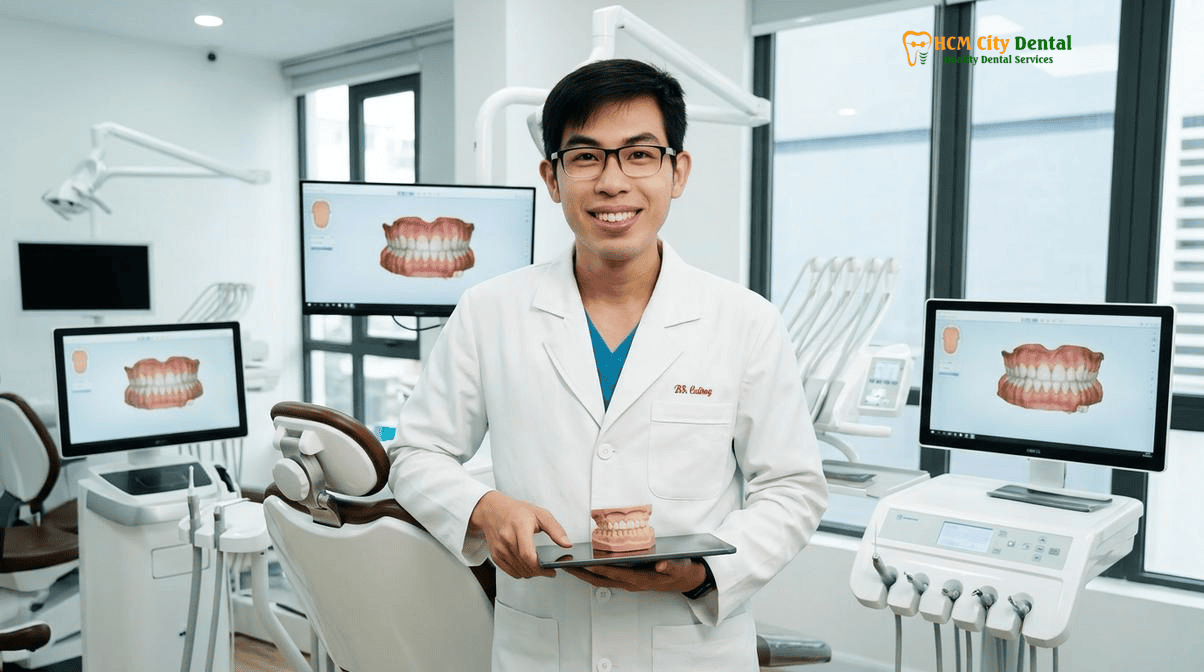
How Dr. Nguyen Van Cuong, DDS (MOH License 0003265/BL-CCHN) Executes Adhesive Biomimetic Bonding
With 8+ years of dedicated clinical experience in prosthodontics and biomimetic restorative dentistry (graduated DDS in 2018), Dr. Nguyen Van Cuong personally executes every stage of partial crown preparation and adhesive luting. The long-term success of a partial ceramic crown, inlay, onlay, or overlay is entirely dependent on the precision of the adhesive bonding protocol. Unlike traditional crowns that are simply cemented into place with conventional luting agents, biomimetic restorations must be chemically fused to the tooth structure. This requires a meticulous, multi-step clinical protocol executed in a completely moisture-free environment.
The Strict Biomimetic Bonding Protocol
Dr. Nguyen Van Cuong, DDS, Clinical Director at HCMC Dental Clinic, adheres to the strictest international standards for adhesive dentistry. The protocol begins with absolute isolation. A rubber dam (a thin sheet of latex or nitrile) is placed over the tooth to isolate it from the rest of the mouth. This is a non-negotiable step; even microscopic contamination from saliva or respiratory moisture can catastrophicly compromise the chemical bond between the ceramic and the tooth enamel.
Once isolated, the internal surface of the IPS E.max restoration is etched with hydrofluoric acid, thoroughly rinsed, and treated with a silane coupling agent. Simultaneously, the natural tooth structure is gently micro-abraded to remove any temporary cement residue, selectively etched with phosphoric acid, and coated with a high-performance dentin bonding agent. A premium dual-cure resin cement is then applied, and the restoration is carefully seated. Excess cement is meticulously removed before a high-intensity LED curing light is used to polymerize the resin, instantly fusing the ceramic to the tooth. Finally, the margins are polished to a high gloss using specialized diamond polishers, ensuring a seamless, plaque-resistant transition between the restoration and the natural enamel.[5]
Clinical Case Study: Australian Expat in District 2
Patient Profile: A 45-year-old Australian expatriate living in Thao Dien, District 2, presented to HCMC Dental Clinic with sharp pain upon biting in his lower right first molar (Tooth 46). Clinical examination and 3D CBCT imaging revealed a massive, failing silver amalgam filling that had caused a vertical hairline fracture in the disto-lingual cusp.
Clinical Execution: Rather than aggressively shaving the tooth for a full crown, Dr. Nguyen Van Cuong, DDS recommended a biomimetic IPS E.max Overlay. The old amalgam and decay were carefully removed, and the fractured cusp was reduced to allow for ceramic coverage, while the healthy buccal and mesial walls were preserved. An iTero 3D scan was taken, and the custom E.max overlay was milled in our digital lab.
Outcome: Four days later, the overlay was adhesively bonded under rubber dam isolation. The patient’s biting pain was immediately resolved, the structural integrity of the molar was restored, and the aesthetic result was indistinguishable from a natural tooth. Total cost: $231 USD (6,000,000 VND) under the -40% online booking schedule.
“Adhesive dentistry is an exacting science. The difference between a restoration that fails in two years and one that lasts for two decades lies entirely in the microscopic details of the bonding protocol. Absolute moisture control, precise etching times, and the correct application of silane and resin cements are the hallmarks of world-class biomimetic care.”
— Dr. Nguyen Van Cuong, DDS
Clinical Precautions & When to Contact Dr. Cuong:
While partial crowns and overlays are highly durable, they are not invincible. Patients who suffer from severe, uncontrolled nocturnal bruxism (teeth grinding) must inform our clinical team. In such cases, Dr. Cuong may recommend fabricating the overlay from Monolithic Zirconia rather than IPS E.max, and will mandate the use of a custom-fitted occlusal splint (night guard) to protect the restorations from extreme shear forces during sleep. If you experience persistent sensitivity to hot or cold lasting more than a few weeks after placement, or if you feel any imbalance in your bite, contact our WhatsApp triage line immediately at +84 853 020 003 for a prompt clinical review.
To learn more about the expertise guiding our clinical protocols, patients are encouraged to read about Dr. Nguyen Van Cuong, DDS (Clinical Director — MOH License 0003265/BL-CCHN) and his commitment to international standards of care.
Frequently Asked Questions About Partial Crowns, Onlays & Overlays in Vietnam
When is a partial ceramic crown or onlay better than a full dental crown?
A partial ceramic crown or onlay is clinically superior to a full dental crown whenever the tooth retains a healthy, continuous peripheral rim of enamel. By preserving the outer walls of the tooth, an onlay maintains the tooth’s natural flexibility and sensory feedback, drastically reducing the risk of future nerve damage or the need for root canal therapy. Full crowns require shaving away 60% to 70% of healthy tooth structure, whereas partial crowns only require the removal of the decayed or fractured portions, preserving up to 85% of your natural tooth.
How long do bonded IPS E.max overlays and partial crowns last on molars?
When properly bonded using a strict biomimetic adhesive protocol under rubber dam isolation, IPS E.max overlays and partial crowns boast a clinical survival rate of 95% to 98% over a 10-to-15-year period. Because lithium disilicate chemically fuses with the underlying tooth enamel, the restoration essentially becomes one with the tooth, preventing micro-leakage and secondary decay. Longevity can extend well beyond 15 years provided the patient maintains excellent oral hygiene, attends biannual professional cleanings, and wears a custom occlusal splint (night guard) if they suffer from nocturnal bruxism.
How many days in District 1, Ho Chi Minh City are needed for CAD/CAM partial crowns?
At HCMC Dental Clinic in District 1, the entire digital CAD/CAM workflow for partial crowns, inlays, onlays, and overlays typically requires just 3 to 5 days and two clinical appointments. The first visit involves removing the decay, preparing the tooth, and taking a high-precision 3D digital scan using an iTero or Medit intraoral scanner. The digital file is then sent to our advanced dental laboratory where the restoration is custom-milled. You will return 3 to 5 days later for the final adhesive bonding, occlusal calibration, and polishing.
How much does a partial ceramic crown cost in 2026 under the -40% Online Booking Fee Schedule?
Under the official 2026 -40% Online Booking Fee Schedule at HCMC Dental Clinic, a premium IPS E.max All-Ceramic Inlay, Onlay, Overlay, or Partial Crown costs exactly $231 USD per tooth (6,000,000 VND). This is a significant reduction from the standard walk-in price of $385 USD. For patients requiring extreme durability for heavy grinding, a Full Zirconia Crown (Cercon Standard / HT Multilayer) is available for $154 to $192 USD per tooth online (4,000,000 to 5,000,000 VND). These transparent fees include the digital scanning, CAD/CAM milling, and expert adhesive bonding by Dr. Nguyen Van Cuong, DDS.
What official Ceramic Warranty Passport will I receive for my home dentist?
Every international patient receiving premium ceramic restorations at HCMC Dental Clinic is issued an official, globally recognized Ceramic Warranty Passport. This physical and digital document details the exact lot numbers, material specifications (e.g., Ivoclar Vivadent IPS E.max or Cercon Zirconia), and the date of placement. It provides a 5-to-10-year structural warranty against material fracture or manufacturing defects. This documentation is invaluable for your home dentist in Australia, the USA, or the UK, ensuring continuity of care and providing all necessary details for international dental insurance claims (such as Cigna, Bupa, or Allianz).
References
- International Journal of Oral & Maxillofacial Implants. Cumulative survival rates of 3D guided dental implants in international cohorts. (2024).
- Journal of Prosthetic Dentistry. Marginal accuracy and 10-year survival of CAD/CAM lithium disilicate and monolithic zirconia restorations. (2023).
- Journal of the American Dental Association (JADA). Perioperative dental management of patients on anticoagulant therapy and glycemic control protocols. (2023).
- Aerospace Medicine and Human Performance. Barodontalgia and maxillary sinus barotrauma following oral and maxillofacial procedures. (2022).
- Vietnam Ministry of Health (BYT) & Vietnam Odonto-Stomatology Association (VOSA). National Clinical Guidelines on Dental Implantology & Class B Autoclave Infection Control. (2024).
Related 2026 Specialist Guides by Dr. Nguyen Van Cuong
- Fixed Dental Bridge for Front Teeth in Vietnam: IPS E.max vs. Zirconia Aesthetics, Timeline & 2026 Cost
- Custom Night Guards, TMJ Occlusal Splints & Sports Mouthguards in Vietnam: 24-Hour Digital Lab & 2026 Cost
- Black Stains on Teeth & Intrinsic Yellowing: Swiss EMS AirFlow Prophylaxis & Laser Whitening in HCMC
- Book a Dentist Appointment Online in Ho Chi Minh City: Free 3D X-Ray Review & Same-Day Specialist Care