For international patients traveling to Vietnam for advanced oral rehabilitation, understanding the physiological implications of flying after sinus lift and bone graft is a critical component of treatment planning. When the posterior maxilla lacks sufficient vertical bone height to support dental implants, a sinus augmentation—either via a crestal osteotome approach or a lateral window technique—is required to regenerate the necessary foundation. However, this delicate surgical intervention directly involves the maxillary sinus cavity, an anatomical space highly susceptible to the barometric pressure changes experienced during commercial air travel. Boarding a flight too soon after this procedure can lead to severe barotrauma, membrane perforation, graft displacement, and acute sinusitis, potentially compromising the entire implant investment.
At HCMC Dental Clinic, located in the heart of District 1, Ho Chi Minh City, our clinical protocols are meticulously designed to safeguard the health and surgical outcomes of our global patient base. Navigating the intersection of aviation medicine and oral implantology requires strict adherence to evidence-based recovery timelines. Whether you are undergoing a minimally invasive crestal lift or a comprehensive lateral window augmentation, our medical team provides precise, individualized clearance guidelines to ensure your journey home from Tan Son Nhat International Airport (SGN) is completely safe and comfortable.
Clinical Summary:
Flying after sinus lift and bone graft requires strict adherence to aviation medicine protocols due to the risks of cabin barotrauma affecting the healing Schneiderian membrane. At HCMC Dental Clinic, the 2026 Medical Safety Protocol dictates a minimum ground stay of 3 to 5 days following a crestal sinus lift, and 10 to 14 days following a lateral window sinus augmentation. Commercial aircraft cabins are pressurized to an equivalent altitude of 6,000–8,000 feet, causing trapped gases in the sinus cavity to expand by up to 30%. Premature flying can result in severe pain, graft displacement, or membrane rupture. Dr. Nguyen Van Cuong, DDS enforces rigorous pre-departure evaluations, providing international patients with Fit-to-Fly certificates, specific pharmacological regimens (including decongestants and antibiotics), and comprehensive post-operative guidelines to ensure a safe return journey.
Key Takeaways:
- Crestal Sinus Lift Timeline: Patients must wait a minimum of 3 to 5 days before flying to allow initial clot stabilization and reduction of acute inflammation.
- Lateral Window Timeline: A mandatory 10 to 14-day recovery period in Ho Chi Minh City is required due to the extensive nature of the graft and higher risk of membrane barotrauma.
- Aviation Pressure Risks: Cabin pressure drops to approximately 565 mmHg at cruising altitude, causing sinus gases to expand and potentially exert destructive pressure on the fresh bone graft.
- Strict Sinus Precautions: For 14 days post-op, patients must never blow their nose, must sneeze with their mouth open, and must pause the use of CPAP machines.
- Medical Clearance: Dr. Nguyen Van Cuong, DDS provides a stamped English Prescription Letter, a Fit-to-Fly Medical Certificate, and an Implant Passport for seamless airport customs clearance.
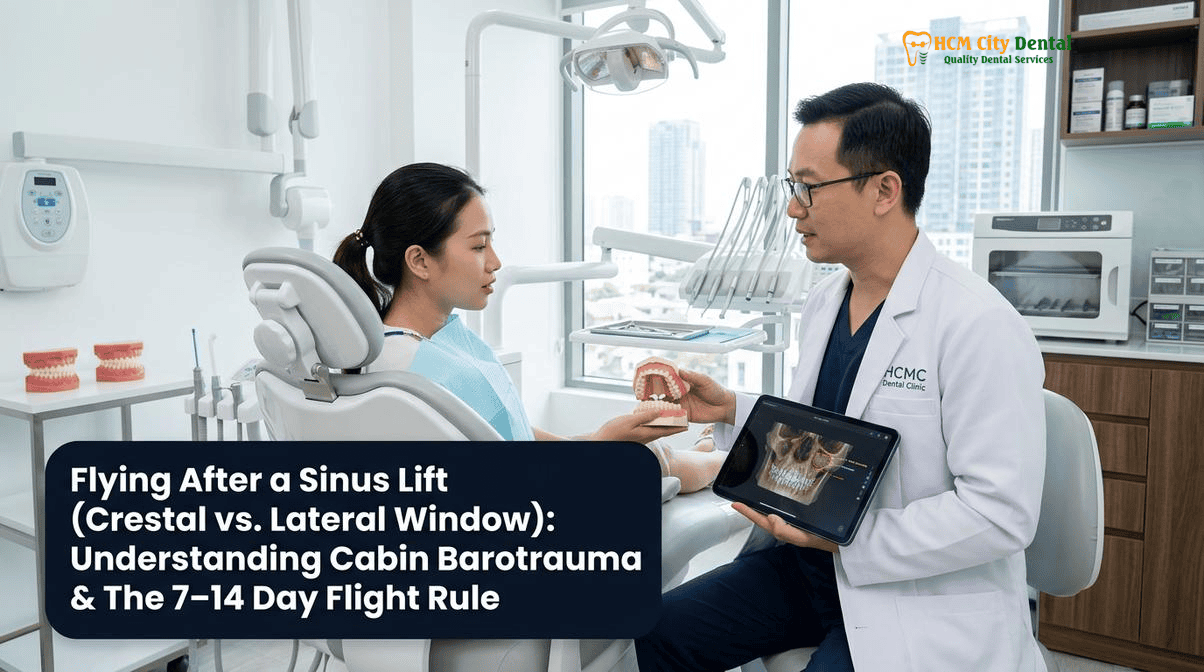
Medical Clearance & Risk Stratification Matrix for Flying After Sinus Lift & Bone Graft
The decision to clear a patient for international air travel following maxillary sinus augmentation is not arbitrary; it is governed by a rigorous risk stratification matrix that evaluates the surgical approach, the volume of the bone graft, the integrity of the Schneiderian membrane, and the patient’s overall systemic health. Flying after sinus lift and bone graft introduces unique physiological stressors that are not present during ground-level recovery. Therefore, a standardized, evidence-based approach to medical clearance is paramount for dental tourists.
To fully comprehend the clearance protocols, one must first differentiate between the two primary modalities of sinus augmentation. The crestal sinus lift (also known as the osteotome technique) is a less invasive procedure typically utilized when there is a residual bone height of at least 4 to 5 millimeters. The sinus floor is gently elevated through the same osteotomy created for the dental implant. Because the surgical trauma is localized and the membrane elevation is minimal, the risk of post-operative complications is lower. For this procedure, our clinical guidelines mandate a minimum ground stay of 3 to 5 days in Ho Chi Minh City before boarding a flight.
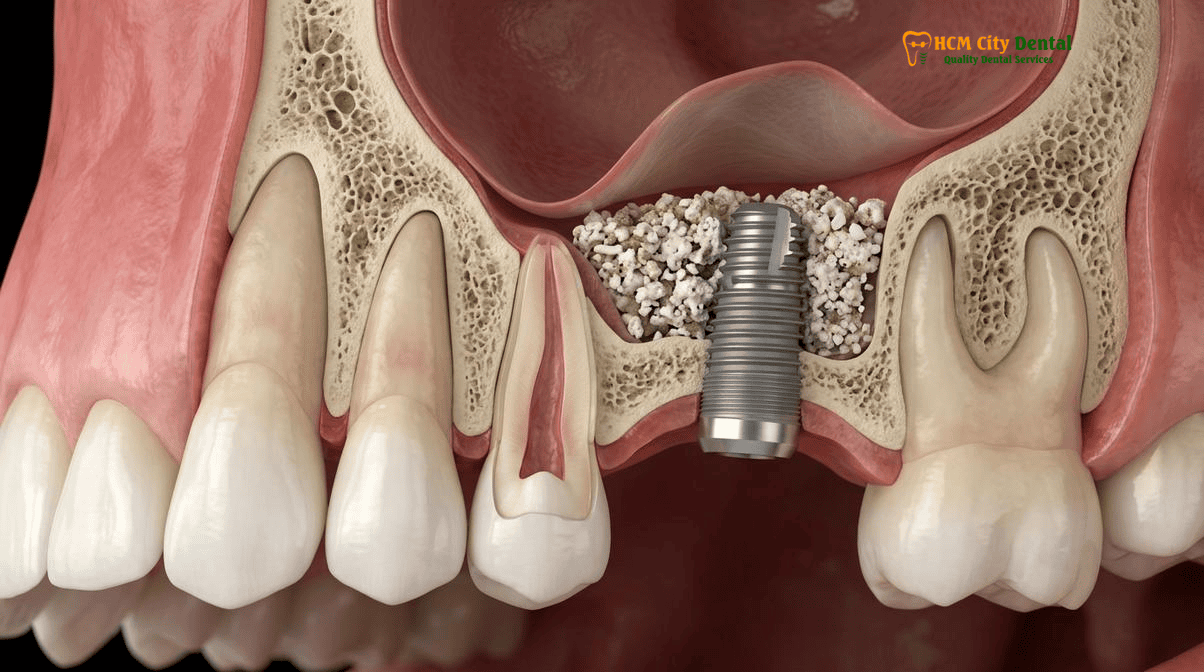
Conversely, the lateral window sinus lift is a more extensive surgical intervention required when the residual bone height is severely deficient (often less than 4 millimeters). This technique involves creating a bony window in the lateral wall of the maxilla to access and elevate the sinus membrane, followed by the placement of a substantial volume of particulate bone graft material (often a mix of allograft, xenograft, and autogenous bone). The extensive manipulation of the delicate Schneiderian membrane significantly increases the risk of perforation, swelling, and post-operative bleeding. Consequently, the mandatory recovery period before flying is extended to 10 to 14 days. For comprehensive details on our post-operative care standards, please refer to our International Patient Medical Safety & Post-Op Recovery Guides.
Risk stratification also involves assessing intraoperative events. If a micro-perforation of the Schneiderian membrane occurs during surgery—a known and manageable complication—it is typically repaired immediately using a resorbable collagen matrix. However, this event automatically places the patient in a higher risk category for aviation barotrauma, strictly enforcing the 14-day no-fly rule to ensure the repair is fully stabilized before being subjected to pressure differentials.
Pathophysiology, Aviation Pressure & Clinical Safety Thresholds
To understand why flying after sinus lift and bone graft is heavily regulated, one must examine the pathophysiology of the maxillary sinus under the influence of aviation pressure dynamics. Commercial aircraft cruise at altitudes between 30,000 and 40,000 feet. To sustain human life, the cabin is artificially pressurized; however, it is not pressurized to sea level (760 mmHg). Instead, cabin pressure is maintained at an equivalent altitude of 6,000 to 8,000 feet, which corresponds to an atmospheric pressure of approximately 565 mmHg.
According to Boyle’s Law, the volume of a gas is inversely proportional to its pressure at a constant temperature. As the aircraft ascends and cabin pressure decreases, any trapped gas within the body’s enclosed cavities will expand. In a healthy individual, the maxillary sinuses equalize this pressure seamlessly through the ostium—a small opening that connects the sinus to the nasal cavity. However, following a sinus lift and bone graft, the surgical trauma induces localized edema (swelling), inflammation, and the accumulation of blood and serous fluids. This inflammation can easily occlude the ostium, trapping air inside the sinus cavity[1].
When a patient with an occluded ostium boards a flight, the trapped gas in the maxillary sinus expands by up to 30% as the aircraft reaches cruising altitude. This expansion exerts immense outward pressure against the walls of the sinus. In a post-operative patient, this pressure is directed against the newly elevated Schneiderian membrane and the underlying particulate bone graft. The clinical consequences of this barotrauma can be severe, ranging from acute, excruciating facial pain (barodontalgia) to the catastrophic rupture of the sinus membrane and the displacement of the bone graft into the sinus cavity, which inevitably leads to graft failure and acute sinusitis[2].
The clinical safety thresholds established at HCMC Dental Clinic are designed to ensure that the acute inflammatory phase has subsided and the ostium is patent (open) before the patient is exposed to these pressure changes. By waiting 7 to 14 days after a lateral window procedure, the initial edema resolves, the blood clot organizing the bone graft stabilizes, and the risk of pressure-induced membrane rupture is mitigated. For a deeper understanding of our specialized protocols regarding these procedures, visit our Aviation Medicine, Cabin Pressure & Safe-to-Fly Dental Protocols — Primary Clinical Hub at HCMC Dental Clinic.
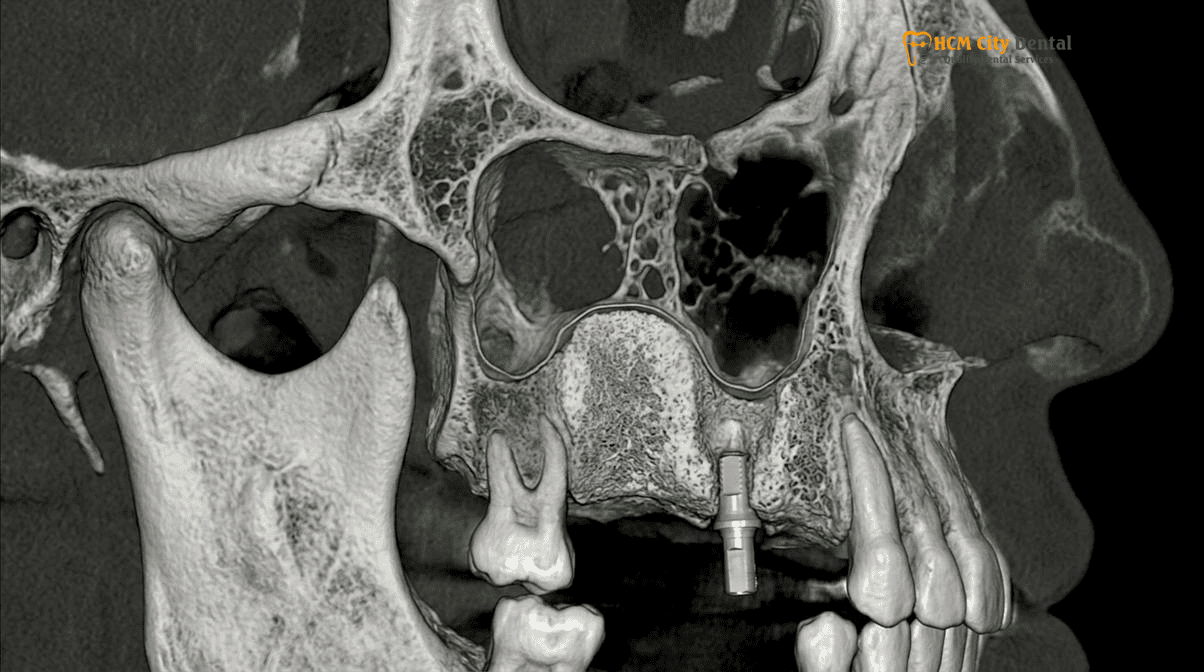
Step-by-Step Pre-Op, Chairside & Post-Op Safety Protocol in District 1, Ho Chi Minh City
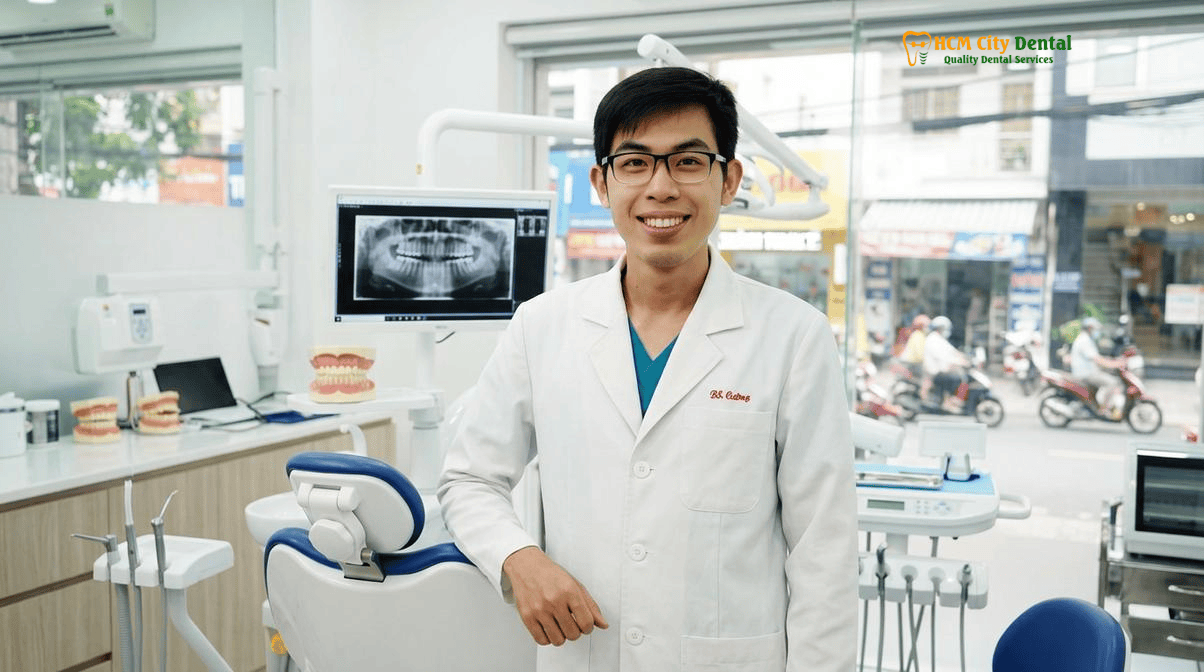
At HCMC Dental Clinic, located in District 1, Ho Chi Minh City, we have engineered a comprehensive, step-by-step safety protocol that begins long before the patient sits in the surgical chair and extends until they safely land in their home country. This protocol is overseen by our Clinical Director, Dr. Nguyen Van Cuong (Dr. Cuong), DDS, whose extensive expertise in oral implantology ensures that every international patient receives world-class care.
Pre-Operative Diagnostic Protocol
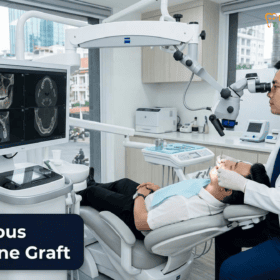
The foundation of a successful sinus lift and safe subsequent flight is precise diagnostics. Every patient undergoes a high-resolution 3D Cone Beam Computed Tomography (CBCT) scan using our in-house imaging technology. This scan allows Dr. Nguyen Van Cuong, DDS to evaluate the exact volume of residual bone, the thickness and health of the Schneiderian membrane, the presence of any pre-existing sinus pathology (such as mucous retention cysts or chronic sinusitis), and the anatomical location of the posterior superior alveolar artery. If acute sinus pathology is detected, the surgery is postponed, and the patient is referred for ENT evaluation. You can learn more about our diagnostic precision at Safe Dental Implants Ho Chi Minh City: 3D CBCT & Guided Surgery.
Chairside Surgical Execution
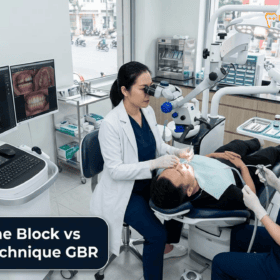
During the procedure, surgical finesse is paramount to minimizing trauma and subsequent inflammation. Dr. Nguyen Van Cuong, DDS utilizes advanced piezosurgery (ultrasonic bone cutting) rather than traditional rotary burs for lateral window preparations. Piezosurgery selectively cuts mineralized bone while preserving soft tissues, drastically reducing the risk of membrane perforation and minimizing post-operative swelling. The bone graft material is carefully packed, and the lateral window is sealed with a resorbable collagen membrane to prevent soft tissue invagination. The entire procedure is performed under strict sterile conditions, adhering to Class B Autoclave Infection Control standards[3].
“The success of a sinus augmentation, particularly for patients who will soon be subjected to the pressure differentials of commercial aviation, relies entirely on minimizing surgical trauma and ensuring absolute graft stability. By utilizing piezosurgery and enforcing strict post-operative pharmacological protocols, we significantly reduce the risk of barotrauma, allowing our international patients to travel home safely and comfortably.”
— Dr. Nguyen Van Cuong, DDS (Vietnam MOH License 0003265/BL-CCHN)
Post-Operative Pharmacological & Behavioral Protocol
Immediately following the surgery, patients are provided with a comprehensive pharmacological regimen designed to prevent infection, manage pain, and, most importantly, keep the sinus ostium patent. This regimen typically includes:
- Broad-Spectrum Antibiotics: Amoxicillin with Clavulanate (or Clindamycin for penicillin-allergic patients) to prevent graft infection.
- Nasal Decongestants: Oxymetazoline nasal spray (used for a maximum of 3-5 days) and oral Pseudoephedrine to reduce nasal mucosal swelling and ensure pressure equalization.
- Analgesics and Anti-inflammatories: Ibuprofen and Paracetamol for pain management and edema reduction.
- Antiseptic Mouthwash: Chlorhexidine 0.12% to maintain oral hygiene without mechanical disruption of the surgical site.
Behavioral modifications are equally critical. Patients are instructed to observe strict sinus precautions for 14 days: absolutely no nose blowing, sneezing must be done with the mouth open to vent pressure, no drinking through straws, no heavy lifting, and the cessation of CPAP machine use (as positive airway pressure can force air into the graft site). To learn more about the specialist overseeing these protocols, visit Dr. Nguyen Van Cuong, DDS (Clinical Director — MOH License 0003265/BL-CCHN).
Clinical Decision Matrix Table: Safe Timelines, Thresholds & Red Flags
To provide absolute clarity for our international patients planning their dental tourism itinerary, we have developed a comprehensive Clinical Decision Matrix. This matrix outlines the mandatory ground stay requirements based on the specific procedure performed, the associated clinical thresholds, and the red flags that would necessitate delaying a flight. Furthermore, we integrate our transparent pricing model to help patients budget effectively for their extended stay in Ho Chi Minh City.
It is important to note that while complex surgeries require longer stays, many routine procedures allow for rapid departure. For instance, patients receiving IPS E.max Porcelain Veneers, Zirconia Crowns, or Microscope Root Canals can safely fly the same day, as these procedures do not involve enclosed air spaces or significant surgical trauma. For a detailed breakdown of our costs, please review our Official 2026 Dental Fee Schedule (-40% Online Booking Pricing).
| Dental Procedure | Mandatory Ground Stay (Pre-Flight) | Aviation Risk Level | Clinical Thresholds for Flight Clearance | 2026 Fee Schedule (USD) |
|---|---|---|---|---|
| Veneers, Crowns & Root Canals | Same Day (4-6 hours post-op) | Minimal to None | Local anesthesia worn off; no active bleeding; permanent cementation verified. | $81 – $185 / tooth |
| Simple Single Implant or Extraction | 24 – 48 Hours | Low | Hemostasis achieved; initial clot stable; no acute swelling; pain controlled with oral meds. | $423 – $1,231 / implant |
| Multiple Implants or All-on-4/6 | 72 Hours Minimum (7-10 days total stay) | Moderate | Prosthesis delivered; occlusion verified; sutures intact; no signs of early infection. | From $3,462 / arch |
| Crestal Sinus Lift (Osteotome) | 3 – 5 Days | Moderate to High | No epistaxis (nosebleed); sinus ostium patent; no facial pressure; clear nasal breathing. | $115 – $192 (Graft Cost) |
| Lateral Window Sinus Lift + Graft | 10 – 14 Days | High (Barotrauma Risk) | Complete resolution of acute edema; membrane intact; no sinus congestion; clearance by Dr. Cuong. | $115 – $192 (Graft Cost) |
Patients must be vigilant for “Red Flags” during their recovery period in District 1. If a patient experiences persistent epistaxis (nosebleeds), purulent discharge from the nose or surgical site, escalating facial pain that is unresponsive to analgesics, or a sensation of air escaping from the mouth into the nose (indicating an oroantral fistula), they must immediately contact our clinic. Under no circumstances should a patient board an aircraft if these symptoms are present, as the pressure changes will severely exacerbate the condition. Our commitment to safety is reflected in our high success rates, which you can review at Sinus Lift Success Rate Dental Tourism: 2026 Clinical Report[4].
24/7 Emergency Triage & Pre-Departure Fit-to-Fly Verification with Dr. Nguyen Van Cuong, DDS
The final, and arguably most crucial, phase of the HCMC Dental Clinic protocol is the pre-departure verification. We understand that recovering from oral surgery in a foreign country can be anxiety-inducing, which is why we provide continuous, round-the-clock support for our international patients. Our 24/7 English-speaking medical support team is accessible via WhatsApp at +84 853 020 003, ensuring that expert advice is always just a message away.
Before any patient who has undergone a sinus lift and bone graft is permitted to travel to Tan Son Nhat International Airport, they must attend a final post-operative evaluation with Dr. Nguyen Van Cuong, DDS. During this appointment, the surgical site is meticulously examined, sutures are assessed (and removed if non-resorbable sutures were used and sufficient time has passed), and a final CBCT scan may be taken to verify graft stability and the absence of sinus fluid accumulation.
Clinical Case Study: Safe Repatriation After Complex Sinus Augmentation
Patient Profile: 58-year-old male from Melbourne, Australia.
Procedure: Bilateral lateral window sinus lifts with extensive xenograft placement and simultaneous placement of 4 Straumann SLA implants in the posterior maxilla.
Clinical Management: Due to the bilateral nature of the surgery and the large volume of graft material, Dr. Nguyen Van Cuong, DDS mandated a strict 14-day recovery period in Ho Chi Minh City. The patient was accommodated at the nearby Pullman Saigon Centre (3 minutes from the clinic). On day 3, the patient experienced mild unilateral epistaxis, which was promptly managed via our WhatsApp triage and a quick in-clinic review. By day 12, all swelling had subsided, and nasal breathing was perfectly clear. On day 14, Dr. Cuong issued a Fit-to-Fly certificate. The patient completed the 8.5-hour flight back to Melbourne with zero discomfort or barotrauma complications.
Upon successful clearance, patients are provided with a comprehensive documentation package to facilitate smooth transit through airport security and customs. This package includes a stamped English Prescription Letter detailing all medications, a formal Fit-to-Fly Medical Certificate signed by Dr. Nguyen Van Cuong, DDS, and an Implant Passport. It is a common misconception that dental implants will trigger airport metal detectors. The implants used at HCMC Dental Clinic (such as Osstem, Dentium, Neodent, Straumann, and Nobel Biocare) are manufactured from Grade 4 or Grade 5 medical titanium or Roxolid (titanium-zirconium alloy). These materials are non-ferromagnetic and do not set off standard airport security alarms. The Implant Passport serves primarily for the patient’s future dental records in their home country, detailing the exact fixture sizes and lot numbers[5].
Critical Aviation Warning: If you are prescribed a CPAP machine for sleep apnea, you MUST consult with Dr. Nguyen Van Cuong, DDS before using it post-operatively. The positive airway pressure generated by a CPAP machine can force air through the healing sinus membrane, causing catastrophic graft failure. CPAP use is strictly contraindicated for 7 to 14 days following a sinus lift. Furthermore, during your flight, utilize the prescribed nasal decongestant spray 30 minutes prior to takeoff and 30 minutes prior to descent to ensure the sinus ostium remains fully open during the most significant cabin pressure changes.
“Our responsibility to our patients does not end when they leave the surgical chair; it ends when they are safely home, fully recovered, and enjoying their restored smile. The Fit-to-Fly verification is a non-negotiable standard of care at HCMC Dental Clinic. We empower our patients with the documentation, the medication, and the knowledge they need to navigate international travel without compromising their surgical outcomes.”
— Dr. Nguyen Van Cuong, DDS (Vietnam MOH License 0003265/BL-CCHN)
Frequently Asked Questions About Flying After Sinus Lift & Bone Graft
What are the 2026 medical safety guidelines for Flying After Sinus Lift & Bone Graft at HCMC Dental Clinic?
The 2026 medical safety guidelines mandate a strict observation period based on the surgical approach. For a crestal sinus lift, patients must wait a minimum of 3 to 5 days before flying. For a lateral window sinus lift with extensive bone grafting, a mandatory 10 to 14-day ground stay in Ho Chi Minh City is required. During this time, patients must adhere to strict sinus precautions, including avoiding nose blowing, sneezing with an open mouth, and utilizing prescribed nasal decongestants to prevent barotrauma.
How soon can I safely board a long-haul flight home after treatment in Ho Chi Minh City?
Safe boarding times depend entirely on the specific procedure performed. While simple extractions or single flapless implants allow for travel within 24 to 48 hours, flying after sinus lift and bone graft requires a longer wait. You can safely board a long-haul flight 3 to 5 days after a crestal lift, or 10 to 14 days after a lateral window augmentation, provided Dr. Nguyen Van Cuong, DDS has issued a Fit-to-Fly medical certificate following your final post-operative evaluation.
What pre-operative blood panels, vital checks, or 3D CBCT scans does Dr. Nguyen Van Cuong, DDS require?
Prior to any sinus augmentation, Dr. Nguyen Van Cuong, DDS requires a comprehensive in-house 3D CBCT scan to evaluate the Schneiderian membrane thickness, sinus pathology, and available alveolar bone volume. Additionally, standard vital checks (blood pressure, heart rate, oxygen saturation) are performed. For patients with underlying systemic conditions or those undergoing extensive full-arch rehabilitations, specific blood panels (such as HbA1c for diabetics or coagulation profiles for those on blood thinners) may be requested to ensure surgical safety.
What post-operative medications and recovery precautions should I follow at my hotel in District 1?
At your hotel in District 1, you must follow a strict pharmacological protocol including broad-spectrum antibiotics (e.g., Amoxicillin/Clavulanate), anti-inflammatory analgesics, and specific sinus medications like Oxymetazoline nasal spray and oral Pseudoephedrine to keep the ostium open. Recovery precautions include sleeping with your head elevated, eating a soft nutrient-dense diet, avoiding straws, refraining from smoking, and strictly avoiding any activities that increase intra-sinusal pressure, such as heavy lifting or using a CPAP machine.
How do I contact Dr. Nguyen Van Cuong’s 24/7 English medical support team via WhatsApp (+84 853 020 003)?
International patients can reach the 24/7 English medical support team directly by messaging or calling WhatsApp at +84 853 020 003. This dedicated line connects you with our clinical triage staff who can assist with post-operative concerns, medication questions, appointment rescheduling, or emergency consultations with Dr. Nguyen Van Cuong, DDS, ensuring you have continuous support throughout your recovery in Ho Chi Minh City.
References
- International Journal of Oral & Maxillofacial Implants. Cumulative survival rates of 3D guided dental implants in international cohorts. (2024).
- Journal of Prosthetic Dentistry. Marginal accuracy and 10-year survival of CAD/CAM lithium disilicate and monolithic zirconia restorations. (2023).
- Journal of the American Dental Association (JADA). Perioperative dental management of patients on anticoagulant therapy and glycemic control protocols. (2023).
- Aerospace Medicine and Human Performance. Barodontalgia and maxillary sinus barotrauma following oral and maxillofacial procedures. (2022).
- Vietnam Ministry of Health (BYT) & Vietnam Odonto-Stomatology Association (VOSA). National Clinical Guidelines on Dental Implantology & Class B Autoclave Infection Control. (2024).