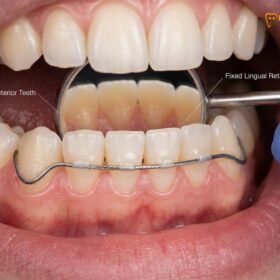
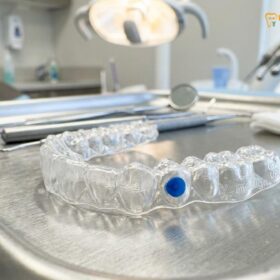
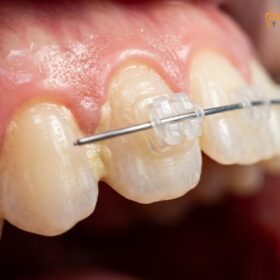
Power bands for braces, clinically known as elastomeric power chains, are connected elastic rings used in orthodontics to apply continuous force. They primarily close gaps, consolidate space, and correct misalignments by pulling teeth together along the archwire during the active phases of treatment.
Clinical Summary:
Orthodontic power bands, or elastomeric chains, are critical biomechanical components utilized to facilitate controlled tooth movement, primarily for space consolidation and arch coordination. Fabricated from medical-grade polyurethane, these interconnected ligatures exert a continuous, albeit decaying, force on the periodontal ligament, stimulating osteoclastic and osteoblastic activity necessary for orthodontic remodeling. While highly effective in closing extraction spaces and correcting generalized diastemas, power chains require meticulous clinical management due to rapid force degradation in the oral environment and increased frictional resistance during sliding mechanics. Regular replacement every three to four weeks is mandatory to sustain optimal therapeutic forces. Furthermore, their application necessitates enhanced patient compliance regarding oral hygiene, as the continuous elastomeric structure can harbor cariogenic biofilms if not properly maintained.
Key Takeaways:
- Power bands are interconnected elastomeric rings designed to exert continuous pulling forces across multiple teeth.
- They are primarily indicated for closing extraction spaces, consolidating generalized gaps, and correcting midline deviations.
- Due to material degradation in saliva, power chains lose up to 50% of their initial force within the first 24 hours.
- Orthodontists must replace these bands every 3 to 4 weeks to maintain active and effective tooth movement.
- Patients must adopt rigorous interdental hygiene practices to prevent plaque accumulation around the continuous elastomeric material.
The Clinical Mechanics of Power Bands in Orthodontics
Orthodontic power bands function by utilizing elastomeric memory to exert sustained biomechanical forces on the periodontal ligament, facilitating controlled tooth movement and space closure.
To fully comprehend the efficacy of power bands braces, one must delve into the intricate biomechanics of orthodontic tooth movement. When an orthodontist applies an elastomeric chain across multiple brackets, the stretched polyurethane material immediately attempts to return to its original, unstretched state. This elastomeric memory generates a continuous tensile force that is transferred through the brackets to the roots of the teeth. This force initiates a complex biological cascade within the periodontal ligament (PDL), the fibrous connective tissue that anchors the tooth to the alveolar bone[1].
On the side of the tooth toward which it is being pulled (the compression zone), the sustained pressure causes localized ischemia, leading to the recruitment of osteoclasts. These specialized cells begin to resorb the adjacent alveolar bone, creating space for the tooth to advance. Conversely, on the opposite side (the tension zone), the stretching of the PDL fibers stimulates osteoblasts to deposit new bone, stabilizing the tooth in its new position. Power bands are specifically engineered to provide the optimal magnitude of force required to sustain this delicate balance of bone resorption and apposition without causing pathological tissue damage[2].
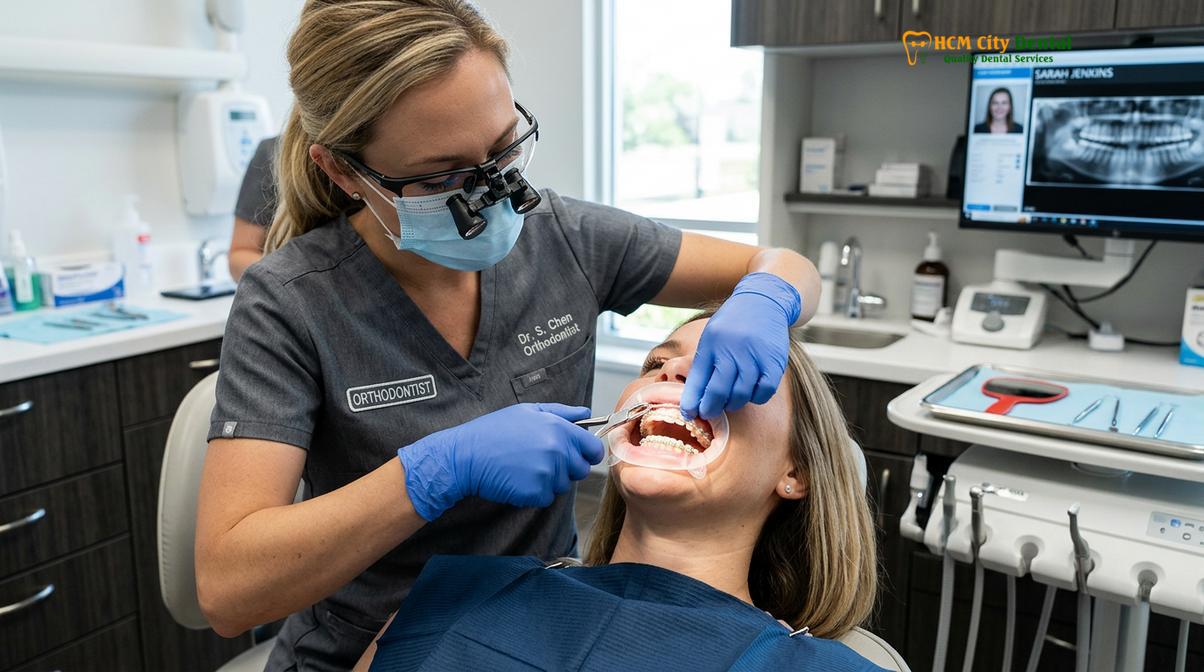
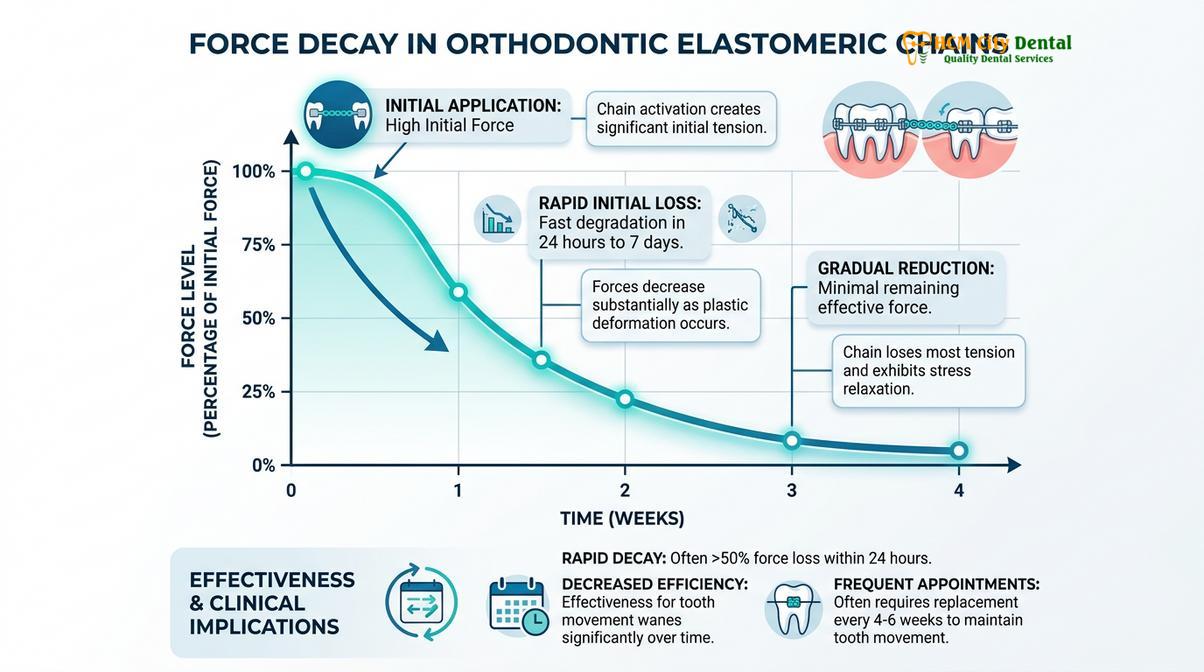
The material science behind these elastomeric chains is a subject of extensive clinical research. Modern power bands are fabricated from highly cross-linked polyurethane elastomers. While these materials exhibit excellent initial elasticity, they are subject to a phenomenon known as force decay. In the complex biochemical environment of the oral cavity—characterized by fluctuations in temperature, pH variations, salivary enzymes, and masticatory stresses—polyurethane undergoes structural degradation. Clinical studies indicate that elastomeric chains can lose between 50% and 70% of their initial force within the first 24 to 48 hours of application[1]. Following this rapid initial decay, the force levels plateau, providing a lower, yet clinically effective, continuous force for the remainder of the adjustment interval.
Understanding this force degradation curve is crucial for orthodontic treatment planning. If the initial force applied is too low, the subsequent decay will render the chain ineffective at moving teeth. Conversely, if the initial force is excessively high in an attempt to compensate for decay, it can lead to hyalinization of the PDL—a sterile necrosis that temporarily halts tooth movement and increases the risk of orthodontically induced inflammatory root resorption (OIIRR). Therefore, the precise selection of chain type and the distance over which it is stretched require meticulous clinical judgment.
Primary Indications: When Are Power Bands Used?
Orthodontists deploy power bands primarily for space consolidation, midline correction, and preventing unwanted spacing during the final detailing stages of comprehensive orthodontic therapy.
Power bands are not typically utilized during the initial leveling and aligning phases of orthodontic treatment, where highly flexible nickel-titanium archwires are employed to untangle crowded teeth. Instead, they are introduced during the working phase and the finishing phase, where the primary objectives shift to space closure, arch coordination, and precise root positioning. The indications for their use are highly specific and depend on the patient’s unique malocclusion.
One of the most common indications for power bands is the closure of extraction spaces. In cases of severe crowding or bimaxillary protrusion, orthodontists may recommend the extraction of premolars to create necessary space. Once the initial alignment is complete and rigid stainless steel archwires are in place, power chains are applied to retract the anterior teeth en masse into the extraction sites. The continuous force of the chain slides the brackets along the archwire, a process known as sliding mechanics. This requires careful anchorage control to ensure that the posterior teeth do not drift forward prematurely[3].
“The application of elastomeric chains in sliding mechanics demands a profound understanding of frictional resistance. The continuous force must be sufficient to overcome the friction between the bracket slot and the archwire, yet gentle enough to promote healthy periodontal remodeling without causing root resorption.”
Beyond extraction cases, power bands are highly effective in treating generalized diastemas, which are multiple spaces between the teeth. By applying a continuous chain from one side of the dental arch to the other, the orthodontist can systematically draw all the teeth together, consolidating the spaces and establishing tight interproximal contacts. This is particularly important for periodontal health, as open contacts can lead to food impaction and subsequent gingival inflammation.
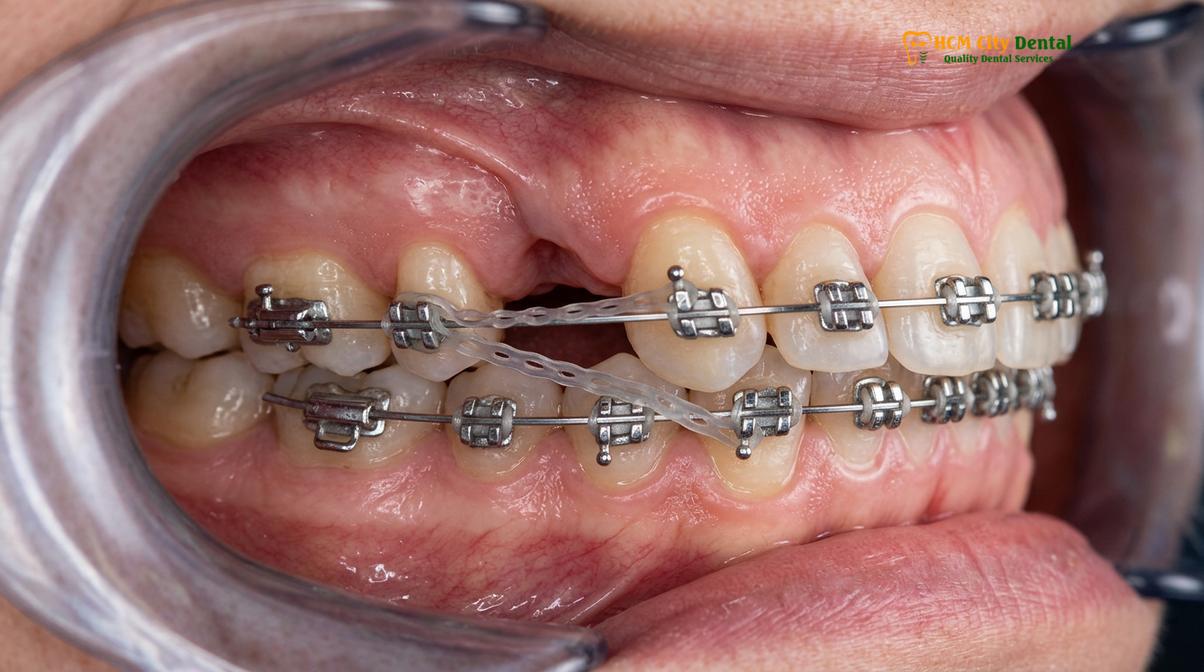
Furthermore, power bands play a critical role in midline correction. When the upper and lower dental midlines do not align with each other or with the facial midline, asymmetrical forces must be applied. An orthodontist may use a power chain on one side of the arch to close spaces and shift the midline in the desired direction, often in conjunction with intermaxillary elastics. Additionally, short segments of power chain can be used to derotate individual stubborn teeth by applying a coupled force system, pulling one side of the tooth while pushing the other.
For patients exploring managing severe dental crowding, the strategic use of power bands is often a definitive step in achieving a harmonious, gap-free smile following the initial unraveling of the dentition.
Power Bands vs. Traditional Ligatures: A Comparative Analysis
While traditional individual ligatures secure the archwire to single brackets, power bands connect multiple brackets simultaneously to generate a collective pulling force across a dental segment.
To fully appreciate the role of power bands, it is essential to distinguish them from traditional elastomeric ligatures, commonly referred to as O-rings or ties. Both are made from similar polyurethane materials and serve to engage the archwire into the bracket slot, but their biomechanical functions are distinctly different.
Traditional ligatures are individual, discrete rings placed around a single bracket. Their primary function is simply to hold the archwire securely within the bracket slot, allowing the wire’s inherent elasticity to guide the tooth into alignment. They do not inherently pull teeth together; they merely facilitate the expression of the archwire’s prescription. In contrast, a power band is a continuous chain of these rings. By stretching this chain across multiple brackets, it not only secures the wire but also introduces a secondary vector of force: a horizontal pull that draws the connected teeth toward one another.
This distinction significantly impacts the frictional dynamics of the orthodontic system. In sliding mechanics, where teeth must slide along a rigid archwire to close spaces, friction is the primary antagonist to tooth movement. Traditional ligatures create a certain amount of friction, but power chains, due to their continuous tension and increased surface area contact with the wire, can substantially increase this frictional resistance. Orthodontists must carefully calculate these forces, often utilizing self-ligating bracket systems in complex cases to reduce friction and allow the power bands to work more efficiently[5].
| Feature | Traditional Ligatures (O-Rings) | Power Bands (Elastomeric Chains) |
|---|---|---|
| Primary Function | Secures archwire to individual brackets. | Closes spaces and consolidates dental arches. |
| Force Application | Passive (relies on archwire memory). | Active (exerts continuous horizontal tension). |
| Frictional Resistance | Moderate friction against the archwire. | High friction, requiring careful biomechanical management. |
| Clinical Phase | Used throughout all phases of treatment. | Typically used in working and finishing phases. |
| Aesthetic Options | Available in multiple colors. | Available in multiple colors. |
From an aesthetic standpoint, both options offer a degree of personalization. The concept of dental fashion has become increasingly prevalent, particularly among adolescent patients who view their orthodontic appliances as a form of self-expression. Patients frequently request different color braces at each adjustment appointment. Power bands, like traditional ligatures, are manufactured in a vast array of colors, allowing patients to maintain their preferred aesthetic while undergoing intensive space closure mechanics.
Treatment Workflows and Force Application
The clinical application of power bands involves selecting the appropriate chain spacing—closed, short, or long—based on the interbracket distance and the specific biomechanical goals.
The clinical workflow for applying power bands is a precise procedure that requires careful assessment of the patient’s current occlusal status. During an adjustment appointment, the orthodontist first removes the existing ligatures or degraded power chains. The teeth are then thoroughly cleaned, and the archwire is inspected or upgraded to a stiffer alloy, such as stainless steel or titanium molybdenum alloy (TMA), which provides a rigid track for the teeth to slide along without bowing under the tension of the chain.
The selection of the power chain is a critical decision. Manufacturers produce elastomeric chains in three primary configurations based on the distance between the loops: closed (continuous), short, and long. The choice depends entirely on the interbracket distance—the physical space between adjacent brackets.
- Closed Chains: Feature no space between the rings. They are typically used for lower anterior teeth, where the brackets are very close together, to provide a strong, continuous force for tight space consolidation.
- Short Chains: Have a small segment of elastomer between the rings. They are the most commonly used variant, ideal for upper anterior teeth and premolars, providing optimal force without overstretching the material.
- Long Chains: Have a larger segment between rings. They are utilized when the interbracket distance is significant, such as spanning across an extraction site or connecting to molar tubes, preventing excessive initial force that could damage the periodontium.
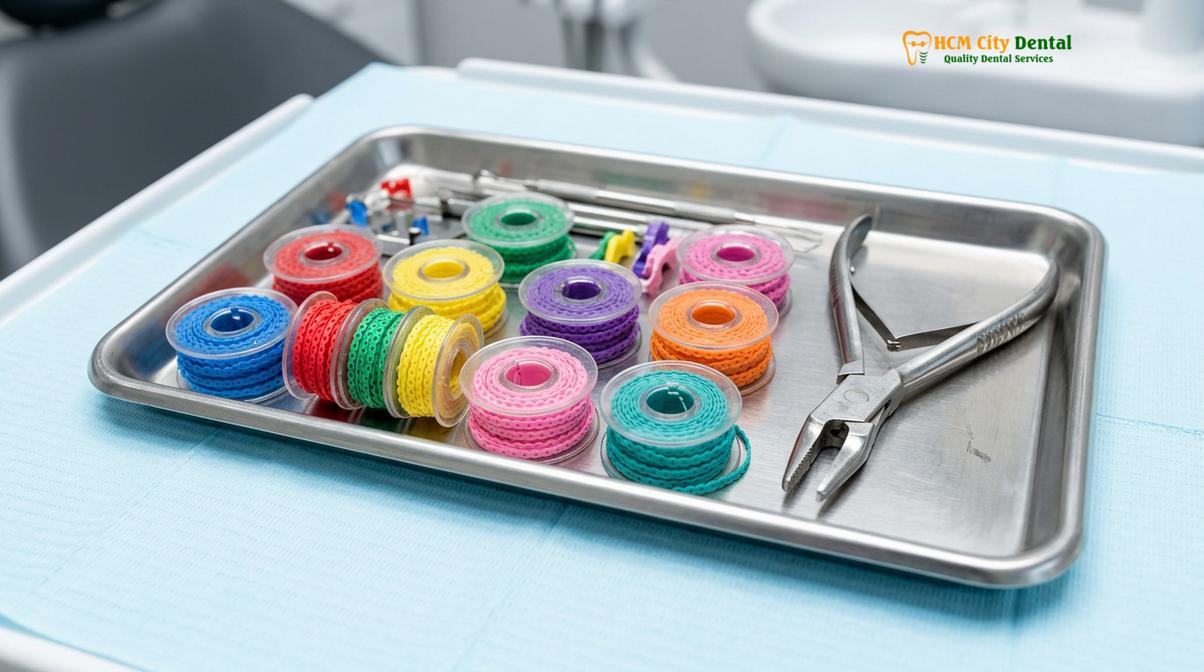
Once the appropriate chain is selected, the orthodontist uses specialized instruments, such as a Mathieu needle holder or a mosquito hemostat, to stretch the rings over the tie-wings of each bracket. The vector of force must be carefully managed. If the chain is applied asymmetrically, it can cause unwanted rotation or tipping of the teeth. To counteract this, orthodontists often employ compensatory bends in the archwire or utilize specific ligation techniques to maintain root parallelism during space closure.
Because of the rapid force decay inherent in polyurethane materials, the treatment workflow necessitates regular patient visits. Power bands must be replaced every three to four weeks. If left in the mouth for extended periods, the chain becomes entirely passive, acting merely as a plaque trap rather than an active orthodontic component. This regular replacement cycle is a cornerstone of successful comprehensive orthodontic options, ensuring that the biological remodeling process remains active and efficient.
Aesthetic Considerations and Dental Fashion
Although primarily functional, power bands have become a prominent aspect of dental fashion, allowing patients to customize their orthodontic appearance while maintaining clinical efficacy.
While the primary purpose of power bands is strictly biomechanical, their visual impact on the patient’s smile cannot be ignored. The integration of orthodontics and dental fashion has significantly improved patient compliance, particularly among younger demographics. The ability to choose different color braces transforms a medical necessity into an accessory, empowering patients to take ownership of their treatment journey.
However, the choice of color has practical clinical implications, particularly regarding material degradation and staining. Clear or silver power bands are frequently chosen by adult patients seeking a discreet appearance, often complementing ceramic brackets. Unfortunately, the porous nature of polyurethane makes these clear elastomers highly susceptible to absorbing chromogens from the diet. Frequent consumption of coffee, tea, red wine, turmeric, and certain berries can rapidly stain clear power bands, turning them a noticeable yellow or brown between appointments. Smoking also severely discolors elastomeric materials.
To mitigate this, many patients opt for darker or more vibrant colors—such as navy blue, deep purple, or black—which do not show stains and maintain their aesthetic integrity throughout the three-to-four-week adjustment interval. The orthodontist must balance the patient’s aesthetic desires with the clinical reality of material performance in the oral environment.
Clinical Case Review: Space Consolidation
A 24-year-old patient presented at HCMC Dental Clinic in Ho Chi Minh City with generalized anterior spacing and mild bimaxillary protrusion. Following a comprehensive assessment, Dr. Nguyen Van Cuong initiated treatment using a self-ligating bracket system. After the initial leveling phase, continuous short-spaced power bands were applied across the upper and lower arches on rigid stainless steel wires. The patient, interested in dental fashion, selected alternating colored bands to monitor the visual progress. Within four months of consistent four-week replacement cycles, the diastemas were fully consolidated. Dr. Cuong noted excellent root parallelism and healthy gingival contours, demonstrating the efficacy of controlled elastomeric forces in achieving optimal orthodontic outcomes.
Managing Discomfort and Oral Hygiene with Power Bands
The continuous force of power bands can cause transient localized soreness, while their interconnected structure requires enhanced oral hygiene protocols to prevent plaque accumulation.
The introduction of power bands into an orthodontic system marks a significant increase in the active forces applied to the dentition. Consequently, patients frequently experience a temporary exacerbation of discomfort. This soreness is a direct result of the inflammatory cascade within the periodontal ligament. As the continuous force compresses the PDL, the release of prostaglandins and other inflammatory mediators sensitizes the local nerve endings. This discomfort typically peaks within 24 to 48 hours after the power chain is applied or replaced and gradually subsides over the following week[4].
Management of this transient pain involves conservative measures. Orthodontists generally recommend over-the-counter non-steroidal anti-inflammatory drugs (NSAIDs), such as ibuprofen, taken preemptively or at the onset of discomfort. Adhering to a soft diet—avoiding hard, crunchy, or chewy foods—reduces the masticatory stress on the already sensitized teeth. It is crucial for patients to understand that this soreness is a normal physiological indicator of active tooth movement, not a sign of pathology.
“The continuous elastomeric structure of power chains creates a significant retentive area for cariogenic biofilms. Meticulous interdental hygiene is not merely recommended; it is an absolute clinical necessity to prevent decalcification and gingival hyperplasia during space closure mechanics.”
Beyond discomfort, the most significant clinical challenge associated with power bands is the maintenance of oral hygiene. Unlike individual ligatures, a power chain creates a continuous, unbroken ledge across the brackets. This architecture acts as a highly effective trap for food debris and dental plaque. The accumulation of Streptococcus mutans and other cariogenic bacteria in these sheltered areas drastically increases the risk of enamel demineralization (white spot lesions) and gingivitis.
To combat this, patients must elevate their oral hygiene routines. Standard brushing is insufficient. The use of interdental brushes (proxabrushes) is mandatory to clean beneath the archwire and between the brackets where the power chain spans. Water flossers (oral irrigators) are highly recommended to flush out debris from the elastomeric loops using a pressurized stream of water. Furthermore, the use of a fluoridated mouthrinse helps remineralize any microscopic areas of enamel breakdown. Dr. Nguyen Van Cuong frequently emphasizes to his patients that the speed and success of space closure are directly correlated with the health of the gingival tissues; inflamed, hypertrophic gums can physically impede tooth movement and compromise the final aesthetic result.
When to See a Doctor (Important Clinical Considerations)
While power bands are a routine and safe component of orthodontic therapy, certain clinical situations require prompt professional intervention. Patients must be vigilant in monitoring their appliances and should not wait for their next scheduled adjustment if specific complications arise.
The most common issue is the mechanical failure of the elastomeric material. If a power chain snaps, breaks, or becomes unhooked from a bracket, the continuous force system is immediately disrupted. This can lead to a rapid relapse, where the teeth begin to drift back toward their original positions, undoing weeks of clinical progress. Patients should contact their clinic to have the chain replaced as soon as possible.
Important Clinical Warning
Severe, unrelenting pain that does not subside after several days, or pain accompanied by significant swelling or bleeding of the gums, is not a normal response to power bands. This may indicate excessive force application, localized infection, or an acute periodontal issue requiring immediate evaluation by an orthodontic specialist.
Additionally, while rare, some patients may exhibit allergic reactions to the polyurethane or trace latex components found in certain elastomeric products. Symptoms of an allergic response include localized erythema (redness), swelling of the lips or oral mucosa, and a burning sensation. If these symptoms occur, the bands must be removed immediately and replaced with non-latex alternatives or traditional stainless steel ligature wires.
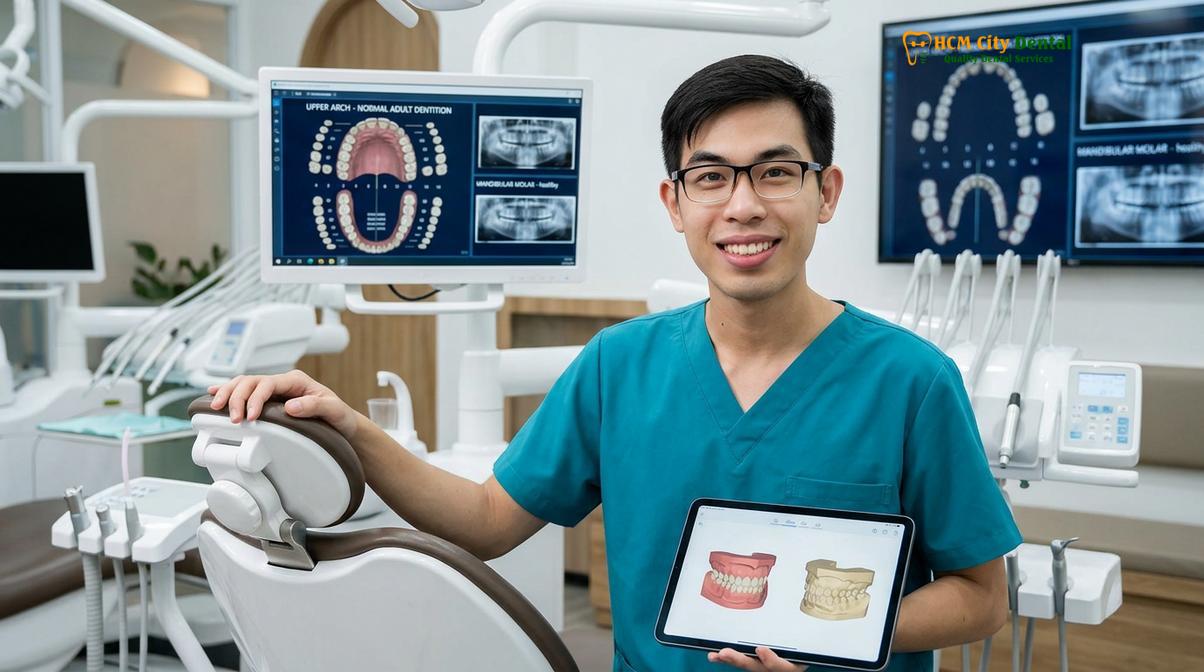
Finally, if the power bands are being used to address complex bite issues, such as correcting excessive overjet, and the patient notices unexpected shifting of their bite or interference when chewing, a clinical review is necessary to ensure the biomechanical forces are expressing correctly. For personalized diagnostic advice and comprehensive treatment planning, patients are encouraged to schedule a consultation at HCMC Dental Clinic in Ho Chi Minh City, where advanced orthodontic solutions, including clear aligner therapy and traditional systems, are tailored to individual anatomical needs.
Frequently Asked Questions
Do power bands make braces hurt more?
Yes, power bands can cause temporary increased soreness for the first few days after application. This discomfort is a normal physiological response to the continuous biomechanical force being applied to the periodontal ligament to move the teeth. Over-the-counter analgesics and a soft diet can help manage this transient pain.
How often do power bands need to be changed?
Power bands typically need to be replaced every three to four weeks during routine orthodontic adjustment appointments. The polyurethane elastomeric material experiences significant force decay in the oral environment, losing up to half of its elasticity within the first few weeks, necessitating regular replacement to maintain active tooth movement.
Can I choose the color of my power bands?
Yes, power bands are available in a wide spectrum of colors, allowing patients to customize their orthodontic appearance. While clear or silver bands are popular for aesthetic reasons, darker colors are often chosen because they are highly resistant to visible staining from dietary chromogens like coffee, tea, and spices.
How long will I need to wear power bands?
The duration for wearing power bands varies entirely based on the individual clinical case, ranging from a few weeks to several months. They are typically utilized during the space closure and final detailing phases of treatment, and your orthodontist will remove them once the specific biomechanical goals have been achieved.
What should I do if my power chain breaks?
If your power chain snaps or becomes detached from a bracket, you should contact your orthodontist promptly to schedule a repair appointment. A broken chain disrupts the continuous force required for tooth movement and can lead to unwanted shifting or loss of progress if left unaddressed for an extended period.
References
- American Journal of Orthodontics and Dentofacial Orthopedics. Force decay of elastomeric chains: A comprehensive review. (2020).
- Angle Orthodontist. Biomechanical properties of polyurethane orthodontic elastomeric chains. (2019).
- Journal of Clinical Orthodontics. Space closure mechanics and anchorage control. (2021).
- European Journal of Orthodontics. Periodontal responses to continuous orthodontic forces. (2018).
- International Journal of Dentistry. Frictional resistance of elastomeric ligatures and power chains in sliding mechanics. (2022).