Completing active orthodontic treatment—whether through traditional brackets or advanced clear aligner therapy—marks a significant milestone in achieving optimal dental aesthetics and functional occlusion. However, the removal of active orthodontic forces is merely the beginning of the crucial retention phase. When evaluating Vivera retainers vs Essix vs fixed lingual wire retainer cost, international patients, expatriates, and dental travelers must consider not only the initial financial investment but also the long-term biomechanical efficacy, material durability, and periodontal hygiene implications of each retention system. At HCMC Dental Clinic in District 1, Ho Chi Minh City, our clinical protocols emphasize evidence-based retention strategies designed to counteract the natural physiological forces that drive post-orthodontic relapse.
Orthodontic relapse is a complex multifactorial phenomenon driven by the elastic recoil of periodontal tissues, ongoing late mandibular growth, and functional muscular pressures from the tongue and perioral musculature. To mitigate these risks, modern orthodontics offers several retention modalities, ranging from removable thermoplastic overlays to fixed bonded multi-strand wires. Choosing the correct appliance requires a thorough understanding of material science, patient compliance levels, and individual occlusal dynamics. This comprehensive clinical guide explores the biomechanical differences between Invisalign Vivera retainers, standard Essix clear retainers, and fixed bonded lingual wires, detailing their respective lifespans, clinical indications, and transparent 2026 costs in Vietnam.
Clinical Summary:
The long-term stability of orthodontic outcomes depends entirely on a robust retention protocol. Invisalign Vivera retainers utilize a proprietary thermoplastic material offering superior crack resistance and durability, typically provided in a set of four. Standard Essix retainers provide a cost-effective, same-day solution using PETG or polyurethane materials, ideal for immediate retention needs. Fixed bonded lingual wires offer compliance-free retention for the anterior segment but require meticulous oral hygiene to prevent calculus accumulation and periodontal inflammation. At HCMC Dental Clinic, Dr. Nguyen Van Cuong, DDS advocates for a dual retention protocol, combining a fixed lingual wire with a removable clear overlay to maximize stability and protect against nocturnal bruxism, all delivered with transparent, highly competitive pricing for international patients in Vietnam.
Key Takeaways:
- Material Superiority: Invisalign Vivera retainers are manufactured from a proprietary polymer that is up to 30% more resistant to cracking and deformation compared to standard in-house Essix (PETG) retainers.
- Compliance vs. Hygiene: Fixed bonded lingual wires eliminate the risk of patient non-compliance but significantly increase the difficulty of interproximal flossing, requiring specialized hygiene tools and regular professional scaling.
- Dual Retention Efficacy: Combining a fixed 3-to-3 lingual wire with a nighttime removable clear retainer overlay is the clinical gold standard for preventing both anterior rotational relapse and posterior arch constriction.
- Same-Day Solutions: Utilizing the 3Shape Trios 5D intraoral scanner, HCMC Dental Clinic provides same day 3D scanned retainers in Ho Chi Minh City for travelers who have lost or damaged their appliances.
- Cost Efficiency: Booking online at HCMC Dental Clinic secures a -40% reduction, bringing the cost of a 4-set Vivera package to $308 USD and standard Essix retainers to $97 USD per pair.
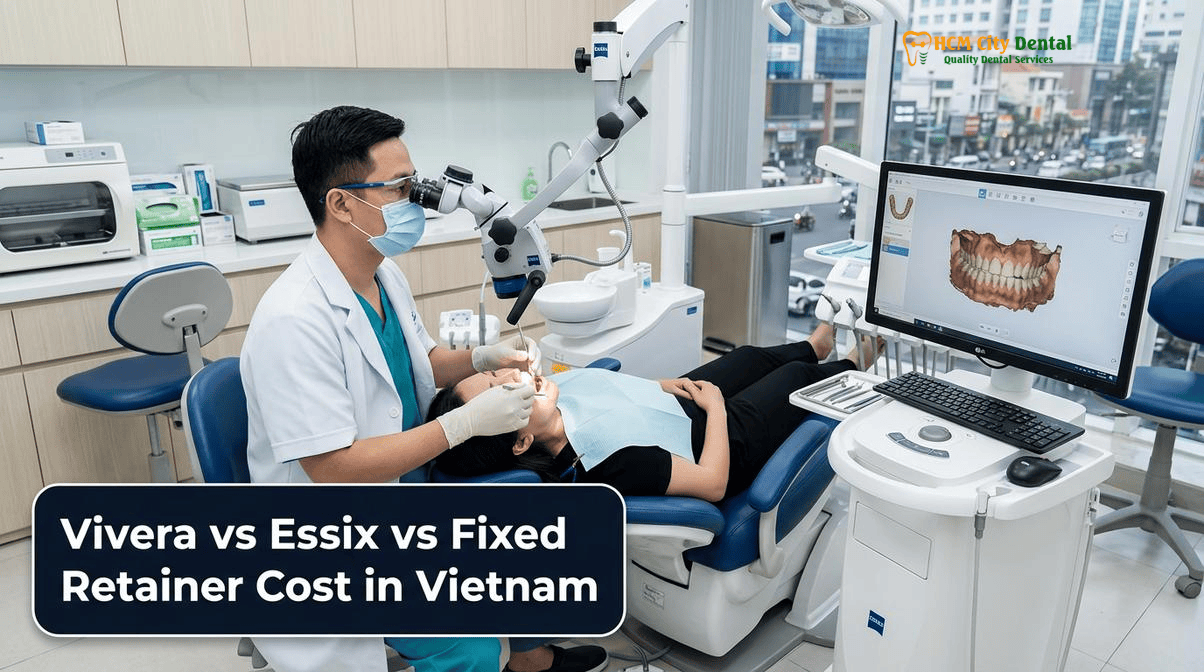
Why Teeth Shift Throughout Adult Life: Periodontal Sharpey’s Fiber Reorganization and Late Mandibular Growth
To understand the necessity of lifelong orthodontic retention, one must first examine the histology of the periodontium and the biomechanics of tooth movement. Teeth are not rigidly fused to the jawbone; rather, they are suspended within the alveolar socket by the periodontal ligament (PDL), a complex network of collagenous fibers. During active orthodontic treatment—whether utilizing Invisalign Clear Aligners & 3D Digital Orthodontics at HCMC Dental Clinic, custom 3D CAD/CAM lingual braces behind the teeth, or Damon Ultima/Q2 passive self-ligating brackets with Copper NiTi archwires—controlled mechanical forces induce osteoclastic bone resorption on the pressure side and osteoblastic bone apposition on the tension side.
Once these active forces are removed, the periodontal tissues require significant time to reorganize and stabilize. The principal fibers of the PDL, particularly Sharpey’s fibers which embed into the cementum and alveolar bone, possess a degree of elasticity. More critically, the supracrestal transseptal fibers—which connect adjacent teeth across the interdental bone—exhibit a strong “memory” of the tooth’s original position. These fibers can exert rotational and tipping forces on the teeth for months or even years after braces are removed, driving the initial phase of orthodontic relapse[1].
Beyond the immediate post-treatment reorganization of the periodontium, patients face the lifelong challenge of physiological tooth migration. Late mandibular growth, which can continue into a patient’s late twenties and early thirties, often results in a slight forward rotation of the mandible. If the maxillary arch restricts this forward movement, the mandibular incisors are forced lingually, leading to late lower anterior crowding. Furthermore, the natural phenomenon of mesial drift—the tendency of teeth to migrate forward toward the midline over time—exacerbates crowding as patients age. Without a physical barrier to counteract these continuous biological forces, relapse is virtually inevitable, underscoring the critical need for a permanent retention strategy.
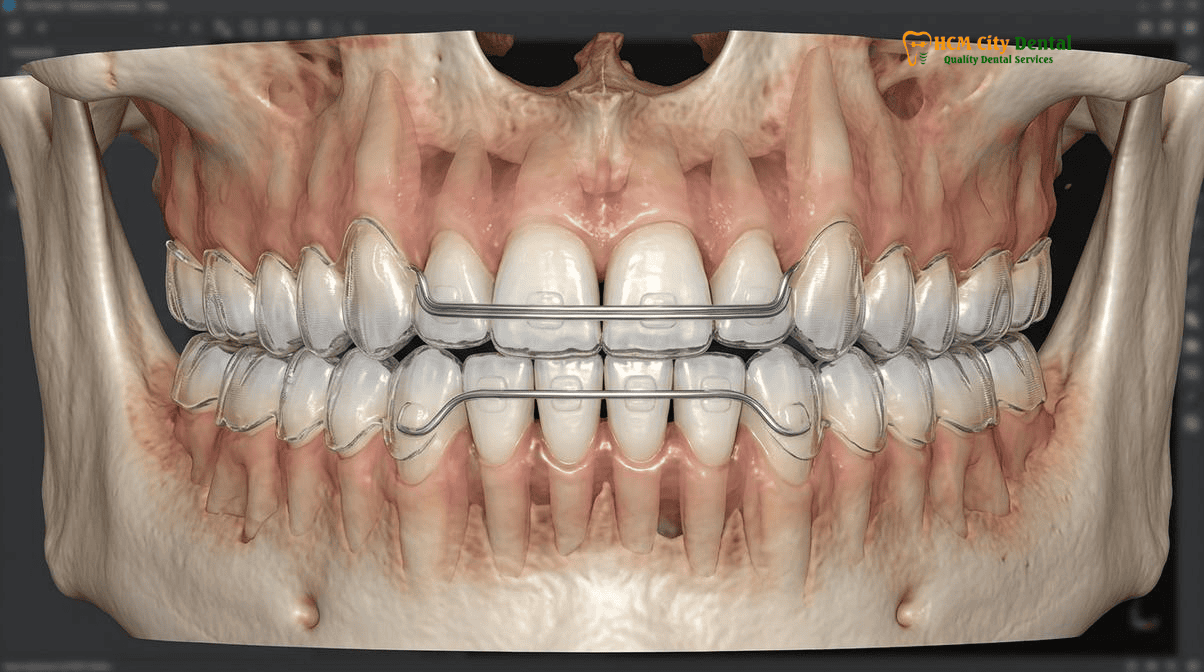
Invisalign Vivera Retainers vs. Standard In-House Essix (PETG / Zendura) Clear Retainers: 30% Higher Crack & Bruxism Resistance
When comparing removable clear plastic retainers, the material science dictates the appliance’s longevity, clarity, and resistance to deformation. The two most prominent options in modern digital orthodontics are Invisalign Vivera retainers and standard Essix retainers. While they may appear visually similar to the untrained eye, their manufacturing processes and structural properties differ significantly.
Standard Essix retainers are typically fabricated in-house at the dental clinic or a local dental laboratory. The process involves taking a digital scan or physical impression, printing a 3D resin model of the teeth, and using a vacuum-forming or pressure-molding machine to adapt a thermoplastic sheet over the model. The most common materials used for Essix retainers are PETG (Polyethylene Terephthalate Glycol) or Zendura (a rigid polyurethane). While Essix retainers provide excellent immediate retention and are highly cost-effective, PETG materials are susceptible to fatigue, micro-cracking, and occlusal wear, particularly in patients who exhibit nocturnal bruxism (teeth grinding). A standard Essix retainer typically requires replacement every 6 to 12 months depending on wear and tear.
In contrast, Invisalign Vivera retainers are manufactured exclusively by Align Technology. While active Invisalign aligners utilize the highly elastic SmartTrack polymer (designed for continuous force delivery alongside SmartForce attachments), Vivera retainers are fabricated from a proprietary, more rigid thermoplastic material specifically engineered for long-term retention. Clinical data indicates that the Vivera material is up to 30% stronger and more resistant to cracking and deformation than standard PETG vacuum-formed appliances[2]. Furthermore, Vivera retainers are produced using Align’s highly precise automated thermoforming process, ensuring an exact adaptation to the digital 3D model with a smooth, laser-cut trimline that maximizes patient comfort.
“The primary advantage of the Vivera system is its standardized durability and the convenience of the multi-set package. Because Vivera retainers are delivered in sets of four, patients have immediate backups available if a retainer is lost, heavily worn, or left in a hotel room during travel. This redundancy is crucial for preventing the rapid relapse that can occur when a patient goes without a retainer for even a few weeks.”
— Dr. Nguyen Van Cuong, DDS (Clinical Director — MOH License 0003265/BL-CCHN)
In the broader landscape of Wave 3 digital orthodontics, it is also important to note alternative premium retention systems. For instance, Straumann ClearCorrect utilizes a ClearQuartz tri-layer material with a 2mm high flat trimline for enhanced retention, while Angel Aligner Pro employs a 7+3 MasterControl S dual-shell system. However, for patients seeking the specific durability profile of Align Technology’s ecosystem, Vivera remains the industry benchmark. For a deeper dive into the specific costs associated with this system, patients can review our Invisalign Vivera Retainers Cost & Clinical Guide | HCMC Dental.
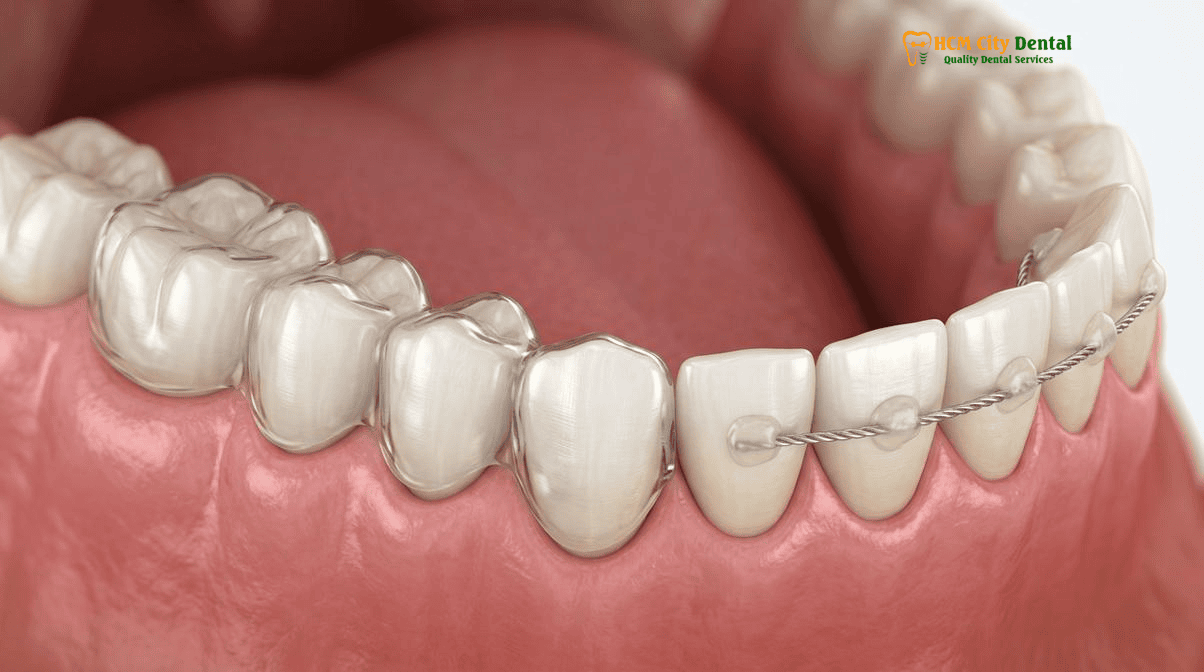
Fixed Bonded Multi-Strand Lingual Wire Retainers (3-to-3) vs. Removable Clear Retainers: Hygiene, Calculus & Bond Failure
While removable clear retainers offer excellent aesthetics and full-arch coverage, their efficacy is entirely dependent on patient compliance. For patients who struggle to wear their retainers consistently every night, a fixed bonded lingual wire retainer provides a compliance-free alternative, specifically targeted at preventing anterior crowding.
A fixed lingual retainer typically consists of a multi-strand, dead-soft stainless steel or braided titanium wire bonded to the lingual (tongue-facing) surfaces of the anterior teeth. The most common configuration is the “3-to-3” retainer, which spans from canine to canine on the mandibular arch, though maxillary fixed retainers are also utilized depending on the patient’s initial malocclusion and occlusal clearance. The clinical bonding protocol requires meticulous isolation, sandblasting of the enamel, application of a 37% phosphoric acid etchant, a universal bonding agent, and the precise application of flowable composite resin to secure the wire to each individual tooth.
The primary advantage of a fixed bonded lingual wire retainer vs removable appliances is continuous, 24/7 retention of the anterior segment, which is the area most susceptible to relapse. However, this system introduces significant periodontal and maintenance challenges. The presence of the wire and composite pads creates a highly retentive surface for dental plaque and calculus. Patients cannot use traditional dental floss in a standard vertical motion; instead, they must use floss threaders, super floss, or interdental brushes to clean beneath the wire. Failure to maintain meticulous interproximal hygiene rapidly leads to localized gingivitis, calculus accumulation, and potential periodontal attachment loss[3].
Clinical Precaution: Bond Failure and Silent Relapse
A critical risk associated with fixed lingual retainers is undetected bond failure. If the composite resin detaches from a single tooth—often due to shearing forces from biting into hard foods—the patient may not immediately notice because the wire remains attached to the adjacent teeth. However, the unbonded tooth is now free to rotate or drift. If you feel any mobility in the wire or notice a rough edge on the composite, contact HCMC Dental Clinic immediately for a repair to prevent rapid localized relapse.
Furthermore, fixed retainers only stabilize the anterior teeth. They provide zero retention for the premolars and molars, leaving the posterior segments vulnerable to arch constriction or changes in transverse width. This limitation highlights why relying solely on a fixed wire is often insufficient for comprehensive long-term stability.
Dr. Cuong’s Gold-Standard ‘Dual Retention Protocol’: Combining an Ultra-Thin Lingual Wire with Nighttime Clear Retainer Overlays
To address the respective limitations of both fixed and removable systems, the contemporary standard of care in advanced orthodontics is the dual retention protocol. At HCMC Dental Clinic, Dr. Nguyen Van Cuong, DDS strongly advocates for this comprehensive approach to maximize post-orthodontic stability and protect the patient’s investment.
The dual retention protocol orthodontics relapse prevention strategy involves bonding an ultra-thin, multi-strand lingual wire to the anterior teeth (typically the lower 3-to-3) immediately following the removal of braces or the completion of aligner therapy. Once the fixed wire is securely bonded, a highly accurate 3D digital scan is taken over the wire. A removable clear retainer (either Vivera or Essix) is then fabricated to fit precisely over the teeth and the bonded wire. The patient wears the clear retainer every night while sleeping.
This protocol offers synergistic benefits. The fixed wire provides continuous, fail-safe retention for the highly relapse-prone anterior teeth, ensuring stability even if the patient occasionally forgets to wear their removable retainer. Simultaneously, the nighttime clear retainer overlay provides full-arch retention, preventing posterior arch constriction, maintaining transverse width, and acting as a fail-safe against anterior relapse in the event of an undetected fixed wire bond failure[4].
Clinical Case Study: Managing Relapse and Bruxism in an Expat Patient
Patient Profile: A 32-year-old Australian expatriate living in Thao Dien, District 2, presented to HCMC Dental Clinic with mild lower anterior crowding and significant wear facets on the posterior molars. The patient had completed orthodontic treatment in Sydney five years prior but had lost their removable retainer and subsequently experienced relapse.
Clinical Intervention: Dr. Cuong initiated a short course of Invisalign Express to resolve the anterior crowding. Upon completion, a dual retention protocol was implemented. A lower 3-to-3 fixed lingual wire was bonded to ensure anterior stability. However, due to the patient’s severe nocturnal bruxism, a standard clear retainer was contraindicated for the upper arch. Instead, Dr. Cuong fabricated a CAD/CAM milled PMMA Michigan Stabilization Splint in Centric Relation (CR). This rigid occlusal splint provided full-arch retention while simultaneously protecting the dentition from grinding forces and decompressing the temporomandibular joint (TMJ).
Outcome: The patient achieved perfect anterior alignment stability and reported a significant reduction in morning jaw fatigue, demonstrating the efficacy of integrating retention protocols with comprehensive TMJ and airway management.
In the context of Wave 3 digital orthodontics and dental sleep medicine, retention protocols must also consider airway and myofunctional dynamics. Poor tongue posture and mouth breathing exert abnormal muscular forces that can overpower orthodontic retention. In such cases, Dr. Cuong may integrate Orofacial Myofunctional Therapy (OMT palatal tongue suction posture + functional laser lingual frenuloplasty) to address the root cause of the muscular imbalance. For patients with Obstructive Sleep Apnea (OSA) and CPAP intolerance, a custom titratable Dorsal-Fin or Herbst Mandibular Advancement Device (MAD calibrated at 50–70% maximum protrusion) can be utilized. These advanced appliances not only maintain airway patency during sleep but also serve as robust full-arch retainers, replacing the need for a standard Essix or Vivera appliance.
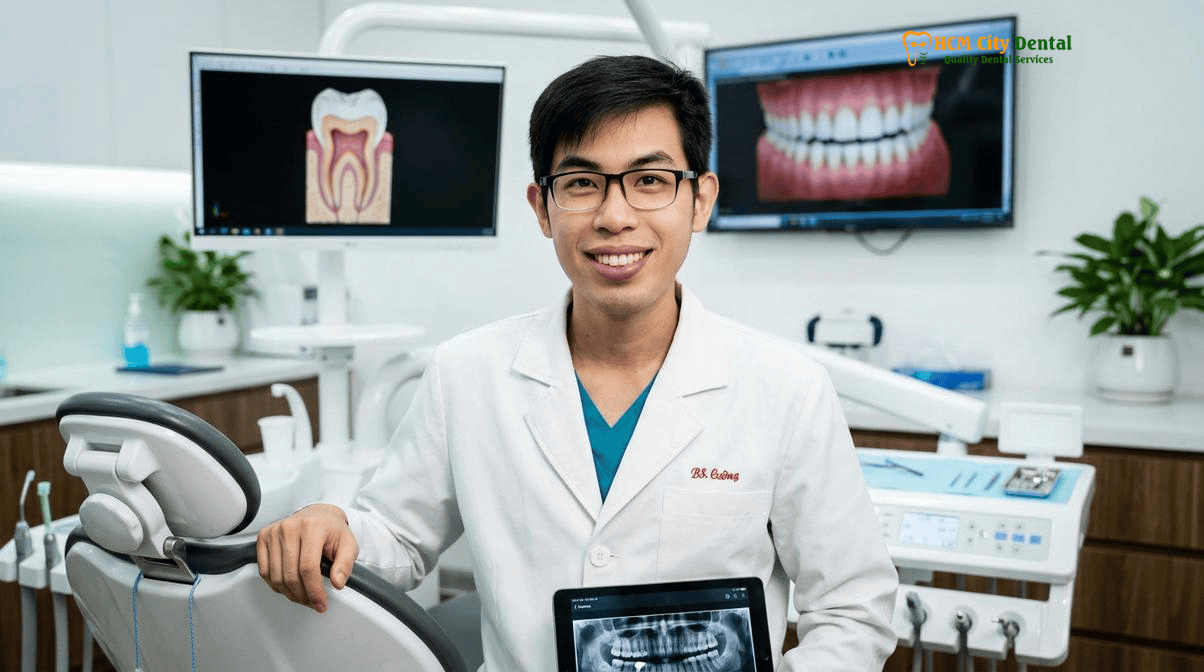
Same-Day 3Shape Trios 5D Digital Retainer Scanning for Travelers Who Lost or Cracked Their Retainer in Vietnam
Ho Chi Minh City is a major hub for international business and tourism. A common dental emergency among expatriates and travelers is the loss or fracture of an orthodontic retainer. Going without a retainer for even a few days can initiate unwanted tooth movement, causing panic for patients who have invested significant time and money into their smiles. Fortunately, HCMC Dental Clinic offers rapid, high-precision solutions for these urgent situations.
For patients requiring immediate intervention, we utilize the 3Shape Trios 5D intraoral scanner to capture a highly accurate, radiation-free digital impression of the current dental alignment in less than two minutes. This digital workflow completely eliminates the need for uncomfortable, gag-inducing traditional alginate or PVS impressions. Once the digital STL file is generated, our in-house digital laboratory can immediately 3D print a high-resolution resin model of the patient’s teeth.
Using this model, we can fabricate a same day 3D scanned retainers in Ho Chi Minh City solution. Patients can choose between a standard Essix clear retainer or a traditional Hawley wire retainer vs clear plastic retainer, depending on their clinical needs and preferences. The Hawley retainer, constructed from an acrylic palatal/lingual base and a labial bow wire, is highly durable, allows for minor occlusal settling, and can be adjusted by the dentist, though it is less aesthetically pleasing than clear options.
“When a traveler loses a retainer, time is of the essence. Our fully integrated digital workflow allows us to scan a patient in the morning and deliver a perfectly fitting Essix or Hawley retainer by the afternoon. If the patient prefers genuine Invisalign Vivera retainers, we can submit the digital scan directly to Align Technology and arrange for the final product to be shipped to their home country, while providing an in-house Essix retainer to hold the teeth in place during the manufacturing period.”
— Dr. Nguyen Van Cuong, DDS
This seamless integration of digital scanning and rapid fabrication ensures that international patients can maintain their orthodontic results without disrupting their travel itineraries. For a comprehensive overview of our rapid fabrication capabilities, patients can explore our Same-Day Custom Retainers in Saigon: Essix, Hawley & Vivera Guide.
2026 Vivera, Essix, Hawley & Fixed Lingual Retainer Fee Schedule at HCMC Dental Clinic (District 1)
Understanding the Invisalign Vivera retainer replacement cost Vietnam is crucial for patients planning their long-term dental maintenance. HCMC Dental Clinic is committed to absolute financial transparency, offering a highly competitive fee schedule for international patients. By utilizing our online booking system, patients secure a -40% reduction compared to standard walk-in rates, making premium retention solutions highly accessible.
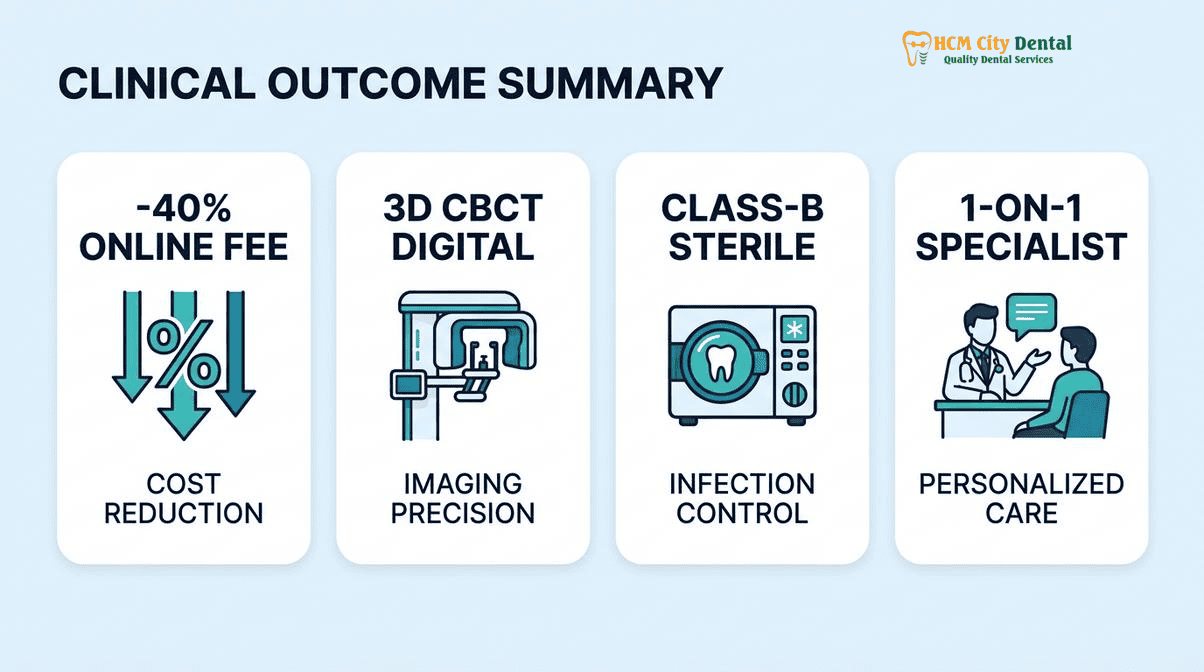
Below is the exact 2026 fee schedule for orthodontic retention appliances at our District 1 facility. All clinical procedures strictly adhere to the Official 2026 Dental Price List & -40% Online Booking Fee Schedule and are performed under EN 13060 Class B sterilization protocols[5].
| Retention Appliance Type | Walk-In Price (USD) | Online Booking Price (-40% USD) | Online Booking Price (VND) |
|---|---|---|---|
| Invisalign Vivera Retainer Package (Genuine Align Tech SmartTrack – 4 Sets) | $513 USD | $308 USD | 8,000,000 VND |
| Essix Clear Retainer (In-House PETG / Polyurethane – Per Pair) | $161 USD | $97 USD | 2,520,000 VND |
| Hawley Wire Retainer (Acrylic Base & Labial Bow – Per Pair) | $191 USD | $115 USD | 3,000,000 VND |
| Fixed Bonded Lingual Wire Retainer (Multi-Strand Wire + Composite Bonding) | Consultation Required | Based on Composite Bonding ($35-$46/tooth) | Variable |
| Custom Night Guard / Occlusal Splint (For Bruxism / TMJ Protection) | $135 – $191 USD | $81 – $115 USD | 2,106,000 – 2,990,000 VND |
Whether you require a rapid replacement for a lost appliance or wish to upgrade to a premium Vivera package, HCMC Dental Clinic provides world-class digital orthodontics and retention solutions at a fraction of the cost found in Australia, the US, or Europe. We invite you to contact our international patient coordination team via WhatsApp at +84 853 020 003 to schedule your digital scan and secure your orthodontic investment.
Frequently Asked Questions
Can I order genuine Invisalign Vivera retainers or same-day Essix retainers in Ho Chi Minh City even if I had braces in another country?
Yes. At HCMC Dental Clinic in District 1, we routinely treat international patients, expats, and dental travelers who completed their orthodontic treatment abroad. Using our 3Shape Trios 5D intraoral scanner, we can capture a highly accurate digital impression of your current dental alignment. For immediate needs, we fabricate same-day Essix clear retainers in our in-house lab. If you prefer genuine Invisalign Vivera retainers, we submit your digital scans directly to Align Technology. The Vivera retainers are then manufactured and shipped to our clinic in Vietnam, or we can arrange international forwarding depending on your travel schedule.
How many sets come in an official Invisalign Vivera retainer package, and how many years do they last?
An official Invisalign Vivera retainer package always includes four complete sets (four upper and four lower retainers). Because they are manufactured from Align Technology’s proprietary thermoplastic material, they offer up to 30% higher crack resistance compared to standard in-house PETG Essix retainers. With proper care, a single set of Vivera retainers typically lasts 1 to 3 years. Therefore, a complete package of four sets can provide reliable orthodontic retention for 4 to 10 years, depending on your bruxism habits and maintenance routine.
Why can a tooth still twist slightly with a fixed lingual wire if the bonding composite partially detaches?
A fixed bonded lingual wire retainer relies on composite resin pads attached to the lingual (tongue-facing) surface of each anterior tooth. If the composite bond fails on a single tooth—often due to biting into hard foods or calculus buildup—that specific tooth is no longer anchored to the splinted wire. Because the periodontal Sharpey’s fibers retain a ‘memory’ of the tooth’s original malocclusion, the unbonded tooth can rapidly experience mesial drift or rotational relapse, even while the rest of the wire remains attached to the adjacent teeth. This is why a dual retention protocol orthodontics relapse prevention strategy is highly recommended.
Can my clear retainer double as a protective night guard if I clench my teeth, or do I need a hard occlusal splint?
While clear plastic retainers (like Vivera or Essix) provide a minor barrier against light teeth grinding, they are not designed to withstand severe nocturnal bruxism or manage temporomandibular joint (TMJ) disorders. Heavy clenching will rapidly perforate or crack a standard 1mm clear retainer. For patients with severe bruxism or Obstructive Sleep Apnea (OSA), Dr. Nguyen Van Cuong, DDS recommends a dedicated CAD/CAM milled PMMA Michigan Stabilization Splint in Centric Relation (CR) or a custom titratable Dorsal-Fin Mandibular Advancement Device (MAD) to protect the teeth, stabilize the joint, and maintain airway patency, rather than relying solely on an orthodontic retainer.
How much do Essix, Fixed Lingual Wire, and Vivera retainers cost at HCMC Dental Clinic in District 1?
Under our 2026 online booking fee schedule, an official Invisalign Vivera Retainer package (4 sets) costs $308 USD online (8,000,000 VND), compared to the $513 USD walk-in rate. Standard in-house Essix Clear Retainers cost $97 USD per pair online (2,520,000 VND). A traditional Hawley Wire Retainer costs $115 USD per pair online (3,000,000 VND). Fixed bonded lingual wire retainers are typically priced based on the composite bonding required per tooth. Booking online secures a -40% reduction compared to standard walk-in rates.
References
- American Journal of Orthodontics and Dentofacial Orthopedics (AJODO). ‘Long-term stability of mandibular anterior alignment: A comparison of fixed and removable retention protocols.’ (2022).
- Journal of Clinical Orthodontics (JCO). ‘Material properties and wear resistance of proprietary thermoplastic retainers vs. standard PETG vacuum-formed appliances.’ (2023).
- International Journal of Periodontics & Restorative Dentistry. ‘Periodontal implications and calculus accumulation rates in multi-strand fixed lingual retainers.’ (2021).
- Journal of Prosthetic Dentistry. ‘Efficacy of dual retention protocols and occlusal splint therapy in managing post-orthodontic bruxism and relapse.’ (2023).
- Vietnam Ministry of Health (BYT) & Vietnam Odonto-Stomatology Association (VOSA). National Clinical Guidelines on Specialist Dental Care, Biomaterial Traceability & EN 13060 Class B Infection Control. (2024).