Cheap dental braces refer to cost-effective orthodontic treatments, primarily traditional metal brackets, designed to correct malocclusions without compromising clinical outcomes. While budget-friendly options exist, achieving a healthy, aligned smile requires professional diagnostic planning, high-quality materials, and consistent monitoring by a qualified dental specialist.
Clinical Summary:
Affordable orthodontic care focuses on utilizing highly effective, time-tested materials like stainless steel brackets to correct dental misalignments at a lower price point. While aesthetic options like ceramic braces and clear aligners command higher fees, traditional metal braces remain the gold standard for complex biomechanical tooth movement. Successful treatment relies not just on the appliance, but on comprehensive diagnostics, precise treatment planning, and rigorous patient compliance. Unsupervised or “DIY” aligner systems pose severe risks to periodontal health and should be avoided. A thorough clinical evaluation by a certified provider is essential to determine the most appropriate and cost-effective intervention for each patient’s unique anatomical needs.
Key Takeaways:
- Traditional metal braces offer the most cost-effective and biomechanically precise method for correcting severe malocclusions.
- Comprehensive diagnostics, including 3D imaging and cephalometric analysis, are mandatory before initiating any orthodontic movement.
- Direct-to-consumer or DIY orthodontic kits carry a high risk of irreversible root resorption and permanent bite misalignment.
- Understanding your insurance policy is critical, as many plans provide partial coverage for medically necessary orthodontic procedures.
- Post-treatment retention is a lifelong commitment required to prevent teeth from relapsing to their original positions.
Understanding Affordable Orthodontics: What Are Cheap Dental Braces?
Affordable braces are clinically approved orthodontic systems optimized for cost-efficiency, typically utilizing standard stainless steel brackets rather than premium aesthetic materials to achieve optimal dental alignment.
The concept of cheap dental braces often carries a stigma, with many patients assuming that a lower price point equates to inferior clinical results. However, in the realm of professional orthodontics, affordability is generally a reflection of the materials used rather than a compromise in the quality of care. Traditional stainless steel brackets have been the cornerstone of orthodontic treatment for many years. Because they are mass-produced and do not require the complex manufacturing processes of polycrystalline alumina (ceramic) or custom-molded thermoplastic (clear aligners), they represent the most budget-friendly option available in modern dentistry[1].
Orthodontic tooth movement is a complex biological process involving the remodeling of the alveolar bone. When continuous, controlled force is applied to a tooth via an archwire and bracket system, it induces a localized inflammatory response within the periodontal ligament (PDL). Osteoclasts break down bone on the pressure side, while osteoblasts form new bone on the tension side. This physiological mechanism remains identical whether the force is delivered by a high-end aesthetic bracket or a standard, cost-effective metal bracket. Therefore, the clinical efficacy of affordable braces is exceptionally high, provided the treatment is managed by a skilled clinician.
Dr. Nguyen Van Cuong, a leading specialist, frequently emphasizes that the success of an orthodontic case is dictated by the doctor’s diagnostic acumen and biomechanical planning, not the price tag of the brackets. For patients looking to understand the financial aspects, his comprehensive guide on the Cost of Orthodontics: How to Save Thousands! | Dr. Cuong provides invaluable insights into maximizing clinical value. He ensures every treatment plan at our facility adheres to the highest international and local standards.
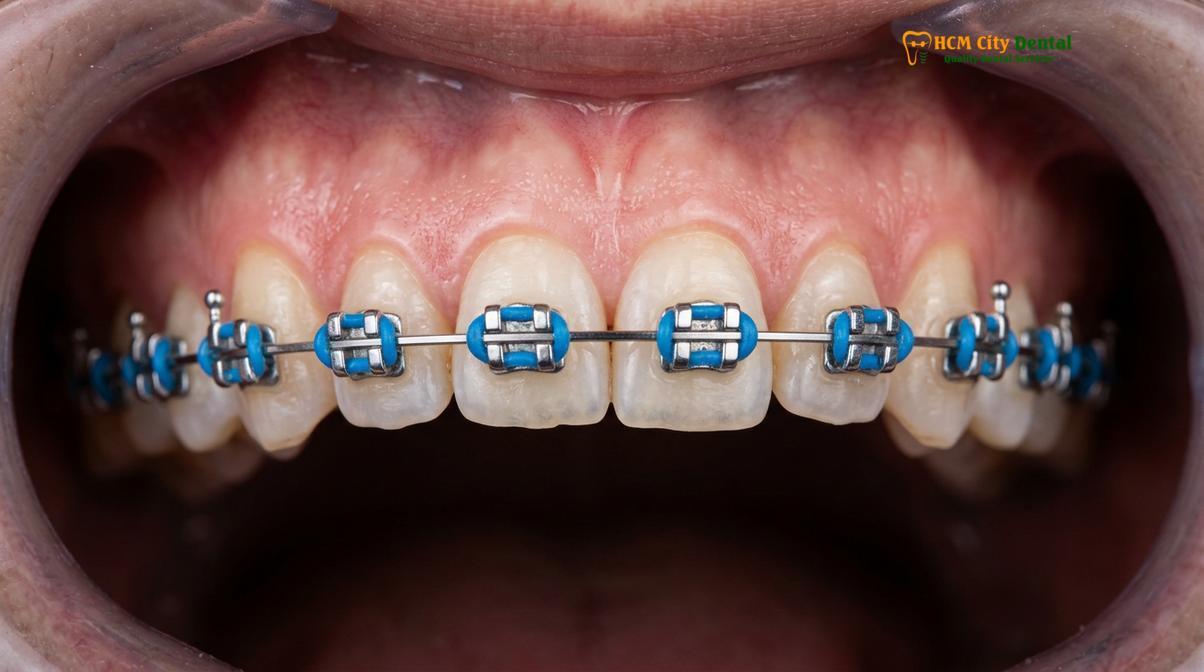
Types of Cost-Effective Braces and Clinical Efficacy
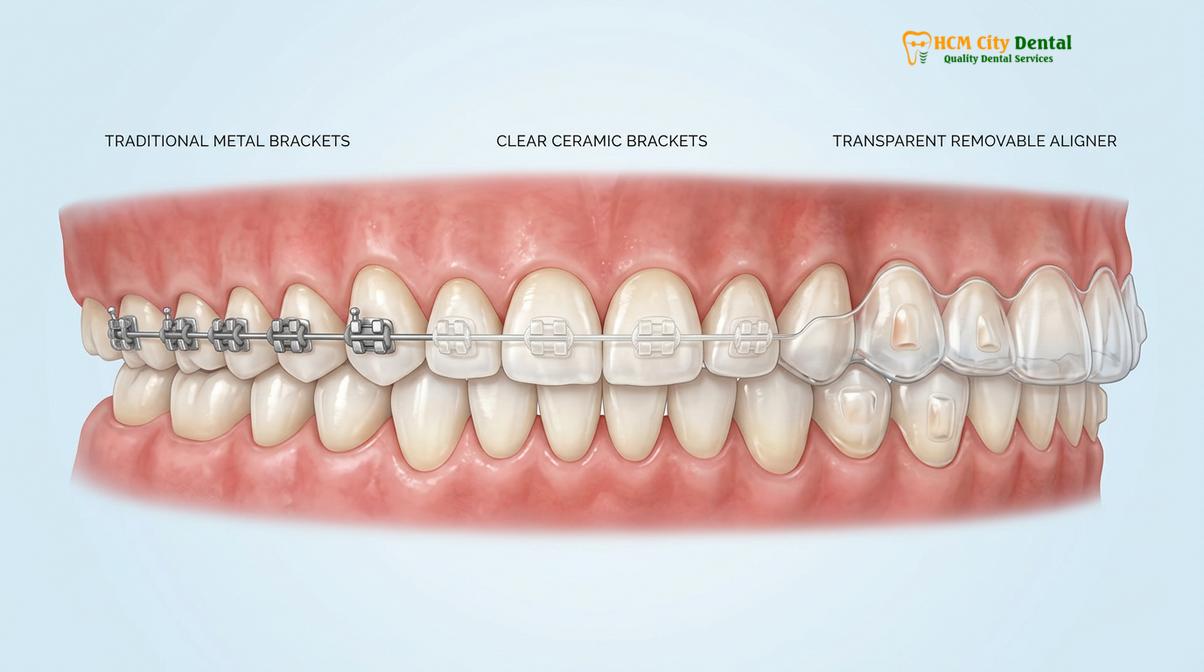
The most economical orthodontic solutions include traditional metal braces, while ceramic brackets and basic clear aligner packages offer tiered aesthetic alternatives at slightly higher price points.
Traditional Metal Braces
Traditional metal braces remain the most robust, versatile, and cost-effective orthodontic appliance available. Constructed from high-grade medical stainless steel, these brackets are bonded directly to the facial surfaces of the teeth. An archwire, typically made of nickel-titanium (NiTi) during the initial alignment phase and stainless steel during the detailing phase, is engaged into the bracket slots and secured with elastomeric ligatures or steel ties. Metal braces offer unparalleled 3-dimensional control over tooth movement, making them the treatment of choice for severe crowding, complex bite discrepancies, and significant rotational corrections[2].
Ceramic Braces (The Aesthetic Alternative)
For patients who desire a less conspicuous appliance but still require the biomechanical control of fixed brackets, ceramic braces serve as an excellent middle-ground. These brackets function identically to metal braces but are fabricated from clear or tooth-colored ceramic materials. While they are slightly more expensive due to the cost of the raw materials and manufacturing, they offer a highly aesthetic solution. It is important to note clinically that ceramic brackets are more brittle than metal and can be prone to fracture under heavy occlusal forces. Additionally, they generate higher friction against the archwire, which can slightly prolong treatment times in extraction cases where sliding mechanics are heavily utilized.
Clear Aligners (Budget-Friendly Tiers)
Clear aligner therapy utilizes a series of custom-fabricated, transparent thermoplastic trays to incrementally move teeth. While premium aligner brands can be quite costly, many clinics now offer in-house aligner systems or tiered packages for mild to moderate anterior crowding. These budget-friendly aligner options are highly aesthetic and removable, facilitating easier oral hygiene. However, their clinical scope is generally limited compared to fixed appliances. They rely on pushing forces rather than the complex push-pull couples generated by brackets, making them less efficient for severe root torquing or significant vertical movements.
| Appliance Type | Relative Cost | Aesthetic Profile | Clinical Indications | Maintenance Requirements |
|---|---|---|---|---|
| Traditional Metal Braces | Lowest ($) | Highly Visible | All malocclusions, complex surgical cases, severe crowding. | Requires meticulous brushing and interdental cleaning. |
| Ceramic Braces | Moderate ($$) | Discreet (Tooth-colored) | Mild to severe malocclusions; ideal for aesthetic-conscious adults. | Elastomeric ties may stain; requires careful dietary choices. |
| Clear Aligners (Basic) | Moderate to High ($$-$$$) | Nearly Invisible | Mild to moderate crowding/spacing; non-extraction cases. | Must be removed for eating; trays require daily cleaning. |
The True Cost of Orthodontics: Breaking Down the Fees
Understanding what’s the cost of braces involves analyzing base appliance fees alongside diagnostic imaging, routine adjustments, and post-treatment retention devices.
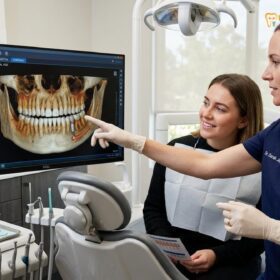
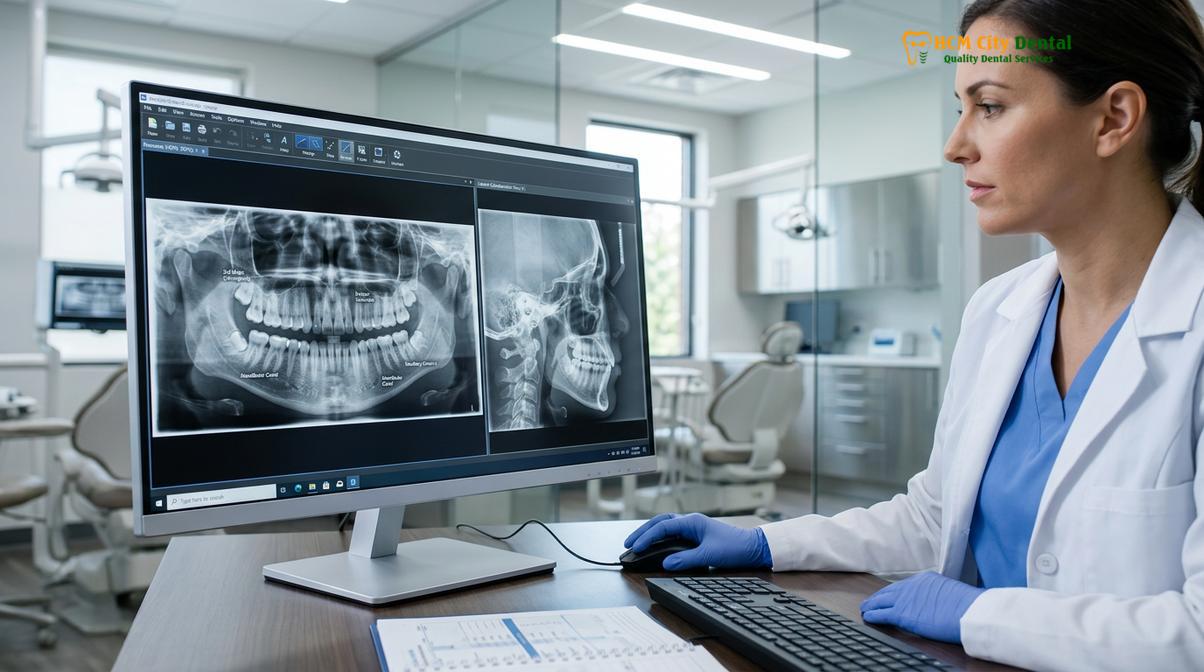
When patients ask about the financial investment required, it is vital to look beyond the advertised price of the brackets themselves. Comprehensive orthodontic treatment is a multi-phase medical service, and the total fee encompasses several distinct clinical components. The initial phase involves extensive diagnostics, including panoramic and cephalometric radiographs, intraoral 3D scanning, and clinical photography. These records are essential for the clinician to perform a detailed cephalometric analysis, assessing the relationship of the maxilla and mandible to the cranial base, and determining the precise angulation of the incisors.
The core cost covers the appliances (brackets, bands, archwires, and auxiliaries like elastics or coil springs) and the clinical chair time required for the initial bonding and subsequent adjustment visits. Orthodontic treatment typically spans many months, requiring regular visits. During these appointments, the clinician evaluates the biological response of the teeth, changes archwires to progress through the sequence of forces, and monitors periodontal health. If a patient requires pre-orthodontic restorative work, they may need to explore the cost of a dental bridge or fillings, which adds to the overall dental investment.
Another critical financial factor is braces insurance. Navigating dental insurance can be complex, but many comprehensive plans include an orthodontic lifetime maximum benefit. This benefit operates differently from standard dental coverage, often paying a percentage of the total fee up to a specific dollar amount. Patients must verify whether their policy covers adult orthodontics or if it is restricted to dependents under a certain age.
“Transparency in orthodontic pricing is a fundamental patient right. A truly affordable treatment plan must account for the entire clinical journey—from the initial 3D scan to the final set of retainers—ensuring there are no hidden financial surprises that could disrupt the patient’s care.”
Finally, the retention phase is a non-negotiable aspect of the total cost. Once the active appliances are removed, the teeth are highly susceptible to relapse as the periodontal fibers and alveolar bone have not yet fully stabilized in their new positions. Custom-fabricated retainers are required to hold the teeth in place, ensuring long-term stability and retention protocols are met[5]. Budgeting for the initial retainers, as well as their eventual replacement, is a necessary component of long-term orthodontic financial planning.
Diagnostic Phase: How Do You Know If You Need Braces?
Identifying the need for orthodontic intervention requires evaluating clinical signs such as severe crowding, crossbites, difficulty chewing, or chronic jaw discomfort.
Many patients wonder how to determine if they need braces. While aesthetic concerns—such as noticeably crooked teeth or large gaps—are the most common reasons patients seek treatment, the clinical indications for orthodontics extend far beyond cosmetics. Malocclusion, or a “bad bite,” can have profound implications for overall oral health and function. When teeth are severely crowded or overlapping, they create inaccessible areas that are virtually impossible to clean effectively with standard brushing and flossing. This plaque accumulation significantly increases the risk of localized periodontal disease, gingival inflammation, and interproximal dental caries, directly impacting oral health-related quality of life[3].
Functional issues are equally critical indicators. A crossbite, where the upper teeth sit inside the lower teeth upon closure, can lead to asymmetric jaw growth in children and severe enamel attrition (wear) in adults. An excessive overjet (protruding upper front teeth) places the incisors at a high risk of traumatic injury, especially during sports or physical activities. Furthermore, a deep overbite, where the upper teeth completely cover the lower teeth, can cause the lower incisors to impinge on the palatal tissue, leading to chronic mucosal trauma and periodontal attachment loss.
Patients experiencing chronic temporomandibular joint (TMJ) discomfort, frequent headaches, or difficulty masticating (chewing) food efficiently should undergo a comprehensive orthodontic evaluation. The diagnostic process involves a meticulous clinical examination of the facial profile, dental symmetry, and functional jaw movements. Advanced imaging may be utilized to assess the volume of the alveolar bone, the position of impacted teeth, and the health of the TMJ structures. Only through this rigorous diagnostic protocol can a clinician determine if orthodontic intervention is medically necessary.
Treatment Workflow and Patient Journey at HCMC Dental Clinic
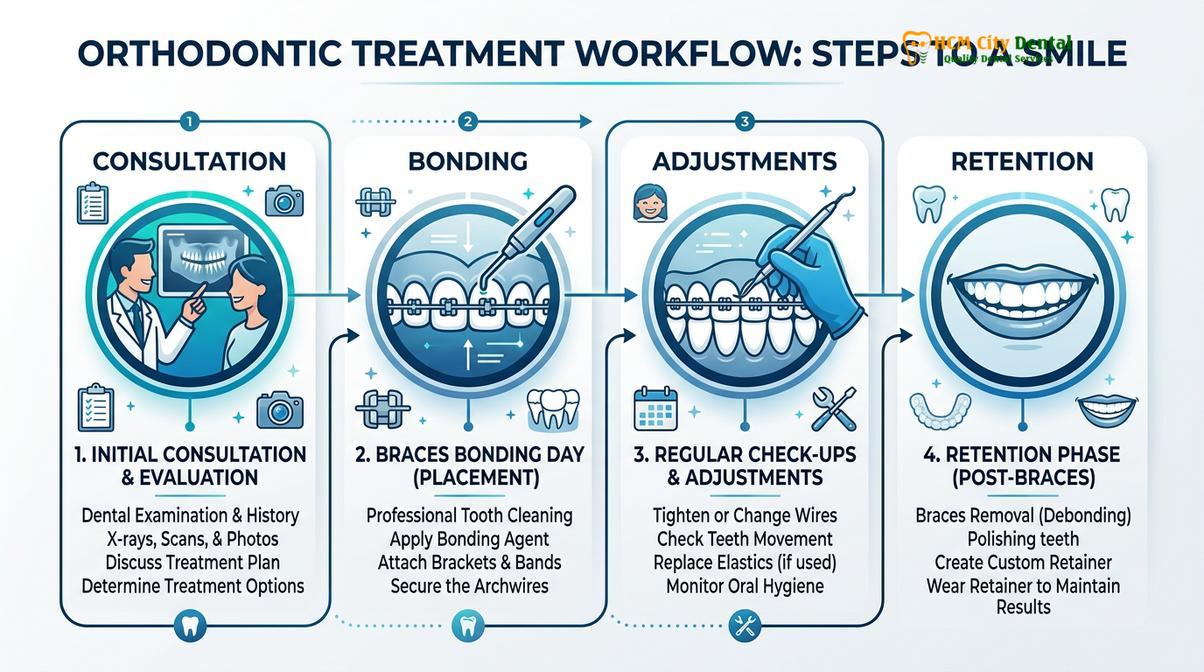
A standard orthodontic treatment workflow encompasses comprehensive digital diagnostics, precise appliance bonding, periodic biomechanical adjustments, and a dedicated retention phase.
The journey to a properly aligned smile is a highly structured medical process. At HCMC Dental Clinic in Ho Chi Minh City, the workflow begins with a comprehensive initial consultation. During this visit, the clinical team captures digital impressions using an intraoral scanner, eliminating the need for uncomfortable traditional putty impressions. These digital models, combined with radiographic data, allow the orthodontist to simulate the proposed tooth movements and present a visual treatment plan to the patient. This is also the stage where patients can review dentist reviews and feedback to feel confident in their chosen provider.
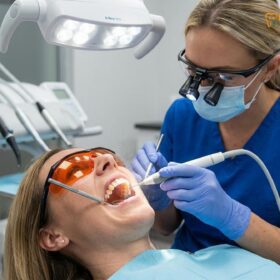
Once the treatment plan is finalized, the active phase begins with the bonding appointment. The enamel surfaces are meticulously cleaned, isolated, and treated with a mild phosphoric acid etchant to create microscopic porosities. A specialized orthodontic composite resin is then used to adhere the brackets to the precise anatomical center of each tooth. The accuracy of bracket placement is paramount, as the bracket slot contains the prescription that dictates the final position of the root. After the brackets are light-cured, the initial highly flexible NiTi archwire is engaged, initiating the first phase of leveling and aligning.
Subsequent adjustment appointments occur regularly. During these visits, the clinician evaluates the progress, replaces elastomeric ligatures, and progresses to stiffer, larger-dimension archwires. In the later stages of treatment, mechanics such as intermaxillary elastics (rubber bands) may be introduced to correct the anterior-posterior relationship of the jaws and achieve proper intercuspation.
Clinical Case Study: Adult Orthodontic Correction
Patient Profile: A 28-year-old female presented to HCMC Dental Clinic in Ho Chi Minh City with severe anterior crowding and a unilateral posterior crossbite, complaining of difficulty maintaining oral hygiene.
Clinical Intervention: After a thorough diagnostic workup, the patient opted for cost-effective traditional metal braces. The treatment plan involved mild interproximal reduction (IPR) to create space, followed by fixed appliance therapy utilizing progressive archwire sequencing and crossbite elastics.
Outcome: The crossbite was successfully corrected, establishing a mutually protected occlusion. The anterior crowding was resolved, significantly improving the patient’s ability to perform effective interdental cleaning and reducing her risk of future periodontal complications.
Managing Life with Orthodontic Appliances
Successful orthodontic treatment requires strict adherence to dietary modifications and enhanced oral hygiene protocols to prevent enamel demineralization and appliance damage.
Adapting to life with fixed orthodontic appliances requires a commitment to modifying daily habits. One of the most frequent questions from new patients is regarding dietary restrictions. The biomechanical integrity of the bracket-adhesive bond is strong enough to withstand normal chewing forces, but it can easily be sheared off by inappropriate foods. Patients must strictly avoid hard, sticky, or excessively chewy foods—such as ice, hard candies, caramel, and whole apples—which can dislodge brackets or bend archwires. A broken bracket halts tooth movement and can significantly extend the overall treatment time.
Oral hygiene becomes exponentially more challenging with braces. The brackets and wires create numerous plaque-retentive areas that standard brushing often misses. Patients must utilize specialized tools, such as orthodontic toothbrushes with V-shaped bristles, interdental brushes, and floss threaders or water flossers, to thoroughly clean around the appliances. Failure to maintain meticulous hygiene can lead to white spot lesions (enamel demineralization) around the brackets, which are permanent aesthetic defects, as well as severe gingival inflammation that alters the periodontal responses to orthodontic forces[4]. To maintain optimal health, patients should also budget for professional cleanings, keeping in mind the average price for dental cleaning during their orthodontic journey.
“Orthodontic treatment is a collaborative effort between the clinician and the patient. Excellent oral hygiene and strict compliance with dietary guidelines are just as critical to the final outcome as the biomechanical forces applied by the braces.”
When to Consult an Orthodontist & Important Clinical Notes
Early evaluation and adherence to clinical guidelines are essential for identifying malocclusions before they cause irreversible dental or skeletal complications.
Knowing when to seek professional advice is a crucial step in maintaining long-term oral health. The American Association of Orthodontists, alongside local bodies such as the Vietnam Association of Orthodontists (VAO), generally recommends that children receive their first orthodontic evaluation by age seven[6]. At this stage, a clinician can identify subtle issues with jaw growth and emerging teeth while some baby teeth are still present. Early interceptive treatment can guide jaw growth, lower the risk of trauma to protruded front teeth, and correct harmful oral habits.
For adults, there is no upper age limit for orthodontic treatment, provided the periodontal tissues and alveolar bone are healthy. If you experience chronic jaw pain, notice your teeth shifting, or have difficulty maintaining oral hygiene due to crowding, a consultation is highly recommended. It is important to remember that while cheap dental braces offer a financially accessible route to a healthier smile, the true value lies in the expertise of the provider managing your care.
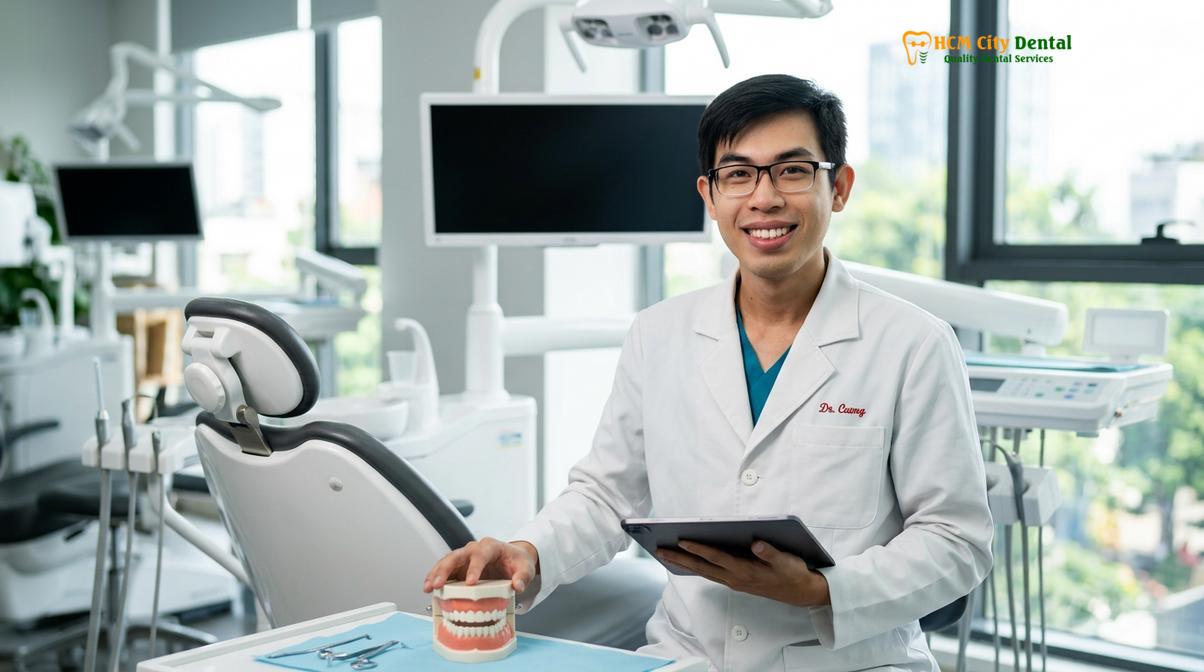
If you are considering affordable orthodontic solutions and want to ensure you receive the highest standard of clinical care, schedule a consultation at HCMC Dental Clinic in Ho Chi Minh City. Our specialists will provide a comprehensive evaluation and discuss the best Orthodontics options tailored to your unique anatomical needs and budget.
References
- American Journal of Orthodontics and Dentofacial Orthopedics. Biomechanical principles of orthodontic tooth movement. (2021).
- Journal of Clinical Orthodontics. Material properties and clinical efficacy of stainless steel versus ceramic brackets. (2020).
- International Journal of Dentistry. The impact of malocclusion on oral health-related quality of life. (2019).
- Journal of Dental Research. Periodontal responses to orthodontic forces: A comprehensive review. (2022).
- European Journal of Orthodontics. Long-term stability and retention protocols following fixed appliance therapy. (2018).
- Vietnam Association of Orthodontists (VAO). National guidelines on orthodontic care and malocclusion management. (2023).