A gold inlay for back teeth is a custom-fabricated, highly durable indirect restoration designed to repair moderate to severe decay or structural damage in molars. Renowned for its exceptional longevity and precise marginal fit, it preserves natural tooth structure while effortlessly withstanding the intense chewing forces of the posterior jaw.
Clinical Summary:
Gold inlays represent the pinnacle of restorative longevity for posterior teeth. Utilizing high-noble gold alloys, these indirect restorations offer a thermal expansion coefficient nearly identical to natural dentin, minimizing the risk of microleakage and secondary caries. While modern dentistry heavily favors CAD/CAM milled ceramics for their natural aesthetics, a cast gold restoration remains unparalleled in margin adaptation, wear compatibility with opposing enamel, and overall decades-long survival rates. Clinical selection depends heavily on the patient’s aesthetic preferences, occlusal forces, and the extent of structural compromise, requiring a personalized diagnostic approach to ensure optimal biomechanical function.
Key Takeaways:
- Gold inlays provide unmatched durability, frequently lasting over two to three decades with proper oral hygiene and regular clinical maintenance.
- The material’s wear rate perfectly mimics natural enamel, preventing abrasive damage to opposing teeth during chewing or grinding.
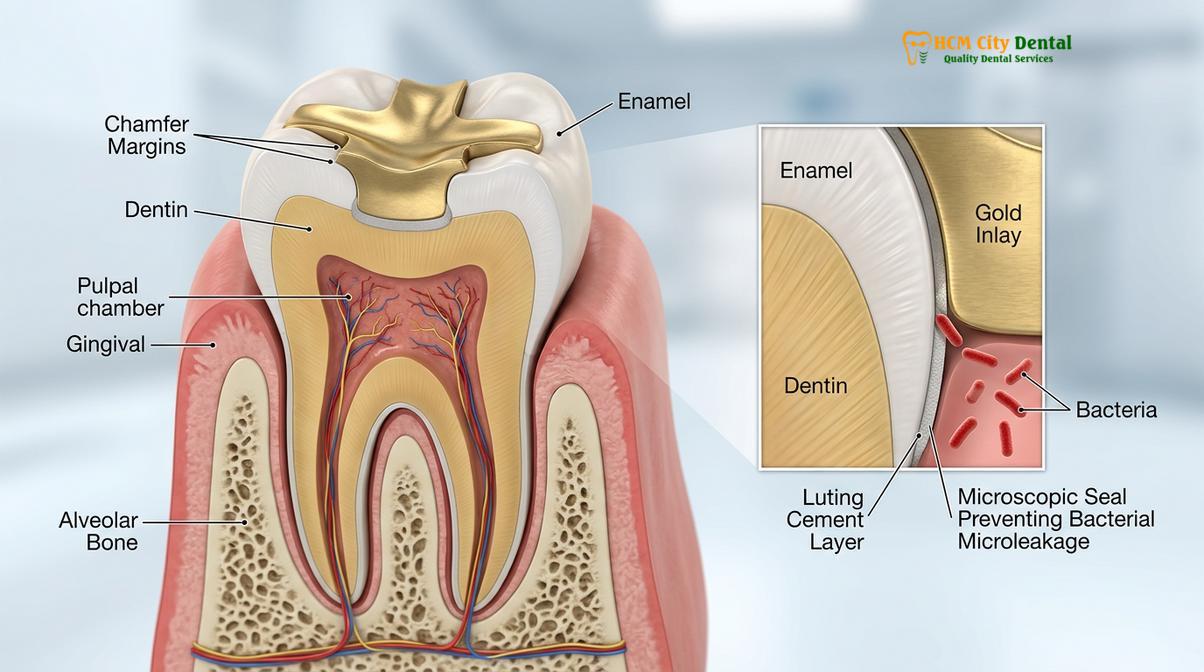
- Gold alloys allow for precise margin burnishing, creating a microscopic seal against bacterial microleakage that leads to secondary decay.
- While highly biocompatible and plaque-resistant, gold lacks the natural tooth color of modern ceramic or composite alternatives.
- Conservative cavity preparation preserves significantly more healthy tooth structure compared to traditional full-coverage dental crowns.
The Golden Standard of Restorative Dentistry
Gold restorations have historically set the benchmark for clinical success in posterior teeth due to their exceptional durability, high compressive strength, and conservative preparation requirements.
In the vast landscape of modern restorative dentistry, the pursuit of the ideal material to replace lost tooth structure is an ongoing clinical challenge. For over a century, the use of a gold inlay for back teeth has been considered the absolute gold standard—both literally and figuratively. Unlike direct fillings, which are packed into the tooth cavity in a soft state and hardened intraorally, dental inlays are indirect restorations. They are meticulously fabricated outside the mouth in a dental laboratory and then precisely cemented into the prepared cavity. This indirect approach allows for superior control over the restoration’s anatomical contours, contact points with adjacent teeth, and overall occlusal harmony.
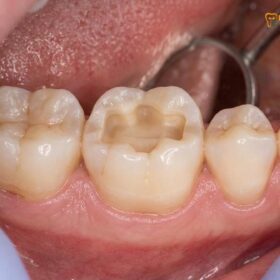
The core of this approach is deeply rooted in the Preservation Philosophy. Modern clinical dentistry emphasizes conservative restorations designed to preserve maximum natural tooth structure. When a posterior tooth suffers from moderate decay or a fractured cusp, a traditional approach might involve grinding the tooth down to a small peg to accommodate a full-coverage crown. This 360-degree shaving removes a significant amount of healthy enamel and dentin, potentially traumatizing the dental pulp. In contrast, inlays and dental onlays only replace the damaged portion of the tooth. By utilizing a gold inlay, the clinician can preserve the healthy cusps and walls of the tooth, maintaining its innate biomechanical strength and flexibility.
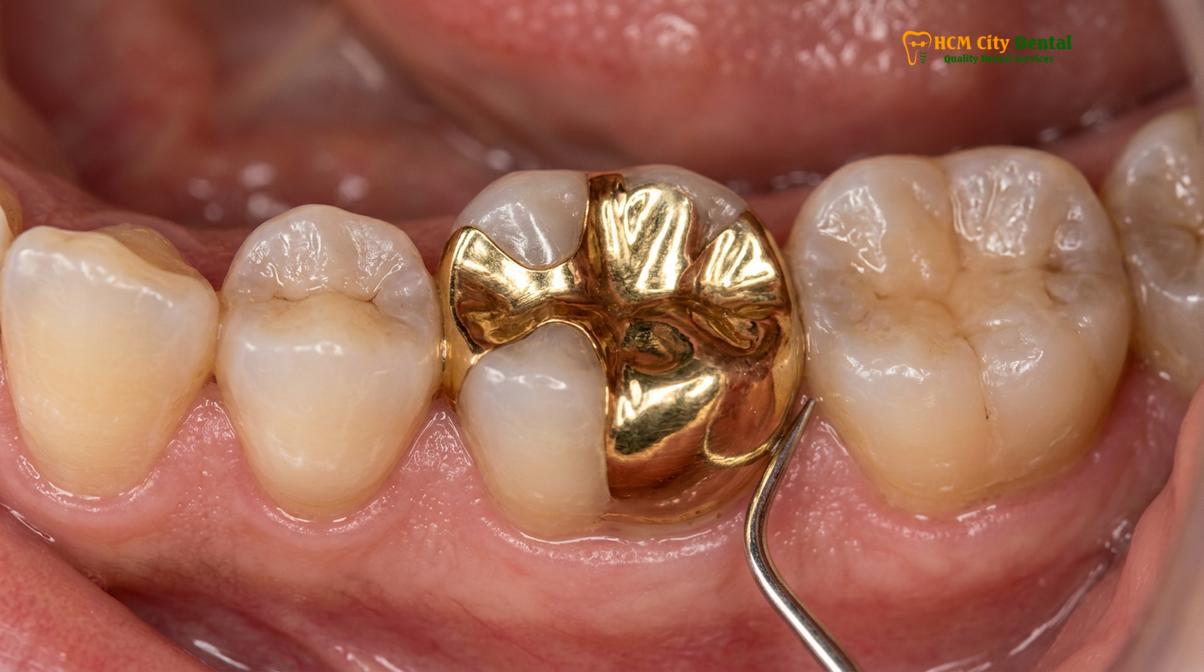
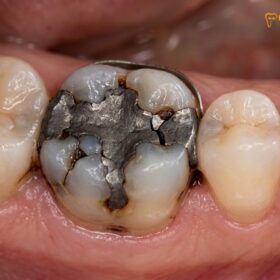
Furthermore, gold is frequently the material of choice for silver filling replacement. Many patients present with old, failing amalgam (silver) fillings that have expanded over time, causing micro-fractures in the surrounding enamel. When these large amalgams are removed, the remaining cavity is often too extensive to be reliably restored with a direct composite resin without risking polymerization shrinkage—a phenomenon where the white filling material contracts as it cures, pulling away from the cavity walls and creating gaps. A custom-fabricated gold inlay eliminates the issue of preventing polymerization shrinkage of large fillings, offering a dimensionally stable, long-lasting solution to severe tooth decay in the posterior region [1].
The Evolution of Indirect Restorations
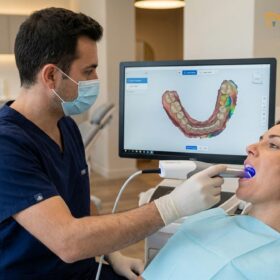
While the fundamental principles of cavity outline form and retention have remained consistent, the technology surrounding indirect restorations has evolved. Historically, creating a gold inlay required taking a physical impression using messy, uncomfortable silicone materials, pouring a stone model, and utilizing the lost-wax casting technique. Today, while the casting process for gold remains highly specialized, the initial data capture has been revolutionized. The integration of digital dentistry allows for highly accurate impressions, ensuring that the final restoration fits with microscopic precision.
Physical Properties: Margin Fit and Thermal Expansion
The unique physical characteristics of gold allow for microscopic marginal adaptation and thermal behavior that closely mimics natural human dentin, ensuring a long-lasting seal.
To truly understand why dentists revere gold as a restorative material, one must examine its unique physical and metallurgical properties. The oral cavity is an incredibly harsh environment, subjected to massive biting forces, constant moisture, bacterial presence, and extreme temperature fluctuations. A restorative material must be able to withstand these dynamic conditions without failing, degrading, or compromising the underlying tooth structure.
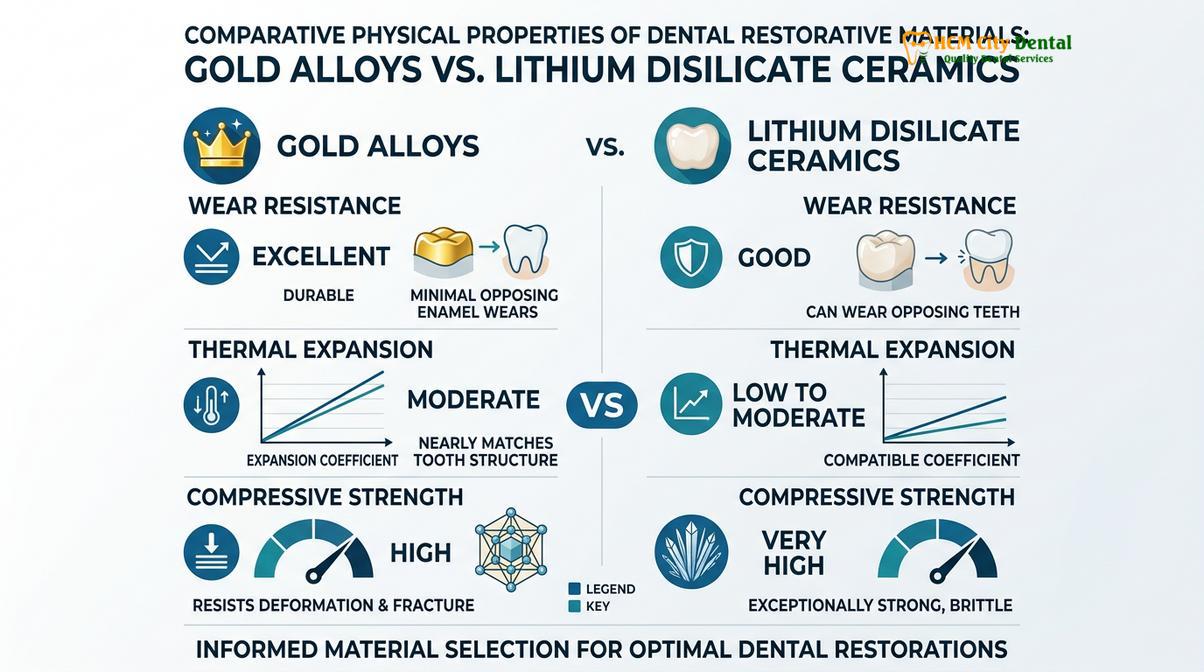
One of the most critical factors in the longevity of any dental restoration is its thermal expansion coefficient. When a patient consumes a hot cup of coffee followed by a cold glass of ice water, their natural teeth expand and contract slightly in response to the temperature changes. If a filling material expands or contracts at a significantly different rate than the surrounding natural tooth structure, it creates microscopic stresses at the interface between the tooth and the filling. Over time, this constant thermal cycling can cause the bonding interface to fatigue and break down, leading to microleakage—the seepage of bacteria and fluids beneath the restoration. Gold alloys possess a thermal expansion coefficient that is remarkably similar to that of natural dentin and enamel. This harmonious thermal behavior ensures that the restoration expands and contracts in unison with the tooth, maintaining the integrity of the margin sealing over decades of use [2].
Perhaps the most clinically significant advantage of gold is its ductility and malleability, which allows for a technique known as margin burnishing. When a cast gold restoration is seated into the prepared tooth, the dentist can use specialized hand instruments to gently rub, or “burnish,” the thin edges of the gold directly against the tooth’s chamfer margins. This physical deformation of the metal closes the microscopic gap between the restoration and the tooth to a degree that is simply impossible to achieve with rigid materials like porcelain or zirconia.
“The ability to burnish a gold margin yields a restorative seal that remains clinically superior to many modern adhesive interfaces, drastically reducing the incidence of secondary caries and ensuring the long-term survival of the underlying dentin.”
This impeccable marginal fit is the primary reason why gold inlays have such extraordinary longevity statistics. By virtually eliminating the microscopic gaps where cariogenic bacteria typically colonize, the risk of recurrent decay beneath the restoration is profoundly minimized.
Wear Resistance: Kindness to Opposing Teeth
Gold alloys possess a wear resistance that is virtually identical to natural tooth enamel, making them the safest and most biomechanically sound choice for opposing dentition.
The posterior teeth—the molars and premolars—are the workhorses of the human mouth. They are responsible for the heavy lifting of mastication, crushing and grinding food with forces that can exceed 200 pounds per square inch. Consequently, any material placed on the occlusal (chewing) surface of a back tooth must possess exceptional compressive strength and wear resistance. However, a material can be *too* hard. If a restoration is significantly harder than the natural enamel of the opposing tooth, it can act like sandpaper, causing severe and accelerated molar wear on the opposing dentition over time.
This is a common clinical concern with certain traditional feldspathic porcelains and unpolished ceramics. While they are highly aesthetic, their abrasive nature can be detrimental to the opposing teeth, particularly in patients who suffer from bruxism (chronic teeth grinding or clenching). A cast gold onlay molar, however, offers the perfect biomechanical balance. The wear rate of a high-noble gold alloy is nearly identical to that of natural human enamel. As the patient chews and grinds over the years, the gold inlay will wear down at the exact same physiological rate as the surrounding and opposing natural teeth, maintaining perfect occlusal harmony and preventing destructive wear patterns [3].
Restoring Vertical Dimension in Bruxism Patients
For patients with severe bruxism who have worn down their posterior teeth significantly, restoring the vertical dimension of occlusion (VDO) is a complex prosthodontic challenge. The VDO is the distance between the upper and lower jaws when the teeth are in maximum intercuspation. When teeth are worn flat, this dimension collapses, leading to bite alignment issues, temporomandibular joint (TMJ) pain, and facial aesthetic changes. Rebuilding these worn teeth requires a material that can withstand extreme parafunctional forces without fracturing or causing further damage. Gold is frequently the material of choice for these full-mouth rehabilitations, as it absorbs and distributes occlusal stress far better than brittle ceramics.
| Material Property | High-Noble Gold Alloy | Lithium Disilicate (Ceramic) | Composite Resin |
|---|---|---|---|
| Wear on Opposing Teeth | Very Low (Similar to Enamel) | Low to Moderate (If polished) | Low |
| Fracture Toughness | Extremely High (Ductile) | High (Brittle) | Moderate |
| Margin Adaptation | Excellent (Burnishable) | Good (Relies on cement gap) | Fair (Shrinkage risk) |
| Aesthetics | Metallic (Gold color) | Excellent (Tooth-colored) | Good (Tooth-colored) |
| Longevity Expectancy | 20 – 40+ Years | 10 – 15+ Years | 5 – 10 Years |
Biocompatibility and Plaque Resistance
High-noble gold alloys are highly biocompatible, resisting plaque accumulation and preventing adverse gingival reactions at the restoration margin for optimal periodontal health.
When placing any foreign material into the human body, biocompatibility is a paramount concern. The oral cavity is constantly bathed in saliva, which acts as an electrolyte solution, making it an ideal environment for the corrosion and oxidation of base metals. This is why pure, high-quality materials must be utilized in restorative dentistry.
It is important to note that dental restorations are never made of 24-karat pure gold, as pure gold is far too soft to withstand the forces of mastication. Instead, a carefully formulated gold alloy is used. High-noble dental alloys typically consist of a high percentage of gold (often 60% to 75%), alloyed with other noble metals such as platinum and palladium, as well as small amounts of silver and copper to increase the material’s hardness and yield strength. Because these noble metals are highly inert, they do not oxidize, tarnish, or corrode in the mouth. This exceptional chemical stability means that gold restorations do not release metallic ions into the surrounding tissues, preventing the dark “amalgam tattoos” or gingival inflammation often associated with older base-metal restorations [4].
Furthermore, gold can be polished to an incredibly smooth, mirror-like finish. This highly polished surface is highly resistant to plaque accumulation. Cariogenic bacteria and biofilm find it exceedingly difficult to adhere to the smooth surface of a gold inlay, which significantly aids in maintaining the health of the surrounding gingival tissues. For patients who struggle with periodontal disease or have difficulty maintaining perfect oral hygiene in the hard-to-reach posterior areas, the plaque-resistant nature of gold provides a distinct clinical advantage.
However, it is essential to acknowledge the growing patient demand for holistic dentistry. While gold is highly biocompatible, some patients prefer a 100% metal-free approach due to specific metal sensitivities or personal health philosophies. In these cases, biocompatible ceramic prevents gum line irritation and allergic reactions, serving as an excellent alternative. Modern ceramics, such as zirconia and lithium disilicate, offer excellent tissue response and are completely devoid of any metallic components, providing a safe and aesthetic option for holistic-minded individuals.
Aesthetics vs. Longevity: The Patient Trade-off
Patients must carefully weigh the unparalleled lifespan and biomechanical advantages of gold against the highly aesthetic, tooth-colored appearance of modern ceramic restorations.
Despite the overwhelming clinical advantages of gold, its use has declined in recent decades. The primary reason for this shift is not a lack of clinical efficacy, but rather a change in patient aesthetic demands. In the modern era, patients overwhelmingly desire restorations that are indistinguishable from natural teeth. The distinct metallic appearance of a gold inlay, while a symbol of premium dental care in the past, is often viewed as a cosmetic drawback today, even in the posterior regions of the mouth.
This creates a classic clinical trade-off: aesthetics versus longevity. When discussing a gold vs ceramic inlay, the clinician must present the facts objectively. While modern ceramics are incredibly strong and beautiful, longevity statistics consistently show that cast gold restorations have the highest survival rates of any dental restoration, frequently lasting 20, 30, or even 40 years. Ceramics, while durable, are inherently brittle and are more susceptible to chipping or fracture under extreme occlusal stress, particularly in patients who grind their teeth [5].
Clinical Warning: Secondary Decay Detection
One challenge with full-coverage metallic restorations is that they are radiopaque, meaning x-rays cannot penetrate them. This can make secondary decay detection beneath a large gold crown difficult. However, because conservative inlays and onlays leave the natural tooth cusps exposed, clinicians can more easily monitor the health of the surrounding tooth structure during routine radiographic examinations.
To meet the diverse needs of patients, Inlays & Onlays at HCMC Dental Clinic are offered in a variety of premium materials. For those who prioritize a natural appearance, we utilize high-end materials from Ivoclar (IPS e.max lithium disilicate for the anterior aesthetic zone and premolars) and Dentsply Sirona (Cercon HT Zirconia for heavy posterior biting forces). These porcelain overlays and partial crowns provide a stunning, lifelike appearance while still adhering to the principles of conservative tooth preparation.
Transparent Pricing and Value
Understanding the financial investment is a crucial part of the treatment planning process. While the cost of a gold restoration fluctuates based on the daily market weight of the precious metal alloy used, our clinic provides highly transparent pricing for our popular CAD/CAM ceramic alternatives. By leveraging our Direct Lab Partnership & CAD/CAM technology, we offer exceptional value without compromising on quality.
According to our current fee schedule, incorporating the 40% pre-arrival discount for WhatsApp bookings:
- Inlay / Onlay (Lab-made ceramic): Walk-in: ~$385 (10.0M VND) | WhatsApp pre-booking discount: From $231 (6.0M VND) (-40%).
- Overlay / Partial Crown: Walk-in: ~$446 (11.6M VND) | WhatsApp pre-booking discount: From $269 (7.0M VND) (-40%).
Every restoration placed at our facility comes with complete peace of mind, backed by a global warranty and remote WhatsApp checkup support, ensuring that international patients receive ongoing care long after they return home.
When Dr. Cuong Recommends Gold
Material selection is a highly individualized process based on occlusal dynamics, aesthetic demands, and the preservation of remaining tooth structure through advanced diagnostics.
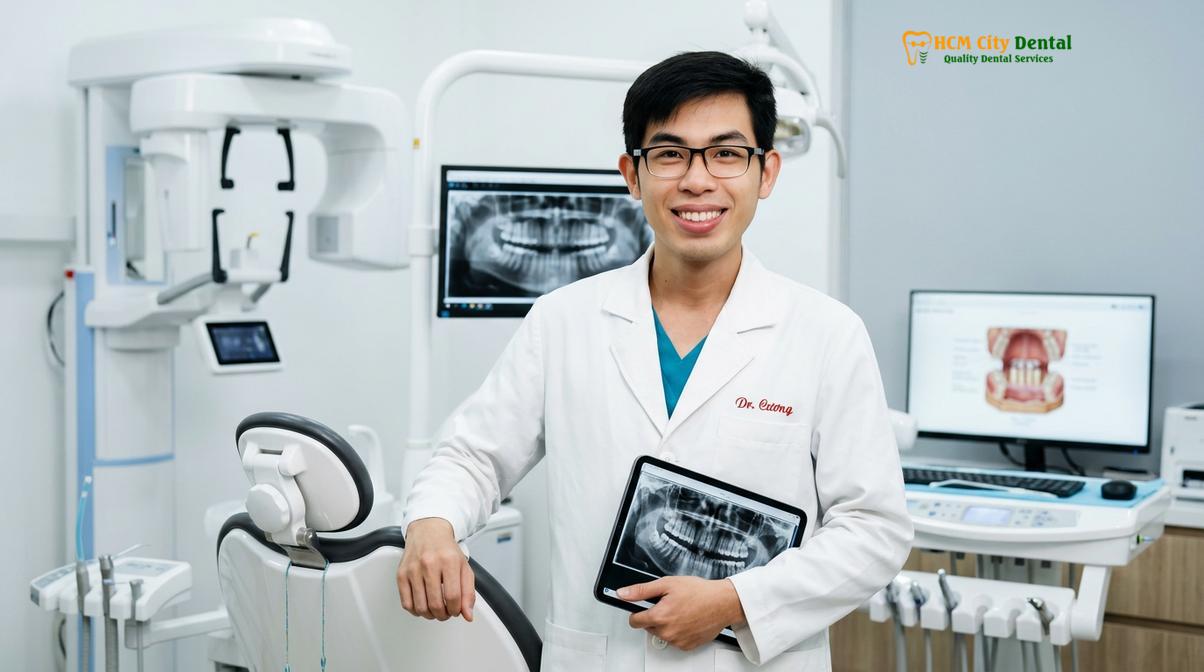
At HCMC Dental Clinic in Ho Chi Minh City, the decision to recommend a specific restorative material is never made lightly. Dr. Nguyen Van Cuong emphasizes a comprehensive diagnostic approach, evaluating each patient’s unique bite alignment, parafunctional habits, and aesthetic goals before finalizing a treatment plan. While CAD/CAM milling has revolutionized the speed and aesthetics of modern dentistry, there are specific clinical scenarios where gold remains the undisputed champion.
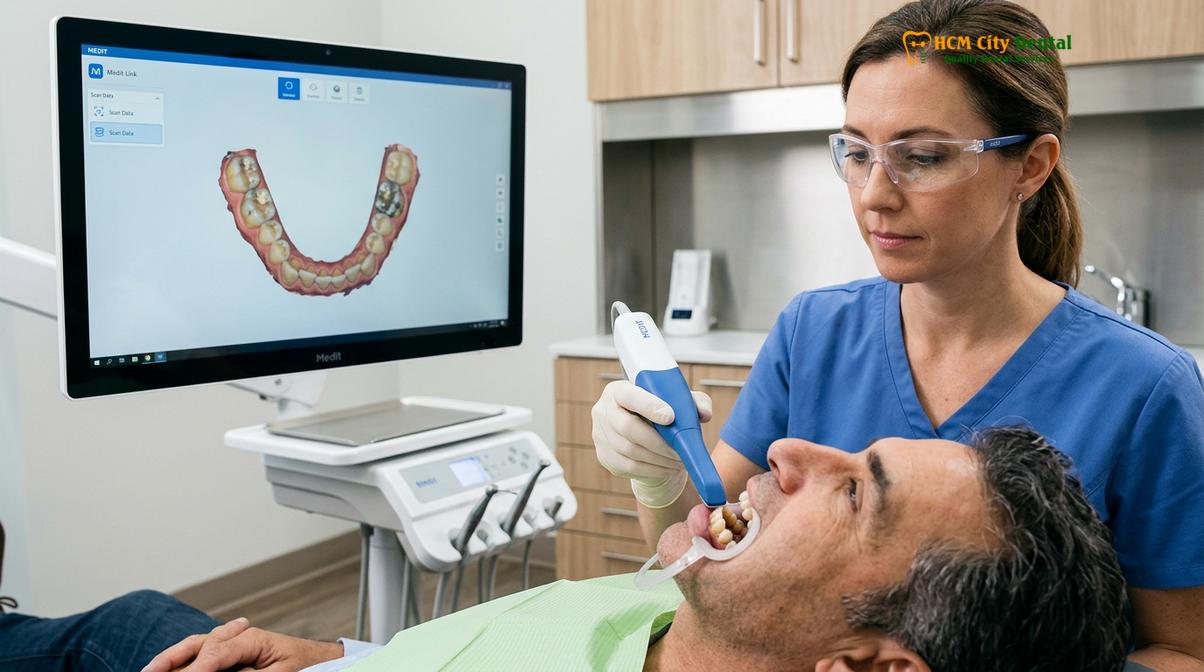
Dr. Cuong frequently recommends gold for the restoration of second molars (the furthest teeth in the back of the mouth) in patients who exhibit signs of heavy bruxism or clenching. Because these teeth are rarely visible even during a wide smile, the aesthetic drawback of gold is negligible, while the biomechanical benefits are maximized. The workflow for these restorations combines traditional craftsmanship with modern digital precision. Instead of using gag-inducing impression materials, the clinical team utilizes advanced iTero + Medit i700 Intraoral Scanners. Digital scanning eliminates uncomfortable silicone impressions, providing precise 3D data that is instantly transmitted to the laboratory.
Clinical Case Study: Posterior Rehabilitation
A 45-year-old international patient visited HCMC Dental Clinic in Ho Chi Minh City presenting with a fractured mesio-lingual cusp on a lower right second molar, secondary to a failing, decades-old amalgam filling. The patient had a history of severe nocturnal bruxism. After a thorough occlusal analysis, Dr. Nguyen Van Cuong recommended a cast gold onlay to preserve the remaining buccal cusps while providing maximum fracture resistance. The preparation utilized precise chamfer margins, and the final restoration was seated with perfect marginal adaptation. The patient was enrolled in our global warranty remote support program, ensuring long-term follow-up.
The cementation process also differs significantly based on the material chosen. While modern ceramics require complex enamel bonding protocols and moisture-sensitive resin-adhesive cementation to achieve their strength, gold restorations rely on traditional luting cements and the precise geometric retention of the cavity preparation. This makes gold an excellent choice in clinical situations where achieving perfect isolation from saliva is challenging, such as deep cavities that extend below the gum line.
“In patients with severe parafunctional habits, prioritizing material strength, marginal integrity, and enamel compatibility over aesthetics in the posterior region is a sound clinical strategy that yields predictable, lifelong results.”
When to See a Doctor
Identifying the early signs of a failing restoration or progressive tooth decay is critical for preserving natural tooth structure and avoiding the need for more invasive procedures like root canal therapy or extractions. You should schedule a comprehensive clinical evaluation if you experience any of the following symptoms:
- Thermal Sensitivity: A sharp, lingering pain when consuming hot or cold foods and beverages, which may indicate microleakage beneath an old filling or inflammation of the dental pulp.
- Pain Upon Chewing: Discomfort or a sharp “zing” when biting down, often a classic symptom of Cracked Tooth Syndrome or a fractured restoration that requires immediate stabilization with an inlay or onlay.
- Visible Defects: Noticeable cracks, missing pieces of an old silver or composite filling, or dark shadowing beneath the enamel, which strongly suggests the presence of secondary decay.
- Food Impaction: Consistent trapping of food between teeth, which can indicate that the contact point of an old filling has worn away, leading to localized gingival inflammation and periodontal pocketing.
- Bite Alignment Changes: A feeling that your teeth no longer fit together correctly, which may result from severe molar wear or the shifting of teeth due to compromised restorations.
Early intervention allows for conservative treatments. If you suspect an issue with your posterior teeth, seeking a professional diagnostic assessment utilizing digital radiography and intraoral scanning is the most effective way to determine if a conservative inlay, onlay, or overlay is the appropriate clinical solution.
Frequently Asked Questions
How long does a gold inlay last?
A well-maintained gold inlay can last between 20 to 40 years, making it one of the most durable restorations available. Its exceptional longevity is due to the material’s high compressive strength, resistance to fracture, and ability to maintain a microscopic marginal seal that prevents bacterial leakage over decades of use. Regular dental checkups and excellent home oral hygiene are essential to maximize the lifespan of the restoration.
Why do dentists love gold restorations?
Dentists favor gold restorations because the material’s physical properties closely mimic natural tooth structure, particularly regarding wear rates and thermal expansion. Furthermore, the ability to burnish the margins allows clinicians to create an incredibly precise seal, minimizing the risk of secondary decay and ensuring predictable, long-term clinical success. Gold is also highly forgiving during the fabrication process, allowing for exquisite anatomical detailing.
Is gold biocompatible?
Yes, high-noble gold alloys are exceptionally biocompatible and highly resistant to oxidation and corrosion in the oral environment. They do not accumulate plaque easily, which promotes excellent gingival health around the restoration margins, though patients seeking a 100% metal-free holistic dentistry approach may prefer biocompatible ceramic alternatives. Gold does not release harmful metallic ions, making it safe for long-term intraoral use.
Can a gold onlay wear out opposing teeth?
No, a gold onlay is uniquely kind to opposing teeth because its wear coefficient is nearly identical to that of natural human enamel. Unlike some highly abrasive traditional porcelains, gold will not cause accelerated wear or damage to the opposing dentition, making it an ideal choice for patients with heavy bites or bruxism. It maintains occlusal harmony throughout the patient’s lifetime.
Are gold inlays better than porcelain for back teeth?
Gold inlays offer superior longevity and margin adaptation, but porcelain provides a natural, tooth-colored aesthetic that gold cannot match. The choice depends on patient priorities; gold is often recommended for heavy-chewing second molars where aesthetics are less critical, while modern CAD/CAM ceramics are preferred for visible areas. Both materials, when properly indicated and executed, provide excellent clinical outcomes.
References
- Journal of Prosthetic Dentistry. Marginal adaptation and clinical survival of cast gold restorations. (2019).
- International Journal of Prosthodontics. Thermal expansion coefficients of dental alloys versus natural dentin. (2020).
- Journal of Oral Rehabilitation. Wear characteristics of gold alloys and opposing enamel in bruxism patients. (2021).
- American Dental Association. Clinical guidelines on biocompatibility of high-noble dental alloys. (2018).
- Journal of Esthetic and Restorative Dentistry. Long-term survival rates of posterior inlays and onlays. (2022).