When choosing between a zirconia vs emax overlay, the decision hinges on balancing fracture resistance with aesthetic integration. Zirconia offers unparalleled strength for heavy biters, while E.max provides superior translucency and adhesive bonding capabilities, making both excellent conservative restorations for damaged teeth.
Clinical Summary:
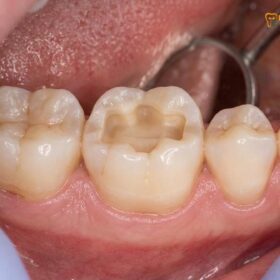
The clinical selection between a zirconia and an E.max (lithium disilicate) overlay depends primarily on the patient’s occlusal load, aesthetic requirements, and remaining tooth structure. E.max is celebrated for its glass-like optical translucency and robust micromechanical bonding, making it ideal for highly visible areas and standard chewing forces. Conversely, monolithic zirconia delivers exceptional flexural strength, rendering it a highly reliable choice for posterior molars subjected to intense compressive stress or bruxism. Both materials support a preservation philosophy, utilizing digital CAD/CAM workflows to restore structural integrity without the aggressive reduction required for traditional full crowns.
Key Takeaways:
- Material Composition: E.max is made of lithium disilicate glass-ceramic, while Zirconia is composed of dense zirconium dioxide.
- Strength Metrics: Zirconia boasts a significantly higher flexural strength, whereas E.max typically ranges between 400-500 MPa, which is still highly durable for most cases.
- Aesthetic Quality: E.max offers superior optical translucency, closely mimicking natural enamel, whereas traditional zirconia is slightly more opaque.
- Tooth Preservation: Both materials are used for porcelain overlays, preserving significantly more natural tooth structure than full-coverage crowns.
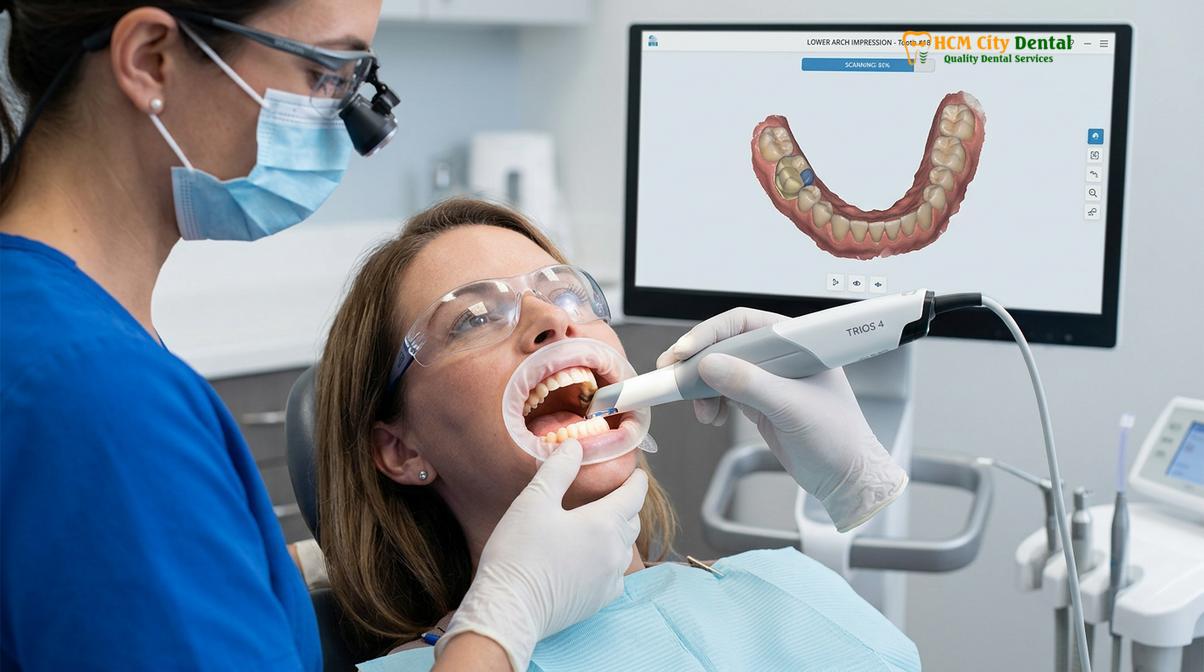
- Digital Precision: Modern overlays are fabricated using intraoral scanners and CAD/CAM milling for exact marginal fit.
Why Molars Require Heavy-Duty Restorations
Molars endure immense compressive stress during mastication, requiring restorative materials that can withstand heavy occlusal loads without fracturing. Overlays provide a conservative alternative to full crowns by preserving healthy tooth structure while reinforcing compromised cusps.
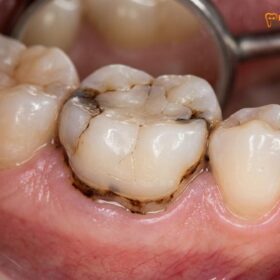
The posterior region of the human mouth is a high-stress environment. During normal mastication, molars can exert tremendous forces, and in patients with parafunctional habits like bruxism (teeth grinding), these forces can multiply significantly. This immense compressive stress necessitates restorative materials that possess high fracture toughness and fatigue resistance. Historically, large cavities or fractured cusps were treated with amalgam or full-coverage metal crowns. However, modern dentistry has shifted toward a strict preservation philosophy. The goal is to retain as much natural, healthy tooth structure as possible. Unlike a full crown, which requires aggressive shaving of the tooth, overlays selectively replace only the damaged or missing portions.
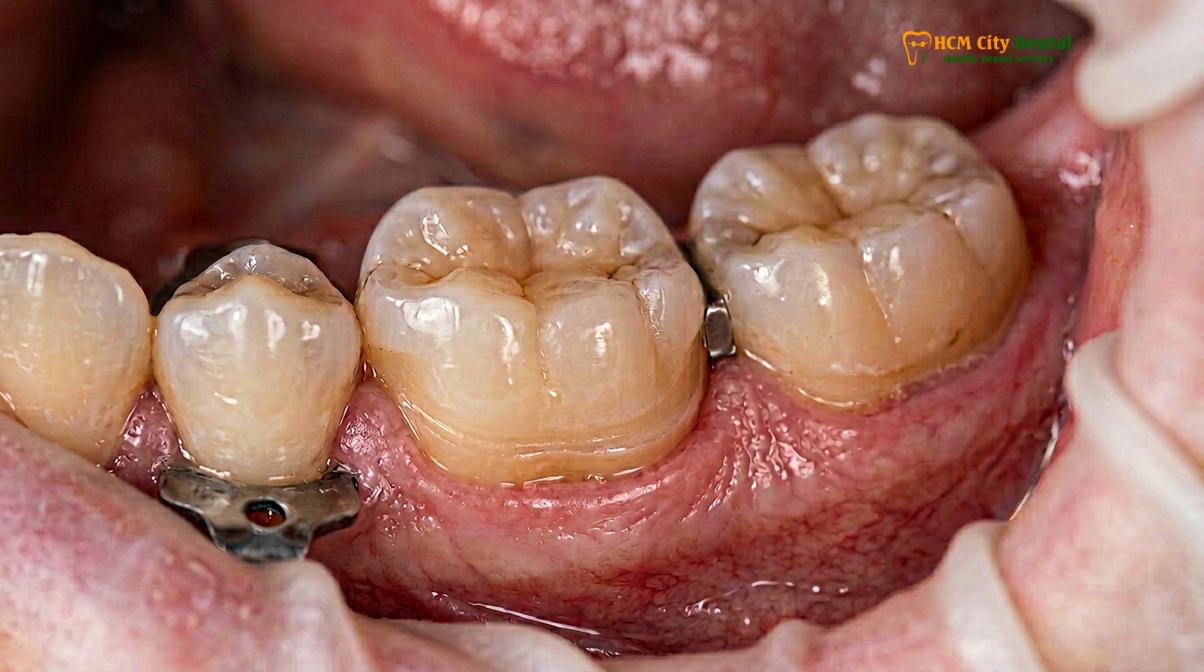
When a molar suffers from extensive decay or requires a large filling replacement, direct composite resins often fall short. Large composite fillings are highly susceptible to polymerization shrinkage, which can pull away from the cavity walls, creating micro-gaps that lead to sensitivity and secondary decay. Furthermore, composites lack the structural rigidity to support heavy occlusal loads over time, often leading to cusp fracture. An overlay, which covers one or more cusps and the biting surface, acts as a rigid helmet, distributing chewing forces evenly across the remaining tooth structure. The fabrication of these heavy-duty restorations has been revolutionized by digital dentistry, ensuring an exact marginal fit that is critical for margin sealing and preventing secondary decay detection in the future [1].
E.max (Lithium Disilicate): Aesthetics and Bond Strength
E.max overlays utilize lithium disilicate glass-ceramic to deliver exceptional optical translucency and robust adhesive bonding. This material seamlessly mimics natural enamel, making it the premier choice for highly visible restorations where aesthetics are paramount.
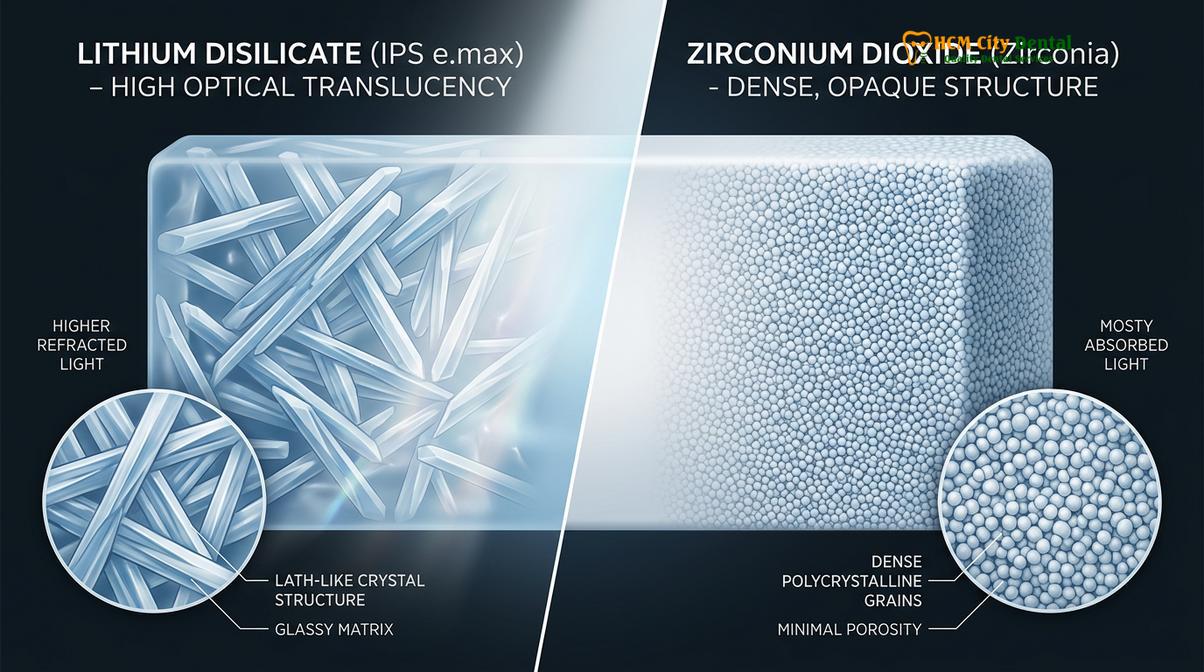
When discussing the pinnacle of dental aesthetics combined with reliable strength, IPS e.max is frequently the material of choice. E.max is composed of lithium disilicate, a glass-ceramic material characterized by its unique needle-like crystalline structure embedded in a glassy matrix. This specific microstructure is what gives E.max its remarkable optical translucency. Unlike materials that block light, lithium disilicate allows light to penetrate, scatter, and reflect in a manner virtually identical to natural human enamel. This chameleon effect enables the restoration to blend seamlessly with the adjacent natural teeth, making it highly desirable for premolars and molars that are visible during a wide smile.
Beyond its inherent translucency, E.max allows for intricate custom shading. Highly skilled dental technicians can apply surface stains and glazes to replicate the subtle nuances of a patient’s natural dentition, including developmental grooves or specific chroma gradients from the gingival margin to the occlusal surface. This level of customization ensures that the final restoration does not look like an artificial block, but rather a vital, living tooth [2].
“The adhesive integration of lithium disilicate to etched enamel creates a monoblock effect, significantly increasing the fracture resistance of the remaining tooth structure and providing a highly reliable seal against bacterial microleakage.”
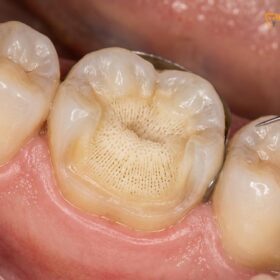
The true clinical advantage of an E.max overlay lies in its bonding protocol. Because it is a glass-ceramic, the internal surface of the E.max restoration can be chemically altered using hydrofluoric acid. This etching process creates a micro-porous surface. A silane coupling agent is then applied, which acts as a chemical bridge between the ceramic and the resin cement. When the restoration is seated using a resin-adhesive cementation process, the E.max overlay and the natural tooth essentially fuse into a single, cohesive biomechanical unit.
Zirconia: Ultimate Fracture Resistance (1,200 MPa)
Zirconia overlays provide unmatched durability with exceptional flexural strength, making them highly resistant to fracture under normal chewing forces. They are often the definitive choice for patients with severe bruxism or heavy posterior bite alignment issues.
For patients who exert extraordinary forces on their teeth, a standard ceramic might not suffice. Zirconium dioxide, commonly referred to as zirconia, is a polycrystalline ceramic that lacks a glassy phase. Its most remarkable property is transformation toughening. When a micro-crack begins to propagate through the material, the crystal structure at the tip of the crack undergoes a phase transformation, which involves a localized volume expansion. This expansion effectively squeezes the crack shut, stopping it in its tracks. This unique characteristic grants zirconia an astonishing flexural strength, making it one of the strongest tooth-colored materials available in modern dentistry [3].
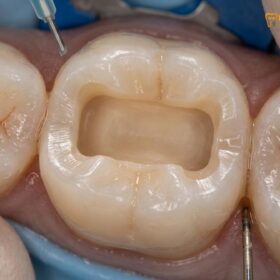
When evaluating a zirconia vs lithium disilicate overlay, the sheer mechanical resilience of zirconia makes it a champion for high-stress molar restoration. Because of its extreme density and strength, zirconia can often be milled into thinner cross-sections than E.max while still maintaining its structural integrity. This allows the dentist to be even more conservative during the cavity outline form preparation, removing less healthy tooth structure to achieve the necessary clearance for the restorative material.
Translucency vs. Opacity: Which Looks More Natural?
While modern zirconia has improved in aesthetics, E.max remains the gold standard for mimicking the natural light transmission of human enamel. The choice depends on the overlay’s location and the underlying tooth color.
The aesthetic debate between an emax vs zirconia partial crown centers primarily on how each material interacts with light. Natural teeth are not opaque; they possess varying degrees of translucency, particularly at the incisal edges and cusp tips, allowing light to pass through the enamel and reflect off the underlying dentin. E.max naturally replicates this optical behavior. Its glass matrix allows for high light transmission, giving the restoration a vital, luminous quality.
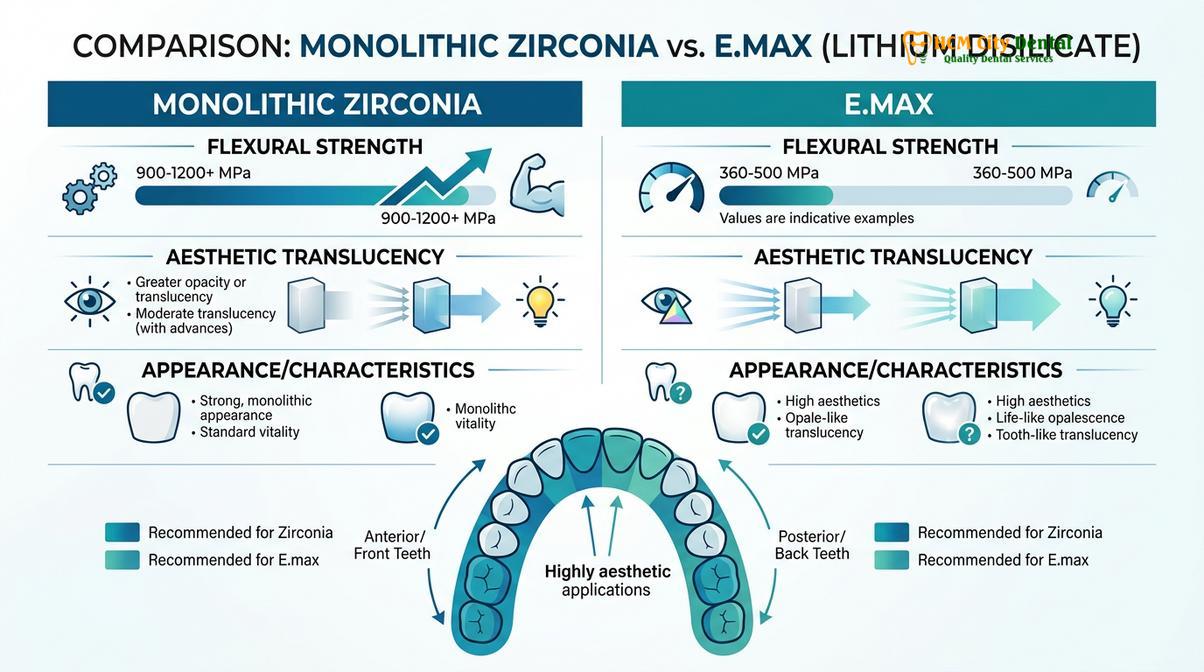
| Clinical Property | E.max (Lithium Disilicate) | Zirconia (Zirconium Dioxide) |
|---|---|---|
| Flexural Strength | 400 – 500 MPa | 800 – 1,200 MPa |
| Optical Translucency | Excellent (Glass-like, highly vital) | Moderate to Good (Depending on formulation) |
| Bonding Mechanism | Chemical adhesion (Hydrofluoric acid + Silane) | Mechanical/Chemical (MDP primer + Sandblasting) |
| Best Clinical Use Case | Premolars, highly visible molars, standard bite | Second molars, heavy bruxers, masking dark teeth |
| Preparation Requirement | Requires slightly more thickness | Can be thinner due to high strength |
Historically, zirconia was notoriously opaque and stark white. However, material science has advanced significantly. Today, dental laboratories utilize high-translucency monolithic zirconia. By altering the yttria content and the sintering protocols, manufacturers have increased the light transmission of zirconium dioxide. Despite these advancements, when placed side-by-side under natural lighting, E.max still holds a slight edge in pure aesthetic vitality.
Bonding vs. Cementation Protocols
The clinical success of an overlay relies heavily on the preparation design and the specific cementation technique used. E.max requires a meticulous adhesive bonding protocol, whereas zirconia can often be conventionally cemented depending on the retention form.
The method by which the overlay is attached to the tooth is just as critical as the material itself. The clinical protocols for E.max and Zirconia differ significantly due to their distinct chemical structures. E.max requires a strict resin-adhesive cementation protocol. The tooth preparation must be meticulously isolated from moisture. The enamel is etched, and a bonding agent is applied. This process is highly technique-sensitive; any moisture contamination during the bonding phase can severely compromise the longevity of the restoration [4].
“Achieving a flawless margin seal is the ultimate goal of any indirect restoration. Whether utilizing the micromechanical interlocking of etched E.max or the MDP-mediated chemical adhesion of zirconia, the precision of the CAD/CAM milling dictates the long-term periodontal health.”
Zirconia, lacking a glass matrix, cannot be etched with hydrofluoric acid. Instead, the internal surface of a zirconia overlay must be particle-abraded to create micro-roughness. A specialized primer containing 10-MDP is then applied. The MDP molecule chemically bonds to the zirconium dioxide on one end and to the resin cement on the other. While adhesive bonding of zirconia is highly effective, zirconia’s high strength also allows it to be conventionally cemented if the tooth preparation has adequate parallel walls and retention form.
Case Study: Restoring Molar Function in Ho Chi Minh City
Clinical Case: Molar Restoration
Recently, a patient visited HCMC Dental Clinic in Ho Chi Minh City presenting with a severely fractured lower right first molar due to nocturnal bruxism. The tooth had a large, failing amalgam filling, but the buccal and lingual walls remained largely intact. After a thorough clinical evaluation, it was determined that a full crown would require unnecessary removal of healthy enamel. Instead, a monolithic zirconia overlay was selected to withstand the patient’s heavy grinding forces. Using digital intraoral scanning, the restoration was milled and bonded in place, successfully restoring the tooth’s structural integrity while preserving the natural margins.
Dr. Cuong’s Molar Recommendation & When to See a Doctor
Selecting the best overlay material requires a comprehensive clinical evaluation of the patient’s bite force, aesthetic expectations, and remaining tooth structure. A personalized approach ensures long-term functional and visual success.
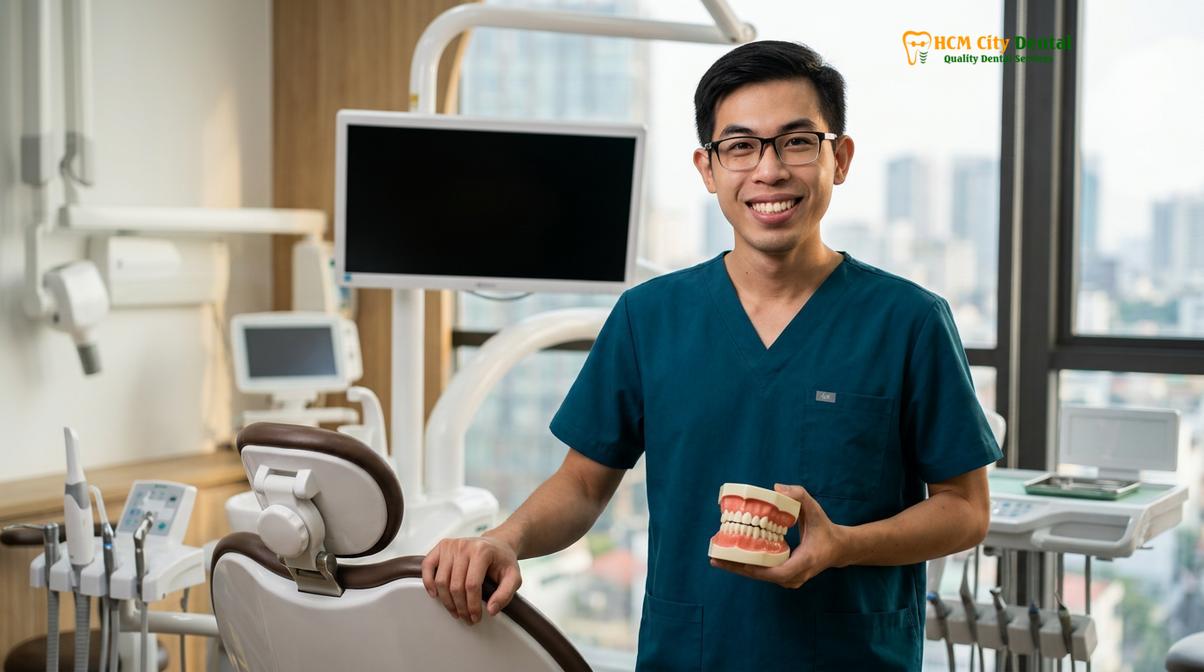
Dr. Nguyen Van Cuong, a leading restorative specialist, emphasizes that selecting the best overlay material requires a comprehensive clinical evaluation of the patient’s bite force and remaining tooth structure. Dr. Cuong often notes that while both materials offer excellent longevity, the final choice must align with the patient’s specific functional needs and aesthetic goals.
When to Seek Immediate Dental Care
Patients should seek immediate dental consultation if they experience sharp pain when chewing, prolonged sensitivity to hot or cold temperatures, or if they notice visible cracks in their posterior teeth. Addressing these symptoms early often allows for conservative treatments rather than requiring full crown coverage or extraction, aligning with the restorative guidelines set forth by the Vietnam Ministry of Health (MOH) [5]. Regular checkups can help identify micro-fractures before they compromise the entire tooth structure.
References
- Journal of Prosthodontic Research. Flexural strength and fracture resistance of monolithic zirconia crowns.
- Journal of Esthetic and Restorative Dentistry. Optical translucency and clinical performance of lithium disilicate.
- International Journal of Prosthodontics. Adhesive cementation protocols for ceramic partial crowns.
- Journal of Dentistry. CAD/CAM milling accuracy and marginal adaptation in dental inlays and onlays.
- Vietnam Ministry of Health (MOH). National guidelines on restorative dentistry and prosthodontic material selection.
Frequently Asked Questions
Can E.max handle heavy chewing forces?
Yes, E.max can handle normal to heavy chewing forces when properly bonded to enamel. Its flexural strength is generally sufficient for most premolar and molar restorations, provided the patient does not suffer from severe bruxism.
Is Zirconia stronger than E.max for overlays?
Yes, zirconia is significantly stronger than E.max, boasting a much higher flexural strength. This makes zirconia a highly reliable choice for patients with heavy bite forces or severe teeth grinding habits.
Does a Zirconia overlay look natural?
Modern high-translucency zirconia overlays look highly natural and blend well with posterior teeth. While it may lack the complete glass-like optical translucency of E.max, it provides excellent aesthetics for molar restorations.
Which material is easier to bond to the tooth?
E.max is generally considered highly predictable for adhesive bonding because its glass-ceramic structure can be etched. Zirconia requires specialized primers and particle abrasion to achieve optimal chemical adhesion.
How long does a zirconia or emax overlay last?
Both zirconia and E.max overlays can last many years with proper oral hygiene and regular dental checkups. Longevity depends heavily on the precision of the initial CAD/CAM milling, the bonding protocol, and the patient’s bite alignment.
If you are experiencing molar pain or structural damage, contact HCMC Dental Clinic in Ho Chi Minh City today. Our clinical team can help determine if porcelain overlays are the right conservative solution to restore your smile’s function and aesthetics.