The choice between all on 4 vs full mouth crowns depends entirely on the structural integrity of your natural tooth roots. All-on-4 utilizes dental implants to replace missing teeth entirely, whereas full mouth crowns preserve and rebuild existing damaged teeth to restore proper bite alignment and aesthetics.
Clinical Summary:
Full mouth rehabilitation requires precise diagnostic evaluation to determine whether a patient benefits more from bone-anchored prosthetics (All-on-4) or tooth-supported restorations (full mouth crowns). While All-on-4 is ideal for terminal dentition with severe bone loss, full mouth crowns remain the conservative choice when healthy roots are present. Both approaches utilize advanced Digital Smile Design and biocompatible materials to restore the Vertical Dimension of Occlusion (VDO) and ensure long-term neuromuscular stability.
Key Takeaways:
- All-on-4 replaces an entire arch using four strategically angled titanium implants.
- Full mouth crowns preserve natural tooth roots, requiring conservative enamel preparation.
- Restoring the Vertical Dimension of Occlusion (VDO) is critical in both rehabilitative procedures.
- Biocompatible monolithic zirconia offers superior durability over traditional PFM materials.
- Pre-booking via WhatsApp provides significant financial advantages for international patients.
Structural Comparison: Bone-Anchored Prostheses vs. Tooth-Supported Restorations
Bone-anchored prostheses replace the entire tooth structure using titanium implants, while tooth-supported restorations rely on the biological foundation of your existing natural roots.
When evaluating the structural mechanics of full mouth rehabilitation, the fundamental difference lies in the foundation. Bone anchored prosthetics, such as the All-on-4 or All-on-6 systems, are designed for patients who have lost their natural teeth or possess dentition that is no longer viable. This approach utilizes four to six titanium implants surgically embedded into the maxilla or mandible. These implants act as artificial roots, fusing with the bone through a process called osseointegration. The All-on-4 structural biomechanics are unique; by tilting the posterior implants at a 30 to 45-degree angle, clinicians can maximize the use of available anterior bone, often bypassing the need for extensive sinus lifts or nerve repositioning[1].
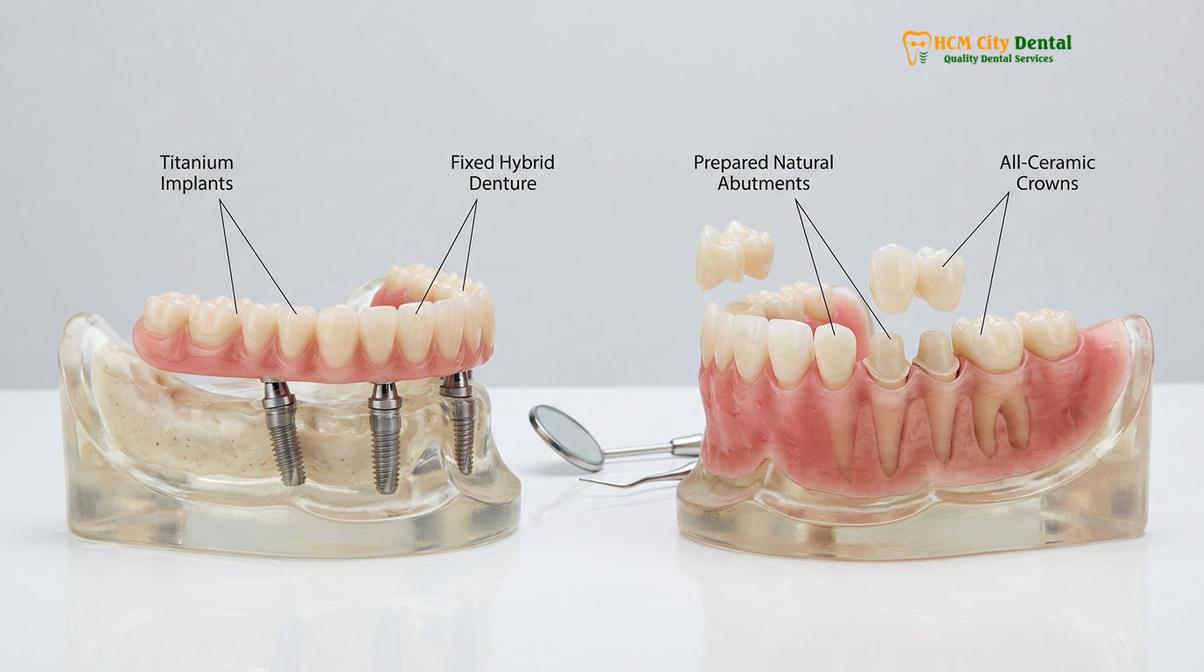
Conversely, tooth supported crowns rely on the preservation of the patient’s natural tooth roots. If the roots are structurally sound and free from severe periodontal disease, the clinical crowns (the visible portion of the teeth) can be conservatively reshaped. This preparation allows custom-fabricated caps to be cemented over the natural structure. Because the natural periodontal ligament is retained, patients maintain their natural proprioception—the sensory feedback that dictates how hard they are biting and chewing.
Material Science: Monolithic Zirconia vs PFM
Regardless of whether the foundation is an implant or a natural root, the choice of restorative material is paramount. Historically, Porcelain-Fused-to-Metal (PFM) was the standard. However, modern clinical protocols heavily favor monolithic zirconia. Biocompatible monolithic zirconia, sourced from premium Swiss and German brands, is metal-free, bio-inert, and highly resistant to chipping. Unlike PFM, which can leave a dark metallic line at the gum margin over time, zirconia offers a virtually seamless aesthetic integration with the soft tissues[2].
Candidacy Factors: Missing Teeth & Bone Loss vs. Intact Roots with Damaged Crowns
Candidacy is determined by a CBCT 3D scan; patients with terminal dentition require implants, whereas those with structurally sound roots are ideal for crowns.
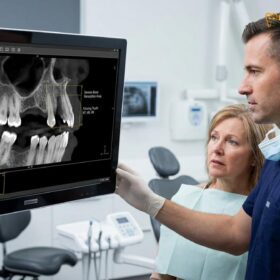
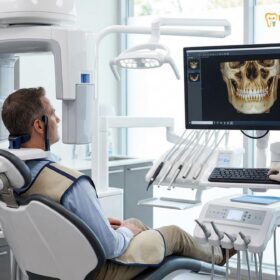
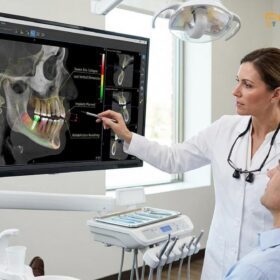
Determining the appropriate treatment pathway requires a comprehensive diagnostic workup. At the core of this evaluation is the CBCT 3D bone diagnostics scan. This advanced imaging technology provides a three-dimensional view of the craniofacial structures, allowing clinicians to assess bone volume, nerve pathways, and the health of existing roots with sub-millimeter accuracy.
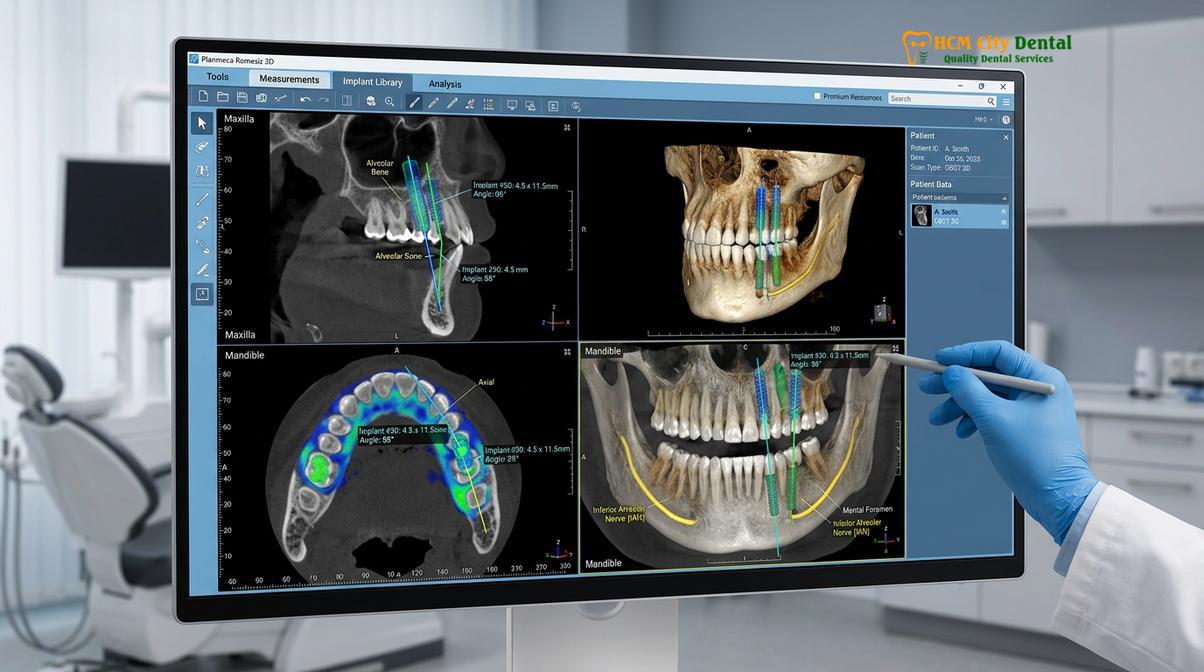
For patients presenting with terminal dentition—characterized by severe periodontal disease, extensive mobility, or significant bone loss—saving the natural teeth is often clinically impossible. In these scenarios, extracting the failing teeth and transitioning to all-on-4 implants is the most predictable course of action. The implants stimulate the jawbone, preventing the progressive resorption that naturally occurs when teeth are lost.
Preserving Natural Dentition
If the CBCT scan reveals that the roots are robust and the surrounding alveolar bone is healthy, the clinical objective shifts to preservation. Even teeth with deep decay can often be salvaged. Techniques such as vital pulp therapy can protect the nerve and prevent the need for root canal therapy. Furthermore, if gum recession is present, a biological gum graft may be performed to thicken the tissue and protect the roots before the final crowns are placed[3].
Clinical Case Example: A 55-year-old patient visited HCMC Dental Clinic in Ho Chi Minh City presenting with severe enamel erosion and a collapsed bite due to decades of acid reflux and bruxism. Because the roots were exceptionally healthy, the clinical team recommended against extractions. Instead, the patient underwent a full mouth rehabilitation using a cosmetic veneers combo on the anterior teeth and full mouth crowns on the posterior teeth, successfully restoring the VDO and preserving all natural roots.
Surgical Requirements: Implant Drills vs. Conservative Tooth Preparation
Implant surgery involves precise osteotomies and bone grafting under sedation, whereas crown preparation focuses on conservative enamel reshaping and digital impression scanning.
The clinical workflows for these two rehabilitative approaches differ significantly in their invasiveness and surgical requirements. The debate of surgical implant versus crown preparation centers on the patient’s tolerance for surgery and the biological necessity of the procedure.
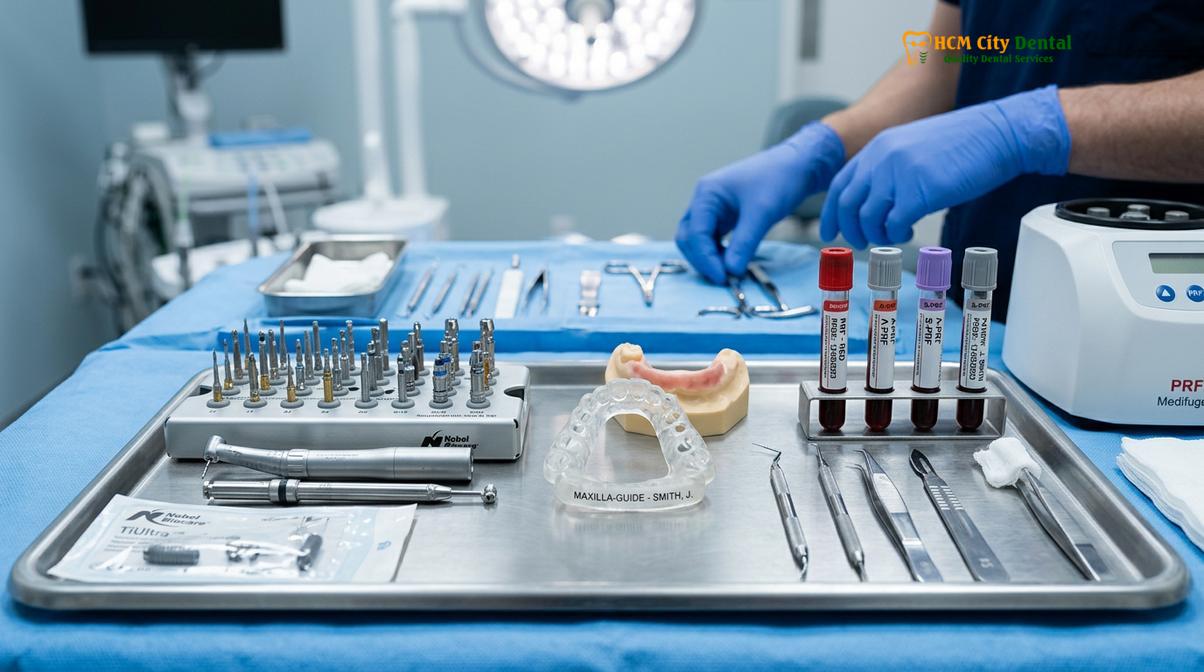
Placing All-on-4 implants is a surgical procedure that involves creating precise osteotomies (drilled channels) in the jawbone. To ensure a safe, anxiety-free, and pain-free experience, this is routinely performed under IV Conscious Sedation. Supervised by a board-certified anesthesiologist, protocols utilizing Midazolam and Propofol, combined with continuous EKG monitoring, allow the patient to rest comfortably while the surgeon works. If localized bone deficiencies are noted, bone augmentation (guided bone regeneration) is performed simultaneously. To accelerate healing, clinicians often utilize Platelet-Rich Fibrin (PRF) healing protocols, drawing a small amount of the patient’s autologous blood to extract growth factors that are then applied directly to the surgical site[4].
Digital Smile Design and Crown Preparation
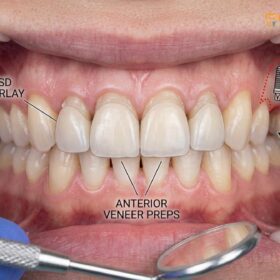
Conversely, preparing teeth for full mouth crowns is a non-surgical, restorative procedure. It requires the conservative reduction of the enamel to create space for the ceramic material. Before a single tooth is touched, the clinical team utilizes Digital Smile Design (DSD). This involves creating 3D digital mock-ups and physical tooth wax-ups. These mock-ups are temporarily placed over the patient’s un-prepped teeth to verify phonetic compatibility, lip support, and chewing guidance. Only when the patient and doctor are completely satisfied with the blueprint does the actual tooth preparation begin[5].
Lifespan and Long-term Maintenance: Screws, Cements, and Hygiene Routines
Implant prosthetics require specialized hygiene to prevent peri-implantitis, while natural tooth crowns demand meticulous margin care to avoid recurrent decay.
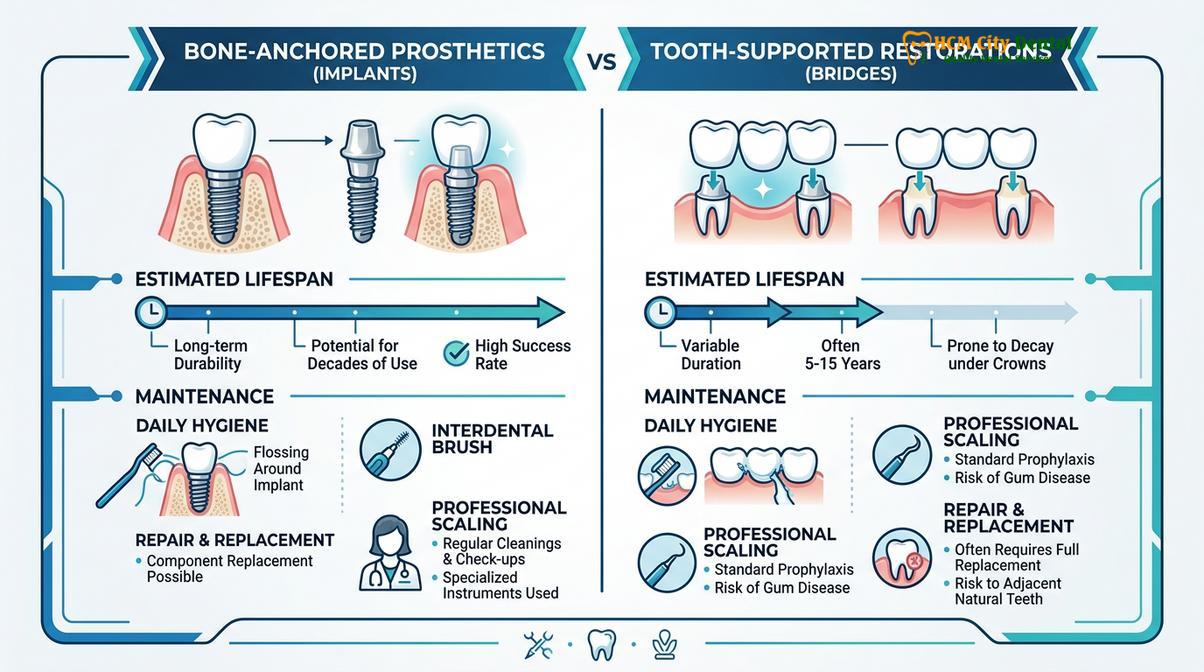
When discussing the restoration lifespan comparison, patients must understand that neither implants nor crowns are entirely maintenance-free. The longevity of the rehabilitation depends heavily on the patient’s commitment to daily oral hygiene and professional maintenance.
Dental implants are impervious to bacterial decay (cavities). However, the gum tissue and bone surrounding the titanium fixtures are susceptible to peri-implantitis—an inflammatory condition that can lead to bone loss and implant failure. Patients with All-on-4 fixed bridges must use water flossers and specialized interdental brushes to clean beneath the prosthetic arch.
“The success of a full arch implant restoration is not solely determined on the day of surgery; it is maintained through decades of meticulous home care and routine professional radiographic evaluation to ensure the peri-implant tissues remain stable.”
For full mouth crowns, the primary risk is recurrent decay at the margin—the microscopic junction where the ceramic crown meets the natural tooth root. Premium laboratories strive to achieve a precise margin fit to prevent bacterial microleakage. Furthermore, the preparation must respect the biological width of the gum tissue to prevent chronic inflammation. Patients must brush and floss their crowned teeth exactly as they would natural teeth to ensure the underlying roots remain healthy for a lifetime.
Clinical Comparison Table
To help visualize the differences between these two restorative pathways, the following table outlines the key clinical distinctions:
| Feature | All-on-4 Implants | Full Mouth Crowns |
|---|---|---|
| Foundation | Titanium implants anchored in jawbone | Natural tooth roots |
| Ideal Candidacy | Severe bone loss, terminal dentition, missing teeth | Healthy roots, damaged clinical crowns, bite collapse |
| Surgical Requirement | Oral surgery, osteotomies, potential bone grafting | Non-surgical, conservative enamel preparation |
| Proprioception | Reduced (relies on bone integration feedback) | Maintained (natural periodontal ligament intact) |
| Primary Maintenance Risk | Peri-implantitis (gum/bone inflammation) | Recurrent decay at the crown margin |
Cost-Benefit Analysis: Upfront Pricing and Lifetime Value
While All-on-4 requires a higher initial surgical investment, full mouth crowns involve per-tooth costs that vary based on the number of restored units and material selection.
Financial planning is a crucial aspect of full mouth reconstruction. The pricing parameters vary widely based on the chosen modality, the brand of materials, and the geographic location of the clinic. For international patients seeking high-quality care, dental tourism in Vietnam has become a premier choice. Facilities operating under strict guidelines, such as those outlined by the Vietnam Odonto-Stomatology Association (VOSA), offer transparent international billing and exceptional clinical standards[6].
According to the latest clinic fee schedule, the pricing structure incorporates a significant 40% pre-arrival discount for WhatsApp bookings, making world-class care highly accessible.
Single Implant Pricing (Fixture & Abutment only – Crown excluded)
- Economy (Dentis/Neo Biotech): Walk-in: ~$770 (20M VND) | WhatsApp pre-booking discount: From $460 (12M VND).
- Standard (Dentium Superline Mỹ / IBS): Walk-in: ~$1,090 (28.3M VND) | WhatsApp pre-booking discount: From $655 (17M VND).
- Premium (Ritter Đức / B&B Ý): Walk-in: ~$1,600 (41.6M VND) | WhatsApp pre-booking discount: From $965 (25M VND).
- High-End (Straumann Active): Walk-in: ~$2,250 (58.3M VND) | WhatsApp pre-booking discount: From $1,350 (35M VND).
Prosthetic and Package Pricing
- Crown on Implant: Walk-in: ~$260 – $385 (6.7M – 10M VND) | WhatsApp pre-booking discount: From $155 – $230 (4M – 6M VND) per tooth.
- Full Arch Zirconia Bridge on Implants (All-on-4 / All-on-6): Walk-in: ~$12,000 – $22,000 | WhatsApp pre-booking discount: From $7,200 – $13,200 per arch.
- Full Mouth Crowns (14 crowns per arch, Zirconia HT): Walk-in: ~$3,640 per arch | WhatsApp pre-booking discount: From $2,184 per arch (based on $156 per crown).
“Investing in full mouth rehabilitation is an investment in systemic health and quality of life. By utilizing comprehensive treatment planning and securing global manufacturer warranties, patients can achieve a functional, beautiful smile without compromising their financial stability.”
Expert Care and Clinical Leadership
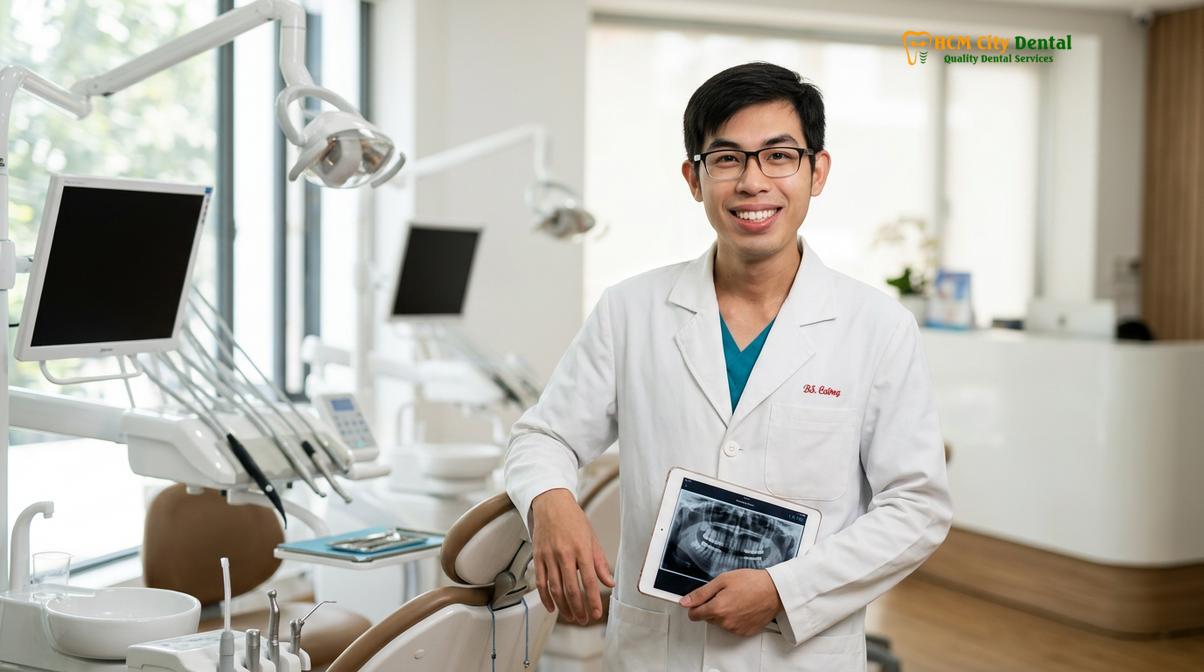
Achieving a successful full mouth restoration requires the expertise of a highly skilled clinical team. Dr. Nguyen Van Cuong is a leading specialist in complex restorative dentistry, emphasizing minimally invasive techniques whenever possible. Under his guidance, patients receive comprehensive evaluations to determine the most predictable pathway for their smile restoration. His commitment to precision ensures that every treatment plan prioritizes long-term biological stability and optimal functional outcomes.
When to See a Doctor
If you are experiencing severe dental pain, chronic muscle fatigue in your jaw, noticeable bite collapse, or if your teeth are becoming increasingly mobile, it is imperative to seek a professional clinical evaluation. Delaying treatment can lead to further irreversible bone loss and complicate future rehabilitative efforts. A comprehensive diagnostic consultation, including a CBCT scan, is the only way to accurately determine whether your natural roots can be saved or if implant therapy is required. We encourage patients to schedule a detailed assessment to explore personalized, evidence-based treatment options tailored to their unique anatomical needs.
Frequently Asked Questions
Which is better: All-on-4 implants or full mouth crowns?
The better option depends entirely on the health of your natural tooth roots and jawbone density. If your roots are healthy but the clinical crowns are damaged, full mouth crowns are superior; if your teeth are failing or missing, All-on-4 implants are the standard of care. A comprehensive clinical evaluation is required to determine the most predictable outcome.
Can I get crowns if I am missing most of my teeth?
No, traditional crowns require a healthy natural tooth root to act as a foundation. If you are missing most of your teeth, you will need dental implants to serve as artificial roots, which can then support individual crowns, an implant-supported bridge, or an overdenture.
Which option is more affordable in the long run?
Full mouth crowns generally have a lower initial cost if no implants are needed, but All-on-4 implants often provide better long-term financial value for patients with failing dentition. Because implants prevent bone loss and do not decay, they reduce the need for future complex retreatments compared to repeatedly restoring compromised natural teeth.
How long does the recovery process take for these procedures?
Recovery for full mouth crowns is typically minimal, often requiring only a few days of mild sensitivity adjustment. In contrast, All-on-4 implant surgery requires an initial soft tissue healing phase of two weeks, followed by a three to six-month osseointegration period before the final permanent prosthesis is attached.
Are these full mouth reconstruction procedures painful?
Modern full mouth rehabilitation is highly manageable and virtually pain-free during the procedure due to advanced anesthesia protocols. Complex surgical phases, such as implant placement or extensive bone grafting, are routinely performed under IV conscious sedation, ensuring maximum patient comfort and minimal postoperative distress.
Ready to restore your smile and regain your confidence? Contact HCMC Dental Clinic in Ho Chi Minh City today to schedule your comprehensive consultation. Discover how our advanced Full Mouth Rehabilitation services can transform your oral health with world-class precision and care.
References
- The Journal of Prosthetic Dentistry. Vertical dimension of occlusion restoration parameters.
- International Journal of Prosthodontics. Biomechanical load distribution in All-on-4 restorations.
- Journal of Clinical Periodontology. Biocompatible dental materials and soft tissue response.
- Clinical Oral Implants Research. Platelet-rich fibrin in guided bone regeneration.
- Journal of Esthetic and Restorative Dentistry. Digital smile design functional protocols.
- Vietnam Odonto-Stomatology Association (VOSA). National guidelines on implant-supported prosthetics and full mouth rehabilitation standards.
For customized treatment planning, transparent cost estimates, and direct consultation with Dr. Cuong, visit our comprehensive Full Mouth Rehabilitation service page or message our team directly via WhatsApp to receive an instant assessment.