Combining dental implants and veneers offers a comprehensive full mouth rehabilitation strategy that restores both structural integrity and aesthetic harmony. Implants replace missing posterior teeth to support bite force, while custom veneers enhance the visible anterior smile zone, creating a seamless, functional dentition.
Clinical Summary:
The integration of dental implants with porcelain veneers represents a sophisticated tier of restorative dentistry. This dual approach addresses posterior bite collapse and anterior aesthetic deficits simultaneously. By utilizing Digital Smile Design (DSD) and 3D CBCT diagnostics, clinicians can synchronize the translucency of anterior veneers with the high-strength monolithic zirconia of posterior implant crowns. Treatment sequencing typically prioritizes implant osseointegration and vertical dimension of occlusion (VDO) restoration before final veneer preparation. Under the guidance of specialists like Dr. Nguyen Van Cuong, patients achieve predictable, long-lasting functional and cosmetic outcomes through meticulously planned biomechanical and aesthetic protocols.
Key Takeaways:
- Implants restore missing roots and posterior bite force, while veneers correct anterior tooth shape and color.
- Digital Smile Design (DSD) ensures precise material synchronization between implant crowns and natural tooth veneers.
- Restoring the Vertical Dimension of Occlusion (VDO) is critical before placing anterior cosmetic restorations.
- Platelet-Rich Fibrin (PRF) and bone augmentation accelerate healing during the surgical implant phase.
- Pre-booking via WhatsApp offers up to 40% off premium implant fixtures and full mouth rehabilitation packages.
The Hybrid Smile Zone Strategy: Anterior Veneers and Posterior Implants
The hybrid smile zone strategy utilizes dental implants to replace missing back teeth for structural support, while applying ultra-thin porcelain veneers to front teeth to perfect the visible aesthetic smile line.
When patients present with a combination of missing posterior teeth and worn, discolored, or chipped anterior teeth, a single restorative modality is rarely sufficient. The concept of the hybrid smile zone addresses this complex clinical scenario by dividing the mouth into functional and aesthetic territories. In the posterior region, the primary goal is to establish a rigid, unyielding foundation capable of withstanding the immense pressures of mastication. Here, dental implants serve as artificial tooth roots, anchoring the bite and preventing the jawbone from resorbing over time. Conversely, the anterior region—the visible smile zone—requires a delicate balance of light reflection, translucency, and natural contouring, which is best achieved through ultra-thin porcelain veneers.
Attempting a cosmetic veneers combo without first addressing posterior tooth loss is a critical clinical error. When back teeth are missing, the patient naturally shifts their chewing patterns to the front teeth. Anterior teeth are anatomically designed for incising (cutting) food, not for the heavy grinding and crushing forces required during normal chewing. If veneers are placed in an environment lacking posterior support, the excessive shear forces will inevitably lead to catastrophic ceramic fracture or debonding. Therefore, the hybrid strategy mandates that posterior implants must bear the brunt of the occlusal load, effectively shielding the delicate anterior veneers from biomechanical stress.
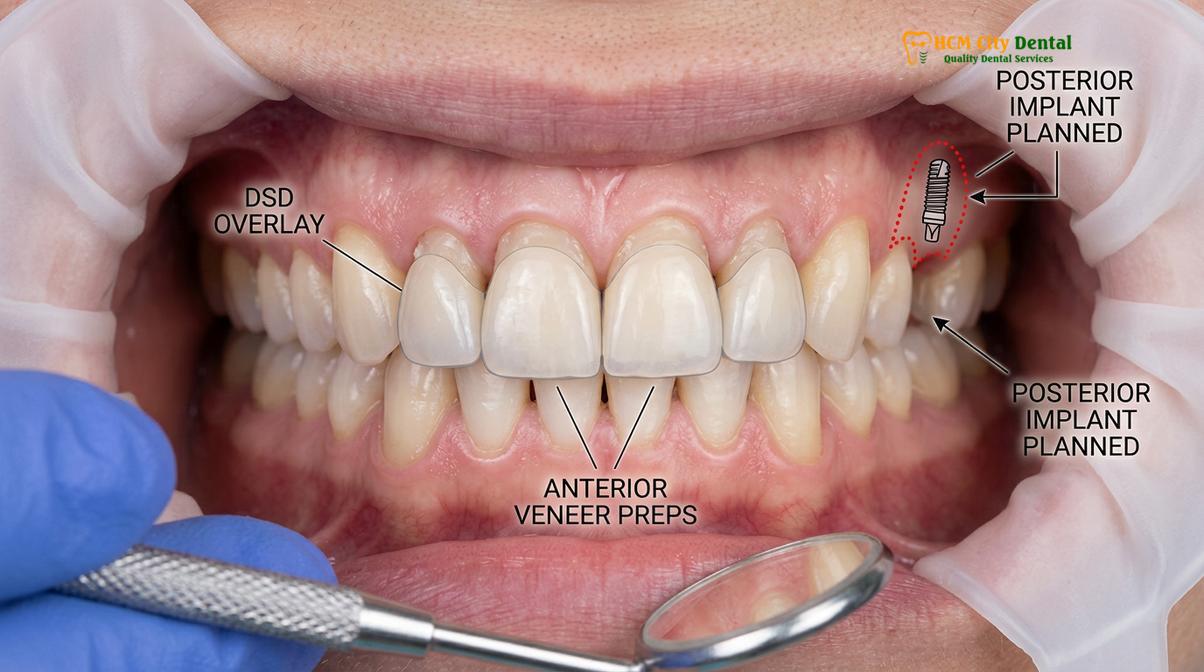
To execute this strategy flawlessly, clinicians rely heavily on Digital Smile Design (DSD). DSD involves creating 3D digital mock-ups and physical tooth wax-ups to evaluate phonetic compatibility, lip support, and chewing guidance before a single tooth is prepared. This digital blueprint allows the dentist and the patient to visualize the final outcome, ensuring that the transition between the natural teeth (covered by veneers) and the implant-supported crowns is virtually undetectable. In cases where the gum line is uneven due to previous extractions or periodontal disease, a biological gum graft may be performed to harmonize the gingival zenith, ensuring that the pink aesthetics perfectly frame the new white restorations [1].
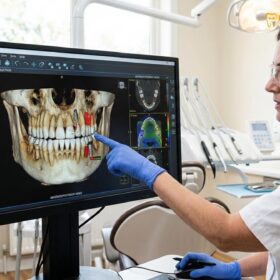
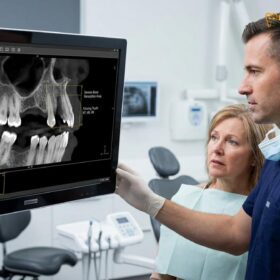
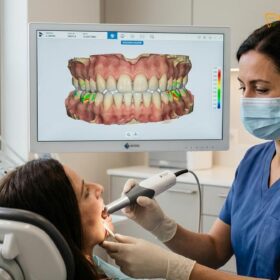
At HCMC Dental Clinic, the hybrid smile zone strategy is meticulously planned using high-resolution CBCT scans and intraoral scanners. This technology allows the clinical team to map out the exact trajectory of the implants while simultaneously designing the optimal emergence profile for the anterior veneers. By treating the mouth as an interconnected biomechanical system rather than isolated teeth, the resulting smile is not only visually stunning but structurally sound for decades to come.
Material Synchronization: Matching E.max Veneer Translucency with Implant Crowns
Achieving a seamless smile requires precise material synchronization, matching the light-reflecting properties of anterior E.max veneers with the durable, bio-inert monolithic zirconia used for posterior implant crowns.
One of the most profound challenges in combining implants and veneers is achieving optical harmony between different restorative materials. Natural teeth possess a complex optical architecture; they are not uniformly white but exhibit varying degrees of hue, chroma, value, translucency, and opalescence. When restoring a smile, the materials chosen must mimic these properties flawlessly. For anterior teeth, lithium disilicate (commonly known as E.max) is often the material of choice for veneers due to its exceptional translucency and ability to bond seamlessly with natural enamel. However, E.max is generally not strong enough to serve as a posterior implant crown, especially in patients with heavy bite forces.
For the posterior implant restorations, clinicians turn to biocompatible monolithic zirconia. Sourced from premium Swiss and German brands, modern zirconia is metal-free, bio-inert, and capable of withstanding massive occlusal loads. The clinical debate of monolithic zirconia vs PFM (Porcelain Fused to Metal) has largely been settled in modern full mouth rehabilitation. PFM crowns, while historically popular, contain a metal substructure that blocks light transmission, resulting in a dead, opaque appearance. Furthermore, as gums naturally recede over time, PFM crowns often expose an unsightly dark metallic line at the margin. Monolithic zirconia eliminates these aesthetic compromises while achieving a microscopic margin fit of under 50 micrometers, which is crucial for preventing peri-implantitis and ensuring long-term tissue health [3].
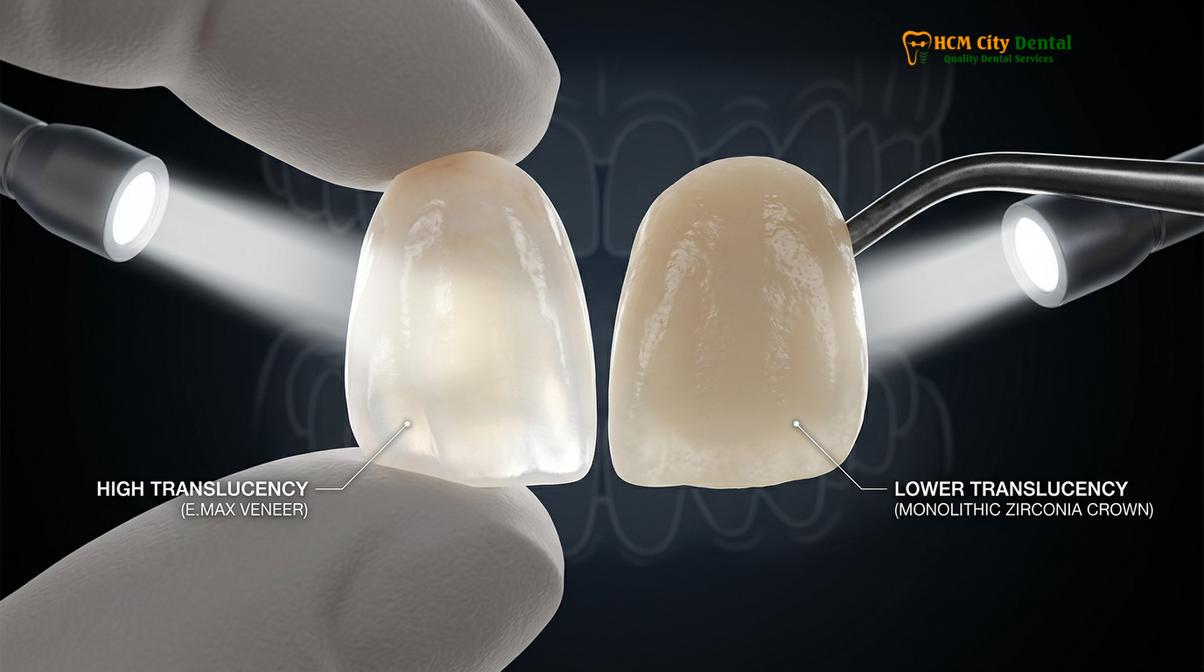
The art of porcelain translucency matching lies in the hands of master dental ceramists. Because the underlying substrate of an implant (a titanium or zirconia abutment) reflects light differently than a natural tooth stump, the ceramist must employ advanced layering techniques. To synchronize the appearance, the laboratory will often use a highly opaque zirconia core for the implant crown to mask the titanium abutment, and then hand-layer translucent feldspathic porcelain over the zirconia to match the exact optical depth of the adjacent E.max veneers. This meticulous process ensures that under natural sunlight, fluorescent indoor lighting, or flash photography, the implant crowns and the natural tooth veneers react to light identically.
“True aesthetic success in combined implant and veneer cases is achieved when neither the patient nor their peers can distinguish the titanium-supported zirconia crowns from the enamel-supported porcelain veneers.”
Furthermore, the surface texture of the materials must be synchronized. Natural teeth feature microscopic ridges, perikymata, and developmental grooves that scatter light. A highly polished, completely smooth crown will look artificial next to a textured natural tooth. During the final stages of fabrication, the ceramist will manually introduce these micro-textures into both the veneers and the implant crowns, ensuring a cohesive, organic appearance across the entire dental arch.
Re-establishing Bite Force Balance (Occlusal Force Distribution)
Re-establishing bite force balance involves correcting the vertical dimension of occlusion (VDO) to ensure that chewing pressures are evenly distributed across implants and natural teeth, preventing restoration failure.
Before any cosmetic enhancements can be permanently bonded, the underlying foundation of the bite must be stabilized. In patients requiring both implants and veneers, there is frequently a history of severe tooth wear, missing teeth, and subsequent bite collapse. When posterior teeth are lost, the lower jaw over-closes, leading to a loss of the Vertical Dimension of Occlusion (VDO). This collapse not only ages the patient’s face prematurely by causing deep wrinkles at the corners of the mouth but also forces the temporomandibular joint (TMJ) into an unnatural, strained position.
Correcting this requires a deep understanding of neuromuscular dentistry and occlusal force balance. The goal is to find the patient’s physiologic rest jaw position—the exact spatial orientation where the jaw muscles are completely relaxed, and the TMJ disc is properly aligned. In complex cases, clinicians may utilize TENS (Transcutaneous Electrical Nerve Stimulation) therapy to gently massage and relax the masticatory muscles, allowing the jaw to naturally settle into its optimal trajectory. Once this position is identified, the new VDO is established [2].
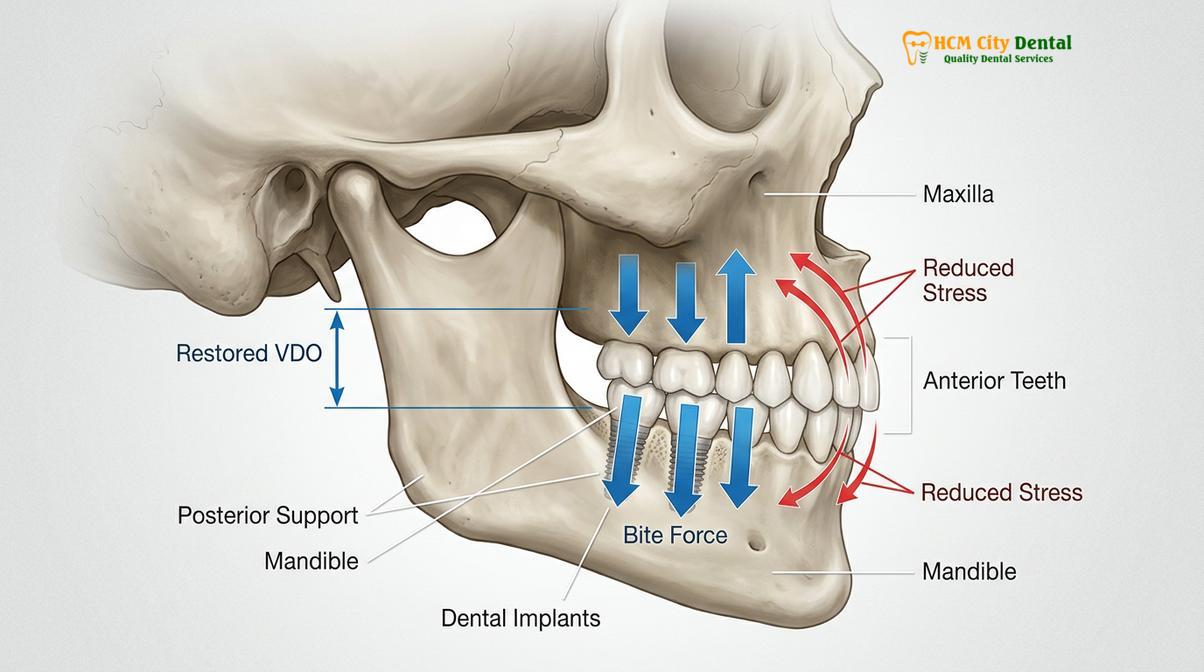
To test this new bite, the patient is often fitted with diagnostic temporary splints or transitional full mouth crowns. These temporaries serve as a critical test drive. Over a period of several weeks, the patient will eat, speak, and sleep with the new VDO. The clinical team monitors the temporaries for any signs of premature wear, chipping, or muscle fatigue. If the patient experiences TMJ discomfort or if the temporaries fracture, the bite is digitally adjusted until perfect harmony is achieved. Only when the patient is completely asymptomatic and comfortable in the new VDO will the final monolithic zirconia crowns and porcelain veneers be fabricated.
Proper occlusal force distribution is the ultimate insurance policy for cosmetic dentistry. When the bite is balanced, the heavy vertical forces of chewing are directed straight down the long axis of the posterior implants, which are biomechanically designed to absorb this stress. Meanwhile, the anterior teeth and their delicate veneers are protected, engaging only during the initial incising of food and providing gentle anterior guidance during lateral jaw movements. This harmonious division of labor ensures that the full mouth rehabilitation will endure the test of time.
Sequencing: Implant Placement, Healing, and Final Veneer Prep
Proper cosmetic sequencing dictates that surgical implant placement and bone healing must occur first, followed by the preparation and bonding of anterior veneers to match the finalized implant crowns.
The success of combining implants and veneers relies heavily on strict adherence to clinical sequencing. Because dental implants require a biological healing period to fuse with the jawbone—a process known as osseointegration—they dictate the overall timeline of the treatment. Rushing the cosmetic phase before the foundation is secure can lead to compromised aesthetics and implant failure. The concept of cosmetic sequencing ensures that every step is performed in the correct biological order.
The journey begins with the surgical phase. Under the supervision of a board-certified anesthesiologist, patients may opt for IV Conscious Sedation. This protocol utilizes medications like Midazolam and Propofol, accompanied by continuous EKG monitoring, to provide a safe, anxiety-free, and pain-free experience. During surgery, the titanium implant fixtures are precisely placed into the jawbone. If the patient has suffered from bone atrophy due to long-standing tooth loss, bone augmentation procedures are performed simultaneously. To accelerate this healing process, clinicians utilize Platelet-Rich Fibrin (PRF) healing protocols. By drawing a small amount of the patient’s autologous blood and centrifuging it, a fibrin matrix rich in growth factors is created and applied directly to the surgical site, significantly reducing inflammation and promoting rapid tissue regeneration [4].
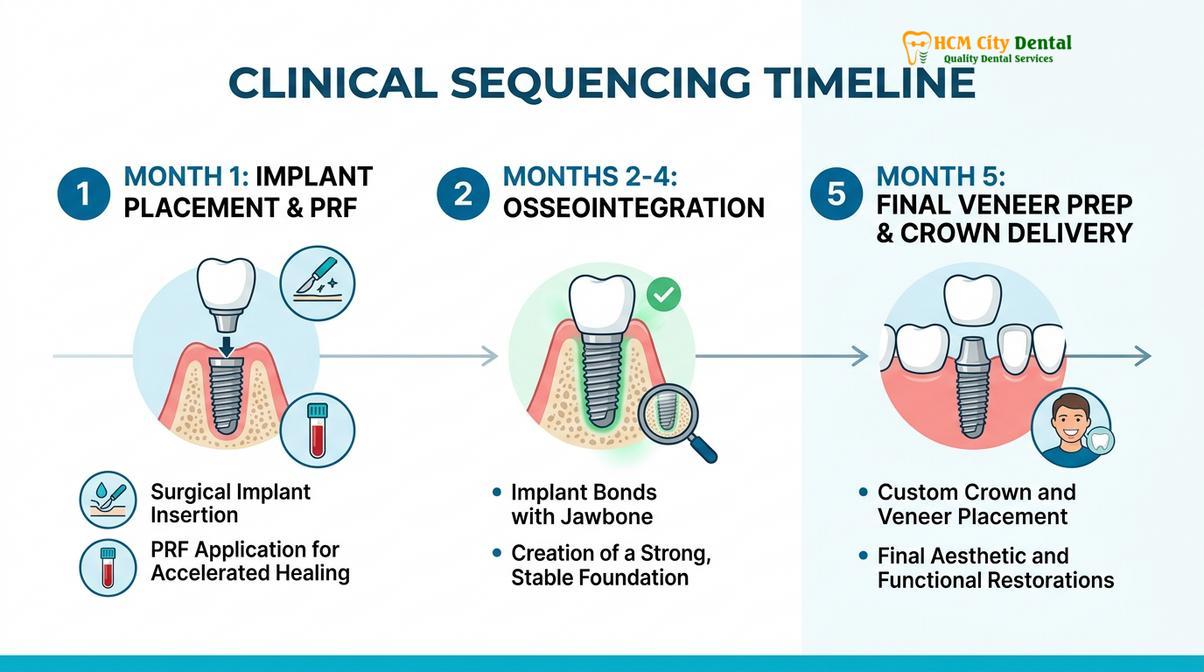
Following surgery, the osseointegration phase requires patience, typically lasting between 3 to 6 months depending on bone density and the extent of grafting. During this waiting period, the patient is never left without teeth; custom temporary restorations or transitional dentures are provided to maintain aesthetics and function. However, the final preparation of the anterior teeth for veneers is intentionally delayed. The soft tissues (gums) surrounding the new implants need time to mature and settle into their final architectural position. If veneers were prepared and bonded too early, subsequent changes in the gum line could expose the margins, ruining the aesthetic outcome.
| Treatment Phase | Clinical Actions | Estimated Timeline |
|---|---|---|
| Phase 1: Diagnostics & Surgery | 3D CBCT, Digital Smile Design, IV Sedation, Implant Placement, Bone Augmentation, PRF Application. | Days 1 – 3 |
| Phase 2: Osseointegration | Biological bone healing, soft tissue maturation, wearing of temporary transitional restorations. | 3 – 6 Months |
| Phase 3: Veneer Prep & Impressions | Preparation of anterior teeth, final digital impressions of implants and natural teeth, VDO verification. | 1 – 2 Weeks (Post-healing) |
| Phase 4: Final Delivery | Simultaneous bonding of monolithic zirconia implant crowns and E.max porcelain veneers. Bite balancing. | Final Week |
Once osseointegration is confirmed via radiographic evaluation, the final restorative phase begins. The anterior teeth are conservatively prepared for veneers, removing only a fraction of a millimeter of enamel. High-precision digital impressions are taken of the entire arch, capturing both the natural tooth preparations and the implant positions. The dental laboratory then fabricates the final restorations simultaneously, ensuring perfect material synchronization. On the day of delivery, the implant crowns are torqued into place, and the veneers are permanently bonded, completing the transformation.
Case Study: Full Mouth Reconstruction Combining Implants, Crowns, and Veneers
A comprehensive full mouth reconstruction case demonstrates how combining All-on-4 implants, zirconia crowns, and anterior veneers successfully restores both severe bite collapse and aesthetic confidence.
To illustrate the profound impact of this combined approach, consider a recent clinical case managed under the direction of Dr. Nguyen Van Cuong at HCMC Dental Clinic in Ho Chi Minh City. The patient, a 58-year-old expatriate, presented with a severely compromised dentition. The lower arch suffered from terminal dentition with advanced periodontal disease, while the upper arch exhibited severe acid erosion, bite collapse, and chipped anterior teeth. The patient’s primary goal was to restore full chewing capacity while achieving a natural, youthful smile.
Patient Profile: 58-year-old male, severe occlusal wear, missing posterior mandibular teeth, failing anterior maxillary restorations.
Clinical Diagnosis: Loss of Vertical Dimension of Occlusion (VDO), posterior bite collapse, anterior enamel erosion requiring vital pulp therapy on two incisors.
Treatment Plan:
– Lower Arch: Clearance of failing teeth and placement of all-on-4 implants supporting a full arch monolithic zirconia bridge.
– Upper Arch: Vital pulp therapy (using MTA/Biodentine) on damaged incisors, followed by 6 anterior E.max veneers and 8 posterior monolithic zirconia full mouth crowns to re-establish VDO.
Outcome: Complete restoration of masticatory function and aesthetic harmony. The patient reported zero TMJ fatigue and high satisfaction with the seamless integration of the upper veneers and lower implant bridge.
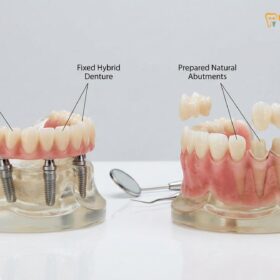
This case highlights the versatility of modern implantology. While the lower arch utilized a fixed All-on-4 structure, other patients with different anatomical or financial considerations might opt for implant-supported overdentures utilizing a locator snap-on attachment system. Regardless of the specific modality, the integration of these systems with upper cosmetic veneers requires exact digital planning [5].
Understanding the financial investment is a crucial aspect of treatment planning. HCMC Dental Clinic offers a highly transparent pricing structure, specifically designed to accommodate international patients seeking premium dental tourism in Saigon. By utilizing the WhatsApp pre-booking system, patients unlock a 40% pre-arrival discount, making world-class rehabilitation highly accessible.
According to the clinic’s structured fee schedule, the cost for a single implant (Fixture & Abutment only, Crown excluded) varies by brand tier. For example, the Economy tier (Dentis/Neo Biotech) is priced at a walk-in rate of ~$770 (20M VND), but with the WhatsApp pre-booking discount, it is available from $460 (12M VND). The Standard tier (Dentium Superline USA / IBS) drops from a walk-in rate of ~$1,090 to from $655. For those seeking the absolute highest standard, the Premium Plus tier (Straumann BLT-SLA) is reduced from ~$1,795 to from $1,080. The final crown on the implant ranges from a walk-in rate of ~$260 – $385 down to from $155 – $230 per tooth with the pre-booking discount.
For extensive cases like the one described above, Full Mouth Rehabilitation Packages offer significant value. A Full Arch Zirconia Bridge on Implants (All-on-4 / All-on-6) has a walk-in price of ~$12,000 – $22,000, but pre-booking reduces this to from $7,200 – $13,200 per arch. Alternatively, a Snap-On Overdenture (Implant-supported) drops from ~$5,000 – $8,000 to from $3,000 – $4,800 per arch. If the upper arch requires Full Mouth Crowns (14 crowns, Zirconia HT), the walk-in rate of ~$3,640 per arch is reduced to from $2,184 per arch (based on $156 per crown).
Beyond the initial cost, patient peace of mind is secured through robust Warranty & Support protocols. Patients receive global manufacturer warranty cards with 10-year to lifetime guarantees on implant fixtures. Furthermore, Dr. Cuong and the clinical team provide remote post-op checkups via WhatsApp, ensuring continuity of care long after the patient returns home. To assist with the financial logistics, the clinic supports international billing, tax offsets (NMETO/IRS deductions), and 0% interest monthly installment plans where applicable.
When to See a Doctor (Clinical Considerations)
While the combination of implants and veneers offers transformative results, it is a highly complex medical procedure that requires careful patient selection. You should seek an immediate clinical consultation if you experience warning signs of bite collapse, such as chronic TMJ pain, frequent headaches, unexplained muscle fatigue in the jaw, or if you notice your front teeth are rapidly chipping or thinning.
Important Clinical Warning: Do not proceed with anterior cosmetic veneers if you have untreated posterior tooth loss or active periodontal disease. The lack of posterior structural support will inevitably lead to excessive occlusal forces on the front teeth, resulting in catastrophic veneer fracture or debonding.
Patients with systemic conditions such as uncontrolled diabetes, severe osteoporosis, or those undergoing active bisphosphonate therapy must undergo a thorough medical clearance before implant surgery. Furthermore, heavy bruxism (teeth grinding) is a significant risk factor that must be managed, often requiring the patient to wear a custom occlusal night guard to protect the new restorations. A comprehensive evaluation, including 3D CBCT imaging and periodontal probing, is mandatory to determine your specific candidacy for this combined treatment approach.
Frequently Asked Questions
Can you get veneers and implants at the same time?
Yes, you can receive veneers and implants as part of a unified treatment plan, though the procedures are typically sequenced. Implants are surgically placed first to allow for osseointegration, while temporary veneers may be placed until the final implant crowns and permanent veneers are bonded simultaneously. This phased approach ensures that the foundation is biologically stable before the final cosmetic layer is applied, guaranteeing long-term success.
How do you match the color of veneers with implant crowns?
Color matching is achieved through Digital Smile Design (DSD) and advanced ceramic layering techniques. Dental technicians use high-resolution photography and spectrophotometry to synchronize the translucency, hue, and chroma of anterior porcelain veneers with the bio-inert monolithic zirconia used for the implant crowns. By carefully layering feldspathic porcelain over the zirconia core, the lab ensures that both materials reflect light identically under all lighting conditions.
What is the recovery order for a combined veneer and implant treatment?
The recovery order prioritizes the surgical implant phase first, requiring 3 to 6 months for complete bone healing and osseointegration. Once the implants are stable and the soft tissue has matured, the final veneer preparation and bonding phase requires only a few days of minimal recovery. During the initial surgical healing phase, patients may experience mild swelling and discomfort, which is managed with prescribed medications and PRF healing protocols.
Are monolithic zirconia crowns better than PFM for implant restorations?
Monolithic zirconia is generally superior to Porcelain Fused to Metal (PFM) for implant restorations due to its exceptional biocompatibility and strength. Unlike PFM, which can leave a dark metallic line at the gum margin, monolithic zirconia is entirely metal-free, highly durable, and provides a superior aesthetic margin fit. This makes it the ideal material for posterior implants that must withstand heavy bite forces while maintaining a natural appearance.
How does a collapsed bite affect the longevity of new veneers?
A collapsed bite places excessive, unnatural shear forces on the anterior teeth, which will inevitably cause new veneers to chip or fracture. Restoring the vertical dimension of occlusion (VDO) with posterior implants or crowns is a mandatory prerequisite to ensure the long-term survival of cosmetic veneers. By re-establishing posterior support, the heavy forces of chewing are redirected away from the delicate anterior smile zone.
References
- The Journal of Prosthetic Dentistry. Vertical dimension of occlusion restoration parameters. (2021).
- International Journal of Prosthodontics. Biomechanical load distribution in All-on-4 restorations. (2020).
- Journal of Clinical Periodontology. Biocompatible dental materials and soft tissue response. (2019).
- Clinical Oral Implants Research. Platelet-rich fibrin in guided bone regeneration. (2022).
- Journal of Esthetic and Restorative Dentistry. Digital smile design functional protocols. (2018).
For customized treatment planning, transparent cost estimates, and direct consultation with Dr. Cuong, visit our comprehensive Full Mouth Rehabilitation service page or message our team directly via WhatsApp to receive an instant assessment.