To clean veneers effectively, patients must adopt a meticulous daily oral hygiene routine that goes beyond standard brushing. Proper maintenance involves brushing twice daily using a non-abrasive toothpaste and an electric soft-bristled toothbrush, flossing daily around the delicate margins to remove plaque biofilm, and rinsing with an alcohol-free mouthwash to protect the underlying bonding cement. Regular professional cleanings and comprehensive evaluations help ensure the long-lasting aesthetic and functional success of your cosmetic dental investment.
Clinical Summary:
Maintaining porcelain veneers requires a highly specific oral hygiene protocol focused on preserving both the integrity of the ceramic material and the health of the underlying biological structures. While premium dental materials like lithium disilicate and zirconia are highly resistant to decay and intrinsic staining, the vulnerable junction where the veneer meets the natural tooth—known as the margin—remains highly susceptible to bacterial infiltration and micro-leakage. Effective maintenance involves utilizing an electric soft toothbrush to prevent surface abrasion, mastering horizontal flossing techniques to protect the interdental papillae, and employing a non-alcoholic rinse to safeguard the composite resin cementation bond. Furthermore, protecting the restorations from excessive occlusal forces using a custom night guard is critical for long-term structural success. Routine professional scaling using specialized non-scratch instruments and comprehensive periodontal evaluations are essential to monitor gingival health and support the longevity of the cosmetic restoration.
Key Takeaways:
- Use a soft-bristled toothbrush and low-RDA (Relative Dentin Abrasivity) toothpaste to help prevent micro-scratches on the highly polished ceramic surface.
- Daily flossing using a horizontal pull-through technique is highly recommended to manage plaque accumulation at the veneer margin and reduce the risk of gingival inflammation.
- Alcohol-free mouthwashes are strongly advised to prevent the potential chemical degradation of the composite resin luting cement over time.
- Patients with bruxism or clenching habits should wear a custom-fabricated nightguard to protect against excessive bite forces and minimize the risk of ceramic fractures.
- Biannual professional dental cleanings using specialized composite or carbon scalers are crucial for removing calculus safely without damaging the restorations.
The Clinical Foundation of Veneer Maintenance
Before diving into the exact protocols of how to clean veneers, it is crucial to understand the clinical foundation and structural anatomy of these restorations. Porcelain Veneers are ultra-thin, custom-fabricated shells of ceramic that are chemically and micro-mechanically bonded to the facial surface of the anterior teeth. They are designed to correct severe discoloration, minor misalignment, structural defects, and spacing issues. The longevity of these restorations is heavily dependent on two primary factors: the initial clinical execution by the prosthodontist and the patient’s subsequent daily home care routine.
At HCMC Dental Clinic in Ho Chi Minh City, the treatment workflow begins with state-of-the-art digital scanning technology. Utilizing advanced intraoral scanners, clinicians capture highly accurate 3D impressions of the dental arches. This digital workflow eliminates the discomfort of messy traditional silicone impressions and provides maximum precision for custom veneer fabrication, ensuring that the margins fit seamlessly against the natural tooth structure.
Dr. Nguyen Van Cuong, a leading restorative specialist, emphasizes that the cementation protocol is a critical phase that directly impacts how the restorations must be maintained. He notes that the internal surface of the ceramic is etched with hydrofluoric acid and treated with a silane coupling agent, while the natural tooth is primed and bonded. A specialized light-cured composite resin cement is then used to fuse the two surfaces together. Protecting this microscopic cement line is the primary goal of your daily oral hygiene routine. For patients exploring their restorative options and seeking to understand these clinical nuances, reviewing Dental Crown vs Veneer: Which Is Right For You? | Dr. Cuong provides essential context for long-term care and material selection.
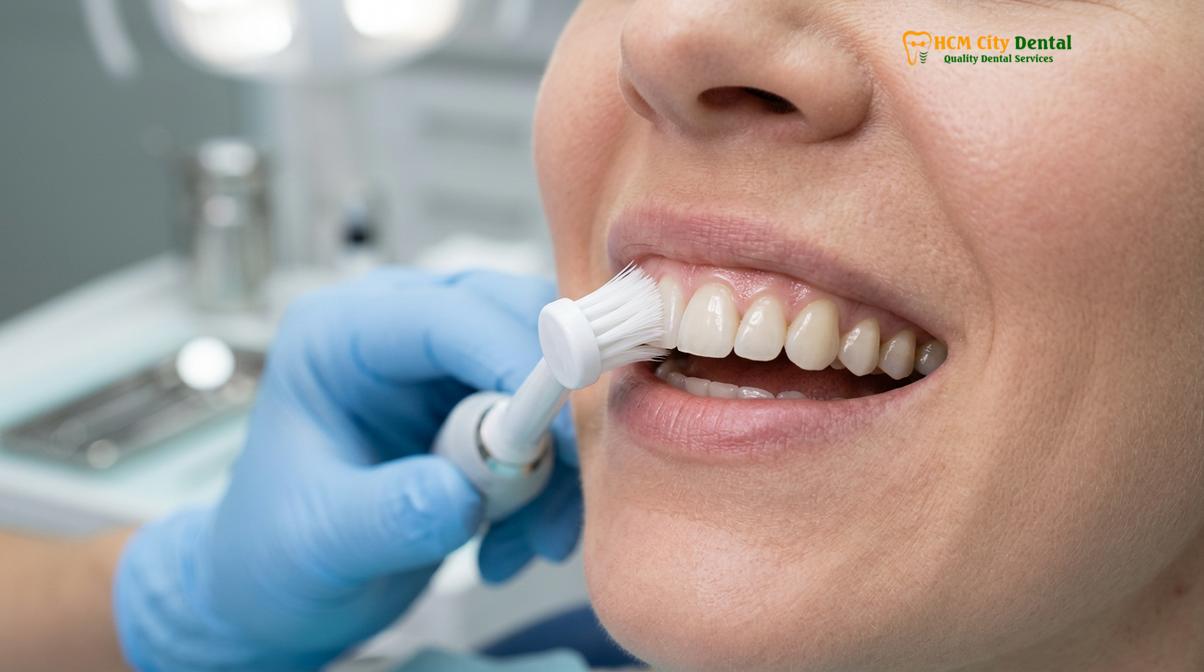
Maintain your smile with brushing, flossing, and a Professional scaling every 6 months.
Preventing Margin Decay: Why Veneered Teeth Can Still Get Cavities
A common and potentially dangerous misconception among patients is that once a tooth is covered by a veneer, it becomes completely immune to cavities. While it is true that advanced ceramic materials are impervious to bacterial degradation and acid attacks, the underlying natural tooth structure is not. The most critical area of concern for any veneered tooth is the margin—the microscopic junction where the porcelain veneer ends and the natural tooth enamel or dentin begins.
If plaque biofilm is allowed to accumulate at this junction, the bacteria within the biofilm will metabolize dietary carbohydrates and sugars, producing lactic acid as a byproduct. This acid leads to the demineralization and eventual decay of the natural tooth structure beneath and adjacent to the restoration.[1] Because the veneer covers the front of the tooth, decay often starts at the edges or on the lingual (back) surface of the tooth, making it harder to detect without professional clinical and radiographic examination.
The Importance of Biological Width
Effective margin decay prevention requires a comprehensive understanding of the biological width. The biological width refers to the natural dimension of the gingival tissues (connective tissue and junctional epithelium) attached to the tooth above the alveolar bone. During the tooth preparation phase, the clinician must carefully calibrate the gingival zenith and ensure that the veneer margin does not invade this biological space.[4] If the margin is placed too deep subgingivally, it can trigger chronic inflammation, leading to persistent redness, bleeding, and eventual bone loss.
“The long-term success of a ceramic restoration is inextricably linked to the integrity of its margins. Microleakage at the restorative interface not only compromises the aesthetic outcome through marginal staining but also serves as a primary pathway for secondary caries and pulpal pathology.”
To help prevent decay and protect the biological width, patients must adopt a rigorous daily hygiene routine. Brushing twice a day is highly recommended. However, the choice of toothpaste is equally important. Highly abrasive toothpastes, particularly those marketed for intensive whitening or containing charcoal, baking soda, or large silica particles, should be strictly avoided. These abrasives can create micro-scratches on the highly polished surface of the porcelain, dulling the aesthetic finish and creating microscopic retention areas where plaque and extrinsic stains can easily accumulate.
Flossing Technique Around Veneer Margins: Preventing Gum Inflammation
Brushing alone is generally insufficient for maintaining veneered teeth, as toothbrush bristles cannot easily penetrate the tight interproximal spaces between the teeth. Plaque accumulation in these interdental areas often leads to gingivitis, characterized by red, swollen, and bleeding gums. If left unmanaged, gingivitis can progress to periodontitis, resulting in irreversible bone loss and gingival recession. Gingival recession is particularly problematic for patients with cosmetic restorations, as it exposes the root surface and the margin of the veneer, compromising the aesthetic outcome of the smile makeover.
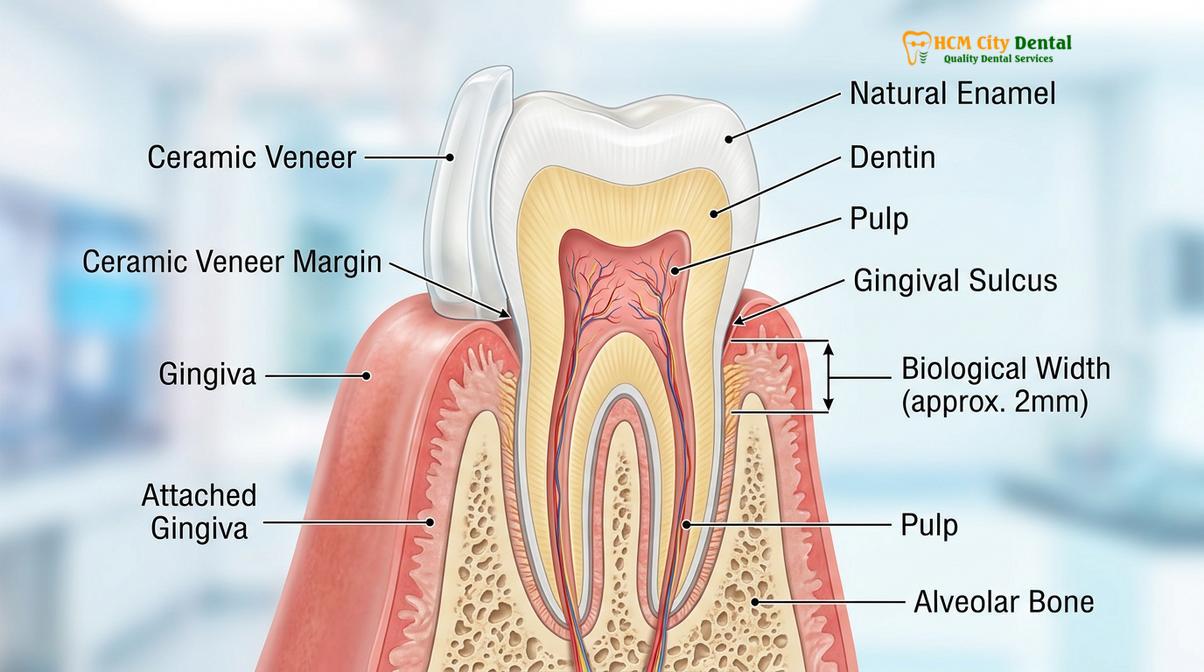
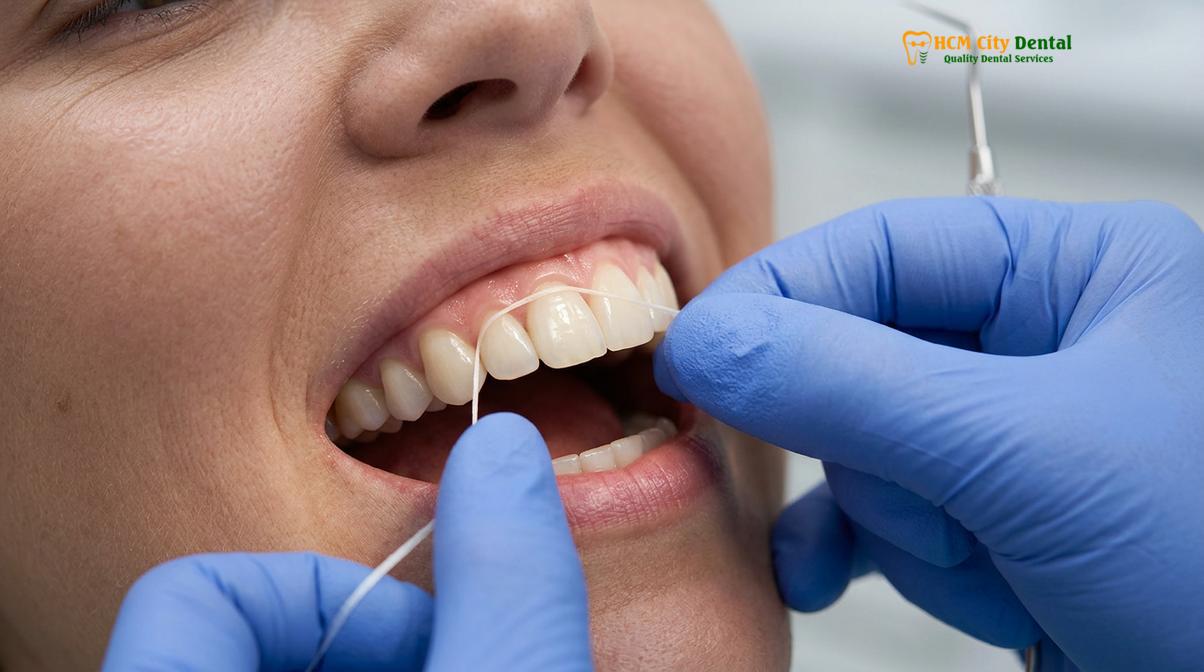
Mastering the correct flossing technique is crucial for preventing these complications. Many patients use a vertical “snapping” motion when flossing, pulling the floss forcefully upward from the gumline to remove it from between the teeth. While this may be acceptable for intact natural teeth, it poses a significant risk to veneered teeth. The upward force can catch the microscopic ledge of the veneer margin, potentially causing micro-leakage, chipping the delicate ceramic edge, or damaging the cement seal over time.
The Horizontal Pull-Through Method
The recommended technique for patients with veneers involves gently sliding the floss between the teeth using a careful, controlled sawing motion. Once the floss reaches the gumline, curve it into a C-shape around the side of the tooth and gently slide it beneath the gingival margin to disrupt the plaque biofilm. When it is time to remove the floss, instead of pulling it back up through the tight contact point, simply let go of one end of the floss and pull it out horizontally through the space near the gumline. This horizontal pull-through method ensures that no upward pressure is applied to the margin of the restoration.
Water Flossers vs. Traditional String Floss
Many patients ask if a water flosser (oral irrigator) can replace traditional string floss. Water flossers are excellent adjuncts to a daily hygiene routine, particularly for flushing out loose food debris and reducing bacterial loads in periodontal pockets. The pulsating stream of water is highly effective and completely safe for porcelain margins. However, water flossers do not provide the mechanical scraping action necessary to remove sticky, mature plaque biofilm. Therefore, dental professionals recommend using a water flosser in combination with, rather than as a replacement for, traditional string flossing.
Choosing the Right Toothbrush: Electric Soft-Bristle vs. Hard Manual
The mechanical action of brushing is the primary method for disrupting plaque biofilm on the facial and lingual surfaces of the teeth. However, the type of toothbrush used can significantly impact the longevity and appearance of your veneers. Dental professionals widely recommend using an electric soft toothbrush for patients with ceramic restorations.
Hard-bristled manual toothbrushes are strongly contraindicated for several reasons. First, the stiff bristles can cause mechanical abrasion to the delicate gingival tissues, leading to recession and the unsightly exposure of the veneer margins. Second, aggressive brushing with hard bristles can gradually wear away the protective glaze applied to the surface of the porcelain during the laboratory fabrication process. Once this glaze is compromised, the underlying ceramic becomes porous, making it highly susceptible to staining and plaque accumulation.[2]
Understanding Sonic and Oscillating Technology
In contrast, an electric toothbrush with soft bristles offers a superior cleaning mechanism. Sonic or oscillating-rotating electric toothbrushes generate thousands of brush strokes per minute. Sonic toothbrushes, in particular, create fluid dynamics—forcing toothpaste and water into micro-bubbles that disrupt plaque biofilm even slightly beyond the physical reach of the bristles. This hydrodynamic action is incredibly effective at cleaning the microscopic crevices around the veneer margins without requiring the patient to apply excessive manual pressure.
Clinical Warning: Abrasive Toothpastes and Whitening Agents
Never use abrasive whitening toothpastes on porcelain or composite veneers. Products containing charcoal, baking soda, or high levels of hydrated silica have high RDA (Relative Dentin Abrasivity) values. While they may scrub stains off natural enamel, they act like sandpaper on ceramic restorations, permanently scratching the surface glaze. Furthermore, over-the-counter bleaching strips and whitening gels will not change the color of your veneers; they will only whiten the adjacent natural teeth, potentially leading to an uneven, mismatched smile.
The Role of Non-Alcoholic Mouthwash in Oral Health
Mouthwashes can be a valuable addition to a comprehensive daily oral hygiene routine, providing antimicrobial benefits, freshening breath, and delivering fluoride to strengthen the natural tooth structure exposed at the lingual surfaces and margins. However, patients with veneers must be highly selective when choosing a mouthrinse. The critical factor is avoiding products that contain high concentrations of alcohol.
Many traditional, over-the-counter mouthwashes contain alcohol (ethanol) as a solvent for essential oils and as an active antimicrobial agent. While effective at reducing bacteria, alcohol has a documented detrimental effect on the composite resin cement used to bond the porcelain veneer to the tooth. Over time, frequent exposure to alcohol can soften and chemically degrade the resin matrix of the luting cement. This degradation compromises the marginal seal, leading to micro-leakage, marginal staining, and an increased risk of secondary caries.[3]
To protect the integrity of the bonding cement, patients should exclusively use a non-alcoholic rinse. These alcohol-free formulations, often utilizing active ingredients like cetylpyridinium chloride (CPC) or essential oils suspended in non-alcoholic solvents, are highly effective at reducing bacterial loads and supporting gingival health without posing a significant risk to the restorative materials.
Professional Scaling and Cleaning (Dental Hygiene) Every 6 Months
While meticulous home care is the foundation of veneer maintenance, it cannot replace the need for professional oversight. You must schedule a Professional Scaling and Cleaning (Dental Hygiene) Every 6 Months to ensure the long-term health of your veneered teeth and the surrounding periodontal tissues. Plaque that is not removed during daily brushing and flossing eventually mineralizes into calculus (tartar), a hard substance that can only be removed by a dental professional.
During a professional hygiene appointment for a patient with veneers, the clinical protocol differs significantly from a standard cleaning. The dental hygienist or dentist must exercise extreme caution to avoid scratching the ceramic surface or damaging the delicate margins. Traditional stainless steel scalers and aggressive ultrasonic scaling tips, which are routinely used on natural teeth, can easily scratch porcelain and ditch the composite resin cement line.
The Professional Polishing Protocol
Instead, the clinician will use specialized instruments designed specifically for cosmetic restorations. These may include curettes made of medical-grade plastic, carbon fiber, or titanium, which are softer than the ceramic glaze and will not cause surface abrasion. If an ultrasonic scaler is necessary to remove heavy calculus deposits, the clinician will use a specialized tip and avoid direct contact with the veneer margin.
Following the removal of calculus, the teeth are polished. Standard prophy pastes used in dental offices are often highly abrasive. For veneered teeth, the clinician will select a fine, non-abrasive polishing paste—often containing aluminum oxide rather than pumice—to gently remove extrinsic stains and restore the high-gloss finish of the ceramic without causing micro-scratches.
| Cleaning Tool / Method | Safety for Veneers | Clinical Recommendation | Usage Frequency |
|---|---|---|---|
| Electric Soft Toothbrush | Highly Safe | Recommended for superior plaque disruption via fluid dynamics. | Twice Daily |
| Hard Manual Toothbrush | Unsafe | Contraindicated; causes gingival recession and glaze abrasion. | Never |
| Traditional String Floss | Highly Safe | Must use horizontal pull-through technique to protect margins. | Daily |
| Water Flosser (Oral Irrigator) | Safe | Excellent adjunct for flushing debris, but does not replace string floss. | Daily (as adjunct) |
| Stainless Steel Scalers | Unsafe | Can scratch porcelain and damage the composite cement line. | Avoid during prophy |
| Plastic/Carbon Scalers | Highly Safe | Standard of care for professional calculus removal around ceramics. | Every 6 Months |
Protecting Your Investment: Nightguards and Bite Force Management
Beyond daily cleaning and professional maintenance, protecting your veneers from excessive mechanical stress is paramount. The human jaw is capable of exerting tremendous force, particularly during sleep. Sleep bruxism, the involuntary clenching and grinding of teeth, is a common condition that can have devastating consequences for ceramic restorations.
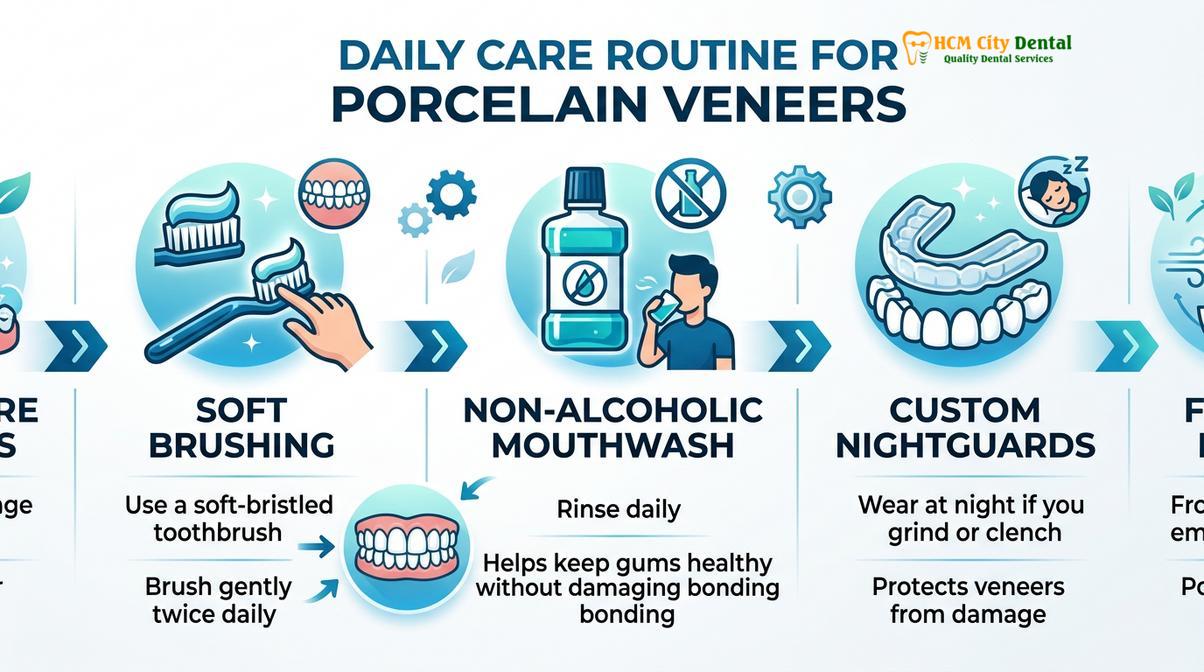
The constant grinding motion generates extreme shear forces that porcelain veneers—which are incredibly strong under compressive forces but vulnerable to shear stress—are not designed to withstand. Over time, this parafunctional habit can lead to micro-fractures within the ceramic, chipping at the incisal edges, or complete debonding of the restoration. To mitigate this risk, prosthodontists strongly recommend that patients with any clinical signs of bruxism wear a custom-fabricated occlusal splint, commonly known as a nightguard, while sleeping.[5]
A custom nightguard, typically made from a dual-laminate or hard acrylic material, acts as a protective barrier. It absorbs and distributes the occlusal forces evenly across the dental arch, preventing localized stress concentrations on individual veneers. Furthermore, it prevents the opposing teeth from coming into direct contact, eliminating the friction that causes wear and tear on the ceramic glaze.
Dietary Considerations for Veneer Longevity
While porcelain is highly resistant to staining compared to natural enamel or composite resin, the margins and the underlying tooth structure remain vulnerable to dietary habits. Frequent consumption of highly acidic foods and beverages—such as citrus fruits, sodas, and sports drinks—can lower the pH of the oral cavity. A consistently acidic environment can accelerate the degradation of the composite resin cement at the margins and promote the demineralization of the exposed natural tooth structure.
Additionally, while the ceramic surface will not easily absorb stains from coffee, tea, red wine, or tobacco, the microscopic cement line at the margin can become discolored over time if exposed to heavy chromogenic agents. Patients are advised to consume staining beverages through a straw when possible and to rinse their mouths with water immediately after consuming acidic or highly pigmented foods to help neutralize the oral pH and wash away residual pigments.
Clinical Case Study: Restorative Maintenance at HCMC Dental Clinic
A recent clinical case highlights the profound importance of proper maintenance protocols. A 34-year-old patient visiting HCMC Dental Clinic in Ho Chi Minh City presented for a routine evaluation two years after receiving a full upper arch of highly aesthetic lithium disilicate veneers. The patient had diligently followed the prescribed home care routine, utilizing an electric soft-bristled toothbrush, a low-RDA toothpaste, and a non-alcoholic mouthwash.
During the comprehensive periodontal examination, the clinical team noted excellent marginal adaptation, zero signs of gingival inflammation, and perfectly preserved interdental papillae. The patient’s strict commitment to horizontal flossing techniques had successfully protected the delicate margins. Furthermore, adherence to the clinical guidelines for the maintenance of fixed prosthodontics and ceramic restorations, as recommended by the Vietnam Odonto-Stomatology Association (VOSA), played a key role in the pristine condition of the restorations.[6] This case underscores that while the initial fabrication is critical, the patient’s daily habits ultimately dictate the lifespan of the smile makeover.
For more insights on the expected lifespan of these restorations and how maintenance plays a role, patients can review How Long Do Porcelain Veneers Last? (Honest Guide).
When to Consult Your Prosthodontist: Important Clinical Signs
Even with the most meticulous oral hygiene routine and strict adherence to dietary guidelines, unexpected issues can occasionally arise. Knowing when to seek professional evaluation is a vital part of veneer maintenance. Patients should not wait for their biannual cleaning appointment if they notice specific warning signs that indicate a potential problem with their restorations, the bonding cement, or the underlying natural teeth.
You should schedule an immediate consultation with your dental provider if you experience any of the following clinical symptoms:
- Persistent Gingival Bleeding: If your gums bleed consistently when brushing or flossing around a specific veneer, it may indicate localized inflammation, a margin overhang that is trapping plaque, or subgingival cement remnants that were not fully removed during the initial placement.
- Sensitivity to Temperature: Sudden or prolonged sensitivity to hot or cold foods can be a sign of micro-leakage at the veneer margin, exposing the underlying dentin tubules to thermal stimuli. It may also indicate the early stages of secondary decay.
- Changes in Bite Alignment: If your bite suddenly feels uneven, high, or if you notice a clicking sound when chewing, the veneer may have partially debonded or shifted out of its optimal position.
- Visible Marginal Staining: A dark line appearing at the gumline where the veneer meets the tooth often points to cement degradation, micro-leakage, or the onset of secondary caries beneath the restoration.
- Roughness or Chipping: If you feel a rough edge with your tongue or notice a small chip in the ceramic, it requires immediate polishing or repair to prevent further structural failure.
“Consistent adherence to evidence-based maintenance protocols, including the avoidance of abrasive dentifrices and the proactive management of occlusal forces, is the most reliable predictor of long-term success for aesthetic ceramic restorations.”
Addressing these clinical signs promptly allows the dental team to perform conservative interventions—such as localized polishing, margin sealing, or occlusal adjustments—often preventing the need for complete veneer replacement. If you are considering alternative treatments due to structural concerns, reading Alternative for Veneers: 3 Secrets for a Perfect Smile | Dr. Cuong can provide valuable perspective on your options.
References
- Journal of Esthetic and Restorative Dentistry. Marginal adaptation and microleakage of porcelain veneers. (2021).
- International Journal of Prosthodontics. The effect of toothbrush abrasion on the surface roughness of lithium disilicate. (2020).
- The Journal of Prosthetic Dentistry. Degradation of resin cements by alcohol-based mouthrinses. (2019).
- Clinical Oral Investigations. Biological width preservation in aesthetic restorative dentistry. (2022).
- Journal of Clinical Periodontology. Management of sleep bruxism and its impact on ceramic restorations. (2018).
- Vietnam Odonto-Stomatology Association (VOSA). Clinical guidelines for the maintenance of fixed prosthodontics and ceramic restorations. (2023).
Maintaining your beautiful smile requires a dedicated partnership between your daily home care routine and expert clinical oversight. If you are experiencing any issues with your current restorations, have questions about the best products to use, or wish to schedule a comprehensive maintenance evaluation, contact HCMC Dental Clinic in Ho Chi Minh City today. Our dedicated team of specialists is committed to ensuring the long-term health, function, and aesthetic brilliance of your porcelain veneers.