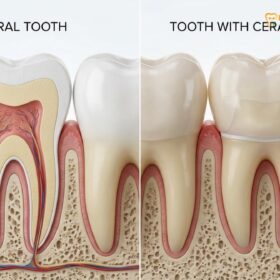
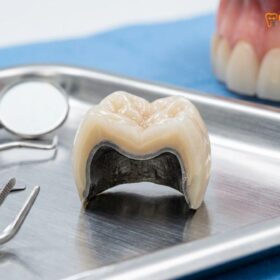
When deciding between inlays onlays vs dental crowns, the primary difference lies in the extent of tooth coverage required. Inlays fit inside the tooth cusps, onlays cover one or more cusps, and crowns encase the entire visible tooth structure to provide maximum strength for severely damaged teeth.
Clinical Summary:
Restoring a damaged tooth requires a precise biomechanical assessment to determine the most appropriate indirect restoration. Inlays and onlays represent conservative approaches that preserve healthy enamel while replacing compromised tissue. Conversely, dental crowns offer comprehensive structural reinforcement for teeth weakened by extensive decay, trauma, or root canal therapy. Modern restorative dentistry utilizes advanced CAD/CAM technology, intraoral scanners, and high-performance ceramics like Zirconia HT and E.max to deliver restorations that are both highly durable and aesthetically indistinguishable from natural teeth. The choice between these modalities depends on the volume of remaining healthy tooth structure, occlusal load, and long-term functional goals.
Key Takeaways:
- Inlays repair moderate damage confined within the cusps of a tooth.
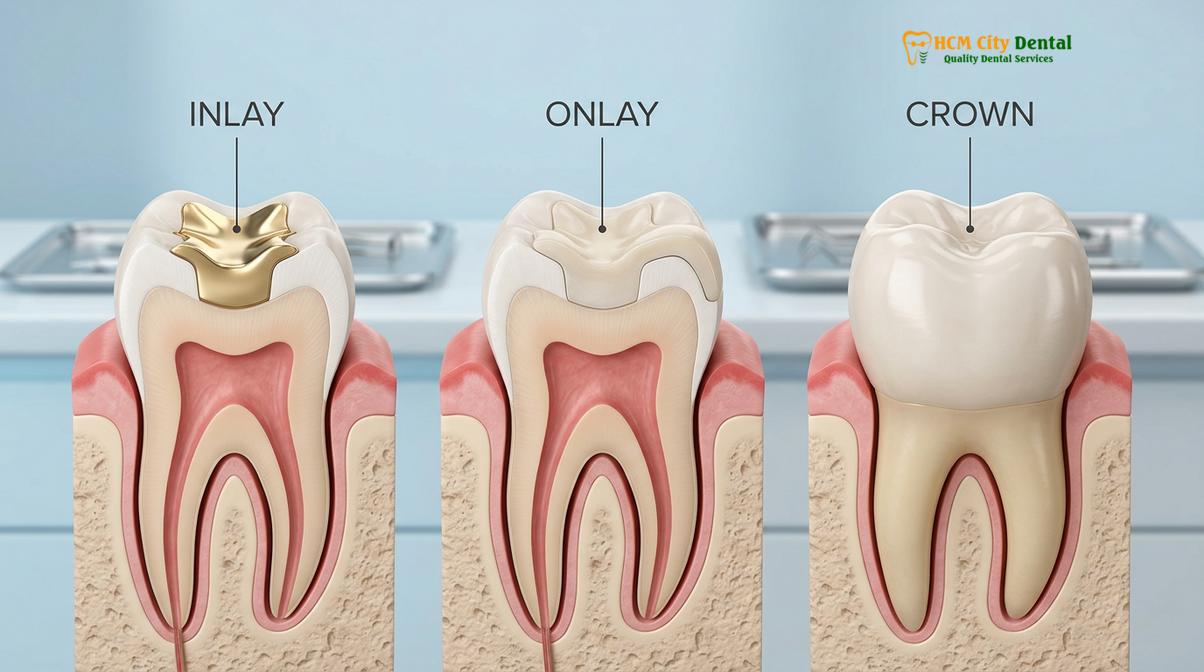
- Onlays (partial crowns) cover one or more cusps, offering a middle ground between fillings and full crowns.
- Dental Crowns provide full-coverage protection for severely compromised or root canal-treated teeth.
- Material Selection utilizes certified Zirconia HT for posterior strength and E.max for anterior lifelike aesthetics.
- Digital Workflows using advanced intraoral scanners ensure precise margins and optimal patient comfort.
Understanding Conservative Dentistry
Conservative dentistry focuses on saving as much healthy enamel and dentin as possible while restoring the tooth’s function and aesthetics using minimally invasive techniques.
The philosophy of modern restorative dentistry has shifted significantly toward tissue preservation. Historically, when a tooth suffered moderate decay, the default treatment was often a full-coverage crown, which required the aggressive removal of healthy enamel to create a retentive stump. Today, the emphasis is on preserving natural tooth structure whenever clinically viable[1]. This approach not only maintains the inherent strength of the tooth but also protects the underlying dental pulp from unnecessary trauma, reducing the likelihood of future endodontic complications.
By utilizing advanced adhesive bonding protocols and high-strength ceramics, clinicians can now repair specific defects without sacrificing intact tooth walls. This conservative tooth restoration paradigm relies heavily on precise diagnostics. Before any preparation begins, a thorough clinical and radiographic examination is conducted to assess the extent of the decay, the vitality of the nerve, and the occlusal forces the tooth must withstand. If the structural integrity of the tooth can be maintained, partial coverage restorations are highly recommended over full crowns.
What is a Dental Inlay?
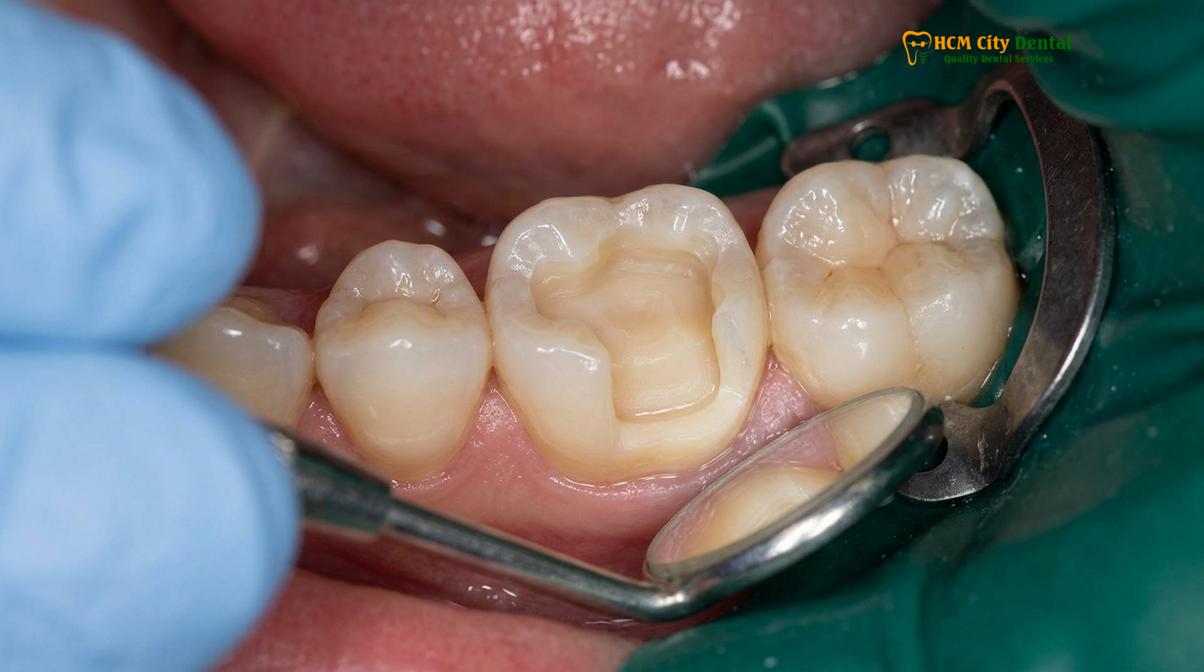
A dental inlay is a custom-made, indirect restoration designed to repair moderate decay or structural damage that is confined strictly within the cusps of a tooth.
When a cavity is too large to be reliably restored with a direct composite filling, but the outer walls (cusps) of the tooth remain strong and intact, a dental inlay is the treatment of choice. Unlike standard fillings, which are molded directly inside the mouth and cured with a light, an inlay is an indirect restoration. This means it is fabricated outside the mouth—typically in a specialized dental laboratory or via in-office CAD/CAM milling—and then permanently bonded into the prepared cavity.
The clinical advantage of an inlay lies in its structural density and marginal adaptation. Because it is milled from a solid block of porcelain or composite resin, it does not undergo the polymerization shrinkage associated with large direct fillings. This precise fit minimizes the risk of microleakage, where bacteria seep under the restoration and cause secondary decay. Furthermore, materials like lithium disilicate provide exceptional wear resistance, ensuring the inlay can withstand the heavy chewing forces exerted on posterior molars without degrading over time[2].
What is a Dental Onlay (Partial Crown)?
An onlay extends beyond the central groove to cover and protect one or more damaged cusps, offering a robust middle ground between a standard filling and a full crown.
A dental onlay, frequently referred to as a partial crown overlay, is indicated when the decay or fracture compromises one or more of the tooth’s cusps. When a cusp is weakened, placing a standard filling or an inlay can act like a wedge, potentially causing the remaining tooth structure to split under occlusal pressure. An onlay mitigates this risk by capping the weakened cusp, thereby distributing the biting forces evenly across the restoration and protecting the underlying tooth from fracture.
The preparation for an onlay is highly customized. The clinician meticulously removes only the diseased or unsupported tissue, leaving the healthy portions of the tooth untouched. This selective preparation is technically demanding but offers profound biological benefits. By avoiding the circumferential reduction required for a full crown, the onlay preserves the natural emergence profile of the tooth and is significantly kinder to the surrounding gingival tissues. Once bonded, the onlay seamlessly integrates with the tooth, restoring both its original anatomy and its mechanical strength.
The Role of Dental Crowns in Full Restoration
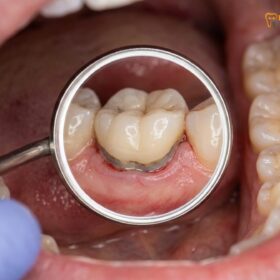
Dental crowns completely encase a heavily compromised tooth above the gumline, providing unparalleled structural reinforcement and aesthetic correction for severe damage.
While conservative options are preferred, there are numerous clinical scenarios where a full dental crown is the only viable solution to save a tooth. A crown acts as a protective helmet, encasing the entire visible portion of the tooth down to the gingival margin. This comprehensive coverage is essential when a tooth has suffered extensive decay that undermines all its walls, when a large portion of the tooth has fractured off, or following a root canal treatment. Root canal-treated posterior teeth become brittle over time due to the loss of blood supply and internal moisture; a crown is critical to prevent these teeth from splitting under masticatory forces.
The preparation for a dental crown involves reducing the tooth circumferentially and occlusally to create sufficient restorative space for the chosen material. Clinicians must carefully design the preparation margins—typically utilizing a chamfer or shoulder design—to ensure a seamless transition between the crown and the natural root. Respecting the biologic width (the natural dimension of the gum tissue attached to the tooth) is paramount during this process. If a preparation margin encroaches too deeply into the gingival sulcus, it can trigger chronic inflammation and bone loss[3].
“The ultimate goal of fixed prosthodontics is not merely to replace missing tooth structure, but to restore biomechanical harmony within the oral cavity. Whether utilizing a partial onlay or a full-coverage crown, the precision of the marginal fit and the biocompatibility of the material dictate the long-term success of the restoration.”
Beyond natural teeth, crowns are also the final restorative step in implant dentistry. Dental implant crowns can be either screw-retained or cement-retained, depending on the angulation of the implant and aesthetic requirements. Furthermore, when a patient is missing one or more teeth, a dental bridge—consisting of two abutment crowns anchoring a pontic (false tooth)—can be utilized to span the edentulous gap, restoring both the chewing surface and the continuity of the dental arch.
Structural Preservation Benefits
Opting for an inlay or onlay when clinically appropriate preserves vital tooth structure, reducing the risk of future nerve complications and extending the tooth’s lifespan.
The primary advantage of choosing an inlay or onlay over a full crown is the preservation of healthy enamel and dentin. Enamel is the hardest substance in the human body, and once removed, it cannot regenerate. By maintaining the natural perimeter of the tooth, partial coverage restorations keep the tooth structurally sound. This conservative approach significantly reduces the trauma inflicted on the dental pulp during the preparation phase. Aggressive tooth reduction for a crown can sometimes irritate the nerve, leading to irreversible pulpitis and the subsequent need for a root canal.
Furthermore, preserving natural tooth structure at the gingival margin promotes better periodontal health. Because the margins of inlays and most onlays are located supragingivally (above the gumline), they are easier for the patient to clean and less likely to harbor plaque that causes gingivitis. This ease of maintenance contributes to the exceptional longevity of these restorations. When a patient commits to excellent oral hygiene, a well-bonded ceramic onlay can function flawlessly for decades.

Making the Right Choice: Clinical Scopes and Guidelines
Selecting the ideal restoration depends on the remaining healthy tooth structure, occlusal forces, and aesthetic requirements evaluated during a comprehensive clinical exam.
Determining whether a patient needs an inlay, an onlay, or a full crown is not a matter of preference, but a strict clinical decision based on biomechanical principles. During a consultation, the clinician evaluates the width of the cavity isthmus, the thickness of the remaining cuspal walls, and the presence of any micro-fractures. As a general guideline, if the defect exceeds more than half the width of the tooth, an onlay or crown is indicated to prevent cuspal fracture.
| Feature | Dental Inlay | Dental Onlay | Dental Crown |
|---|---|---|---|
| Coverage Area | Confined within the cusps (central groove). | Covers one or more cusps and the biting surface. | Encases the entire visible tooth above the gumline. |
| Tooth Preservation | Maximum preservation of healthy walls. | High preservation; only weakened cusps removed. | Requires significant circumferential reduction. |
| Primary Indication | Moderate decay, failed large fillings. | Fractured cusps, extensive decay leaving some walls intact. | Root canal treated teeth, severe fractures, large decay. |
| Structural Support | Restores internal strength. | Protects against cuspal splitting. | Provides maximum overall reinforcement. |
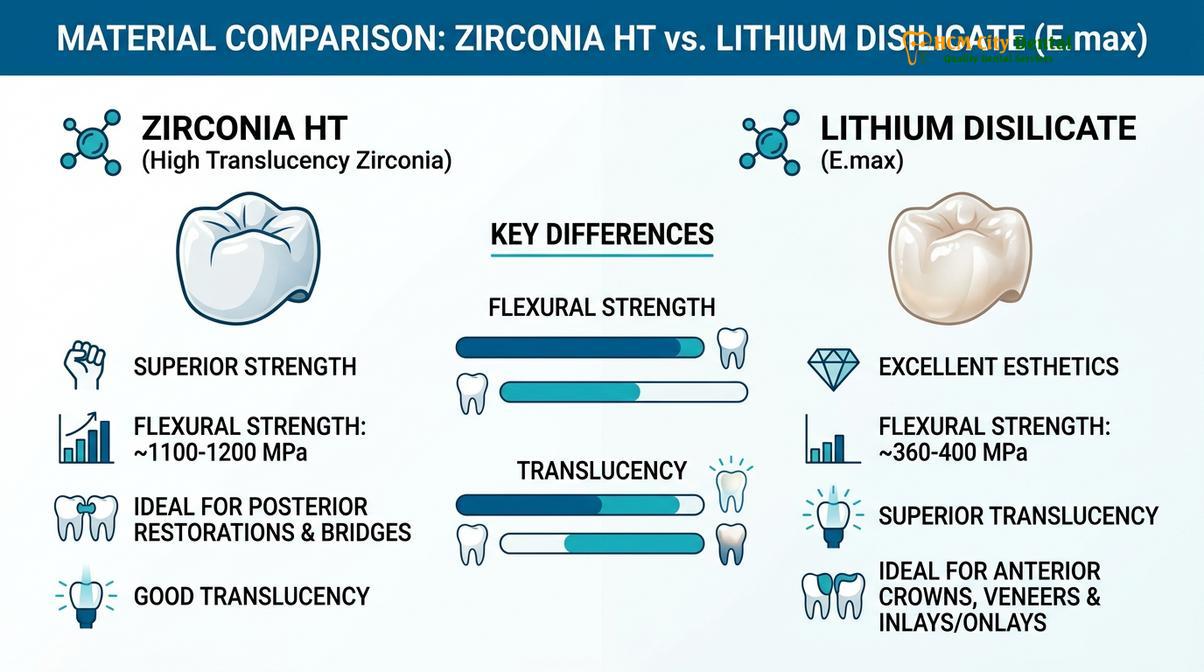
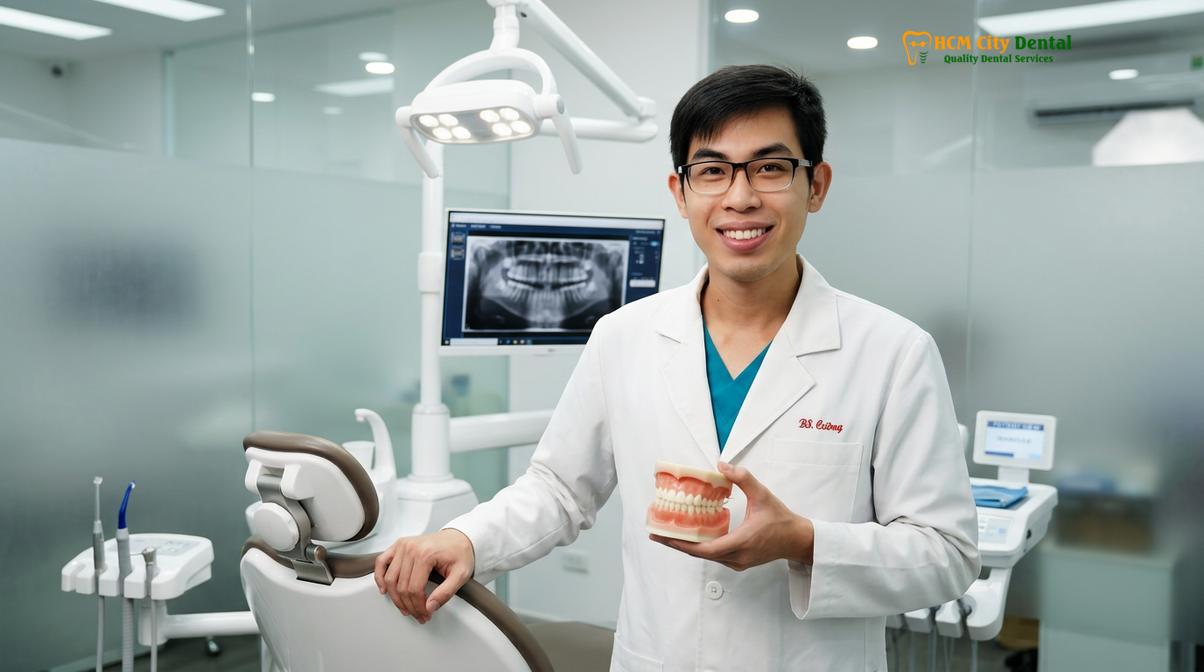
Dr. Nguyen Van Cuong, a leading restorative specialist, emphasizes that the choice between these modalities relies on precise biomechanical assessment. He frequently advises patients that preserving natural enamel should always be the priority when structural integrity allows, ensuring long-term functional harmony. The selection of materials is equally critical. For anterior teeth, where translucency and light dynamics are paramount, E.max is typically the material of choice. For posterior molars that endure heavy masticatory forces, Zirconia HT offers the ultimate flexural strength, virtually eliminating the risk of porcelain chipping.
Treatment Workflow and Advanced Technology
Modern restorative workflows utilize digital intraoral scanners and direct laboratory partnerships to deliver highly precise, custom-milled restorations in a fraction of the traditional time.
The fabrication of indirect restorations has been revolutionized by digital dentistry. The traditional method of taking impressions involved placing trays filled with gooey silicone material into the patient’s mouth, which was uncomfortable and prone to dimensional distortion. Today, the workflow is entirely digital, enhancing both accuracy and patient experience[4].
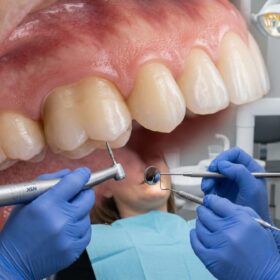
The procedure typically unfolds over two visits. During the first appointment, the tooth is anesthetized and meticulously prepared. Once the preparation is complete, state-of-the-art digital scanning technology is used to capture a high-resolution 3D model of the prepared tooth and the surrounding dentition. This digital approach not only provides maximum comfort by eliminating the gag reflex associated with traditional molds but also allows the clinician to instantly verify the preparation margins on a monitor, ensuring absolute precision. Studies confirm that digital intraoral scanners provide exceptional accuracy for both single-tooth and quadrant impressions, leading to superior marginal adaptation of the final restoration[5].
Clinical Case Example: Digital Workflow Efficiency
A patient visiting HCMC Dental Clinic in Ho Chi Minh City presented with a fractured amalgam filling on a lower molar. After removing the old metal and assessing the remaining structure, an onlay was indicated. Using an advanced intraoral scanner, a digital impression was captured in under two minutes. The data was instantly transmitted to the lab, and a temporary restoration was placed. Within days, a custom-milled E.max onlay was permanently bonded, restoring the tooth’s anatomy with zero discomfort and perfect occlusal harmony.
The digital file is then transmitted to the dental laboratory. A significant advantage for patients is the direct lab partnership. By partnering directly with a leading laboratory, the clinic maintains complete quality control and facilitates direct collaboration between the prosthodontist and the master ceramist. This synergy allows for an express turnaround, which is particularly tailored for dental tourists and expats. It enables complete smile makeovers or the fabrication of multiple crowns and bridges to be completed efficiently, without compromising on the meticulous shade matching and anatomical detailing required for a natural-looking result.
When to Consult a Professional & Important Considerations
Recognizing the early signs of structural tooth failure can prevent the need for more invasive treatments like root canals or extractions.
Patients should seek a professional consultation if they experience sharp pain when biting down, lingering sensitivity to hot or cold temperatures, or if they notice a visible crack or missing piece of a tooth or old filling. Delaying treatment often allows bacteria to penetrate deeper into the dentin, potentially reaching the pulp chamber and necessitating endodontic therapy.
“Early intervention is the cornerstone of conservative dentistry. Addressing a compromised tooth with a well-designed inlay or onlay before the damage becomes catastrophic is the most effective way to preserve your natural smile for a lifetime.”
When planning restorative treatments, it is also important to consider the guidelines set forth by local and international dental authorities. Organizations such as the Vietnam Odonto-Stomatology Association (VOSA) advocate for the use of biocompatible, clinically proven materials in all indirect restorations to ensure patient safety and long-term clinical success. Choosing a clinic that adheres to these stringent standards is vital for achieving optimal outcomes.
Pricing, Materials, and Warranty
Transparent pricing combined with premium certified materials ensures patients receive world-class restorative care with exceptional long-term value.
Understanding the financial investment is a crucial part of treatment planning. The cost of porcelain inlays, onlays, and full crowns reflects the quality of the materials used and the expertise required for fabrication. High-quality clinics are committed to using only authentic, certified materials from industry leaders, ensuring biocompatibility and longevity.
While exact fees vary based on the complexity of the case and the specific material chosen, investing in premium ceramics like Zirconia or Lithium Disilicate provides superior aesthetics and durability compared to traditional metal-based restorations. Many modern clinics also offer comprehensive warranties on their indirect restorations, providing patients with peace of mind regarding their investment.
If you are experiencing tooth pain, have a broken filling, or want to explore conservative options to restore your smile, expert care is available. Schedule a comprehensive consultation at HCMC Dental Clinic in Ho Chi Minh City to determine whether an inlay, onlay, or crown is the right solution for your dental health. Learn more about our advanced restorative solutions by visiting our guide on Dental Crowns & Bridges tại HCMC Dental Clinic.
References
- Journal of Prosthetic Dentistry. Biomechanical behavior of teeth restored with inlays, onlays, and crowns. (2021).
- International Journal of Prosthodontics. Survival rates of lithium disilicate partial coverage restorations. (2020).
- Journal of Esthetic and Restorative Dentistry. Margin design and biologic width considerations in fixed prosthodontics. (2019).
- American Dental Association. Clinical guidelines for indirect restorative materials and CAD/CAM technology. (2022).
- Journal of Dentistry. Accuracy of digital intraoral scanners in full-arch and quadrant impressions. (2023).