Choosing between a screw vs cement implant crown depends on the implant’s angulation, aesthetic demands, and available restorative space. Screw-retained crowns offer superior retrievability and eliminate cement-related tissue inflammation, while cement-retained crowns provide enhanced aesthetics and passive fit for complex anterior cases.
Clinical Summary:
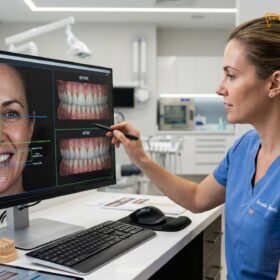
In modern implant prosthodontics, the debate between screw-retained and cement-retained restorations centers on balancing biomechanical stability, aesthetic outcomes, and long-term periodontal health. Screw-retained crowns are increasingly favored due to their predictable retrievability and the complete elimination of subgingival cement, which is a primary catalyst for peri-implantitis. Conversely, cement-retained crowns remain indispensable in cases of suboptimal implant angulation or high aesthetic demands in the anterior maxilla, where a screw access hole would compromise the facial aspect of the restoration. The advent of digital dentistry, utilizing advanced intraoral scanners and CAD/CAM milling, allows prosthodontists to design custom abutments that mitigate the risks of both modalities, ensuring precise marginal adaptation and optimal emergence profiles.
Key Takeaways:
- Retrievability: Screw-retained crowns allow for easy, non-destructive removal for maintenance, whereas cemented crowns are often permanently fixed.
- Tissue Health: Cement-retained restorations carry a significant risk of excess subgingival cement, a leading cause of peri-implant inflammation.
- Aesthetics: Cemented crowns offer an uninterrupted occlusal surface, making them ideal for anterior teeth with challenging implant angulations.
- Space Requirements: Screw-retained crowns require less interocclusal space (minimum 6mm) compared to cement-retained crowns (minimum 8mm).
- Digital Precision: Modern intraoral scanners (iTero, Medit i700) ensure highly accurate custom abutment designs for both retention types.
The Mechanics of Implant Prosthodontics
Implant prosthodontics relies on a precise connection between the titanium fixture, the abutment, and the final crown to ensure biomechanical stability and long-term tissue health.
The foundation of any successful dental implant restoration lies in the structural integrity of the implant abutment connection. Unlike natural teeth, which are suspended in the alveolar bone by a resilient periodontal ligament, dental implants are osseointegrated directly into the bone. This rigid fixation means that any occlusal forces—whether from normal chewing or parafunctional habits like bruxism—are transferred directly to the implant components and the surrounding crestal bone. Consequently, the method used to attach the final prosthetic crown to the implant body plays a critical role in the long-term survivability of the restoration.[1]
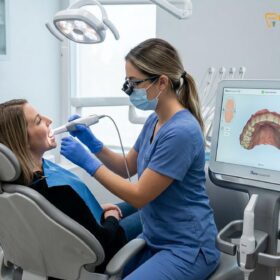
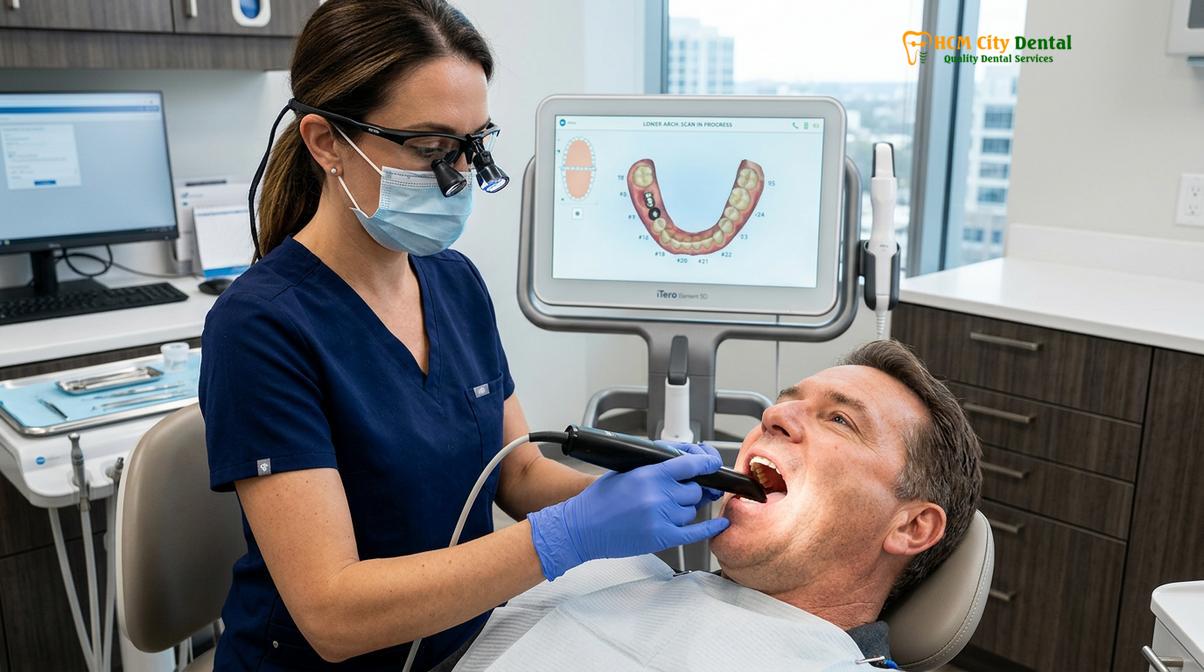
Historically, the transition from the surgical placement of the implant to the final prosthetic delivery involved messy, uncomfortable traditional silicone impressions. Today, the landscape of restorative dentistry has been revolutionized by digital workflows. The utilization of state-of-the-art digital scanning technology, specifically the iTero and Medit i700 Intraoral Scanners, eliminates the need for conventional impression materials. These devices capture the three-dimensional topography of the implant platform, the surrounding soft tissue emergence profile, and the opposing dentition with micron-level accuracy. This digital data is then transmitted instantly to a dental laboratory, facilitating the design of highly precise custom abutments and crowns.
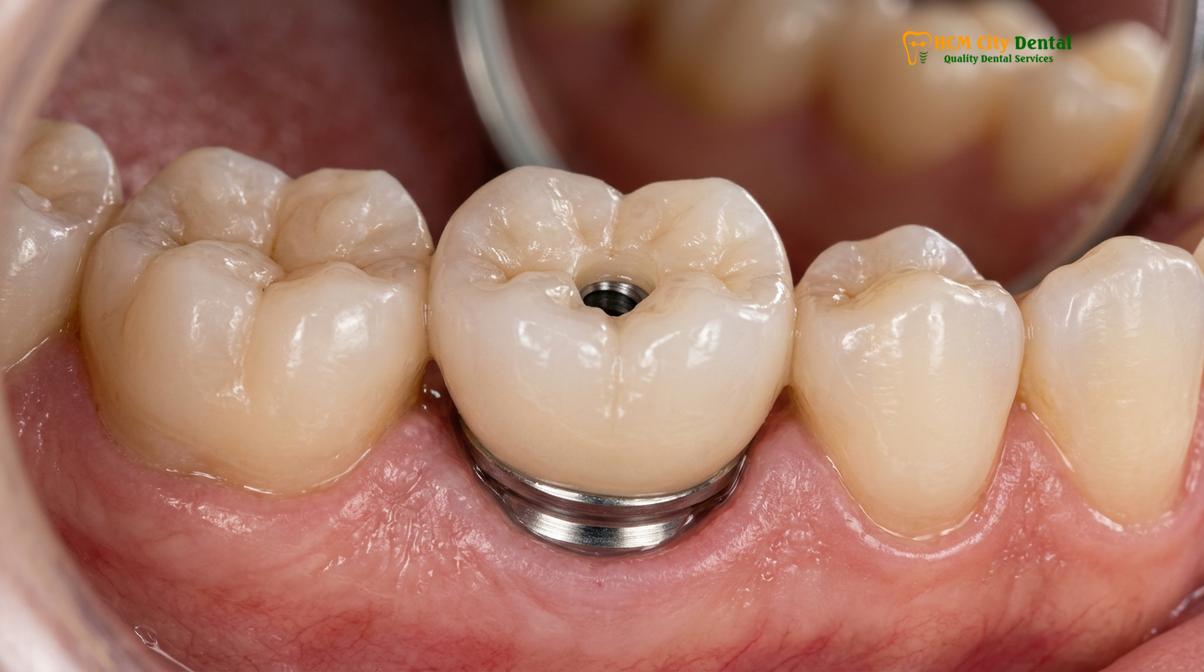
When designing the restoration, prosthodontists must carefully consider the tooth preparation margin designs. While natural teeth require specific geometric preparations—such as a chamfer margin for full-cast or monolithic zirconia crowns, or a heavier shoulder margin for porcelain-fused-to-metal (PFM) and layered ceramic crowns—implant abutments are custom-milled to replicate these ideal contours. The margin of the implant abutment dictates where the crown will sit relative to the gingival tissue. For cement-retained restorations, placing this margin equigingival (even with the gum line) or slightly supragingival (above the gum line) is crucial to allow for the safe and complete removal of excess luting cement.
Furthermore, the mechanics of implant prosthodontics extend beyond single-tooth replacements. When restoring larger edentulous spans, such as with 3-unit or 4-unit bridges, the choice of retention becomes even more complex. Achieving a completely passive fit across multiple implant fixtures is biomechanically demanding. Any discrepancy in the framework can introduce static strain to the implants, potentially leading to screw loosening or marginal bone loss. In these extensive cases, the precision afforded by CAD/CAM milling and digital impression techniques is absolutely paramount to ensure that the final prosthesis seats flawlessly without inducing undue stress on the osseointegrated fixtures.
Screw-Retained Crowns: Retrieval and Maintenance
Screw-retained restorations utilize a fixation screw to secure the crown directly to the implant, offering predictable retrievability without the need for potentially irritating dental cements.
The concept of a retrievability dental implant crown is one of the most significant advantages of the screw-retained modality. In this design, the crown and the abutment are often fabricated as a single cohesive unit, or the crown is luted to a titanium base (Ti-base) extraorally by the dental laboratory. The entire assembly is then secured to the internal threads of the implant fixture using a small retaining screw. This screw passes through an access channel located on the occlusal (chewing) surface of posterior teeth or the lingual (tongue-facing) surface of anterior teeth. Once the screw is torqued to the manufacturer’s specifications (typically between 15 to 35 Ncm), the access hole is protected with a barrier material, such as Teflon tape, and seamlessly sealed with a light-cured composite resin.
The primary clinical benefit of this approach is the ease of maintenance. Dental implants, while highly successful, are not immune to mechanical or biological complications over their lifespan. Prosthetic screws can occasionally loosen under heavy occlusal loads, ceramic materials can chip, and peri-implant tissues may require professional debridement. With a screw-retained crown, the treating clinician can simply drill through the composite seal, unscrew the restoration, and remove the entire crown in a matter of minutes. This non-destructive retrieval allows for extraoral cleaning, repair, or screw replacement, after which the original crown can be easily re-torqued into place.[2]
“The ability to predictably retrieve an implant restoration without damaging the prosthesis or the underlying fixture is a cornerstone of modern implant maintenance, significantly extending the functional lifespan of the treatment.”
Dr. Nguyen Van Cuong frequently emphasizes the importance of retrievability, particularly for patients who travel internationally for dental care. For dental tourists, the ability to have an implant crown easily removed and serviced by any qualified prosthodontist worldwide provides immense peace of mind. Furthermore, screw-retained crowns are highly advantageous in clinical scenarios where interocclusal space is limited. Because there is no need to build a separate abutment core of sufficient height to provide cement retention, a screw-retained restoration can be successfully utilized in areas with as little as 4 to 6 millimeters of restorative space, measured from the implant platform to the opposing tooth.
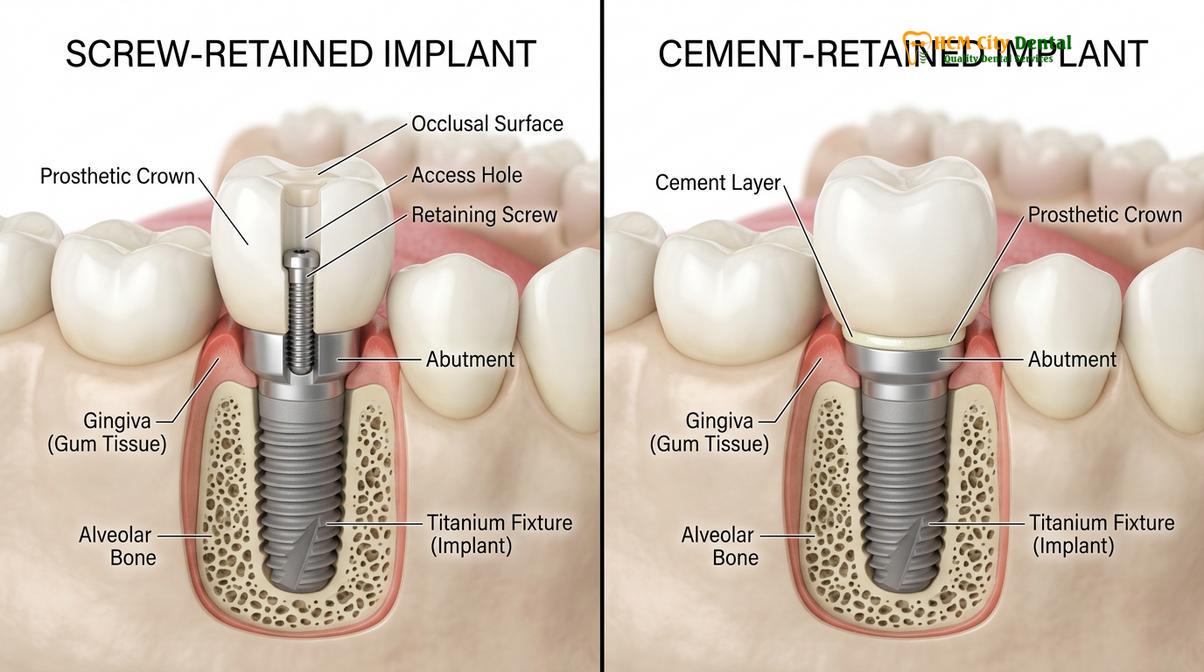
However, the screw-retained approach is not without its limitations. The presence of the access channel can occasionally compromise the structural integrity of the ceramic material, particularly if the hole occupies a large portion of the occlusal table. Additionally, if the surgical placement of the implant was not prosthetically driven, the trajectory of the implant might cause the screw access hole to emerge through the facial or incisal edge of the crown. In such cases, achieving an acceptable aesthetic outcome with a screw-retained design becomes exceedingly difficult, necessitating alternative restorative strategies.
Cement-Retained Crowns: Esthetics and Passivity
Cement-retained crowns mimic natural tooth restorations by luting the crown to a custom abutment, providing optimal aesthetics, passive fit, and flexibility in correcting suboptimal implant angulations.
When evaluating aesthetic implant crown options, cement-retained restorations often provide the most lifelike and visually pleasing results, particularly in the highly demanding anterior maxilla (upper front teeth). The workflow for a cement-retained implant crown closely mirrors that of a traditional crown placed over a natural tooth. First, a custom-milled abutment—typically fabricated from titanium or tooth-colored zirconia—is screwed securely into the implant fixture. Subsequently, the final ceramic crown is cemented over this abutment using a dental luting agent. This two-piece design completely eliminates the need for an occlusal or lingual screw access hole, resulting in an uninterrupted, pristine porcelain surface.
The absence of an access channel is a profound advantage when dealing with implants that have been placed at a less-than-ideal angle. Due to anatomical limitations, such as severe bone resorption or the proximity of the maxillary sinus, surgeons are sometimes forced to place implants at an angulation that deviates from the ideal restorative axis. If a screw-retained crown were used in these situations, the access hole might exit right through the visible front surface of the tooth. A custom abutment, however, can be milled to correct this angulation, allowing the final cemented crown to align perfectly with the adjacent natural teeth.[3]
Material selection plays a pivotal role in the success of cement-retained restorations. To achieve ultimate strength and high translucency, prosthodontists rely on authentic, certified materials. For posterior teeth that endure heavy masticatory forces, Zirconia HT (such as Cercon HT from Germany) is the material of choice. It offers exceptional fracture toughness while maintaining a natural appearance. For front teeth, where outstanding lifelike aesthetics are paramount, E.max (lithium disilicate by Ivoclar, Liechtenstein) is frequently utilized. The optical properties of E.max, including its light transmission and fluorescence, closely mimic natural enamel, making the restoration virtually indistinguishable from surrounding teeth.
Another significant biomechanical advantage of cement-retained restorations is the facilitation of a passive fit. When fabricating multi-unit restorations, such as custom dental crowns and bridges, achieving absolute passivity across several rigid implant fixtures is challenging. The layer of dental cement acts as a microscopic buffer, compensating for minor discrepancies in the framework casting or milling process. This cement space ensures that the final bridge seats without introducing static tension to the implants, thereby reducing the risk of mechanical complications such as screw loosening or framework fracture.
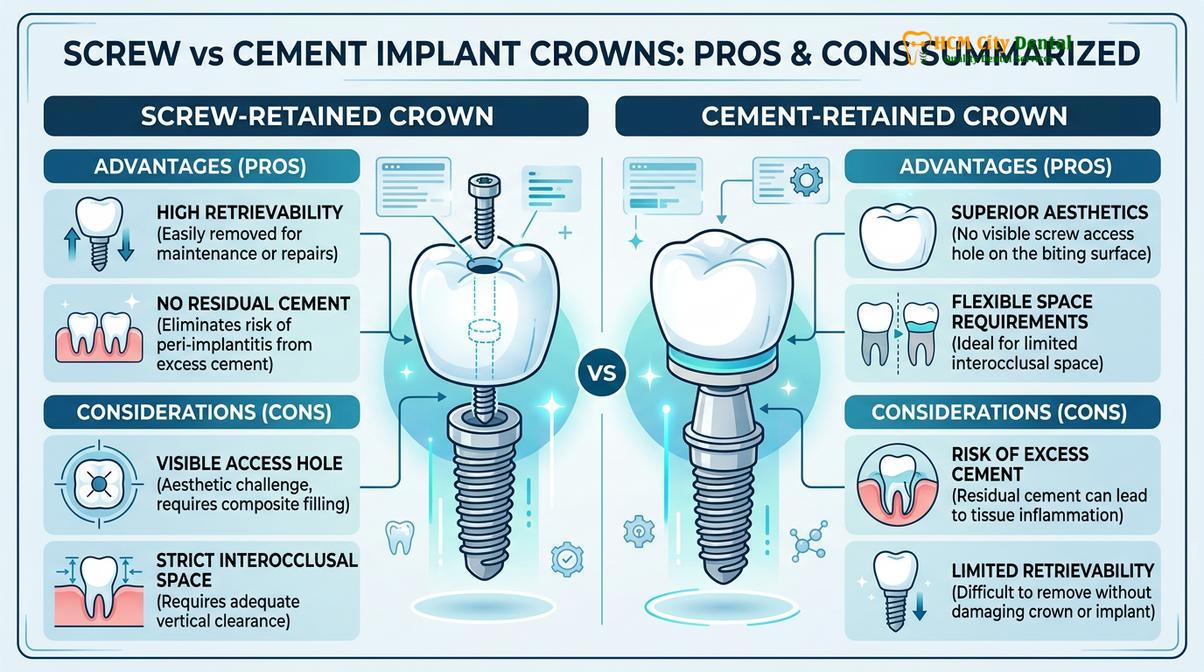
| Clinical Parameter | Screw-Retained Crown | Cement-Retained Crown |
|---|---|---|
| Retrievability | Excellent; easily removed via access hole. | Poor; often requires destroying the crown. |
| Aesthetics | Good; but access hole may be visible. | Excellent; uninterrupted porcelain surface. |
| Minimum Space | Requires ~4-6 mm of interarch space. | Requires ~7-8 mm of interarch space. |
| Implant Angulation | Requires ideal, prosthetically driven placement. | Can correct significant angulation issues. |
| Biological Risk | Low risk of tissue inflammation. | High risk if excess cement is left subgingivally. |
Risks of Excess Cement: Peri-Implantitis Concerns
The primary disadvantage of cemented implant restorations is the risk of undetected subgingival cement extrusion, which can trigger severe inflammatory responses and subsequent crestal bone loss.
Despite the aesthetic and biomechanical benefits of cement-retained crowns, they carry a profound biological vulnerability: the risk of cement sepsis peri implantitis. To understand this risk, one must examine the anatomical differences between a natural tooth and a dental implant. Around a natural tooth, the gingival connective tissue fibers (Sharpey’s fibers) insert perpendicularly into the root cementum, creating a robust physical barrier that resists the apical migration of bacteria and foreign debris. Conversely, the connective tissue fibers around a titanium implant run parallel to the fixture surface, creating a much weaker, non-attached biological seal.[4]
When a crown is cemented onto an implant abutment, hydraulic pressure forces the excess luting cement outward toward the margins. If the margin of the abutment is placed deep below the gum line (subgingivally) for aesthetic reasons, this extruded cement is forced into the delicate peri-implant sulcus. Because the parallel tissue fibers offer little resistance, the cement can easily be pushed deep toward the crestal bone. Once the cement sets, it becomes highly retentive and exceedingly difficult for the clinician to detect and remove completely, even with meticulous scaling and radiographic evaluation.
Clinical Warning: Undetected subgingival cement acts as a highly porous nidus for bacterial plaque accumulation. This rapidly initiates a destructive inflammatory cascade known as peri-implantitis, characterized by bleeding, suppuration, and rapid, irreversible loss of the supporting alveolar bone, ultimately leading to implant failure if left untreated.
The consequences of cement-induced peri-implantitis are severe. The inflammatory response violates the biologic width—the natural dimension of soft tissue attached to the implant—causing the bone to resorb in an attempt to re-establish a safe distance from the irritating foreign body. To mitigate this critical risk, modern prosthodontic protocols dictate that if a cement-retained crown must be used, the abutment margins should be placed no deeper than 1.0 to 1.5 millimeters below the free gingival margin. Furthermore, custom-milled abutments are vastly superior to stock abutments, as they allow the clinician to precisely control the margin placement relative to the patient’s unique tissue architecture.
Clinicians also employ specific techniques to minimize cement extrusion. One common method involves creating a replica of the abutment using fast-setting bite registration material. The crown is loaded with cement and seated on this extraoral replica first, which extrudes the majority of the excess cement outside the mouth. The crown, now containing only a micro-thin layer of cement, is then immediately transferred to the actual implant abutment in the patient’s mouth. Additionally, the use of temporary or provisional cements, rather than definitive resin cements, is often preferred in implant dentistry. Temporary cements provide adequate retention while allowing for easier retrieval and significantly reducing the risk of permanent subgingival cement impaction.
Clinical Criteria for Selection
Selecting the optimal retention method requires evaluating interocclusal space, implant angulation, aesthetic zone demands, and the patient’s periodontal biotype to ensure long-term success.
The decision-making process between a screw vs cement implant crown is highly individualized and must be based on comprehensive clinical diagnostics. There is no universal “best” option; rather, the choice is dictated by the specific anatomical and functional parameters of each patient’s mouth. The primary factors influencing this decision include the three-dimensional position of the implant, the available restorative space, the aesthetic demands of the site, and the patient’s history of periodontal disease.
At HCMC Dental Clinic, the clinical protocol heavily favors screw-retained restorations whenever anatomically feasible, primarily due to their superior biological safety profile and ease of maintenance. Dr. Nguyen Van Cuong advocates for prosthetically driven implant surgery, where the surgical placement is guided by the planned final restoration. By utilizing 3D CBCT imaging and digital surgical guides, implants can be placed in the ideal trajectory, ensuring that the screw access hole emerges through the center of the occlusal surface, thereby allowing for a safe, aesthetic, screw-retained crown.[5]
However, when clinical realities necessitate a cemented approach, a hybrid solution known as a “screwmentable” crown is often employed. This technique combines the best of both worlds. The dental laboratory fabricates a custom titanium abutment and a ceramic crown with an access hole. The crown is then cemented to the abutment extraorally (outside the mouth) by the lab technician, allowing for the meticulous and complete removal of all excess cement. The entire fused assembly is then delivered to the clinic and screwed into the patient’s implant as a single unit. This provides the aesthetic correction of a custom abutment while maintaining the retrievability and biological safety of a screw-retained design.
Clinical Case Review: Anterior Aesthetic Restoration
A patient presented to HCMC Dental Clinic in Ho Chi Minh City with a failing central incisor requiring extraction and immediate implant placement. Due to the natural angulation of the pre-maxilla, the implant was placed with a slight facial trajectory. To achieve optimal aesthetics without compromising the facial porcelain with a screw hole, a custom zirconia abutment was digitally designed. An E.max lithium disilicate crown was fabricated and cemented extraorally to the abutment, creating a “screwmentable” restoration. This approach delivered outstanding lifelike aesthetics, perfect marginal adaptation, and complete elimination of subgingival cement risks.
For international patients and expats seeking high-quality restorative care, understanding the logistical and financial parameters is as important as the clinical details. Through a Direct Lab Partnership in Ho Chi Minh City, clinics can maintain complete quality control and direct collaboration between the prosthodontist and the master ceramist. This synergy enables an Express 3-5 Day Turnaround, tailored specifically for dental tourists, allowing complete smile makeovers or multiple crowns and bridges to be fabricated and fitted within a single week.
According to the latest clinic fee schedule, the pricing structure for implant crowns and bridges is highly competitive, especially when utilizing the 40% pre-arrival discount for WhatsApp bookings. The estimated costs are as follows:
- PFM Crown: Walk-in: ~$140 (3.5M VND) | WhatsApp pre-booking discount: From $84 (2.1M VND).
- Zirconia Crown (Cercon): Walk-in: ~$200 (5.0M VND) | WhatsApp pre-booking discount: From $120 (3.0M VND).
- Zirconia HT Crown (Cercon HT): Walk-in: ~$260 (6.5M VND) | WhatsApp pre-booking discount: From $156 (3.9M VND).
- E.max Crown (Ivoclar): Walk-in: ~$280 (7.0M VND) | WhatsApp pre-booking discount: From $168 (4.2M VND).
- 3-Unit Bridge (Zirconia HT): Walk-in: ~$480 (12.0M VND) | WhatsApp pre-booking discount: From $288 (7.2M VND).
- 4-Unit Bridge (Zirconia HT): Walk-in: ~$640 (16.0M VND) | WhatsApp pre-booking discount: From $384 (9.6M VND).
To further support international patients, comprehensive care includes a global warranty policy with remote follow-up support via WhatsApp, utilizing photo and video assessment protocols to monitor tissue health and restoration integrity. Additionally, 0% interest monthly credit card installment plans are available to make advanced implant prosthodontics accessible.
When to Consult a Prosthodontist
While dental implants boast a remarkably high success rate, they require ongoing professional monitoring and maintenance. Patients should seek immediate clinical evaluation if they experience any signs of peri-implant inflammation, such as bleeding when brushing around the implant, swelling, redness, or a persistent bad taste in the mouth. These symptoms may indicate the presence of retained cement or developing peri-implantitis, which requires prompt intervention to prevent bone loss.
Furthermore, if an implant crown feels loose, shifts during chewing, or if the composite seal over a screw access hole dislodges, it is imperative to consult a prosthodontist without delay. A loose crown can cause micro-movements that damage the internal connection of the implant fixture or lead to the fracture of the abutment screw. In many cases, an emergency loose crown recementation or the simple retorquing of a screw-retained crown can resolve the issue quickly and prevent catastrophic component failure.
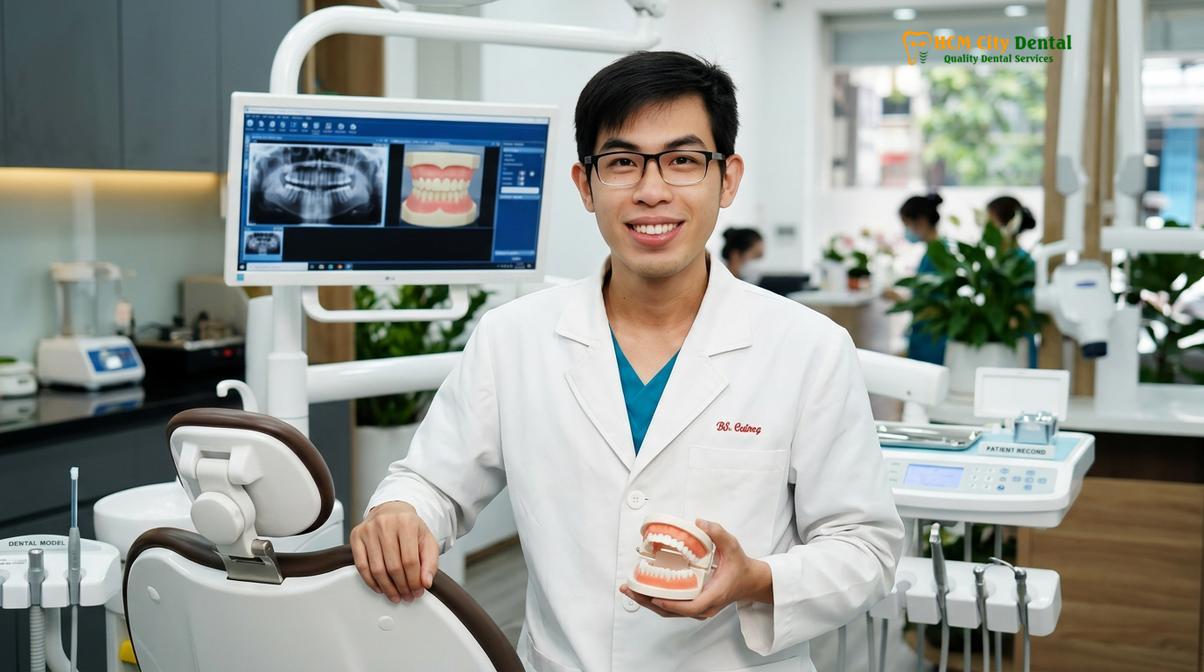
Patients considering implant therapy or those requiring maintenance of existing restorations are encouraged to undergo a comprehensive clinical and radiographic examination. By evaluating the specific anatomical conditions and discussing the aesthetic and functional goals, a tailored treatment plan can be developed. For expert guidance and personalized care, patients can rely on the advanced diagnostic capabilities and clinical expertise available at HCMC Dental Clinic.
“Proactive maintenance and timely intervention are the keys to implant longevity. Never ignore a loose implant crown or bleeding gums, as early diagnosis can often save the restoration and the underlying bone.”
Frequently Asked Questions
What is a screw retained implant crown?
A screw-retained implant crown is a dental restoration secured directly to the implant fixture or abutment using a small fixation screw. This design features an occlusal access hole that is later sealed with composite resin, allowing for easy removal and maintenance without damaging the crown. By eliminating the need for dental cement, this method significantly reduces the risk of tissue inflammation and peri-implantitis, making it the preferred choice for posterior teeth and ideally angled anterior implants.
Why do cement implant crowns cause problems?
Cemented implant crowns can cause problems if excess luting cement is extruded below the gum line during placement. Because implants lack the protective periodontal ligament found in natural teeth, residual cement can trigger severe inflammation, leading to bone loss and peri-implantitis. The parallel orientation of the connective tissue fibers around an implant offers little resistance to the apical migration of this cement, making meticulous cleanup and proper margin placement critical to the success of the restoration.
Can a cemented implant crown be removed?
Yes, but removing a cemented implant crown is often difficult and unpredictable. If a permanent cement was used, the crown may need to be cut off and destroyed to access the abutment screw, whereas temporary cements allow for easier, though less secure, retrievability. In cases where retrieval is anticipated, prosthodontists often use provisional cements or opt for a screw-retained design to ensure that the restoration can be safely removed for maintenance or repair without causing trauma to the underlying implant.
Which is better for front teeth: screw or cement retained?
For front teeth, cement-retained crowns are often preferred if the implant angulation causes a screw access hole to exit through the facial surface. However, if the implant is ideally angled, a screw-retained crown is highly recommended to avoid subgingival cement in the aesthetic zone. The use of custom-milled zirconia abutments combined with extraoral cementation (the “screwmentable” technique) offers the best of both worlds, providing flawless aesthetics while maintaining the biological safety and retrievability of a screw-retained system.
How long does it take to get an implant crown fitted?
With modern digital workflows, an implant crown can typically be fabricated and fitted within a single week. Clinics utilizing advanced CAD/CAM technology and direct lab partnerships often offer an express 3-5 day turnaround for complete restoration delivery. The process involves a highly accurate digital scan using an intraoral scanner, followed by the computerized design and milling of the custom abutment and crown, ensuring a precise fit and rapid completion of the treatment.
References
- International Journal of Oral & Maxillofacial Implants. Biomechanical evaluation of screw-retained vs cement-retained restorations. (2021).
- Journal of Prosthetic Dentistry. The impact of residual cement on peri-implant tissue health. (2020).
- Clinical Oral Implants Research. Retrievability and complication rates in implant prosthodontics. (2019).
- Journal of Esthetic and Restorative Dentistry. Material selection for anterior implant restorations: Zirconia vs Lithium Disilicate. (2022).
- American College of Prosthodontists. Clinical guidelines for implant-supported single crowns. (2018).