The palatal expander kids cost typically ranges from $800 to $2,500 globally, while specialized pediatric clinics in Vietnam offer comprehensive early orthodontic treatments at highly competitive rates. Early intervention prevents severe crowding, corrects crossbites, and guides proper jaw development during the critical mixed dentition phase.
Clinical Summary:
A palatal expander is a foundational orthopedic appliance used in pediatric dentistry to treat maxillary transverse deficiency—a condition where the upper jaw is too narrow. By applying gentle, controlled pressure to the unfused midpalatal suture, the device stimulates natural bone growth, widening the dental arch. This interceptive treatment not only creates essential space for erupting permanent teeth, thereby reducing the need for future extractions, but also significantly improves nasal airway volume. Clinical protocols emphasize early intervention between ages 8 and 10, utilizing child-centric behavioral management techniques and biocompatible materials to ensure a comfortable, anxiety-free experience. Understanding the clinical mechanics, optimal timing, and associated costs empowers parents to make informed decisions regarding their child’s long-term oral and systemic health.
Key Takeaways:
- Palatal expanders correct narrow upper jaws, creating space for permanent teeth and preventing severe crowding.
- The optimal window for treatment is between ages 8 and 10, before the midpalatal suture fully fuses.
- Expanding the maxilla physically widens the nasal cavity, improving airflow and reducing mouth breathing.
- Treatment involves a brief active expansion phase followed by a longer passive retention phase for bone consolidation.
- Pediatric pricing structures vary, but early intervention is generally more cost-effective than complex adult orthodontics.
Understanding Rapid Maxillary Expansion (RME)
Rapid Maxillary Expansion (RME) is an interceptive orthodontic treatment that widens a narrow upper jaw, creating space for permanent teeth and significantly improving pediatric airway function.
Rapid Maxillary Expansion (RME) represents a cornerstone of modern Children & Pediatric Dentistry. When a child presents with a maxillary transverse deficiency—meaning the upper jaw is disproportionately narrow compared to the lower jaw—it can lead to a cascade of dental, skeletal, and functional issues. The primary objective of RME is not merely to move teeth, but to achieve true orthopedic changes by separating the two halves of the maxilla at the midpalatal suture[1]. This biological process relies on the application of controlled lateral forces that stimulate osteoblastic activity, resulting in the deposition of new bone along the midline.
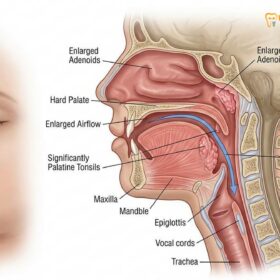
Beyond dental alignment, the implications of a narrow maxilla extend deeply into pediatric respiratory health. The roof of the mouth simultaneously serves as the floor of the nasal cavity. Therefore, when a maxillary expander children use widens the dental arch, it inherently increases the transverse dimension of the nasal airway. Children with constricted maxillas frequently suffer from chronic nasal resistance, forcing them into habitual mouth breathing. Over time, obligate mouth breathing can alter facial growth patterns, leading to “adenoid facies” or long-face syndrome—characterized by a narrow face, drooping eyes, and an open-mouth posture.
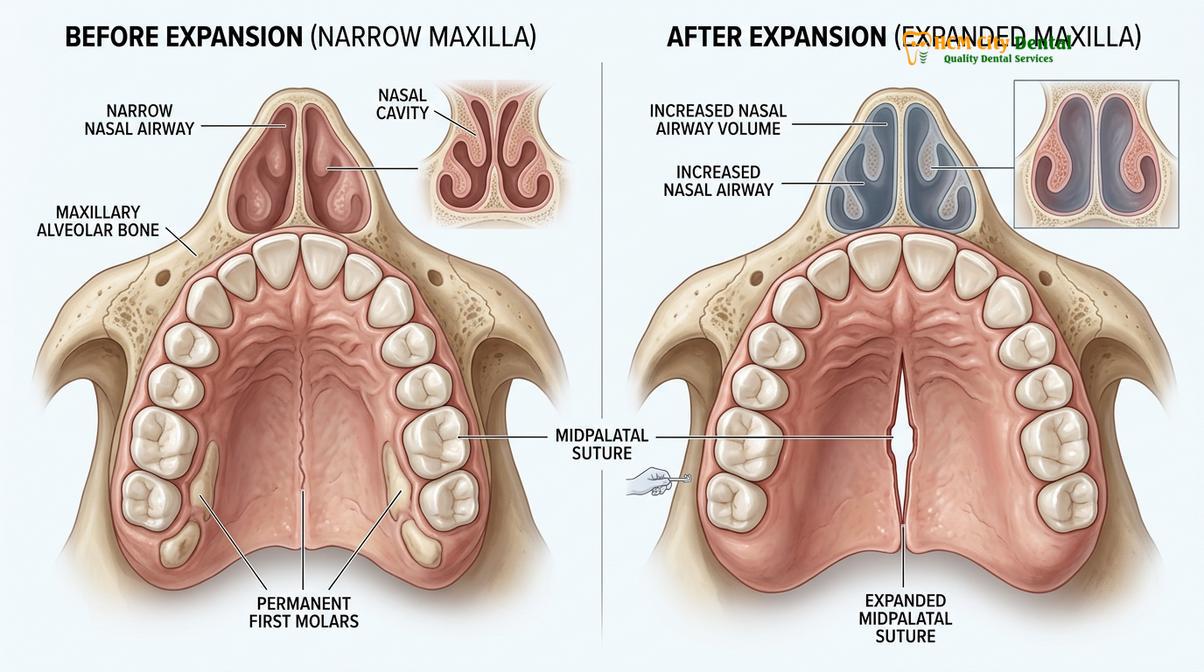
Clinical diagnostics for RME involve a comprehensive evaluation of both the dentition and the airway. Pediatric dentists and orthodontists utilize advanced imaging, such as cephalometric radiographs and 3D Cone Beam Computed Tomography (CBCT), to assess the skeletal discrepancy accurately. By identifying these issues early, clinicians can implement pediatric sleep apnea and airway assessment protocols, ensuring that the expansion therapy addresses both the bite mechanics and the child’s respiratory efficiency. The dual benefit of RME makes it one of the most impactful interventions in pediatric healthcare, setting the foundation for a lifetime of proper function and restful sleep.
Optimal Age for Expansion (8–10 years)
The ideal window for palatal expansion is between ages 8 and 10, during the mixed dentition phase when the midpalatal suture remains unfused and highly responsive to orthopedic forces.
Timing is arguably the most critical factor in the success of palatal expansion. The human maxilla is composed of two separate bones joined at the midline by the midpalatal suture. During early childhood, this suture consists of highly cellular and vascular connective tissue, making it pliable and responsive to mechanical stress. The optimal age for expansion is generally between 8 and 10 years old, a period known as the mixed dentition phase, where both primary (baby) teeth and permanent teeth are present in the mouth[2].
Dr. Nguyen Van Cuong, a leading expert in early interceptive orthodontics, emphasizes that evaluating a child during this specific developmental window allows clinicians to harness natural growth spurts. If expansion is delayed until the late teenage years or adulthood, the midpalatal suture becomes heavily interdigitated and eventually fuses (ossifies). Once fusion occurs, achieving true skeletal expansion with a standard appliance becomes nearly impossible, often necessitating Surgically Assisted Rapid Palatal Expansion (SARPE) to physically separate the bone.
“Intervening while the skeletal sutures are still adaptable allows us to guide facial growth non-invasively. Early expansion not only corrects the immediate bite discrepancy but fundamentally alters the trajectory of the child’s craniofacial development, preventing the need for invasive jaw surgeries later in life.”
Parents seeking the best age for a kid’s first orthodontic evaluation should aim for age 7, as recommended by the American Association of Orthodontists. At this age, the first permanent molars have typically erupted, establishing the posterior occlusion (bite). This allows the clinician to accurately diagnose crossbites, crowding, and transverse deficiencies. Initiating treatment between ages 8 and 10 ensures that the expansion forces are directed primarily at the skeletal level rather than merely tipping the teeth outward, which is a common compromise when treating older patients.
How a Palatal Expander Works
A palatal expander applies gentle outward pressure on the upper molars via a central screw, gradually separating the elastic palatal bones to stimulate new bone growth.
The mechanics of a palatal expander are elegantly simple yet biologically profound. The most common type of expander, the Hyrax appliance, consists of a central expansion screw connected to heavy wire arms that are laser-welded to metal bands. These bands are custom-fitted and cemented onto the child’s upper molars. Once secured, the appliance rests high in the palatal vault. The activation process involves inserting a small, specialized key into the central screw and turning it—usually once or twice a day, as prescribed by the orthodontist. Each turn typically widens the appliance by 0.25 millimeters.
As the screw is turned, it generates a lateral force that is transmitted through the teeth to the two halves of the maxilla. Because the midpalatal suture is not yet fused in children, this force causes the suture to gently pull apart. In response to this tension, the body’s natural healing mechanisms are triggered. Osteoblasts (bone-forming cells) migrate into the widened sutural gap and begin depositing new bone matrix. Over a period of several months, this new bone calcifies, permanently widening the upper jaw.
A common and highly positive clinical sign during the active expansion phase is the development of a midline diastema—a noticeable gap between the two upper front teeth. This gap indicates that the skeletal suture is successfully opening, rather than just the teeth shifting. Parents are often concerned by this sudden space, but it is a temporary phenomenon; the elastic fibers in the gums will naturally pull the front teeth back together over the subsequent weeks.
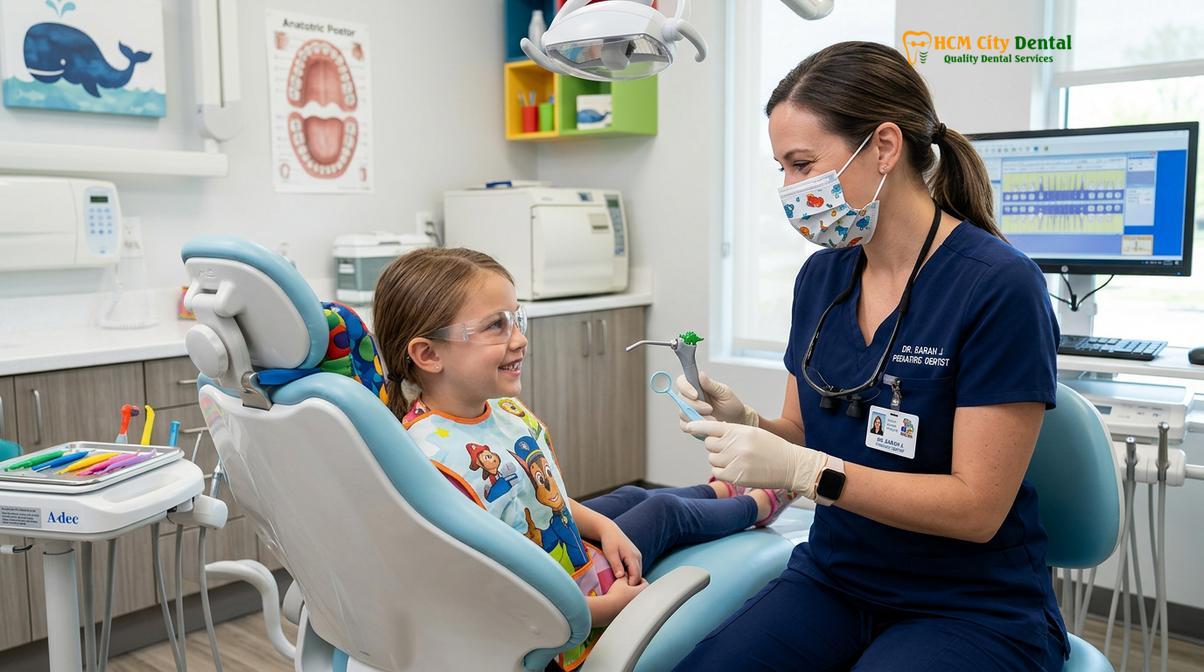
To ensure the process is stress-free for the child, specialized clinics employ the “Tell-Show-Do behavioral management” technique. This psychological approach is vital in pediatric dentistry to build trust and reduce anxiety[3].
- Tell: The dentist explains the procedure using child-friendly language, perhaps describing the expander as a “magic mouth spacer” or the activation key as a “tiny steering wheel.”
- Show: The dentist demonstrates how the key works outside the mouth, letting the child hold it and see the mechanism move.
- Do: The appliance is fitted or activated only when the child is completely comfortable, utilizing a “stop on request” protocol where the child can raise their hand if they need a break.
Clinical Warning: Hygiene and Activation Compliance
Strict adherence to the prescribed turning schedule is crucial; over-activating the expander can cause excessive pressure, while under-activating delays treatment. Furthermore, impeccable oral hygiene is mandatory. Food debris can easily become trapped between the appliance and the palate, leading to severe gingival inflammation or palatal tissue hyperplasia if not cleaned daily with a water flosser.
Correcting Posterior Crossbites
Expanding the maxilla corrects posterior crossbites by ensuring the upper teeth properly overlap the lower teeth, preventing asymmetrical jaw growth and TMJ dysfunction.
A normal, healthy occlusion dictates that the upper teeth should sit slightly outside the lower teeth, much like the lid of a box fitting over its base. A posterior crossbite occurs when this relationship is reversed in the back of the mouth—the upper molars and premolars bite inside the lower teeth. This condition is almost always a direct result of a narrow maxilla. Posterior crossbites can be unilateral (affecting only one side) or bilateral (affecting both sides).
Unilateral crossbites in children are particularly insidious because they frequently involve a functional shift of the mandible. When the child closes their mouth, the narrow upper jaw interferes with the lower jaw, causing the child to unconsciously slide their lower jaw to one side to achieve a comfortable bite. If this functional shift is left untreated during the critical years of facial growth, the mandible will actually grow asymmetrically, resulting in a permanent, true skeletal asymmetry that is incredibly difficult to correct later in life.
By utilizing a palatal expander to widen the upper jaw, the clinician eliminates the interference, allowing the lower jaw to center itself naturally within the temporomandibular joint (TMJ) fossa. This early correction is a prime example of pediatric interceptive orthodontics, where a relatively brief intervention prevents a lifetime of structural and functional complications.
Clinical Case Review: Crossbite Correction
A 9-year-old patient visited HCMC Dental Clinic in Ho Chi Minh City presenting with a severe unilateral posterior crossbite and a noticeable mandibular shift upon closing. Dr. Nguyen Van Cuong diagnosed a maxillary transverse deficiency and prescribed a bonded rapid palatal expander. After 21 days of active expansion and a 6-month retention phase, the crossbite was fully resolved. The patient’s lower jaw naturally re-centered, eliminating the functional shift and restoring facial symmetry without the need for complex surgical intervention.
Preventing Permanent Tooth Impaction
Proactively widening the upper jaw creates the necessary arch perimeter to accommodate all adult teeth, significantly reducing the risk of permanent tooth impaction.
One of the most compelling reasons to initiate early expansion therapy is space management. The permanent teeth are significantly larger than the primary teeth they replace. If the maxillary arch is narrow, there simply is not enough perimeter space (arch length) for the adult teeth to erupt into their proper positions. This lack of space leads to severe crowding, ectopic eruptions (teeth coming in at the wrong angle), and, most concerningly, tooth impaction.
The maxillary canines (eyeteeth) are particularly vulnerable to impaction. They are among the last anterior teeth to erupt, typically making their appearance around age 11 or 12. Because they develop high up in the maxilla and have a long eruption path, any lack of space in the dental arch will force them to become trapped within the bone, often resting against the roots of the adjacent incisors. An impacted canine is a severe clinical complication that can cause root resorption (dissolving) of the neighboring teeth, leading to tooth loss[4].
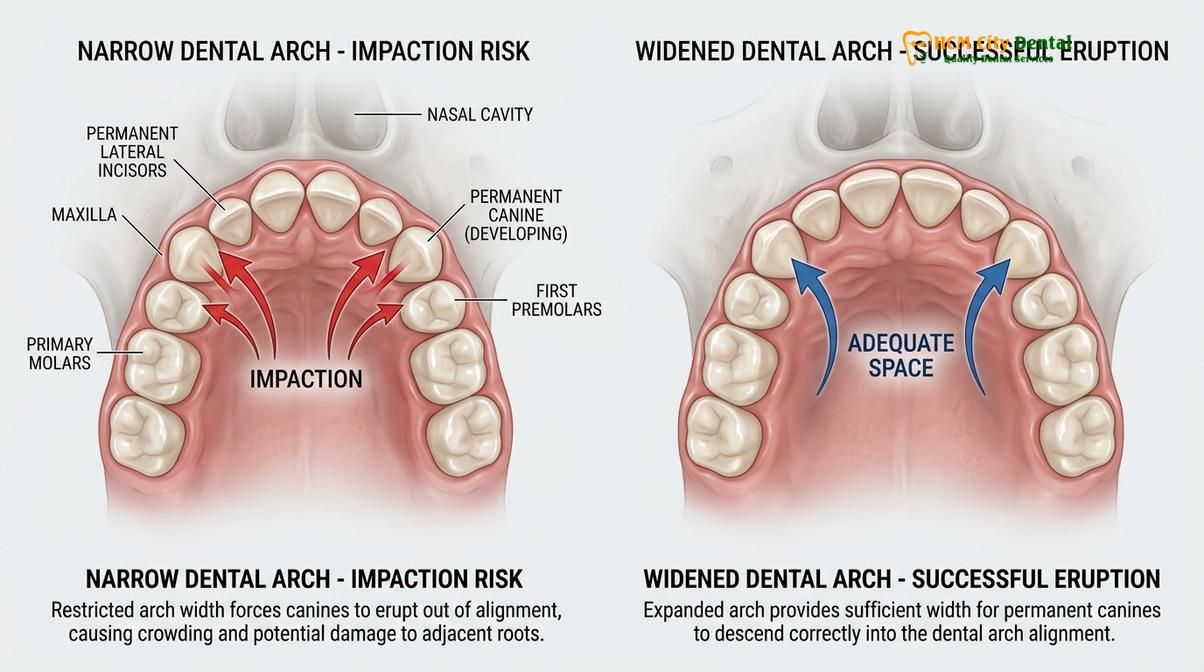
To prevent impacted canine teeth, clinicians use palatal expanders to proactively increase the arch perimeter. By widening the jaw at age 8 or 9, the orthodontist ensures that when the canines begin their final descent a few years later, there is ample room for them to drop into place naturally. This interceptive approach drastically reduces the likelihood that the child will require surgical exposure of impacted teeth or the extraction of healthy permanent premolars to relieve crowding.
“Space management in the mixed dentition is a game of foresight. By expanding the arch early, we are essentially building a larger foundation to safely house the permanent dentition, transforming a potentially complex surgical case into a straightforward alignment procedure.”
Palatal Expander Kids Cost & Pediatric Pricing Structure
The cost of early orthodontic intervention varies by case complexity, but transparent pricing ensures parents can plan effectively for comprehensive pediatric dental care.
When evaluating the palatal expander kids cost, it is essential to view the expense as an investment in preventative healthcare. The financial outlay for early interceptive treatment is almost always significantly lower than the cost of comprehensive Phase 2 braces or corrective jaw surgery required in adulthood. The total cost encompasses the initial diagnostic records (CBCT scans, digital impressions), the custom fabrication of the appliance in a dental laboratory, the clinical fitting, and the series of monitoring appointments required throughout the active and retention phases.
In international standard facilities, the pricing is structured to reflect the use of premium, biocompatible materials and the expertise of specialized pediatric clinicians. For families seeking early orthodontic intervention saigon, the following is the current estimated fee schedule for pediatric dental services, reflecting both standard walk-in rates and discounted rates for pre-booked appointments.
| Pediatric Dental Service | Standard Walk-in Rate (VND) | Pre-booked Rate (VND) | Estimated USD |
|---|---|---|---|
| Kids Consultation & Diagnostic Check-up | 500,000 – 800,000 | 300,000 – 500,000 | ~$12 – $20 |
| Fissure Sealant (per tooth) | 700,000 – 1,000,000 | 400,000 – 600,000 | ~$16 – $24 |
| Fluoride Varnish Application | 500,000 – 800,000 | 300,000 – 500,000 | ~$12 – $20 |
| Pediatric Glass Ionomer Filling (GIC) | 700,000 – 1,000,000 | 400,000 – 600,000 | ~$16 – $24 |
| Pediatric Composite Filling (per tooth) | 800,000 – 1,300,000 | 500,000 – 800,000 | ~$20 – $32 |
| Baby Root Canal (Pulpotomy, per tooth) | 1,600,000 – 2,500,000 | 1,000,000 – 1,500,000 | ~$40 – $60 |
| Space Maintainer (fixed, band-and-loop) | 3,300,000 – 5,000,000 | 2,000,000 – 3,000,000 | ~$80 – $120 |
| Custom Pediatric Sports Mouthguard | 2,500,000 – 3,500,000 | 1,500,000 – 2,500,000 | ~$60 – $100 |
| Palatal Expander (Comprehensive Phase) | Varies by complexity | Consultation Required | ~$800 – $2,500 |
Note: Patients who utilize the -40% WhatsApp booking discount can access the lower tier of the pricing structure, making high-quality pediatric care highly accessible. For expatriate families, exploring braces for expat children in Ho Chi Minh City provides a seamless transition of care with internationally trained specialists.
Clinical Materials & Comfort Techniques in Pediatric Dentistry
Modern pediatric dentistry utilizes biocompatible materials like fluoride-releasing cements and non-invasive decay arrest protocols to ensure painless, durable treatments for children.
The success of any pediatric dental intervention, including orthodontics, relies heavily on maintaining the health of the primary teeth. Baby teeth act as natural space maintainers; if they are lost prematurely due to decay, the adjacent teeth will drift into the empty space, exacerbating crowding and complicating expander therapy. Therefore, meticulous restorative care is paramount.
When treating early childhood caries, clinicians must choose the appropriate restorative material. The debate between Glass Ionomer Fillings (GIC) vs. Composite is central to pediatric restorative protocols. We prioritize fluoride-releasing glass ionomer cement (GIC) for baby teeth due to its unique chemical bonding properties and moisture tolerance. Unlike composite resins, which require a perfectly dry field (often difficult to achieve with a squirming child), GIC bonds chemically to the dentin even in slightly moist environments. Furthermore, GIC acts as a fluoride reservoir, continuously releasing and recharging fluoride from toothpaste to protect the margins of the filling from recurrent decay[5]. Composite is reserved for anterior teeth where higher strength and perfect aesthetics are strictly required.
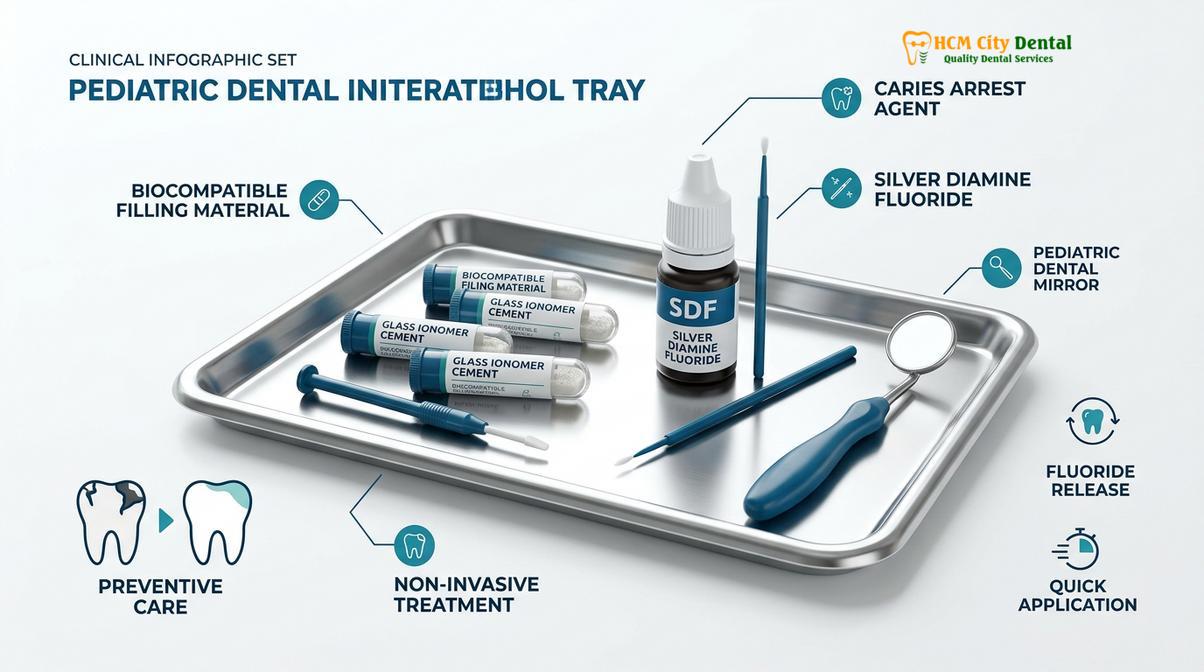
For highly anxious or uncooperative children, non-invasive cavity arrest using Silver Diamine Fluoride (SDF) is a revolutionary option. SDF is a liquid substance applied directly to the cavity. The silver ions act as a powerful antimicrobial agent, killing the bacteria causing the decay, while the fluoride promotes remineralization of the softened tooth structure. This halts the decay without any drilling, injections, or pain. The only clinical trade-off is that SDF leaves a localized black stain on the decayed area, making it most suitable for posterior baby teeth that will eventually fall out.
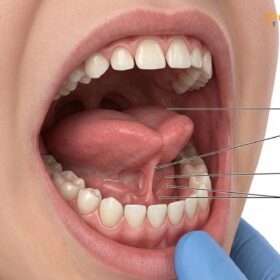
Beyond restorative materials, comprehensive pediatric care includes assessing soft tissue attachments. Tongue-ties (ankyloglossia) can severely restrict palatal development, as the tongue cannot rest properly in the roof of the mouth to naturally expand the jaw. These are treated painlessly with diode laser frenectomies, a procedure that involves minimal bleeding and rapid healing. For children undergoing complex procedures or those with severe dental phobia, advanced behavior desensitization techniques are supplemented with conscious sedation options, such as nitrous oxide (laughing gas) or, in extensive cases, general anesthesia, ensuring the child’s psychological well-being is always protected.
When to See a Doctor for Early Orthodontic Evaluation
Parents should not wait until all permanent teeth have erupted to seek an orthodontic consultation. Early identification of skeletal discrepancies allows for the utilization of growth modification appliances like palatal expanders, which are highly effective during the mixed dentition phase. Understanding the difference between Phase 1 vs Phase 2 braces for children is crucial; Phase 1 focuses on skeletal correction and space creation, while Phase 2 focuses on final dental alignment.
Dr. Nguyen Van Cuong advises parents to schedule a comprehensive airway and orthodontic assessment if they notice any of the following clinical signs in their child:
- Chronic mouth breathing, especially during sleep.
- Loud snoring, gasping, or pauses in breathing (signs of pediatric sleep apnea).
- Prolonged thumb-sucking or pacifier use past the age of 4, which can physically deform the palate.
- Visible crowding, overlapping, or rotated front teeth.
- A noticeable crossbite, where the jaw shifts to one side upon closing.
- Premature loss of primary teeth without the placement of a space maintainer.
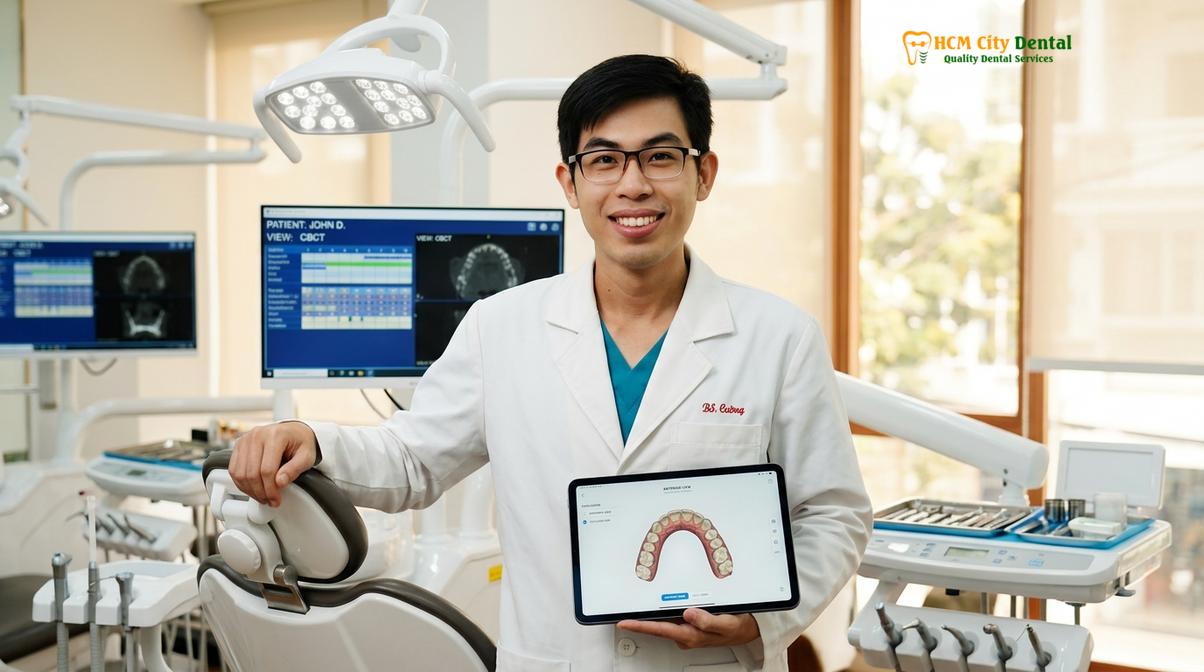
If your child exhibits any of these symptoms, a proactive evaluation is highly recommended. By addressing the root cause of the malocclusion early, clinicians can guide the jaws into a harmonious relationship, optimizing both dental function and respiratory health. For personalized diagnostic advice and to explore treatment options, families are encouraged to book a consultation at HCMC Dental Clinic in Ho Chi Minh City, where our dedicated pediatric team is ready to support your child’s developmental journey.
Frequently Asked Questions
Is a palatal expander painful for a child?
A palatal expander is generally not painful, though children may experience mild pressure or a tingling sensation immediately after the device is activated. This pressure typically subsides within a few minutes to an hour. Over-the-counter pediatric analgesics and a soft diet during the first few days can effectively manage any initial discomfort while the oral tissues adapt to the appliance. The Tell-Show-Do method is heavily utilized to ensure the child feels in control and safe during the fitting process.
What is the average cost of a palatal expander for kids?
The average cost of a palatal expander for kids ranges from $800 to $2,500 globally, depending on the appliance type and case complexity. In specialized international clinics, comprehensive early orthodontic packages often provide highly competitive rates. Parents should consult their pediatric dentist for a detailed breakdown, which typically includes the appliance fabrication, clinical fitting, and necessary follow-up adjustment visits. Utilizing pre-booking discounts can also significantly reduce the overall financial burden.
How long does a child need to wear a jaw expander?
A child typically needs to wear a jaw expander for a total of six to nine months to ensure skeletal stability. The active expansion phase usually lasts only two to four weeks, during which the device is turned regularly. Afterward, the expander remains in place passively for several months to allow new bone to solidify in the midpalatal suture, preventing relapse. Removing the appliance too early can result in the jaw narrowing back to its original state.
Can a palatal expander improve my child’s breathing?
Yes, a palatal expander can significantly improve a child’s nasal breathing and overall airway function. Because the roof of the mouth is also the floor of the nasal cavity, widening the maxilla physically increases the volume of the nasal passages. This anatomical change reduces nasal airway resistance, helping to alleviate chronic mouth breathing, snoring, and mild pediatric sleep apnea, leading to better sleep quality and improved daytime cognitive function.
How do I clean my child’s palatal expander?
Cleaning a palatal expander requires diligent daily hygiene using a soft-bristled toothbrush and a water flosser to dislodge trapped food particles. Parents should assist children in brushing around the metal bands, the central screw, and the gumline to prevent plaque accumulation. Avoiding sticky, chewy, or hard foods is also crucial to maintain the integrity of the appliance and protect the underlying enamel from decalcification during the treatment period.
References
- American Academy of Pediatric Dentistry. Clinical Guidelines on Management of the Developing Dentition and Occlusion. (2022).
- Journal of the American Dental Association. The efficacy of early interceptive orthodontic treatment. (2021).
- International Journal of Paediatric Dentistry. Behavior management techniques in pediatric dentistry: Tell-Show-Do. (2020).
- American Journal of Orthodontics and Dentofacial Orthopedics. Maxillary expansion and its effects on the pediatric airway. (2019).
- Journal of Dental Research. Clinical efficacy of Silver Diamine Fluoride and Glass Ionomer Cements in primary dentition. (2023).