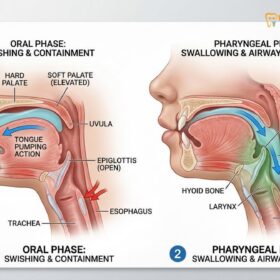
Tongue tie release kids, clinically known as a frenectomy, is a minor surgical procedure that frees a restricted lingual frenulum. This intervention immediately improves tongue mobility, resolving infant breastfeeding difficulties, preventing speech articulation issues, and supporting proper pediatric airway development and jaw growth.
Clinical Summary:
Ankyloglossia (tongue-tie) is a congenital anomaly where an unusually short, thick, or tight band of tissue tethers the bottom of the tongue’s tip to the floor of the mouth. Left untreated, it can severely disrupt infant feeding, alter speech articulation, and negatively influence maxillofacial development. Modern pediatric dentistry utilizes diode laser technology to perform virtually painless, bloodless frenectomies. Comprehensive care extends beyond the release, incorporating myofunctional therapy, interceptive orthodontics, and behavioral management techniques to ensure optimal oral function, proper airway development, and a positive dental experience for the child.
Key Takeaways:
- A restricted tongue-tie can cause severe breastfeeding pain for mothers and poor weight gain for infants.
- Diode laser frenectomies offer a bloodless, rapid procedure with minimal discomfort and immediate recovery.
- Post-operative stretching exercises are mandatory to prevent tissue reattachment during the healing phase.
- Untreated ankyloglossia is strongly linked to mouth breathing, narrow palates, and pediatric sleep apnea.
- Pediatric dental care integrates tongue-tie release with early orthodontic evaluation and minimally invasive cavity prevention.
Clinical Signs of Ankyloglossia (Tongue-Tie)
Ankyloglossia presents as a short, tight, or thick lingual frenulum that restricts the tongue’s upward and lateral movements, often causing a heart-shaped tongue tip upon protrusion.
Ankyloglossia is a congenital condition characterized by an abnormally short, thickened, or tight lingual frenulum—the mucosal band of tissue connecting the ventral surface of the tongue to the floor of the mouth. In a normally developing fetus, the frenulum recedes during gestation, allowing the tongue to move freely. When this process is incomplete, the resulting restriction can range from mild to severe, profoundly impacting the oral biomechanics of the child [1].
Clinically, pediatric dentists and otolaryngologists classify tongue-ties based on the anatomical attachment point. An anterior tongue-tie is highly visible, attaching near the very tip of the tongue, often pulling the tip downward to create a distinct “heart-shaped” or notched appearance when the child attempts to stick their tongue out. A posterior tongue-tie, however, is more insidious; it is hidden beneath the mucosal lining at the base of the tongue, restricting upward elevation without obvious visual cues at the tip.
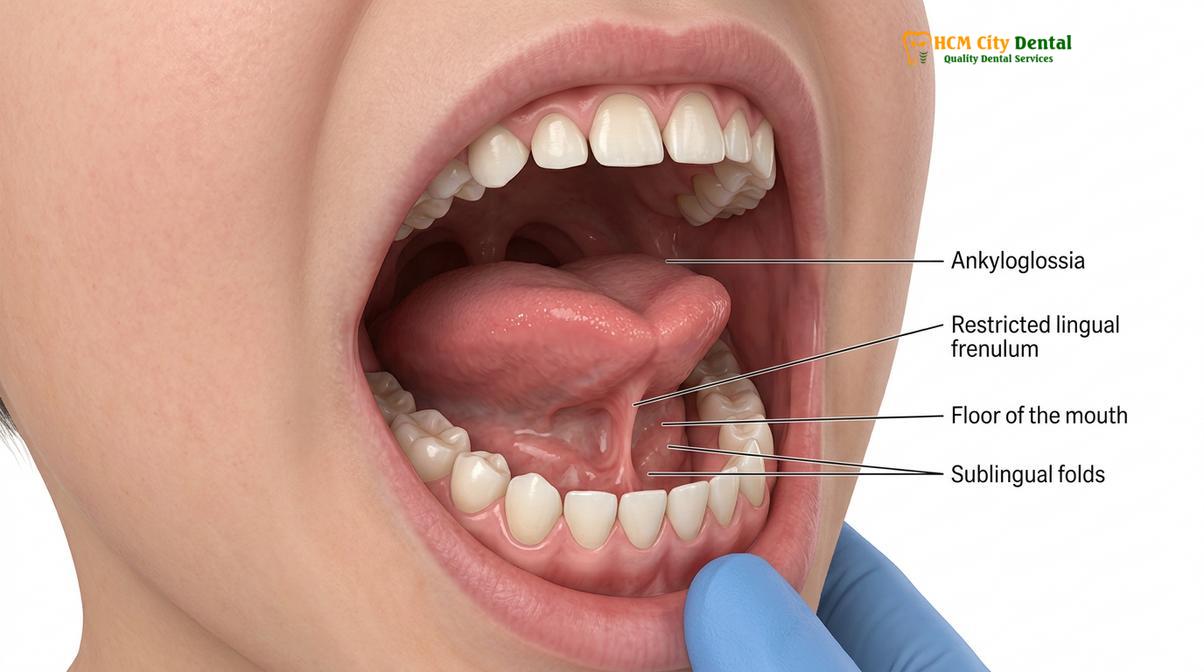
Dr. Nguyen Van Cuong, a leading specialist in Children & Pediatric Dentistry, emphasizes that diagnosing a posterior tie requires a tactile clinical examination rather than just a visual inspection. By elevating the tongue with specialized instruments or gloved fingers, the clinician can palpate the restrictive submucosal band. Common clinical signs in toddlers and older children include the inability to lick the lips, difficulty clearing food debris from the molars, and an inability to elevate the tongue to the incisive papilla (the roof of the mouth just behind the upper front teeth).
Furthermore, the restriction of the tongue alters the resting posture of the oral cavity. A healthy tongue should rest against the hard palate, acting as a natural scaffold that guides the lateral expansion of the upper jaw during growth. When a tongue-tie forces the tongue to rest in the floor of the mouth, the upper jaw often develops into a narrow, V-shape with a high palatal vault, leading to significant orthodontic crowding and an increased risk of pediatric airway obstruction.
Impact on Breastfeeding & Infant Feeding
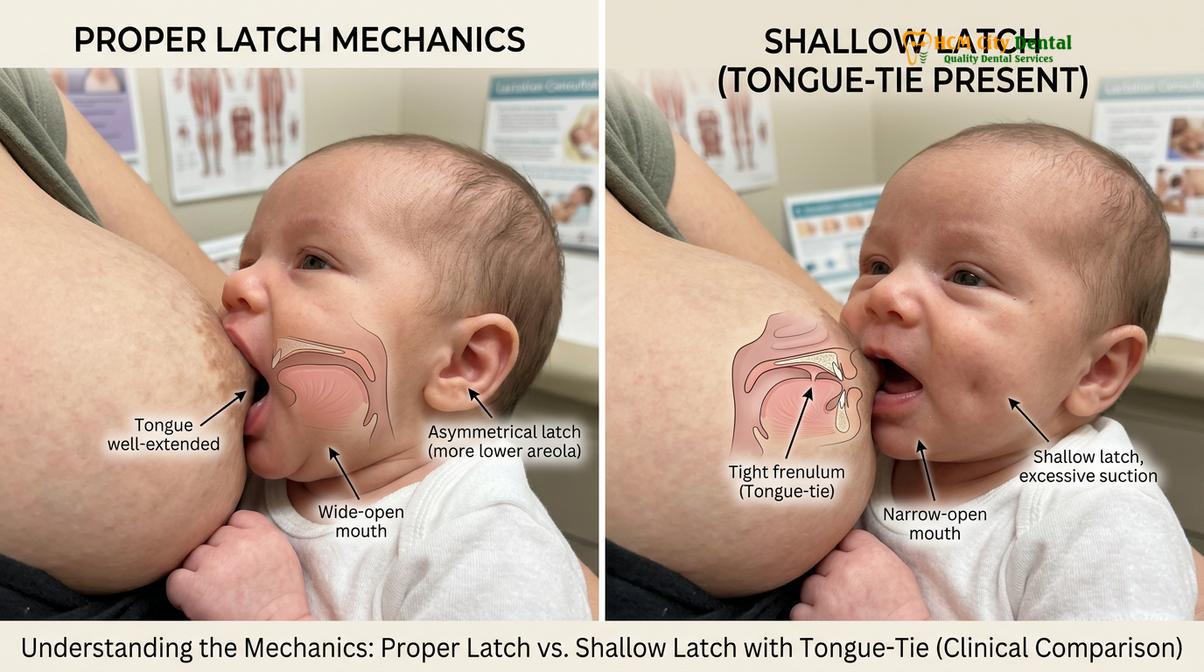
A restricted tongue prevents infants from creating an effective vacuum seal during breastfeeding, leading to poor milk transfer, excessive gas, and severe maternal nipple trauma.
The most immediate and critical consequence of ankyloglossia is its disruption of infant feeding mechanics. Breastfeeding is a complex biomechanical process that requires the infant’s tongue to extend over the lower gum line, cup the areola, and perform a rhythmic, wave-like peristaltic motion to extract milk efficiently. When a tongue-tie restricts this extension and elevation, the infant is forced to compensate using their lips and gums to clamp down on the breast [2].
This compensatory clamping mechanism leads to a cascade of feeding difficulties. For the mother, it often results in excruciating nipple pain, vasospasm, cracking, bleeding, and an increased risk of mastitis due to incomplete breast emptying. For the infant, the inability to maintain a proper vacuum seal causes them to swallow excessive amounts of air (aerophagia), leading to severe colic, reflux, and gassiness.
“The tongue is the primary engine of infant feeding. When it is tethered, the infant works twice as hard for half the caloric intake, leading to exhaustion at the breast, frequent cluster feeding, and ultimately, failure to thrive if left unaddressed by a clinical release.”
Infants with a tongue-tie often exhibit a characteristic “clicking” sound during nursing, which is the sound of the vacuum seal repeatedly breaking. They may also experience milk leaking from the corners of the mouth and prolonged feeding sessions that leave both mother and baby exhausted. While bottle-feeding can sometimes mask the severity of a tongue-tie because milk flows more easily from an artificial nipple, the underlying restriction remains, potentially causing issues when transitioning to solid foods. Children may struggle to manipulate a bolus of food, leading to gagging, pocketing food in the cheeks, or becoming exceptionally picky eaters.
Speech Articulation Concerns
While not all tongue-ties cause speech delays, restricted mobility often leads to ankyloglossia speech difficulties, particularly with alveolar sounds like ‘t’, ‘d’, ‘l’, and ‘th’.
As a child transitions from infancy to toddlerhood, the focus of oral function shifts from feeding to speech development. It is a common misconception that a tongue-tie causes cognitive language delays (the ability to understand and formulate words). Instead, it causes mechanical articulation errors—the physical inability to place the tongue in the correct anatomical position to produce specific phonemes [3].
The most commonly affected sounds are the alveolar consonants, which require the tip of the tongue to elevate and touch the roof of the mouth just behind the upper teeth. These include ‘t’, ‘d’, ‘n’, ‘l’, ‘s’, and ‘z’. Additionally, the ‘th’ sound, which requires the tongue to protrude slightly between the upper and lower incisors, and the ‘r’ sound, which requires complex mid-tongue elevation, are frequently compromised. This phenomenon is clinically referred to as ankyloglossia speech difficulties.
Children with untreated tongue-ties often develop compensatory speaking habits. They may speak with a smaller mouth opening or use their lower jaw to help elevate the tongue, leading to a mumbled or slurred speech pattern. If a child’s speech is less than 50% intelligible to strangers by age three, a comprehensive evaluation by both a pediatric dentist and a speech-language pathologist is highly recommended. Early intervention prevents these compensatory habits from becoming deeply ingrained neurological motor patterns that are difficult to correct later in life.
Diode Laser Frenectomy: Painless & Bloodless
Modern diode laser frenectomy vaporizes the restrictive tissue with pinpoint accuracy, simultaneously cauterizing blood vessels and nerve endings for a virtually painless, bloodless procedure.
The traditional method of releasing a tongue-tie involved using sterile surgical scissors or a scalpel to snip the frenulum (a procedure often called a “tongue tie clip”). While effective, this method often resulted in bleeding, required sutures in older children, and carried a higher risk of post-operative pain and infection. Today, the gold standard in pediatric dental surgery is the diode laser frenectomy.
A diode laser uses highly focused light energy to gently vaporize the restrictive tissue. Because the laser energy is absorbed by the pigmentation in the soft tissue, it cuts with microscopic precision. More importantly, the thermal energy simultaneously cauterizes capillaries and seals lymphatic and nerve endings. This results in a virtually bloodless field, immediate hemostasis, and a significant reduction in post-operative pain and swelling [4].
For parents seeking a tongue tie clip saigon, HCMC Dental Clinic utilizes advanced soft-tissue lasers to ensure the highest standard of care. The procedure itself takes only a few minutes. For infants, topical anesthetic gel is usually sufficient, and they can be returned to the mother for immediate breastfeeding, which provides natural comfort and allows the clinician to assess the immediate improvement in latch.
For toddlers and older children, managing anxiety is just as important as managing pain. Dr. Cuong and the pediatric team employ the “Tell-Show-Do behavioral management” technique. This involves explaining the procedure using child-friendly language (e.g., calling the anesthetic “sleepy juice” and the laser a “magic light”), demonstrating the instruments on the child’s finger, and proceeding only when the child is calm. We also utilize the “stop on request” protocol, empowering the child to raise their hand if they need a break.
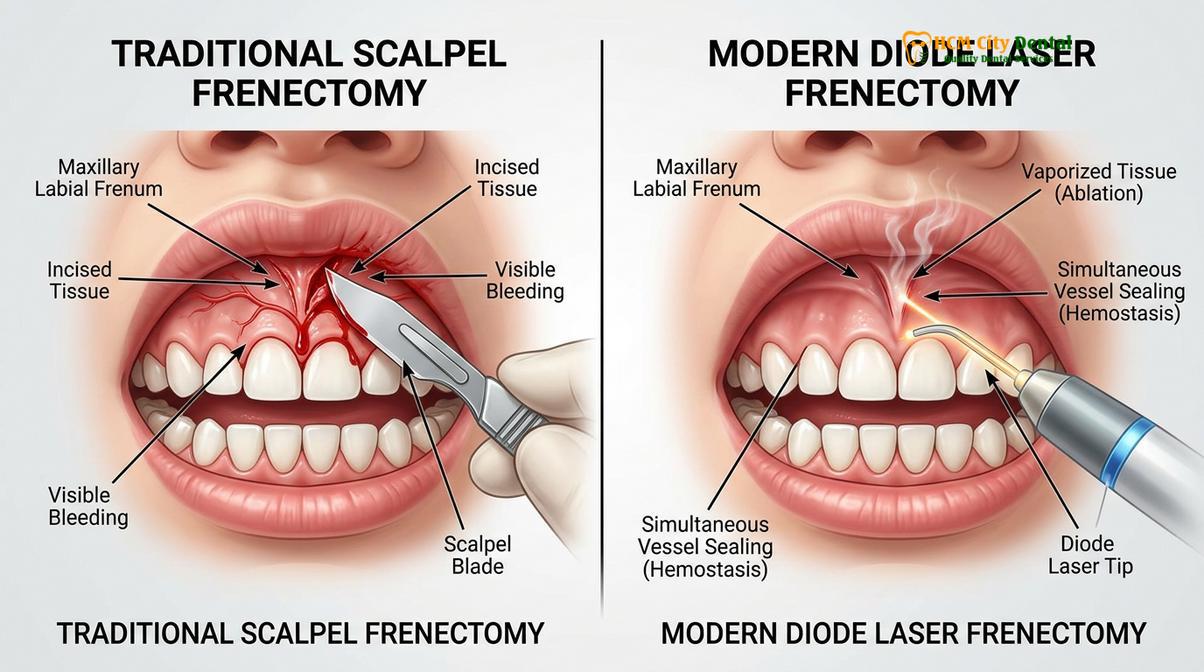
Clinical Comparison: Laser vs. Traditional Scissors
| Clinical Parameter | Diode Laser Frenectomy | Traditional Scissor/Scalpel |
|---|---|---|
| Bleeding | Virtually bloodless (immediate cauterization) | Mild to moderate bleeding expected |
| Pain Management | Topical gel usually sufficient; nerve endings sealed | Local infiltration injection often required |
| Sutures | Rarely required, heals by secondary intention | Often required for older children |
| Procedure Time | 1-3 minutes of active lasing | 5-10 minutes including hemostasis control |
| Infection Risk | Extremely low (laser sterilizes the surgical site) | Low, but higher than laser |
Pediatric Dentistry Pricing Structure at HCMC Dental Clinic
Understanding the financial investment in your child’s oral health is important. According to the latest clinic fee schedule, we offer transparent pricing with a special -40% WhatsApp booking discount for pre-scheduled appointments:
- Kids Consultation & Diagnostic check-up: 300,000 to 500,000 VND (~$12 to $20 USD) (Walk-in: 500,000 to 800,000 VND).
- Fissure Sealant (per tooth): 400,000 to 600,000 VND (~$16 to $24 USD) (Walk-in: 700,000 to 1,000,000 VND).
- Fluoride Varnish Application: 300,000 to 500,000 VND (~$12 to $20 USD) (Walk-in: 500,000 to 800,000 VND).
- Pediatric Composite Filling (per tooth): 500,000 to 800,000 VND (~$20 to $32 USD) (Walk-in: 800,000 to 1,300,000 VND).
- Pediatric Glass Ionomer Filling (GIC, fluoride-releasing, per tooth): 400,000 to 600,000 VND (~$16 to $24 USD) (Walk-in: 700,000 to 1,000,000 VND).
- Baby Root Canal (Pulpotomy, per tooth): 1,000,000 to 1,500,000 VND (~$40 to $60 USD) (Walk-in: 1,600,000 to 2,500,000 VND).
- Space Maintainer (fixed, band-and-loop, per unit): 2,000,000 to 3,000,000 VND (~$80 to $120 USD) (Walk-in: 3,300,000 to 5,000,000 VND).
- Custom Pediatric Sports Mouthguard: 1,500,000 to 2,500,000 VND (~$60 to $100 USD) (Walk-in: 2,500,000 to 3,500,000 VND).
Post-Op Exercises & Speech Therapy Co-ordination
Active wound management through myofunctional tongue tie exercises is critical to prevent tissue reattachment and train the newly released tongue muscles for optimal function.
The success of a tongue-tie release does not end when the laser is turned off. The mouth heals faster than almost any other part of the body, which presents a unique clinical challenge: the raw tissue surfaces under the tongue will naturally attempt to heal back together, potentially re-forming the restriction. To prevent this, parents must perform active wound management.
For a laser frenectomy recovery baby, this involves specific stretching protocols performed 4 to 6 times a day for approximately 3 to 4 weeks. The most common technique is the “lift and sweep.” With clean hands, the parent places their index fingers under the baby’s tongue and gently but firmly lifts the tongue toward the roof of the mouth, exposing the diamond-shaped surgical wound. This stretch ensures the tissue heals by secondary intention (filling in from the bottom up) rather than primary intention (edges fusing together).
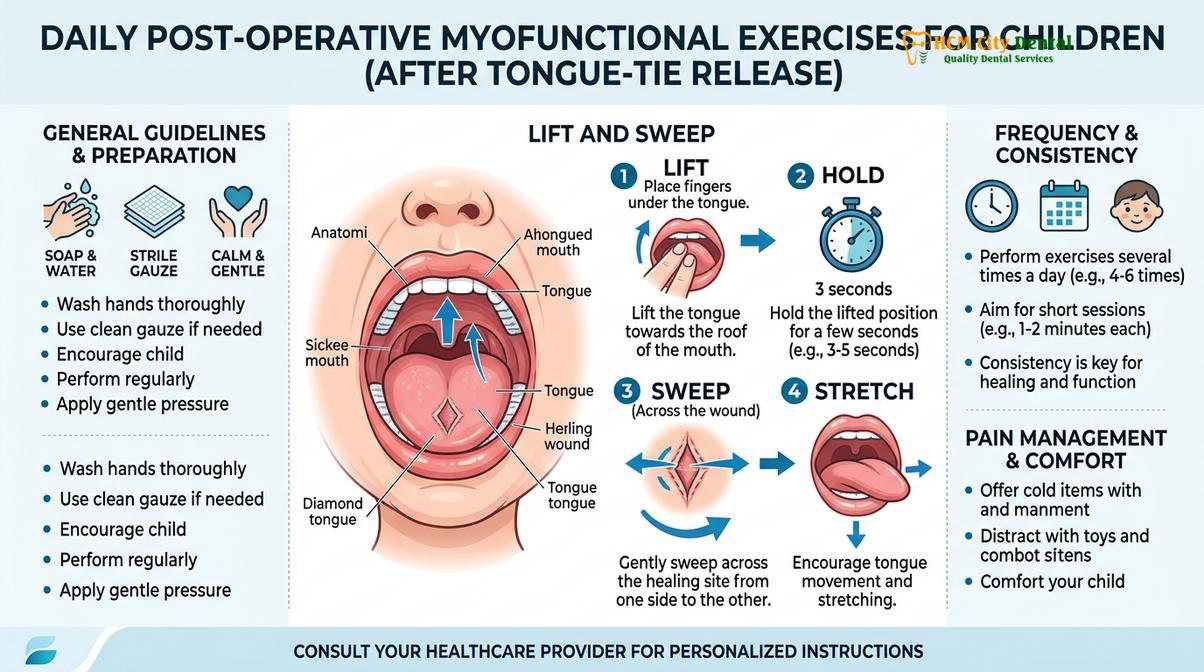
In older children, passive stretching is replaced by active myofunctional tongue tie exercises. These exercises are designed to build muscle tone in the tongue, which has been restricted since birth, and to establish a new neurological motor pattern for swallowing and speaking. Exercises may include clicking the tongue against the palate, tracing the lips with the tongue tip, and holding a small orthodontic elastic against the roof of the mouth. Co-ordination with a certified speech-language pathologist or myofunctional therapist is highly recommended to maximize the functional outcomes of the surgery.
Clinical Case Study: Multidisciplinary Care in Ho Chi Minh City
A 4-year-old patient presented to HCMC Dental Clinic with severe speech articulation issues, chronic mouth breathing, and a highly restricted anterior tongue-tie. Dr. Nguyen Van Cuong performed a diode laser frenectomy using the Tell-Show-Do technique, ensuring the child remained calm without the need for general anesthesia. Post-operatively, the parents were instructed on daily myofunctional exercises. Within six weeks, working in tandem with a local speech therapist, the child’s ability to pronounce alveolar consonants improved dramatically, and their resting tongue posture shifted to the palate, facilitating a transition to healthy nasal breathing.
Pediatric Dentistry Integration: Beyond the Frenulum
Beyond tongue-tie release, comprehensive pediatric dental care focuses on early interceptive orthodontics, airway assessment, and minimally invasive cavity management to ensure optimal oral health.
Treating ankyloglossia is often just one component of a comprehensive pediatric dental treatment plan. At HCMC Dental Clinic, we view the child’s oral cavity as a dynamic, interconnected system. Proper tongue posture is intimately linked to jaw development, airway patency, and overall dental alignment.
During a routine check-up, we conduct a thorough Pediatric Airway Assessment. We evaluate early jaw development, thumb-sucking habits, and signs of mouth breathing. Chronic mouth breathing, often exacerbated by a low-resting tongue-tie, can lead to “adenoid facies” or long-face syndrome, and is a primary indicator for Pediatric Sleep Apnea. If we detect a narrow palate or severe crowding in the primary dentition, we may recommend Pediatric Interceptive Orthodontics. This early intervention utilizes palatal expanders and myofunctional appliances to guide jaw growth, often reducing or eliminating the need for complex Braces for Expat Children later in life [6].
Understanding the Best Age for Kids First Orthodontic Evaluation is crucial; the American Association of Orthodontists recommends an initial assessment by age 7, though airway and tongue-tie evaluations should occur much earlier. This proactive approach helps clarify the clinical pathway when considering Phase 1 vs Phase 2 Braces.
In terms of restorative care, we prioritize minimally invasive techniques. For early childhood caries, we offer Silver Diamine Fluoride (SDF). SDF provides non-invasive cavity arrest, halting decay without drilling or pain, although it leaves a localized black stain on the decayed area. For active restorations, we prioritize Glass Ionomer Fillings (GIC) over composite for baby teeth. GIC offers chemical bonding, moisture tolerance, and continuous fluoride release (fluoride recharge), which is highly effective at preventing recurrent decay in the primary dentition [5]. We also strongly advocate for Kids Dental Cleaning & Fissure Sealants to protect the deep grooves of newly erupted permanent molars.
If a primary tooth is lost prematurely due to severe decay or trauma, we utilize fixed space maintainers (such as a band-and-loop) to hold the space open, preventing adjacent teeth from drifting and blocking the eruption path of the permanent tooth.
When to See a Doctor for Pediatric Airway & Feeding Issues
Parents should not wait for a child to “outgrow” feeding or speech difficulties. Early diagnosis and intervention are key to preventing long-term developmental and orthodontic complications. A clinical evaluation is strongly recommended if you observe any of the following signs:
- Your infant struggles to latch, makes clicking sounds while nursing, or exhibits poor weight gain.
- The mother experiences severe, persistent nipple pain, bleeding, or recurrent mastitis during breastfeeding.
- Your toddler has difficulty transitioning to solid foods, frequently gags, or pockets food in their cheeks.
- Your child exhibits a heart-shaped tongue tip or cannot elevate their tongue to the roof of their mouth.
- Your child breathes primarily through their mouth, snores loudly, or grinds their teeth at night (bruxism).
Important Clinical Consideration: While a laser frenectomy is a highly effective and safe procedure, it is not a universal cure for all feeding or speech issues. A comprehensive evaluation by a qualified pediatric dentist or ENT is required to rule out other anatomical, neurological, or gastrointestinal factors. Treatment plans must be individualized based on clinical diagnostics, and parents must commit to the post-operative stretching protocols to ensure a successful outcome.

“The goal of pediatric dentistry is not just to fix teeth, but to ensure the entire stomatognathic system—the jaws, muscles, airway, and teeth—develops in harmony. Releasing a restricted tongue is often the first step in unlocking a child’s full developmental potential.”
If you suspect your child may have a tongue-tie or airway restriction, scheduling a comprehensive diagnostic check-up is the first step. At HCMC Dental Clinic in Ho Chi Minh City, our specialized pediatric team is equipped with the latest laser technology and behavioral management techniques to provide safe, effective, and compassionate care for your child.
Frequently Asked Questions
Does a tongue-tie cause speech delays in children?
A tongue-tie does not typically cause cognitive language delays, but it frequently causes mechanical speech articulation issues. Children may struggle to pronounce alveolar sounds like ‘t’, ‘d’, ‘l’, ‘n’, and ‘th’ due to restricted upward tongue mobility. If a child’s speech is unclear, a combined evaluation by a pediatric dentist and a speech therapist is recommended to address both the physical restriction and the learned compensatory speaking habits.
Is laser frenectomy painful for babies or toddlers?
Laser frenectomy is virtually painless due to the use of topical anesthetics and the laser’s ability to instantly seal nerve endings. Most infants experience minimal discomfort and can resume feeding immediately after the procedure. For toddlers, the anxiety of the clinical setting is often more challenging than the procedure itself, which is why pediatric dentists utilize Tell-Show-Do behavioral management to keep the child calm and comfortable.
What is the recovery time after a tongue-tie release?
Initial tissue healing occurs within 3 to 5 days, while complete mucosal remodeling takes about 2 to 3 weeks. During the first few days, the surgical site will look like a white or yellow diamond-shaped patch; this is normal oral healing tissue, not an infection. Consistent post-operative stretching exercises are required during this entire period to prevent the tissue from reattaching.
Can a tongue-tie reattach after it has been released?
Yes, mild reattachment can occur if post-operative stretching exercises are not performed consistently. Active wound management through daily myofunctional exercises ensures the tissue heals by secondary intention, maintaining the newly created mobility. If reattachment does occur and restricts function, a minor secondary release may be necessary.
How does a tongue-tie affect my child’s jaw development?
A restricted tongue rests in the floor of the mouth rather than against the palate, which can lead to a narrow upper jaw, high palatal vault, and subsequent orthodontic crowding. The tongue acts as a natural expander for the maxilla. Early release supports proper palatal expansion, encourages healthy nasal breathing, and reduces the likelihood of requiring complex interceptive orthodontics or jaw surgery in the future.
References
- American Academy of Pediatric Dentistry (AAPD). Policy on Management of the Frenulum in Pediatric Dental Patients. (2022).
- International Journal of Pediatric Otorhinolaryngology. The efficacy of laser frenectomy in improving breastfeeding. (2021).
- Journal of Applied Oral Science. Ankyloglossia and its impact on speech articulation and myofunctional development. (2020).
- Pediatric Dentistry Journal. Behavioral management techniques in pediatric laser dentistry. (2019).
- Journal of Clinical Pediatric Dentistry. Glass ionomer cements versus composite resins in primary dentition. (2023).
- American Journal of Orthodontics and Dentofacial Orthopedics. Early interceptive orthodontics and pediatric airway assessment. (2021).