Mandibular Advancement Devices (MAD) effectively treat sleep apnea but can cause side effects like jaw muscle soreness, excess salivation, and temporary bite shifts. While initial symptoms resolve quickly, long-term occlusal changes require clinical monitoring and precise titration to ensure TMJ safety and continuous treatment efficacy.
Clinical Summary:
Oral appliance therapy is a highly effective, non-invasive alternative for patients suffering from mild-to-moderate obstructive sleep apnea or those intolerant to CPAP machines. However, the mechanical repositioning of the mandible introduces specific biomechanical forces to the temporomandibular joint (TMJ), masticatory muscles, and dentition. The side effects of MAD therapy are generally categorized into transient short-term adaptation issues—such as hypersalivation and muscular fatigue—and progressive long-term occlusal changes, including alterations in overjet and overbite. Clinical success relies heavily on multidisciplinary collaboration. Dentists do not diagnose sleep apnea; rather, they work alongside sleep physicians who interpret polysomnography data. Under the guidance of experienced practitioners, custom-fabricated devices are meticulously calibrated. Through controlled titration protocols, morning repositioning exercises, and routine joint assessments, the therapeutic benefits of airway expansion can be achieved while safely managing and mitigating adverse dental and skeletal side effects.
Key Takeaways:
- Initial side effects like muscle fatigue and hypersalivation typically subside within 2 to 4 weeks of consistent use.
- Long-term MAD therapy can induce gradual orthodontic changes, reducing overjet and overbite over several years.
- Morning repositioning exercises are critical for resetting the bite and preventing permanent occlusal shifts.
- Precise, millimeter-by-millimeter titration minimizes TMJ stress while maximizing airway patency.
- Dentists collaborate with sleep physicians to fabricate devices; a formal sleep study is required for an OSA diagnosis.
Initial adaptation: What to expect in the first 2 weeks
During the first two weeks of MAD therapy, patients typically experience transient jaw muscle fatigue, tooth tenderness, and increased saliva production as the oral cavity adapts to the foreign object and forward mandibular posture.
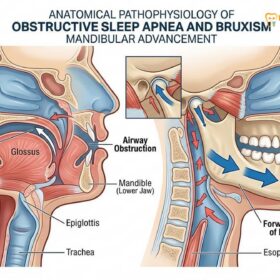
The introduction of a Mandibular Advancement Device into the oral cavity represents a significant biomechanical shift for the stomatognathic system. When a patient begins wearing a MAD, the appliance mechanically holds the lower jaw in an anterior (forward) position during sleep. This protrusion is essential for preventing airway obstruction and reducing oxygen desaturation events, but it requires the surrounding musculature and tissues to adapt to a new resting posture[1].
In the first few days of therapy, the most commonly reported side effect is jaw muscle soreness. The lateral pterygoid, masseter, and temporalis muscles are stretched beyond their habitual resting length for several hours a night. This sustained isometric contraction can lead to localized lactic acid accumulation and mild micro-inflammation, which the patient perceives as stiffness or a dull ache upon waking. This muscular response is entirely normal and is akin to the delayed onset muscle soreness experienced after starting a new physical exercise routine.
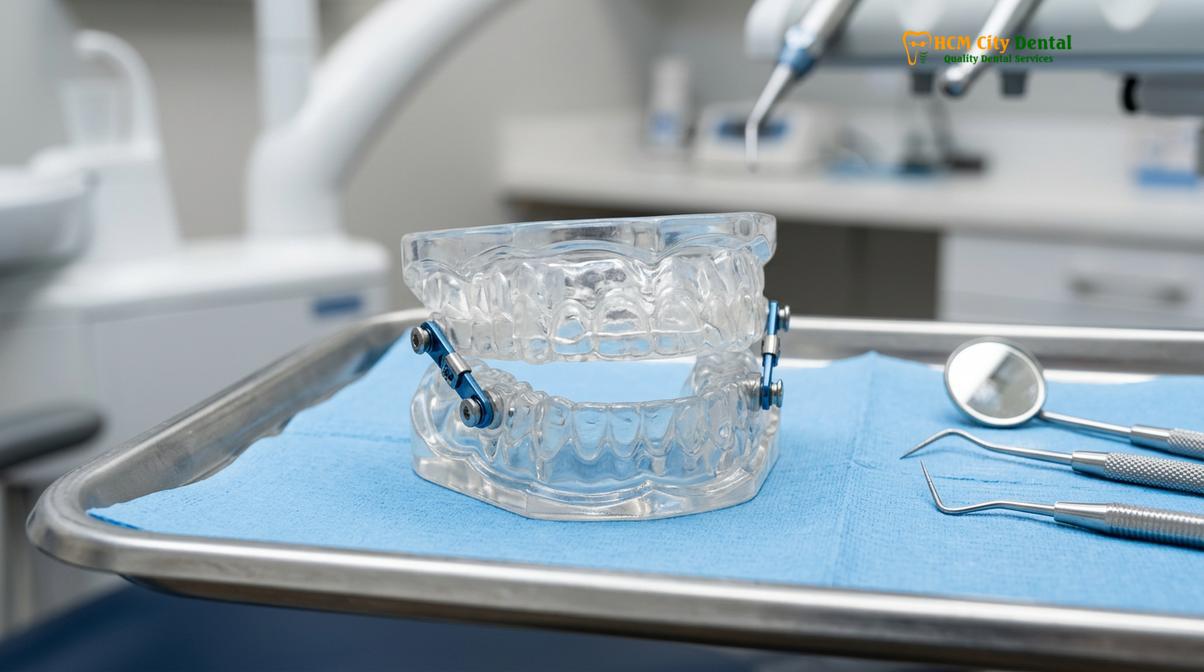
Alongside muscular adaptation, patients frequently notice changes in their dentition. Because the MAD anchors to the teeth to generate the forward force required to advance the mandible, the teeth themselves bear a continuous load. This can result in transient tooth tenderness, particularly in the incisors and premolars. Custom-milled appliances distribute these forces much more evenly than over-the-counter guards, significantly reducing localized pressure points and minimizing the risk of tooth mobility.
Another immediate physiological response is a dramatic increase in salivary flow. The presence of the acrylic or milled resin appliance stimulates the mechanoreceptors in the oral mucosa. The brain interprets this foreign object as a food bolus, triggering the parotid, submandibular, and sublingual glands to produce excess salivation. Conversely, some patients may experience dry mouth if the appliance causes them to sleep with their lips slightly parted. Both hypersalivation and xerostomia are transient; the central nervous system typically downregulates this response within a few weeks as it habituates to the device.
Managing morning jaw muscle stiffness and excessive salivation
Morning jaw stiffness and hypersalivation are managed through targeted masticatory muscle stretching, the use of a morning repositioning splint, and allowing the salivary glands to naturally downregulate over time.
Effectively managing the initial side effects of MAD therapy is crucial for ensuring long-term patient compliance. If a patient abandons the therapy due to early discomfort, they remain vulnerable to the systemic cardiovascular and neurological risks associated with untreated obstructive sleep apnea. Therefore, structured morning routines are an integral part of dental sleep medicine protocols.
To combat morning jaw muscle stiffness, patients are instructed to perform a series of targeted stretching and repositioning exercises immediately upon removing the appliance. When the MAD is removed, the patient may feel that their teeth do not fit together correctly—a phenomenon known as a temporary bite shift. This occurs because the lateral pterygoid muscle remains in a slightly contracted, shortened state, holding the condyle slightly forward in the articular eminence. Active stretching helps release this contraction.
“The implementation of a structured morning repositioning protocol is not merely a comfort measure; it is a clinical necessity to prevent the transient muscular engram from solidifying into a permanent occlusal discrepancy.”
A standard morning protocol involves the use of an anterior bite ramp or a custom morning repositioner. The patient bites down gently on this small acrylic wafer for a few minutes. The wafer provides a stable platform for the anterior teeth, disoccluding the posterior teeth and allowing the elevator muscles to contract evenly. This isometric clenching helps reset the proprioceptive feedback loop, signaling the lateral pterygoid to relax and allowing the mandible to seat back into its natural centric relation[2].
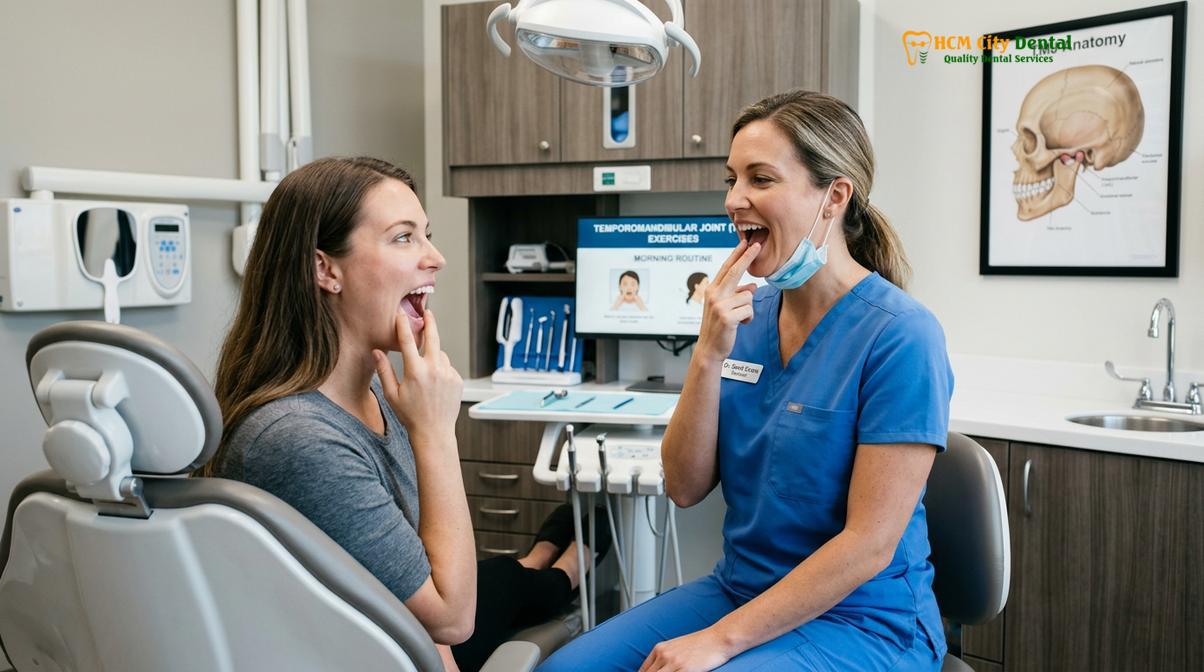
In addition to the repositioner, thermal therapy can be highly effective. Applying a warm, moist compress to the preauricular area increases local blood flow, accelerating the clearance of metabolic byproducts from the muscles and soothing joint capsules. For excessive salivation, patient reassurance is the primary management tool. Patients are advised to sleep with their head slightly elevated and to swallow naturally. Over-the-counter oral moisturizing gels can be prescribed for those experiencing the opposite problem of dry mouth, ensuring the oral mucosa remains protected during sleep.
Long-term considerations: Prevent teeth movement and bite shifting
Prolonged MAD use can induce gradual orthodontic changes, including decreased overjet and overbite, which are mitigated by routine dental monitoring, morning bite exercises, and utilizing custom-milled rigid appliances.
While the short-term side effects of MAD therapy are largely muscular and transient, the long-term side effects are primarily skeletal and dental. The continuous application of reciprocal forces required to hold the mandible forward inevitably places stress on the anchoring dentition. Over months and years of nightly wear, these forces can induce unintended orthodontic tooth movement.
The biomechanics of a mandibular advancement device dictate that a distalizing (backward) force is applied to the maxillary (upper) teeth, while a mesializing (forward) force is applied to the mandibular (lower) teeth. Clinically, this manifests as a gradual retroclination of the upper incisors and a proclination of the lower incisors. Consequently, patients may experience a reduction in overjet (the horizontal overlap of the front teeth) and overbite (the vertical overlap)[3].
| Timeframe | Common Side Effects | Clinical Management Strategy |
|---|---|---|
| 1 – 4 Weeks | Muscular fatigue, hypersalivation, tooth tenderness | Morning repositioner, warm compresses, soft diet |
| 1 – 6 Months | TMJ clicking, minor temporary bite shifts | Titration adjustments, lateral excursion exercises |
| Long-term | Decreased overjet/overbite, posterior open bite | Annual digital scanning, appliance recalibration |
In some cases, patients may develop a posterior open bite, where the back teeth no longer touch when the jaw is closed. This occurs due to a combination of anterior tooth interference and the super-eruption of posterior teeth if the appliance does not provide adequate occlusal coverage. To prevent these permanent bite changes, continuous clinical monitoring is mandatory.
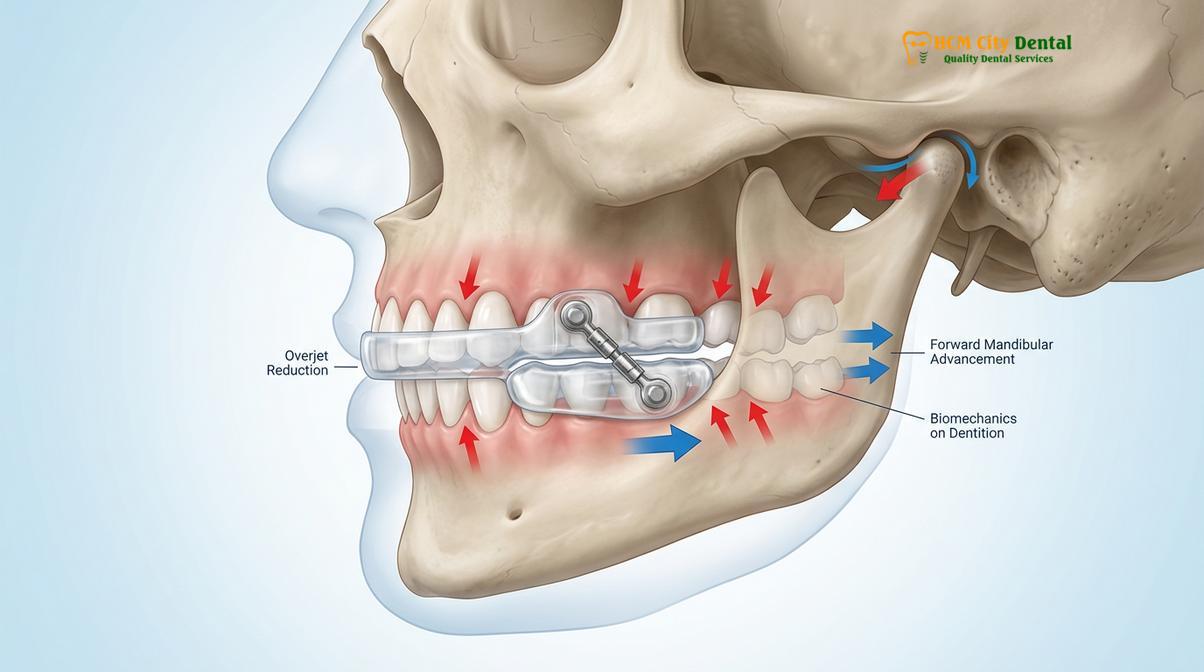
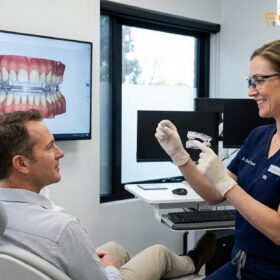
During review appointments, the clinical team utilizes intraoral digital scans to overlay the patient’s current dentition against their baseline records. This digital superimposition allows the dentist to detect microscopic tooth movements long before they become clinically noticeable to the patient. If significant shifting is detected, the appliance may need to be adjusted, or the patient’s wearing schedule modified. The use of rigid, custom-fabricated devices that encapsulate the entire dental arch is critical, as they act similarly to orthodontic retainers, splinting the teeth together and resisting individual tooth movement better than flexible or partial-coverage appliances.
Why precise titration and calibration visits prevent TMJ disorders
Gradual, millimeter-by-millimeter titration allows the temporomandibular joint to adapt safely, preventing severe TMJ disorders while effectively opening the airway to resolve sleep-disordered breathing.
The success of a Mandibular Advancement Device hinges on finding the target protrusion—the exact mandibular position that maximizes airway patency without exceeding the physiological tolerance of the temporomandibular joint. This delicate balance is achieved through a process called titration. Rushing this process by advancing the jaw too far, too quickly, is the primary cause of severe TMJ joint stress and subsequent joint disorders.
A conservative, patient-guided titration protocol is essential. When a device is first delivered, it is set at a comfortable baseline, typically half of the patient’s maximum protrusive capability. The patient wears the device at this setting to allow the musculature to adapt. Subsequently, the device is advanced in micro-increments until the patient reports a cessation of snoring and a resolution of daytime sleepiness, which is later confirmed by a follow-up sleep study[4].
The design of the appliance plays a massive role in TMJ safety. Devices that allow for both side-to-side (lateral) and vertical jaw movement while maintaining the forward posture are often preferred. By permitting these natural nocturnal movements, the appliance significantly minimizes TMJ stiffness and capsular strain compared to rigid, locked-in designs.
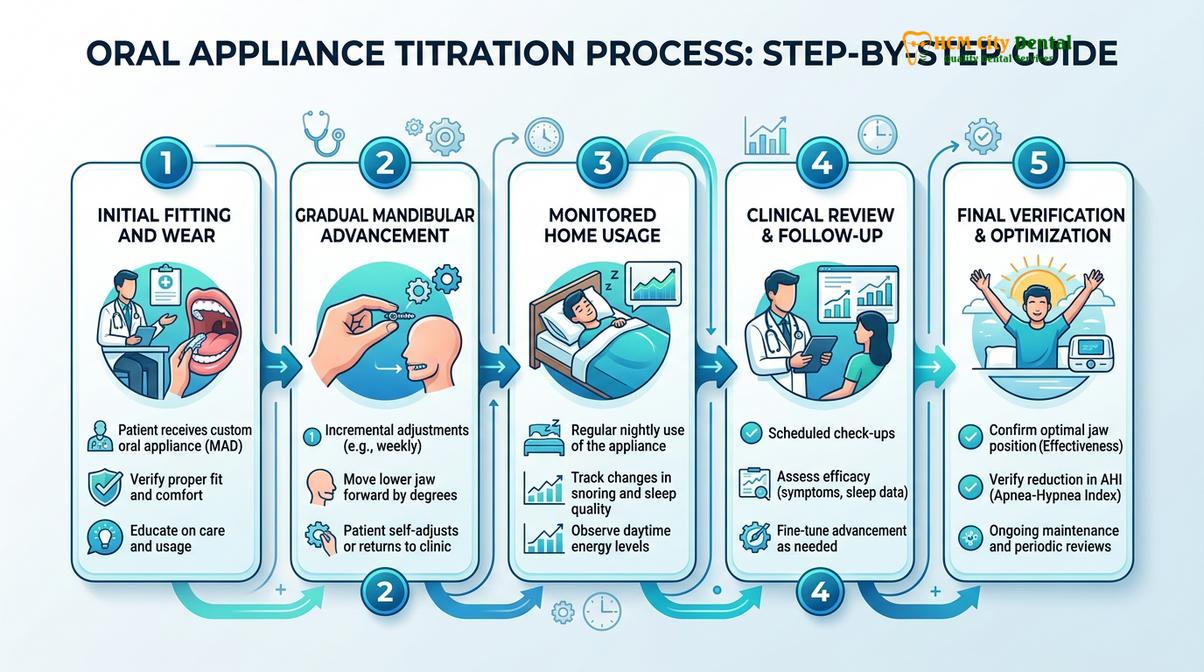
By utilizing devices that allow for precise titration adjustments, the clinical team can fine-tune the therapy. If a patient reports joint pain or clicking, the device can be easily dialed back a millimeter to relieve the pressure. This adjustability is what separates professional dental sleep medicine from over-the-counter snoring aids, ensuring that the treatment of sleep apnea does not inadvertently create a debilitating temporomandibular joint disorder.
The Role of Digital Dentistry and Multidisciplinary Care
Selecting the appropriate MAD involves comprehensive intraoral digital scans, TMJ joint checks, and collaboration with sleep physicians to ensure the device matches the patient’s specific anatomical and diagnostic needs.
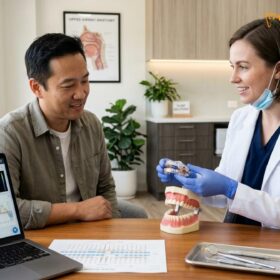
The fabrication and management of a sleep apnea mouthpiece require a high level of clinical precision and a strict adherence to medical protocols. It is a fundamental rule of dental sleep medicine that dentists do not diagnose sleep apnea. Obstructive sleep apnea is a complex medical condition that requires a formal diagnosis by a board-certified sleep physician. This diagnosis is achieved through a polysomnography or a Home Sleep Apnea Test (HSAT), which measures critical metrics such as the Apnea-Hypopnea Index (AHI) and oxygen desaturation levels.
Once a sleep physician determines that a patient is a suitable candidate for oral appliance therapy, the patient is referred to a qualified dentist. At this stage, digital dentistry becomes invaluable. Traditional messy putty impressions have been replaced by highly accurate intraoral digital scans. These scans capture the exact topography of the teeth and gingiva, ensuring that the resulting appliance fits with micrometer precision[5].
Clinical Case Review: Multidisciplinary Success
A 45-year-old male patient presented to HCMC Dental Clinic in Ho Chi Minh City with a referral from his sleep physician. His HSAT indicated moderate OSA and severe CPAP intolerance. Comprehensive TMJ joint checks and digital scans were performed. The patient was fitted with a custom telescopic device. Through a structured titration protocol, the jaw was advanced gradually. A follow-up sleep study confirmed his AHI dropped to normal ranges, with the patient reporting zero TMJ pain and complete resolution of daytime fatigue.
A precise fit is not just about comfort; it is about safety. An ill-fitting device can cause uneven force distribution, leading to rapid tooth movement or localized periodontal trauma. Furthermore, thorough TMJ joint checks are performed before any impressions are taken. The dentist must evaluate the health of the articular disc, the range of motion, and the presence of any crepitus or clicking. If a patient has active, painful TMJ disease, MAD therapy may be contraindicated until the joint is stabilized.
“The intersection of digital scanning technology and multidisciplinary medical collaboration has elevated oral appliance therapy from a simple snoring fix to a highly predictable, medically sound intervention for sleep-disordered breathing.”
By adhering to these strict clinical workflows, dental professionals ensure that the custom appliances they provide are both highly effective at maintaining airway patency and exceptionally safe for the patient’s long-term dental health.
When to See a Doctor
Patients should seek immediate clinical evaluation if they experience severe joint pain, an inability to close their teeth together by midday, or a return of sleep apnea symptoms like loud snoring and daytime fatigue.
While minor side effects are an expected part of the adaptation process, certain symptoms warrant immediate medical or dental intervention. Patients must be educated on how to differentiate between normal muscle fatigue and pathological joint or dental damage. Routine follow-ups are scheduled, but patients should not wait for their next appointment if red flag symptoms arise.
If you experience sharp, shooting pain in the jaw joint, an inability to close your teeth together by midday, or a return of sleep apnea symptoms, you should contact your provider. Furthermore, guidelines aligned with the Vietnam Ministry of Health (MOH) for sleep-disordered breathing emphasize the importance of multidisciplinary monitoring to prevent severe temporomandibular joint dysfunction and ensure patient safety throughout the treatment process[6].
Dr. Nguyen Van Cuong is a dedicated practitioner in dental sleep medicine, focusing on non-invasive airway management and the mitigation of appliance-induced side effects. Dr. Cuong works closely with sleep physicians to ensure that every custom appliance is meticulously calibrated, prioritizing both respiratory improvement and long-term occlusal stability.
If you are struggling with CPAP intolerance or wish to explore oral appliance therapy, contact HCMC Dental Clinic in Ho Chi Minh City. Our clinical team can evaluate your suitability for custom sleep apnea mouthpieces and guide you through a safe, effective treatment journey tailored to your unique anatomical needs.
References
- Journal of Dental Sleep Medicine. Mandibular advancement device efficacy and occlusal changes.
- American Journal of Respiratory and Critical Care Medicine. CPAP vs oral appliances in mild-to-moderate OSA.
- Sleep and Breathing. Telescopic Herbst appliance TMJ safety and lateral excursion.
- Journal of Clinical Sleep Medicine. HSAT diagnostic reliability and multidisciplinary workflows.
- Journal of Oral Rehabilitation. Titration protocols and morning repositioning in dental sleep medicine.
- Vietnam Ministry of Health (MOH). Guidelines on the diagnosis and management of sleep-disordered breathing and multidisciplinary care.