Maintaining optimal permanent bonded retainer hygiene flossing requires specialized techniques to navigate the fixed wire effectively. By utilizing floss threaders, spongy floss, or oral irrigators, patients can efficiently remove interdental plaque, preventing calculus buildup and safeguarding their periodontal health after the completion of active orthodontic treatment.
Clinical Summary:
A permanent bonded retainer is a critical orthodontic appliance utilized to prevent tooth migration and relapse, typically affixed to the lingual (tongue-facing) surfaces of the anterior teeth. While highly effective for stabilization, the fixed wire creates a physical barrier that complicates standard interproximal cleaning protocols. Effective hygiene necessitates the use of specialized interdental aids, such as floss threaders or spongy floss, to bypass the wire and access the gingival sulcus. Adjunctive tools like water flossers significantly reduce marginal plaque but cannot replace the mechanical friction provided by string floss. Regular professional scaling is clinically mandatory to manage the inevitable calculus accumulation in these high-risk retention zones, ensuring long-term periodontal stability and the structural integrity of the bonding composite.
Key Takeaways:
- Fixed lingual wires inherently trap plaque and accelerate tartar formation if not meticulously cleaned daily.
- Standard flossing techniques are ineffective; specialized threading tools are required to bypass the barrier.
- Floss threaders and spongy floss provide the necessary mechanical friction to disrupt subgingival biofilm.
- Water flossers serve as excellent adjuncts for debris removal but do not replace traditional string flossing.
- Biannual professional scaling is clinically recommended to maintain periodontal health around bonded retainers.
The Challenge of Fixed Retention: Plaque and Tartar Risk
The fixed wire of a bonded retainer creates a physical barrier that traps food and plaque, significantly increasing the risk of localized tartar buildup and gingival inflammation if specialized cleaning techniques are not employed.
The transition from active orthodontic treatment protocols to the retention phase marks a critical shift in oral hygiene requirements. A permanent bonded retainer, often constructed from a multistranded stainless steel or titanium molybdenum alloy (TMA) wire, is bonded to the lingual surfaces of the anterior teeth using a specialized dental composite resin. While this appliance is exceptionally effective at preventing orthodontic relapse, it introduces significant challenges to daily oral hygiene routines.
The primary challenge stems from the anatomical location of the retainer. The lingual surfaces of the mandibular (lower) incisors are situated directly opposite the submandibular and sublingual salivary glands. These glands continuously secrete saliva that is highly saturated with calcium and phosphate ions. When dental plaque—a sticky, colorless biofilm composed of pathogenic bacteria—is allowed to accumulate around the retainer wire and composite pads, these salivary minerals rapidly precipitate into the biofilm. This biochemical process transforms soft plaque into hardened dental calculus (tartar) in a matter of days[1].
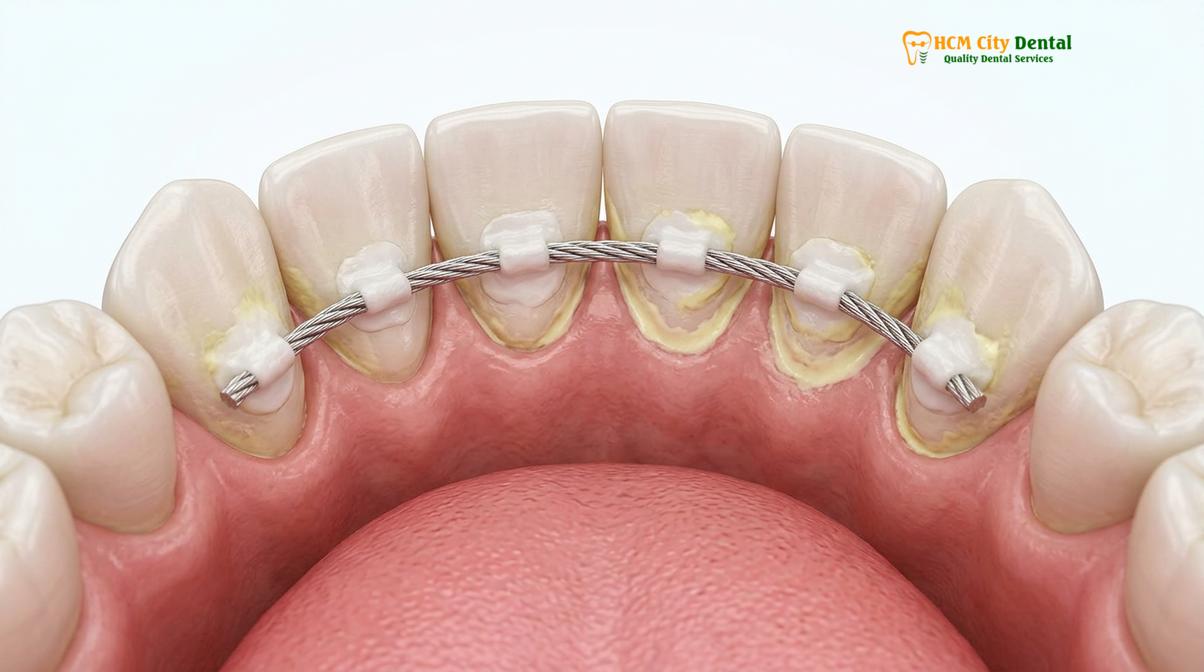
Furthermore, the physical presence of the wire creates artificial stagnation areas. The interproximal spaces (the gaps between the teeth) and the gingival embrasures become shielded by the wire, making them inaccessible to the bristles of a standard toothbrush. This localized environment is highly conducive to the proliferation of anaerobic bacteria, such as Porphyromonas gingivalis and Streptococcus mutans. As these bacterial colonies mature, they release acidic byproducts and endotoxins that trigger an inflammatory immune response in the adjacent gingival tissues. This localized inflammation, known as gingivitis, is characterized by erythema (redness), edema (swelling), and a tendency to bleed upon probing or brushing.
Dr. Nguyen Van Cuong, a leading specialist in orthodontic retention, frequently emphasizes the periodontal implications of inadequate retainer maintenance. “The multistranded nature of most bonded retainer wires provides a microscopic scaffolding that actively encourages biofilm adhesion,” notes Dr. Cuong. “If a patient neglects targeted interdental cleaning, the rapid accumulation of calculus not only jeopardizes the health of the periodontium but can also exert mechanical stress on the composite bonding pads, leading to premature appliance failure.”
Managing fixed retainer plaque build up requires a paradigm shift in how a patient approaches their daily oral care. Standard flossing, which involves passing the floss vertically through the contact point between two teeth, is physically impossible due to the horizontal obstruction of the wire. Therefore, patients must adopt specialized techniques and utilize specific interdental aids designed to navigate this complex micro-environment. Failure to adapt to these hygiene requirements can lead to chronic periodontal issues, potentially necessitating the removal of the retainer to treat underlying bone loss or severe gingival recession[2].
Essential Tools: Floss Threaders, Superfloss, and Water Flossers
Proper maintenance of a bonded retainer requires specific interdental aids, including flexible threaders to bypass the wire, spongy floss for wide embrasures, and oral irrigators for flushing out loose debris.
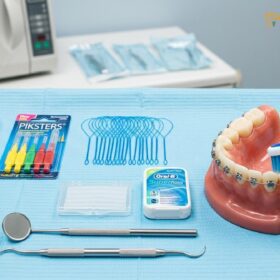
To achieve comprehensive plaque removal around a fixed orthodontic appliance, patients must equip themselves with the appropriate armamentarium. The standard spool of dental floss, while effective for natural dentition, is insufficient on its own. The dental industry has developed several specialized tools designed specifically to overcome the physical barriers presented by bonded retainers, bridges, and implant-supported prostheses.
Floss Threaders: The Standard of Care
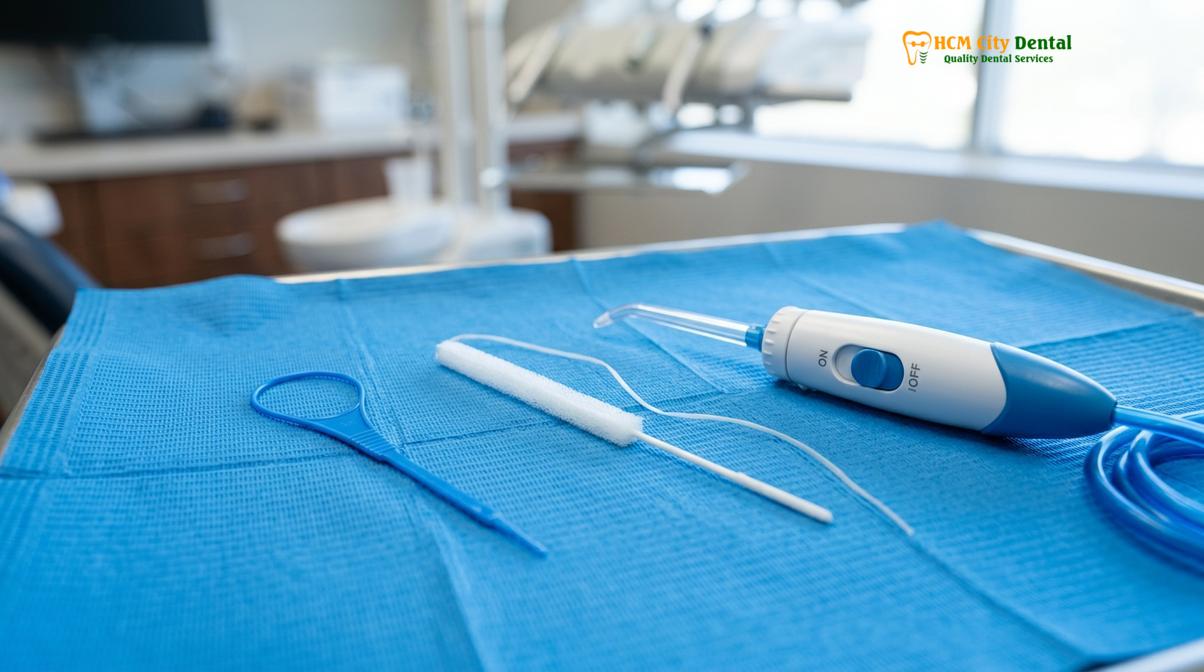
A floss threader is arguably the most critical tool for anyone with a bonded retainer. Functioning much like a flexible needle used in sewing, a floss threader is a thin, semi-rigid nylon loop. The patient threads a segment of standard dental floss through the loop, and then uses the stiff, pointed end of the threader to guide the floss horizontally under the retainer wire and through the interproximal space. Mastering dental floss threaders use is essential, as it allows the patient to position the floss correctly beneath the wire, enabling them to clean the critical subgingival areas (below the gumline) that are most susceptible to periodontal disease.
Spongy Floss (Superfloss)
For patients who find traditional floss and threaders cumbersome, specialized orthodontic floss, commonly referred to by brand names like Superfloss, offers an integrated solution. This product consists of three distinct segments on a single strand: a stiffened end for easy threading beneath the wire, a spongy, expanded middle section for cleaning wide embrasures and around the appliance, and a segment of regular floss for standard interproximal cleaning. The spongy section is particularly advantageous for cleaning the composite bonding pads and the wire itself, as its expanded surface area provides superior mechanical friction against the complex topography of the retainer. Finding Superfloss permanent retainer HCMC supplies is relatively easy, as most specialized dental clinics and major pharmacies stock these essential orthodontic aids.
Oral Irrigators (Water Flossers)
Water flossers have revolutionized orthodontic hygiene by utilizing a pulsating stream of pressurized water to disrupt biofilm and flush out food debris. These devices generate hydrostatic pressure that can penetrate deep into the periodontal pocket and clean the intricate spaces around the retainer wire and composite pads. While highly effective at reducing gingival inflammation and altering the composition of the subgingival microflora, it is crucial to understand their clinical limitations. Water flossers are excellent adjunctive tools, but they do not provide the direct mechanical friction required to detach tenacious, mature biofilm from the tooth surface[3].
“While oral irrigators are fantastic for flushing out loose debris and reducing overall bacterial load, they cannot replace the physical wiping action of string floss against the tooth enamel. Think of a water flosser as a high-pressure rinse for your car; it removes the loose dirt, but you still need a sponge to remove the stubborn grime.”
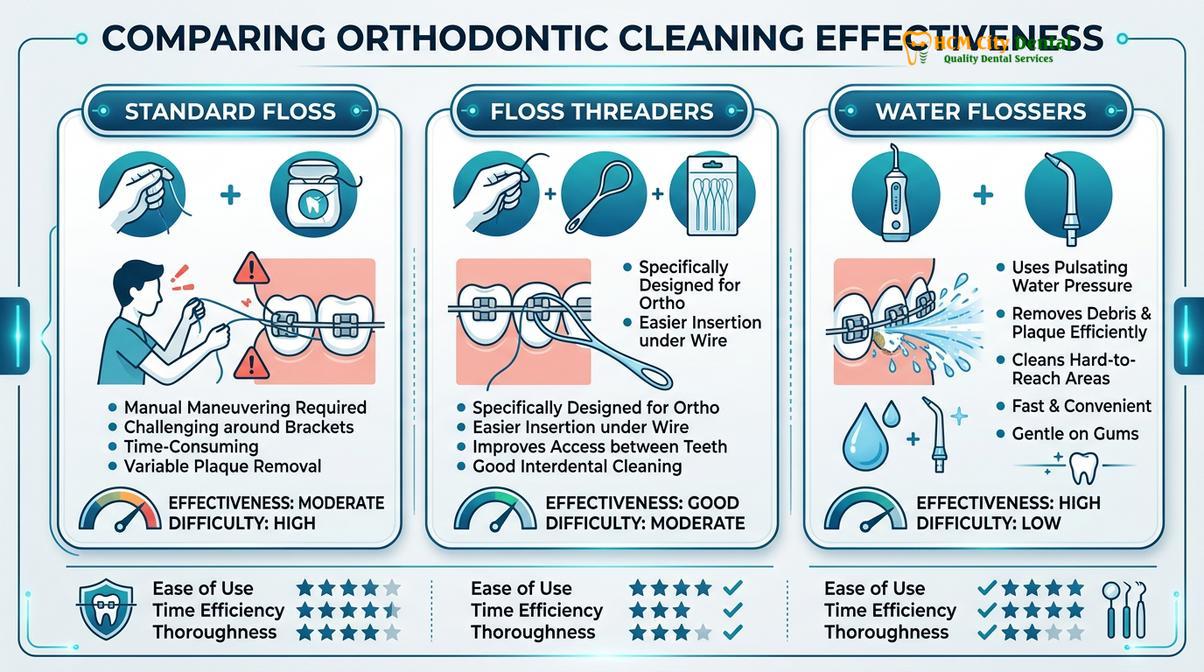
To optimize daily hygiene, patients are encouraged to use a combination of these tools. A highly effective regimen involves using a water flosser first to clear away macroscopic food particles and loose plaque, followed by meticulous mechanical cleaning using a floss threader or spongy floss to address the adherent biofilm.
| Cleaning Tool | Mechanism of Action | Primary Clinical Benefit | Limitations |
|---|---|---|---|
| Floss Threader | Guides standard floss under the fixed wire. | Allows for precise, mechanical subgingival cleaning. | Requires manual dexterity and can be time-consuming. |
| Spongy Floss | Integrated stiff threader with an expanded spongy segment. | Excellent for cleaning wide embrasures and appliance surfaces. | May be too thick for patients with very tight interdental contacts. |
| Water Flosser | Pulsating hydrostatic pressure disrupts biofilm. | Highly effective for debris removal and reducing inflammation. | Does not replace the mechanical friction of string floss. |
Step-by-Step Guide: Flossing Under the Bonded Retainer Wire
Effective cleaning involves threading the floss beneath the retainer wire, adapting it in a C-shape against the tooth surface, and gently sweeping subgingivally to remove adherent biofilm without damaging the appliance.
Executing the correct bonded retainer cleaning steps requires patience, precision, and a clear understanding of dental anatomy. The goal is not merely to pass the floss between the teeth, but to actively disrupt the biofilm adhering to the enamel surfaces and within the shallow gingival sulcus. Improper technique can lead to inadequate cleaning, gingival trauma, or even the accidental debonding of the retainer wire.
Step 1: Preparation and Threading
Begin by dispensing approximately 18 inches (45 cm) of high-quality, shred-resistant dental floss. If using a floss threader, pass about 5 inches of the floss through the nylon loop. If using specialized spongy floss, identify the stiffened threading end. Position yourself in front of a well-lit mirror; visual feedback is crucial, especially when first learning the technique. Gently insert the stiff end of the threader (or spongy floss) into the interproximal space, passing it horizontally between the teeth and underneath the bonded retainer wire. Aim the tip slightly toward the incisal edge (the biting surface) to avoid inadvertently poking the delicate gingival papilla.
Step 2: Positioning the Floss
Once the threader has passed through to the lingual side (toward the tongue), grasp the stiff end and pull it completely through, bringing the floss along with it. You should now have the floss positioned horizontally beneath the retainer wire, with one end held on the facial side (toward the lips) and the other on the lingual side. Remove the threader from the floss and set it aside. Wrap the ends of the floss around your middle fingers to establish a secure grip, leaving about 1 to 2 inches of taut floss between your index fingers and thumbs for precise control.
Step 3: The C-Shape Adaptation Technique
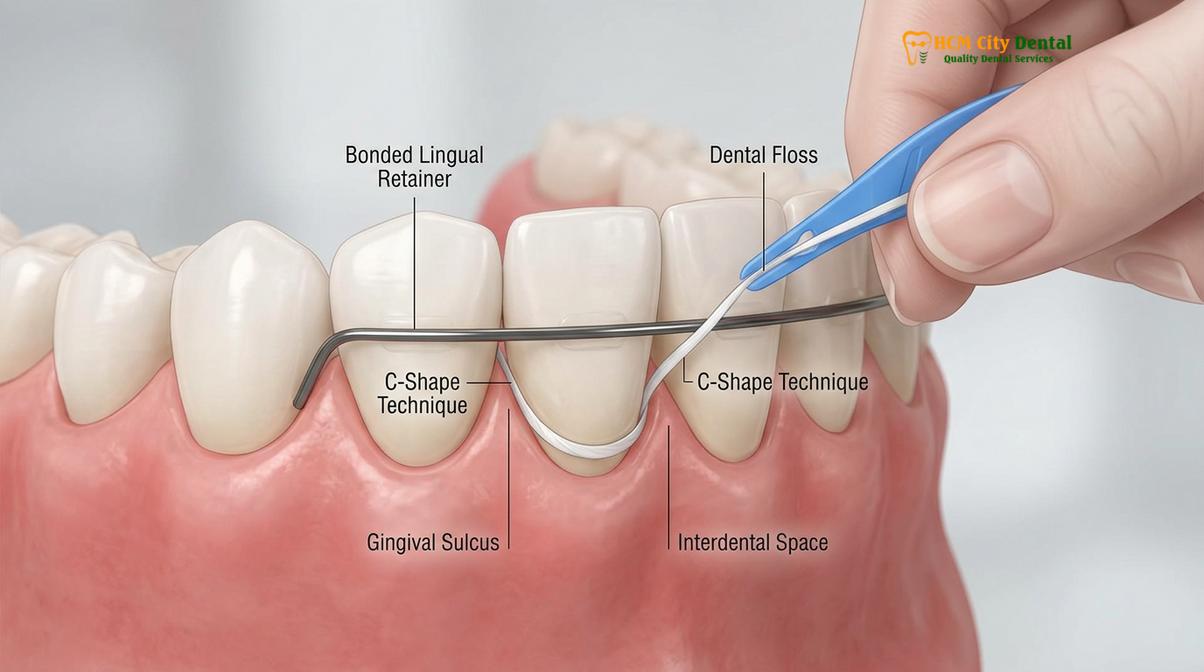
This is the most critical phase of flossing fixed wire retainer appliances. Do not simply pull the floss back and forth in a sawing motion, as this can cause severe clefting of the gingival tissue. Instead, adapt the floss tightly against the side of one tooth, forming a “C-shape” that hugs the curvature of the enamel. Gently slide the floss apically (downward) until it slips just below the gumline into the gingival sulcus. You should feel a slight resistance, but no pain. Once subgingival, use a firm, sweeping motion to move the floss coronally (upward) toward the contact point, scraping the biofilm off the tooth surface. Repeat this vertical sweeping motion 3 to 4 times on that specific tooth surface[4].
Step 4: Cleaning the Adjacent Tooth and Removal
Without removing the floss from the interproximal space, shift the tension to adapt the floss into a C-shape against the adjacent tooth. Repeat the subgingival sweeping motion. Once both tooth surfaces have been thoroughly cleaned, you must carefully remove the floss. Do not attempt to pull the floss upward through the contact point, as the retainer wire blocks this path. Doing so will exert immense upward force on the wire, potentially fracturing the composite bonding. Instead, simply let go of one end of the floss and gently pull the other end to slide it horizontally out from under the wire.
“The most common mechanism of retainer failure we see is iatrogenic—caused by the patient pulling the floss upward against the wire. Always remember to pull the floss out horizontally. The composite resin is incredibly strong against horizontal forces, but vulnerable to vertical dislodgement.” — Dr. Nguyen Van Cuong
Repeat this entire process for every interproximal space spanned by the bonded retainer. While this routine may seem tedious initially, muscle memory develops rapidly, and the process becomes a swift, integrated part of your daily hygiene regimen.
Bracing and Cleaning: Accessing Hard-to-Reach Molar Areas
While bonded retainers typically span the anterior teeth, maintaining comprehensive oral hygiene requires equal attention to posterior molars using specialized interdental brushes and precise angulation.
Although the focus of retainer hygiene is naturally centered on the anterior teeth where the appliance is bonded, comprehensive oral health dictates that the posterior regions (the premolars and molars) receive equal attention. The presence of a bonded retainer alters the overall oral ecosystem. If plaque is allowed to flourish in the posterior regions, the resulting bacterial load can easily migrate, increasing the risk of inflammation and calculus formation around the anterior retainer.
Adhering to strict hygiene rules orthodontics means recognizing that the posterior teeth present their own unique anatomical challenges. The molars have complex root anatomies, including furcations (the areas where the roots divide) and broad interproximal contact areas that are highly susceptible to decay and periodontal pocketing. Furthermore, patients who have recently completed treatment and are managing orthodontic visit frequency for retention checks must ensure their entire dentition remains pristine to avoid secondary complications.
To effectively clean the posterior regions, patients should utilize interdental brushes (proxy brushes) in addition to standard flossing. These small, cylindrical brushes are designed to slide between the teeth, cleaning the concave surfaces of the molar roots that standard floss might bridge over. When selecting an interdental brush, it is crucial to choose the correct size; the brush should fit snugly but slide through the space without requiring excessive force. The wire core of the brush should be plastic-coated to prevent scratching the enamel or any posterior restorations.
For patients who travel frequently or are managing orthodontic care while relocating, maintaining this comprehensive hygiene routine is vital. Changes in diet, water fluoridation levels, and daily routines during travel can disrupt oral health. Utilizing a travel-sized water flosser and keeping a supply of interdental brushes and floss threaders ensures that both the bonded retainer and the posterior molars remain free of pathogenic biofilm, regardless of location.
When to Get Professional Scaling and Polishing at HCMC Dental
Professional scaling is essential every six months to remove hardened calculus around the retainer wire that home care tools cannot eliminate, ensuring long-term periodontal stability and appliance integrity.
Despite the most meticulous home care routine, microscopic amounts of plaque will inevitably evade removal, particularly in the complex micro-anatomy surrounding a bonded retainer. Over time, this residual plaque calcifies into tartar. Once calculus has formed, it cannot be removed by brushing or flossing; it requires professional intervention. Regular professional scaling and polishing are not merely cosmetic procedures; they are critical therapeutic interventions necessary to halt the progression of periodontal disease and maintain the structural integrity of the orthodontic appliance.
At HCMC Dental Clinic in Ho Chi Minh City, the protocol for maintaining patients with bonded retainers involves advanced ultrasonic instrumentation. Ultrasonic scalers utilize high-frequency vibrations (typically between 25,000 and 30,000 Hz) combined with a continuous water coolant. The vibrating tip shatters the hardened calculus deposits, while the water creates a cavitation effect—producing microscopic bubbles that implode, disrupting the bacterial cell walls and flushing debris from the periodontal pocket[5].
Clinical Case Study: Managing Severe Calculus Accumulation
A 24-year-old patient presented to HCMC Dental Clinic in Ho Chi Minh City for a routine examination, having missed professional cleanings for over two years following the placement of a mandibular bonded retainer. Clinical examination by Dr. Cuong revealed heavy, bridge-like calculus accumulation completely encasing the retainer wire and composite pads, accompanied by severe localized gingivitis and spontaneous bleeding. The treatment protocol involved targeted ultrasonic scaling using specialized thin-profile tips to carefully fracture the calculus without debonding the wire. Following the removal of the deposits, the composite pads were polished to a high gloss to deter future plaque adhesion. The patient was re-educated on the use of floss threaders and scheduled for a 3-month periodontal recall, resulting in a complete resolution of gingival inflammation.
Following the removal of calculus, the teeth and the composite bonding pads must be meticulously polished. Polishing removes extrinsic stains and smooths the microscopic surface irregularities on the enamel and the composite resin. A smooth surface is significantly less conducive to future plaque adhesion. For patients with bonded retainers, air polishing systems utilizing fine glycine or erythritol powder are often preferred, as they are highly effective at cleaning the intricate spaces around the wire without scratching the composite material.
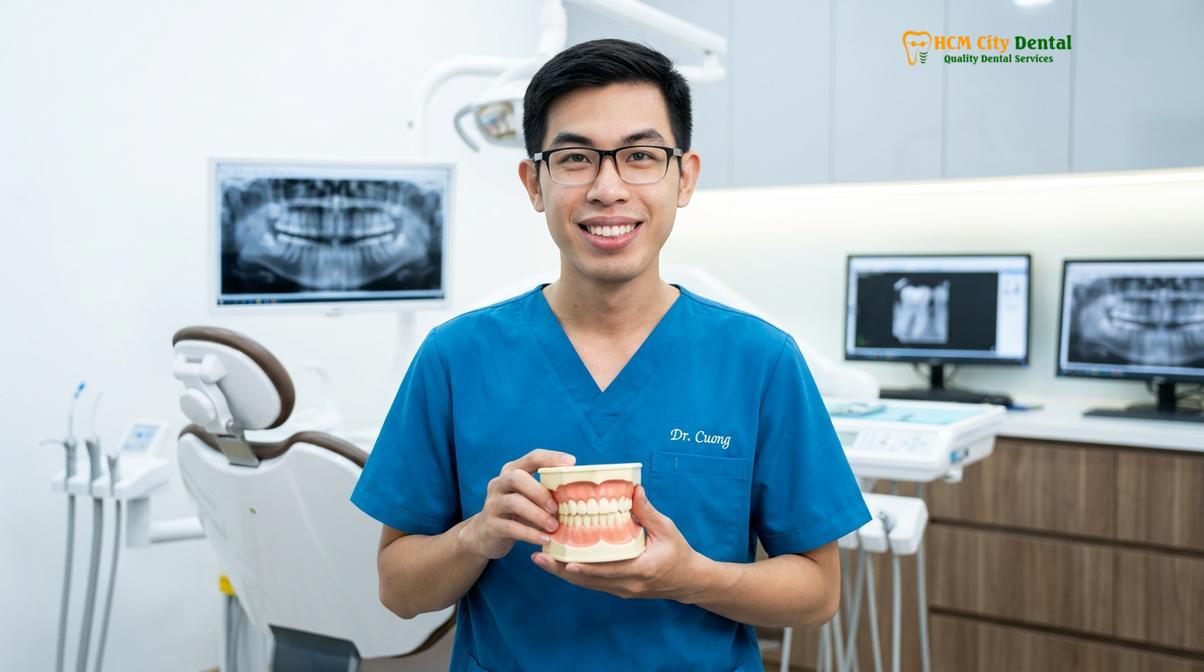
Patients who are evaluating braces vs clear aligners often factor in the long-term maintenance requirements. While removable retainers (like Essix retainers) allow for easier flossing, bonded retainers offer the distinct advantage of guaranteed compliance. However, this compliance comes with the strict prerequisite of professional maintenance. Scheduling biannual cleanings ensures that any calculus buildup is addressed promptly, and allows the clinician to verify the integrity of the composite bonds, ensuring the retainer continues to function effectively.
When to See a Doctor
While minor gingival bleeding may occur when first initiating a new flossing routine, persistent or worsening symptoms require professional evaluation. You should schedule an appointment with your dental provider if you experience any of the following:
- Persistent Gingival Bleeding: Bleeding that continues after two weeks of consistent, gentle flossing indicates underlying inflammation or the presence of subgingival calculus that requires professional removal.
- Loose or Broken Wire: If you feel movement in the retainer wire, or if it feels sharp against your tongue, a composite pad may have debonded. This requires immediate repair to prevent rapid tooth movement.
- Visible Calculus Buildup: If you notice hard, yellow or brown deposits forming around the wire that cannot be brushed away, professional scaling is necessary.
- Chronic Halitosis: Persistent bad breath can be a sign of anaerobic bacterial proliferation in the periodontal pockets surrounding the retainer.
Important Clinical Warning: If you suspect that a portion of your bonded retainer has become loose or detached, DO NOT attempt to pull on the wire or remove it yourself. Applying force can cause the wire to distort, potentially exerting active orthodontic forces that will rapidly move your teeth out of alignment. Contact your dental clinic immediately for professional repair.
Frequently Asked Questions
Is a permanent retainer harder to clean than removable ones?
Yes, a permanent bonded retainer is inherently more challenging to clean because the fixed wire creates a physical barrier that prevents standard flossing. Patients must use specialized interdental tools, such as floss threaders or spongy floss, to physically bypass the wire and access the interproximal spaces effectively. While removable retainers allow for normal brushing and flossing, bonded retainers require adapted techniques and increased diligence to prevent localized periodontal issues.
What happens if tartar builds up around my fixed retainer wire?
If tartar (calculus) accumulates around the fixed retainer wire, it creates a porous surface that harbors pathogenic bacteria, leading to gingival inflammation, bleeding, and potential bone loss. Furthermore, heavy calculus buildup can compromise the integrity of the composite bonding, potentially causing the retainer to detach from the tooth surface. Once tartar has formed, it cannot be removed at home and requires professional ultrasonic scaling.
How often should I use a water flosser on my bonded retainer?
Clinical guidelines recommend using a water flosser at least once daily as an adjunct to your oral hygiene routine. While highly effective at flushing out loose food debris and disrupting superficial biofilm around the wire, it must always be paired with mechanical string flossing for comprehensive subgingival cleaning. A water flosser alone cannot remove the sticky, adherent plaque that causes decay and gingivitis.
Can flossing break my permanent bonded retainer?
When performed correctly with gentle, controlled movements, flossing will not break a properly bonded permanent retainer. However, applying excessive upward force or aggressively yanking the floss against the wire can weaken the composite resin pads, potentially leading to debonding or wire distortion over time. Always ensure you pull the floss out horizontally from under the wire, rather than pulling it up through the contact point.
What should I do if I cannot thread the floss under the wire?
If you experience difficulty threading floss under the wire, do not force it, as this may injure the gingival tissue. Switch to a stiffer floss threader, try a different angle of insertion, or consult your dentist to ensure there is no excess composite resin blocking the interproximal embrasure space. In some cases, your dentist may need to polish the composite to create a smoother pathway for the interdental aids.
References
- Journal of Clinical Orthodontics. Periodontal implications of fixed lingual retainers: A long-term assessment. (2021).
- American Journal of Orthodontics and Dentofacial Orthopedics. Efficacy of various interdental cleaning aids in patients with bonded retainers. (2020).
- Journal of Periodontology. Biofilm accumulation and calculus formation on multistranded orthodontic wires. (2019).
- International Journal of Dental Hygiene. The adjunctive use of oral irrigators in orthodontic retention phases. (2022).
- Clinical Oral Investigations. Survival rates and periodontal health associated with composite-bonded lingual retainers. (2018).