A same day dental filling CEREC CAD CAM Saigon offers an advanced, single-visit restoration for decayed or damaged teeth. By utilizing cutting-edge digital scanning and on-site milling, patients can receive highly durable, custom-fitted ceramic restorations without the need for messy impressions, fragile temporary fillings, or multiple inconvenient appointments.
Clinical Summary:
CEREC (Chairside Economical Restoration of Esthetic Ceramics) CAD/CAM technology represents a paradigm shift in modern restorative dentistry. This fully digital workflow eliminates traditional elastomeric impressions, replacing them with high-resolution optical scanning. The acquired data is processed via advanced CAD software to design a precise ceramic inlay, onlay, or crown, which is subsequently fabricated by a milling unit in minutes. This single-visit protocol significantly reduces the risk of bacterial contamination and dentinal sensitivity associated with temporary restorations. For international patients seeking a same day dental filling CEREC CAD CAM Saigon, this approach offers unparalleled clinical efficiency, combining aesthetic excellence with robust mechanical properties. Clinical studies consistently demonstrate that these milled ceramic restorations exhibit marginal adaptation, biocompatibility, and wear resistance that are comparable to, or exceed, traditional laboratory-fabricated alternatives.
Key Takeaways:
- Single-visit procedures eliminate the need for fragile temporary fillings and multiple anesthetic injections.
- Optical scanning provides superior micron-level accuracy compared to traditional putty impressions.
- On-site milling units fabricate custom ceramic restorations in approximately 15 to 20 minutes.
- Biocompatible ceramic materials perfectly mimic the natural translucency, shade, and strength of human enamel.
- The digital workflow is highly cost-effective and time-efficient for dental tourists requiring immediate care.
The Same-Day Revolution: Bypassing Temporary Restorations
Transitioning to a single-visit digital workflow eliminates the vulnerabilities of temporary fillings, protecting the exposed dentin and preventing bacterial microleakage between appointments.
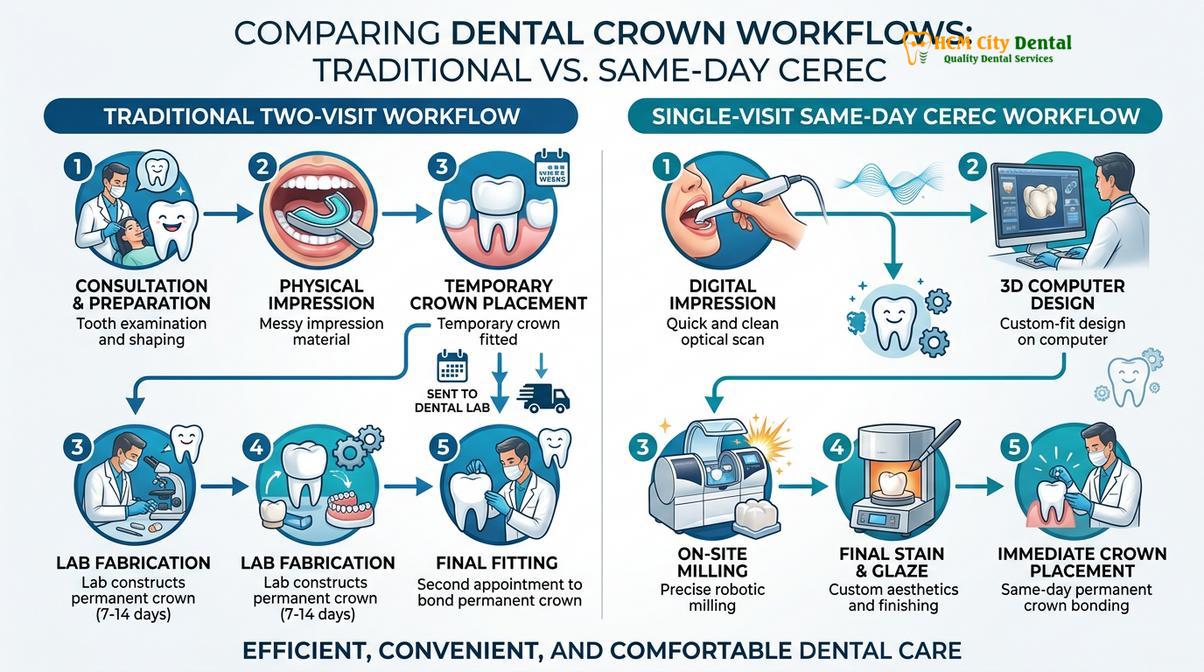
Historically, restoring a tooth with an indirect restoration—such as an inlay, onlay, or crown—required a minimum of two separate clinical appointments spaced several weeks apart. During the first visit, the dentist would remove the decay, prepare the tooth, take a physical impression using a silicone-based putty, and place a temporary filling. The impression was then sent to an off-site dental laboratory where a technician would fabricate the final restoration. While this method has been the standard of care for decades, it introduces several clinical vulnerabilities that can compromise the long-term health of the tooth.
The primary issue with the traditional multi-visit approach lies in the use of temporary restorations. Temporary fillings are inherently weak and are designed to be easily removed. Because they do not form a strong chemical bond with the underlying tooth structure, they are highly susceptible to microleakage. Microleakage occurs when oral fluids and bacteria seep into the microscopic gap between the temporary filling and the prepared tooth. This bacterial infiltration can irritate the dental pulp, leading to post-operative sensitivity, inflammation, and in severe cases, the need for root canal therapy. Furthermore, temporary restorations are prone to fracturing or dislodging during normal chewing, leaving the sensitive dentin completely exposed to the oral environment.
The advent of the same-day ceramic inlay has revolutionized this process by completely bypassing the provisional phase. By utilizing a fully digital workflow, the tooth is prepared, scanned, and permanently restored in a single continuous session. This concept allows the dentist to apply the adhesive bonding agent to the freshly cut dentin immediately after preparation. Sealing the dentinal tubules immediately prevents bacterial ingress, dramatically reduces post-operative sensitivity, and significantly increases the overall bond strength of the final restoration[1].
How CEREC CAD/CAM Technology Works Chairside
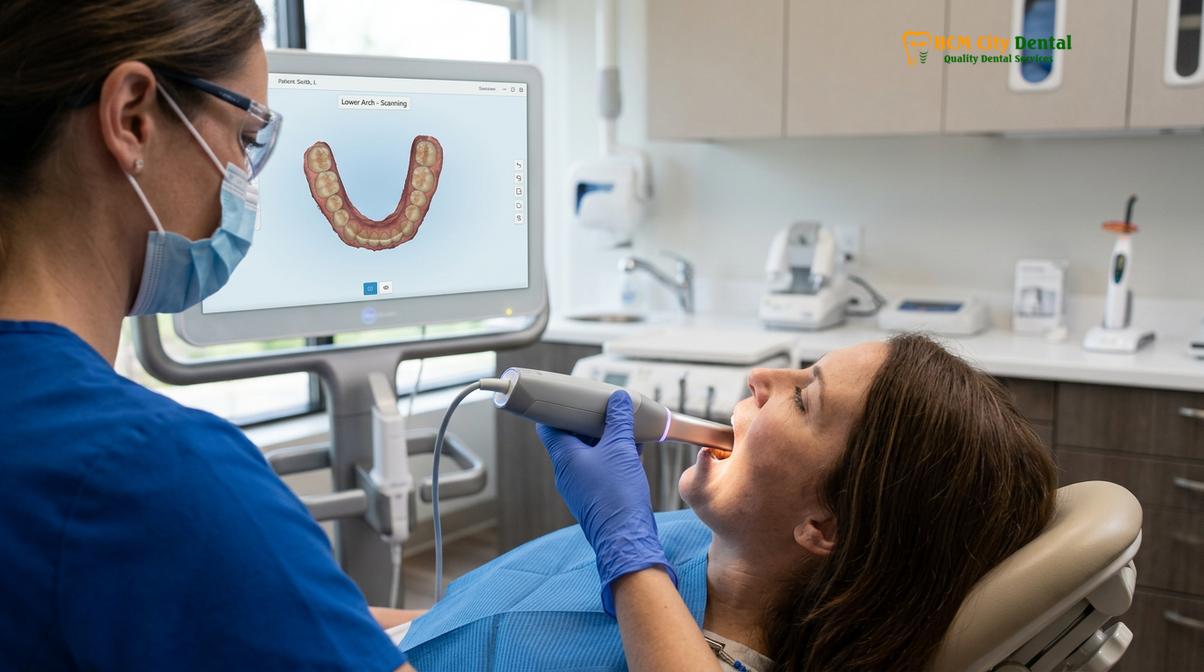
CEREC integrates a digital scanner, advanced design software, and a precision milling machine to fabricate permanent ceramic restorations directly within the dental clinic.
To fully appreciate the clinical benefits of a same day dental filling CEREC CAD CAM Saigon, it is essential to understand the sophisticated technology that drives the process. CEREC is an acronym for Chairside Economical Restoration of Esthetic Ceramics. The system is built upon the principles of CAD/CAM (Computer-Aided Design and Computer-Aided Manufacturing), a technology originally developed for high-precision aerospace and automotive engineering, which has been meticulously adapted for dental applications.
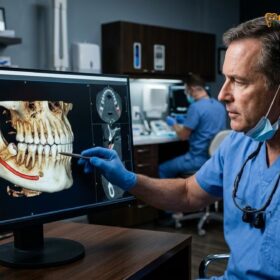
The CEREC CAD/CAM technology ecosystem consists of three primary components: the acquisition unit, the design software, and the milling chamber. The process begins with the acquisition unit, which houses a highly advanced digital intraoral scanner. Unlike traditional cameras that capture 2D images, this scanner utilizes confocal microscopy or active triangulation to project structured light onto the prepared tooth. As the light reflects back into the sensor, the system calculates the exact distance and topography of the tooth surface, generating a highly accurate, full-color 3D model in real-time. This digital model is accurate to within mere microns, capturing details that are often missed or distorted by traditional impression materials[2].
“The integration of CAD/CAM technology in restorative dentistry not only streamlines the clinical workflow but also significantly enhances the predictability and marginal integrity of ceramic restorations, ensuring long-term clinical success.”
Once the 3D model is acquired, it is transferred to the CAD software. This software utilizes artificial intelligence and biogeneric algorithms to analyze the surrounding teeth, the opposing bite, and the overall arch morphology. Based on this data, the software automatically proposes an ideal design for the restoration, ensuring perfect occlusal contacts and anatomical contours. The clinician can then manipulate this digital proposal, adjusting the margins, cusp angles, and contact points with unparalleled precision.
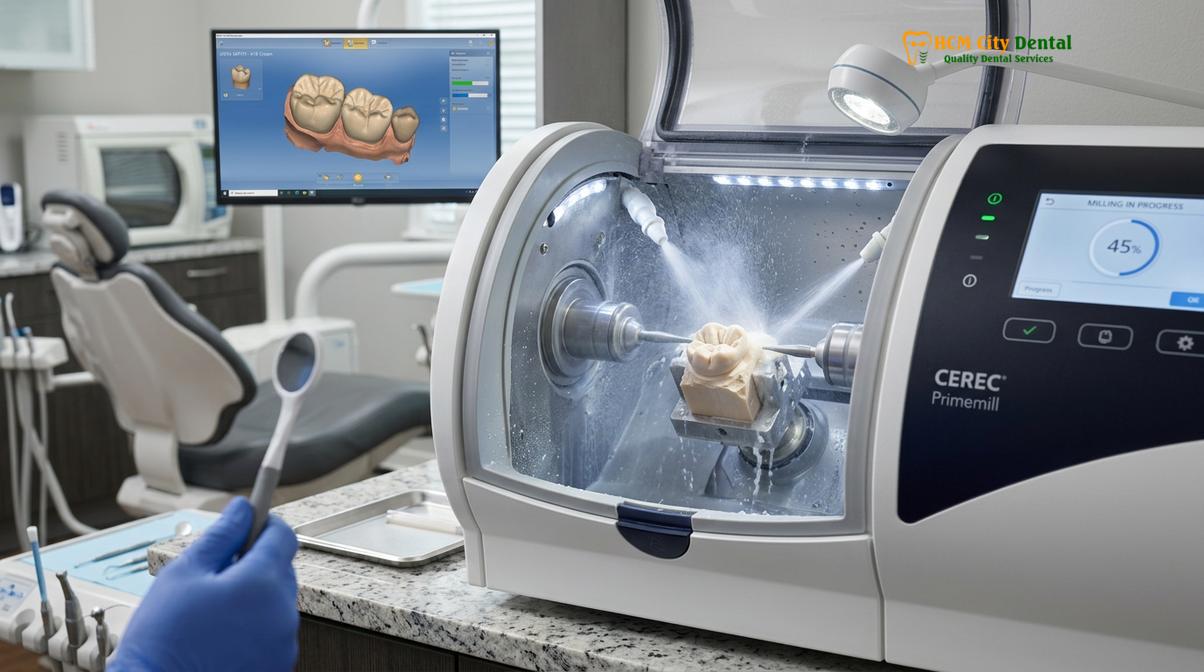
The Process: Digital Scanning to Inlay Milling in 90 Minutes
The entire clinical protocol, from cavity preparation to the final bonding of the milled ceramic restoration, is systematically completed in approximately 90 minutes.
The clinical workflow for a same-day digital restoration is a highly choreographed process designed to maximize efficiency without compromising clinical excellence. When a patient presents with a decayed tooth, a failing amalgam filling, or a structural fracture, the dentist will first conduct a thorough examination to determine if the tooth is a suitable candidate for a ceramic inlay or onlay. Once confirmed, the 90-minute protocol begins.
The first step involves profound local anesthesia to ensure complete patient comfort. The tooth is then isolated to maintain a sterile, moisture-free environment—a critical requirement for successful adhesive dentistry. The dentist then carefully removes the decayed tissue and any old filling material. The cavity preparation for a milled ceramic restoration differs slightly from traditional fillings; the internal walls must be smooth and slightly divergent to allow the rigid ceramic piece to seat passively into the tooth without binding or creating internal stress concentrations.
Following preparation, the digital intraoral scanning phase commences. The dentist glides the optical wand over the prepared tooth, the adjacent teeth, and the opposing arch. The patient is then asked to bite together so the scanner can record the exact occlusal relationship. This entire scanning process takes less than two minutes and is completely comfortable for the patient. The digital data is instantly rendered on the screen, allowing the dentist to verify the quality of the preparation and the clarity of the margins.
| Clinical Parameter | Traditional Multi-Visit Workflow | CEREC Single-Visit Workflow |
|---|---|---|
| Total Appointments | 2 to 3 visits | 1 single visit |
| Impression Method | Uncomfortable silicone putty | Comfortable digital optical scan |
| Temporary Filling | Required (risk of sensitivity/loss) | Not required |
| Anesthetic Injections | Multiple (at each visit) | Single administration |
| Total Treatment Time | 2 to 3 weeks | Approximately 90 minutes |
While the patient relaxes in the chair, the dentist moves to the design phase. Using the CAD software, the restoration is meticulously designed to restore the tooth’s natural anatomy. Once the design is finalized, a ceramic block matching the patient’s natural tooth shade is selected and placed into the milling unit. The milling process typically takes between 10 to 20 minutes, depending on the complexity and size of the restoration. The robust nature of these milled lithium disilicate restorations ensures they can withstand heavy occlusal forces over time[3].
Clinical Accuracy and Fit Quality of Digital Impressions
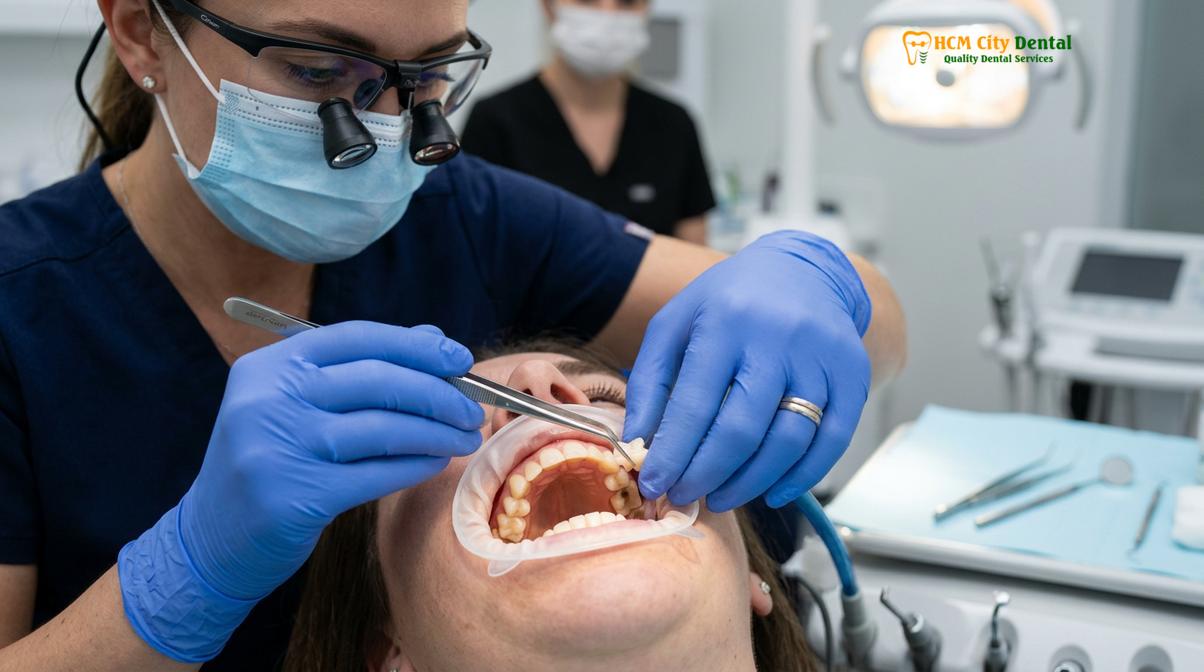
Digital impressions capture the precise topography of the prepared tooth at a micron level, ensuring a flawless marginal fit that minimizes the risk of secondary caries.
One of the most critical factors determining the long-term success of any dental restoration is its marginal adaptation—the exactness of the fit between the edge of the restoration and the natural tooth structure. If the margin is open or ill-fitting, the cement will eventually wash out, creating a microscopic gap where bacteria can accumulate, leading to secondary decay and eventual failure of the restoration. Traditional impression techniques, while effective, are subject to numerous variables that can introduce dimensional inaccuracies.
When using traditional polyvinyl siloxane (PVS) putty, the material can shrink slightly as it sets. Furthermore, when the dental laboratory pours liquid stone into the impression to create a physical model, the stone undergoes expansion as it crystallizes. These compounding dimensional changes can result in a restoration that requires significant manual adjustment by the dentist to achieve an acceptable fit. Digital impressions completely eliminate these physical variables. The optical data captured by the scanner is a 1:1 digital replica of the tooth, immune to shrinkage, expansion, or distortion. According to the Vietnam Odonto-Stomatology Association (VOSA), the adoption of digital workflows significantly elevates the standard of marginal precision in modern restorative treatments[4].
Clinical Case Review:
A 45-year-old patient visiting HCMC Dental Clinic in Ho Chi Minh City presented with a fractured MOD (mesio-occluso-distal) amalgam filling that was causing sharp pain upon chewing. Dr. Nguyen Van Cuong evaluated the tooth and recommended a same-day ceramic onlay to preserve the remaining healthy cusps. Utilizing the digital workflow, the tooth was prepared, scanned, and a custom lithium disilicate restoration was milled on-site. The digital precision ensured perfect interproximal contacts, preventing food impaction, and established ideal occlusal harmony. The patient was able to resume normal chewing immediately after the 90-minute appointment, reporting zero post-operative sensitivity.
The software controlling the milling unit is calibrated to account for the specific diameter and geometry of the milling burs, ensuring that the internal surface of the ceramic perfectly matches the digital design. Furthermore, the clinician can digitally set the cement spacer—a uniform gap of typically 50 to 80 microns—allowing the resin cement to flow evenly and create a microscopic, hermetic seal. This level of precision is why a rapid tooth restoration utilizing CAD/CAM technology often exhibits superior marginal integrity compared to traditional methods.
When to Consult a Dentist for a Same-Day Restoration
Recognizing the early signs of dental damage can help you seek timely intervention, preventing the need for more invasive procedures like root canals or extractions.
Not every dental issue requires a full crown, nor can every cavity be fixed with a simple composite resin. Same-day ceramic inlays and onlays occupy a crucial middle ground in restorative dentistry. You should consider consulting a dental professional for a CAD/CAM restoration if you experience sharp pain when biting down, which often indicates a cracked tooth or a failing large filling. Additionally, if an old silver amalgam filling begins to leak or causes the surrounding tooth structure to darken and fracture, a milled ceramic restoration is often the ideal replacement.
“Timely intervention with biomimetic, digitally milled ceramics allows us to preserve maximum healthy tooth structure while restoring the tooth to its original biomechanical strength.”
Patients who suffer from severe temperature sensitivity may also benefit from this technology. When decay penetrates deep into the dentin, the tooth becomes highly reactive to hot and cold stimuli. By removing the decay and immediately sealing the tooth with a bonded ceramic restoration, the sensitivity is often resolved instantly. The advanced adhesive protocols used during the final cementation phase ensure a durable, long-lasting bond between the glass-ceramic and the natural tooth structure[5].
Expert Care and Clinical Excellence
Achieving optimal results with CAD/CAM technology requires not just advanced equipment, but the refined skill and clinical judgment of an experienced dental professional.
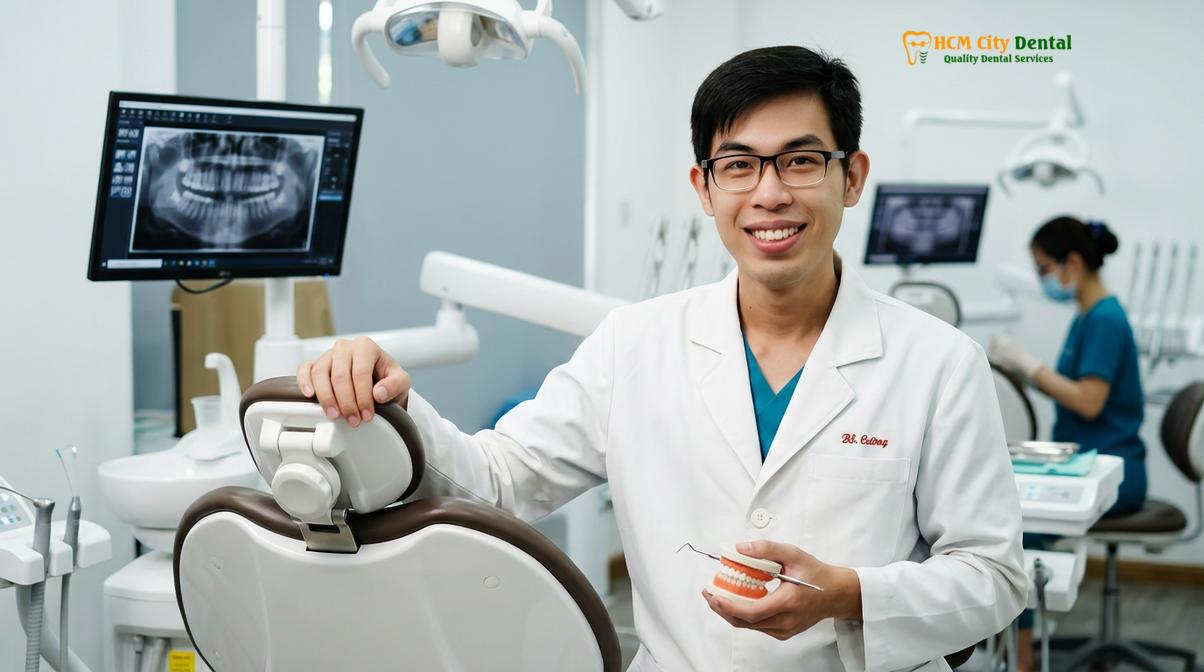
Dr. Nguyen Van Cuong is a leading specialist in digital restorative dentistry. With extensive experience in CAD/CAM protocols, Dr. Cuong ensures that every patient receives meticulously designed ceramic restorations that blend seamlessly with natural dentition. His commitment to precision, minimally invasive techniques, and patient comfort has made him a trusted name for international visitors seeking advanced dental care.
Cost and Efficiency Benefits for International Dental Tourists
For international patients, same-day digital dentistry offers a highly efficient, cost-effective solution that maximizes clinical outcomes while minimizing travel disruptions.
Ho Chi Minh City has rapidly emerged as a premier destination for global dental tourism, attracting patients from Australia, the United States, Europe, and beyond. These patients seek high-quality dental care at a fraction of the cost they would incur in their home countries. However, for a dental tourist, time is often just as valuable as money. Traditional restorative dentistry, which requires a two-week waiting period for laboratory fabrication, poses a significant logistical challenge for travelers on a tight schedule.
A same day dental filling CEREC CAD CAM Saigon perfectly addresses the unique needs of the international patient. By condensing the entire restorative process into a single 90-minute appointment, patients can receive world-class ceramic dentistry without having to extend their hotel stays or alter their travel itineraries. There is no need to worry about a temporary filling dislodging while exploring the city or during a long-haul flight back home. The treatment is completed definitively, allowing the patient to enjoy their vacation with complete peace of mind.
If you are considering a same day dental filling CEREC CAD CAM Saigon, contact HCMC Dental Clinic in Ho Chi Minh City today. Learn more about our advanced Dental Fillings tại HCMC Dental Clinic and schedule your comprehensive consultation to restore your smile in a single visit.
References
- Journal of Dentistry. Microleakage and marginal adaptation of CAD/CAM ceramic inlays. (2021).
- Clinical Oral Investigations. Accuracy and clinical fit of intraoral digital impressions vs conventional impressions. (2020).
- International Journal of Computerized Dentistry. Biomechanical evaluation of chairside milled lithium disilicate restorations. (2019).
- Vietnam Odonto-Stomatology Association (VOSA). Guidelines on digital workflows and CAD/CAM applications in modern restorative dentistry. (2022).
- Dental Materials. Adhesive protocols for bonding glass-ceramic CAD/CAM restorations. (2018).
For pricing, booking, and a free clinical assessment, visit our Dental Fillings & Bonding service page at HCMC Dental Clinic in Ho Chi Minh City.