Hypoallergenic dentures in Saigon provide a safe, biocompatible solution for patients suffering from acrylic resin allergies. By utilizing advanced monomer-free materials like thermoplastic nylons and PEEK, clinical prosthodontists can eliminate tissue irritation while restoring optimal masticatory function and aesthetic harmony.
Clinical Summary:
For a subset of the edentulous population, traditional polymethyl methacrylate (PMMA) dentures trigger severe localized allergic reactions due to the leaching of unreacted residual monomers. Hypoallergenic dentures address this immunological challenge by utilizing advanced, monomer-free materials such as injection-molded thermoplastic nylons (Valplast) and milled Polyether Ether Ketone (PEEK). These biocompatible alternatives not only prevent contact dermatitis but also offer superior mechanical properties, including enhanced flexibility, high tensile strength, and excellent tissue adaptation. Clinical protocols at leading facilities in Ho Chi Minh City emphasize precise digital fabrication and strict material sourcing to ensure the delivery of safe, durable, and highly aesthetic restorative solutions for sensitive patients.
Key Takeaways:
- Traditional acrylic dentures can release residual monomers, triggering Type IV delayed hypersensitivity in susceptible individuals.
- Thermoplastic nylons eliminate the need for liquid monomers, providing a highly flexible and translucent restorative option.
- PEEK frameworks offer a high-strength, metal-free alternative to conventional chrome-cobalt partials.
- Clinical diagnosis of acrylic allergy requires professional patch testing to differentiate from mechanical trauma.
- Advanced digital workflows ensure precise adaptation of hypoallergenic materials, minimizing mucosal friction.
MMA (Methyl Methacrylate) Contact Dermatitis: Recognizing the Signs
Methyl methacrylate contact dermatitis presents as localized mucosal inflammation, requiring immediate clinical evaluation to differentiate the immunological response from mechanical trauma caused by ill-fitting prosthetics.
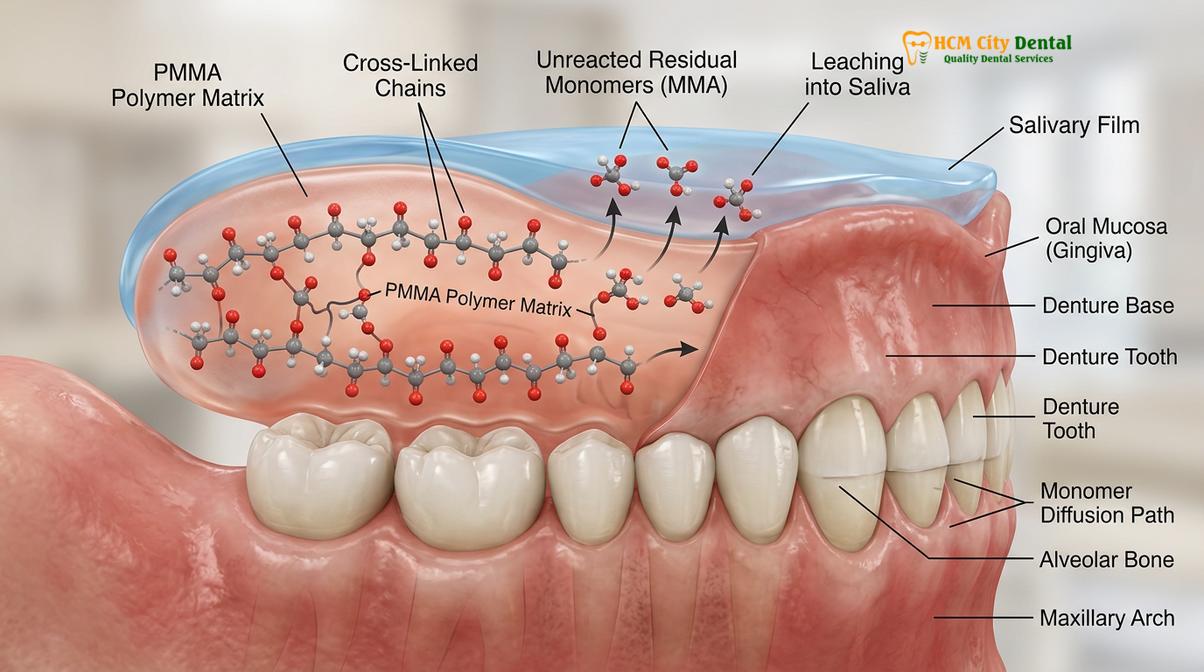
The foundation of traditional removable prosthodontics has long relied on polymethyl methacrylate (PMMA). While generally well-tolerated by the vast majority of patients, a specific subset of the population develops a profound immunological intolerance to the chemical components used in its fabrication. This condition, clinically recognized as a methyl methacrylate allergy, manifests as a Type IV delayed hypersensitivity reaction. Unlike immediate IgE-mediated allergies (such as anaphylaxis), Type IV reactions are cell-mediated. When unreacted monomer molecules leach from the denture base into the saliva, they penetrate the oral mucosa and bind to tissue proteins, forming hapten-carrier complexes. Langerhans cells capture these complexes and present them to T-lymphocytes, initiating a localized inflammatory cascade[1].
Patients suffering from this condition frequently report symptoms of itchy gums contact dermatitis, characterized by a persistent burning sensation, localized erythema (redness), edema (swelling), and occasionally the formation of small vesicles on the mucosal surfaces directly in contact with the prosthesis. The clinical challenge lies in differential diagnosis. The symptoms of an MMA allergy closely mimic those of denture stomatitis (often fungal in origin) or mechanical trauma resulting from an unstable prosthesis. Therefore, before diagnosing an allergy, a clinician must carefully evaluate the occlusion and tissue adaptation. If adjusting the fit of a loose prosthesis through a professional reline procedure fails to resolve the inflammation, chemical hypersensitivity must be strongly suspected.
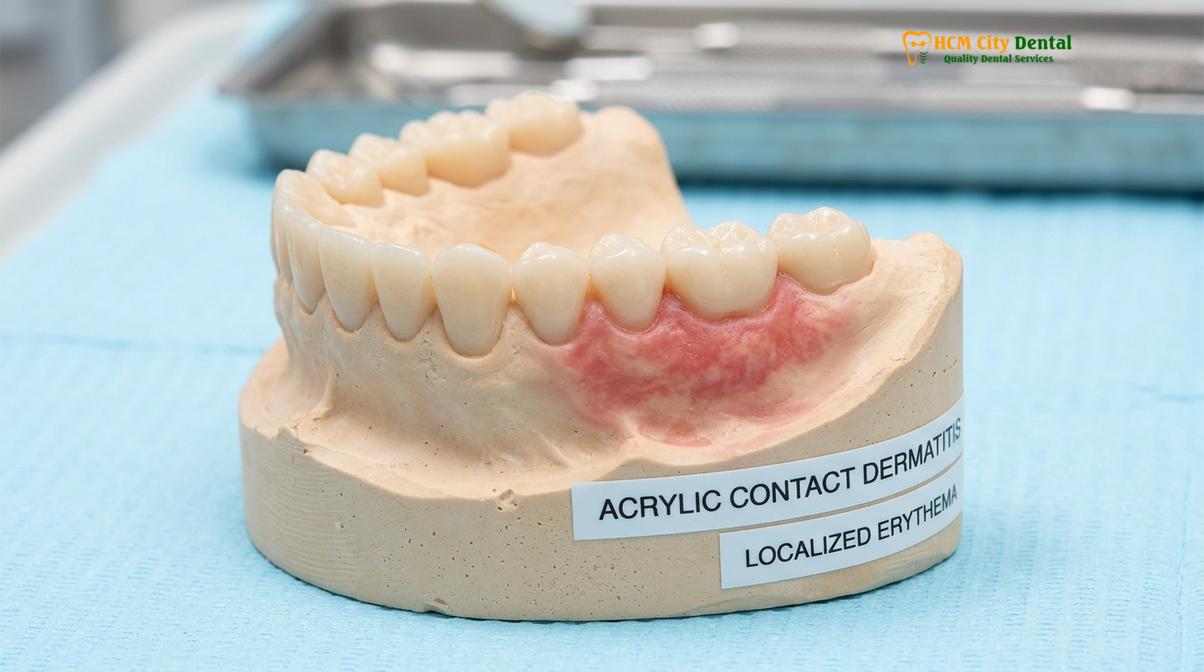
Clinical Warning: Ignoring the signs of acrylic contact dermatitis can lead to chronic mucosal inflammation, accelerated alveolar bone resorption, and secondary opportunistic infections. Patients experiencing persistent burning or severe erythema beneath their dentures should discontinue use and seek immediate prosthodontic evaluation.
Histopathological examination of affected tissues typically reveals a dense mononuclear cell infiltrate, primarily composed of T-lymphocytes and macrophages, within the lamina propria. This chronic inflammatory state not only causes significant patient discomfort but also compromises the integrity of the underlying supporting structures. Consequently, identifying the exact chemical trigger is paramount for developing a safe and effective restorative treatment plan.
The Chemistry of Residual Monomers in Cold-Cured Acrylics
Residual unreacted monomers in cold-cured acrylics leach into the oral environment over time, acting as potent chemical sensitizers that trigger adverse immunological responses in susceptible patients.
To fully comprehend the necessity of hypoallergenic alternatives, one must examine the fundamental chemistry of traditional denture fabrication. PMMA is created through an addition polymerization reaction, mixing a powder (pre-polymerized PMMA beads and a benzoyl peroxide initiator) with a liquid (methyl methacrylate monomer and a chemical activator, typically N,N-dimethyl-p-toluidine). In heat-cured acrylics, thermal energy drives the reaction, resulting in a high degree of monomer conversion. However, in auto-polymerizing or “cold-cured” acrylics—frequently used for repairs, relines, and temporary prostheses—the chemical activator alone initiates the process at room temperature.
This cold-curing process is inherently less efficient. It consistently leaves a higher percentage of unreacted double bonds, resulting in a significant volume of residual monomer trapped within the polymerized matrix. Over time, as the denture is subjected to the thermal and mechanical stresses of the oral cavity, these residual monomers slowly diffuse out of the resin and into the saliva[2]. The leaching process is exacerbated by microscopic surface degradation and the continuous flow of salivary fluids.
“The cytotoxicity of dental acrylics is directly proportional to the concentration of unreacted methyl methacrylate. Heat-polymerized resins generally exhibit residual monomer levels below 1%, whereas auto-polymerized resins can retain up to 5%, significantly increasing the risk of mucosal sensitization.”
Once in the saliva, the monomer acts as a lipophilic solvent, easily penetrating the lipid bilayer of the oral epithelial cells. This cellular disruption not only triggers the aforementioned allergic cascade but can also cause direct chemical irritation, independent of an immune response. For patients with a confirmed sensitivity, even trace amounts of leaching monomer can provoke severe discomfort. Maintaining strict hygiene through proper daily maintenance protocols can help manage surface plaque, but it cannot stop the internal chemical leaching inherent to the material itself. Therefore, the only definitive clinical solution is the complete elimination of MMA from the prosthetic equation.
Hypoallergenic Alternatives: Thermoplastic Nylons and Monomer-Free PMMA
Modern prosthodontics utilizes advanced injection-molded thermoplastic resins and specialized monomer-free PMMA to construct durable, highly biocompatible dental prostheses without the use of chemical sensitizers.
The evolution of dental material science has introduced several sophisticated alternatives for patients requiring monomer-free dental plates. The most prominent among these are thermoplastic resins. Unlike traditional acrylics that rely on a chemical reaction between a powder and a liquid monomer, thermoplastics are fully polymerized materials supplied in solid pellet form. During fabrication, these pellets are heated to their specific melting point and injected under high pressure into a prepared mold. Because the material is already fully polymerized prior to heating, there is absolutely no liquid monomer involved in the process, effectively reducing the risk of chemical sensitization to zero.
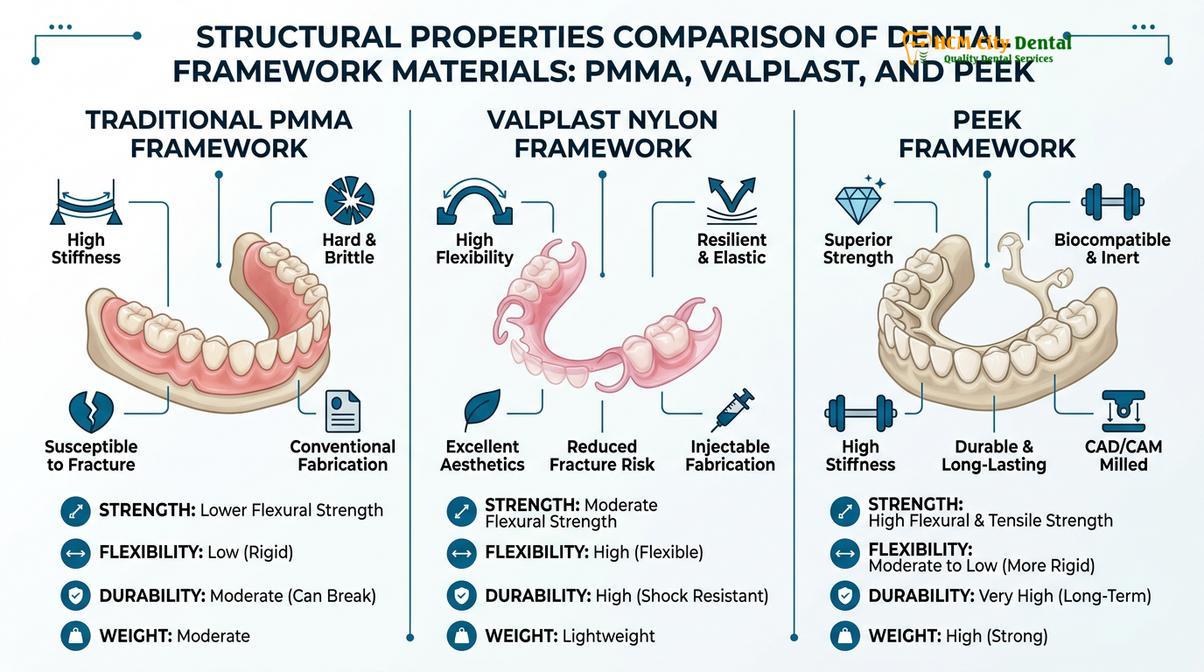
Thermoplastic nylons, a specific subcategory of these resins, offer exceptional clinical advantages. They possess a micro-crystalline structure that provides remarkable flexibility and high impact resistance. This flexibility allows the prosthesis to adapt dynamically to the micro-movements of the oral mucosa during mastication, distributing occlusal forces more evenly and reducing localized pressure points. Furthermore, the inherent translucency of the thermoplastic resin allows the natural color of the patient’s underlying gingiva to show through, creating a highly aesthetic, chameleon-like effect that blends seamlessly with the surrounding tissues[3].
| Material Type | Monomer Presence | Flexibility | Primary Clinical Indication |
|---|---|---|---|
| Traditional PMMA (Heat-Cured) | Low (but present) | Rigid | Standard complete dentures |
| Cold-Cured PMMA | High | Rigid | Repairs, temporary relines |
| Thermoplastic Nylon | Zero | High | Hypoallergenic partials, aesthetic zones |
| Milled PEEK | Zero | Semi-Rigid | High-strength metal-free frameworks |
For patients who require the rigidity of a traditional complete denture but cannot tolerate MMA, specialized monomer-free PMMA formulations are available. These materials utilize alternative cross-linking agents and advanced curing protocols (such as light-curing or microwave polymerization) to achieve a rigid, stable base without the use of methyl methacrylate. When integrated into comprehensive tooth replacement solutions, these materials ensure that patients do not have to compromise on functional stability to achieve immunological safety.
Valplast: The Gold Standard for Biocompatible Partial Restorations
Valplast utilizes a highly flexible, tissue-adaptable nylon base that eliminates metal clasps and acrylic monomers, ensuring superior aesthetics and immunological safety for partial denture wearers.
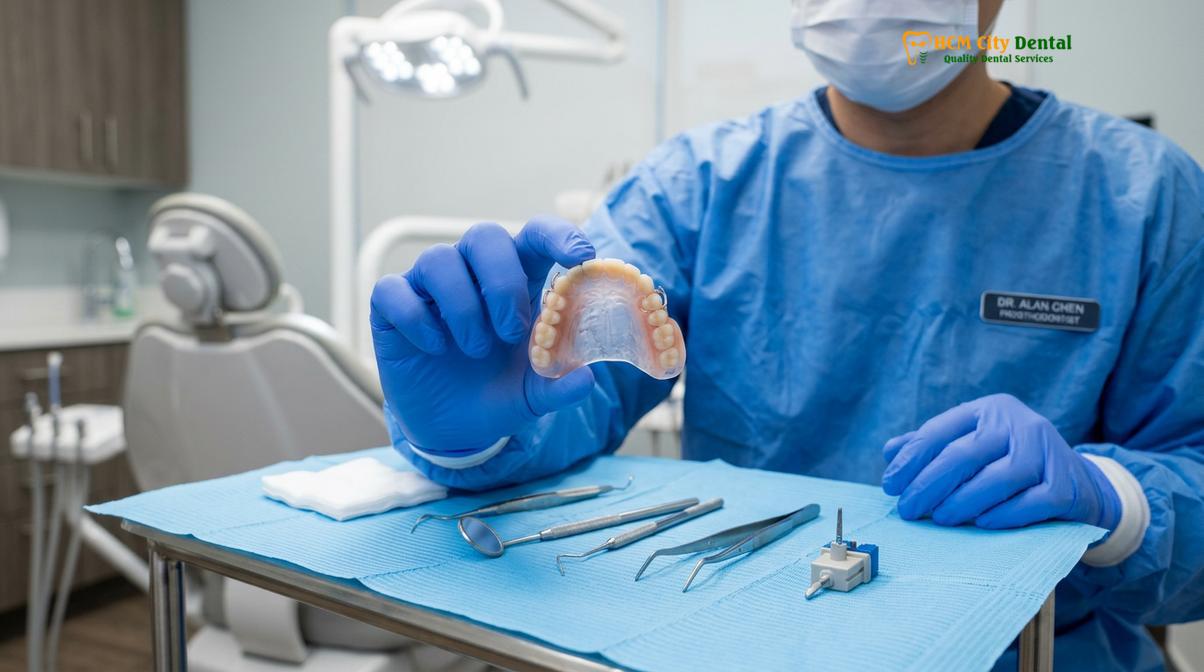
When discussing hypoallergenic solutions for partially edentulous patients, hypoallergenic Valplast nylon is widely considered the gold standard. Valplast is a specific brand of flexible partial denture made from an injected thermoplastic nylon resin. Its primary clinical advantage lies in its ability to utilize the natural undercuts of the remaining dentition for retention, entirely eliminating the need for rigid cast-metal clasps. This not only improves the aesthetic outcome—as there is no visible metal in the patient’s smile—but also prevents the galvanic reactions and metallic taste sometimes associated with chrome-cobalt frameworks.
The biomechanical behavior of Valplast is fundamentally different from rigid acrylic. Its low modulus of elasticity allows the prosthesis to flex slightly under occlusal load. This stress-breaking function protects the abutment teeth from excessive torquing forces, which is particularly beneficial for patients with compromised periodontal support. Because the material is exceptionally lightweight and can be fabricated with very thin borders, patients generally experience a faster phonetic adaptation period compared to bulkier traditional acrylic partials.
Clinical Case Review: A 58-year-old female patient presented to HCMC Dental Clinic with severe, recurrent mucosal erythema and a burning sensation beneath her conventional acrylic partial denture. Patch testing confirmed a Type IV hypersensitivity to MMA. Dr. Nguyen Van Cuong designed a custom Valplast flexible partial. Upon delivery, the patient reported immediate relief from the burning sensation. At the 30-day follow-up, all signs of contact dermatitis had completely resolved, and the patient demonstrated excellent masticatory function and aesthetic satisfaction.
Despite its numerous advantages, Valplast does have specific clinical limitations. Because the nylon material cannot be chemically bonded to traditional cold-cured acrylics, chairside relines or the addition of new teeth to an existing Valplast denture are highly complex and often require the prosthesis to be sent back to a specialized laboratory. Therefore, careful case selection is critical. Valplast is most appropriate for patients with stable alveolar bone levels who are not anticipated to lose additional teeth in the near future.
PEEK (Polyether Ether Ketone) Frameworks: High-Strength Metal-Free Options
PEEK offers exceptional tensile strength and a low modulus of elasticity, making it an ideal metal-free framework for patients requiring robust, biocompatible prosthetics.
For patients who require a high-strength framework but suffer from both acrylic and metal allergies, Polyether Ether Ketone (PEEK) represents a revolutionary advancement in biocompatible prosthetics. PEEK is a high-performance, semi-crystalline thermoplastic polymer originally developed for demanding medical applications, including orthopedic spinal implants and cardiovascular devices. Its extensive history in medicine provides robust evidence of its exceptional biocompatibility and chemical inertness.
In removable prosthodontics, PEEK is utilized as a direct alternative to traditional chrome-cobalt metal frameworks. It boasts a high strength-to-weight ratio, making the resulting denture significantly lighter than its metal counterpart. More importantly, PEEK has a modulus of elasticity (approximately 4 GPa) that closely mimics that of human cortical bone. This unique biomechanical property allows the framework to absorb and dissipate occlusal forces effectively, reducing stress concentrations on the supporting alveolar ridge and abutment teeth[4]. This shock-absorbing characteristic is vital for restoring masticatory efficiency without causing trauma to the underlying tissues.
“The integration of CAD/CAM milled PEEK frameworks in removable prosthodontics provides a metal-free, monomer-free solution that delivers the structural rigidity required for complex occlusal rehabilitation while maintaining absolute immunological neutrality.”
The fabrication of PEEK dentures relies heavily on digital dentistry. The frameworks are typically designed using advanced CAD (Computer-Aided Design) software and milled from solid PEEK pucks using precision CAM (Computer-Aided Manufacturing) milling machines. This subtractive manufacturing process ensures an incredibly precise fit, minimizing the micro-gaps that can harbor bacteria or cause frictional irritation. The resulting framework is then layered with composite resin or specialized monomer-free acrylics to create the artificial gingiva and teeth, resulting in a highly durable, completely hypoallergenic restoration.
Sourcing Allergen-Free Materials at HCMC Dental Clinic
HCMC Dental Clinic implements strict material sourcing and digital fabrication protocols to guarantee the authenticity and safety of all hypoallergenic prosthetics delivered to our patients.
The clinical success of hypoallergenic dentures depends entirely on the purity of the materials used and the precision of the fabrication process. At HCMC Dental Clinic, we recognize that patients seeking monomer-free solutions are often highly sensitive, and any cross-contamination during laboratory procedures can compromise the treatment outcome. Therefore, we maintain rigorous quality control standards for all biocompatible prosthetics fabricated in Ho Chi Minh City.
Under the clinical guidance of Dr. Nguyen Van Cuong, our facility partners exclusively with certified dental laboratories that utilize dedicated injection-molding and milling equipment for hypoallergenic materials. This strict separation prevents trace amounts of PMMA dust or liquid monomer from contaminating the Valplast or PEEK restorations. Furthermore, all imported thermoplastic resins and PEEK pucks are verified for authenticity and compliance with international biocompatibility standards (ISO 10993).
Our approach to foundational oral health care emphasizes comprehensive diagnostics. Before prescribing a hypoallergenic prosthesis, we conduct a thorough evaluation of the patient’s medical history, previous prosthetic experiences, and current mucosal health. By combining premium, verified materials with advanced digital impression techniques, we ensure that every hypoallergenic denture delivered in Saigon provides a precise, comfortable fit, allowing patients to speak, smile, and chew with absolute confidence and zero irritation.
When to See a Doctor for Denture Allergies
Identifying an allergic reaction to dental materials requires professional clinical evaluation. You should schedule an appointment with a prosthodontist or dental specialist if you experience any of the following symptoms:
- Persistent burning, itching, or stinging sensations on the gums, palate, or tongue that do not subside after removing the denture.
- Noticeable redness, swelling, or the formation of small blisters on the mucosal tissues directly beneath the prosthesis.
- Symptoms that worsen immediately after receiving a new denture, a hard reline, or a denture repair (which often utilize high-monomer cold-cured acrylics).
- Chronic angular cheilitis (cracking at the corners of the mouth) combined with generalized intraoral inflammation.
A dental professional will first evaluate the fit of your denture to rule out mechanical trauma or frictional irritation. If an allergy is suspected, you may be referred to an allergist or dermatologist for an epicutaneous patch test[5]. This diagnostic tool will definitively identify whether methyl methacrylate or another chemical component is the root cause of your symptoms. Based on these clinical diagnostics, your dentist can formulate a personalized treatment plan, transitioning you to safe, monomer-free restorative materials.
Frequently Asked Questions
How do I test if I am allergic to traditional denture acrylic?
A definitive diagnosis requires an epicutaneous patch test administered by an allergist or dermatologist. During this clinical evaluation, standard concentrations of methyl methacrylate are applied to the skin to observe delayed hypersensitivity reactions over a 48 to 72-hour period. If the test yields a positive result, your prosthodontist will transition your treatment plan to utilize strictly monomer-free materials.
Do monomer-free dentures look different from standard pink dentures?
Monomer-free dentures offer exceptional aesthetics that closely mimic or even exceed the appearance of standard acrylics. Materials like thermoplastic nylon feature inherent translucency, allowing the patient’s natural gingival tissue color to show through the base. This chameleon effect creates a highly natural, seamless transition between the prosthesis and the oral mucosa, avoiding the opaque, artificial look sometimes associated with traditional pink acrylics.
Are flexible hypoallergenic dentures more expensive in Saigon?
Flexible hypoallergenic options generally carry a higher initial cost than conventional cold-cured acrylics due to the specialized injection-molding equipment and premium imported resins required. However, when factoring in their high durability, resistance to micro-fractures, and the elimination of allergy-related clinical complications, these advanced biocompatible prosthetics offer excellent long-term value for patients seeking restorative care in Ho Chi Minh City.
Can a traditional acrylic denture be coated to prevent allergic reactions?
Coating a traditional acrylic denture is not considered a reliable or permanent clinical solution for true monomer allergies. While some surface sealants exist, they inevitably wear down under the mechanical stress of daily mastication and enzymatic degradation in the oral cavity. Once the barrier is breached, residual monomers will leach into the saliva, re-triggering the allergic response. Complete replacement with hypoallergenic materials is the standard of care.
How long do hypoallergenic Valplast dentures typically last?
With meticulous daily maintenance and regular clinical evaluations, hypoallergenic Valplast dentures can function effectively for many years. The thermoplastic nylon is highly resistant to impact fractures and chemical degradation. However, because the material is difficult to reline chairside, changes in the patient’s underlying alveolar bone structure over time may eventually necessitate the fabrication of a new prosthesis to maintain an optimal fit.
References
- Journal of Prosthetic Dentistry. Allergic contact dermatitis to methyl methacrylate in dental prostheses. (2021).
- Dental Materials Journal. Cytotoxicity and residual monomer content of cold-cured acrylic resins. (2020).
- International Journal of Prosthodontics. Clinical evaluation of thermoplastic resin removable partial dentures. (2019).
- Clinical Oral Investigations. Biomechanical properties of PEEK frameworks in removable prosthodontics. (2022).
- Journal of Allergy and Clinical Immunology. Patch testing protocols for dental material hypersensitivity. (2018).