Mastering how to eat with new dentures requires a phased approach, transitioning from liquids to soft solids while learning bilateral mastication. This eating with dentures guide provides clinical strategies to prevent tissue trauma, ensure chewing force balance, and safely restore your dietary function over a 30-day adaptation period.
Clinical Summary:
Adapting to eating with dentures involves retraining the neuromuscular system to process food without natural periodontal ligaments. Patients must progress through a structured 30-day dietary protocol, beginning with a soft food diet plan and nutritional shakes, before advancing to solid proteins. Success depends on mastering bilateral mastication—chewing simultaneously on both sides—to prevent denture displacement and tissue ulceration. Dr. Nguyen Van Cuong emphasizes that understanding the biomechanics of chewing force balance and adhering to hot food safety protocols are critical for long-term prosthetic stability and patient comfort.
Key Takeaways:
- Neuromuscular adaptation requires chewing simultaneously on both sides to maintain prosthetic stability.
- The first week necessitates a strict liquid and puréed diet to protect healing gingival tissues.
- Acrylic palatal coverage reduces thermal sensation, requiring strict hot food safety practices.
- Sticky foods risk dislodging the prosthesis and should be permanently avoided.
- Routine clinical adjustments are essential to resolve sore spots during the initial 30-day transition.
The Biomechanics of Denture Chewing: Ditching Unilateral Habits
Transitioning to dentures requires abandoning the natural habit of chewing on one side. Patients must adopt bilateral mastication to distribute occlusal forces evenly and prevent the prosthesis from tipping or dislodging.
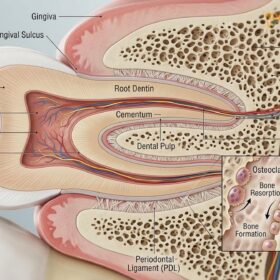
The human masticatory system is naturally designed to process food unilaterally. When you possess a full complement of natural teeth, the periodontal ligaments surrounding each tooth root provide continuous proprioceptive feedback to the brain. This neurological loop allows you to instinctively shift food to your dominant chewing side, applying up to 200 pounds of occlusal force without conscious thought. However, when transitioning to removable dentures, this entire biomechanical paradigm shifts dramatically. The absence of periodontal ligaments means the loss of micro-sensory feedback, and the foundation of support transfers entirely from the alveolar bone to the resilient, yet vulnerable, oral mucosa.
Because a complete denture functions as a single, rigid unit resting on the gingival tissues, applying unilateral force creates a fulcrum effect. If you bite down on a piece of food solely on the left side, the right side of the denture will inevitably lift, breaking the peripheral seal and causing immediate loss of suction. This rocking motion not only leads to embarrassing denture displacement during meals but also causes the hard acrylic base to rub aggressively against the underlying gums, resulting in painful friction ulcers and accelerated bone resorption[1].
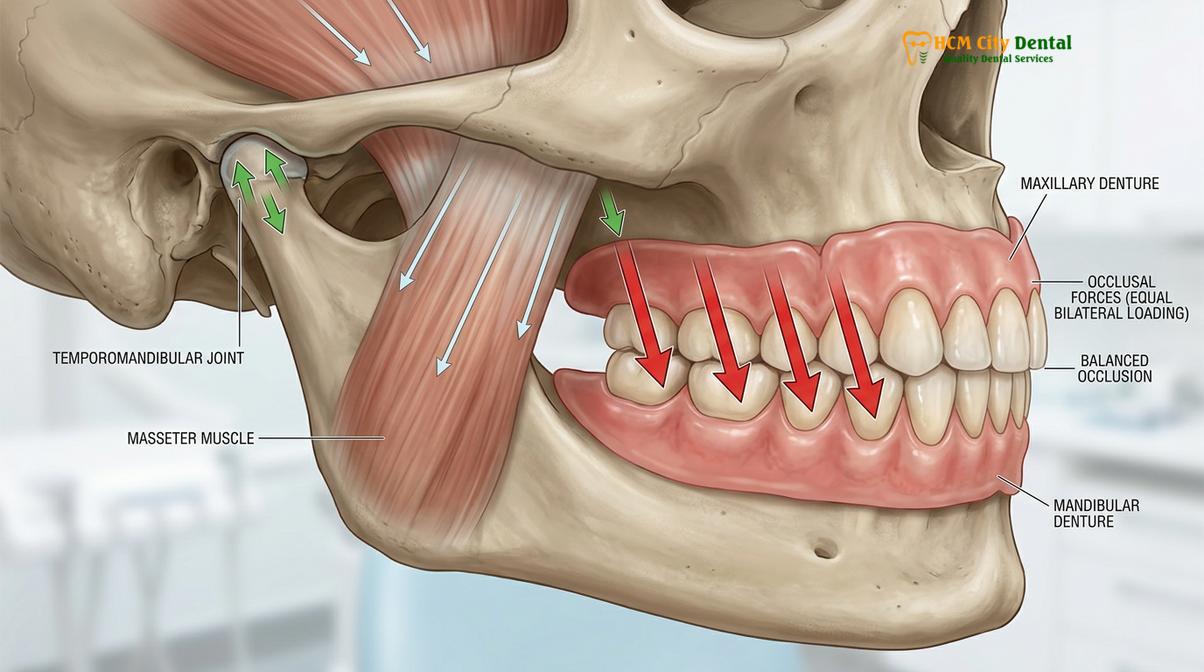
To counteract this, patients must consciously train themselves in the art of bilateral mastication. This technique involves dividing every bite of food in half using the tongue, placing one portion on the left posterior teeth and the other on the right posterior teeth, and chewing simultaneously. Achieving this chewing force balance ensures that the downward pressure is distributed equally across the entire alveolar ridge, effectively seating the denture more firmly into the tissues rather than dislodging it.
“The transition from natural dentition to complete removable prosthetics is as much a neurological rehabilitation as it is a mechanical one. Patients must actively override decades of muscle memory to master bilateral chewing, which is the absolute cornerstone of prosthetic stability.”
Dr. Nguyen Van Cuong frequently reminds patients that this neuromuscular retraining does not happen overnight. The buccinator muscles in the cheeks and the intrinsic muscles of the tongue must learn new roles. Instead of merely moving food around, these muscles must now actively work to keep the denture borders sealed while simultaneously managing the food bolus. This complex coordination requires patience, deliberate practice, and a deep understanding of how your new general dentistry prosthetics interact with your oral anatomy.
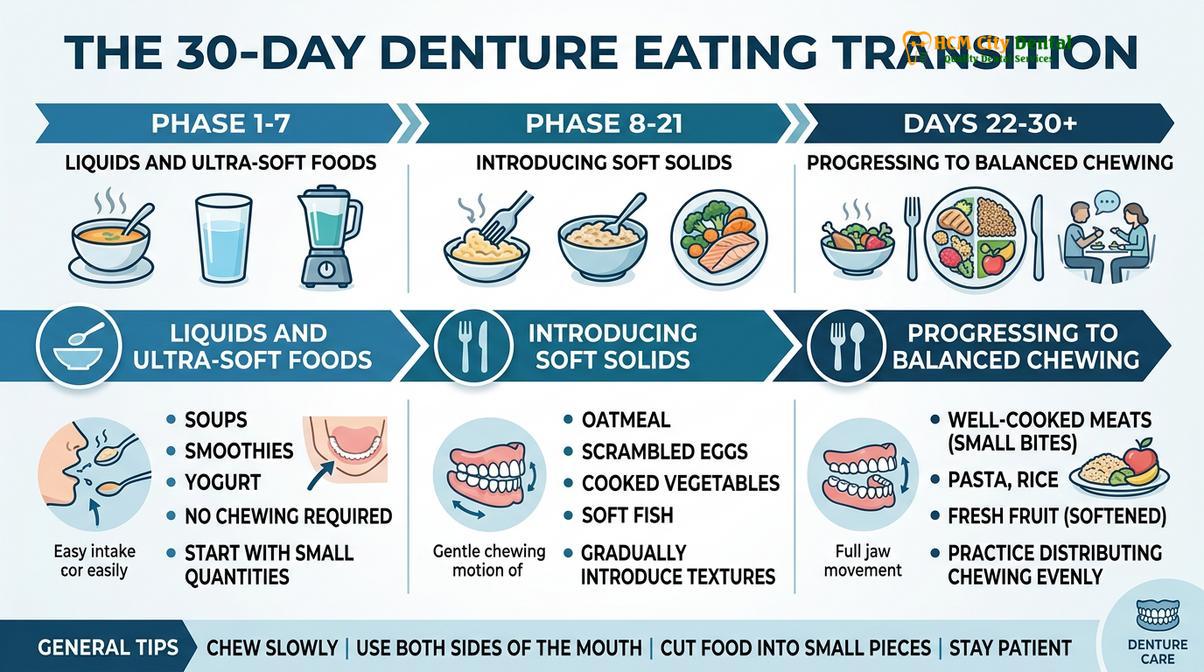
Days 1–7: The Liquid and Puréed Diet Survival Guide
The first week focuses on minimizing occlusal stress and allowing the oral mucosa to adapt to the acrylic base. A strict liquid and puréed diet prevents friction-induced ulcerations and early displacement.
The initial seven days following the delivery of new dentures—particularly if they are immediate dentures placed right after tooth extraction—represent the most critical phase of tissue adaptation. During this period, the gums are often edematous (swollen), highly sensitive, and undergoing active cellular remodeling. Subjecting these healing tissues to the compressive and shear forces of solid food can cause severe pain, disrupt blood clot formation in extraction sockets, and create deep mucosal ulcerations that delay the overall rehabilitation process.
Therefore, a strict adherence to a liquid and puréed diet is clinically mandated. The primary objective during this first week is to maintain adequate caloric and nutritional intake without requiring the jaws to exert any significant masticatory force. Patients should rely heavily on nutrient-dense broths, blended cream soups, and high-protein nutritional shakes. These liquids pass through the oral cavity with minimal manipulation, allowing the tongue and cheeks to begin acclimating to the physical bulk of the acrylic prosthesis without the added complication of managing a solid food bolus[2].
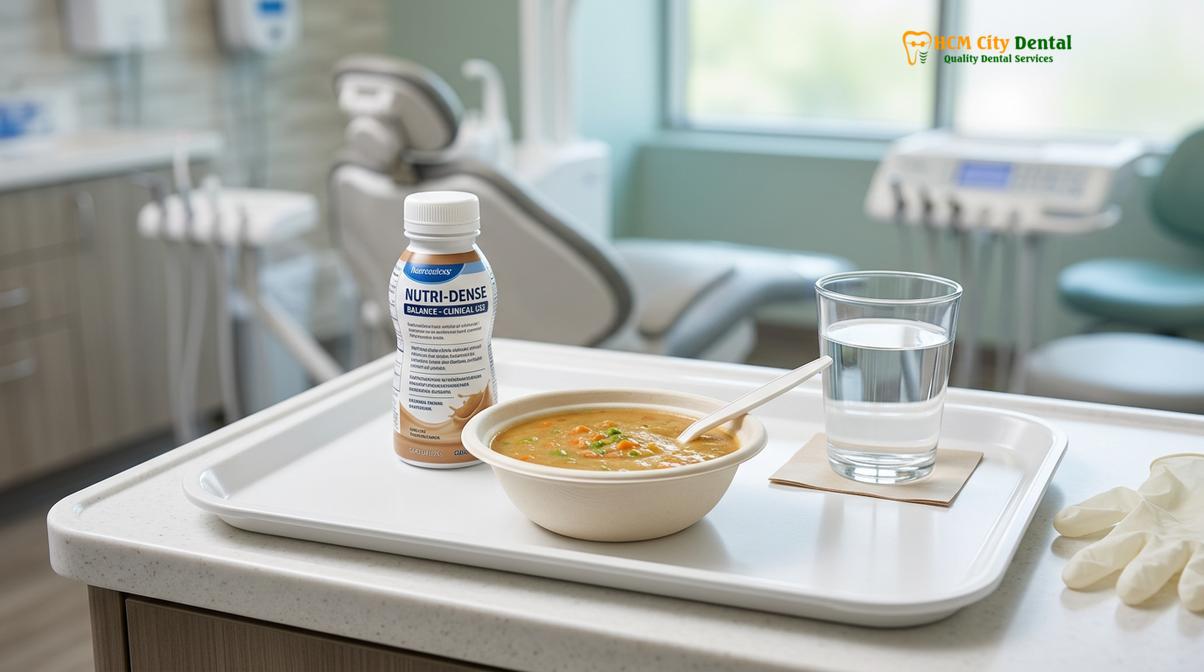
When consuming liquids, it is vital to avoid using a straw. The negative intraoral pressure created by the sucking motion can easily dislodge the upper denture by breaking the palatal suction seal. Furthermore, if extractions were recently performed, this suction can dislodge the protective blood clots, leading to a painful condition known as alveolar osteitis, or dry socket. Instead, liquids should be sipped slowly and deliberately from a cup or a spoon.
By days four through seven, as the initial swelling begins to subside, patients can slowly introduce slightly thicker purées. Applesauce, smooth yogurt, thoroughly mashed potatoes, and puréed vegetables provide a safe bridge toward more substantial textures. Even with these highly processed foods, patients should begin practicing the fundamental motions of chewing force balance. Gently bringing the upper and lower teeth together through the soft purée helps the temporomandibular joints (TMJ) and the muscles of mastication begin to register the new occlusal vertical dimension established by the dentures.
Days 8–21: Introducing Soft Solids and Sliced Proteins
As mucosal tissues toughen, patients can gradually introduce soft solids and finely sliced proteins. The focus shifts to cutting food into small, manageable pieces to minimize the required chewing force.
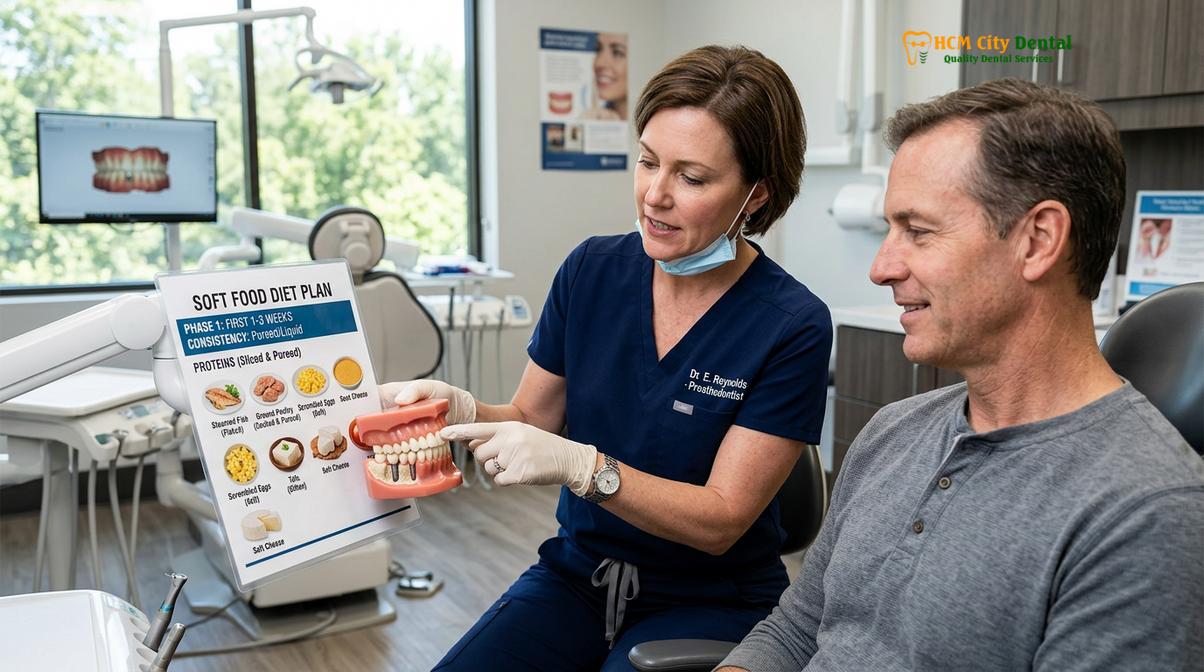
Entering the second week marks a significant milestone in the eating with dentures guide. The oral mucosa has begun to keratinize slightly, becoming more resilient to the presence of the polymethyl methacrylate (PMMA) denture base. The initial post-insertion inflammation has largely resolved, and the patient’s tongue has become more adept at navigating the reduced intraoral space. It is at this juncture that a structured soft food diet plan is implemented, transitioning the patient from passive swallowing to active, albeit gentle, chewing.
The introduction of soft solids must be methodical. The goal is to select foods that require minimal occlusal force to break down, thereby protecting the underlying alveolar bone from excessive pressure spikes. Excellent choices during this phase include scrambled eggs, baked flaky fish (such as tilapia or cod), well-cooked pasta, and steamed vegetables that can be easily mashed with a fork. These foods provide essential structural resistance to help build masticatory muscle tone without overwhelming the newly acquired bilateral chewing technique[3].
| Adaptation Phase | Recommended Food Textures | Clinical Rationale | Preparation Technique |
|---|---|---|---|
| Days 1-7 | Liquids, broths, nutritional shakes, smooth yogurt | Prevents tissue trauma during peak mucosal edema; protects extraction sites. | Blend thoroughly; serve at lukewarm temperatures; avoid straws. |
| Days 8-14 | Scrambled eggs, mashed potatoes, flaky fish, soft pasta | Initiates gentle occlusal loading; begins training bilateral mastication. | Mash with a fork; cut into pieces no larger than a pea. |
| Days 15-21 | Ground meats, slow-cooked poultry, steamed soft vegetables | Increases masticatory muscle endurance; tests denture retention under mild shear forces. | Dice finely; ensure meats are braised or stewed for maximum tenderness. |
| Days 22-30+ | Tender solid meats, crispier vegetables, soft breads | Finalizes neuromuscular adaptation; establishes long-term dietary habits. | Slice thinly across the grain; continue strict bilateral chewing. |
When introducing proteins, preparation is paramount. Tearing meat with the front teeth—an action known as incisal biting—is strictly contraindicated for conventional denture wearers. The anterior teeth of a denture are positioned primarily for aesthetics and phonetic function, not for heavy shearing. Biting into a piece of chicken or a sandwich with the front teeth will instantly lever the posterior section of the denture downward. Therefore, all proteins must be sliced into extremely small, bite-sized pieces before entering the mouth. Ground meats, such as soft meatballs or meatloaf, are highly recommended during this phase as the muscle fibers have already been mechanically broken down.
Days 22–30: Balancing Chewing Forces on Both Sides of the Mouth
By the fourth week, patients must perfect chewing force balance by distributing food equally on the left and right posterior teeth. This stabilizes the denture base and enhances masticatory efficiency.
As patients enter the final week of their initial 30-day adaptation period, the focus shifts from merely surviving meals to optimizing masticatory efficiency. By this stage, the soft tissues have largely adapted to the frictional demands of the prosthesis, and the patient should feel significantly more confident in their ability to manage a wider variety of textures. However, true functional success hinges entirely on the mastery of chewing force balance.
Bilateral simultaneous mastication is not a natural human reflex; it is a learned mechanical skill. When a piece of food is introduced into the mouth, the tongue must actively divide the bolus. Half of the food is pushed to the left premolars and molars, while the other half is pushed to the right. As the mandible elevates to close the bite, the occlusal surfaces of the upper and lower dentures meet the food simultaneously on both sides. This bilateral loading ensures that the denture base is pressed uniformly into the mucosal tissues, maximizing the surface area contact and reinforcing the peripheral seal[4].
Clinical Case Review: Neuromuscular Adaptation
A 62-year-old patient presented to HCMC Dental Clinic in Ho Chi Minh City experiencing chronic denture displacement during meals. Clinical evaluation revealed excellent peripheral seal and occlusion, but the patient was habitually chewing exclusively on the right side. After a two-week retraining program focused on bilateral mastication and dividing food boluses, the patient reported a complete cessation of dislodgement and a significant reduction in mucosal sore spots, demonstrating the critical nature of chewing force balance.
Failure to maintain this balance results in immediate instability. If a patient reverts to unilateral chewing, the non-chewing side (the balancing side) loses contact, causing the denture to tilt. This tilting breaks the suction, allowing air and saliva to rush under the acrylic base, leading to sudden denture displacement. To prevent this, patients must remain highly conscious of their chewing mechanics during every meal. Taking smaller bites significantly aids this process, as a smaller volume of food is easier for the tongue to divide and control.
Furthermore, patients must learn to chew using a vertical, up-and-down motion rather than the lateral, side-to-side grinding motion typical of natural dentition. Lateral excursions generate high horizontal shear forces that easily dislodge conventional removable prosthetics. By keeping the chewing strokes vertical and bilateral, the forces are directed straight down onto the supportive alveolar bone, ensuring maximum stability and minimizing the risk of tissue trauma.
Crucial Safety Alerts: Assessing Food Temperatures on Numb Acrylic Gums
The acrylic palate of an upper denture acts as an insulator, masking the true temperature of foods and liquids. Patients must test temperatures on their lips before ingestion to prevent severe pharyngeal burns.
One of the most critical, yet frequently overlooked, aspects of adapting to complete dentures involves thermal perception. The hard palate of the human mouth is densely populated with sensory nerve endings that detect temperature variations, acting as a vital early warning system to prevent the ingestion of scalding foods or liquids. However, a conventional upper denture features a full palatal plate crafted from polymethyl methacrylate (PMMA) or similar acrylic resins. This material is a highly effective thermal insulator.
Because the acrylic covers the entire roof of the mouth, the patient’s ability to gauge the temperature of a food bolus is severely compromised. A spoonful of soup that feels pleasantly warm against the acrylic may actually be near boiling. If this liquid is swallowed without proper thermal assessment, it can cause severe, immediate burns to the soft palate, the pharynx, and the esophagus. These thermal injuries are not only intensely painful but can also lead to significant swelling that compromises the airway or requires emergency medical intervention[5].
Important Clinical Warning: Thermal Insulation Risk
Never rely on the sensation inside your mouth to judge the temperature of food or beverages while wearing an upper denture. The acrylic palate blocks thermal receptors. Always test the temperature of hot liquids and foods against your lips or the tip of your tongue (which remains uncovered) before taking a full bite or sip to prevent severe esophageal burns.
Dr. Nguyen Van Cuong strongly advises all new denture wearers to implement strict hot food safety protocols. Before consuming any heated meal, a small amount of the food or liquid should be touched to the vermilion border of the lips. The lips remain highly sensitive and will accurately register the true temperature. Additionally, stirring hot liquids thoroughly and allowing them to sit for several minutes before consumption is a mandatory practice. Patients must also be cautious with foods that retain heat internally, such as microwaved pastries, baked potatoes, or melted cheese, as the exterior may feel cool while the interior remains dangerously hot.
Foods to Avoid Permanently to Prevent Denture Crack and Splittage
Certain hard, sticky, or tough foods exert excessive shear forces that can fracture acrylic bases or dislodge teeth. Permanently avoiding these items ensures the longevity of the removable prosthesis.
While the goal of prosthetic rehabilitation is to restore as much dietary freedom as possible, patients must accept that conventional dentures have mechanical limitations. Unlike implant-supported overdentures, which are anchored securely to the jawbone, traditional removable dentures rely entirely on tissue support and suction. Consequently, certain categories of food pose a persistent threat to both the structural integrity of the prosthesis and the health of the underlying tissues.
The sticky foods risk is perhaps the most immediate concern. Foods such as caramel, taffy, chewing gum, gummy candies, and peanut butter possess high adhesive properties. When a patient bites into these items, the food bonds tightly to the acrylic teeth. As the jaw opens for the next chewing stroke, the adhesive force of the food exceeds the retentive suction of the denture, causing immediate denture displacement. Furthermore, sticky residues are notoriously difficult to clean from the microscopic pores of the acrylic, leading to bacterial colonization and halitosis.
“The structural integrity of a PMMA denture base is highly susceptible to flexural fatigue. Repeatedly subjecting the prosthesis to the extreme shear forces required to crush hard nuts or tear tough crusts will inevitably lead to micro-fractures, eventually resulting in a catastrophic midline split of the denture.”
Hard and unyielding foods must also be permanently restricted. Biting down on ice cubes, hard candies, unpopped popcorn kernels, or whole nuts concentrates massive occlusal force onto a single point of the denture. Because the underlying gum tissue is compressible, the rigid acrylic base flexes under this pinpoint pressure. Over time, this repeated flexing causes material fatigue, leading to hairline cracks that propagate through the base, often resulting in the denture snapping in half. Additionally, tough, fibrous foods like crusty baguettes, beef jerky, and raw carrots require excessive lateral grinding forces that destabilize the bite and cause painful mucosal friction.
When to See a Doctor for Denture Adjustments
The 30-day transition period outlined in this eating with dentures guide is a generalized clinical timeline; individual healing and adaptation rates vary significantly. It is entirely normal to experience mild tissue tenderness and minor speech alterations during the first few weeks. However, certain symptoms indicate that the prosthesis requires professional clinical intervention rather than continued home adaptation.
If you experience localized, sharp pain that does not subside, or if you develop visible, bleeding ulcerations (sore spots) on your gums, you must schedule an adjustment appointment. Do not attempt to alter, file, or adjust the acrylic base yourself, as this can permanently ruin the precise anatomical fit. Sore spots occur when the denture base exerts uneven pressure on a specific bony prominence, and your dentist can easily relieve this pressure using specialized acrylic burs and pressure-indicating paste.
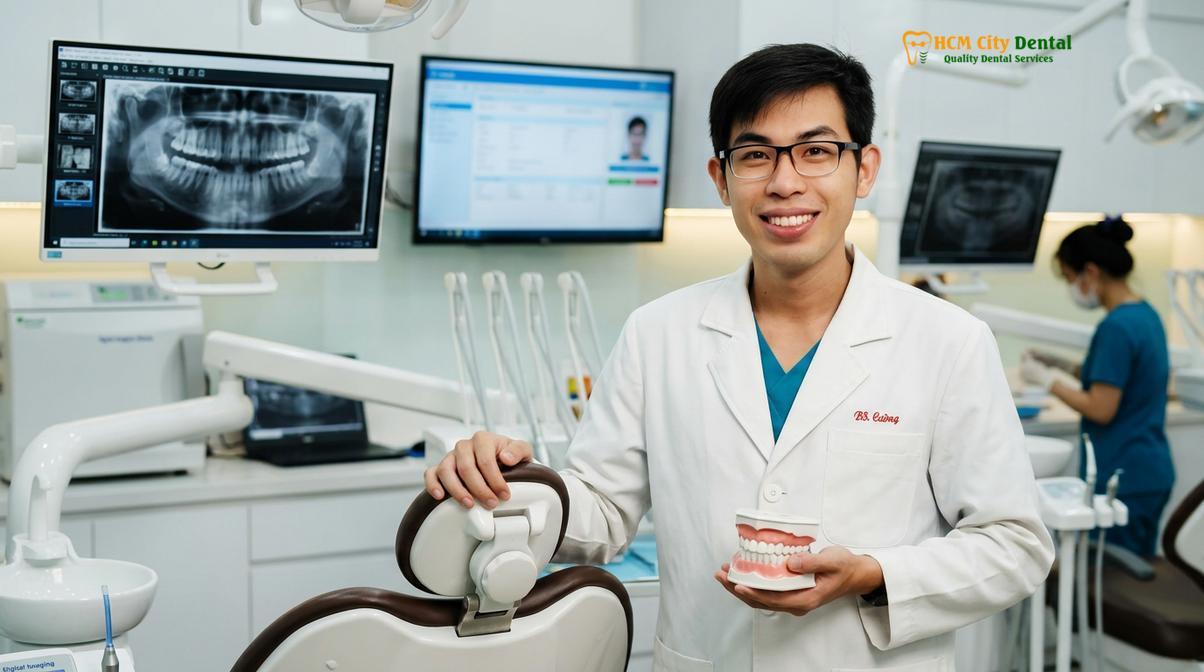
Furthermore, if you find that despite practicing strict bilateral mastication, your dentures consistently lose suction and fall down while speaking or eating, the base may no longer match the contours of your gums. Following tooth extraction, the alveolar bone undergoes rapid resorption, shrinking away from the denture base. When this occurs, a clinical reline is necessary to fill the void and re-establish the peripheral seal. For personalized diagnostics, adjustments, or to explore advanced stabilization options, we encourage patients to consult with the prosthodontic team at HCMC Dental Clinic in Ho Chi Minh City. Regular professional evaluations ensure your prosthetics remain functional, comfortable, and safe for years to come.
Frequently Asked Questions
Can I bite directly into an apple with complete dentures?
Biting directly into hard fruits like apples is strongly discouraged with conventional complete dentures. The incisive force applied to the anterior teeth causes the posterior section of the denture to dislodge, leading to tissue trauma and loss of suction. Instead, apples should be peeled, thinly sliced, and chewed simultaneously on both sides of the mouth to maintain occlusal stability.
Why does food taste different after getting full dentures?
Food often tastes different initially because the upper denture’s acrylic base covers the hard palate, which houses numerous taste buds and sensory receptors. This coverage diminishes the perception of subtle flavors and alters the mouth’s ability to detect temperature and texture. Over time, the brain adapts, and the olfactory system (sense of smell) compensates to improve flavor perception.
Is steak completely off-limits for denture wearers?
Steak is not permanently off-limits, but it requires specific preparation and advanced chewing techniques. Tough cuts of meat exert high shear forces that can destabilize the prosthesis. To safely consume steak, choose tender cuts (like filet mignon), use slow-cooking or braising methods to break down muscle fibers, cut the meat into extremely small pieces, and chew bilaterally.
How do I prevent food from getting trapped under my dentures while eating?
Preventing food entrapment requires maintaining a precise fit and utilizing proper chewing mechanics. Taking smaller bites and avoiding sticky or heavily seeded foods reduces the volume of debris. If food consistently accumulates beneath the acrylic base, it often indicates that the alveolar ridge has resorbed, and you should visit your dentist for a professional reline to restore the peripheral seal.
Will using dental adhesive change how I chew my food?
Dental adhesive can significantly enhance chewing efficiency by stabilizing the prosthesis against the mucosal tissues, reducing micro-movements during mastication. While it provides extra security, it does not replace the need for proper bilateral chewing techniques. Adhesive should be used as a supportive measure, not as a substitute for a well-fitting denture that requires clinical adjustment.
References
- Journal of Prosthetic Dentistry. Neuromuscular adaptation and masticatory efficiency in complete denture wearers. (2021).
- International Journal of Oral and Maxillofacial Surgery. Dietary transitions and mucosal healing post-dental extraction. (2020).
- British Dental Journal. Nutritional impacts of edentulism and prosthetic rehabilitation protocols. (2019).
- Journal of the American Dental Association. Biomechanics of bilateral balanced occlusion in removable prosthodontics. (2022).
- Clinical Oral Investigations. Thermal conductivity of polymethyl methacrylate and oral sensory impairment. (2018).
For further guidance on adapting to your new prosthetics or to schedule a comprehensive fit evaluation, please contact our clinical team.