The Philips Zoom ACP desensitizer is an advanced clinical gel combining amorphous calcium phosphate, potassium nitrate, and fluoride. Applied during or after professional teeth whitening, it rapidly occludes dentinal tubules to eliminate transient sensitivity, rebuild enamel structure, and significantly enhance tooth luster for a comfortable, brilliant smile.
Clinical Summary:
Professional teeth whitening has advanced significantly with the integration of the Philips Zoom ACP desensitizer. Historically, high-concentration hydrogen peroxide treatments caused transient pulpitis due to the rapid oxidation of organic stains within the enamel rods. By incorporating Amorphous Calcium Phosphate (ACP) directly into the bleaching protocol, modern cosmetic dentistry can mitigate this discomfort. ACP acts as a powerful remineralizing agent, precipitating into hydroxyapatite to seal exposed dentinal tubules in real-time. This dual-action approach not only ensures hypersensitivity prevention but also restores the microscopic structural integrity of the tooth, resulting in a smoother surface with enhanced enamel luster and gloss. For optimal aesthetic outcomes, clinical protocols dictate specific treatment sequencing, dietary restrictions during the pellicle reformation phase, and the supplementary use of custom take-home trays loaded with potassium nitrate-infused gels.
Key Takeaways:
- Advanced Technology: Utilizes Philips Zoom! WhiteSpeed and Beyond Polus LED systems for safe, effective in-office bleaching.
- Triple Action Formula: ACP reduces sensitivity, rebuilds enamel micro-defects, and enhances surface gloss.
- Take-Home Maintenance: Custom trays with Opalescence gel (10% or 15%) ensure sustained, long-lasting shade improvement.
- Cosmetic Sequencing: Whitening must be completed and stabilized for two weeks prior to color-matching new restorations.
- Post-Care Protocol: A strict 48-hour “White Diet” is required to prevent secondary staining while the enamel pellicle reforms.
Introducing Advanced Enamel Protection Technology
Modern professional teeth whitening utilizes advanced LED systems paired with active enamel protection to ensure patient comfort while achieving optimal shade improvement without compromising tooth structure.
The landscape of cosmetic dentistry has undergone a paradigm shift. In the past, the primary focus of professional teeth whitening was solely on the rapid oxidation of chromogens (stain molecules) using high concentrations of hydrogen peroxide. While effective at lifting deep intrinsic stains, this aggressive chemical process often left the enamel temporarily dehydrated and porous, leading to a common and uncomfortable side effect known as transient pulpitis, or severe tooth sensitivity. Recognizing this clinical challenge, dental material scientists developed advanced desensitizing technology Philips Zoom to protect the tooth structure during the bleaching process.
Today, the technology standard at leading practices involves the use of the original Philips Zoom! WhiteSpeed blue LED technology and Beyond Polus Halogen/LED systems, both manufactured in the USA. These sophisticated devices use specific wavelengths of light to accelerate the breakdown of hydrogen peroxide into reactive oxygen radicals. However, the true innovation lies not just in the light activation, but in the proprietary gel formulations used in conjunction with these systems. By integrating active desensitizers directly into the bleaching gel or applying them immediately post-treatment, clinicians can now offer a procedure that prioritizes both aesthetic brilliance and structural safety.
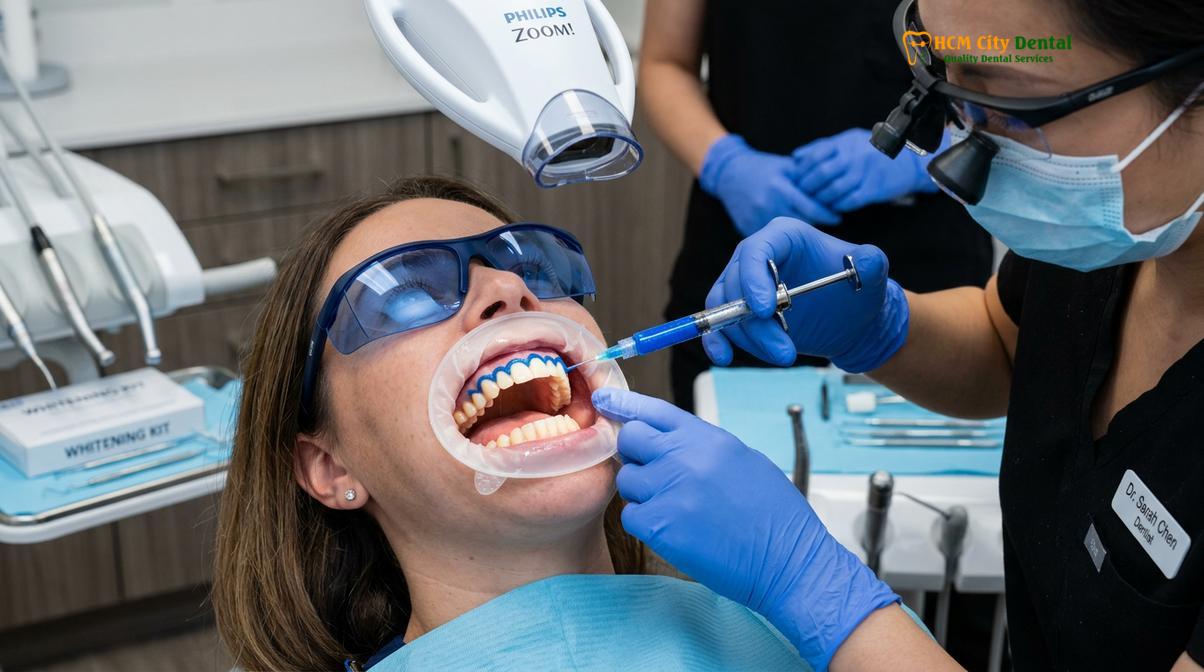
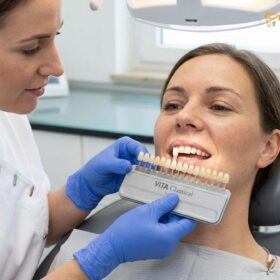
The integration of these protective agents marks the transition from simple cosmetic bleaching to comprehensive enamel therapy. When a patient undergoes an in-office whitening session, the goal is to achieve a noticeable shift on the VITA Classical shade guide—often up to eight shades lighter—while maintaining the biological vitality of the tooth. This delicate balance is achieved through meticulous isolation of the soft tissues using a light-cured gingival barrier, followed by the precise application of pH-balanced whitening gels that actively nourish the enamel as they lift years of accumulated stains.
What is ACP (Amorphous Calcium Phosphate)?
Amorphous Calcium Phosphate (ACP) is a highly reactive, bioavailable compound that serves as a fundamental building block for human teeth, acting as a powerful agent to repair microscopic enamel defects.
To understand the efficacy of modern desensitizers, one must first examine the biochemistry of the tooth. Human enamel is primarily composed of hydroxyapatite, a crystalline structure made of calcium and phosphate. When teeth are exposed to acidic environments—whether from dietary choices, bacterial byproducts, or the oxidative stress of bleaching agents—they undergo demineralization. This process leaches vital minerals from the enamel matrix, creating microscopic voids and increasing the tooth’s permeability.
Amorphous Calcium Phosphate (ACP) was developed as a revolutionary biomaterial to combat this demineralization. Unlike traditional crystalline calcium phosphate, the “amorphous” state of ACP means it lacks a rigid, organized structure. This structural instability makes it highly reactive and rapidly soluble in the oral environment. When applied to the teeth, ACP quickly dissolves, releasing a supersaturated burst of calcium and phosphate ions directly onto the enamel surface[1]. This rapid delivery system makes it an exceptionally effective re-mineralization agent.
“The introduction of Amorphous Calcium Phosphate into cosmetic dental protocols represents a critical advancement; it transforms a purely aesthetic procedure into a therapeutic treatment that actively restores the mineral density of the enamel matrix.”
The concept of Amorphous Calcium Phosphate (ACP) teeth whitening revolves around this continuous cycle of repair. As the hydrogen peroxide breaks down the complex carbon bonds of the stain molecules, the ACP is simultaneously drawn into the newly opened pores of the enamel. Once inside, the ACP undergoes a phase transformation, crystallizing into stable hydroxyapatite. This biomimetic process essentially patches the microscopic defects created during whitening, ensuring that the tooth emerges from the treatment not only whiter but structurally reinforced.
The Triple Action: Reducing Sensitivity, Rebuilding Enamel, and Adding Luster
The ACP formula delivers three distinct clinical benefits: it neutralizes nerve depolarization to stop pain, precipitates minerals to rebuild enamel, and restores a smooth surface for enhanced aesthetic gloss.
The clinical superiority of the Philips Zoom ACP desensitizer lies in its comprehensive, triple-action approach to post-operative care. While many over-the-counter products rely solely on numbing agents to mask discomfort, the ACP protocol addresses the root causes of sensitivity while simultaneously enhancing the cosmetic outcome.
1. Hypersensitivity Prevention: The most immediate benefit of the ACP formula is its profound impact on patient comfort. The gel typically combines ACP with potassium nitrate and sodium fluoride. Potassium nitrate works by penetrating the enamel and dentin to reach the pulpal nerve. Once there, it prevents the nerve from repolarizing, effectively blocking the transmission of pain signals to the brain[2]. This chemical nerve-calming effect, combined with the physical sealing action of the ACP, provides rapid and sustained hypersensitivity prevention, allowing patients to comfortably complete their whitening treatments.
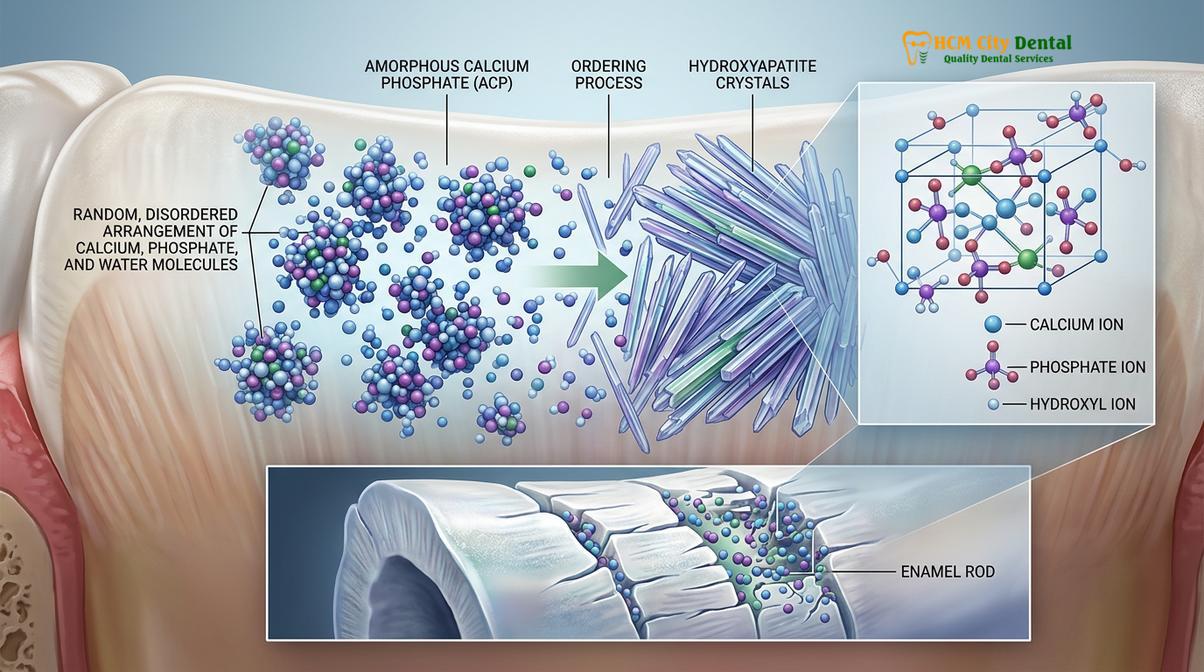
2. Rebuilding Enamel Architecture: As previously discussed, the oxidative reaction of bleaching can leave the enamel temporarily porous. The ACP acts as a liquid enamel, flowing into these microscopic porosities. Through the process of hydroxyapatite formation, the ACP crystallizes and integrates with the natural tooth structure. This remineralization not only strengthens the tooth against future acid attacks but also restores the micro-hardness of the enamel, which can be temporarily reduced immediately following a high-concentration bleaching session.
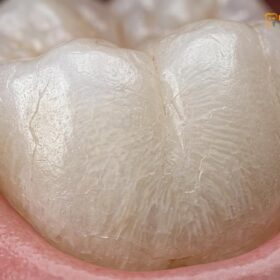
3. Enhancing Enamel Luster and Gloss: The aesthetic benefits of ACP extend beyond simply making teeth whiter. A common issue with older bleaching techniques was that they could leave the teeth looking chalky or matte due to surface dehydration and micro-pitting. By filling in these microscopic surface irregularities, ACP creates a significantly smoother enamel topography. In optics, a smoother surface reflects light more uniformly. Therefore, the application of ACP directly improves the refractive index of the tooth, resulting in a vibrant, natural-looking enamel luster and gloss that cannot be achieved by bleaching alone.
How ACP Fills Dentinal Micro-Tubules in Real Time
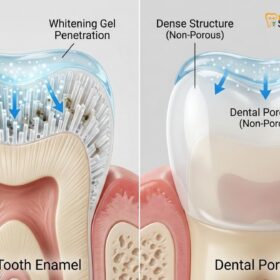
During whitening, dentinal tubules become temporarily exposed; ACP rapidly penetrates these channels, triggering occlusion and promoting hydroxyapatite formation to seal the tooth nerve from external stimuli.
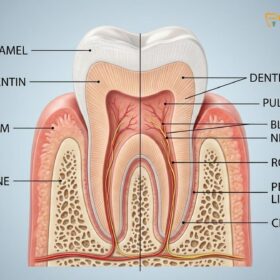
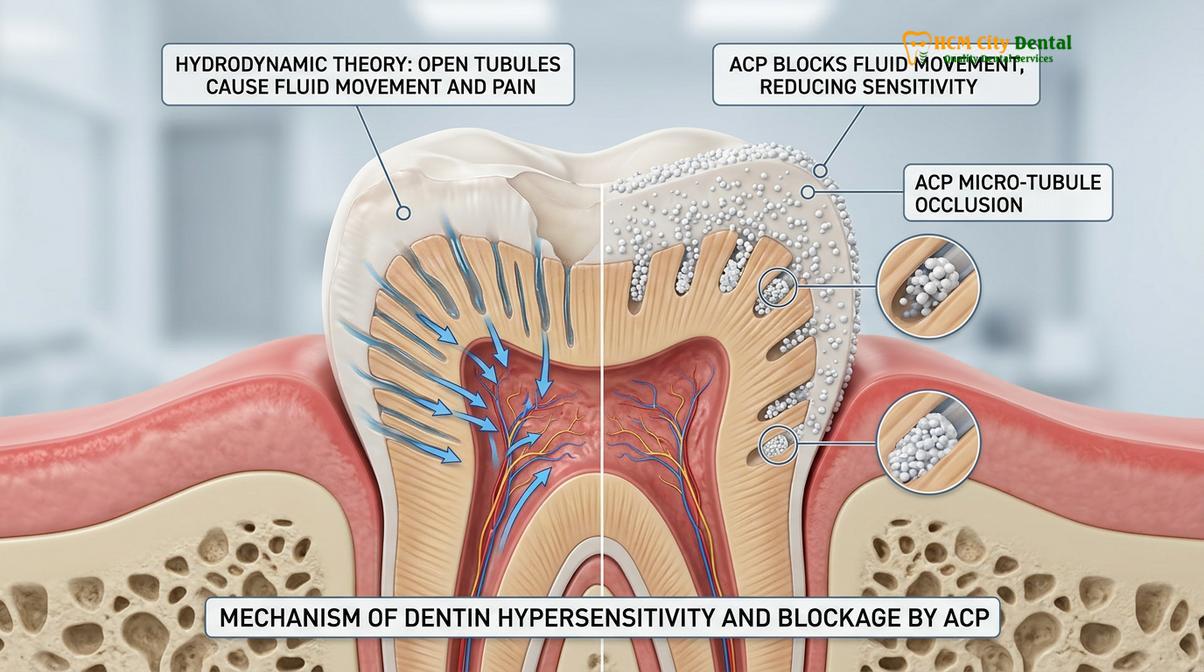
To fully appreciate the mechanism of the Philips Zoom ACP desensitizer, it is necessary to delve into the hydrodynamic theory of tooth sensitivity. Beneath the hard, protective layer of enamel lies the dentin, a softer, porous tissue that makes up the bulk of the tooth. Dentin is traversed by thousands of microscopic channels called dentinal tubules, which radiate outward from the central pulp chamber (where the nerve resides) to the enamel junction.
These tubules are filled with dentinal fluid. According to the hydrodynamic theory, when the enamel is compromised—either through wear, recession, or the temporary removal of the protective protein pellicle during whitening—these tubules become exposed to the oral environment. External stimuli, such as cold air, hot liquids, or the osmotic pressure of whitening gels, cause the fluid inside the tubules to shift rapidly. This fluid movement stimulates the mechanoreceptors on the pulpal nerve, resulting in a sharp, shooting pain.
Clinical Warning: Avoid DIY Whitening Remedies
Professional whitening is highly safe for enamel under dental supervision. However, patients must strictly avoid DIY kitchen remedies like baking soda, activated charcoal, and lemon juice. These substances are highly abrasive and highly acidic, causing permanent, irreversible enamel wear and severe tubule exposure that ACP cannot fully repair.
The Philips Zoom ACP desensitizer combats this through rapid micro-tubule occlusion. When the gel is applied, the supersaturated calcium and phosphate ions are drawn into the open tubules via capillary action. Once inside the confined space of the tubule, the ACP precipitates, forming solid hydroxyapatite plugs[3]. This physical blockage stops the movement of dentinal fluid, effectively cutting off the mechanism that triggers pain. Because this reaction occurs rapidly in the presence of saliva, the occlusion happens in real-time, providing immediate relief to the patient.
Comparing Zoom! ACP vs. Generic Whitening Gels
Unlike generic bleaching agents that strip the enamel pellicle and leave teeth vulnerable, Zoom! with ACP actively repairs the tooth during treatment, especially when paired with premium take-home solutions.
The cosmetic dental market is flooded with various whitening options, ranging from professional in-office systems to generic salon treatments and over-the-counter strips. The critical differentiator between premium clinical systems and generic alternatives is the management of the tooth’s structural integrity during the oxidation process.
Generic whitening gels, often found in non-clinical settings, typically utilize unbuffered hydrogen peroxide or carbamide peroxide. While these agents will oxidize stains, they lack any protective or remineralizing components. Consequently, they strip away the acquired pellicle (the protective protein layer on the teeth) and leave the enamel dehydrated and highly susceptible to secondary staining and severe sensitivity. Furthermore, without a desensitizer, patients often cannot tolerate the gel long enough to achieve optimal results.
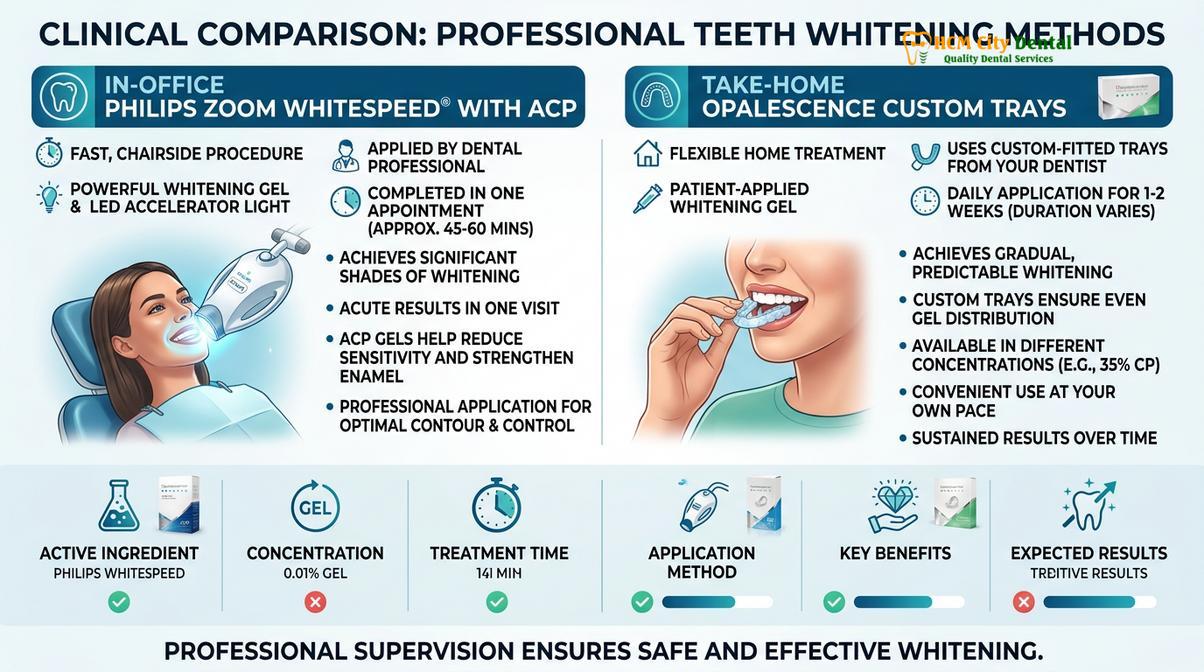
In contrast, the Zoom Whitening ACP Technology Saigon protocol represents a holistic approach to tooth bleaching. The in-office Philips Zoom WhiteSpeed system utilizes a proprietary 25% hydrogen peroxide gel that is co-mixed with the ACP desensitizer at the moment of application. This ensures that as the peroxide breaks down stains, the ACP is simultaneously repairing the enamel.
For sustained results and maintenance, clinical protocols highly recommend the use of custom-fabricated take-home kits. We provide custom bleaching trays loaded with genuine Opalescence (Ultradent, USA) gel. This premium take-home solution contains a PF formula (potassium nitrate and sodium fluoride) to continue the desensitizing and remineralizing process at home. The recommended concentrations are tailored to the patient’s specific needs: 10% carbamide peroxide for overnight wear (ideal for patients with a history of sensitive teeth) and 15% for standard daytime wear[4]. This combination of Ultradent potassium nitrate and custom-fit trays ensures even distribution of the gel and prevents gingival irritation.
| Feature | Philips Zoom! In-Office (with ACP) | Opalescence Take-Home (PF Formula) | Generic/Salon Whitening Gels |
|---|---|---|---|
| Active Agent | 25% Hydrogen Peroxide | 10% – 15% Carbamide Peroxide | Variable (Often unbuffered Peroxide) |
| Desensitizing Tech | Amorphous Calcium Phosphate (ACP) | Potassium Nitrate & Fluoride (PF) | None |
| Application Time | 45 – 60 minutes (LED Activated) | 2 – 8 hours daily (Custom Trays) | Variable (Often poorly regulated) |
| Enamel Protection | High (Active Remineralization) | High (Fluoride Strengthening) | Low (High risk of dehydration) |
Dr. Cuong’s Clinical Feedback on Zoom! Comfort
Clinical observations confirm that integrating ACP into the whitening protocol drastically reduces post-operative transient pulpitis, providing patients with a significantly more comfortable experience compared to traditional treatments.
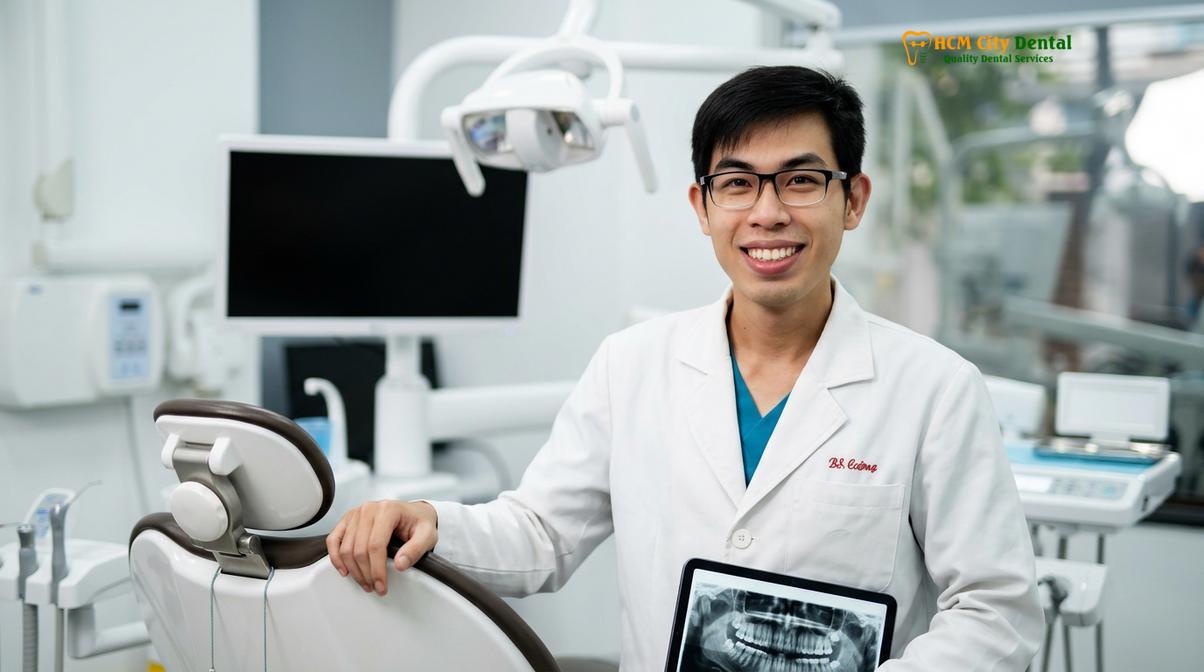
The theoretical benefits of ACP are strongly supported by daily clinical practice. Dr. Nguyen Van Cuong, a leading specialist at HCMC Dental Clinic, emphasizes that patient comfort is the cornerstone of successful cosmetic dentistry. “In the past, the fear of severe, shooting pains deterred many patients from pursuing a brighter smile,” notes Dr. Cuong. “The introduction of the Philips Zoom ACP desensitizer has fundamentally changed our clinical workflow. We can now achieve brilliant, multi-shade improvements with a fraction of the post-operative discomfort.”
At HCMC Dental Clinic in Ho Chi Minh City, the protocol involves a comprehensive pre-screening to assess enamel thickness, existing restorations, and baseline sensitivity levels. Dr. Cuong utilizes the VITA Classical shade guide to establish realistic expectations and meticulously applies the gingival barrier to protect soft tissues. The clinical feedback from this rigorous approach is overwhelmingly positive. Patients frequently report that the procedure is virtually seamless, with any mild sensitivity resolving rapidly thanks to the continuous action of the ACP and potassium nitrate.
Clinical Case Study: Dental Tourism in Saigon
A 34-year-old patient visiting HCMC Dental Clinic in Ho Chi Minh City from Australia presented with moderate tetracycline staining and a history of severe hypersensitivity to over-the-counter whitening strips. Dr. Nguyen Van Cuong prescribed a combined protocol: an in-office Philips Zoom WhiteSpeed session utilizing the ACP desensitizer, followed by a 2-week regimen of 10% Opalescence take-home trays. The patient achieved a 6-shade improvement on the VITA guide with zero reports of the sharp, shooting pains they had previously experienced, highlighting the efficacy of the ACP and PF formulations in managing complex cosmetic cases.
Treatment Sequencing and Post-Whitening Care
Proper cosmetic sequencing requires whitening natural teeth before fabricating restorations, followed by strict adherence to a 48-hour white diet to ensure the newly brightened enamel remains stain-free.
Achieving a perfect smile involves more than just the bleaching session itself; it requires meticulous treatment sequencing and disciplined post-operative care. A fundamental rule in cosmetic dentistry is that whitening must be completed BEFORE getting any new restorations, such as porcelain veneers, ceramic crowns, or composite bonding. Bleaching agents only affect natural tooth structure; they cannot change the color of ceramic or resin materials. Therefore, clinicians must first establish the new, lighter baseline shade of the natural teeth. Following the whitening procedure, a mandatory 2-week stabilization period is required. During this time, the oxygen dissipates from the enamel, and the final shade settles, allowing the dental laboratory to accurately color-match the new restorations.
“The 48 hours immediately following a professional whitening session are critical; the protective salivary pellicle has been temporarily removed, making the enamel highly susceptible to absorbing new pigments if dietary restrictions are not strictly followed.”
Equally important is the patient’s adherence to the “White Diet” during the crucial 48-hour recovery window post-treatment. While the ACP is working to rebuild the enamel, the tooth’s acquired pellicle is slowly reforming. During this vulnerable period, patients must strictly avoid staining pigments, specifically chromogens and tannins. This means completely abstaining from coffee, red wine, dark teas, soy sauce, berries, and smoking. If drinking colored beverages is absolutely necessary, using a straw positioned toward the back of the mouth is highly recommended to minimize contact with the anterior teeth[5].
To make these advanced treatments accessible, HCMC Dental Clinic offers a transparent pricing structure, heavily incentivizing patients who plan their dental tourism trips in advance. According to the latest clinic fee schedule, patients who utilize the WhatsApp booking discount receive a 40% reduction in fees prior to arrival. The In-office Zoom Whitening is available at 2,800,000 VND ($108), down from the walk-in rate of 4,666,667 VND. The custom Take-home Whitening Kit is reduced to 1,500,000 VND ($58). For comprehensive care, the Perfect Smile Combo (In-office + Take-home) is offered at 4,300,000 VND ($166), and the Bright Smile Combo (Professional Clean + Zoom) is available for 3,200,000 VND ($123). Complete peace of mind is ensured with a global warranty and remote WhatsApp checkup support.
When to See a Doctor
While professional teeth whitening with ACP technology is highly safe and effective, it is not suitable for everyone. A comprehensive clinical examination is mandatory prior to any bleaching procedure. You should consult a dentist if you experience severe, unremitting pain following a whitening treatment, as this may indicate underlying pulpal pathology rather than standard transient sensitivity. Furthermore, whitening is contraindicated for women who are pregnant or lactating, patients with active periodontal disease, severe untreated dental caries, or significantly exposed tooth roots (recession), as root dentin does not whiten and is highly prone to sensitivity. Always rely on professional diagnostic advice rather than attempting to self-treat severe discoloration or dental pain.
Frequently Asked Questions
What is ACP in Philips Zoom gel?
ACP stands for Amorphous Calcium Phosphate, a highly reactive compound integrated into Philips Zoom whitening gels. It acts as a rapid delivery system for calcium and phosphate ions, which are the fundamental building blocks of natural tooth enamel and dentin. By delivering these minerals directly to the tooth surface during the oxidation process, ACP helps to mitigate the structural stress typically associated with dental bleaching.
Does ACP help with sensitive teeth?
Yes, ACP is clinically proven to significantly reduce transient tooth sensitivity during and after bleaching procedures. It achieves this by rapidly occluding exposed dentinal tubules, preventing external stimuli from reaching and irritating the underlying pulpal nerve tissue. When combined with potassium nitrate, which calms the nerve chemically, ACP provides a highly effective, dual-action defense against whitening-induced discomfort.
Does Zoom! whitening repair enamel?
While whitening agents primarily oxidize stains, the addition of ACP allows the Zoom! system to actively repair microscopic enamel defects. The ACP precipitates into hydroxyapatite, effectively remineralizing the tooth surface and restoring structural integrity lost during the oxidation process. This biomimetic repair mechanism ensures that the enamel remains strong and resilient after the cosmetic treatment is completed.
Why do my teeth look shinier after Zoom! whitening?
Teeth appear shinier because ACP fills in microscopic surface irregularities, creating a smoother enamel topography. This enhanced smoothness improves the refractive index of the tooth surface, allowing light to bounce off more evenly, which directly increases enamel luster and gloss. Consequently, the teeth do not just look whiter; they exhibit a healthy, vibrant, and natural-looking sheen.
How long does sensitivity last after Philips Zoom whitening?
Any transient sensitivity experienced after a professional Zoom whitening session typically resolves completely within 24 to 48 hours. The continuous action of the ACP desensitizer, combined with proper post-treatment care and the avoidance of extreme hot or cold stimuli during the recovery window, ensures that this temporary pulpal inflammation subsides rapidly without long-term consequences.
References
- Journal of Clinical Periodontology. Tooth bleaching safety and enamel micro-hardness. (2021).
- Journal of Esthetic and Restorative Dentistry. Carbamide vs Hydrogen Peroxide sensitivity. (2020).
- American Dental Association. Clinical guidelines for professional teeth whitening. (2019).
- Journal of Dentistry. Amorphous calcium phosphate re-mineralization. (2022).
- Operative Dentistry. Staining susceptibility of bleached enamel. (2018).