Philips Zoom WhiteSpeed LED technology is an advanced, light-accelerated teeth bleaching system that utilizes a specific blue light spectrum to activate hydrogen peroxide gel. This photochemical activation is designed to safely break down deep enamel stains, delivering a significantly brighter smile in a single clinical visit without compromising the underlying tooth structure [1].
Clinical Summary:
The Philips Zoom WhiteSpeed system represents a highly effective approach in professional cosmetic dentistry for extrinsic and intrinsic stain removal. By utilizing a proprietary blue LED activator, the system accelerates the breakdown of 25% hydrogen peroxide gel, initiating a rapid oxidation process that cleaves chromogenic double bonds within the dentinal tubules. Unlike traditional heat-generating lasers, this cold light technology helps preserve pulpal vitality. The integration of Amorphous Calcium Phosphate (ACP) acts as a desensitizing agent, actively supporting enamel remineralization and reducing transient sensitivity. Comprehensive treatment protocols require meticulous soft tissue isolation using a liquid dam block and strict adherence to a 48-hour post-treatment white diet to ensure optimal aesthetic results.
Key Takeaways:
- Zoom WhiteSpeed uses cold blue LED light to accelerate hydrogen peroxide oxidation without overheating the dental pulp.
- Amorphous Calcium Phosphate (ACP) is integrated into the gel to support enamel health and minimize post-operative sensitivity.
- A light-cured liquid rubber dam is mandatory to protect gingival tissues from chemical irritation during the procedure.
- Patients are advised to follow a “White Diet” for 48 hours post-treatment while the protective salivary pellicle reforms.
- Whitening should generally be completed and stabilized for two weeks prior to matching shades for new crowns or veneers.
The Evolution of Light-Accelerated Bleaching
Light-accelerated teeth bleaching has transitioned from high-heat halogen lamps to advanced cold LED systems, maximizing stain removal efficiency while minimizing pulpal thermal stress.
The pursuit of a brighter, more radiant smile has driven significant advancements in cosmetic dental technology over the past few decades. Historically, professional teeth whitening relied heavily on high-concentration bleaching agents that required prolonged exposure times, often leading to patient discomfort and unpredictable results. The introduction of light-accelerated teeth bleaching revolutionized the industry by acting as a catalyst to speed up the chemical reaction of the whitening gel [2].
Early iterations of light-activated systems utilized halogen lamps or ultraviolet (UV) light sources. While effective at accelerating the bleaching process, these older technologies generated substantial thermal output. The heat produced by halogen bulbs could penetrate the tooth structure, elevating the temperature of the dental pulp and causing acute, albeit usually transient, pulpitis (inflammation of the nerve). Furthermore, UV light exposure carried inherent risks to the soft tissues of the oral cavity and required extensive protective measures for both the patient and the dental operator.
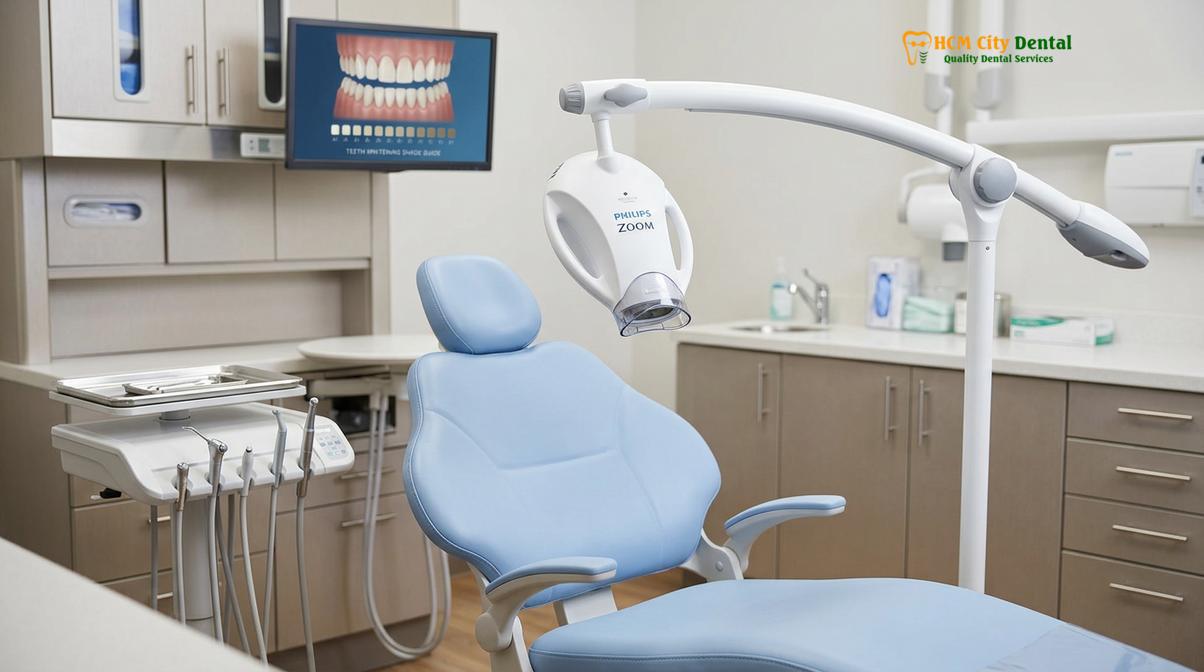
The paradigm shifted dramatically with the development of Light Emitting Diode (LED) technology. Modern systems, such as the Philips Zoom! WhiteSpeed, represent the current standard in aesthetic dentistry. These advanced devices utilize a narrow spectrum of visible blue light, specifically calibrated to a wavelength range of 400 to 505 nanometers. This specific wavelength is highly absorbed by the yellow and orange pigments found in stained teeth, as well as by the photo-initiators present in the proprietary whitening gels.
The Chemistry: How Blue Light Activates Hydroxyl Radicals
The Zoom WhiteSpeed system uses a specific blue LED wavelength to accelerate the breakdown of hydrogen peroxide, rapidly releasing hydroxyl radicals that oxidize deep enamel stains.
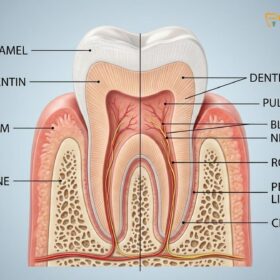
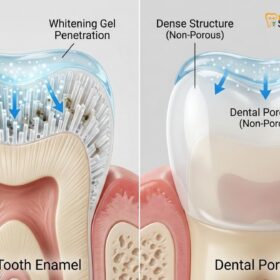
To truly understand the efficacy of the Zoom WhiteSpeed system, one must examine the biochemical interactions that occur at the microscopic level within the tooth structure. The outer layer of the tooth, the enamel, is composed of tightly packed hydroxyapatite crystals forming enamel rods. While enamel is the hardest substance in the human body, it is also semi-permeable. Over time, chromogens—pigmented molecules from coffee, tea, red wine, tobacco, and certain foods—infiltrate the microscopic spaces between these enamel rods and settle into the underlying dentin tubules.
The core active ingredient in professional in-office whitening is hydrogen peroxide (H₂O₂). When applied to the tooth surface, hydrogen peroxide acts as a powerful oxidizing agent. However, simply applying the gel yields a relatively slow chemical reaction. This is where the blue LED activator becomes crucial. When the Philips Zoom gel is exposed to the specific blue light spectrum, it undergoes rapid photochemical activation.
“The brilliance of LED-accelerated bleaching lies in its ability to maximize the oxidative cleavage of chromogens without altering the structural integrity of the hydroxyapatite crystals. We can achieve a profound aesthetic transformation while preserving the tooth’s natural architecture.”
This activation causes the hydrogen peroxide molecules to rapidly decompose into water (H₂O) and highly reactive hydroxyl free radicals (HO•). These free radicals are small enough to easily penetrate the enamel matrix and enter the dentin tubules. Once inside, the oxidation process begins. The radicals attack the complex, long-chain organic chromogen molecules that cause discoloration. By breaking the double carbon bonds of these dark pigment molecules, they are cleaved into smaller, simpler, and lighter-colored compounds that either diffuse out of the tooth or become optically transparent.
Zoom WhiteSpeed LED: Cold Light vs. Laser Heat
Unlike traditional laser whitening which generates significant heat, the Zoom WhiteSpeed blue LED activator uses cold light technology to protect the dental pulp from thermal damage.
In the realm of professional teeth whitening, patients often confuse laser whitening with LED whitening. While both utilize a light source to enhance the bleaching process, the underlying physics and biological impacts on the tooth are fundamentally different. Understanding this distinction is critical for patients seeking safe and comfortable cosmetic dental treatments.
Traditional laser teeth whitening utilizes a focused beam of coherent light, typically from a diode or erbium laser. Lasers are highly energetic and generate a significant amount of thermal energy (heat) as a byproduct. When this heat is directed at a tooth, it accelerates the chemical breakdown of the bleaching gel, but it also transfers heat through the enamel and dentin into the dental pulp. This sudden increase in intra-pulpal temperature can cause the fluid within the dentinal tubules to expand, stimulating the odontoblastic nerve endings and resulting in sharp, shooting pains known as “zingers” during and after the procedure.
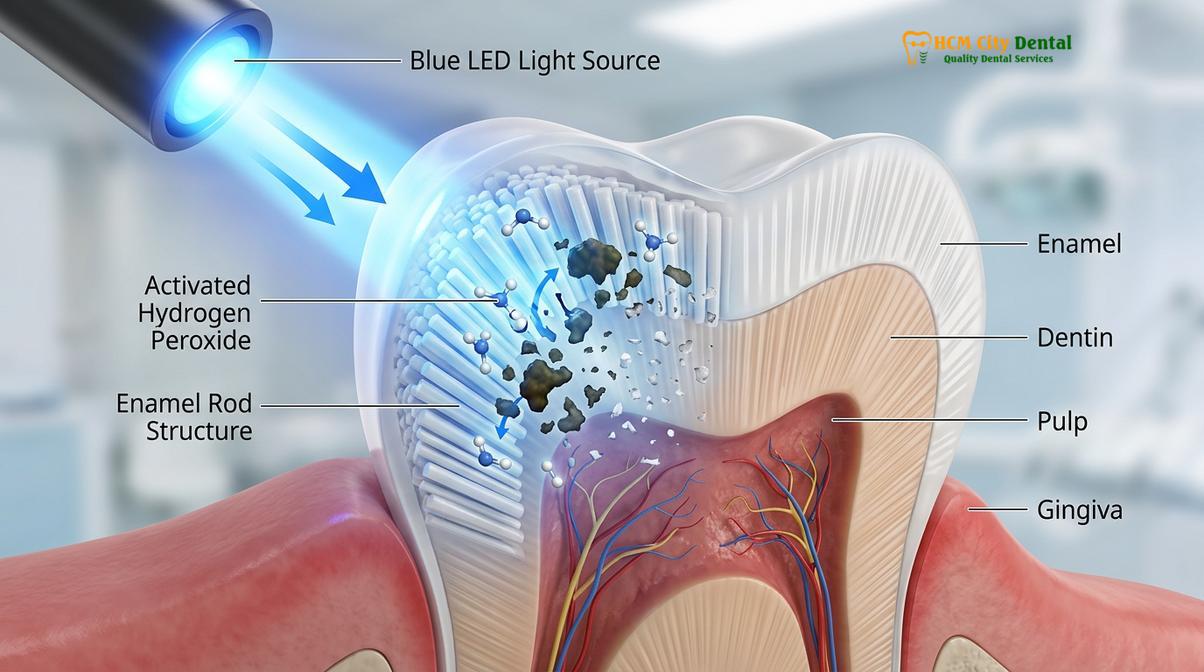
Conversely, the Philips Zoom WhiteSpeed system employs an advanced LED array that emits incoherent, cold blue light. LEDs are highly efficient light sources that convert electrical energy directly into photons with very little wasted heat energy. The specific blue light spectrum is optimized to interact with the photo-activators in the Zoom gel without relying on thermal agitation.
| Feature | Zoom WhiteSpeed (Blue LED) | Traditional Laser Whitening |
|---|---|---|
| Light Source | Cold Light Emitting Diode (LED) | Focused Coherent Laser Beam |
| Thermal Output | Minimal to None (Cold Light) | High (Generates significant heat) |
| Pulpal Risk | Low risk of thermal pulpitis | Higher risk of heat-induced nerve pain |
| Coverage Area | Illuminates both arches simultaneously | Often requires tooth-by-tooth application |
| Patient Comfort | High (Adjustable intensity settings) | Variable (Prone to sharp sensitivity) |
By utilizing cold light technology, the Zoom WhiteSpeed system ensures that the activation of the hydrogen peroxide is driven purely by photochemistry rather than photothermal effects. This makes the procedure significantly safer for the vitality of the tooth nerve and vastly improves the overall patient experience.
Adjustable Intensity: Customizing the Treatment to Your Comfort
The Philips Zoom WhiteSpeed lamp features three adjustable intensity settings, allowing dentists to customize the photochemical activation based on individual patient sensitivity.
One of the most significant clinical advantages of the Philips Zoom WhiteSpeed system is its adaptability to individual patient needs. Tooth sensitivity is the most common side effect associated with any professional bleaching procedure. This transient sensitivity occurs because the oxidation process temporarily opens the microscopic pores in the enamel, exposing the underlying dentin tubules to changes in temperature and air pressure [3].
To combat this, the Zoom WhiteSpeed lamp is engineered with three distinct power settings: Low, Medium, and High. During the procedure, the dentist continuously monitors the patient’s comfort level. If a patient begins to experience the characteristic “zingers” associated with dentinal hypersensitivity, the clinician can immediately reduce the light intensity. This slows down the rate of free radical release, allowing the tooth nerve to accommodate the chemical changes without compromising the final aesthetic outcome.
Clinical Case Review: Sensitivity Management
A 32-year-old patient presented to HCMC Dental Clinic in Ho Chi Minh City requesting a brighter smile for an upcoming event but reported a history of severe dentinal hypersensitivity. The clinical team designed a customized protocol utilizing the Zoom WhiteSpeed system on the “Low” intensity setting combined with the ACP-infused gel. The procedure was completed over three 15-minute cycles with minimal reported discomfort. To maintain the results, the patient was provided with custom-fabricated bleaching trays for gentle, overnight take-home maintenance.
Furthermore, the proprietary Philips Zoom! gel is uniquely formulated with Amorphous Calcium Phosphate (ACP). As the hydrogen peroxide breaks down stains, the ACP acts as an active desensitizing agent. It precipitates into the open dentinal tubules, effectively plugging them and helping to block the transmission of nerve impulses. Additionally, ACP helps to rebuild the enamel surface, restoring its natural luster and smoothness.
Protecting Your Gums with Liquid Rubber Dam
Before applying the whitening gel, a light-cured liquid dam block is meticulously applied to the gingival margins to prevent chemical burns and soft tissue irritation.
The safety of professional in-office teeth whitening relies heavily on the meticulous isolation of the oral soft tissues. The 25% hydrogen peroxide gel used in the Zoom WhiteSpeed system is highly reactive. If this concentrated bleaching agent comes into contact with the gums, lips, or cheeks, it can cause rapid chemical irritation, resulting in tissue blanching (turning white), inflammation, and significant discomfort [4].
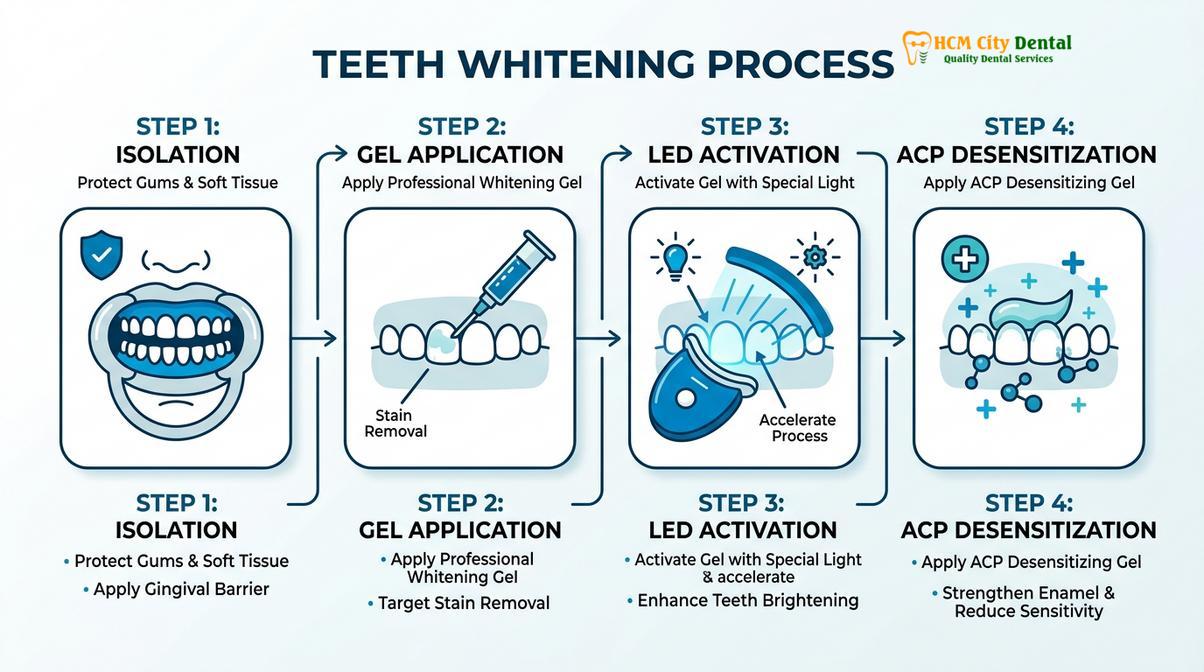
To prevent this, dental professionals employ a rigorous isolation protocol. First, a specialized cheek retractor is inserted to pull the lips and cheeks away from the teeth. Cotton rolls and gauze are strategically placed to absorb saliva and keep the working field completely dry. The most critical step, however, is the application of the liquid dam block.
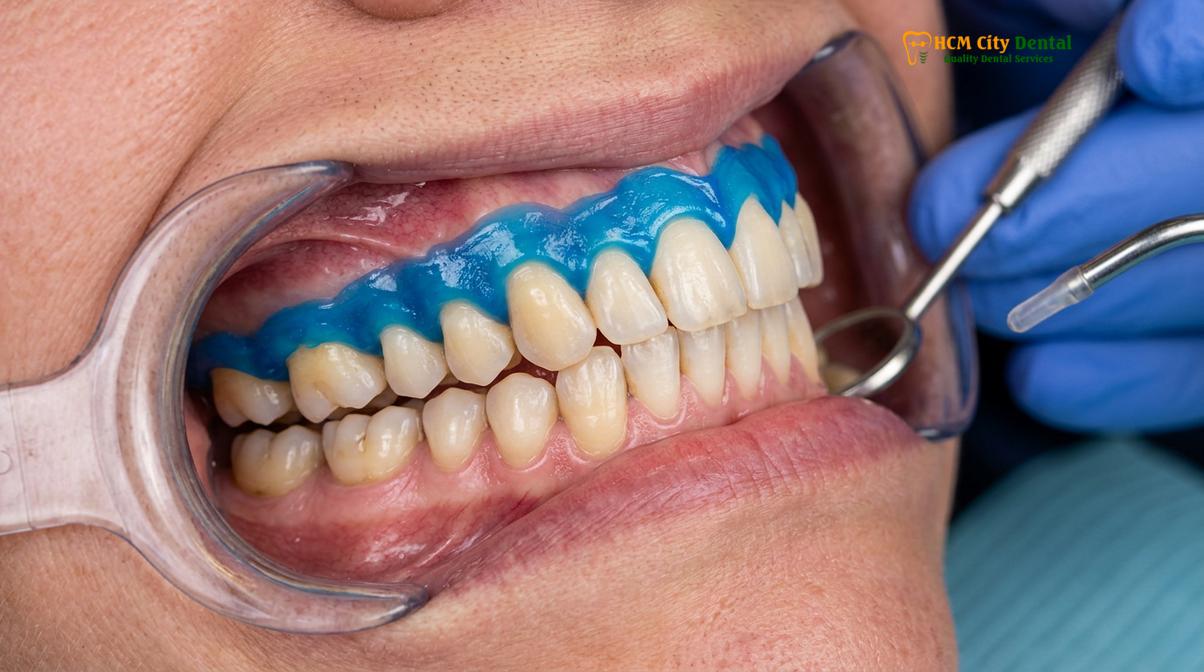
The liquid rubber dam is a flowable, resin-based material that the dentist carefully extrudes along the gingival margin—the exact line where the gums meet the teeth. Once the material is perfectly positioned to cover the interdental papillae and the free gingiva, it is exposed to a standard dental curing light. The light causes the resin to polymerize and harden instantly, creating an impermeable physical barrier. This barrier ensures that the whitening gel remains strictly on the enamel surface and cannot seep down into the sensitive gum pockets.
Clinical Warning: The Dangers of DIY Whitening
Professional teeth whitening is safe for enamel strictly under dental supervision. Patients should avoid DIY kitchen remedies, such as scrubbing teeth with baking soda and lemon juice. Lemon juice contains highly acidic citric acid that aggressively decalcifies enamel, while baking soda acts as a harsh abrasive. Together, they can cause permanent enamel wear, severe sensitivity, and actually make teeth appear yellower over time as the underlying dentin is exposed.
Important Clinical Considerations: When to Consult a Dentist
Not everyone is an ideal candidate for light-accelerated teeth whitening; a comprehensive dental examination is required to rule out contraindications such as active decay or severe gum disease.
Before undergoing any professional whitening procedure, it is imperative to have a thorough clinical evaluation. Patients experiencing active dental caries (cavities), exposed tooth roots due to gingival recession, or untreated periodontal disease should not receive bleaching treatments until these underlying issues are fully resolved. Applying high-concentration hydrogen peroxide to compromised teeth can lead to severe pain and exacerbate existing dental pathologies.
Additionally, pregnant or nursing mothers are generally advised to postpone elective cosmetic procedures, including teeth whitening, as a precautionary measure. Individuals with a known allergy to peroxide or any other ingredients in the whitening gel must also avoid this treatment. Consulting with a qualified dental professional ensures that your oral health is prioritized and that the chosen whitening method is both safe and effective for your specific clinical presentation.
Safety Standards of Philips Zoom! in Vietnam
Professional Zoom whitening in Vietnam adheres to strict clinical safety protocols, ensuring optimal cosmetic results without compromising enamel integrity or causing permanent sensitivity.
As the demand for advanced cosmetic dentistry continues to grow, ensuring the safety and efficacy of treatments like Zoom WhiteSpeed has become a priority for top-tier clinics. Reputable practices strictly adhere to guidelines set forth by organizations such as the Vietnam Odonto-Stomatology Association (VOSA) regarding infection control, material authenticity, and clinical workflows [5].

A crucial aspect of this clinical workflow is proper treatment sequencing. Patients seeking comprehensive smile makeovers must understand that whitening agents only affect natural tooth structure. They have zero effect on ceramic materials or composite resins. Therefore, whitening must always be performed before getting new restorations such as porcelain veneers, dental crowns, or composite bonding. After the bleaching procedure, the oxygen molecules trapped within the tooth structure continue to dissipate. Dentists require a mandatory stabilization period before color-matching new dental work.
“Adhering to strict clinical protocols, including proper soft tissue isolation and the use of ACP-infused gels, allows us to deliver exceptional whitening results while prioritizing the long-term health and comfort of our patients.”
Dr. Nguyen Van Cuong emphasizes that comprehensive dental care extends beyond cosmetic procedures. At HCMC Dental Clinic, the clinical team ensures that every patient receives a thorough evaluation before any whitening treatment, verifying that the teeth and gums are healthy enough to undergo the procedure safely.
If you are looking for professional, safe, and effective teeth whitening, contact HCMC Dental Clinic, Ho Chi Minh City today. We provide comprehensive care for the whole family, including specialized Children & Pediatric Dentistry at HCMC Dental Clinic, ensuring optimal oral health and beautiful smiles for patients of all ages.
References
- Journal of Esthetic and Restorative Dentistry. Photochemical activation of hydrogen peroxide in dental bleaching. (2021).
- Journal of Dentistry. Amorphous calcium phosphate re-mineralization and sensitivity reduction. (2022).
- American Dental Association. Clinical guidelines for professional teeth whitening and soft tissue isolation. (2019).
- Operative Dentistry. Staining susceptibility of bleached enamel and the 48-hour pellicle recovery. (2018).
- Vietnam Odonto-Stomatology Association (VOSA). Guidelines on the safe application of light-accelerated dental bleaching in clinical practice. (2023).