Professional dental cleaning with braces involves specialized ultrasonic scaling and airflow polishing to safely remove plaque and calculus around brackets and archwires. This clinical procedure prevents white spot lesions, gingivitis, and enamel demineralization without damaging orthodontic hardware, ensuring optimal periodontal health throughout your alignment journey.
Clinical Summary:
Maintaining optimal oral hygiene during orthodontic treatment requires more than standard at-home care. The complex architecture of brackets, bands, and archwires creates highly retentive areas for bacterial biofilm, accelerating the formation of subgingival calculus and increasing the risk of plaque-induced gingivitis. To clean teeth with braces professional protocols utilize advanced dual-scaler technology—combining piezoelectric and magnetostrictive frequencies—alongside the Swiss EMS Guided Biofilm Therapy (GBT). This approach leverages low-abrasive erythritol powder to eradicate biofilm without scratching enamel or compromising orthodontic bonds. Regular professional interventions every three to four months are clinically indicated to prevent permanent enamel decalcification (white spot lesions) and ensure the periodontium remains healthy enough to support continuous orthodontic tooth movement.
Key Takeaways:
- Orthodontic hardware significantly increases plaque retention, requiring specialized professional debridement to prevent calculus buildup.
- Dual scaler technology utilizes both piezoelectric and magnetostrictive frequencies to safely clean around delicate brackets.
- Guided Biofilm Therapy (GBT) with 25μm erythritol powder is the gold standard for painless, non-abrasive orthodontic cleaning.
- Professional cleanings prevent irreversible white spot lesions and plaque-induced gingival hyperplasia.
- Orthodontic patients require an accelerated periodontal maintenance schedule, typically every three to four months.
Why Brackets Trap Plaque
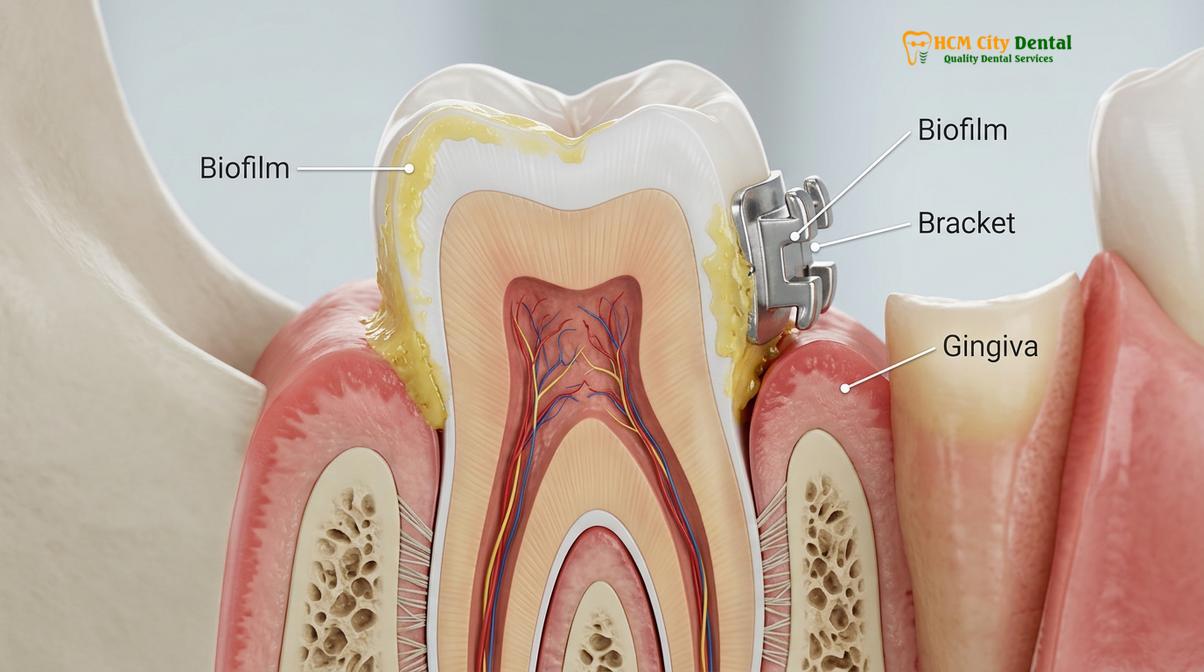
Orthodontic hardware creates microscopic retention areas where biofilm rapidly accumulates, accelerating the transition from soft plaque to hardened subgingival calculus. Regular professional intervention is required to disrupt this bacterial colonization and prevent plaque-induced gingivitis.
The introduction of fixed orthodontic appliances fundamentally alters the oral environment. Under normal circumstances, the smooth surfaces of natural enamel allow for the self-cleansing action of saliva, the tongue, and the lips to sweep away transient bacteria and food debris. However, when brackets, molar bands, elastomeric ligatures, and archwires are bonded to the dentition, they introduce complex geometric structures that disrupt this natural cleansing mechanism. These components create microscopic niches and undercut areas that serve as highly retentive havens for bacterial colonization.
Within hours of brushing, a pellicle layer forms on both the enamel and the orthodontic hardware, providing a substrate for primary bacterial colonizers. If not meticulously removed, this soft biofilm rapidly matures, incorporating pathogenic strains such as Streptococcus mutans and various anaerobic bacteria. The presence of braces makes standard brushing techniques significantly less effective, as toothbrush bristles struggle to penetrate beneath the archwire and around the gingival margins of the brackets. Consequently, plaque accumulation is exponentially higher in orthodontic patients compared to those without braces.
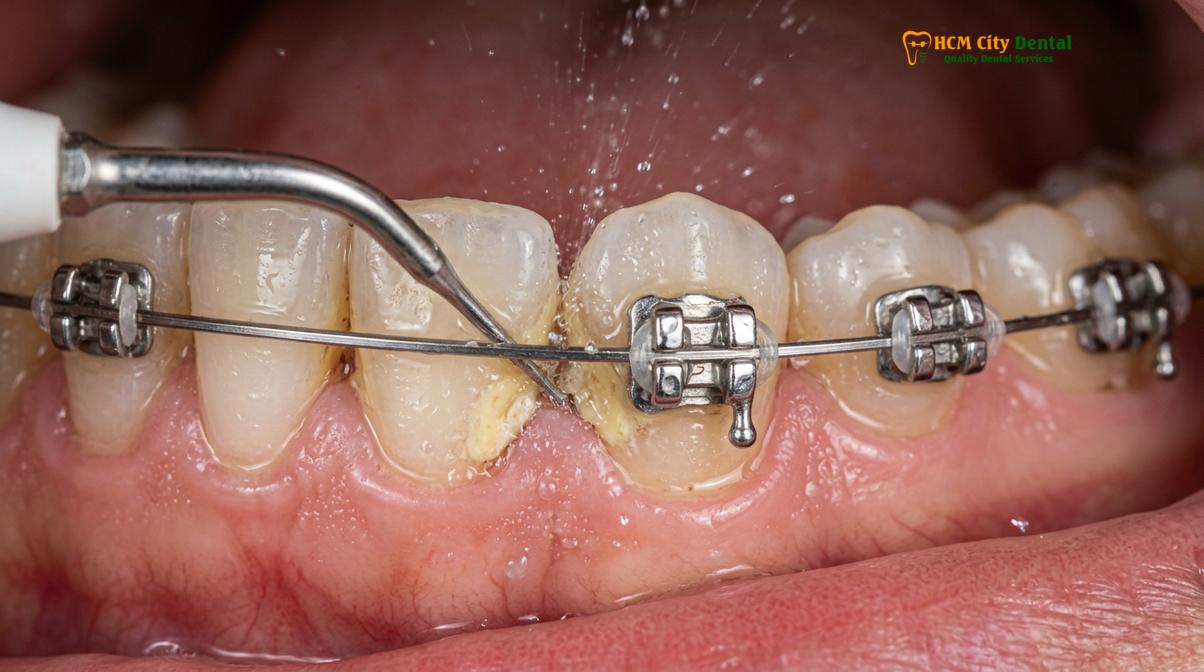
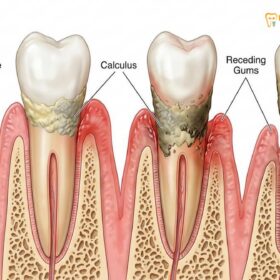
When soft plaque is left undisturbed in these hard-to-reach areas, it begins to mineralize through the absorption of calcium and phosphate ions from the saliva and gingival crevicular fluid. This mineralization process transforms the soft biofilm into hardened calculus (tartar), which bonds tenaciously to the tooth surface and the orthodontic hardware. Once calculus forms, it cannot be removed by at-home brushing or flossing; it requires professional mechanical debridement. The rough surface of calculus further exacerbates the problem by providing an ideal, porous scaffold for even more plaque to accumulate, creating a vicious cycle of bacterial proliferation [1].
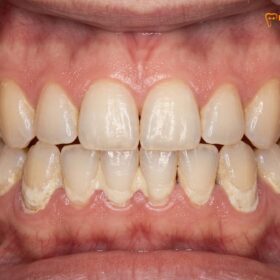
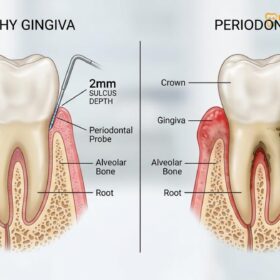
This persistent bacterial load triggers a localized inflammatory response in the gingival tissues, clinically known as plaque-induced gingivitis. Patients often notice their gums becoming erythematous (red), edematous (swollen), and prone to bleeding upon probing or brushing. The inflammatory cascade increases the flow of gingival crevicular fluid, which paradoxically provides more nutrients for the subgingival bacteria. Furthermore, the metabolic byproducts of these anaerobic bacteria include volatile sulfur compounds, which are the primary etiologic agents of chronic halitosis (bad breath) in orthodontic patients. Additionally, dietary habits involving highly pigmented foods and beverages—such as coffee, tea, and dark berries—can lead to severe extrinsic teeth staining, as the porous plaque and calculus readily absorb these chromogens.
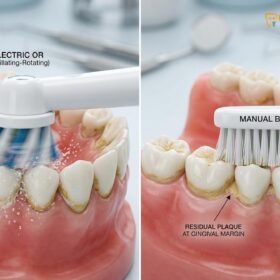
To combat these comprehensive challenges, a robust at-home oral hygiene routine is paramount, though rarely sufficient on its own. Orthodontic patients are instructed to utilize modified brushing techniques, such as the Charters method, which angles the bristles at 45 degrees toward the occlusal surface to clean the bracket margins effectively. Adjunctive tools, including interdental brushes, floss threaders, and water flossers, are critical for disrupting interproximal biofilm and flushing out debris from beneath the archwires. However, despite the most diligent home care, microscopic biofilm inevitably persists, necessitating regular, specialized professional interventions to maintain periodontal health and ensure the structural integrity of the enamel.
Cleaning Around Archwires
Safely debriding calculus around delicate archwires requires advanced dual-scaler technology, utilizing both piezoelectric and magnetostrictive frequencies to protect enamel and orthodontic bonds.
The clinical challenge of performing a professional dental prophylaxis on an orthodontic patient lies in the delicate balance between achieving comprehensive calculus removal and preserving the integrity of the orthodontic hardware. Aggressive instrumentation can inadvertently debond brackets, distort archwires, or scratch the composite resin used for attachment. To navigate this complexity, modern dental clinics employ sophisticated ultrasonic scaling technologies that rely on high-frequency vibrations and fluid dynamics rather than sheer mechanical force.
At HCMC Dental Clinic, we utilize a Dual Scaler Advantage, incorporating both Piezoelectric and Magnetostrictive ultrasonic systems to customize the debridement process based on the specific clinical presentation of the orthodontic patient. This dual approach ensures maximum efficacy while maintaining the highest safety standards for enamel preservation.
Piezoelectric Scalers, such as the advanced Acteon/Satelec systems, are often the instrument of choice for orthodontic patients. These devices utilize ceramic crystals that expand and contract when an electrical current is applied, producing a linear, back-and-forth motion at the tip. Operating at frequencies up to 32 kHz, piezoelectric scalers are exceptionally precise. Because only the lateral sides of the tip are active, the clinician can carefully adapt the instrument parallel to the tooth surface and the bracket margins. This linear motion is significantly gentler, generating less heat and minimizing the risk of micro-fractures in the enamel or the orthodontic adhesive. It is highly preferred for patients with dentinal hypersensitivity, pediatric patients, and those undergoing active orthodontic alignment.
Conversely, Magnetostrictive Scalers, such as the Dentsply Cavitron, utilize a stack of metal strips that expand and contract in a magnetic field, creating an elliptical or figure-eight motion at the tip. This means all surfaces of the tip—front, back, and sides—are active. While this elliptical motion is highly efficient for breaking down heavy, tenacious calculus and performing full mouth debridement, it requires meticulous angulation when used around braces to avoid inadvertently striking the brackets with the active face of the tip. Magnetostrictive technology is particularly valuable when addressing deep subgingival tartar that may have accumulated due to prolonged periods between professional cleanings.
“The integration of piezoelectric technology in orthodontic maintenance allows for the precise disruption of biofilm and calculus without compromising the shear bond strength of the brackets. The linear oscillation ensures that the kinetic energy is directed parallel to the tooth surface, safeguarding the enamel architecture.”
Beyond the mechanical vibration, both ultrasonic systems rely heavily on the cavitation effect and acoustic microstreaming. As the scaler tip vibrates at high frequencies, it creates microscopic bubbles in the cooling water spray. When these bubbles collapse (cavitation), they release localized shockwaves that rupture bacterial cell walls, effectively destroying the biofilm. Simultaneously, the rapid movement of the water (acoustic microstreaming) flushes the disrupted bacteria, calculus fragments, and endotoxins out of the periodontal pockets and away from the intricate spaces beneath the archwires [2].
From a clinical perspective, Dr. Nguyen Van Cuong emphasizes the importance of selecting the appropriate ultrasonic power levels during an orthodontic dental cleaning saigon. “When navigating the complex topography of a patient with braces, we must calibrate the ultrasonic frequency to the lowest effective power setting,” notes Dr. Cuong. “This ensures that we achieve thorough subgingival debridement and calculus eradication while absolutely preserving the enamel safety and the structural integrity of the orthodontic appliance.”
Airflow for Braces
Guided Biofilm Therapy (GBT) using warm water and ultra-fine erythritol powder safely eradicates biofilm and stains from complex orthodontic structures without scratching brackets or enamel.
Following the removal of hard calculus via ultrasonic scaling, the next critical phase in an orthodontic cleaning is the eradication of residual soft biofilm and extrinsic stains. Traditional polishing methods, which utilize a rotating rubber cup and abrasive prophylaxis paste, are notoriously inefficient for patients with braces. The rubber cup cannot adapt to the sharp angles of the brackets or reach beneath the archwires, leaving significant amounts of biofilm undisturbed. Furthermore, coarse prophy pastes can scratch the surface of ceramic brackets and leave gritty residue trapped in the elastomeric ligatures.
To overcome these limitations, the contemporary standard of care is airflow polishing, specifically the Guided Biofilm Therapy (GBT) protocol developed by Swiss EMS. GBT represents a paradigm shift in preventive dentistry, utilizing a highly controlled stream of pressurized air, warm water, and specialized powder to gently and comprehensively clean the teeth and orthodontic hardware.
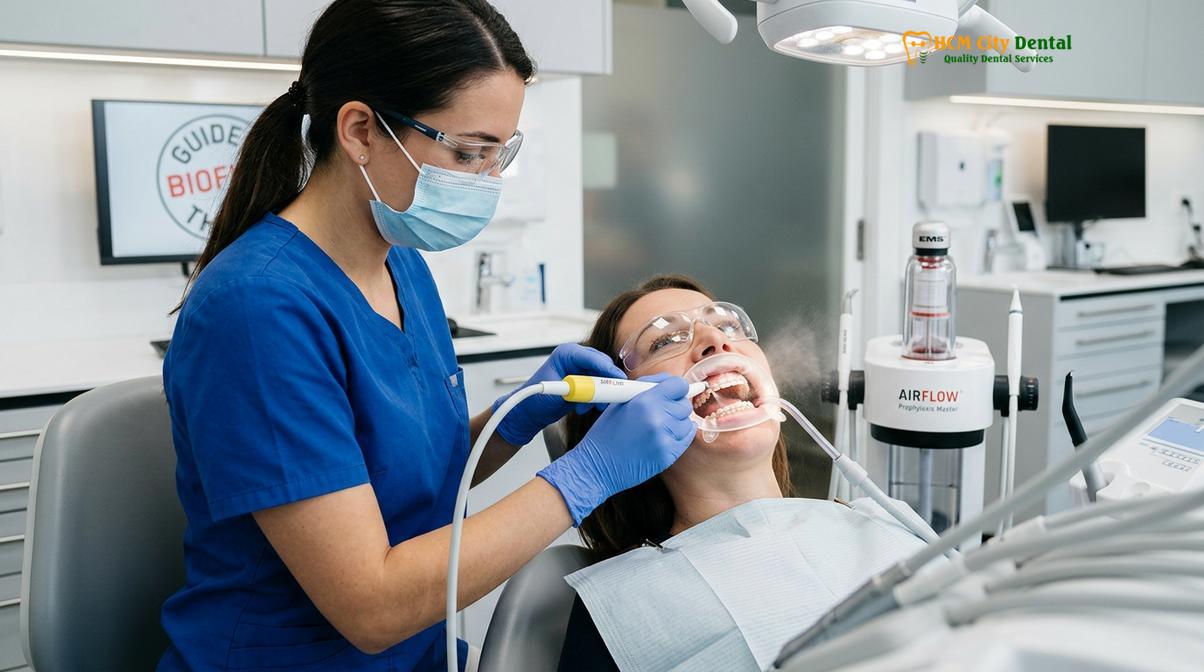
The cornerstone of the GBT protocol for orthodontic patients is the use of erythritol powder. Unlike traditional sodium bicarbonate powders, which have a larger particle size and can be highly abrasive, erythritol is an ultra-fine powder with a grain size of just 25μm. This microscopic particle size allows the powder to act more like a fluid, effortlessly penetrating the microscopic crevices around brackets, beneath archwires, and into the subgingival periodontal pockets up to 4mm deep. Erythritol is minimally abrasive, ensuring that it removes biofilm and stains painlessly and safely without scratching natural enamel, titanium implants, ceramic crowns, porcelain veneers, or delicate orthodontic brackets [3].
The airflow orthodontic cleaning process is highly systematic. The kinetic energy of the erythritol particles, combined with the warm water spray, creates a synergistic effect that disrupts the biofilm matrix and flushes it away. Because the powder is so fine, it does not damage the composite resin used to bond the brackets, nor does it degrade the surface polish of the orthodontic wires, which is crucial for maintaining low friction during tooth movement.
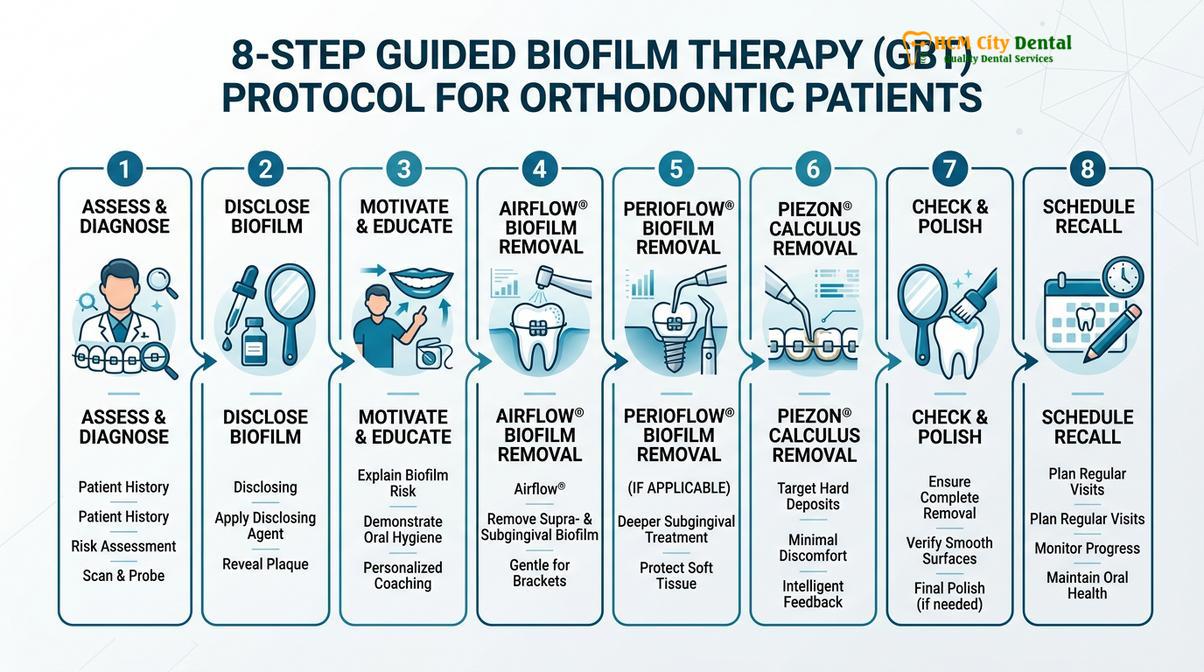
| Step | Clinical Action | Orthodontic Significance |
|---|---|---|
| 1. Assess | Clinical examination of teeth, gums, and hardware. | Identifies areas of gingival hyperplasia and bracket integrity. |
| 2. Disclose | Application of a disclosing dye to highlight biofilm. | Visually guides the clinician to hidden plaque around brackets. |
| 3. Motivate | Patient education based on disclosed biofilm patterns. | Improves targeted at-home brushing techniques for braces. |
| 4. Airflow | Removal of supragingival biofilm and stains using erythritol. | Cleans complex bracket geometry without scratching surfaces. |
| 5. Perioflow | Subgingival biofilm removal in deeper pockets. | Addresses localized periodontitis caused by plaque retention. |
| 6. Piezon | Targeted ultrasonic scaling for remaining calculus. | Safely dislodges tartar without debonding brackets. |
| 7. Check | Final inspection for residual biofilm or calculus. | Ensures complete debridement and hardware safety. |
| 8. Recall | Scheduling the next maintenance appointment. | Establishes the critical 3-4 month orthodontic recall interval. |
The use of warm water in the EMS Airflow system is a critical comfort factor, particularly for orthodontic patients who may experience heightened dentinal hypersensitivity due to tooth movement and localized gingival recession. The precise temperature control ensures a comfortable experience, eliminating the sharp, cold shocks often associated with traditional ultrasonic scaling and water sprays.
Preventing White Spot Lesions
Proactive remineralization protocols, including targeted fluoride varnish application and meticulous biofilm eradication, are essential to halt enamel decalcification and prevent permanent white spot lesions during orthodontic treatment.
One of the most significant and frustrating complications of orthodontic treatment is the development of white spot lesions (WSLs). These opaque, chalky-white areas on the enamel surface are the direct clinical manifestation of subsurface enamel demineralization. When cariogenic bacteria within the plaque biofilm metabolize fermentable carbohydrates, they produce lactic acid. If this acidic environment drops below the critical pH of 5.5, the hydroxyapatite crystals that make up the enamel begin to dissolve, leaching calcium and phosphate ions.
Because brackets act as plaque traps, this acidic challenge is often concentrated around the margins of the orthodontic hardware. If the biofilm is not regularly and thoroughly removed through professional cleanings, the demineralization process accelerates. When the braces are eventually removed, the patient may be left with perfectly straight teeth that are permanently scarred by these unsightly white squares outlining where the brackets used to be.
Effective white spots braces prevention requires a dual-pronged approach: meticulous biofilm eradication and proactive enamel remineralization. Professional cleanings disrupt the bacterial colonies, halting the production of lactic acid and allowing the oral pH to neutralize. Once the tooth surface is completely clean and free of biofilm, the clinician can apply highly concentrated remineralizing agents directly to the vulnerable enamel.
“White spot lesions represent the earliest clinical sign of dental caries. During orthodontic treatment, the continuous presence of biofilm around brackets creates a sustained acidic environment. Interrupting this process through professional debridement and the application of fluoride varnish is critical to shifting the balance from demineralization back to remineralization.”
Fluoride varnish is the gold standard for remineralization in orthodontic patients. When applied to the teeth, the fluoride ions react with the remaining enamel structure to form fluorapatite. Fluorapatite is significantly more resistant to acid dissolution than the original hydroxyapatite, providing a robust chemical shield against future bacterial attacks. Additionally, modern varnishes often contain amorphous calcium phosphate (ACP), which provides the necessary building blocks to repair the microscopic porosities in the decalcified enamel [4].
Clinical Case Review: Enamel Preservation
A 16-year-old patient undergoing active Orthodontics presented to HCMC Dental Clinic in Ho Chi Minh City with early signs of decalcification (chalky margins) around the upper incisor brackets. The patient struggled with interproximal plaque control despite using a water flosser. Dr. Cuong verified the implementation of a strict GBT protocol using 25μm erythritol powder to completely eradicate the retentive biofilm without damaging the composite bonds. Following the debridement, a 5% sodium fluoride varnish containing ACP was applied directly to the affected margins. By shifting the patient to a 3-month recall schedule and reinforcing modified brushing techniques, the progression of the white spot lesions was successfully halted, and the enamel surface demonstrated significant remineralization by the subsequent visit.
It is important to note that once a white spot lesion progresses to actual cavitation (a physical hole in the tooth), it cannot be reversed through remineralization and will require restorative intervention, such as a composite filling. Therefore, the emphasis must always remain on early detection and aggressive preventive maintenance throughout the duration of the orthodontic treatment.
Cleaning Frequency for Ortho Patients
Orthodontic patients require accelerated periodontal maintenance, typically scheduling professional prophylaxis every three to four months to mitigate the heightened risk of gingival hyperplasia and caries.
For the general population with healthy periodontium and no fixed appliances, the standard recommendation for a professional dental cleaning is every six months. However, this interval is entirely insufficient for patients undergoing active orthodontic therapy. The presence of brackets and wires fundamentally changes the risk profile of the patient, categorizing them as high-risk for both caries and periodontal disease.
Clinical guidelines strongly advocate for an accelerated periodontal maintenance schedule for orthodontic patients, typically requiring a professional cleaning every three to four months. This shortened recall interval is based on the biological timeline of plaque maturation and calculus formation. It takes approximately 90 to 120 days for subgingival pathogenic bacteria to repopulate and organize into destructive colonies after a professional debridement. By intervening at the three-to-four-month mark, the clinician disrupts this maturation process before the bacteria can cause irreversible damage to the enamel or trigger severe gingival hyperplasia (overgrowth of gum tissue) [5].
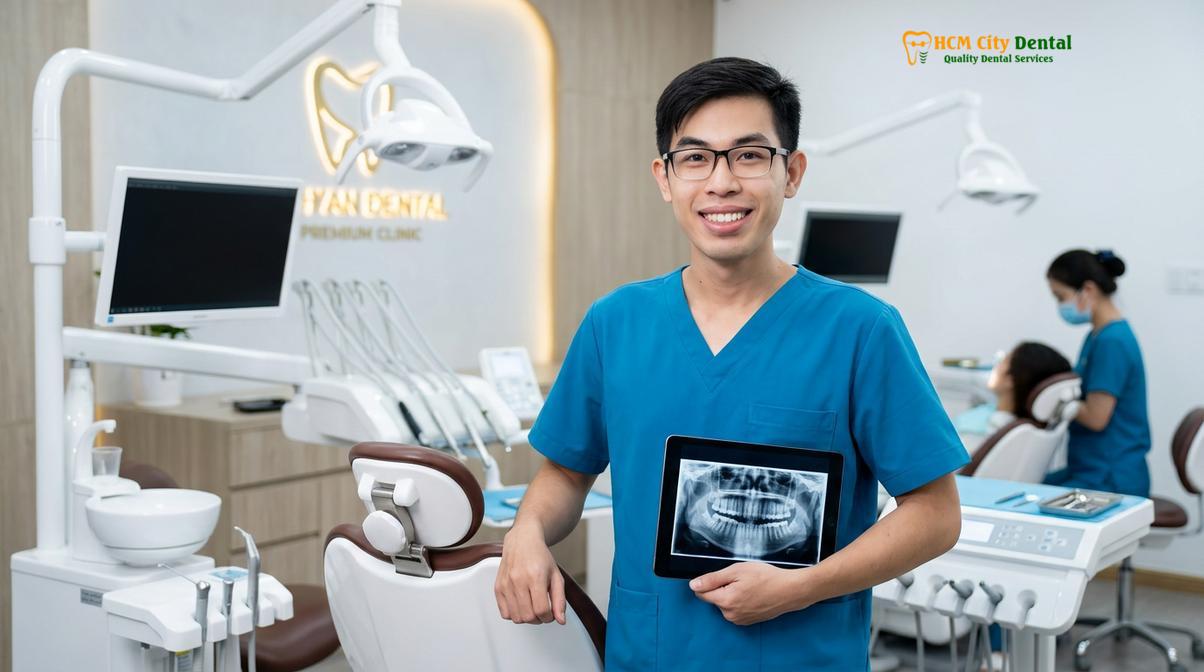
At HCMC Dental Clinic, we offer a transparent and structured pricing model to support the frequent maintenance needs of our orthodontic patients. According to the latest clinic fee schedule, the pricing structure is designed to accommodate various clinical requirements:
- Standard Ultrasonic Scaling & Polishing: 500,000 to 800,000 VND (~$20 to $32 USD). (Walk-in: 800,000 to 1,300,000 VND). This is suitable for routine maintenance with mild calculus accumulation.
- Airflow Prophylaxis / Guided Biofilm Therapy (GBT): 1,500,000 to 2,000,000 VND (~$60 to $80 USD). (Walk-in: 2,500,000 to 3,300,000 VND). The premium standard for orthodontic patients, utilizing Swiss EMS technology and erythritol powder for optimal safety and efficacy.
- Scaling & Root Planing (SRP deep cleaning per quadrant): 1,000,000 to 1,500,000 VND (~$40 to $60 USD). (Walk-in: 1,600,000 to 2,500,000 VND). Indicated if the patient has developed localized periodontitis with pocket depths exceeding 4mm.
- Full Mouth Debridement (Heavy Tartar Removal): 2,000,000 to 3,000,000 VND (~$80 to $120 USD). (Walk-in: 3,300,000 to 5,000,000 VND). Required for patients who have neglected professional care and present with severe, generalized calculus bridging across the orthodontic hardware.
To further encourage compliance with these critical maintenance intervals, patients can take advantage of a -40% WhatsApp booking discount when scheduling their appointments in advance. Maintaining this consistent schedule is the most predictable way to ensure that upon the completion of orthodontic treatment, the teeth are not only perfectly aligned but also structurally sound and aesthetically unblemished.
When to See a Doctor
While mild gingival inflammation and slight discomfort are common during orthodontic treatment, certain clinical signs indicate the need for immediate professional intervention beyond a routine cleaning.
Important Clinical Considerations:
You should schedule an immediate clinical examination if you experience any of the following symptoms while wearing braces:
- Spontaneous Gingival Bleeding: Gums that bleed heavily without provocation or during gentle brushing indicate severe plaque-induced gingivitis or underlying periodontitis.
- Gingival Hyperplasia: Gum tissue that is visibly swelling and beginning to grow over the orthodontic brackets, creating deep pseudopockets that trap massive amounts of bacteria.
- Visible White Spot Lesions: The sudden appearance of chalky, opaque squares around the margins of your brackets, indicating active and rapid enamel decalcification.
- Loose Hardware: Brackets that have debonded from the tooth surface or archwires that are loose, which can harbor hidden decay beneath the compromised adhesive.
- Persistent Halitosis: Chronic bad breath that does not resolve with brushing and mouthwash, strongly suggesting a deep subgingival anaerobic bacterial infection.
These symptoms require a personalized clinical examination to determine the appropriate diagnostic and therapeutic approach. Do not wait for your next scheduled adjustment appointment to address these issues.
Frequently Asked Questions
Can you get a dental cleaning with braces?
Yes, you can and absolutely should get a professional dental cleaning while wearing braces. Orthodontic hardware increases plaque retention, making specialized clinical cleanings essential to prevent gingivitis and decay. Dental professionals use specialized ultrasonic scalers and airflow polishing devices designed to safely navigate around brackets and archwires without causing damage or disrupting your orthodontic progress.
How often should I get my teeth cleaned with braces?
Orthodontic patients should receive a professional dental cleaning every three to four months. This accelerated frequency is necessary because braces create microscopic traps for biofilm and food debris. Maintaining a three-to-four-month recall interval helps mitigate the heightened risk of plaque-induced gingivitis, periodontal pocket deepening, and the formation of permanent white spot lesions on the enamel.
Does ultrasonic scaling damage braces brackets?
No, professional ultrasonic scaling does not damage braces brackets when performed by a trained clinician. Modern piezoelectric scalers operate at specific frequencies that safely dislodge calculus through micro-vibrations and cavitation without compromising the composite resin bond holding the bracket to the tooth. The procedure is highly safe for both metal and ceramic orthodontic hardware.
Is airflow polishing safe for ceramic braces?
Yes, airflow polishing is exceptionally safe for ceramic braces, especially when utilizing the Guided Biofilm Therapy (GBT) protocol. By using ultra-fine, low-abrasive erythritol powder (25μm grain size), the airflow device gently and effectively removes biofilm and extrinsic stains without scratching the delicate surface of ceramic brackets, titanium implants, or natural tooth enamel.
How do dentists clean under the orthodontic wire?
Dentists clean under the orthodontic wire using a combination of specialized instruments, including thin-tipped ultrasonic scalers and targeted airflow polishing nozzles. These tools utilize fluid dynamics, acoustic microstreaming, and pressurized kinetic energy to flush out subgingival calculus and plaque from beneath the archwires and around the bracket margins, ensuring a comprehensive debridement.
References
- Journal of Clinical Periodontology. Guided Biofilm Therapy clinical efficacy. (2021).
- International Journal of Dental Hygiene. Ultrasonic scaling vs hand scaling. (2020).
- Journal of Periodontology. Scaling and root planing for periodontitis. (2019).
- Clinical Oral Investigations. Erythritol air-polishing powder safety. (2022).
- Journal of the American Dental Association. Professional cleaning recall intervals. (2018).