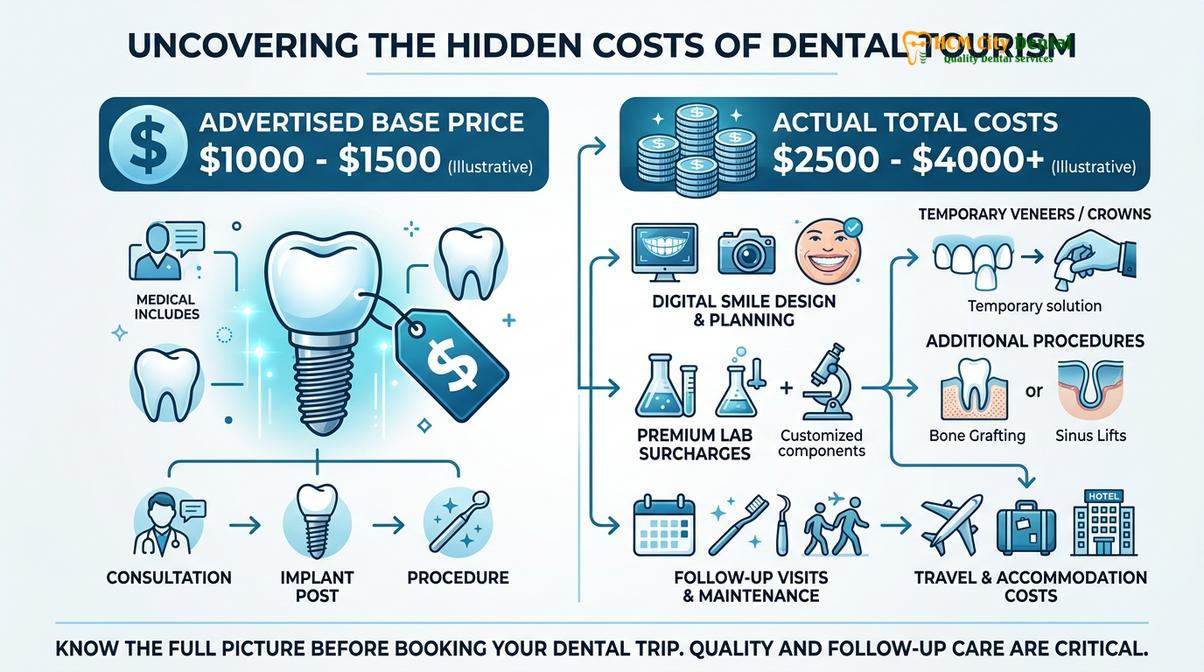
When researching the hidden costs of veneers in Vietnam, international patients must look beyond the advertised base price. Unforeseen expenses often include consultation fees, 3D digital scans, temporary restorations, and lab fee surcharges for authentic materials. A transparent, all-inclusive quote is essential for accurate dental tourism budgeting.
Navigating the financial landscape of cosmetic dentistry abroad requires a clinical understanding of what a complete smile makeover entails. From the initial diagnostic imaging to the final cementation protocol, every step incurs a cost. Without a comprehensive breakdown, patients may find themselves facing unexpected out-of-pocket expenses that diminish the financial advantages of traveling for care.
Clinical Summary:
The true cost of porcelain veneers extends beyond the physical ceramic shell. While Vietnam offers world-class cosmetic dentistry at a fraction of Western prices, patients must be vigilant against bait-and-switch pricing models. A comprehensive treatment plan requires advanced diagnostics, including 3D CBCT imaging and intraoral scanning (such as the iTero Element 5D or Medit i700), which are sometimes billed separately. Furthermore, the choice of material—ranging from direct composite resin to premium Ivoclar E.max lithium disilicate or Cercon HT Zirconia—drastically alters the final invoice. Pre-treatment requirements, such as laser gum contouring for gingival zenith calibration or cavity restorations, can also add to the total. To ensure a seamless experience, patients should seek clinics that provide an all-inclusive quote, transparent material certifications, and robust global warranties, ensuring that the clinical outcome matches the financial expectation.
Key Takeaways:
- Advertised “low prices” often refer to direct composite resin, not custom-milled porcelain.
- Diagnostic tools like 3D scans and Digital Smile Design (DSD) may incur hidden fees at some clinics.
- Authentic materials (E.max, Zirconia HT) require specific lab protocols that affect the final cost.
- Pre-treatment procedures, including laser gum contouring and cavity fillings, are usually billed separately.
- Securing an all-inclusive quote prior to travel prevents unexpected financial surprises.
The “Low Lead Price” Trap: Common Bait-and-Switch Tactics
Many clinics advertise an artificially low base price for veneers, only to add mandatory clinical fees later. Patients must verify if the quoted price covers the complete treatment workflow, including preparation, temporaries, and final cementation.
The phenomenon of medical tourism has revolutionized access to high-quality aesthetic dentistry, but it has also given rise to sophisticated marketing strategies designed to lure international patients. One of the most prevalent issues is the dental pricing trap. Clinics may advertise a remarkably low price—sometimes as low as $50 to $80 per tooth—under the broad umbrella term of “veneers.” However, this price almost exclusively applies to direct chair-side composite veneers, not the highly durable, custom-milled porcelain restorations that most patients are actually seeking.
Composite resin is a porous material applied directly to the tooth and sculpted by the dentist. While it is a valid clinical option for minor corrections, it lacks the flexural strength, stain resistance, and lifelike translucency of pressed ceramics. When a patient arrives expecting a premium smile makeover based on that low lead price, they are often subjected to a high-pressure upsell to porcelain, which can cost three to four times the advertised rate. This bait-and-switch tactic immediately compromises the trust between the patient and the provider.
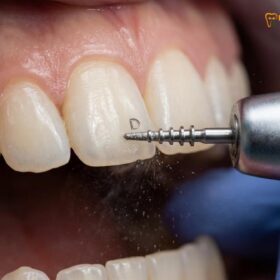
Furthermore, even if a clinic advertises a low price for actual porcelain, that figure often represents only the raw cost of the ceramic shell. The clinical reality of Porcelain Veneers involves a multi-step workflow. Tooth preparation, which involves the careful reduction of 0.3mm to 0.7mm of enamel to accommodate the restoration, requires profound local anesthesia and meticulous skill to preserve the dentin layer[1]. Once the teeth are prepared, the exposed dentin tubules can cause severe thermal sensitivity. Therefore, temporary veneers are an absolute clinical necessity to protect the biological vitality of the tooth and provide an aesthetic preview while the final restorations are being fabricated.
“A transparent treatment plan must account for the entire clinical journey. Quoting a patient for a veneer without including the cost of the temporary restoration or the final bonding protocol is a disservice to the standard of care.”
Unfortunately, many budget clinics treat temporary veneers as an unlisted add-on, charging a separate fee per tooth. When multiplied across a full arch of 8 to 10 teeth, this “hidden” cost can drastically inflate the final bill. Patients must explicitly ask if their initial estimate includes preparation, temporaries, and the complex adhesive cementation protocol required to bond the final ceramic to the enamel.
Hidden Fees to Watch Out For: Consultations, Digital Scans, and X-Rays
Essential diagnostic steps like 3D CBCT imaging, intraoral scanning, and digital smile design are frequently excluded from initial estimates. A comprehensive treatment plan requires these tools for precise gingival calibration and marginal fit.
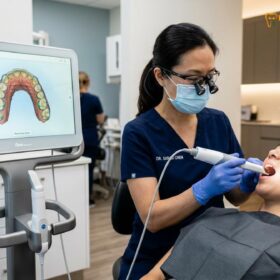
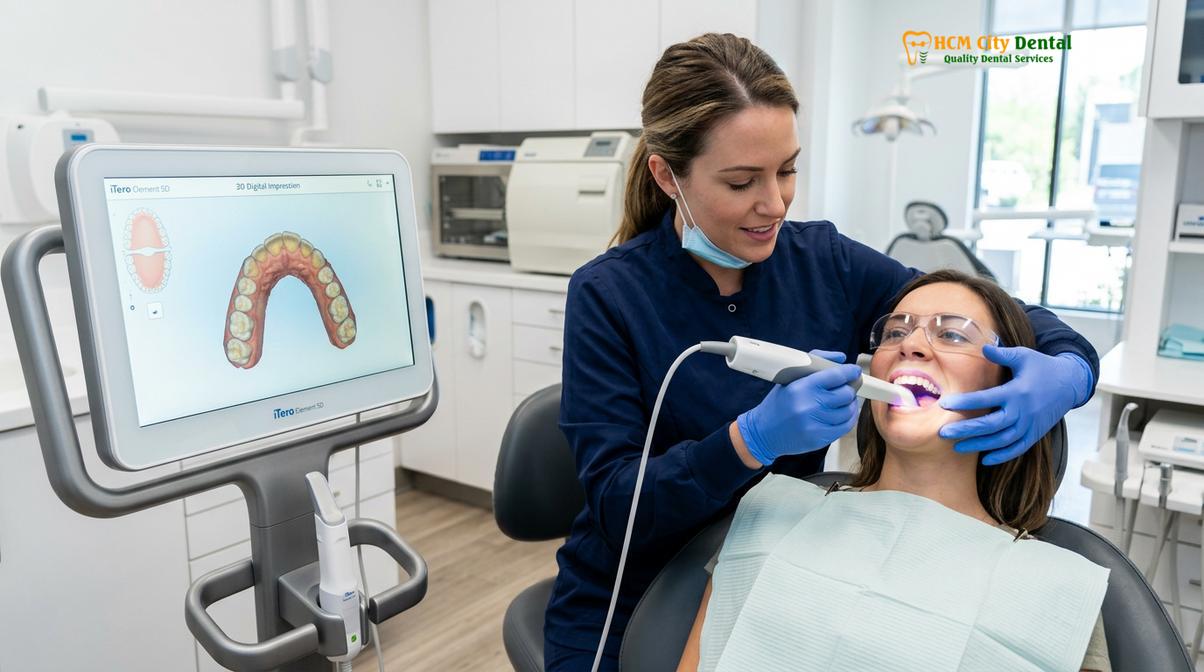
The foundation of any successful cosmetic dental procedure lies in accurate, high-resolution diagnostics. In modern prosthodontics, the era of messy, uncomfortable traditional silicone (polyvinyl siloxane) impressions is largely obsolete. Leading facilities now utilize state-of-the-art digital scanning technology, such as the iTero Element 5D and the Medit i700 Intraoral Scanners. These devices capture the 3D topography of the dental arches at a microscopic level, capturing thousands of frames per second to stitch together a flawless digital mesh.
This digital workflow eliminates the gag reflex associated with traditional impression trays and provides maximum comfort and 3D precision for custom veneers. However, the acquisition and maintenance of these advanced optical scanners represent a significant capital investment for the clinic. Consequently, some practices offset this overhead by charging a separate, hidden fee for the digital scan itself. When planning your dental tourism HCMC itinerary, it is vital to confirm whether digital impressions are included in your package.
Another frequent source of unexpected expense is the digital design fee. Digital Smile Design (DSD) is a sophisticated protocol that involves high-resolution facial photography, dynamic video analysis, and specialized CAD (Computer-Aided Design) software. The clinician uses DSD to analyze the patient’s facial symmetry, interpupillary line, and lower lip arc to design a smile that is anatomically harmonious. This allows the patient to preview the final result via a 3D printed mock-up placed directly over their natural teeth before any irreversible enamel reduction occurs.
While DSD is an invaluable tool for predictable aesthetic outcomes, it requires significant clinical time and software licensing fees. Some clinics charge upwards of $200 to $300 for this service alone. At transparent clinics, this fee is often waived or absorbed into the total cost if the patient proceeds with the treatment, but it remains a common hidden cost for those who are unaware.
Finally, radiographic imaging is non-negotiable. Before placing Porcelain Veneers vs Composite Veneers, the dentist must evaluate the underlying bone architecture and ensure there are no periapical radiolucencies (hidden infections) at the root apices. A panoramic X-ray or a 3D Cone Beam Computed Tomography (CBCT) scan is required. Budget clinics may advertise a free consultation but later mandate a paid CBCT scan before the doctor will even look in your mouth. A truly all-inclusive quote will clearly state the inclusion of all necessary diagnostic imaging.
Lab Surcharges: Original Materials vs. Cheap Local Substituted Ceramics
Authentic materials like Ivoclar E.max and Cercon HT Zirconia carry strict manufacturing costs, whereas unbranded ceramics compromise flexural strength and aesthetics. Always demand material certification to avoid unexpected lab fee surcharges.
The most significant variable in the cost of a smile makeover is the material science behind the restorations. Not all ceramics are created equal, and the term “porcelain” is often used generically to describe a wide range of materials with vastly different optical and mechanical properties. This ambiguity is where lab fee surcharges most frequently occur.
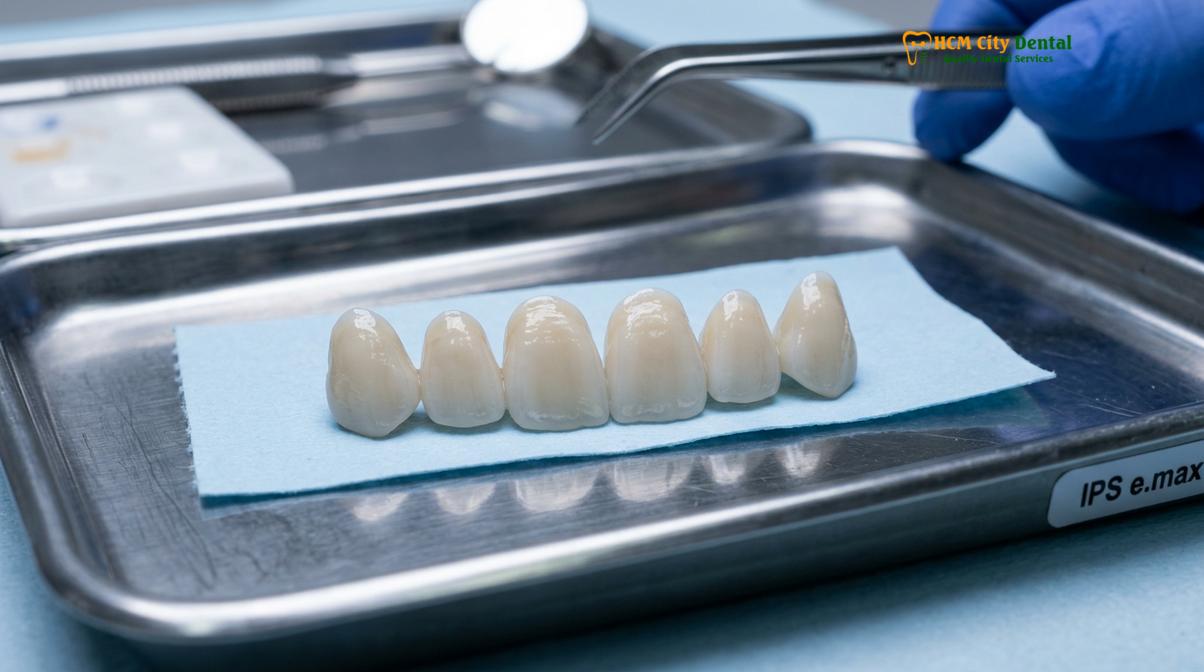
For the aesthetic zone (the front teeth visible when smiling), the gold standard is lithium disilicate, most commonly known by the brand name E.max (manufactured by Ivoclar, Liechtenstein). E.max offers outstanding lifelike aesthetics, natural opalescence, and the ability to achieve a highly translucent margin that blends seamlessly with the natural tooth root. It is particularly effective for custom shading, allowing the ceramist to map out specific color gradients, such as the highly sought-after VITA BL1 natural translucent shade selection[2].
Conversely, for patients with heavy bite forces, sleep bruxism (teeth grinding), or severe tetracycline staining that needs to be masked, Zirconia HT (such as Cercon HT from Germany) is often indicated. Zirconia is a polycrystalline ceramic milled from a solid block using CAD/CAM technology. It boasts immense flexural strength—often exceeding 1000 MPa—making it highly resistant to fracture[3]. However, older generations of zirconia were notoriously opaque and unnatural looking. Modern high-translucency (HT) zirconia requires complex, multi-layered milling and sintering protocols to achieve an aesthetic result.
| Material Type | Primary Clinical Indication | Aesthetic Quality | Relative Cost Tier |
|---|---|---|---|
| Direct Composite Resin | Minor chips, short-term budget corrections | Moderate (prone to staining over time) | Low ($) |
| Zirconia HT (Cercon) | Heavy grinders, masking dark stains, structural strength | High (excellent masking ability) | Medium-High ($$$) |
| Lithium Disilicate (E.max) | Premium anterior aesthetics, lifelike translucency | Exceptional (mimics natural enamel) | High ($$$$) |
The hidden cost arises when a clinic quotes a low price for a generic “porcelain veneer” but utilizes cheap, unbranded, or locally substituted ceramics that lack the rigorous quality control of authentic Ivoclar or Cercon products. These inferior materials are prone to early fracture, rapid loss of surface glaze, and poor marginal adaptation, which can lead to micro-leakage and recurrent decay beneath the restoration.
Dr. Nguyen Van Cuong emphasizes the critical nature of material selection: “The clinical perspective on cosmetic material selection is that you cannot compromise on the substrate. A restoration is only as good as the ceramic block it is milled from and the adhesive resin used to bond it. Using uncertified materials to lower the initial price inevitably leads to biological failure and a much higher cost of revision down the line.”
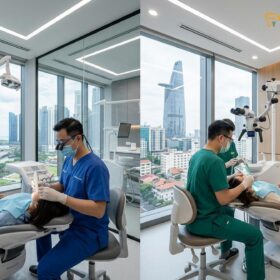
To ensure quality, elite clinics maintain a Direct Lab Partnership with leading laboratories in Ho Chi Minh City. This enables complete quality control and direct collaboration between the prosthodontist and the master ceramist. For international patients, this synergy allows for an Express 3-5 Day Turnaround. This rapid workflow is tailored specifically for expats and dental tourists, allowing complete smile makeovers to be fabricated, characterized, and fitted within a single week without incurring exorbitant “rush fees” that other clinics might hide in the fine print.
Pre-treatment Costs: Dental Cleaning, Cavity Fillings, and Gum Treatment
Successful veneer bonding requires a healthy oral foundation, meaning pre-existing conditions like gingivitis or decay must be resolved first. Treatments such as laser gum contouring or composite fillings often incur separate charges.
A beautiful smile is built on a foundation of optimal periodontal health. One of the most common misunderstandings among patients traveling for cosmetic dentistry is the assumption that veneers can simply be glued over existing dental problems. In reality, placing a permanent restoration over active decay or inflamed gums is a severe violation of clinical protocols.
Before the final intraoral scan can be taken, the teeth must be meticulously prepared. If a patient has old, leaking composite fillings, these must be removed and replaced to ensure a sterile, solid core for the veneer to bond to. If there is active gingivitis or calculus buildup, a professional scaling and root planing (deep cleaning) is mandatory. The presence of blood or gingival crevicular fluid during the cementation process will contaminate the hydrophilic bonding agents, leading to immediate bond failure and debonding of the veneer.
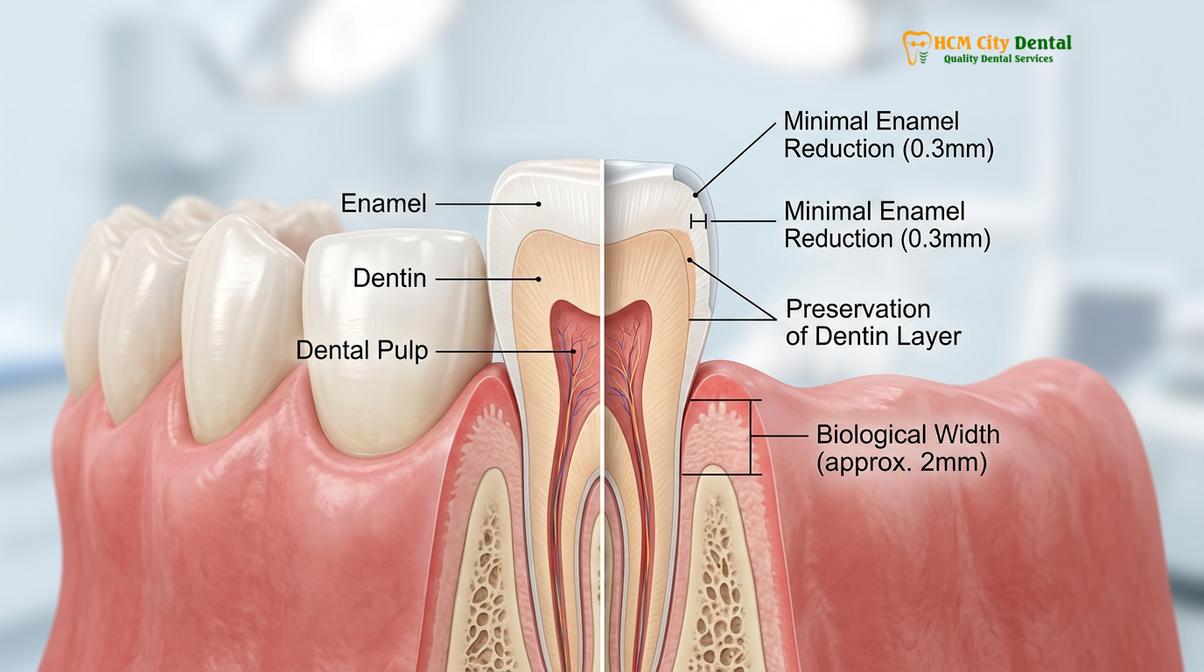
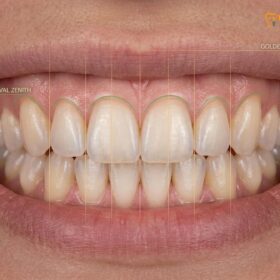
Furthermore, achieving a symmetrical, harmonious smile often requires addressing the soft tissue architecture. The gingival zenith—the highest point of the gum tissue around the neck of the tooth—must be calibrated to ensure the teeth appear proportional in length and width. If a patient has a “gummy smile” or uneven gum margins, a diode laser is used for laser gum contouring. This procedure gently sculpts the gingival architecture, but it must be done with strict adherence to the biological width[4].
Clinical Warning: The biological width is the approximately 2mm of connective tissue and epithelial attachment that protects the underlying alveolar bone. If a veneer margin is placed too deep beneath the gumline, invading this space, the body will react with chronic, irreversible inflammation, bleeding, and eventual bone loss. Precision in tooth preparation and gum contouring is non-negotiable.
These pre-treatment procedures—fillings, deep cleanings, and laser contouring—are distinct clinical interventions that require their own time, materials, and expertise. Therefore, they are almost always billed separately from the cost of the veneers themselves. When evaluating How Many Veneers Do I Need?, patients must also ask their provider to outline any necessary pre-requisite treatments to avoid surprise costs on day one of their itinerary.
Additionally, the philosophy of tooth preparation impacts the workflow. A minimal-prep approach (removing 0.3mm to 0.7mm of enamel) is standard for E.max to ensure a flush marginal fit and prevent the teeth from looking bulky. In highly specific cases, prep-less Lumineers (0.2mm thick) can be used, requiring virtually zero enamel removal[5]. However, prep-less options are only suitable for patients who already have small, slightly retruded teeth. Attempting a prep-less approach on normal-sized teeth results in a bulky, over-contoured appearance that traps plaque and causes gingival inflammation.
HCMC Dental’s 100% Price Transparency and All-Inclusive Quotes
We eliminate financial ambiguity by providing a comprehensive, all-inclusive quote prior to your arrival. Our structured pricing includes all clinical steps, authentic materials, and global warranties without hidden surcharges.
At HCMC Dental Clinic, we recognize that financial peace of mind is just as important as clinical excellence, especially for patients traveling across the globe. We have structured our practice to eliminate the anxiety of hidden fees by providing a 100% transparent, all-inclusive quote before you ever board your flight. By utilizing our cosmetic savings calculator and engaging in a remote consultation, you can accurately plan your investment.
To further support our international clientele, we offer a highly advantageous Pricing Structure that incorporates a 40% pre-arrival discount for patients who book their treatment plan via WhatsApp. According to our latest clinic fee schedule, this structure dramatically reduces the financial barrier to premium care:
- Composite Veneer (Chair-side): Walk-in: ~$80 (2.0M VND) | WhatsApp discount: From $48 (1.2M VND) (-40%).
- Zirconia Veneer (Cercon HT): Walk-in: ~$240 (6.0M VND) | WhatsApp discount: From $144 (3.6M VND) (-40%).
- E.max Porcelain Veneer (Ivoclar): Walk-in: ~$320 (8.0M VND) | WhatsApp discount: From $192 (4.8M VND) (-40%).
- Smile Design 3D Mock-up: Walk-in: ~$200 (5.0M VND) | WhatsApp discount: From $120 (3.0M VND) (This fee is completely waived/free if the treatment is performed).
- Laser Gum Contouring (Diode): Walk-in: ~$160 (4.0M VND) | WhatsApp discount: From $96 (2.4M VND) per arch.
- In-Office Teeth Whitening (Laser): Walk-in: ~$140 (3.5M VND) | WhatsApp discount: From $84 (2.1M VND).
This transparent pricing model ensures that when you compare a Dental Crown vs Veneer, you are looking at the true, final cost. Furthermore, we understand the logistics of international travel. To make your experience seamless, our concierge team assists with airport pickup transfer and provides curated recommendations for premium District 1 hotels located conveniently near the clinic.
Financial flexibility is also a core component of our patient care model. We offer 0% interest monthly international credit card installment plans, allowing you to manage your cash flow effectively while still receiving the highest standard of aesthetic dentistry.
Patient Experience: A recent patient visiting HCMC Dental Clinic in Ho Chi Minh City from Australia was initially quoted $1,500 per tooth in Sydney. By utilizing our WhatsApp pre-arrival consultation, she secured an all-inclusive quote for 10 E.max veneers at $192 each. Her comprehensive package included the 3D CBCT scan, iTero digital impressions, temporary restorations, and final cementation—with zero hidden lab fee surcharges. The savings allowed her to enjoy a luxury vacation while transforming her smile.
Beyond the initial procedure, long-term security is paramount. We provide global manufacturer warranty cards with a 3-year clinic bonding & fit guarantee for E.max and Zirconia restorations, and a 1-year guarantee for Composite. Dr. Cuong notes, “Our commitment to the patient does not end when they fly home. We have established rigorous remote follow-up support via WhatsApp, utilizing specific photo and video assessment protocols to monitor gingival health and restoration integrity, ensuring our global warranty remote support is highly effective.”
When to See a Doctor: Clinical Considerations for Veneers
While porcelain veneers offer a transformative aesthetic solution, they are a medical procedure that requires careful clinical consideration. Not every patient is an immediate candidate for minimal-prep restorations. It is crucial to undergo a comprehensive evaluation to determine if this treatment aligns with your biological and functional needs.
You should consult with a prosthodontist if you experience severe sleep bruxism (involuntary teeth grinding or clenching). The immense occlusal forces generated during bruxism can easily fracture even the strongest ceramics. In such cases, the fabrication of a custom nightguard is a mandatory post-treatment requirement to protect your investment. If a clinic fails to diagnose bruxism and places veneers without occlusal protection, the restorations are highly likely to fail.
Furthermore, patients with severe dental misalignment, severe crowding, or edge-to-edge bite relationships may not be suitable candidates for veneers alone. In these scenarios, attempting to correct the alignment purely through aggressive tooth preparation can lead to devitalization of the tooth nerve, necessitating root canal therapy. Orthodontic intervention (such as clear aligners) may be required prior to cosmetic bonding. Always seek a personalized clinical examination to distinguish between general educational reference and individualized diagnostic advice, ensuring that your treatment plan prioritizes long-term oral health over short-term aesthetic gains.
Frequently Asked Questions
What are the typical hidden costs at dental clinics in Vietnam?
Typical hidden costs include consultation fees, 3D CBCT scans, temporary veneers, and lab fee surcharges for premium materials. Many clinics advertise a low base price for a composite resin veneer but charge significantly more for custom-milled porcelain, digital smile design, and necessary pre-treatment procedures like gum contouring.
Does HCMC Dental charge extra for Digital Smile Design?
No, the Digital Smile Design (DSD) fee is fully waived if you proceed with the veneer treatment. While the standalone 3D mock-up is priced from $120 with our WhatsApp discount, this cost is absorbed into your all-inclusive quote once your clinical treatment plan is confirmed and initiated.
Are X-rays included in the initial veneer quote?
Yes, comprehensive diagnostic imaging, including panoramic X-rays and 3D CBCT scans, is typically included in our all-inclusive treatment packages. We believe that accurate clinical diagnostics are mandatory for assessing bone health and biological width, and should never be treated as an unexpected add-on expense.
How does the WhatsApp pre-arrival discount work?
International patients who book their consultation and treatment plan via WhatsApp prior to arriving in Vietnam receive a 40% discount on standard walk-in rates. This allows you to secure premium treatments, such as E.max porcelain veneers starting from $192 per tooth, while accurately planning your dental tourism budget.
What happens if my veneer chips after I return home?
We provide global manufacturer warranty cards and a 3-year clinic bonding guarantee for E.max and Zirconia restorations. If an issue occurs, our remote follow-up support via WhatsApp allows our specialists to assess the damage through photo and video protocols, coordinating a solution or replacement as per the warranty terms.
References
- Journal of Esthetic and Restorative Dentistry. Translucency and optical properties of lithium disilicate ceramics. (2021).
- International Journal of Prosthodontics. Enamel preservation techniques and micro-tensile bond strength in veneer restorations. (2020).
- The Journal of Prosthetic Dentistry. Flexural strength and fracture toughness of monolithic zirconia vs. pressed ceramics. (2019).
- Clinical Oral Investigations. Diode laser gingival sculpting parameters for aesthetic crown lengthening. (2022).
- Journal of Clinical Periodontology. Biological width preservation around anterior ceramic restorations. (2018).