When international patients, expatriates, and dental travelers embark on an orthodontic journey in Ho Chi Minh City, one of the most critical clinical decisions involves selecting the appropriate biomechanical appliance. The debate between damon passive self ligating braces vs traditional elastic tie braces represents a fundamental shift in how orthodontists approach tooth movement, friction control, and periodontal health. While traditional braces have successfully aligned smiles for decades using elastomeric O-rings to bind the archwire to the bracket, modern passive self-ligating systems—such as the Damon Q2 and Damon Ultima—utilize an integrated slide-door mechanism. This advanced engineering eliminates the need for rubber ties, drastically reducing binding friction and allowing teeth to glide along the archwire with unprecedented biological efficiency.
At HCMC Dental Clinic, located in the vibrant heart of District 1, Ho Chi Minh City, our orthodontic protocols are driven by evidence-based biomechanics and patient-centric care. Under the clinical leadership of Dr. Nguyen Van Cuong, DDS (Clinical Director — MOH License 0003265/BL-CCHN), we provide comprehensive diagnostic evaluations to determine which bracket system aligns best with your skeletal anatomy, lifestyle, and aesthetic goals. Whether you are an expat residing in Thao Dien seeking fewer adjustment appointments, or a dental traveler looking for world-class Damon Clear ceramic braces, understanding the structural, biological, and financial differences between these two systems is paramount to achieving a stable, functional, and beautiful smile.
Clinical Summary:
The primary distinction between Damon passive self-ligating braces and traditional braces lies in the ligation method. Traditional braces utilize elastomeric ties (rubber bands) that create high binding friction, requiring heavier forces to initiate tooth movement and frequent 3 to 4-week adjustment visits as the elastics degrade. Conversely, Damon passive self-ligating braces feature a built-in sliding door that secures the archwire without active pressure. This low-friction environment, paired with shape-memory Copper NiTi archwires, facilitates light, continuous biological forces. The result is a preservation of periodontal capillary blood flow, reduced peak discomfort, superior oral hygiene (by eliminating plaque-trapping rubber ties), and extended 8 to 10-week adjustment intervals—making it the premier choice for busy professionals and international patients at HCMC Dental Clinic.
Key Takeaways:
- Friction Mechanics: Passive self-ligation eliminates the active binding friction caused by elastomeric O-rings, allowing teeth to slide freely along the archwire.
- Biological Forces: The Damon system utilizes light, continuous forces that respect the periodontal ligament (PDL), minimizing hyalinization and reducing post-adjustment soreness.
- Appointment Frequency: Without degrading rubber ties, self-ligating systems require adjustments only every 8 to 10 weeks, compared to every 3 to 4 weeks for traditional braces.
- Hygiene & Aesthetics: The absence of porous elastomeric ties prevents the accumulation of plaque biofilm and eliminates the yellow staining commonly caused by coffee, tea, and curry.
- Treatment Efficiency: Low-friction mechanics often accelerate the initial leveling and aligning phases and facilitate broader transverse arch expansion, potentially reducing the need for premolar extractions.
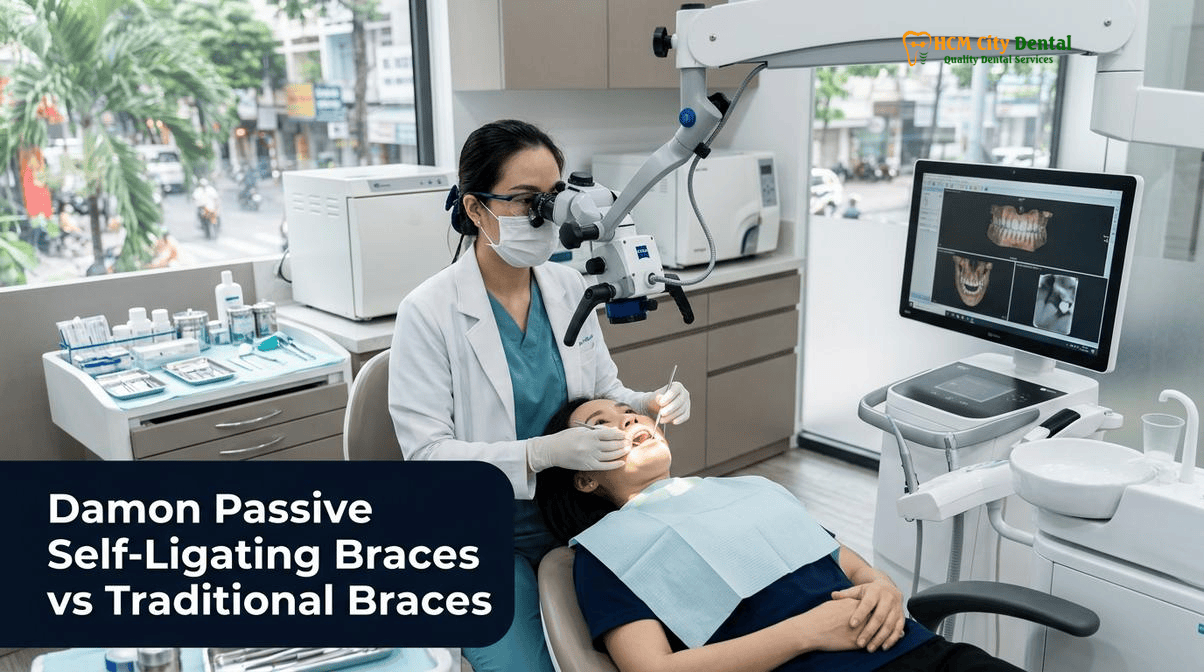
How Passive Self-Ligating Brackets (Damon Q2 / Ultima) Differ from Conventional Elastic O-Ring Tied Braces
To fully comprehend the clinical advantages of modern orthodontics, one must first examine the structural anatomy of the brackets themselves. The core difference between damon passive self ligating braces vs traditional elastic tie braces is the method of ligation—how the archwire is physically held inside the bracket slot. This seemingly minor engineering detail dictates the entire biomechanical behavior of the appliance.
The Mechanics of Traditional Twin Brackets
Traditional metal or ceramic braces utilize a “twin bracket” design featuring four tie-wings. Once the orthodontist places the archwire into the bracket slot, a small elastomeric ligature (commonly known as an O-ring or rubber band) is stretched over the tie-wings to secure the wire. While these colored bands are popular among younger patients for their customizability, they present significant biomechanical drawbacks. The elastomeric tie actively presses the archwire against the base of the bracket slot. This constant clamping force generates high levels of static and kinetic friction, known clinically as resistance to sliding (RS). To overcome this friction and move the tooth, the orthodontist must apply heavier initial forces[1].
The Innovation of Passive Self-Ligation
In stark contrast, passive self-ligating brackets, such as the Damon Q2 or the highly advanced Damon Ultima system, completely eliminate the need for elastomeric ties. Instead, each bracket is manufactured with an integrated, micro-engineered sliding door or clip. When the door is closed, it converts the bracket slot into a passive tube. The archwire is securely contained within the slot but is not actively pressed against the bracket walls. This creates a low-friction environment where the wire can slide freely. By removing the binding friction of rubber ties, passive self-ligating systems allow the teeth to respond to the gentle, shape-memory forces of the archwire without mechanical resistance, leading to highly efficient and biologically sound tooth movement.
Slide-Door Low-Friction Mechanics and Light-Force Copper NiTi Archwires: Preserving Periodontal Capillary Blood Flow
The true clinical superiority of the Damon system is not just the bracket itself, but how the bracket interacts with advanced metallurgical archwires. At HCMC Dental Clinic, we utilize high-technology Copper Nickel-Titanium (CuNiTi) archwires in conjunction with passive self-ligating brackets to optimize the biological response of the periodontal tissues.
The Histology of Tooth Movement
Orthodontic tooth movement is a biological process mediated by the periodontal ligament (PDL), a thin layer of connective tissue that suspends the tooth root within the alveolar bone. When force is applied to a tooth, it creates areas of compression and tension within the PDL. If the applied force is too heavy—as is often required to overcome the friction of traditional elastic-tie braces—the blood vessels within the PDL are crushed. This cuts off the capillary blood supply, leading to localized tissue necrosis known as hyalinization. The body must then clear away this necrotic tissue through a slow process called undermining resorption before the tooth can move, which causes significant discomfort and delays treatment progress.
Light Continuous Forces and Frontal Resorption
Because Damon passive self-ligating brackets exhibit virtually zero binding friction, the orthodontist can utilize extremely light, thermal-active Copper NiTi archwires. These wires exert a gentle, continuous force that remains below the capillary blood pressure of the PDL (approximately 20 to 26 g/cm²). By preserving the capillary blood flow, the PDL remains healthy and oxygenated, allowing for a highly efficient cellular process called frontal resorption[2]. Osteoclasts resorb bone on the compression side, while osteoblasts build new bone on the tension side, allowing the tooth to move smoothly through the alveolar bone.
“The paradigm shift in modern orthodontics is moving away from heavy mechanical forces toward light, biologically sensible forces. By utilizing passive self-ligation and Copper NiTi archwires, we respect the physiological limits of the periodontal ligament. This not only minimizes patient discomfort but also facilitates broader, more natural arch expansion, often allowing us to resolve severe crowding without the need for healthy premolar extractions.”
— Dr. Nguyen Van Cuong, DDS (Clinical Director, HCMC Dental Clinic)
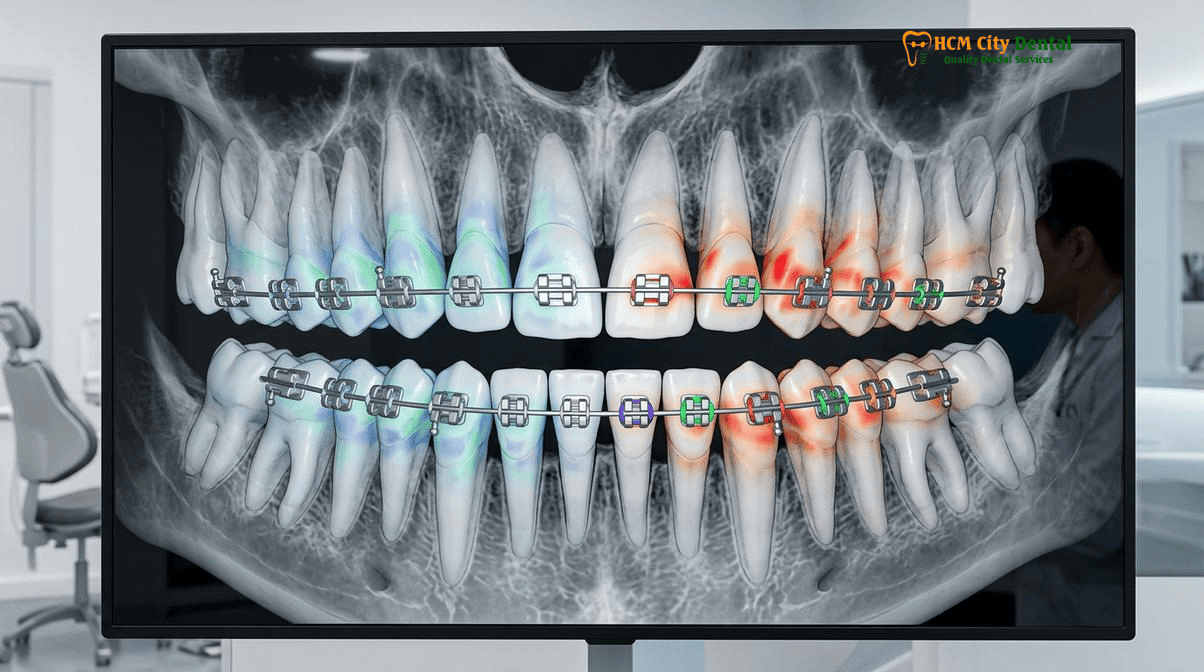
Fewer Appointments for Busy Expats & Travelers: 8–10 Week Adjustment Intervals vs. 3–4 Week Elastic Tie Changes
For expatriates living in Ho Chi Minh City, international business professionals, and dental travelers, time is a highly valuable commodity. The frequency of required clinical visits is a major factor when choosing an orthodontic system. The mechanical differences between traditional and self-ligating braces directly impact the treatment timeline and appointment scheduling.
The Degradation of Elastomeric Ties
Traditional braces require frequent adjustment appointments—typically every 3 to 4 weeks. This is primarily due to the material properties of the elastomeric O-rings. In the warm, moist environment of the oral cavity, rubber ties rapidly absorb water, degrade, and lose their elasticity. Within just a few weeks, the ties lose their tension, and the active force applied to the archwire diminishes significantly. To keep the teeth moving, the patient must return to the clinic frequently to have the old, stretched-out ties removed and replaced with new ones.
Extended Activation with Shape-Memory Wires
Damon passive self-ligating braces do not rely on degrading rubber bands. The solid metal or ceramic sliding door maintains its structural integrity throughout the entire treatment. This allows the high-tech Copper NiTi archwires to remain active and express their shape-memory properties over a much longer duration. As a result, teeth continue to move efficiently between visits without the force dropping off. Patients undergoing treatment with the Damon system at HCMC Dental Clinic typically only need to attend progress checks every 8 to 10 weeks. This extended interval drastically reduces total chair time and minimizes disruptions to your busy schedule, making it an ideal solution for those seeking a Self Ligating Damon Braces Vietnam: Clinical Guide | HCMC Dental.
Oral Hygiene & Stain Prevention: Eliminating Plaque-Trapping Elastomeric Ligatures That Turn Yellow from Coffee and Curry
Maintaining pristine oral hygiene during orthodontic treatment is a universal challenge, but the type of bracket system you choose plays a massive role in your ability to keep your teeth and gums healthy. The elimination of elastomeric ties in passive self-ligating systems provides a profound advantage in both periodontal health and aesthetic maintenance.
Biofilm Accumulation and Gingival Inflammation
Elastomeric ligatures used in traditional braces are highly porous. At a microscopic level, these rubber rings act as a sponge, absorbing saliva, food debris, and bacteria. Clinical studies have consistently demonstrated that elastomeric ties harbor significantly higher levels of plaque biofilm and Streptococcus mutans (the primary bacteria responsible for tooth decay) compared to self-ligating brackets[3]. This bacterial accumulation often leads to gingival inflammation (gingivitis), puffy bleeding gums, and an increased risk of white spot lesions (enamel decalcification) around the brackets.
The Stain-Free Advantage of Self-Ligation
Beyond bacterial concerns, elastomeric ties are notorious for their susceptibility to staining. For adult patients who opt for traditional ceramic braces with clear rubber ties, the aesthetic appeal is often short-lived. The clear ties rapidly absorb pigments from dark beverages and highly colored foods. In Vietnam, where the daily consumption of robust iced coffee (cà phê sữa đá), rich teas, and vibrant curries is a cultural staple, clear rubber ties can turn a highly visible, unappealing yellow within days of an adjustment.
Damon passive self-ligating brackets, whether in metal or clear ceramic, feature smooth, non-porous contours and a solid sliding door. Without rubber ties to trap food or absorb pigments, the brackets remain exceptionally clean and completely stain-free between your 8 to 10-week appointments. Brushing and flossing are notably easier, ensuring your gingival tissues remain pink, firm, and healthy throughout your orthodontic journey.
Clinical Case Study: Expat Orthodontics in District 1
Patient Profile: Sarah, a 32-year-old Australian expatriate working in District 1, Ho Chi Minh City.
Clinical Presentation: Moderate anterior crowding, narrow maxillary arch, and a strong desire for discreet aesthetics without frequent clinic visits due to her heavy regional travel schedule.
Treatment Protocol: Dr. Nguyen Van Cuong, DDS prescribed the Damon Clear2 passive self-ligating system. The low-friction mechanics allowed for broad transverse arch expansion, resolving the crowding without the need for premolar extractions. Because the Damon Clear2 brackets utilize a stain-resistant polycrystalline alumina slide-door instead of clear rubber ties, Sarah was able to enjoy her daily Vietnamese coffee without any yellowing of her braces. Her adjustment intervals were set at 10 weeks, perfectly accommodating her travel schedule. Total treatment time was completed in 16 months with excellent periodontal health and a broad, aesthetic smile arc.
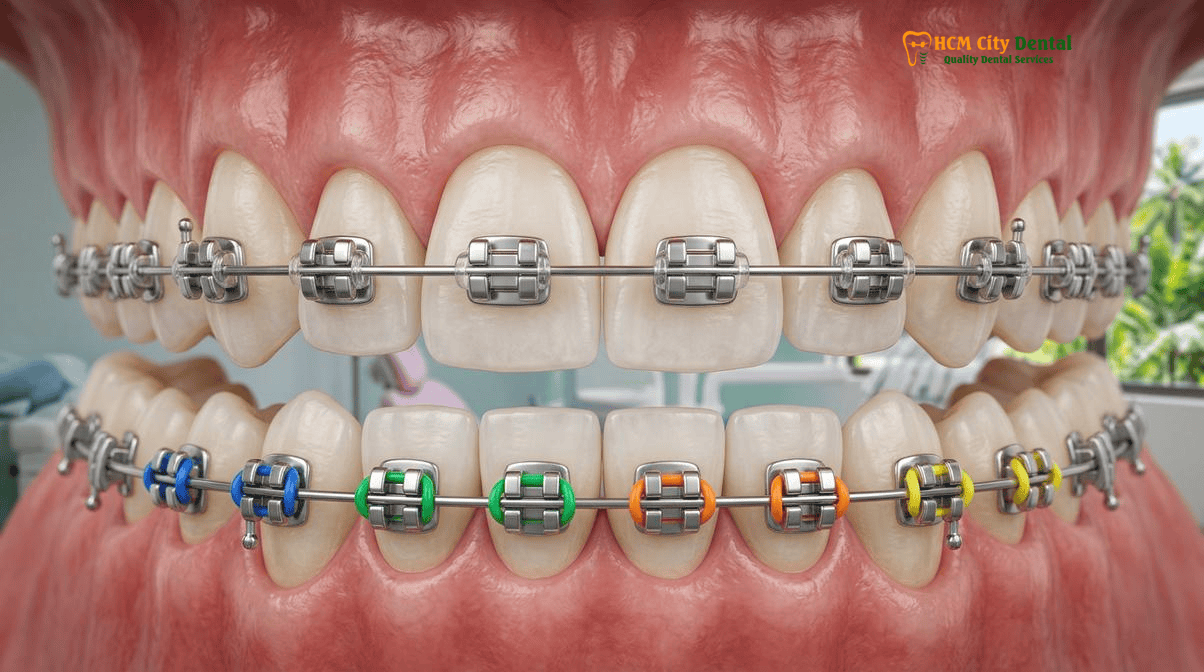
Damon Clear2 (Polycrystalline Alumina) vs. Metal Self-Ligating vs. Traditional Twin Brackets: Speed, Torque & Cost
When evaluating damon passive self ligating braces vs traditional elastic tie braces, patients must also consider the material composition of the brackets and how it affects biomechanical control, treatment speed, and overall investment.
Damon Q2 (Metal) vs. Damon Clear2 (Ceramic)
The Damon system offers two primary bracket materials. The Damon Q2 is manufactured from high-grade stainless steel, offering the ultimate in durability, low profile design, and minimal friction. It is the workhorse of the Damon lineup, ideal for complex biomechanical movements and severe crowding.
For adult patients prioritizing aesthetics, the Damon Clear2 bracket is a masterpiece of orthodontic engineering. Unlike traditional ceramic brackets that can be brittle or bulky, Damon Clear2 brackets are crafted from solid Polycrystalline Alumina (PCA). This material is entirely transparent, impervious to staining, and highly resistant to fracture. Furthermore, the slide-door mechanism in the Damon Clear2 is also made of PCA, ensuring a 100% metal-free appearance on the anterior teeth. If you are considering aesthetic options, we highly recommend reviewing our Self Ligating Ceramic Braces: Clinical Guide | HCMC Dental.
Torque Expression and Finishing
While passive self-ligation is undisputed in its superiority during the initial leveling and aligning phases (due to low friction), traditional twin brackets still hold clinical value in specific scenarios. During the final detailing stages of orthodontics, precise torque expression (the bucco-lingual inclination of the tooth root) is required. Traditional brackets, when tightly ligated with stainless steel wire ligatures (rather than rubber ties), provide active seating of the heavy rectangular finishing wires into the base of the slot. This active binding allows the orthodontist to execute rigid micro-movements[4]. However, modern self-ligating systems like the Damon Ultima have been re-engineered with precise slot tolerances to achieve excellent torque control without the need for traditional ligation.
2026 Self-Ligating & Traditional Braces Fee Schedule at HCMC Dental Clinic (District 1)
At HCMC Dental Clinic, we believe that world-class orthodontic care should be accessible and transparent. For international patients and expats, the cost of premium self-ligating systems in Vietnam represents a fraction of the fees charged in Australia, the United States, or Europe. Below is our comprehensive 2026 fee schedule, highlighting the exceptional value of our -40% online booking pricing.
To secure these exclusive rates for your orthodontic or restorative treatments, please visit our Official 2026 Dental Price List & -40% Online Booking Fee Schedule.
| Orthodontic & Restorative Procedure (2026) | Walk-In / Standard Price (USD) | -40% Online Booking Price (USD) | VND Equivalent (Online) |
|---|---|---|---|
| Invisalign Go / Lite / Express (up to 14–20 aligners) | $2,692 USD | $1,615 USD | 42,000,000 VND |
| Invisalign Comprehensive (Unlimited aligners) | $4,231 USD | $2,538 USD | 66,000,000 VND |
| Invisalign Vivera Retainer (Genuine SmartTrack) | $513 USD | $308 USD | 8,000,000 VND |
| Essix Clear Retainer (Per Pair) | – | $97 USD | 2,520,000 VND |
| Hawley Wire Retainer (Per Pair) | – | $115 USD | 3,000,000 VND |
| Single Korean Implant (Dentis / Neo Biotech / Dentium) | $769 – $1,090 USD | $462 – $654 USD | 12,000,000 – 17,000,000 VND |
| Single European / Swiss Implant (Straumann BLT/BLA) | $1,603 – $2,244 USD | $962 – $1,346 USD | 25,000,000 – 35,000,000 VND |
| IPS E.max Porcelain Veneer (Per Tooth) | $308 USD | $185 USD | 4,800,000 VND |
| Full Zirconia Crown (Cercon Standard / HT Multilayer) | $256 – $321 USD | $154 – $192 USD | 4,000,000 – 5,000,000 VND |
Note: The exact cost of Damon passive self-ligating braces vs traditional braces depends on the complexity of the malocclusion and the estimated treatment duration. We encourage patients to review our comprehensive guide on Braces Cost in Vietnam: Clinical Guide & Pricing | HCMC Dental for detailed orthodontic tier pricing.
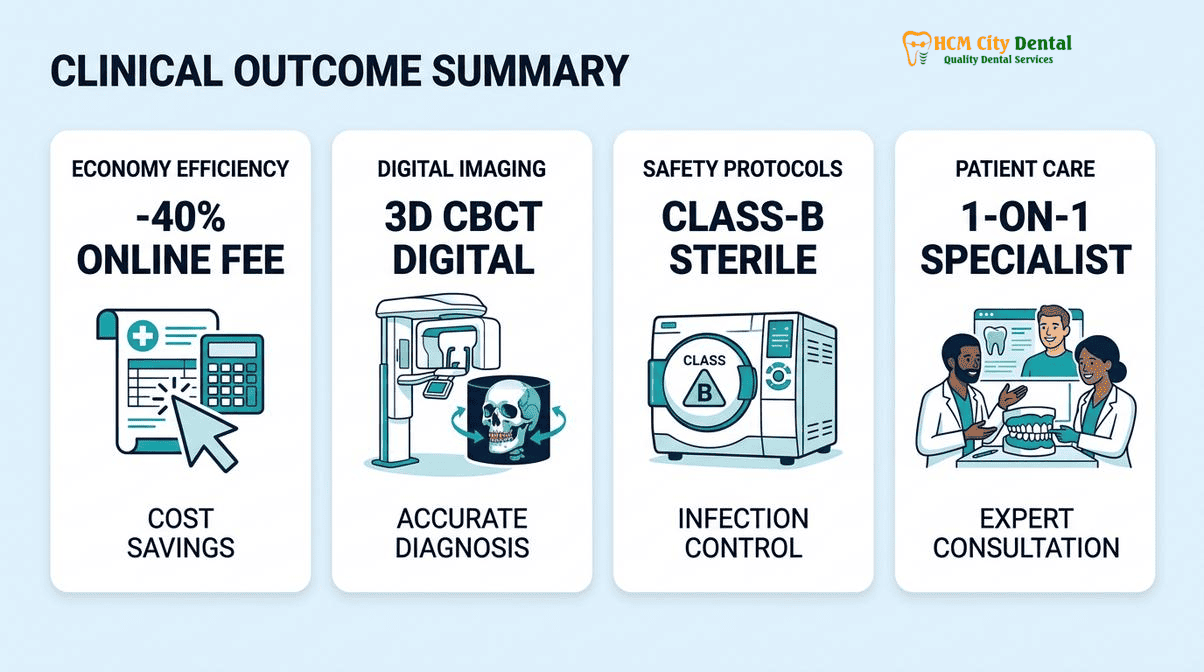
Advanced Digital Orthodontics, TMJ & Sleep Apnea Protocols
At HCMC Dental Clinic, our approach to orthodontics extends far beyond simply straightening teeth. We integrate Wave 3 digital orthodontic protocols with comprehensive temporomandibular joint (TMJ) equilibration and dental sleep medicine to ensure optimal functional health.
Clear Aligners vs. Self-Ligating Braces
While Damon passive self-ligating braces offer unparalleled control for complex skeletal discrepancies and severe crowding, many adult patients inquire about clear aligner therapy. We offer a full spectrum of digital aligner systems, including Align Technology Invisalign (utilizing SmartTrack polymer and SmartForce attachments), Straumann ClearCorrect (featuring ClearQuartz tri-layer material with a 2mm high flat trimline for enhanced retention), and Angel Aligner Pro (utilizing the 7+3 MasterControl S dual-shell system with AngelButtons for complex mechanics). For patients who desire the absolute highest level of discretion but require the biomechanical control of fixed appliances, we also provide custom 3D CAD/CAM lingual braces placed completely behind the teeth.
Retention and Airway Management
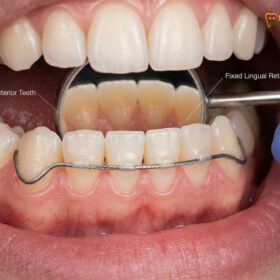
Following the removal of your Damon braces or clear aligners, retention is critical to prevent relapse. We offer a tiered retention protocol, comparing the durability of Invisalign Vivera retainers against standard Essix clear retainers, often combined with a 3-to-3 fixed lingual wire for dual retention security.
Furthermore, malocclusion is frequently linked to airway restriction and TMJ dysfunction. Dr. Nguyen Van Cuong, DDS incorporates Orofacial Myofunctional Therapy (OMT)—focusing on palatal tongue suction posture and functional laser lingual frenuloplasty—to address the root causes of orthodontic relapse. For patients suffering from Obstructive Sleep Apnea (OSA) or CPAP intolerance, we design custom titratable Dorsal-Fin or Herbst Mandibular Advancement Devices (MAD), precisely calibrated at 50–70% maximum protrusion to open the airway. TMJ stabilization is achieved using the Kois Anterior Deprogrammer or a CAD/CAM milled PMMA Michigan Stabilization Splint seated in Centric Relation (CR)[5].
Clinical Precaution: Adult Orthodontics & Periodontal Health
Adult patients seeking orthodontic treatment must undergo a thorough periodontal evaluation prior to the placement of any bracket system. Active periodontal disease, characterized by bone loss and deep gingival pockets, must be stabilized before applying orthodontic forces. The light, continuous forces of the Damon passive self-ligating system are highly beneficial for adult patients with compromised periodontium, as they minimize the risk of further bone loss compared to the heavy forces of traditional braces. If you have concerns regarding your gum health, schedule a comprehensive 3D CBCT diagnostic scan with Dr. Cuong at HCMC Dental Clinic to ensure a safe and predictable treatment outcome. Learn more about our advanced capabilities at Specialist Orthodontics, TADs & Adult Palatal Expanders in Ho Chi Minh City.
“Orthodontics is not merely aesthetic; it is a functional rehabilitation of the stomatognathic system. By integrating passive self-ligation with digital airway analysis and TMJ stabilization, we ensure that our patients not only achieve a beautiful smile but also experience improved respiratory function and long-term joint stability.”
— Dr. Nguyen Van Cuong, DDS
Frequently Asked Questions
Do Damon passive self-ligating braces really hurt less and require fewer tooth extractions than traditional braces?
Clinical evidence indicates that Damon passive self-ligating braces utilize lighter, continuous forces via Copper NiTi archwires, which reduces peak pressure on the periodontal ligament compared to the heavy initial forces of traditional elastic-tie braces. This often results in less acute soreness following adjustments. Furthermore, the low-friction mechanics facilitate transverse arch expansion, which can reduce the need for premolar extractions in borderline crowding cases, though severe skeletal discrepancies may still require extractions.
How often do I need to visit HCMC Dental Clinic in District 1 for archwire checks with self-ligating braces?
Because passive self-ligating brackets do not rely on elastomeric ties that degrade and lose tension over time, the shape-memory archwires remain active for longer periods. Patients typically only need to visit HCMC Dental Clinic in District 1 every 8 to 10 weeks for adjustments, compared to the 3 to 4-week intervals required for traditional braces. This extended interval is highly advantageous for busy expats and international dental travelers.
Do Damon Clear self-ligating brackets stain from Vietnamese iced coffee, tea, or red wine?
No. Damon Clear2 brackets are manufactured from solid polycrystalline alumina (PCA), a highly dense and non-porous ceramic material that is impervious to staining from Vietnamese iced coffee, tea, curry, or red wine. Unlike traditional ceramic braces that use clear elastic O-rings (which turn yellow rapidly), the Damon Clear system uses a stain-resistant slide-door mechanism, ensuring the appliance remains discreet throughout your treatment.
Why are traditional twin brackets with steel ligatures still useful in specific surgical or finishing stages?
While passive self-ligation excels in the leveling and aligning phases, traditional twin brackets tied with stainless steel ligatures offer exceptional torque expression and rotational control during the final detailing stages of orthodontics. In complex orthognathic surgery cases or when precise root angulation is required, the active binding friction of a tightly ligated traditional bracket allows the orthodontist to execute micro-movements with absolute rigidity.
What is the 2026 price difference between traditional braces and passive self-ligating braces at HCMC Dental Clinic?
At HCMC Dental Clinic, the investment in orthodontic care is highly transparent. While traditional metal braces are the most economical option, upgrading to the Damon Q2 or Damon Ultima passive self-ligating system typically involves a moderate premium due to the advanced slide-door technology and specialized Copper NiTi archwires. However, with our -40% online booking fee schedule, international patients can access premium self-ligating systems at a fraction of the cost compared to clinics in Australia, the US, or the UK.
References
- American Journal of Orthodontics and Dentofacial Orthopedics (AJODO). Biomechanical evaluation of passive self-ligating brackets vs. conventional twin brackets: Friction and resistance to sliding. (2023).
- Journal of Clinical Orthodontics (JCO). Periodontal capillary blood flow and hyalinization rates under light continuous forces using Copper NiTi archwires in self-ligating systems. (2022).
- Angle Orthodontist. Biofilm accumulation and Streptococcus mutans colonization on elastomeric ligatures versus self-ligating bracket doors: A comparative clinical study. (2024).
- International Journal of Dentistry. Torque expression and rotational control in polycrystalline alumina self-ligating brackets compared to traditional ceramic twin brackets. (2023).
- Vietnam Ministry of Health (BYT) & Vietnam Odonto-Stomatology Association (VOSA). National Clinical Guidelines on Specialist Dental Care, Biomaterial Traceability & EN 13060 Class B Infection Control. (2024).