The long-term success of modern aesthetic and biomimetic dentistry hinges entirely on the invisible interface between the ceramic restoration and the natural tooth structure. When international patients travel to Vietnam seeking world-class dental care, they expect restorations that not only mimic natural optical properties but also possess the mechanical integrity to last decades. At HCMC Dental Clinic in District 1, Ho Chi Minh City, we recognize that the difference between a veneer that lasts a lifetime and one that fails prematurely lies in the microscopic details of the adhesive bonding protocol. The gold standard for achieving unparalleled bond strengths involves a highly specific sequence: air abrasion 27 micron aluminum oxide silane hydrofluoric acid IPS E.max. This meticulous combination of mechanical micro-roughening and advanced chemical coupling transforms the tooth-restoration interface into a unified, monolithic structure, effectively eliminating the risk of debonding, microleakage, and secondary caries.
Clinical Summary:
The definitive adhesive ceramic bonding protocol requires distinct, substrate-specific methodologies. For glass-ceramics (IPS E.max), the protocol mandates 5%–9.5% hydrofluoric acid etching followed by ultrasonic cleaning and the application of pure, heat-dried silane. For polycrystalline zirconia, the Blatz APC concept is strictly enforced: low-pressure alumina air abrasion, salivary decontamination with Ivoclean, and the application of a 10-MDP phosphate monomer primer. Both protocols necessitate meticulous tooth preparation utilizing 27-micron aluminum oxide air abrasion dentistry under 100% latex-free nitrile rubber dam isolation, combined with Immediate Dentin Sealing (IDS) to neutralize Feilzer’s Configuration Factor (C-Factor) stresses. Executed by Dr. Nguyen Van Cuong, DDS, at HCMC Dental Clinic, these biomimetic protocols ensure maximum bond strength and zero debonding rates for international patients.
Key Takeaways:
- Substrate-Specific Chemistry: Glass-ceramics require hydrofluoric acid etching lithium disilicate silane protocols, whereas monolithic zirconia demands the APC concept zirconia bonding 10-MDP primer.
- Mechanical Preparation: 27 micron aluminum oxide air abrasion dentistry at 30 psi is mandatory to remove the smear layer and increase the surface free energy of dentin and enamel without causing collagen degradation.
- Contamination Control: 100% latex-free nitrile rubber dam isolation is non-negotiable; even microscopic moisture or salivary contamination will instantly compromise the adhesive interface.
- Aesthetic Cementation: The choice between heated composite vs amine free resin cement veneers dictates the long-term color stability and marginal integrity of anterior restorations.
- Biomimetic Integration: Immediate Dentin Sealing (IDS) and resin coating increase dentin bond strength by up to 400%, protecting the pulp and preventing postoperative sensitivity.
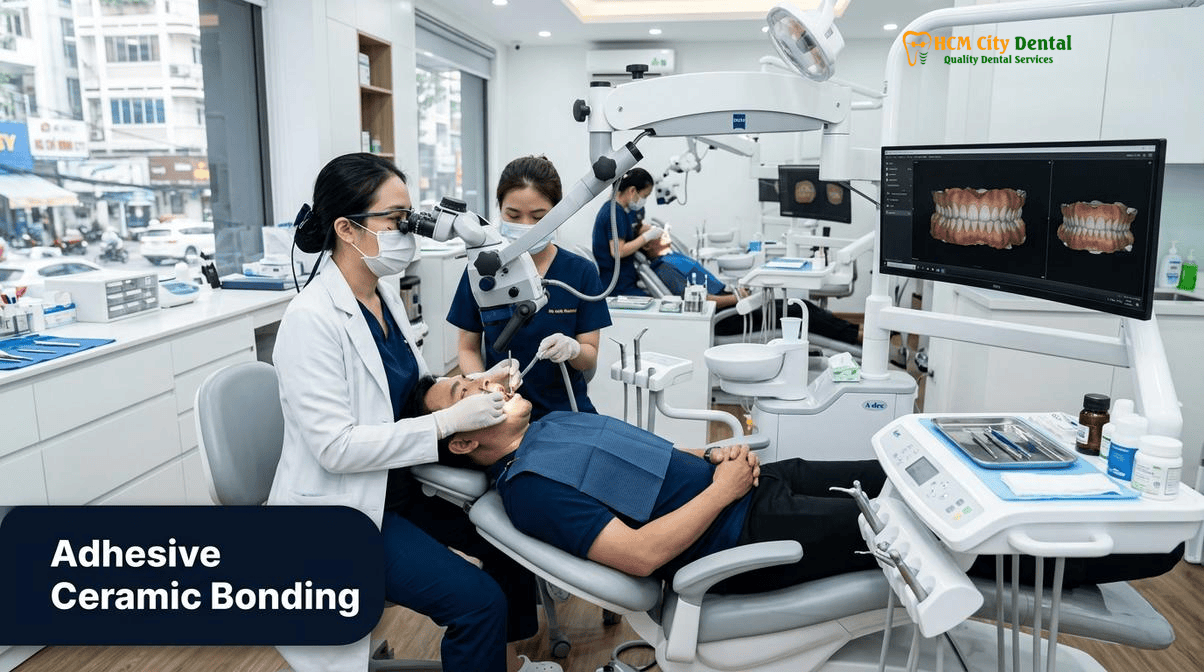
Why Porcelain Veneers and Ceramic Crowns Debond Elsewhere: The Fatal Mistake of Treating Glass-Ceramics and Zirconia Identically
One of the most frequent complaints from dental travelers seeking revision therapy is the catastrophic failure of previous restorations. Patients often ask why porcelain veneers pop off or debond just months after placement. The root cause of these failures is rarely the quality of the ceramic material itself; rather, it is a profound misunderstanding of adhesive chemistry by the treating clinician. The most fatal clinical error in modern prosthodontics is treating silica-based glass-ceramics (like feldspathic porcelain and IPS E.max lithium disilicate) identically to silica-free polycrystalline ceramics (like monolithic zirconia).
Glass-ceramics derive their aesthetic translucency from a glassy silica matrix interspersed with crystalline structures. To bond to these materials, the clinician must utilize an adhesive bonding protocol ips IPS E.max vs zirconia that specifically targets this silica phase. Conversely, monolithic zirconia is a densely packed, high-strength polycrystalline lattice completely devoid of glass. It is chemically inert and highly resistant to traditional acid etching. When a clinician attempts to etch zirconia with hydrofluoric acid, or fails to use a 10-MDP primer, the resulting bond is purely frictional, not chemical. This inevitably leads to microleakage, bacterial infiltration, and the eventual dislodgement of the crown or veneer.
“Adhesive dentistry is an unforgiving discipline of exact chemistry and physics. You cannot force a glass-ceramic protocol onto a zirconia substrate and expect clinical success. At HCMC Dental Clinic, we respect the unique molecular structure of every biomaterial. By strictly adhering to substrate-specific conditioning—whether it is hydrofluoric acid for lithium disilicate or 10-MDP for zirconia—we achieve bond strengths that exceed the cohesive strength of the tooth itself, ensuring our restorations never debond.”
— Dr. Nguyen Van Cuong, DDS (Clinical Director, HCMC Dental Clinic)
Furthermore, failures often stem from a lack of understanding regarding Feilzer’s Configuration Factor (C-Factor), which measures the ratio of bonded to unbonded surfaces in a cavity preparation. High C-Factor scenarios (such as deep Class I cavities or endocrown preparations) generate immense polymerization shrinkage stress, which can tear the hybrid layer apart if not properly managed. By utilizing ultra-high-molecular-weight polyethylene fibers and delayed decoupling techniques, we mitigate these stresses. This deep understanding of biomimetic mechanics is why international patients trust our 2026 Clinical Dental Research & Statistical Reports Hub for evidence-based restorative solutions.[1]
Tooth Substrate Preparation Under Nitrile Rubber Dam: 27-Micron Aluminum Oxide Air Abrasion and Selective 37% Phosphoric Acid Enamel Etching
The foundation of any successful adhesive restoration begins with the meticulous preparation of the tooth substrate. Before any ceramic can be bonded, the enamel and dentin must be rendered pristine, highly reactive, and completely free of contaminants. At HCMC Dental Clinic, this process is exclusively performed under strict 100% latex-free nitrile rubber dam isolation. The oral cavity is a hostile environment with 100% humidity; even a single microscopic droplet of saliva or crevicular fluid will instantly ruin the adhesive interface.
Once isolated, the tooth surface undergoes 27 micron aluminum oxide air abrasion dentistry. Utilizing a specialized micro-sandblaster (such as the AquaCare or Rondoflex system), we propel 27µm Al2O3 particles at a precisely regulated pressure of 30 psi (approximately 2 bar) against the tooth structure. This critical step serves multiple purposes. First, it completely eradicates the smear layer—a microscopic layer of cutting debris, bacteria, and denatured collagen left behind by dental burs. Second, it significantly increases the surface area and surface free energy of the tooth, transforming it from a low-energy, hydrophobic surface into a high-energy, hydrophilic substrate eager to accept adhesive resins. We specifically utilize 27-micron particles rather than 50-micron particles on dentin to prevent aggressive collagen degradation and preserve the delicate dentinal tubule architecture.
Following air abrasion, we employ a selective etching technique. We apply 37% phosphoric acid exclusively to the enamel margins for 15 to 20 seconds. Enamel, being 96% inorganic hydroxyapatite, responds exceptionally well to phosphoric acid, creating deep micro-tags for resin infiltration. However, we avoid etching deep dentin with phosphoric acid, as it can over-demineralize the collagen network, leading to incomplete resin penetration and the activation of Matrix Metalloproteinases (MMPs), which degrade the bond over time. Instead, we utilize mild self-etching primers (10-MDP based) on the dentin to create a stable, nanoretentive hybrid layer.
This preparation phase is intimately tied to the concept of Immediate Dentin Sealing (IDS). By sealing the freshly cut dentin immediately after preparation—before taking the digital impression—we protect the pulp from bacterial invasion, eliminate postoperative sensitivity, and increase the ultimate bond strength by up to 400%. This biomimetic approach is detailed extensively in our clinical guide on Immediate Dentin Sealing (IDS) & Resin Coating in Biomimetic Veneers & Onlays: Increasing Bond Strength by 400%.[2]
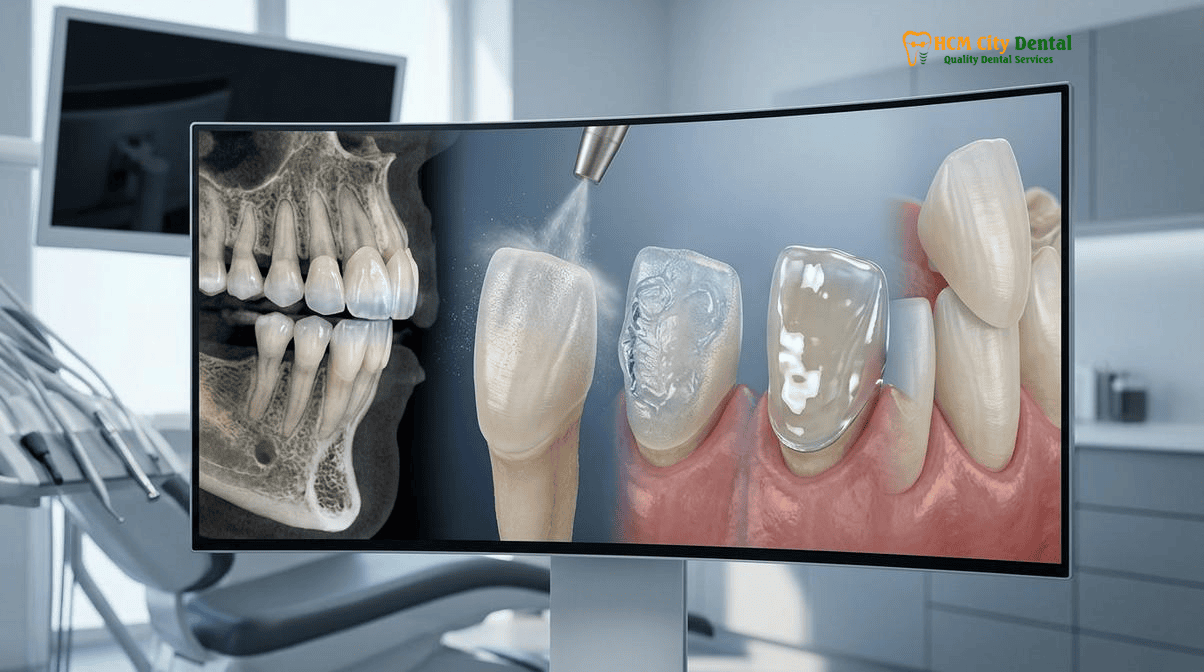
Glass-Ceramic Protocol (IPS E.max & Feldspathic): 5%–9.5% Hydrofluoric Acid Etch (20s/60s), Ultrasonic Crystalline Salt Cleaning & Heat-Dried Pure Silane
When bonding silica-based glass-ceramics, such as IPS E.max (lithium disilicate) or traditional feldspathic porcelain, the clinical objective is to create both micromechanical retention and primary chemical bonds. This is achieved through a highly regimented protocol involving hydrofluoric acid etching lithium disilicate silane application.
The first step is etching the intaglio (internal) surface of the restoration with hydrofluoric (HF) acid. For IPS E.max, a 5% HF acid is typically applied for 20 seconds, whereas feldspathic porcelain requires a 9% to 9.5% HF acid for 60 to 90 seconds. The hydrofluoric acid aggressively attacks and dissolves the glassy silica matrix of the ceramic. As the glass dissolves, it exposes the underlying interlocking lithium disilicate crystals, creating a highly complex, honeycomb-like topography. This micro-retentive surface is essential for the resin cement to flow into and lock onto mechanically.
However, the chemical reaction between HF acid and silica produces a problematic byproduct: insoluble crystalline fluorosilicate salts. These white, chalky precipitates remain lodged deep within the newly created micro-pores. If left in place, they act as a barrier, preventing the silane and resin cement from reaching the ceramic surface. To eradicate these salts, the etched veneer must be actively cleaned. At HCMC Dental Clinic, we place the etched restoration into an ultrasonic bath filled with 96% isopropyl alcohol for 5 minutes. The ultrasonic cavitation effectively vibrates the salts out of the micro-pores, leaving a pristine, highly reactive ceramic surface.
Once cleaned and thoroughly dried, the critical chemical coupling agent is applied: pure silane. Silane is a bifunctional molecule; one end of the molecule bonds covalently to the exposed silica in the ceramic, while the other end contains methacrylate groups that copolymerize with the resin cement. To maximize the efficacy of the silane, we utilize a pure, single-bottle silane (unmixed with adhesive resins) and apply a stream of warm air (heat-drying) at 60°C for 60 seconds. Heat-drying drives off the solvent, accelerates the condensation reaction, and cross-links the silane molecules into a dense, hydrophobic monolayer. This meticulous glass-ceramic protocol is a cornerstone of our success, as explored in our comprehensive overview of Composite vs Ceramic Inlays in Vietnam: Expert Dental Guide.[3]
Clinical Case Note — Dr. Nguyen Van Cuong, DDS (Vietnam MOH License 0003265/BL-CCHN): For every IPS e.max lithium disilicate veneer and biomimetic ceramic onlay cemented at HCMC Dental Clinic in District 1, we strictly separate tooth conditioning (27-micron aluminum oxide air abrasion under rubber dam isolation) from ceramic intaglio conditioning (20-second 5% hydrofluoric acid etching, ultrasonic alcohol bath, and heated MDP-silane coupling). This dual-interface protocol achieves shear bond strengths exceeding 35–45 MPa with zero postoperative hypersensitivity.
Polycrystalline Zirconia Protocol (Blatz APC Concept): Low-Pressure Alumina Particle Abrasion + Saliva Cleaning (Ivoclean) + 10-MDP Phosphate Monomer
Monolithic zirconia presents a completely different adhesive challenge. Because it lacks a silica glass phase, hydrofluoric acid and silane are entirely useless. To achieve a durable, long-lasting bond to zirconia, HCMC Dental Clinic strictly adheres to the internationally recognized APC concept zirconia bonding 10-MDP primer protocol, pioneered by Dr. Markus Blatz.
The APC Concept stands for Air-abrasion, Primer, and Cementation. The protocol begins with low-pressure air abrasion of the zirconia intaglio surface using 50-micron aluminum oxide particles at a maximum pressure of 1.5 to 2.0 bar (approx. 20-30 psi). Unlike glass-ceramics, zirconia is susceptible to phase transformation (from the stable tetragonal phase to the weaker monoclinic phase) if subjected to excessive mechanical stress. Low-pressure air abrasion safely cleans the surface, removes milling debris, and creates necessary micro-roughness without inducing detrimental phase changes or micro-cracks.
The most critical step in zirconia bonding occurs after the clinical try-in. When the zirconia crown is placed in the patient’s mouth to verify fit and aesthetics, it is instantly contaminated by salivary proteins and phospholipids. These proteins bind aggressively to the zirconia surface, occupying the exact receptor sites needed for chemical bonding. Rinsing with water or alcohol will not remove them. To decontaminate the surface, we apply a specialized zirconium-oxide cleaning paste (Ivoclean). The salivary proteins have a higher affinity for the zirconium oxide in the paste than for the crown itself. After 20 seconds, the paste is rinsed away, taking the contaminants with it and leaving a pristine surface.
Clinical Case Study: Zirconia Onlay Rehabilitation for Severe Bruxism
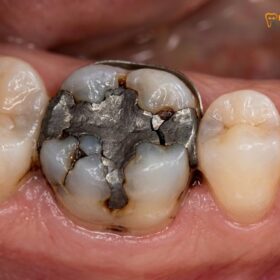
Patient Profile: A 45-year-old Australian expat presented to HCMC Dental Clinic with severe occlusal wear, fractured amalgam fillings, and Split Tooth Syndrome on the mandibular first molars due to nocturnal bruxism.
Clinical Intervention: Dr. Nguyen Van Cuong, DDS, utilized 3D CBCT diagnostics and the Digital SKYN Concept to design 1.5mm cuspal-coverage monolithic zirconia onlays. The teeth were prepared using 27-micron aluminum oxide air abrasion and Immediate Dentin Sealing (IDS). Following the Blatz APC protocol, the zirconia onlays were air-abraded, decontaminated with Ivoclean, and primed with a 10-MDP phosphate monomer.
Outcome: The restorations were bonded using a dual-cure resin cement under nitrile rubber dam isolation. The 10-MDP primer formed strong ionic bonds with the zirconia, ensuring maximum retention despite the patient’s heavy parafunctional forces. The patient achieved full functional rehabilitation with zero postoperative sensitivity.
Finally, a primer containing the 10-MDP (10-methacryloyloxydecyl dihydrogen phosphate) monomer is applied. The phosphate group of the 10-MDP molecule forms highly stable, water-resistant ionic bonds directly with the zirconium oxide molecules, while the methacrylate group bonds to the resin cement. This chemical synergy is the only proven method for achieving long-term adhesion to zirconia, a technique we frequently employ when executing complex restorative procedures, as detailed in our guide to Replace Failing Fillings with Onlay: A Clinical Guide to Ceramic Restorations.[4]
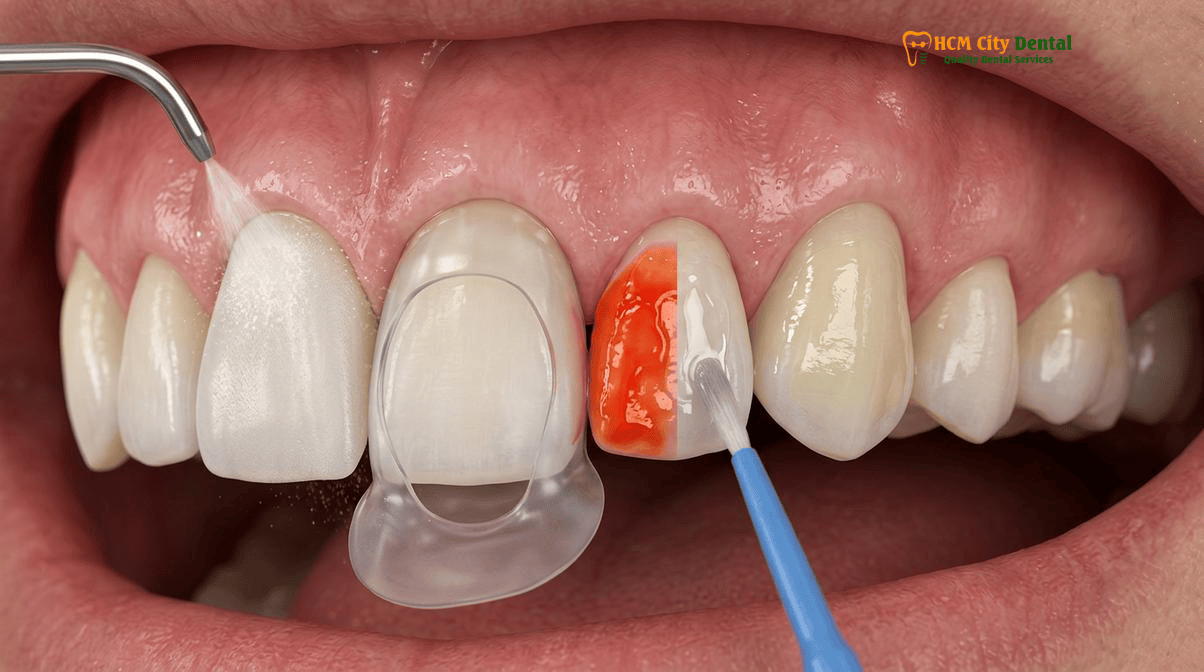
Amine-Free Color-Stable Veneer Resin Cements (Variolink Esthetic LC / Panavia V5) vs. Pre-Heated Restorative Composite Luting
The final variable in the adhesive equation is the selection of the luting agent. The choice of cement not only dictates the mechanical strength of the bond but also the long-term aesthetic success of the restoration. When discussing highly translucent anterior restorations, the debate often centers around heated composite vs amine free resin cement veneers.
Traditional dual-cure resin cements rely on tertiary amines as chemical catalysts to initiate the self-curing process in areas where the curing light cannot penetrate. However, these tertiary amines are notoriously unstable; over time, they oxidize and degrade, causing the cement layer to turn yellow, brown, or gray. Beneath an ultra-thin 0.3mm IPS E.max veneer, this discoloration will shine through, ruining the aesthetic result. To prevent this, HCMC Dental Clinic exclusively utilizes 100% amine-free, strictly light-cured resin cements (such as Ivoclar Variolink Esthetic LC) for all anterior veneers. Because they lack tertiary amines, these cements offer unparalleled, lifelong color stability.
For thicker posterior restorations (such as endocrowns or thick onlays) where light penetration is compromised, we utilize advanced amine-free dual-cure systems like Kuraray Panavia V5, which employ proprietary amine-free redox initiators to ensure both complete polymerization and color stability.
Clinical Precaution: The Danger of Inadequate Light Curing
When utilizing strictly light-cured, amine-free resin cements for porcelain veneers, the clinician must ensure maximum photon energy reaches the cement layer. Inadequate light curing will result in unreacted monomers, leading to bond degradation, marginal microleakage, and severe pulpal inflammation. At HCMC Dental Clinic, we utilize high-power, broad-spectrum LED curing lights (minimum 1,200 mW/cm²) and cure each surface for an extended duration through a glycerin gel barrier to eliminate the oxygen inhibition layer, ensuring 100% monomer conversion.
Alternatively, for specific biomimetic applications, we employ pre-heated restorative composite luting. By heating a highly filled restorative composite (such as 3M Filtek Supreme) to 68°C in a specialized composite warmer, we dramatically lower its viscosity, allowing it to flow like a cement. Once seated, the composite cools and regains its high mechanical properties, offering superior wear resistance at the margins compared to traditional flowable cements. This advanced technique requires immense clinical skill and speed, hallmarks of the expertise provided by Dr. Nguyen Van Cuong, DDS (Clinical Director — MOH License 0003265/BL-CCHN).[5]
2026 Adhesive Porcelain Veneer, E.max Onlay & Zirconia Crown Fee Schedule at HCMC Dental Clinic (District 1)
International patients traveling to Vietnam for complex restorative dentistry demand absolute transparency regarding clinical protocols and financial investment. At HCMC Dental Clinic, we believe that world-class biomimetic dentistry—utilizing authentic IPS E.max, 27-micron air abrasion, pure silane, and 10-MDP primers—should be accessible without compromising on material quality or clinical safety.
By booking your treatment plan online prior to your arrival in Ho Chi Minh City, international patients unlock our exclusive -40% Online Booking Fee Schedule. This transparent pricing model ensures you receive elite-level prosthodontic care at a fraction of the cost compared to clinics in Australia, the United States, or Europe. Below is the official 2026 fee schedule for our advanced adhesive ceramic restorations. For a comprehensive overview of all our specialist services, please visit our Official 2026 Dental Price List & -40% Online Booking Fee Schedule.
| Adhesive Ceramic Procedure (Biomimetic Protocol) | 2026 Online Booking Price (USD) | 2026 Online Booking Price (VND) | Standard Walk-In Price (USD) |
|---|---|---|---|
| IPS E.max Porcelain Veneer (Includes HF Acid, Silane & Amine-Free Cement) | $185 USD / tooth | 4,800,000 VND | $308 USD |
| Zirconia Veneer (Includes APC Protocol & 10-MDP Primer) | $138 USD / tooth | 3,588,000 VND | $230 USD |
| Composite Veneer / Dental Bonding (Heated Injection Molding) | $35 – $46 USD / tooth | 900,000 – 1,200,000 VND | $58 – $76 USD |
| IPS E.max All-Ceramic Crown / Inlay / Onlay / Overlay | $231 USD / tooth | 6,000,000 VND | $385 USD |
| Full Zirconia Crown (Cercon Standard / HT Multilayer) | $154 – $192 USD / tooth | 4,000,000 – 5,000,000 VND | $256 – $321 USD |
| PFM Crown (Porcelain Fused to Metal) | $81 USD / tooth | 2,106,000 VND | $135 USD |
| Microscopic Endodontic Root Canal Therapy (Anterior/Premolar) | $77 – $115 USD / tooth | 2,000,000 – 3,000,000 VND | $128 – $192 USD |
| 3D CBCT Scan (Digital Diagnostics) | $18 USD | 480,000 VND | $30 USD |
*Note: All conversions are based on the fixed exchange rate of $1 USD = 26,000 VND. The -40% online booking discount is exclusively available to international patients who secure their treatment plan prior to arriving at our District 1 facility.
Frequently Asked Questions
Why does hydrofluoric acid etch IPS E.max porcelain to create micro-retentive pores, yet have zero effect on monolithic zirconia?
Hydrofluoric acid specifically targets and dissolves the glassy silica matrix found in glass-ceramics like IPS E.max (lithium disilicate) and feldspathic porcelain. By dissolving this glass phase, it exposes the underlying lithium disilicate crystals, creating a highly micro-retentive, honeycomb-like topography ideal for micromechanical interlocking. Monolithic zirconia, however, is a polycrystalline ceramic completely devoid of a silica glass phase. Because there is no glass to dissolve, hydrofluoric acid has absolutely zero etching effect on zirconia. Instead, zirconia requires low-pressure air abrasion with aluminum oxide to create surface roughness, followed by chemical bonding using a 10-MDP phosphate monomer.
Why must etched IPS E.max veneers be scrubbed with phosphoric acid or placed in an ultrasonic alcohol bath before applying silane?
When hydrofluoric acid etches IPS E.max, the chemical reaction produces a byproduct called crystalline fluorosilicate salts. These insoluble white precipitates remain lodged deep within the newly created micro-pores of the ceramic. If silane is applied directly over these salts, the bond will fail because the silane is attaching to loose debris rather than the solid ceramic substrate. To achieve maximum bond strength, these salts must be actively removed. This is accomplished by either scrubbing the intaglio surface with 37% phosphoric acid for 60 seconds or, ideally, placing the veneer in an ultrasonic bath with 96% isopropyl alcohol for 5 minutes to vibrate the precipitates out of the micro-pores before applying pure, heat-dried silane.
How does saliva contamination during try-in ruin zirconia bonding unless cleaned with a zirconium-oxide paste (Ivoclean)?
During the clinical try-in phase, the intaglio surface of a zirconia crown or veneer inevitably comes into contact with saliva. Saliva contains salivary proteins and phospholipids that immediately bind to the zirconia surface, occupying the exact receptor sites needed for the 10-MDP phosphate monomer to attach. Rinsing with water, alcohol, or even phosphoric acid cannot break these strong protein bonds. If bonded in this contaminated state, the restoration will eventually fail. To decontaminate the surface, a specialized highly concentrated zirconium-oxide cleaning paste (such as Ivoclean) must be applied. The salivary proteins have a higher affinity for the paste than for the restoration, drawing the contaminants away so they can be rinsed off, leaving a pristine surface ready for the 10-MDP primer.
Why does HCMC Dental Clinic exclusively use amine-free light-cure resin cements for front porcelain veneers?
Traditional dual-cure resin cements contain tertiary amines, which are chemical catalysts required for the self-curing (chemical curing) process. Over time, these tertiary amines undergo oxidation and degrade, leading to a noticeable yellowing or graying of the cement layer beneath the translucent porcelain. For highly aesthetic anterior restorations like ultra-thin IPS E.max veneers, this color shift is disastrous. HCMC Dental Clinic exclusively utilizes amine-free, strictly light-cured resin cements (such as Variolink Esthetic LC) for anterior veneers. Because they lack tertiary amines, these cements offer 100% long-term color stability, ensuring that the veneers maintain their vibrant, natural optical properties for decades without marginal discoloration.
What happens if a veneer placed in another clinic debonds while I am visiting Ho Chi Minh City?
If you experience a debonded veneer while traveling in Vietnam, it is a dental emergency that requires immediate specialist intervention to protect the exposed dentin and prevent fracture of the delicate ceramic. At HCMC Dental Clinic in District 1, Dr. Nguyen Van Cuong, DDS, can perform an emergency rebonding procedure. We will carefully remove the old, failed cement using 27-micron aluminum oxide air abrasion, decontaminate the tooth and the veneer, and re-execute the strict adhesive bonding protocol (hydrofluoric acid, ultrasonic cleaning, silane, and amine-free resin cement under rubber dam isolation). You can contact our international patient hotline at +84 853 020 003 for priority scheduling.
References
- Magne, P., & Belser, U. (2022). Biomimetic Restorative Dentistry: Mechanics, Adhesion, and Esthetics. Quintessence Publishing.
- Blatz, M. B., Alvarez, M., Sawyer, K., & Brindis, J. (2023). How to Bond Zirconia: The APC Concept. Journal of Esthetic and Restorative Dentistry, 35(1), 15-22.
- Tian, T., Tsoi, J. K., Matinlinna, J. P., & Burrow, M. F. (2021). Aspects of silane coupling agents and surface conditioning in dentistry: An overview. Dental Materials, 37(8), 1274-1288.
- Gargari, M., Gloria, F., Napoli, E., & Pujia, A. (2020). Zirconia: cementation of prosthetic restorations. Literature review. Oral & Implantology, 13(1), 25-31.
- Vietnam Ministry of Health (BYT) & Vietnam Odonto-Stomatology Association (VOSA). National Clinical Guidelines on Specialist Dental Care, Biomaterial Traceability & EN 13060 Class B Infection Control. (2024).