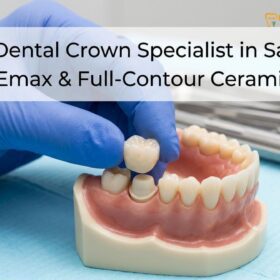
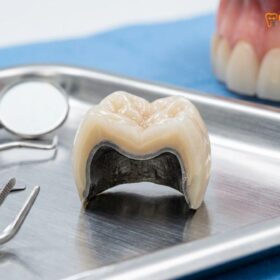
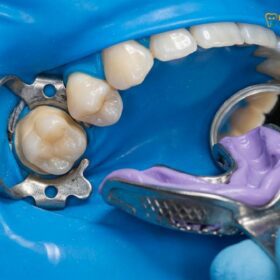
Choosing between a Zirconia vs Emax crown after a root canal depends primarily on the tooth’s location and functional demands. Zirconia offers unmatched durability for posterior molars, while Emax provides superior translucency for anterior teeth, ensuring both structural integrity and aesthetic harmony.
Clinical Summary:
Post-endodontic restorations require careful material selection to ensure the long-term survival of the devitalized tooth. Following root canal therapy, a tooth loses its internal blood supply and becomes significantly more brittle, necessitating a full-coverage restoration to prevent catastrophic vertical root fractures. The debate between Zirconia and E.max (lithium disilicate) centers on the balance between biomechanical strength and optical aesthetics. Zirconia, specifically yttria-stabilized tetragonal zirconia polycrystal (Y-TZP), delivers exceptional flexural strength exceeding 1,000 MPa, making it the definitive choice for load-bearing posterior molars. Conversely, E.max glass-ceramic offers unparalleled light transmission and translucency, mimicking natural enamel perfectly for highly visible anterior teeth. Clinical success depends on evaluating the patient’s occlusal forces, the presence of parafunctional habits like bruxism, and the amount of remaining healthy tooth structure (the ferrule effect). A comprehensive diagnostic approach ensures that the chosen material not only restores the tooth’s function but also integrates seamlessly with the surrounding gingival architecture and opposing dentition.
Key Takeaways:
- Zirconia provides superior flexural strength (up to 1,200 MPa), making it ideal for posterior molars subjected to heavy chewing forces.
- E.max (lithium disilicate) offers exceptional translucency, making it the preferred aesthetic choice for anterior (front) teeth.
- Endodontically treated teeth require full-coverage crowns to prevent structural fractures and bacterial microleakage.
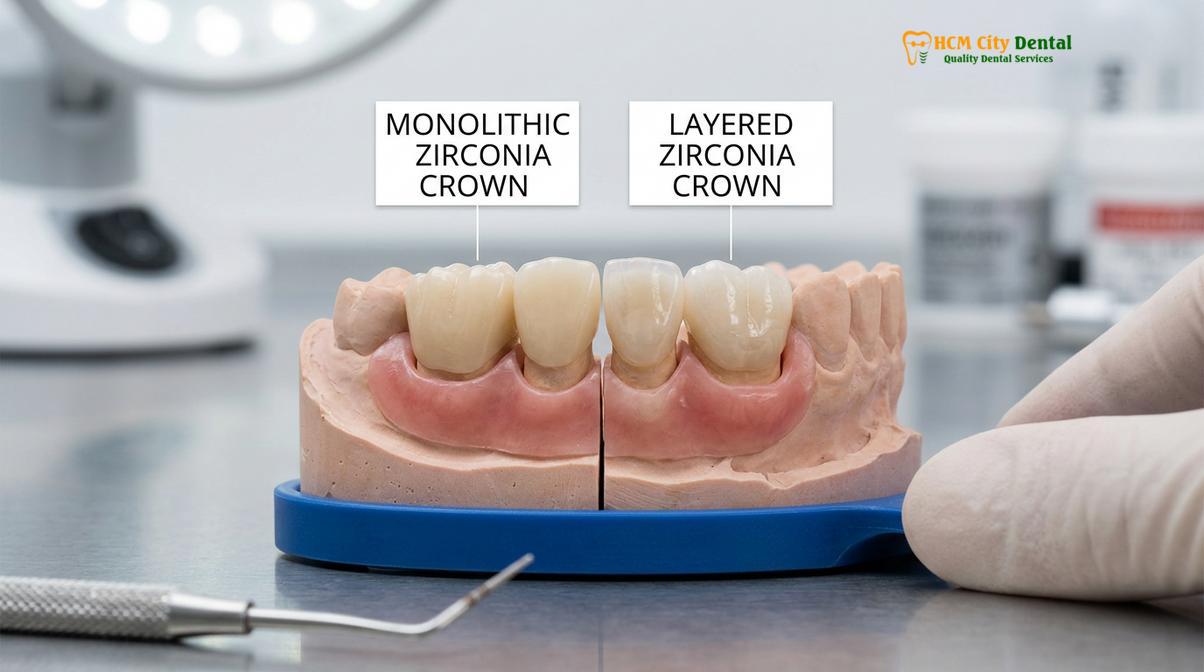
- Monolithic zirconia is highly resistant to chipping, whereas layered zirconia offers better aesthetics but carries a slight risk of porcelain delamination.
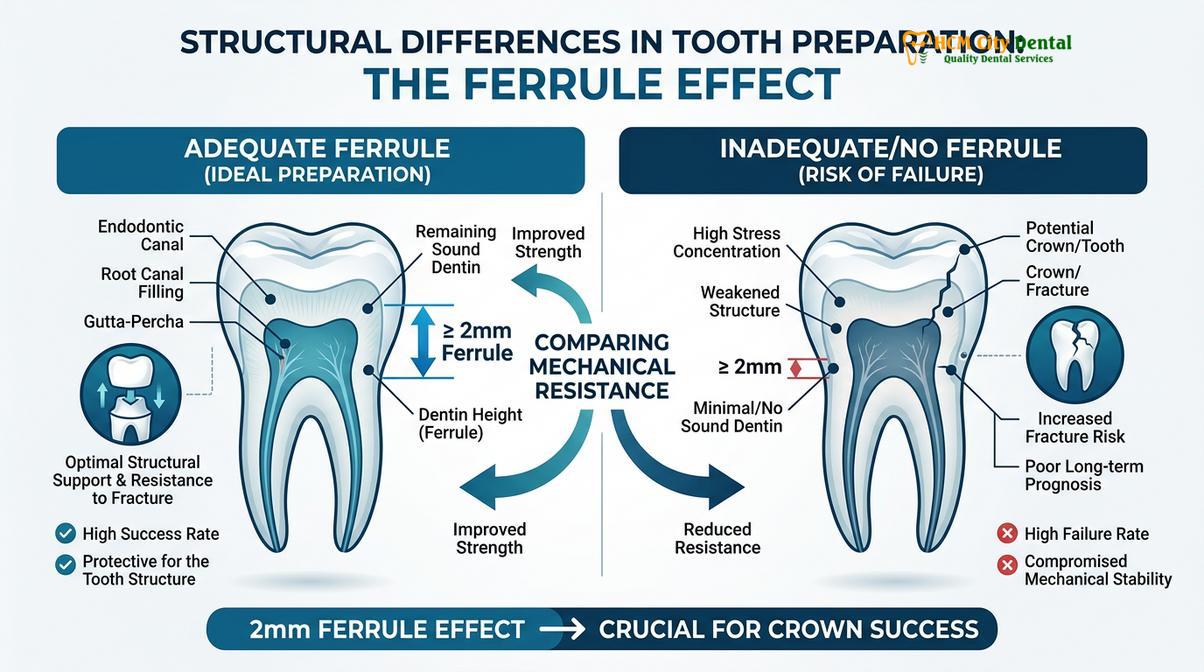
- Proper tooth preparation, including a minimum 2mm ferrule, is critical for the long-term success of any post-root canal crown.
High Flexural Strength: Why Zirconia Rules Posterior Molar Crowns
Zirconia delivers exceptional fracture toughness and flexural strength, making it the gold standard for restoring root canal-treated molars that must endure heavy, repetitive masticatory forces.
When a posterior tooth undergoes root canal therapy, the removal of the internal pulp tissue and the necessary access cavity preparation significantly compromise the tooth’s structural integrity. The remaining dentin becomes dehydrated over time, altering its modulus of elasticity and rendering the tooth highly susceptible to fracture under the immense pressures of chewing. In the posterior region, bite forces can easily exceed 500 Newtons during normal mastication, and even higher during parafunctional clenching. This biomechanical reality necessitates a restorative material capable of withstanding extreme stress without catastrophic failure.
Zirconia, specifically Yttria-stabilized tetragonal zirconia polycrystal (Y-TZP), has revolutionized restorative dentistry due to its extraordinary mechanical properties. Unlike traditional ceramics, high flexural strength zirconia possesses a unique crystalline structure that undergoes “phase transformation toughening.” When a microscopic crack begins to propagate through the material, the crystal structure at the tip of the crack transforms from a tetragonal phase to a monoclinic phase. This transformation is accompanied by a localized volumetric expansion of approximately 3% to 5%, which effectively compresses the crack and halts its progression. This self-healing characteristic grants zirconia a fracture toughness that is virtually unmatched by any other metal-free dental material.[1]
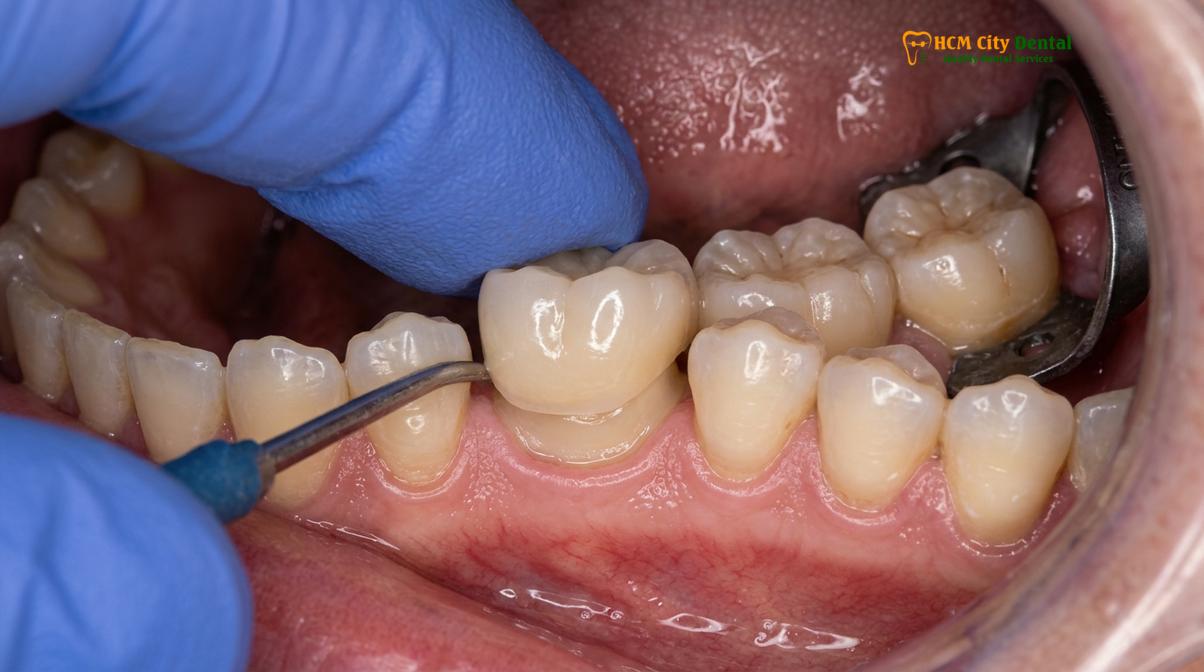
The Biomechanics of Posterior Restorations
For a posterior molar crown, the primary clinical objective is functional longevity. While aesthetics are always a consideration, the posterior region demands a material that will not chip, fracture, or wear down prematurely. Monolithic zirconia crowns are milled from a single, solid block of zirconia oxide, eliminating the weak interface found in traditional porcelain-fused-to-metal (PFM) crowns where the porcelain can shear off the metal substructure. With flexural strengths ranging from 800 MPa to over 1,200 MPa, monolithic zirconia provides a robust, fracture-resistant shield over the fragile endodontically treated root.
Furthermore, the preparation design for a zirconia crown is highly conservative. Because the material is inherently strong even at minimal thicknesses, dentists can preserve more of the natural tooth structure during the preparation phase. A minimal chamfer margin and a conservative occlusal reduction of 1.0mm to 1.5mm are often sufficient. This preservation of cervical dentin is crucial for maintaining the “ferrule effect”—a band of solid tooth structure above the gumline that acts like a barrel hoop, preventing the root from splitting under lateral forces.
Lithium Disilicate (E.max): The Ultimate Choice for Anterior Esthetics
E.max crowns utilize lithium disilicate glass-ceramic to mimic natural enamel translucency, providing unparalleled aesthetic results for highly visible front teeth following endodontic treatment.
While posterior teeth demand brute strength, anterior (front) teeth present a completely different clinical challenge. The incisors and canines are the focal point of a patient’s smile, and any restoration in this aesthetic zone must seamlessly integrate with the adjacent natural dentition. Natural tooth enamel is not a solid, opaque white; it is highly translucent, allowing light to penetrate, scatter, and reflect off the underlying dentin. Replicating this complex optical behavior requires a material with exceptional light-transmitting properties.
Lithium disilicate, commercially known as E.max, is a glass-ceramic material that excels in the anterior region. Its microstructure consists of needle-like lithium disilicate crystals embedded in a glassy matrix. This unique composition allows light to pass through the crown in a manner virtually identical to natural enamel. When an anterior tooth requires a crown after a root canal, lithium disilicate Emax HCMC protocols often recommend this material to avoid the “dead” or artificial look associated with opaque restorations.[2]
“In the anterior aesthetic zone, our goal is optical invisibility. The restoration must disappear into the smile. While zirconia has improved aesthetically, lithium disilicate remains the undisputed champion for mimicking the depth, vitality, and translucency of natural human enamel.”
— Dr. Nguyen Van Cuong, Clinical Director
Adhesive Bonding and Structural Integration
Beyond its optical superiority, E.max offers a distinct advantage in how it attaches to the underlying tooth structure. Unlike zirconia, which is typically cemented using conventional luting agents (like glass ionomer), lithium disilicate can be adhesively bonded to the tooth. The internal surface of the E.max crown is etched with hydrofluoric acid, creating a microporous surface. A silane coupling agent is then applied, allowing a dual-cure resin cement to form a true chemical and micromechanical bond between the ceramic and the tooth’s dentin and enamel.
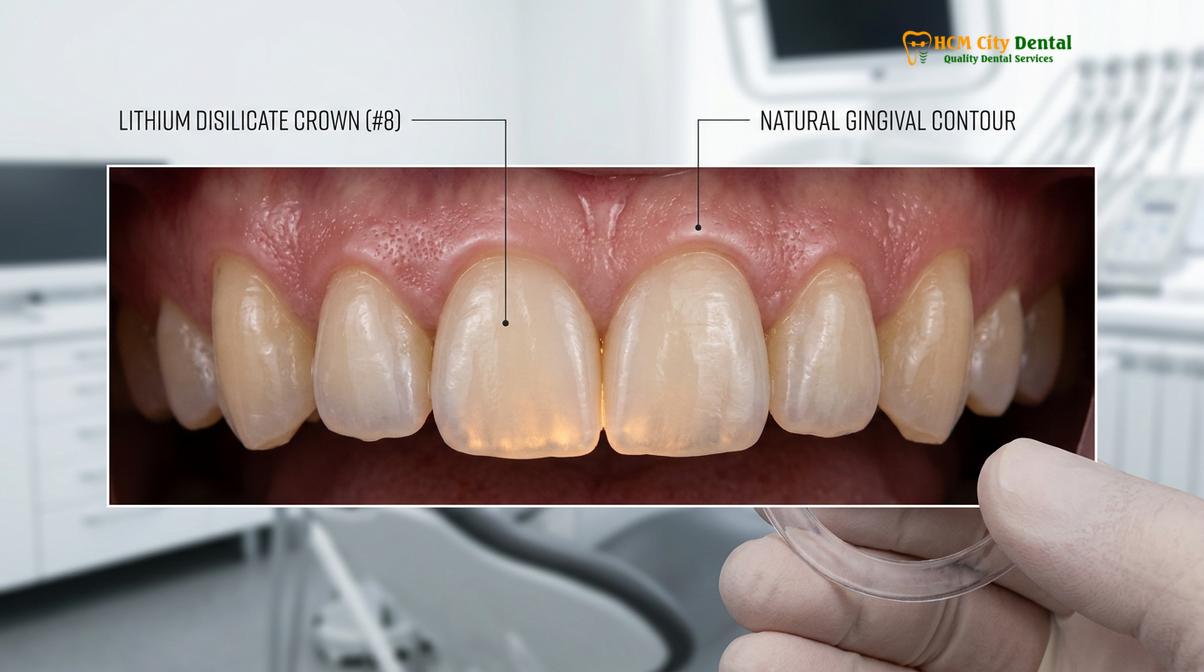
This adhesive bonding protocol is particularly beneficial for endodontically treated anterior teeth. The chemical integration reinforces the remaining tooth structure, distributing stress more evenly across the root and reducing the risk of fracture at the cervical margin. For patients seeking comprehensive aesthetic rehabilitations, E.max crowns can be perfectly color-matched and blended with adjacent Porcelain Veneers, ensuring a uniform and radiant smile makeover.
Monolithic Zirconia vs. Layered Zirconia: Balancing Strength and Translucency
Monolithic zirconia maximizes bite resistance without chipping risks, whereas layered zirconia combines a strong core with porcelain overlays to enhance aesthetics at the cost of some surface durability.
As the demand for metal-free dentistry grew, manufacturers sought to improve the aesthetic limitations of early generation zirconia, which was notoriously opaque and chalky white. This evolution led to the development of two distinct types of zirconia restorations: monolithic and layered. Understanding the difference between these two modalities is critical when planning a post-endodontic restoration, as each offers a different balance of strength and aesthetics.
Monolithic Zirconia: As the name implies, a monolithic crown is milled from a single, uniform block of zirconia. There is no overlying porcelain. To improve aesthetics, modern monolithic zirconia blocks are highly translucent (often containing a higher percentage of yttria, such as 4Y-TZP or 5Y-TZP) and are pre-shaded with gradient color transitions from the darker cervical neck to the lighter, more translucent incisal edge. Because it is a single solid material, monolithic zirconia is virtually immune to chipping or delamination, making it the ultimate choice for heavy bruxers and posterior molar restorations.[3]
Layered Zirconia: To achieve the highest level of aesthetic customization, a dental technician can mill a high-strength zirconia coping (the core) and then manually bake layers of feldspathic porcelain over it. This technique allows the ceramist to build internal characterizations, mamelons, and precise translucency, rivaling the beauty of E.max. However, the bond between the zirconia core and the layered porcelain is mechanical, and the overlying porcelain is significantly weaker than the core. Consequently, layered zirconia carries a clinical risk of porcelain chipping or delamination under heavy occlusal loads.
Clinical Comparison of Crown Materials
| Material Type | Flexural Strength (MPa) | Aesthetic Quality | Primary Clinical Indication | Risk of Chipping |
|---|---|---|---|---|
| Monolithic Zirconia | 800 – 1,200+ | Good (Gradient shading) | Posterior Molars, Heavy Bruxers | Extremely Low |
| Layered Zirconia | Core: 1,000+ / Veneer: 100 | Excellent (Customizable) | Anterior Teeth, Premolars | Moderate (Porcelain fracture) |
| E.max (Lithium Disilicate) | 360 – 500 | Superior (Enamel-like) | Anterior Teeth, High Esthetic Zones | Low (When adhesively bonded) |
Structural Differences: Bone Preservation and Tooth Reduction Requirements
Material selection directly dictates the amount of tooth structure removed during preparation, significantly impacting the long-term survival of the underlying root and surrounding alveolar bone.
The success of a crown on an endodontically treated tooth is not solely dependent on the material chosen; it is heavily reliant on the quality and quantity of the remaining natural tooth structure. When a dentist prepares a tooth for a crown, they must reduce the circumference and height of the tooth to create space for the restorative material. The amount of reduction required varies significantly between Zirconia and E.max, directly influencing the biomechanical stability of the tooth-root complex.
The most critical biomechanical principle in restoring a root canal-treated tooth is the “ferrule effect.” A ferrule is a continuous band of healthy dentin above the gumline, ideally measuring at least 1.5mm to 2.0mm in height and 1.0mm in thickness. This collar of dentin is embraced by the crown, transferring occlusal forces down into the root and surrounding alveolar bone rather than allowing those forces to wedge the tooth apart. If too much tooth structure is removed during preparation, the ferrule is compromised, drastically increasing the risk of a vertical root fracture, which inevitably leads to tooth extraction and the need for a dental implant.[4]
“Preserving cervical dentin is the cornerstone of endodontic restorative success. A crown is only as strong as the foundation it rests upon. If we aggressively prepare a devitalized tooth to accommodate a thick aesthetic material, we sacrifice the very ferrule that prevents catastrophic root failure.”
— Clinical Endodontic Guidelines
Conservative Preparation Protocols
Because monolithic zirconia possesses such high flexural strength, it can be fabricated at very thin dimensions—sometimes as thin as 0.5mm at the margins and 1.0mm occlusally—without compromising its fracture resistance. This allows the clinician to perform a highly conservative preparation, preserving precious enamel and dentin, and maximizing the ferrule effect. This conservative approach is particularly vital for teeth that have suffered extensive decay prior to the root canal.
Conversely, E.max requires a slightly more aggressive preparation to achieve its aesthetic potential and structural stability. Lithium disilicate typically requires a minimum thickness of 1.0mm to 1.5mm at the margins (usually a heavy chamfer or modified shoulder preparation) and 1.5mm to 2.0mm of occlusal clearance. While this reduction is standard and safe for teeth with abundant remaining structure, it may be contraindicated for severely broken-down teeth where every millimeter of dentin is critical for survival.
Durability and Wear Against Opposing Natural Enamel
The surface hardness of a crown material determines not only its own longevity but also the wear rate and potential abrasion of the opposing natural dentition over time.
A common misconception in restorative dentistry is that the hardest material is always the best. While high flexural strength prevents the crown itself from breaking, surface hardness dictates how the crown interacts with the opposing natural teeth during chewing and grinding. Natural human enamel is incredibly durable, but it can be severely worn down if it is constantly grinding against an abrasive ceramic surface.
Historically, traditional porcelain was highly abrasive to opposing teeth, especially if the surface glaze wore off, exposing the rough, sandpaper-like ceramic underneath. Modern monolithic zirconia, however, behaves very differently. When zirconia is meticulously polished to a high mirror shine, it is exceptionally smooth and remarkably kind to opposing natural enamel. Studies have shown that highly polished zirconia causes less wear on opposing teeth than even natural enamel against natural enamel.[5]
Clinical Warning: If a zirconia crown requires occlusal adjustment (grinding to fix the bite) after it has been cemented, the dentist must use specialized diamond polishing kits to restore the mirror finish. Leaving a roughened zirconia surface will act as an abrasive file, rapidly wearing down the opposing natural tooth structure.
E.max (lithium disilicate) also exhibits excellent wear characteristics. Its wear rate is very similar to that of natural enamel, making it a highly biocompatible choice for the stomatognathic system. Because E.max is often used in the anterior region, where the teeth guide the jaw during lateral movements (canine guidance and anterior guidance), its smooth, enamel-like surface ensures harmonious function without causing premature wear to the lower incisors.
Choosing the Right Material Based on Tooth Location and Bruxism Habits
A comprehensive clinical assessment of bite dynamics, parafunctional habits, and aesthetic expectations is essential for prescribing the correct post-endodontic crown material.
The decision between Zirconia and E.max is rarely a one-size-fits-all scenario. It requires a personalized diagnostic approach that evaluates the patient’s unique oral environment. The location of the tooth is the primary deciding factor. As established, a posterior molar crown almost universally benefits from the indestructible nature of monolithic zirconia, while anterior incisors demand the lifelike vitality of E.max.
However, parafunctional habits, specifically bruxism (chronic teeth grinding and clenching), can alter this standard protocol. Patients who suffer from severe bruxism generate occlusal forces that far exceed normal chewing. In these cases, placing an E.max crown or a layered zirconia crown, even on a premolar or anterior tooth, carries a significant risk of fracture. For heavy bruxers, monolithic zirconia is often the safest choice for all teeth, prioritizing structural survival over maximum translucency. To mitigate the aesthetic compromise in the anterior zone, highly translucent zirconia blends (like 5Y-TZP) can be utilized, providing an acceptable balance of beauty and brawn.
Clinical Case Study: A 45-year-old male patient visited HCMC Dental Clinic in Ho Chi Minh City presenting with a fractured temporary crown on a recently root canal-treated lower first molar (Tooth #30). The patient exhibited signs of severe nocturnal bruxism, with flattened cusps on adjacent teeth. Dr. Nguyen Van Cuong evaluated the remaining tooth structure and noted a healthy 2mm ferrule. Given the extreme occlusal forces, an E.max restoration was contraindicated. Dr. Cuong prescribed a highly polished, monolithic high flexural strength zirconia crown. The restoration was cemented with a resin-modified glass ionomer. At the one-year follow-up, the crown showed zero signs of wear, and the opposing natural enamel remained completely intact, demonstrating the efficacy of polished zirconia in high-stress environments.
When to See a Doctor for Post-Endodontic Restorations
Following a root canal, the tooth is typically sealed with a temporary filling or a temporary acrylic crown. It is imperative not to delay the placement of the final permanent restoration. A temporary seal is designed to last only a few weeks; prolonged use can lead to microleakage, allowing oral bacteria to re-infect the root canal system, potentially leading to an abscess and the failure of the entire endodontic treatment.
You should schedule an immediate clinical evaluation if you experience any of the following symptoms after a root canal or after receiving a permanent crown:
- The temporary filling or temporary crown falls out or cracks.
- You feel a sharp, uneven contact when biting down (the bite feels “high”).
- There is swelling, redness, or a pimple-like bump (fistula) on the gums near the treated tooth.
- You experience pain when applying chewing pressure to the tooth (a devitalized tooth should not feel pain; pressure sensitivity indicates potential root fracture or periapical inflammation).
- The gum tissue around the crown bleeds easily or appears chronically inflamed.
Prompt intervention is critical to saving the tooth. If you require a post-endodontic evaluation or need to discuss material options for your restoration, contact the specialists at HCMC Dental Clinic for a comprehensive diagnostic consultation.
Frequently Asked Questions
Is Zirconia stronger than E.max for crown placement?
Yes, Zirconia is significantly stronger than E.max in terms of flexural strength and fracture toughness. While E.max typically offers a flexural strength of 360 to 400 MPa, modern monolithic zirconia can exceed 1,000 to 1,200 MPa. This immense durability makes zirconia the preferred material for posterior molars that must withstand heavy chewing forces, whereas E.max is often reserved for anterior teeth where aesthetic demands outweigh the need for maximum bite resistance.
Why is an E.max crown preferred for front teeth after a root canal?
An E.max crown is preferred for front teeth because its lithium disilicate glass-ceramic structure closely mimics the natural translucency and light-reflecting properties of human enamel. After a root canal, anterior teeth require restorations that blend seamlessly with adjacent natural teeth. E.max allows light to pass through it similarly to a natural tooth, preventing the opaque, artificial appearance that can sometimes occur with denser materials, ensuring a highly aesthetic and natural-looking smile.
How many years do Zirconia and E.max crowns last?
With proper oral hygiene and regular dental check-ups, both Zirconia and E.max crowns can last between 10 to 15 years, and often much longer. The longevity of the restoration depends heavily on the patient’s bite dynamics, the presence of parafunctional habits like teeth grinding (bruxism), and the structural integrity of the underlying root canal-treated tooth. Excellent home care and wearing a nightguard if prescribed can significantly extend the lifespan of either crown.
Can I get a porcelain veneer instead of a crown after a root canal?
In most cases, a full-coverage dental crown is recommended over a porcelain veneer for a tooth that has undergone root canal therapy. Endodontically treated teeth are inherently more brittle due to the loss of internal blood supply and structural dentin. A crown encapsulates the entire tooth, providing essential structural reinforcement and preventing vertical root fractures. Veneers only cover the front surface and do not offer the necessary 360-degree protection required for a devitalized tooth.
Does the crown placement procedure hurt after root canal therapy?
The crown placement procedure is generally painless, especially since the tooth has already had its nerve tissue removed during the root canal therapy. Patients may experience mild sensitivity in the surrounding gum tissue due to the impression process or the placement of retraction cord, but the tooth itself cannot feel hot, cold, or sharp pain. Local anesthesia is often not even required during the final cementation, making it a comfortable and straightforward clinical appointment.
References
- Journal of Prosthetic Dentistry. Flexural strength and phase transformation of yttria-stabilized zirconia. (2021).
- Dental Materials. Optical properties and clinical performance of lithium disilicate glass-ceramics. (2020).
- International Journal of Prosthodontics. Survival rates of monolithic vs layered zirconia restorations. (2019).
- Journal of Endodontics. The ferrule effect and biomechanical behavior of endodontically treated teeth. (2022).
- Clinical Oral Investigations. Wear behavior of polished zirconia against natural enamel. (2018).
For premium porcelain crowns, bridges, and advanced smile reconstructions, visit our Dental Crowns & Bridges service page at HCMC Dental Clinic in Ho Chi Minh City.