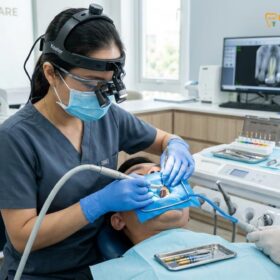
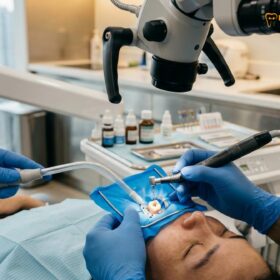
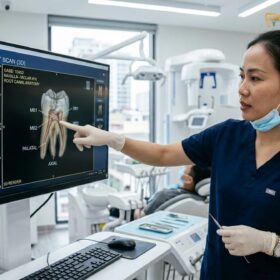
A bioceramic root canal sealer is an advanced, biocompatible endodontic material composed of calcium silicates. It chemically bonds to dentin and gutta-percha, producing hydroxyapatite upon setting. This creates a hermetic, antibacterial seal that significantly improves the long-term success of root canal therapy by preventing microbial leakage.
Clinical Summary:
The evolution of endodontic obturation has shifted dramatically with the introduction of bioceramic root canal sealers. Unlike traditional zinc oxide eugenol or resin-based materials that shrink upon setting and merely fill spaces mechanically, bioceramics are active, hydrophilic materials. They utilize the natural moisture present within the dentinal tubules to initiate a complex hydration reaction, resulting in the formation of a calcium silicate hydrate gel and the precipitation of hydroxyapatite. This unique bioactivity allows the sealer to form a true chemical bond with the root dentin, creating an impenetrable mineral infiltration zone. Furthermore, the highly alkaline pH generated during the setting process provides exceptional antibacterial properties, effectively neutralizing residual pathogens. By employing a single-cone cold hydraulic condensation technique, clinicians can achieve a superior, dimensionally stable, three-dimensional seal that promotes rapid periapical tissue healing and supports the long-term preservation of the natural dentition.
Key Takeaways:
- Bioceramic sealers are hydrophilic, utilizing natural dentinal moisture to initiate their setting reaction.
- They exhibit zero shrinkage and slight volumetric expansion, ensuring a gap-free, hermetic apical seal.
- The hydration process produces hydroxyapatite, creating a direct chemical bond with the tooth structure.
- A sustained high pH (above 12) provides powerful, long-lasting antibacterial effects against intracanal pathogens.
- The material is highly biocompatible, promoting osteogenesis and rapid healing of periapical tissues.
The Importance of the Final Seal (Obturation)
The primary objective of obturation is to entomb residual bacteria and completely seal the root canal system from coronal to apical endpoints, preventing reinfection and promoting periapical tissue healing.
Endodontic therapy is fundamentally built upon a triad of clinical objectives: meticulous biomechanical preparation, aggressive chemical disinfection, and a flawless three-dimensional obturation. While shaping and cleaning remove the bulk of infected pulp tissue and bacterial biofilms, it is clinically impossible to sterilize the root canal system entirely. Microscopic accessory canals, isthmuses, and apical deltas often harbor residual microorganisms. Therefore, the final seal—the obturation phase—serves as the ultimate barrier. Its purpose is to entomb any surviving bacteria, depriving them of the nutrients necessary for survival, while simultaneously preventing the ingress of new pathogens from the oral cavity or periapical tissues[1].
A successful obturation must achieve a fluid-tight seal at the apical foramen, along the lateral dentinal walls, and at the coronal orifice. If this seal is compromised, tissue fluids can percolate into the canal space, providing a nutrient source for dormant bacteria, which inevitably leads to the failure of the endodontic treatment. Historically, achieving this perfect seal has been the greatest challenge in endodontics, driving the continuous evolution of core materials and sealers.
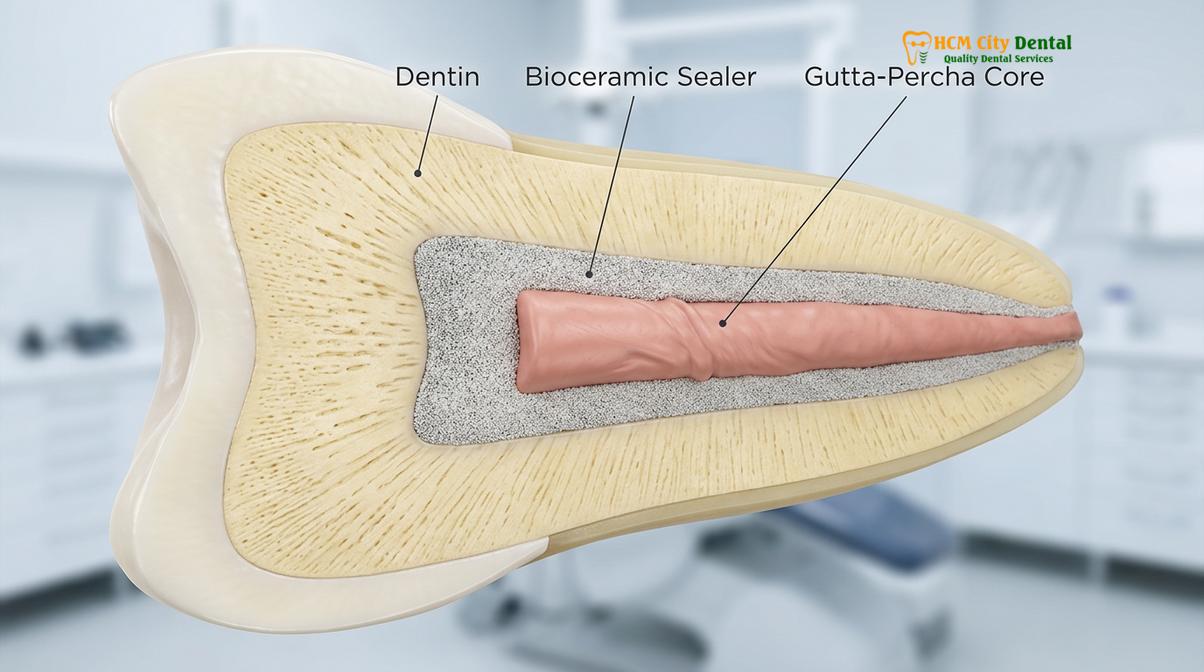
The criteria for an ideal endodontic sealer dictate that the material should be biocompatible, radiopaque, dimensionally stable, antibacterial, and capable of providing a hermetic seal. While no single material has perfectly met all these criteria throughout dental history, the advent of modern bioceramics represents the closest the profession has come to an ideal obturation material, fundamentally changing how clinicians approach the final stage of endodontic therapy.
Gutta-Percha: The Traditional Gold Standard and Its Limitations
While gutta-percha remains the standard core filling material due to its inertness and retrievability, it cannot adhere to dentin independently, necessitating a sealer to fill microscopic voids.
For over a century, gutta-percha has been the undisputed gold standard for filling the root canal space. Derived from the coagulated latex of specific trees, gutta-percha is a highly inert, biocompatible, and radiopaque material. Its primary advantage lies in its plasticity when heated and its ease of retrievability should non-surgical endodontic retreatment become necessary. However, gutta-percha possesses a critical limitation: it lacks any adhesive properties. It cannot bond to the dentinal walls, nor can it adapt perfectly to the microscopic irregularities of the prepared canal.
To compensate for this lack of adhesion, endodontists must use a root canal sealer in conjunction with the gutta-percha core. The sealer acts as a luting agent, filling the discrepancies between the gutta-percha cone and the dentin, as well as flowing into lateral canals and apical ramifications. Traditionally, clinicians have relied on zinc oxide eugenol (ZOE), calcium hydroxide-based, or epoxy resin-based sealers. While these materials have a long history of clinical use, they all share a significant physical drawback: they shrink upon setting.
“The inherent setting shrinkage of traditional resin and zinc oxide eugenol sealers creates microscopic gaps at the sealer-dentin interface, which serves as a primary pathway for bacterial microleakage and subsequent endodontic failure.”
When a traditional sealer shrinks, it pulls away from either the gutta-percha core or the dentinal wall, creating a microscopic gap. This gap, though invisible to the naked eye, is large enough to allow bacterial migration. Furthermore, many traditional sealers are hydrophobic, meaning they repel water. Because dentin is inherently moist—composed of approximately 20% water by volume—hydrophobic sealers struggle to adapt intimately to the canal walls, further compromising the integrity of the seal[2]. This fundamental incompatibility highlighted the urgent need for a hydrophilic material that could thrive in the naturally moist environment of the root canal.
What Are Bioceramic Sealers? Active Calcium Silicate Technology
Bioceramic sealers are advanced, hydrophilic materials primarily composed of calcium silicates, calcium phosphates, and zirconium oxide, which utilize the natural moisture within dentinal tubules to initiate their setting reaction.
Bioceramic root canal sealers represent a paradigm shift in endodontic material science. Unlike their predecessors, which are passive materials that merely occupy space, bioceramics are highly active, bioactive compounds. They belong to a broader category of materials known as calcium silicate cements. Modern bioceramic sealers have been heavily refined to possess the optimal flowability, film thickness, and setting times required for routine root canal obturation.
The chemical composition of a standard bioceramic sealer typically includes tricalcium silicate, dicalcium silicate, calcium phosphates, colloidal silica, and a radiopacifier such as zirconium oxide or tantalum pentoxide. The defining characteristic of these materials is their profound hydrophilicity. Instead of repelling moisture, bioceramics require water to set. When the sealer is introduced into the root canal, it draws upon the residual moisture present within the dentinal tubules to initiate a complex hydration reaction.
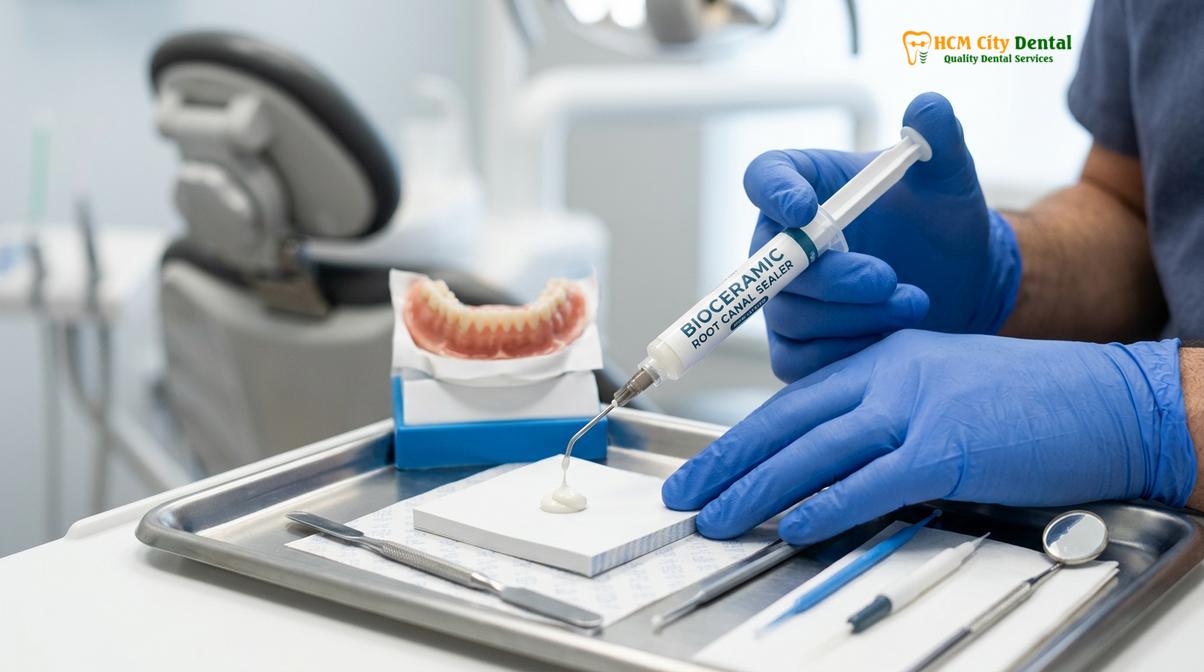
During this hydration process, the calcium silicates react with water to form a rigid calcium silicate hydrate gel and calcium hydroxide. This reaction is highly significant for several reasons. First, it allows the sealer to set effectively even in the presence of tissue fluids, a common clinical challenge in cases of severe apical periodontitis. Second, the formation of the calcium silicate hydrate gel provides exceptional structural integrity and dimensional stability. To understand the clinical advantages, it is helpful to compare bioceramics with traditional resin-based sealers.
| Property | Bioceramic Sealer | Traditional Resin Sealer |
|---|---|---|
| Moisture Tolerance | Hydrophilic (Requires moisture to set) | Hydrophobic (Requires completely dry canal) |
| Dimensional Stability | Slight expansion (0.20%) | Shrinkage upon setting |
| Bonding Mechanism | Chemical bond (Hydroxyapatite formation) | Mechanical interlocking only |
| pH Level | Highly alkaline (>12) | Neutral |
| Biocompatibility | Excellent (Promotes tissue healing) | Moderate (Can cause initial inflammation) |
This fundamental shift from hydrophobic, shrinking materials to hydrophilic, expanding materials has revolutionized the predictability of endodontic outcomes, particularly in complex anatomical cases where achieving a dry field is exceptionally difficult.
Key Benefits of Bioceramics: Hydroxyapatite Formation and Expansion
Upon setting, bioceramic sealers release calcium and hydroxide ions that interact with tissue fluids to precipitate hydroxyapatite, creating a seamless chemical bond with the tooth structure while exhibiting slight volumetric expansion.
The most remarkable feature of bioceramic technology is its bioactivity—specifically, its ability to induce the formation of hydroxyapatite. Hydroxyapatite is the primary mineral component of natural tooth enamel and dentin. When a bioceramic sealer hydrates, the resulting calcium hydroxide dissociates into calcium and hydroxide ions. These ions interact with the phosphate ions naturally present in dentinal fluid and periapical tissues to precipitate newly formed hydroxyapatite crystals along the sealer-dentin interface[3].
This precipitation creates what is known as a mineral infiltration zone. The sealer does not merely sit against the dentin; it chemically fuses with it. This chemical bonding results in an exceptionally strong, gap-free interface that is highly resistant to microleakage. Furthermore, modern bioceramic sealers are designed to bond not only to the dentin but also to specially coated bioceramic gutta-percha points, creating a unified, solid monoblock within the root canal system.
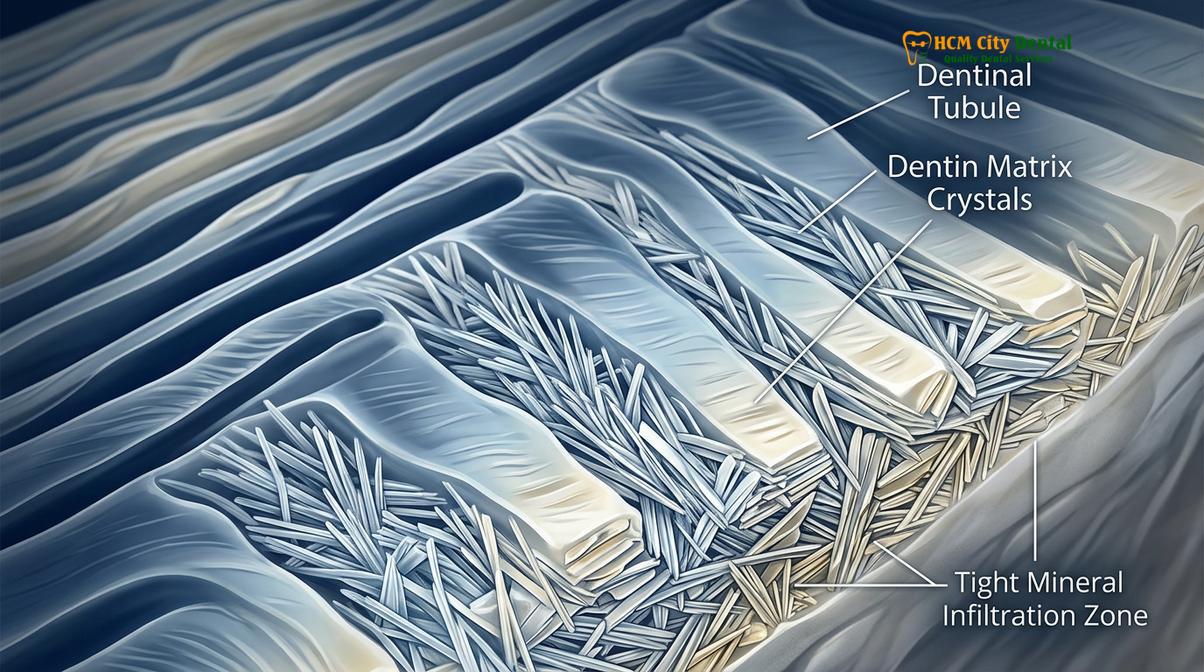
Another critical physical property of bioceramics is their dimensional stability. While traditional sealers shrink, bioceramics exhibit a slight volumetric expansion of approximately 0.20% during the setting phase. This microscopic expansion is highly advantageous. As the material expands slightly, it actively presses into the dentinal tubules, lateral canals, and microscopic irregularities, mechanically locking the sealer into place and further reinforcing the hermetic seal.
Clinical Case Review: Complex Molar Anatomy
A patient presented to HCMC Dental Clinic in Ho Chi Minh City with a failing root canal on a mandibular first molar, characterized by a persistent periapical radiolucency. CBCT imaging revealed an untreated, highly curved mesiolingual canal. Following meticulous retreatment and disinfection, the canal was obturated using a bioceramic sealer and the single-cone technique. The hydrophilic nature of the sealer allowed it to flow deeply into the apical delta. A follow-up radiograph demonstrated excellent resolution of the periapical lesion, highlighting the material’s superior sealing ability and biocompatibility in complex anatomies.
Because the material is essentially a synthetic bone cement, it is recognized by the body as a biocompatible root filling. If a small amount of sealer is inadvertently extruded past the apical foramen during obturation, it does not typically provoke a severe foreign body reaction. Instead, the highly biocompatible nature of the calcium silicate cement encourages osteoblasts to lay down new bone directly against the material, facilitating rapid healing of periapical lesions.
Antibacterial Properties: High pH Defense Against Microbial Leakage
The hydration reaction of bioceramic sealers produces a highly alkaline environment with a pH exceeding 12, effectively neutralizing residual intracanal bacteria and neutralizing acidic byproducts of inflammation.
Eradicating bacteria from the root canal system is the primary goal of endodontic therapy, but preventing their return is equally vital. Bioceramic sealers provide a powerful, ongoing defense mechanism through their profound antibacterial properties. This antibacterial efficacy is primarily driven by the material’s high alkalinity.
During the hydration reaction, the continuous release of calcium hydroxide elevates the local pH to levels exceeding 12. Most pathogenic bacteria responsible for endodontic failures, including the highly resilient Enterococcus faecalis, struggle to survive in such an extreme alkaline environment. The high pH disrupts the bacterial cell membrane, denatures essential cellular proteins, and damages bacterial DNA, leading to rapid cell death[4].
“The sustained alkaline environment generated by calcium silicate-based sealers not only eradicates residual microorganisms but also neutralizes the acidic environment typical of periapical inflammation, thereby shifting the biological balance toward osteogenesis and tissue repair.”
Unlike traditional sealers, whose antibacterial effects often diminish rapidly after setting, bioceramics maintain their high pH for an extended period. As long as the hydration reaction continues, the material continues to release hydroxide ions. This sustained antibacterial action provides a critical safety net, neutralizing any bacteria that may have survived the chemical irrigation protocols.
Furthermore, the dense, chemically bonded mineral infiltration zone created by the hydroxyapatite precipitation acts as a physical barrier. Even if bacteria attempt to migrate coronally from the periapical tissues or apically from a compromised coronal restoration, they are blocked by the impenetrable nature of the set bioceramic material. This dual mechanism—chemical destruction via high pH and physical entombment via chemical bonding—makes bioceramics exceptionally effective at preventing secondary endodontic infections.
Clinical Protocol: Cold Hydraulic Condensation Technique
Unlike traditional warm vertical compaction, bioceramic sealers are optimized for a single-cone or cold hydraulic condensation technique, minimizing heat-induced damage to the periodontal ligament and preventing sealer degradation.
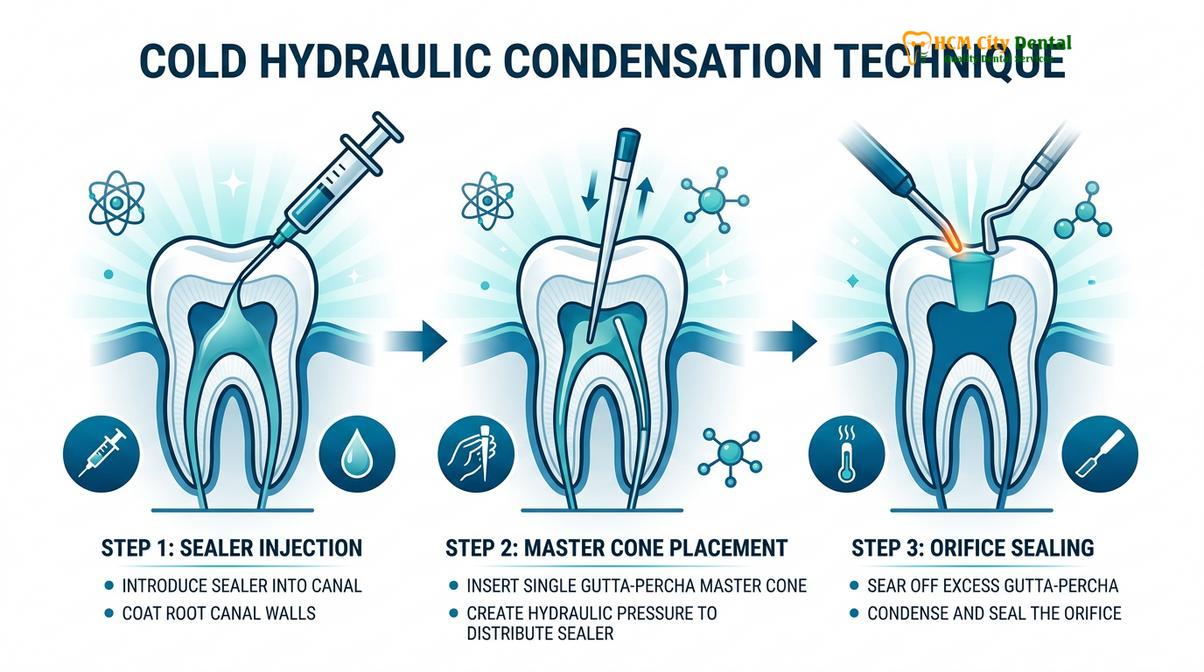
The introduction of bioceramic sealers has necessitated a shift in obturation techniques. Traditional methods, such as warm vertical compaction, rely on heating gutta-percha to make it flow into canal irregularities. However, applying high heat to a bioceramic sealer can be detrimental. Heat accelerates the setting reaction prematurely, alters the physical properties of the material, and can reduce its flowability. Therefore, the recommended protocol for bioceramics is the cold hydraulic condensation technique, often referred to as the single-cone technique.
The clinical workflow begins with the final irrigation protocol. After thorough disinfection, the canals are dried using paper points. However, unlike traditional techniques that demand a bone-dry canal, the clinician must leave the dentin slightly moist. Over-drying the canal will deprive the bioceramic sealer of the water it needs to initiate its hydration reaction, potentially leading to an incomplete set.
Clinical Warning: Moisture Control
Do not desiccate the root canal prior to applying a bioceramic sealer. Excessive drying with high-concentration alcohol or prolonged air blasts removes the intrinsic moisture required for the calcium silicate hydration reaction, which can compromise the final seal and reduce the material’s bioactivity.
Once the canal is appropriately prepared, the pre-mixed bioceramic sealer is injected directly into the coronal third of the canal using a specialized capillary tip. A master gutta-percha cone, precisely matched to the final shaping file, is lightly coated with additional sealer and slowly inserted to the working length. The slow insertion creates hydraulic pressure, forcing the sealer apically and laterally into all anatomical complexities. The excess gutta-percha is then seared off at the canal orifice, and the access cavity is sealed.
Retreatment Strategies for Bioceramic Fillings
While bioceramic sealers set exceptionally hard, non-surgical retreatment remains viable through the use of specialized ultrasonic instruments and rotary files designed to bypass the material.
A common concern among clinicians regarding bioceramic sealers is their retrievability. Because these materials set into a hard, cement-like structure and chemically bond to the dentin, removing them during non-surgical retreatment is more challenging than removing traditional zinc oxide eugenol sealers. However, retreatment is entirely possible with the correct approach.
The key to successful retreatment lies in the presence of the gutta-percha master cone. The bioceramic sealer itself cannot be easily dissolved by traditional solvents like chloroform. Instead, the clinician must use rotary or reciprocating retreatment files to remove the central gutta-percha core, creating a pathway down the canal. Once the core is removed, ultrasonic instruments are employed to carefully chip away and dislodge the remaining bioceramic sealer from the dentinal walls[5]. The use of a dental operating microscope is highly recommended during this procedure to ensure complete removal of the material without damaging the natural tooth structure.
Important Clinical Notes and When to Consult a Specialist
Understanding the indications for advanced endodontic materials ensures that patients receive the highest standard of care for complex root canal anatomies.
Following the general recommendations aligned with the Vietnam Odonto-Stomatology Association (VOSA), patients should seek immediate specialist evaluation if they experience persistent swelling, severe pain upon biting, or a recurring sinus tract after previous endodontic therapy. These symptoms often indicate a failing root canal that may benefit from retreatment using advanced bioceramic obturation techniques to ensure a proper seal.
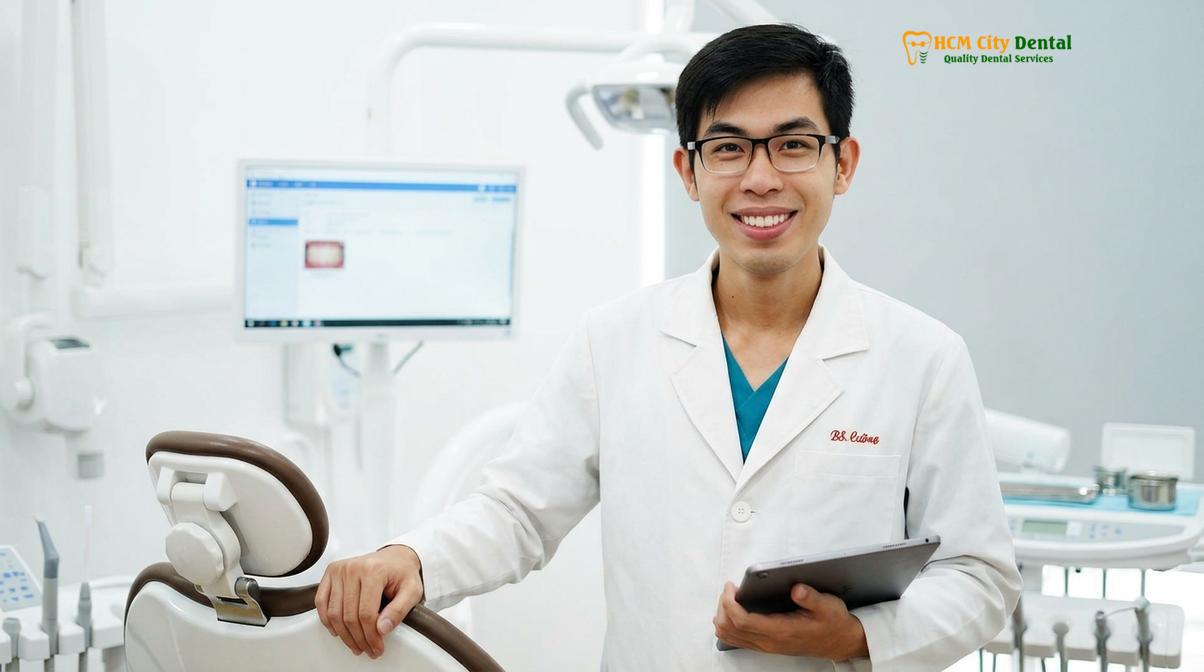
Dr. Nguyen Van Cuong, a leading specialist at our clinic, emphasizes that while bioceramic sealers offer exceptional sealing capabilities, their success relies heavily on precise canal preparation and moisture control. Dr. Cuong regularly utilizes these advanced materials during complex Root Canal procedures to ensure optimal long-term outcomes, promoting rapid tissue healing and preventing reinfection for his patients.
Patients with complex root anatomies, such as severely curved canals or calcified spaces, are prime candidates for bioceramic technology. The high flowability and hydrophilic nature of the material allow it to reach areas that traditional sealers cannot, providing a superior level of protection against future microbial leakage.
Conclusion
Bioceramic root canal sealers represent a monumental advancement in endodontic therapy. By transitioning from passive, shrinking materials to active, expanding, and bioactive compounds, clinicians can now achieve a level of sealing and biocompatibility previously thought unattainable. The formation of hydroxyapatite, combined with sustained antibacterial properties and excellent dimensional stability, makes bioceramics an invaluable tool in preserving the natural dentition.
If you are experiencing dental pain, require a complex endodontic evaluation, or need specialized care, contact HCMC Dental Clinic in Ho Chi Minh City. Our expert team is equipped with the latest bioceramic technologies to provide comfortable, highly effective Root Canal treatments designed to protect your smile for years to come.
References
- Journal of Endodontics. Biocompatibility and bioactivity of calcium silicate-based sealers.
- International Endodontic Journal. Antibacterial efficacy of bioceramic root canal sealers against Enterococcus faecalis.
- Clinical Oral Investigations. Dimensional stability and sealing ability of modern endodontic sealers.
- Journal of the American Dental Association. Clinical outcomes of single-cone obturation with bioceramic sealers.
- British Dental Journal. Retreatment strategies for calcium silicate-based root canal fillings.