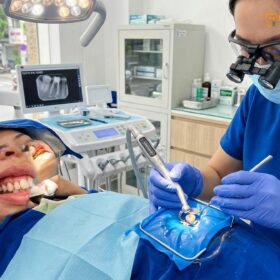
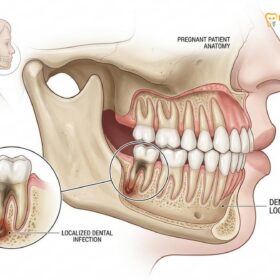
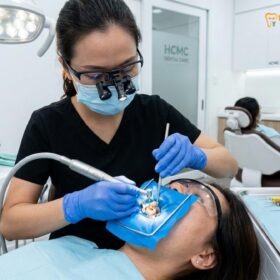
A single visit root canal in Vietnam offers international patients a highly efficient, clinically safe solution to resolve irreversible pulpitis or localized infection in just one appointment. Utilizing advanced CBCT imaging and rotary endodontics, this streamlined approach eliminates the need for multiple visits while maintaining exceptional long-term success rates.
Clinical Summary:
Single-visit endodontics represents a significant advancement in restorative dentistry, allowing clinicians to diagnose, extirpate, clean, shape, and obturate an infected root canal system within a single continuous appointment. Driven by the integration of Cone Beam Computed Tomography (CBCT), nickel-titanium (NiTi) rotary instrumentation, and bioceramic sealers, this protocol offers profound advantages for patients seeking a root canal. It minimizes the risk of inter-appointment bacterial leakage, reduces overall chair time, and provides immediate relief from acute dental pain. While highly effective for vital pulp exposures and uncomplicated necrosis, careful case selection remains paramount. Teeth presenting with severe acute periapical abscesses or active exudate may still require traditional multi-visit therapy with intracanal medicaments. For international patients, this streamlined workflow is often combined with same-day CAD/CAM crown fabrication, delivering a complete functional and aesthetic restoration in a fraction of the traditional timeframe.
Key Takeaways:
- Technological Foundation: Success relies on 3D CBCT imaging, electronic apex locators, and motorized NiTi files for precise canal navigation.
- Ideal Candidacy: Best suited for teeth with irreversible pulpitis, uncomplicated anatomy, and absence of active, draining periapical abscesses.
- Time Efficiency: The entire procedure typically requires 60 to 120 minutes, drastically reducing the logistical burden for traveling patients.
- Clinical Outcomes: Evidence shows single-visit treatments yield comparable long-term success rates (85%-97%) to multi-visit approaches.
- Restorative Synergy: Often paired with immediate digital crown milling to protect the biomechanical integrity of the treated tooth on the same day.
The Shift to Same-Day Endodontics: How Technology Enables It
Modern endodontic technology, including 3D CBCT imaging and motorized rotary files, allows dentists to accurately clean, shape, and seal root canals in a single appointment without compromising clinical outcomes.
Historically, endodontic therapy was almost exclusively a multi-visit endeavor. Clinicians relied on tactile sensation, two-dimensional radiographs, and rigid stainless-steel hand files to navigate the complex internal anatomy of the tooth. Because mechanical shaping and chemical disinfection were time-consuming and less predictable, dentists routinely placed an intracanal medicament—typically calcium hydroxide—between appointments to ensure bacterial eradication before final obturation. However, the landscape of endodontics has undergone a profound paradigm shift, transitioning toward the one-appointment root canal as the standard of care for many clinical scenarios.
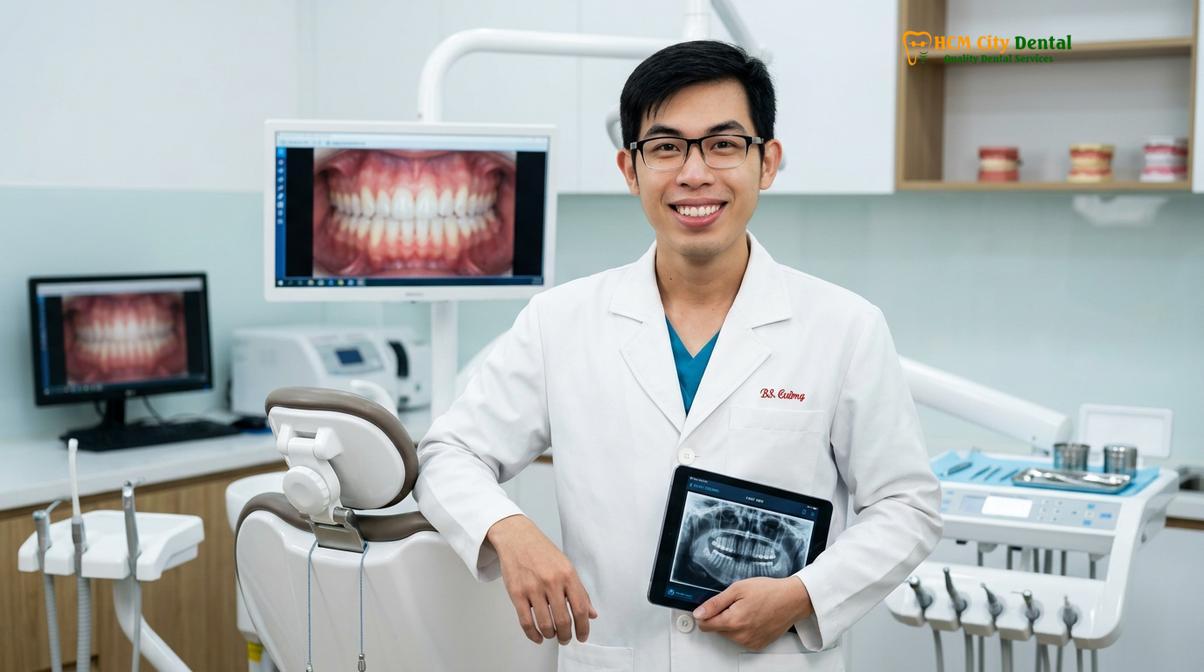
This evolution is not merely a matter of speed; it is a direct result of technological innovations that have exponentially increased the precision and efficacy of the treatment workflow. According to Dr. Nguyen Van Cuong, a leading specialist in restorative dentistry, the ability to complete a root canal in a single visit hinges entirely on the clinician’s capacity to achieve absolute disinfection and a hermetic seal in one continuous sequence. This is made possible by several core technologies.
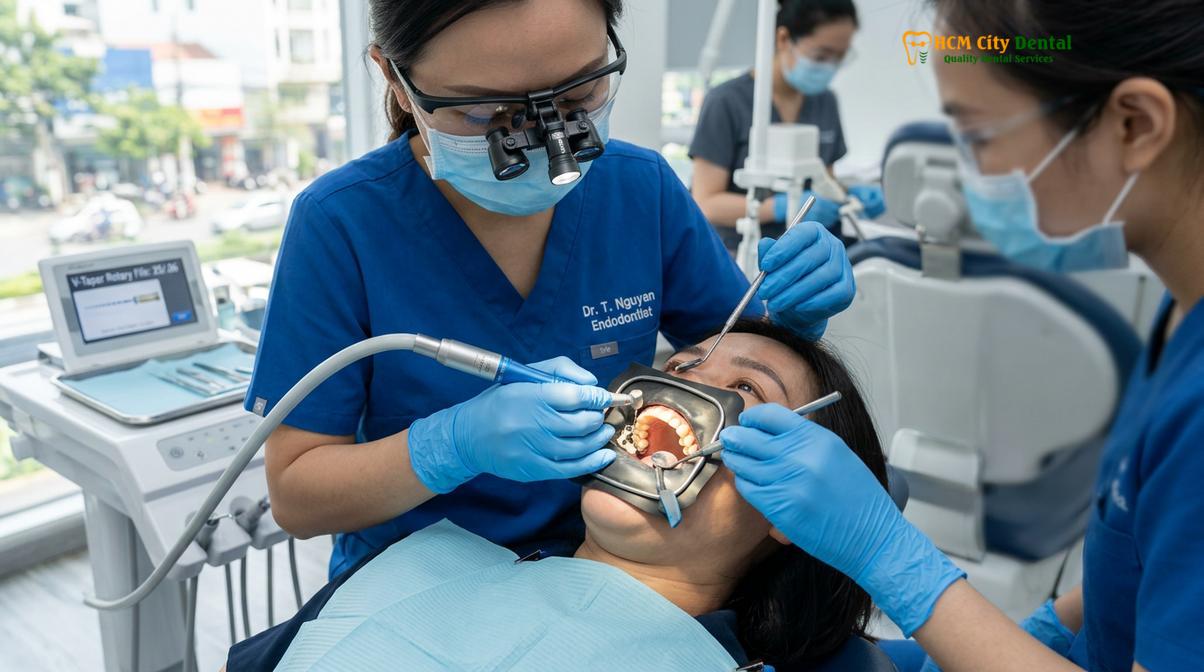
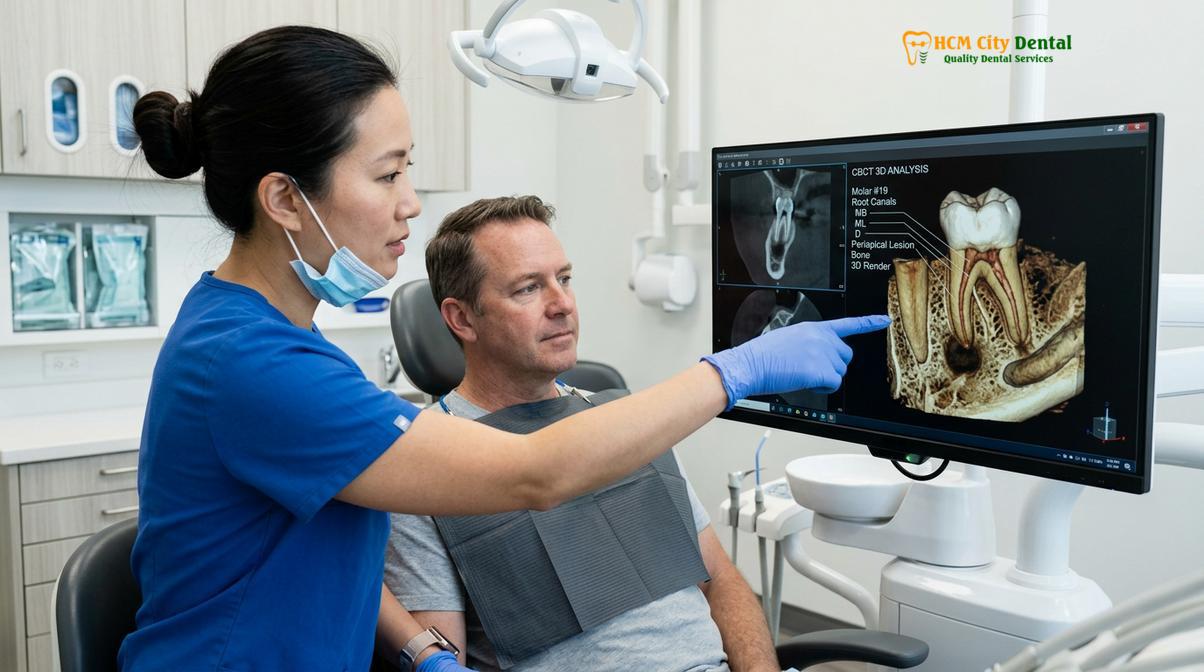
First, Cone Beam Computed Tomography (CBCT) has revolutionized diagnostics. Unlike traditional 2D X-rays, which suffer from anatomical superimposition, a 3D CBCT scan allows the clinician to visualize the tooth in axial, coronal, and sagittal planes[1]. This is critical for identifying hidden anatomy, such as the notoriously elusive second mesiobuccal (MB2) canal in maxillary molars, assessing root curvatures, and detecting early periapical lesions. By mapping the exact internal topography before the procedure begins, the clinician eliminates guesswork and drastically reduces the time spent searching for canal orifices.
Second, the introduction of nickel-titanium (NiTi) rotary and reciprocating file systems has transformed the mechanical shaping of the canal. NiTi alloys possess superelasticity and shape-memory properties, allowing them to follow severe root curvatures without the risk of ledging, transportation, or perforation that plagued rigid stainless-steel files[2]. Motorized handpieces with built-in torque control and auto-reverse functions further enhance safety, enabling rapid and conservative removal of infected dentin while preserving the structural integrity of the root.
“The transition to single-visit endodontics is driven by our ability to achieve superior chemical and mechanical debridement in a fraction of the time. With modern rotary systems and ultrasonic activation, we can confidently seal the canal system immediately, preventing the risk of coronal leakage that often occurs between multiple appointments.”
Furthermore, advancements in irrigation protocols and obturation materials have solidified the single-visit approach. Ultrasonic activation of sodium hypochlorite (NaOCl) creates acoustic streaming and cavitation, driving the antimicrobial solution into microscopic lateral canals and dentinal tubules that files cannot reach. Finally, the use of biocompatible, hydrophilic bioceramic sealers ensures a dimensionally stable, gap-free seal that actively promotes periapical tissue healing, completing the technological ecosystem required for same-day success.
Clinical Criteria: Who is a Candidate for Single-Visit Root Canals?
Ideal candidates for a one-appointment root canal present with vital pulp inflammation, uncomplicated anatomy, or localized necrosis without severe acute abscesses or active pus drainage.
While the technological capacity for single-visit endodontics is well-established, clinical success remains heavily dependent on meticulous case selection. Not every tooth is biologically primed to be cleaned and sealed in a single session. The decision to proceed with a single-visit protocol requires a comprehensive evaluation of the patient’s pulpal and periapical diagnosis, the anatomical complexity of the tooth, and the patient’s overall medical history.
The most predictable candidates for a single-visit procedure are teeth diagnosed with irreversible pulpitis. This condition typically arises when deep dental caries, a fractured restoration, or acute trauma exposes the sterile pulp chamber to oral bacteria, triggering a severe inflammatory response. In these cases, the pulp tissue is inflamed and highly symptomatic—often causing spontaneous, lingering pain to thermal stimuli—but the infection has not yet progressed to the periapical tissues (the bone surrounding the root tip). Because the bacterial load is primarily confined to the coronal pulp and the root canal system is relatively sterile at the apical third, immediate extirpation, cleaning, and sealing yield exceptionally high success rates.
Another excellent indication for a single-visit approach is an elective root canal required for prosthodontic reasons. For instance, if a tooth requires a dental crown but lacks sufficient clinical crown height, elective endodontic therapy may be performed to allow for the placement of a post and core buildup. Since these teeth are vital and uninfected, completing the procedure in one appointment is both safe and highly efficient.
Teeth with necrotic (dead) pulps and asymptomatic apical periodontitis can also be treated in a single visit, provided the canal can be completely dried. If the clinician can establish patency, thoroughly disinfect the canal system, and dry the apical terminus with paper points without any fluid seeping back in, immediate obturation is clinically acceptable and often preferred to prevent secondary contamination.
| Clinical Presentation | Recommended Protocol | Biological Rationale |
|---|---|---|
| Irreversible Pulpitis (Vital Pulp) | Single-Visit | Infection is confined to the pulp; periapical tissues are healthy. Immediate sealing prevents bacterial ingress. |
| Elective Prosthodontic Endodontics | Single-Visit | Sterile canal system; procedure performed purely for structural restoration. |
| Necrotic Pulp (Asymptomatic, Dry Canal) | Single-Visit | Bacterial load can be managed with modern irrigation; canal can be dried for a hermetic seal. |
| Acute Apical Abscess (Active Pus Exudate) | Multi-Visit | Canal cannot be dried. Requires drainage and calcium hydroxide to neutralize severe infection. |
| Severe Anatomical Complexity (Calcifications) | Multi-Visit | Requires extended chair time to safely navigate and negotiate blocked or severely curved canals. |
For international patients managing a tight itinerary, finding a clinic capable of handling a same-day dental emergency HCMC is crucial. However, ethical clinicians will always prioritize biological healing over scheduling convenience, ensuring that only appropriate candidates undergo the accelerated single-visit protocol.
Contraindications: When Multi-Visit Treatment with Calcium Hydroxide is Safer
Multi-visit endodontic therapy remains necessary for teeth with severe acute periapical abscesses, active exudate, complex calcifications, or persistent symptoms that require extended intracanal medication.
Despite the overwhelming shift toward single-visit endodontics, there are specific clinical scenarios where attempting to clean, shape, and seal a tooth in one appointment is biologically contraindicated. In these complex cases, forcing a single-visit protocol can lead to severe post-operative flare-ups, persistent infection, and ultimate failure of the treatment. The primary limiting factor in endodontics is moisture control; a root canal system must be absolutely dry to achieve a hermetic seal with gutta-percha and sealer.
The most absolute contraindication for a single-visit root canal is the presence of an acute periapical abscess with active exudate (pus or inflammatory fluid) continuously draining into the canal. When a tooth is “weeping,” it is physically impossible to dry the apical third of the canal using paper points. If a clinician attempts to obturate a wet canal, the sealer will not adhere to the dentinal walls, resulting in microleakage, and the trapped fluid will build up pressure in the jawbone, causing excruciating pain and swelling. In such cases, the canal must be left open to drain briefly or, more commonly, dressed with an intracanal medicament and sealed with a temporary filling until the acute infection subsides.
Clinical Warning: Attempting to seal a root canal that exhibits active purulent drainage or continuous hemorrhage can lead to a severe acute flare-up, characterized by intense pain, facial swelling, and systemic infection. Multi-visit therapy with intracanal medication is mandatory in these scenarios.
Calcium hydroxide (Ca(OH)2) is the gold standard intracanal medicament used in multi-visit therapy. It is a highly alkaline paste (pH ~12.5) that is spun into the canal system between appointments. The high pH creates an environment hostile to bacterial survival, denatures bacterial endotoxins, and dissolves necrotic tissue remnants that mechanical instrumentation may have missed[3]. For teeth with large, chronic periapical lesions or persistent infections involving resilient bacteria like Enterococcus faecalis, a two-to-four-week dressing with calcium hydroxide significantly improves the predictability of the final outcome.
Anatomical complexities also dictate a multi-visit approach. Teeth presenting with severe dilacerations (sharp root curves), extensive pulp stones, or calcified (sclerosed) canals require meticulous, time-consuming negotiation. Rushing this process to fit a single-visit window increases the risk of procedural errors, such as separating (breaking) a file in the canal, perforating the root laterally, or ledging the canal wall. When a clinician encounters extreme difficulty establishing a glide path to the apex, it is safer to place a medicament, temporize the tooth, and schedule a second appointment to continue the delicate work without operator fatigue.
Step-by-Step Single-Appointment Workflow
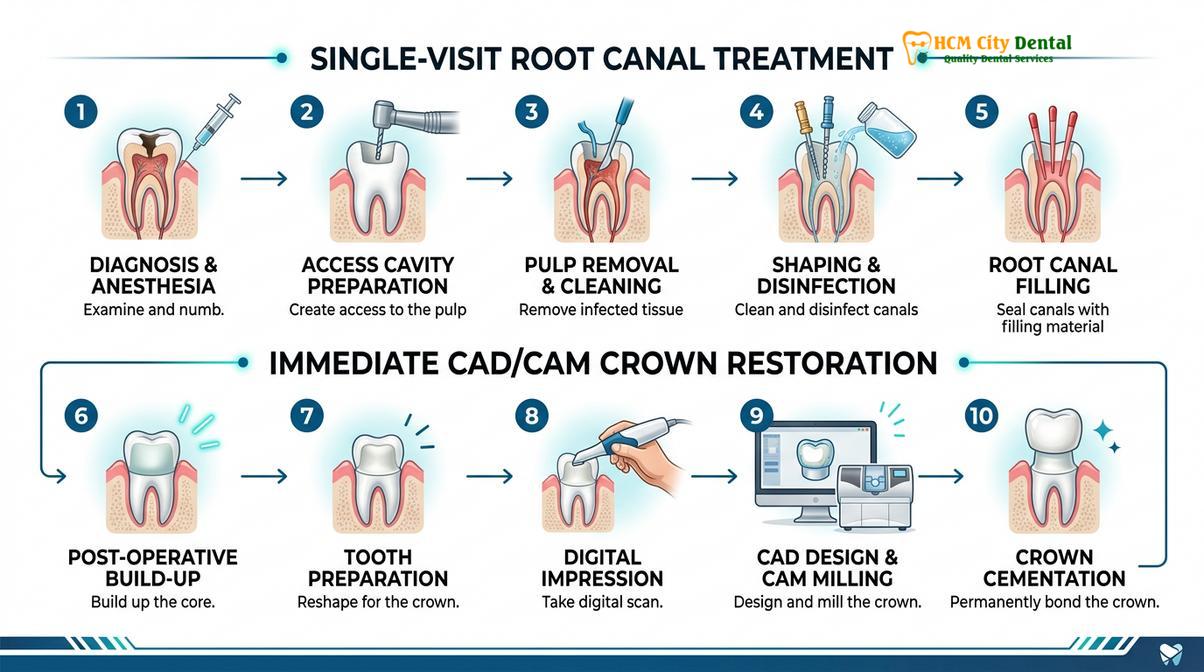
The same-day workflow involves profound local anesthesia, isolation with a rubber dam, precise mechanical shaping, chemical disinfection, and immediate 3D obturation of the canal system.
Executing a single-visit root canal requires a highly choreographed clinical workflow. Efficiency must be balanced with absolute precision, ensuring that no step in the biological debridement process is compromised. The procedure begins with comprehensive diagnostics, typically involving a 3D CBCT scan to map the internal anatomy, followed by the administration of profound local anesthesia. Because patients with irreversible pulpitis often present with “hot teeth” that are difficult to numb due to the altered pH of inflamed tissue, advanced anesthetic techniques, such as intraligamentary or intraosseous injections, may be utilized to ensure complete comfort.
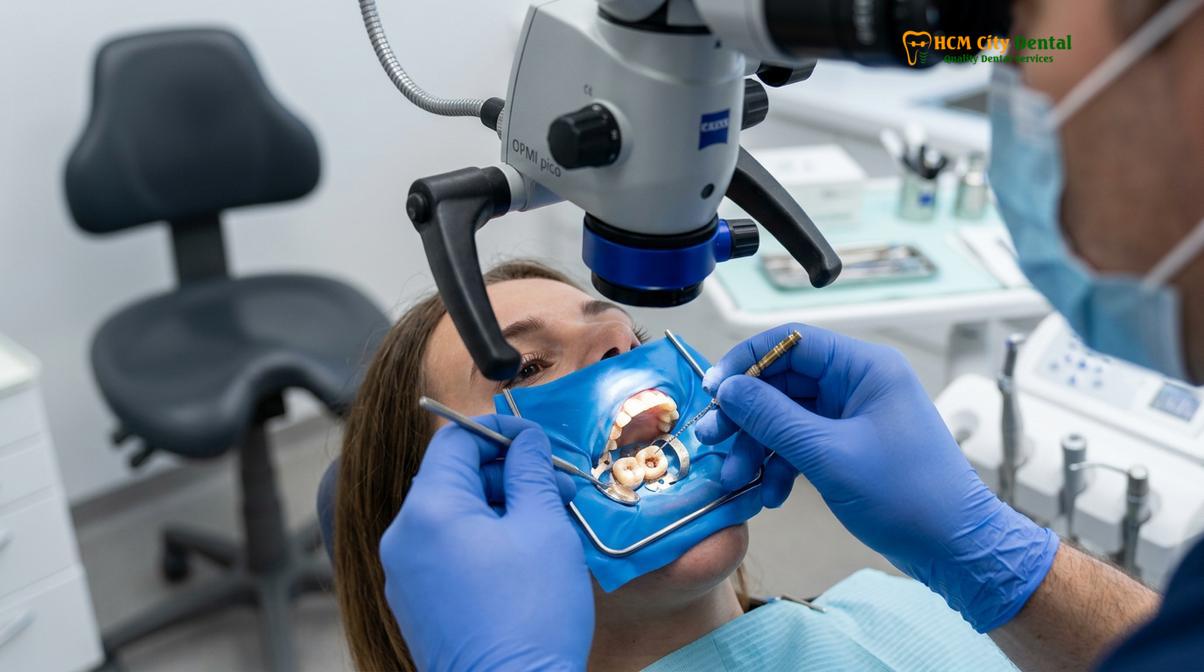
Once anesthesia is achieved, the absolute prerequisite for any endodontic procedure is isolation. A dental rubber dam is placed over the target tooth. This latex or nitrile sheet serves a dual purpose: it prevents the aspiration or swallowing of small endodontic instruments and harsh irrigants, and crucially, it maintains a sterile operating field by preventing saliva and oral bacteria from contaminating the open tooth.
The clinician then creates an access cavity through the biting surface of the tooth to unroof the pulp chamber. Using a dental operating microscope, the clinician locates all canal orifices. The inflamed or necrotic pulp tissue is extirpated (removed) using specialized broaches or files. To determine the exact length of each root canal, an electronic apex locator (EAL) is employed. This device measures the electrical impedance between the oral mucosa and the apical constriction (the narrowest part of the root tip), providing a highly accurate measurement that is often verified with a digital radiograph.
Clinical Case Review: A 45-year-old international patient visited HCMC Dental Clinic in Ho Chi Minh City presenting with severe, spontaneous nocturnal pain in the lower right first molar (Tooth 46). Diagnosed with irreversible pulpitis, Dr. Cuong utilized a CBCT scan to identify four distinct canals. Under rubber dam isolation and microscopic magnification, the canals were shaped with NiTi rotary files, disinfected with ultrasonically activated NaOCl, and obturated with bioceramic sealer in a single 90-minute appointment, providing immediate pain relief.
The core of the procedure is the chemo-mechanical preparation. Mechanical shaping is performed using NiTi rotary files, which gradually enlarge and taper the canals to remove infected dentin and create a funnel shape. However, files alone cannot clean the complex web of lateral canals and isthmuses. Chemical disinfection is achieved through copious irrigation with sodium hypochlorite (NaOCl), which dissolves organic tissue and kills bacteria, followed by EDTA (ethylenediaminetetraacetic acid), which removes the inorganic smear layer created by the files. Ultrasonic activation is frequently used to agitate these fluids, creating microscopic bubbles that implode (cavitation) to scrub the canal walls clean.
Once the canals are shaped, disinfected, and thoroughly dried with sterile paper points, the final step is obturation. The empty canal space is sealed in three dimensions using gutta-percha (a biocompatible rubber material) and an endodontic sealer. Modern techniques often utilize warm vertical compaction or a single-cone technique with advanced bioceramic sealers. These hydrophilic sealers utilize the natural moisture of the dentinal tubules to set, expanding slightly to create an impenetrable, gap-free barrier against future bacterial invasion[4]. The access cavity is then sealed with a composite resin core buildup, completing the endodontic phase of treatment.
Success Rates: Comparing Single-Visit vs. Multi-Visit Treatments
Extensive clinical research demonstrates that single-visit and multi-visit root canals share nearly identical long-term success rates, typically ranging between 85% and 97%, provided strict disinfection protocols are followed.
One of the most common concerns among patients and traditional practitioners is whether condensing endodontic therapy into a single appointment compromises the long-term prognosis of the tooth. Decades of rigorous clinical research, systematic reviews, and meta-analyses have conclusively addressed this debate. The consensus within the endodontic community is that there is no statistically significant difference in the radiographic healing or clinical success rates between single-visit and multi-visit root canal treatments, provided the biological objectives of debridement and sealing are fully met.
Success in endodontics is defined by the absence of clinical symptoms (pain, swelling, sinus tracts) and the radiographic evidence of periapical healing (the resolution of bone lesions around the root tip). Studies indicate that primary root canal treatments, whether performed in one or multiple visits, boast success rates ranging from 85% to 97%[5]. The critical determinant of success is not the number of appointments, but the quality of the coronal seal, the thoroughness of the chemo-mechanical disinfection, and the precision of the apical obturation.
“The biological objective of endodontics is the elimination of microbial infection from the root canal system. Whether this is achieved in one hour or over two weeks is irrelevant to the periapical tissues, provided the canal is rendered sterile and hermetically sealed against reinfection.”
In fact, single-visit endodontics offers a distinct biological advantage: it completely eliminates the risk of inter-appointment contamination. In multi-visit protocols, the temporary filling placed between appointments can occasionally leak, fracture, or wash out, allowing saliva and bacteria to re-enter the partially cleaned canal system. By sealing the tooth immediately after disinfection, the single-visit approach secures the sterile environment. Furthermore, completing the treatment in one session reduces the cumulative trauma to the temporomandibular joint (TMJ) from prolonged mouth opening and minimizes the patient’s exposure to local anesthetics.
Travel Optimization: Same-Day Root Canal + Crown for Tourists
Combining a single-visit root canal with CAD/CAM same-day crown fabrication allows international patients to fully restore their tooth’s function and aesthetics within a highly condensed travel schedule.
For international patients engaging in dental tourism, time is a critical constraint. Traditional endodontic and restorative workflows often require three to four separate visits spanning several weeks: one or two visits for the root canal, a visit for crown preparation and impression, and a final visit for the delivery of the permanent crown. This protracted timeline is often incompatible with a standard vacation or business trip. The advent of the one-appointment root canal, synergized with digital dentistry, has revolutionized dental tourist scheduling.
Following a root canal, particularly on a premolar or molar, the tooth becomes biomechanically compromised. The removal of internal dentin to access the pulp chamber weakens the tooth’s structural integrity, making it highly susceptible to vertical root fractures under the heavy forces of mastication. Furthermore, a pulpless tooth loses its internal moisture supply, becoming more brittle over time. Therefore, full cuspal coverage—typically a dental crown—is clinically mandatory to protect the investment of the root canal and ensure the long-term survival of the tooth.
At advanced centers like HCMC Dental Clinic, the single-visit root canal is frequently paired with same-day CAD/CAM (Computer-Aided Design and Computer-Aided Manufacturing) crown technology. Immediately after the root canal is obturated and the core buildup is placed, the dentist prepares the outer surface of the tooth. Instead of messy traditional impressions, an intraoral scanner captures a highly accurate 3D digital impression of the prepared tooth. This data is transmitted to a milling unit within the clinic, which carves a custom, high-strength ceramic or zirconia crown from a solid block of material in under an hour.
The crown is then characterized, glazed, and permanently cemented onto the tooth. This integrated workflow means a patient can walk into the clinic with a severely infected, painful tooth and walk out a few hours later with a fully treated, pain-free, and permanently restored tooth. This level of efficiency not only maximizes the patient’s time to enjoy Ho Chi Minh City but also ensures that the tooth is immediately protected against fracture and coronal leakage, providing the ultimate peace of mind before flying home.
When to See a Doctor
Recognizing the early signs of pulpal distress is critical for saving a natural tooth and preventing the spread of infection into the jawbone. You should seek immediate clinical evaluation if you experience spontaneous, unprovoked tooth pain, especially pain that awakens you at night. Lingering sensitivity to hot or cold temperatures—where the pain persists for more than 10-15 seconds after the stimulus is removed—is a classic hallmark of irreversible pulpitis. Additionally, if you notice localized swelling of the gums, a pimple-like bump (sinus tract) near the root of the tooth, or pain upon chewing or tapping the tooth, these are strong indicators of periapical inflammation. Prompt intervention at a qualified dental emergency facility can often resolve the issue with a straightforward single-visit procedure before it escalates into a complex, multi-visit abscess management scenario.
Frequently Asked Questions
Is a single-visit root canal less effective than a two-visit one?
Extensive clinical research confirms that single-visit and multi-visit root canals share nearly identical success rates when strict disinfection protocols are followed. The key factor is the quality of the cleaning and sealing, not the number of appointments. Single visits actually prevent the risk of inter-appointment bacterial contamination, making them highly predictable for appropriate candidates.
What happens if my tooth is still inflamed after a single-visit root canal?
Mild inflammation and tenderness in the surrounding periodontal ligament are normal for a few days following the procedure and can be managed with over-the-counter anti-inflammatory medication. However, if severe swelling or persistent pain occurs, it requires immediate clinical re-evaluation to rule out secondary infection or missed anatomy.
How long does a same-day root canal procedure take?
A single-visit root canal typically takes between 60 to 120 minutes, depending on the anatomical complexity and the number of canals present in the tooth. Anterior teeth with single canals are treated faster, while multi-rooted molars require more time for precise navigation, cleaning, and 3D obturation under microscopic magnification.
Does a one-appointment root canal hurt more afterward?
Post-operative discomfort is generally comparable between single and multi-visit treatments. Because the entire nerve is removed and the canal is sealed in one session, patients often experience immediate relief from the acute pulpitis pain, though the surrounding jawbone may feel bruised from the instrumentation process.
Can I fly immediately after a single-visit root canal in Vietnam?
Yes, it is generally safe to fly after a completed and sealed root canal, as the internal pressure within the tooth has been resolved. However, clinicians often recommend waiting 24 to 48 hours before long-haul flights to ensure any immediate post-operative discomfort is easily managed on the ground before traveling.
References
- Journal of Endodontics. Healing of periapical lesions in single and multiple visit endodontics. (2020).
- International Endodontic Journal. The impact of cone-beam computed tomography on endodontic diagnosis. (2021).
- Journal of the American Dental Association. Efficacy of rotary nickel-titanium files in canal shaping. (2019).
- Clinical Oral Investigations. Biocompatibility and sealing ability of bioceramic root canal sealers. (2022).
- British Dental Journal. Management of endodontic emergencies and inter-appointment pain. (2018).
For personalized diagnostics and to determine if you are a candidate for a streamlined endodontic procedure, contact our clinical team at HCMC Dental Clinic to schedule a comprehensive evaluation.