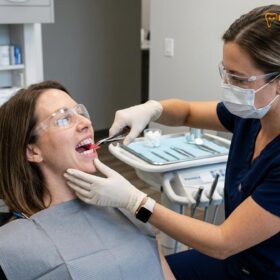
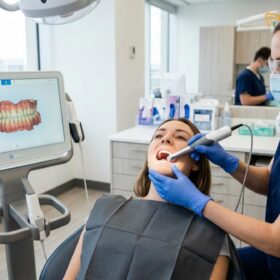
Daytime bruxism jaw clenching is the subconscious habit of tightly pressing the teeth together while awake. Often triggered by stress or intense concentration, this condition strains the temporomandibular joint, accelerates enamel wear, and causes chronic facial pain, requiring behavioral awareness and clinical intervention to prevent long-term dental damage.
Clinical Summary:
Awake bruxism differs fundamentally from nocturnal grinding by presenting primarily as sustained, isometric clenching rather than rhythmic lateral grinding. It is heavily correlated with psychosocial stressors, anxiety, and poor ergonomic posture during cognitive tasks. Management focuses on cognitive behavioral retraining, biofeedback mechanisms, and daytime protective appliances to mitigate temporomandibular joint (TMJ) overloading, reduce myofascial pain, and preserve the occlusal vertical dimension. Early diagnostic intervention is critical to preventing irreversible structural degradation of the jaw joint and dentition.
Key Takeaways:
- Daytime bruxism primarily involves sustained jaw clenching rather than the lateral grinding typically observed during sleep.
- Psychological stress, anxiety, and intense cognitive focus are the primary systemic triggers for awake clenching.
- Prolonged stress jaw tension can lead to severe temporomandibular joint (TMJ) dysfunction, cartilage degradation, and chronic headaches.
- Behavioral retraining, specifically adopting the “lips together, teeth apart” resting posture, is the first-line clinical defense.
- Custom daytime splints or specialized night guards can protect enamel and decompress the jaw joint during periods of high stress.
Daytime Bruxism vs. Sleep Bruxism: Key Differences
While sleep bruxism involves rhythmic, involuntary grinding during unconsciousness, daytime bruxism manifests as sustained, semi-conscious jaw clenching directly triggered by environmental stress or intense cognitive concentration.
To effectively manage masticatory muscle disorders, it is crucial to differentiate between the two primary classifications of bruxism: sleep bruxism (nocturnal) and awake bruxism (daytime). Although both conditions involve the hyperactivation of the jaw muscles, their etiology, biomechanical presentation, and clinical management strategies differ significantly. Sleep bruxism is classified primarily as a sleep-related movement disorder. It is characterized by rhythmic masticatory muscle activity (RMMA), which presents as lateral grinding or gnashing of the teeth. This nocturnal activity is centrally mediated, meaning it is driven by the central nervous system during micro-arousals from sleep, often independent of the patient’s emotional state, though stress can exacerbate its frequency[1].
Conversely, daytime bruxism jaw clenching is predominantly a somatic response to psychosocial factors. It is characterized by sustained, isometric contraction of the masseter and temporalis muscles without the lateral movement seen in sleep grinding. Patients with awake clenching rarely “grind” their teeth back and forth; instead, they lock their jaws together with immense vertical force. This sustained pressure can be highly destructive because the protective reflexes that normally prevent excessive bite force are overridden by the brain’s response to stress or concentration. The lack of lateral movement means that awake clenching might not produce the audible grinding sounds that alert partners during the night, making it a silent but highly destructive habit.
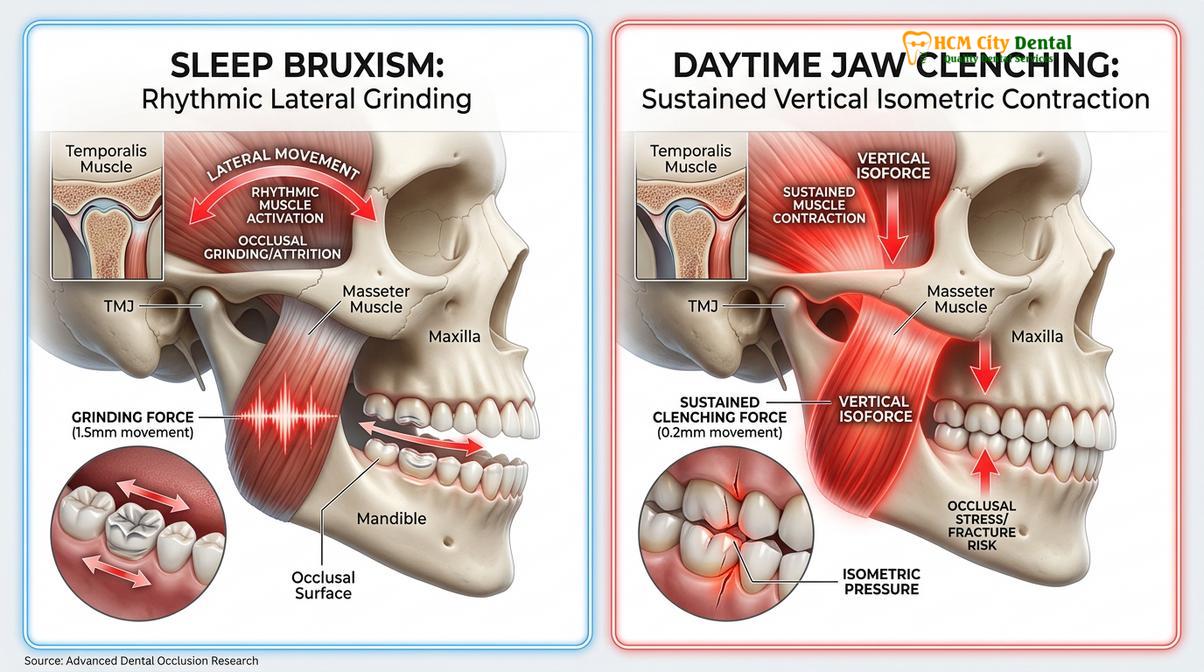
The neurological pathways involved also differ. Sleep bruxism is linked to autonomic sympathetic cardiac activation that precedes the muscle contraction during sleep cycles. Awake clenching, however, is a direct manifestation of the fight-or-flight response or heightened cognitive load during waking hours. When an individual is focused on a complex task, driving in heavy traffic, or experiencing emotional distress, the brain channels excess neural energy into the masticatory system. This results in what clinicians refer to as awake clenching, a habit that the patient is usually entirely unaware of until physical symptoms—such as a dull ache in the temples or a tired jaw—begin to manifest.
Understanding these differences is the foundation of effective treatment. While a patient might benefit from a traditional custom night guard to protect against nocturnal grinding, addressing daytime clenching requires a more active, conscious approach involving habit reversal and behavioral modification.
| Characteristic | Daytime Bruxism (Awake Clenching) | Sleep Bruxism (Nocturnal Grinding) |
|---|---|---|
| Primary Motion | Sustained vertical isometric clenching | Rhythmic lateral grinding and gnashing |
| State of Consciousness | Semi-conscious (habitual/subconscious) | Unconscious (sleep-related movement) |
| Primary Triggers | Stress, anxiety, intense cognitive focus | Sleep micro-arousals, airway issues (apnea) |
| Audible Symptoms | Usually silent | Often produces loud grinding noises |
| Clinical Management | Biofeedback, behavioral retraining, day splints | Occlusal splints (night guards), sleep hygiene |
Stress, Anxiety, and Focus-Induced Awake Clenching
High-stress environments and intense cognitive tasks trigger the central nervous system to involuntarily contract the masseter and temporalis muscles, leading to sustained and damaging jaw tension.
The modern lifestyle, characterized by constant digital connectivity, high-pressure work environments, and chronic psychological stress, has led to a significant rise in the prevalence of daytime bruxism jaw clenching. The human body’s response to stress is deeply rooted in evolutionary biology. When the brain perceives a threat—whether it is a physical danger or an impending deadline—the sympathetic nervous system activates the “fight or flight” response. This autonomic reaction triggers a cascade of physiological changes, including the release of cortisol and adrenaline, increased heart rate, and widespread muscle tension. The muscles of mastication, particularly the masseter and temporalis, are highly sensitive to this systemic arousal[2].
Stress jaw tension is not merely a metaphorical concept; it is a measurable physiological phenomenon. During periods of heightened anxiety or intense cognitive focus, the brain inadvertently sends continuous low-grade electrical signals to the jaw muscles, commanding them to contract. Because the individual’s conscious attention is directed toward the stressor or the task at hand—such as staring at a computer screen, analyzing data, or navigating a difficult conversation—this muscle contraction occurs entirely below the threshold of conscious awareness. The patient may sit for hours with their teeth firmly locked together, only realizing the extent of the tension when they finally take a break and notice a profound ache radiating through their face and neck.
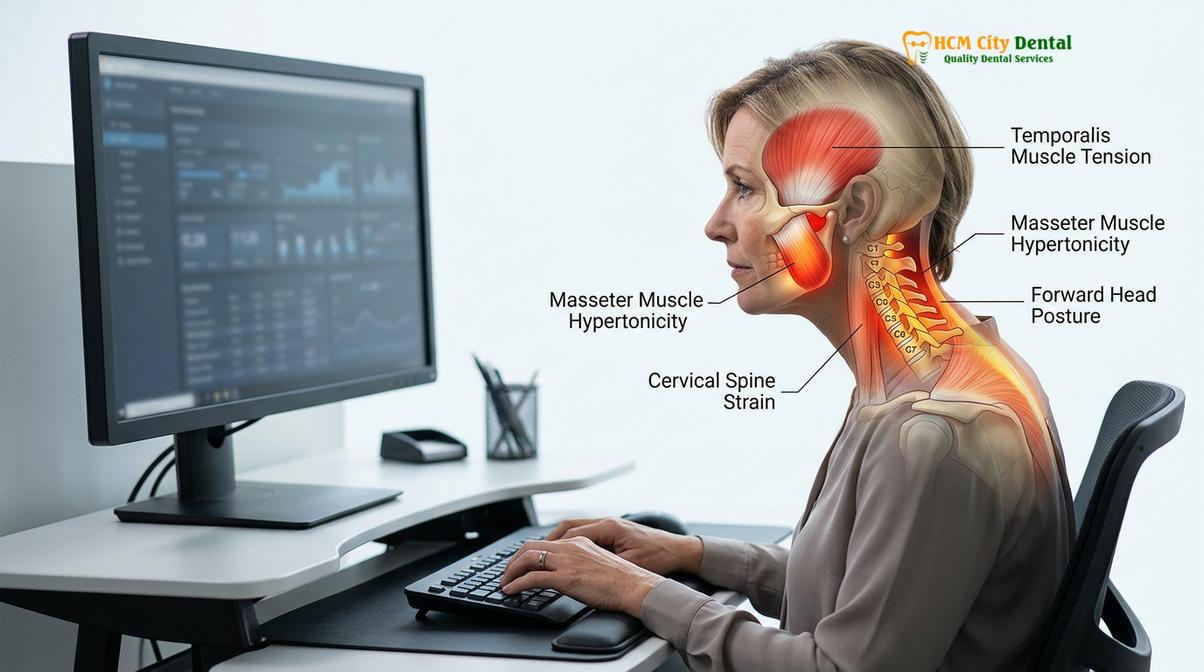
“Awake bruxism is fundamentally a physical manifestation of emotional and cognitive overload. The masticatory muscles become the somatic repository for unexpressed psychological stress, leading to chronic isometric contractions that the patient is entirely oblivious to until pain ensues.”
Furthermore, the physical ergonomics of modern work exacerbate this issue. Prolonged screen time often leads to “forward head posture,” where the neck cranes forward and the shoulders slump. This unnatural alignment places immense strain on the cervical spine and the complex network of muscles connecting the neck, head, and jaw. The altered biomechanics force the suprahyoid and infrahyoid muscles to pull abnormally on the mandible. To stabilize the jaw against this unnatural pull, the masseter and temporalis muscles must contract compensatorily. This postural instability, combined with psychological stress, creates a perfect storm for severe awake clenching.
Recognizing the triggers is the first step in clinical management. Patients are often advised to conduct a “stress audit” of their daily routines, identifying specific activities or times of day when their jaw feels the tightest. By linking the physical symptom of clenching to specific emotional or environmental triggers, patients can begin the process of conscious habit reversal, moving away from destructive tension and toward a relaxed, neutral jaw posture.
The Long-Term Strain on the Temporomandibular Joint
Chronic daytime clenching continuously overloads the temporomandibular joint, leading to cartilage degradation, articular disc displacement, and chronic myofascial pain if left untreated.
The temporomandibular joint (TMJ) is one of the most complex and frequently used joints in the human body. It functions as a sliding hinge, allowing the mandible to move up and down, side to side, and forward and backward. Between the condyle of the lower jaw and the glenoid fossa of the skull lies a small, fibrous articular disc that acts as a crucial shock absorber. Under normal physiological conditions, the teeth should only make contact during chewing and swallowing—amounting to roughly 15 to 20 minutes of total contact time per day. However, a patient suffering from daytime bruxism jaw clenching may keep their teeth locked together for hours, subjecting the TMJ to unprecedented and unnatural biomechanical stress[3].
This sustained isometric contraction generates immense intra-articular pressure. Unlike dynamic chewing, which allows for the intermittent release of pressure and the circulation of lubricating synovial fluid, sustained clenching creates a static load. This static load squeezes the synovial fluid out of the joint space, leading to localized hypoxia (lack of oxygen) and nutrient deprivation within the joint tissues. Over time, this continuous compression degrades the fibrocartilage covering the joint surfaces. The articular disc, constantly pinched under high pressure, may begin to thin, deform, or become displaced anteriorly. When the disc slips out of its proper position, patients often experience a characteristic clicking, popping, or grating sound (crepitus) when opening or closing their mouth.
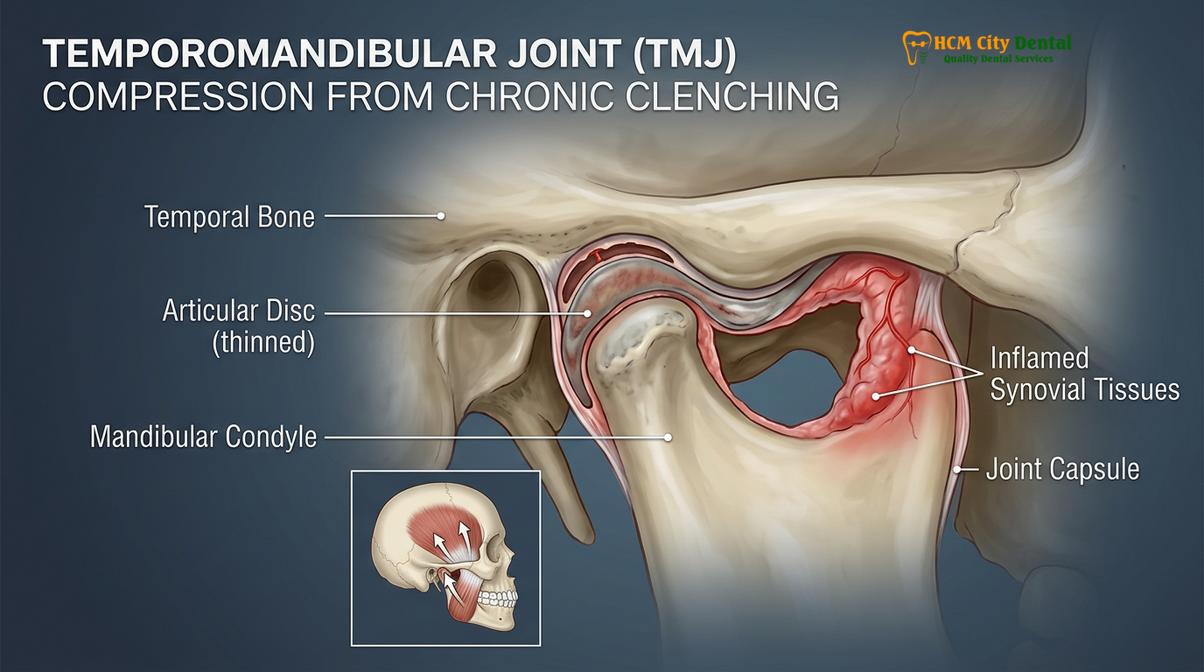
Beyond the joint itself, the surrounding musculature suffers profoundly. The masseter and temporalis muscles, forced to maintain a state of continuous contraction, accumulate lactic acid and other metabolic waste products. This leads to myofascial pain syndrome, characterized by deep, aching pain, muscle spasms, and the formation of hyperirritable “trigger points.” Pain from these trigger points frequently refers to other areas of the head and neck, manifesting as severe tension headaches, earaches, or even pain behind the eyes. Patients often mistake these symptoms for migraines or sinus infections, delaying appropriate dental diagnosis.
To prevent this cascade of structural degradation, early intervention is paramount. Comprehensive diagnostic imaging, such as Cone Beam Computed Tomography (CBCT), can assess the exact position of the condyle and the health of the joint space. Based on these findings, a dentist can develop a targeted treatment plan. For patients experiencing severe joint degradation, exploring comprehensive TMJ therapy and rehabilitation is essential to decompress the joint, restore proper anatomical alignment, and alleviate chronic pain before irreversible osteoarthritic changes occur.
Behavioral Retraining and Mindful Jaw Positioning
Reversing daytime clenching requires active biofeedback and habit reversal techniques to establish a relaxed resting jaw posture with lips closed and teeth slightly apart.
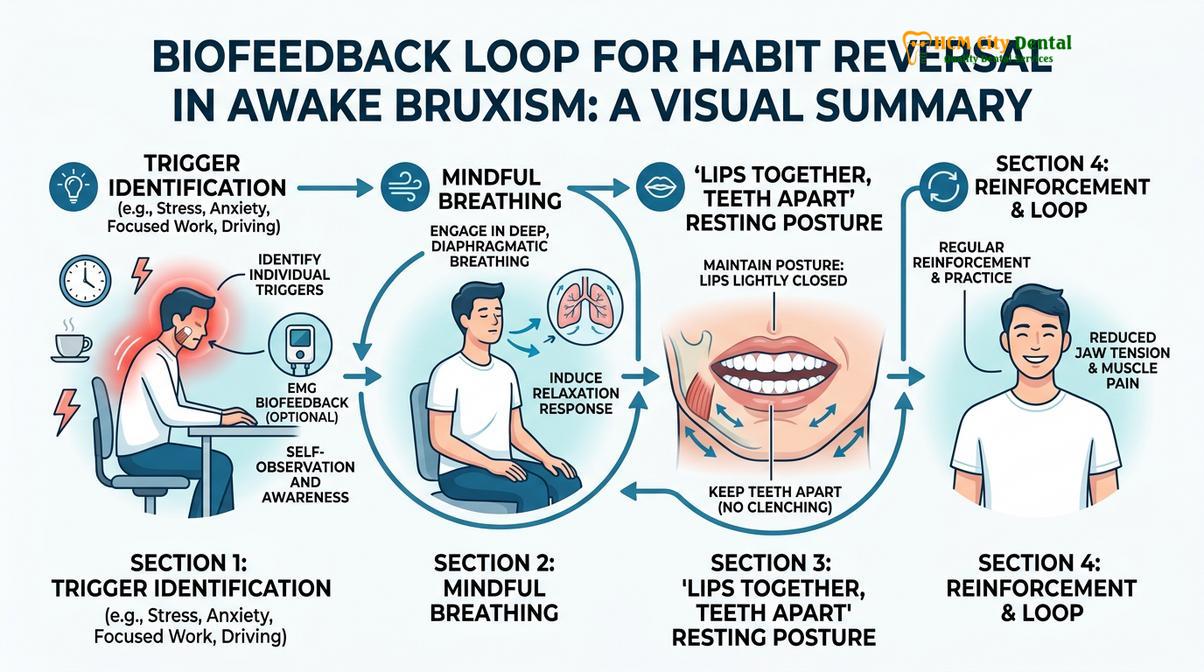
Because daytime bruxism jaw clenching is primarily a subconscious habit driven by the central nervous system’s response to stress, pharmacological or mechanical interventions alone are often insufficient for long-term resolution. The cornerstone of managing awake clenching is behavioral retraining. The goal of this therapy is to bring the subconscious habit into conscious awareness and systematically replace it with a healthy, relaxed physiological baseline. This process requires dedication, repetition, and a deep understanding of one’s own physical responses to environmental triggers[4].
The fundamental principle of jaw relaxation is the “freeway space.” In a healthy, relaxed state, the lips should be gently closed, the teeth should be separated by 2 to 3 millimeters, and the tongue should rest lightly against the roof of the mouth, just behind the upper front teeth. This posture, often summarized by the mantra “lips together, teeth apart,” ensures that the masticatory muscles are at their resting length and the temporomandibular joint is fully decompressed. For a patient accustomed to chronic clenching, maintaining this posture initially feels unnatural and requires constant conscious effort.
A 34-year-old software engineer visited HCMC Dental Clinic in Ho Chi Minh City complaining of severe afternoon headaches and jaw fatigue. Dr. Nguyen Van Cuong diagnosed severe awake clenching linked to occupational stress. By implementing a strict biofeedback protocol and prescribing a discreet daytime splint, the patient achieved a 90% reduction in myofascial pain within six weeks, successfully reprogramming their resting jaw posture.
To facilitate this transition, clinicians often employ cognitive behavioral therapy jaw techniques. This involves setting up a system of biofeedback and environmental cues. Patients are instructed to place visual reminders—such as small colored stickers—on their computer monitor, steering wheel, or bathroom mirror. Every time the patient sees the sticker, they must perform a “jaw check”: assessing whether their teeth are touching and consciously releasing any tension. Alternatively, setting a gentle alarm on a smartphone or smartwatch every 30 to 60 minutes can serve as an effective auditory cue to relax the facial muscles.
Breathing techniques also play a critical role in behavioral retraining. Because clenching is tied to sympathetic nervous system arousal, activating the parasympathetic nervous system (the “rest and digest” state) can naturally reduce muscle tone. Diaphragmatic breathing—inhaling deeply through the nose, allowing the abdomen to expand, and exhaling slowly through the mouth—lowers heart rate, reduces circulating cortisol, and signals the brain that the body is safe. Integrating short, one-minute breathing exercises into the workday can significantly disrupt the cycle of stress-induced clenching.
Furthermore, addressing the ergonomic factors discussed earlier is vital. Adjusting the height of the computer monitor so that the top third of the screen is at eye level prevents the forward head posture that exacerbates jaw tension. Ensuring that the feet are flat on the floor and the lower back is supported helps maintain spinal alignment, which in turn supports a neutral mandibular position. Through a combination of mindfulness, biofeedback, and ergonomic adjustments, patients can successfully rewire their neuromuscular habits and achieve lasting relief from awake clenching.
Clinical Interventions and Protective Splint Therapy
When behavioral modifications are insufficient, dentists utilize custom occlusal splints, physical therapy, and targeted muscle relaxants to protect the dentition and decompress the jaw.
While behavioral retraining is the foundation of managing daytime bruxism jaw clenching, many patients require immediate clinical intervention to protect their teeth from catastrophic wear and to provide acute relief from severe myofascial pain. When the forces of clenching exceed the structural tolerance of the enamel, teeth can become flattened, chipped, or fractured. Existing dental restorations, such as porcelain crowns or composite fillings, are also at high risk of failure under the immense isometric pressure generated by the masseter muscles. Therefore, a multi-disciplinary clinical approach is often necessary to stabilize the oral environment[5].
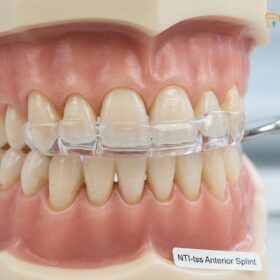
The most common and effective mechanical intervention is the use of an occlusal splint. While traditional night guards are designed to be worn during sleep to prevent grinding, managing awake clenching often requires a specialized daytime appliance. A daytime splint is typically fabricated from a rigid or semi-rigid acrylic material and is designed to be much thinner and less obtrusive than a nocturnal guard. It is usually fitted to the lower arch to minimize interference with speech and aesthetics. The primary function of this splint is not just to put a physical barrier between the teeth, but to alter the proprioceptive feedback to the brain. When the patient attempts to clench, the hard surface of the splint distributes the force evenly across the arch and prevents the jaw from fully closing into its habitual, tension-inducing position. This slight opening of the vertical dimension helps to stretch the masseter muscles and decompress the TMJ.
“The application of a precisely calibrated occlusal splint does more than protect enamel; it acts as a neurological circuit breaker. By altering the sensory input from the periodontal ligaments, the splint disrupts the habitual motor engram responsible for involuntary clenching.”
In cases where muscle hyper-tonicity is severe and unresponsive to splint therapy and behavioral changes, pharmacological interventions may be considered. Short-term use of muscle relaxants can help break the cycle of acute muscle spasms. For chronic, refractory cases, targeted injections of Botulinum Toxin (Botox) into the masseter and temporalis muscles have proven highly effective. Botox works by temporarily blocking the release of acetylcholine at the neuromuscular junction, thereby reducing the force of muscle contraction without compromising normal chewing function. This allows the overworked muscles to atrophy slightly, reducing their bulk and significantly decreasing the pain associated with clenching.
Physical therapy is another crucial component of the clinical workflow. A specialized orofacial physical therapist can perform manual release techniques to alleviate trigger points within the masticatory and cervical musculature. They can also guide the patient through specific jaw mobility and strengthening exercises to restore normal range of motion and improve joint stability. Dr. Nguyen Van Cuong emphasizes that a successful treatment outcome relies on a comprehensive, individualized approach. At HCMC Dental Clinic, the clinical team conducts thorough occlusal analyses and utilizes advanced digital scanning to ensure that any appliance provided perfectly harmonizes with the patient’s unique anatomy, ensuring maximum efficacy and comfort.
When to See a Doctor
While occasional jaw tension during a stressful day is normal, chronic daytime bruxism jaw clenching requires professional evaluation to prevent irreversible damage. You should schedule a comprehensive dental examination if you experience any of the following symptoms:
- Persistent Facial Pain: A constant, dull ache in the jaw, temples, or in front of the ears that worsens as the day progresses.
- Restricted Jaw Movement: Difficulty opening your mouth fully, or experiencing a “locking” sensation where the jaw gets stuck in an open or closed position.
- Visible Tooth Damage: Noticing that your teeth appear shorter, flatter, or have chipped edges, or experiencing sudden, severe tooth sensitivity to hot or cold temperatures.
- Audible Joint Noises: Loud clicking, popping, or grating sounds (crepitus) when chewing or speaking, especially if accompanied by pain.
- Chronic Headaches: Frequent tension headaches that originate in the temples or the back of the head, particularly in the afternoon or evening.
A qualified dental professional can perform a detailed clinical assessment, which may include palpation of the masticatory muscles, evaluation of the TMJ range of motion, and radiographic imaging to assess joint health. Based on these diagnostics, a personalized treatment plan can be formulated. It is important to remember that early intervention yields the highest success rates in managing bruxism and preventing complex, costly dental rehabilitations in the future. If you suspect your clenching is related to underlying malocclusion, consulting with a specialist about orthodontic alignment may also be a necessary step in achieving long-term occlusal stability.

Frequently Asked Questions
Why do I clench my teeth when concentrating?
Clenching during concentration is an involuntary somatic response to heightened cognitive load and sympathetic nervous system activation. When you focus intensely, your brain often channels excess neural energy into the masseter and temporalis muscles, leading to sustained, subconscious jaw tension. This phenomenon is a physical manifestation of mental effort, where the body braces itself as if preparing for a physical challenge, resulting in prolonged isometric contraction of the jaw muscles without the individual realizing it until fatigue sets in.
How do I stop clenching my jaw during the day?
Stopping daytime clenching requires active behavioral retraining, primarily utilizing the ‘lips together, teeth apart’ resting posture. Setting frequent biofeedback reminders, practicing diaphragmatic breathing, improving ergonomic posture, and utilizing cognitive behavioral therapy techniques can gradually reprogram the neuromuscular habit. You can use visual cues like sticky notes or digital alarms to remind yourself to check your jaw position. Over time, this conscious effort rewires the brain’s automatic response to stress, allowing the jaw to remain in a relaxed, decompressed state.
Are night guards useful for daytime clenching?
Yes, specific types of night guards or custom daytime occlusal splints are highly useful for managing daytime clenching. While traditional bulky night guards may impede speech, a dentist can fabricate a slim, lower-arch daytime splint that protects enamel and decompresses the TMJ without disrupting daily communication. These daytime appliances act as a physical barrier and provide proprioceptive feedback, reminding the brain to release the tension whenever the teeth attempt to lock together.
Can daytime bruxism cause permanent jaw damage?
If left untreated, chronic daytime bruxism can lead to permanent structural damage within the temporomandibular joint. Sustained isometric pressure degrades the articular cartilage, displaces the cushioning disc, and can result in irreversible osteoarthritis, chronic myofascial pain, and severe occlusal wear. The continuous force deprives the joint of necessary synovial fluid, accelerating wear and tear that may eventually require complex surgical intervention if conservative management is ignored.
Does poor posture contribute to awake clenching?
Poor posture, particularly forward head posture associated with prolonged screen time, directly contributes to awake clenching. This misalignment strains the cervical spine and alters the biomechanics of the mandible, forcing the masticatory muscles to contract compensatorily, which frequently manifests as involuntary jaw clenching. Correcting workplace ergonomics, ensuring the monitor is at eye level, and maintaining spinal alignment are critical steps in reducing the muscular tension that drives daytime bruxism.
References
- Journal of the American Dental Association. Pathophysiology and management of awake bruxism: a clinical review. (2021).
- Journal of Oral Rehabilitation. The correlation between psychosocial stress and daytime jaw clenching. (2020).
- Journal of Prosthetic Dentistry. Biomechanical impact of sustained isometric muscle contraction on the temporomandibular joint. (2019).
- Clinical Oral Investigations. Efficacy of cognitive behavioral therapy and biofeedback in awake bruxism management. (2022).
- International Journal of Oral and Maxillofacial Surgery. Occlusal splint therapy for the mitigation of daytime myofascial pain. (2018).