Non-toxic veneers are ultra-thin, biocompatible ceramic shells designed to restore dental aesthetics without introducing harmful chemicals, metals, or BPA into the body. They provide a safe, durable solution for enhancing your smile while strictly preserving systemic health and natural tooth structure.
Clinical Summary:
In modern biological dentistry, the demand for non-toxic veneers has surged as patients become increasingly aware of the systemic impact of dental materials. Unlike traditional restorations that may utilize metal substructures or composite resins containing Bisphenol A (BPA) derivatives, non-toxic veneers are fabricated from completely inert ceramics such as lithium disilicate or zirconia. These materials are highly biocompatible, meaning they are designed to avoid triggering allergic reactions, localized gingival inflammation, or systemic toxicity. Furthermore, the clinical workflow for placing these veneers prioritizes minimally invasive techniques, preserving the maximum amount of natural enamel to protect the tooth’s vital pulp. By combining advanced digital smile design with BPA-free bonding agents, holistic dental practitioners can achieve exceptional aesthetic outcomes that harmonize perfectly with the patient’s overall biological health.
Key Takeaways:
- Non-toxic veneers are crafted from inert, biocompatible ceramics that minimize the risk of releasing harmful substances into the oral cavity.
- The bonding process utilizes advanced, BPA-free resin cements to help eliminate the risk of endocrine-disrupting chemical exposure.
- Minimally invasive preparation techniques preserve natural enamel, reducing post-operative sensitivity and protecting the dental nerve.
- Metal-free restorations prevent the development of dark lines at the gum margin and eliminate the risk of galvanic toxicity.
- Biological smile design integrates aesthetic enhancement with strict protocols to support long-term systemic wellness.
Aesthetic Smile Design Meets Biological Standards
Biological smile design integrates premium aesthetic enhancements with biocompatible materials, ensuring that your new veneers support both a beautiful appearance and optimal systemic health.
The intersection of cosmetic dentistry and biological health represents a profound shift in how dental professionals approach smile restoration. Historically, the primary focus of cosmetic procedures was purely visual—achieving the whitest, straightest teeth possible, sometimes at the expense of the underlying tooth structure or through the use of materials that could provoke biological reactivity. Today, the philosophy of holistic cosmetic dentistry dictates that any material placed in the mouth must be rigorously evaluated for its systemic impact. The oral cavity is a highly vascularized environment, and materials that degrade or leach chemicals can introduce toxins directly into the bloodstream.
When patients seek to improve their smiles, they should not have to compromise their overall wellness. This is the foundational principle behind the use of non-toxic veneers. By utilizing materials that are chemically inert and highly stable in the moist, acidic environment of the mouth, we can create stunning aesthetic transformations that are completely harmonious with human biology. Clinical studies confirm that advanced ceramics offer exceptional biocompatibility and long-term clinical performance without adverse systemic effects[1].
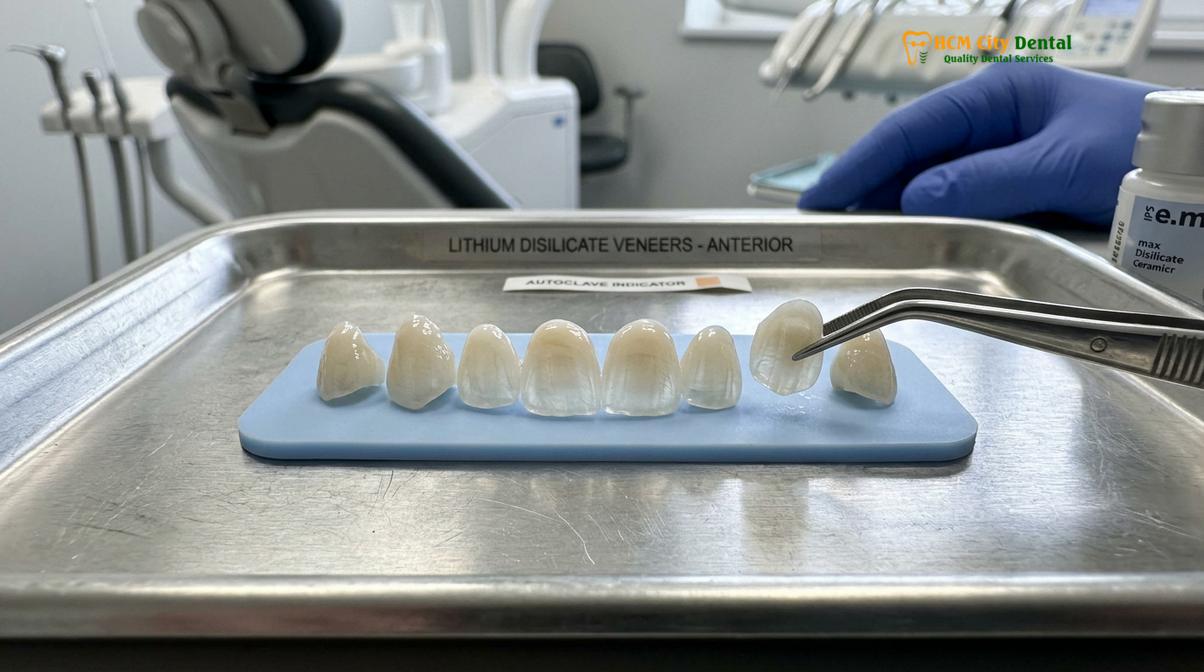
Dr. Nguyen Van Cuong, a leading advocate for biological approaches, frequently emphasizes that true dental aesthetics cannot exist without underlying biological health. He ensures that every smile transformation utilizes strictly evaluated, biocompatible ceramics to protect the patient’s systemic wellness. Under his guidance, the clinical team meticulously plans each case to harmonize with the individual’s natural oral environment, ensuring that beauty and health go hand in hand.
To achieve these high standards, modern clinics employ comprehensive biological dentistry protocols. This involves not only the selection of the veneer material itself but also a meticulous evaluation of the patient’s periodontal health, bite alignment, and individual material sensitivities. Biocompatibility testing can even be utilized for highly sensitive patients to ensure that the chosen ceramics and adhesives will not trigger an immune response. The goal is to create a seamless integration between the artificial restoration and the natural biological tissues, resulting in a smile that feels as natural as it looks.
Why We Use 100% Metal-Free Ceramic Veneers
We exclusively utilize advanced, metal-free ceramics like lithium disilicate and zirconia because they are chemically inert, highly durable, and eliminate the risk of metal toxicity and allergies.
The transition away from metal-based dental restorations is one of the most significant advancements in biological dentistry. For decades, Porcelain-Fused-to-Metal (PFM) crowns and veneers were the standard due to their strength. However, the metal alloys used in these restorations often contained nickel, beryllium, chromium, and cobalt—elements known to cause hypersensitivity, allergic reactions, and localized tissue toxicity. When these metals interact with saliva, they can undergo galvanic corrosion, releasing metallic ions into the oral tissues and potentially causing a metallic taste, chronic inflammation, and the unsightly dark line often seen at the gum margin of older crowns.
To eliminate these risks, the modern standard for non-toxic restorations relies entirely on advanced ceramics. Lithium disilicate and cubic zirconia are the premier choices for crafting safe porcelain veneers. These materials are completely devoid of metallic elements. They are synthesized under extreme heat and pressure, resulting in a crystalline structure that is incredibly strong, highly resistant to fracture, and entirely chemically inert.
The biological advantages of metal-free ceramics extend beyond the absence of toxicity. These materials exhibit excellent soft tissue integration. The gingiva responds exceptionally well to highly polished glazed porcelain, attaching to it much like it does to natural tooth enamel. Research indicates that metal-free ceramic restorations promote a significantly healthier gingival response compared to traditional metal-based alternatives[3]. This prevents the accumulation of plaque and bacteria at the restoration margin, significantly reducing the risk of periodontal disease and supporting long-term oral health.
| Material Type | Biocompatibility | Aesthetic Quality | Toxicity / Allergy Risk |
|---|---|---|---|
| Lithium Disilicate (Ceramic) | Excellent; highly inert | Superior translucency; mimics natural enamel | None; metal-free |
| Zirconia (Ceramic) | Excellent; highly inert | High opacity to medium translucency; very strong | None; metal-free |
| Traditional Composite Resin | Moderate; prone to degradation | Good initially; stains over time | Potential for BPA/Bis-GMA leaching |
| Porcelain-Fused-to-Metal (PFM) | Poor; causes gingival irritation | Opaque; prone to dark margins | High risk of metal allergies and galvanism |
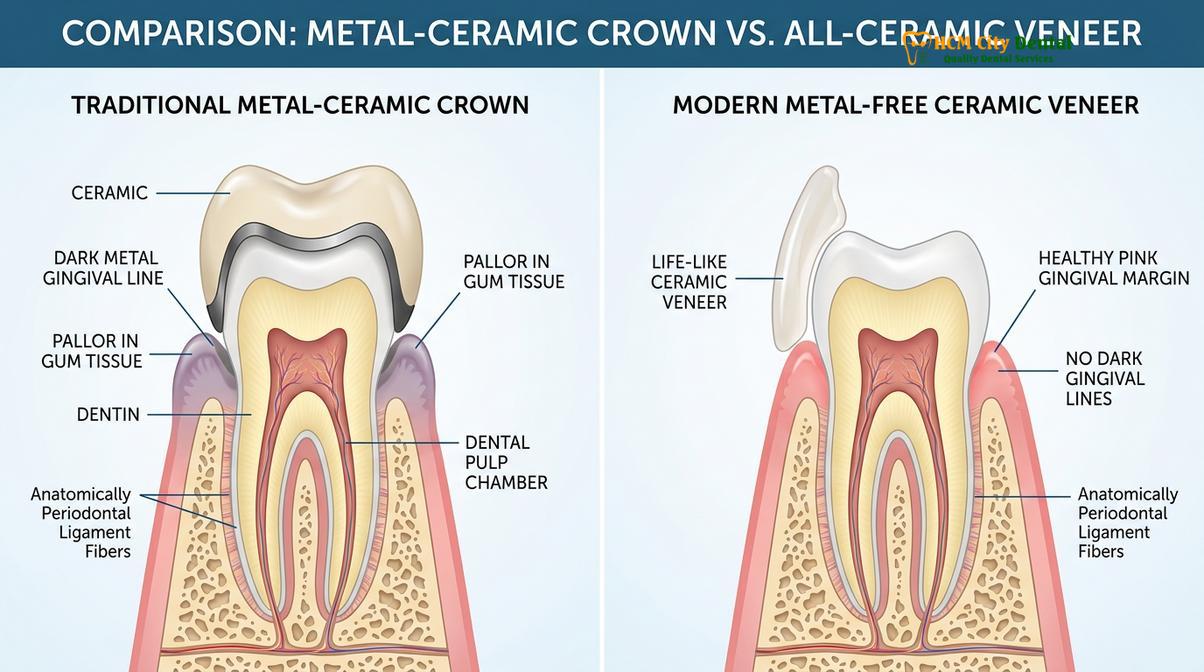
By choosing metal-free ceramics, patients are investing in a restoration that respects their body’s biological boundaries. The inert nature of these materials ensures that the immune system is not constantly burdened by foreign, reactive substances. This approach is central to the philosophy of holistic care, where every treatment decision is weighed against its potential systemic impact.
BPA-Free Bonding Agents and Biocompatible Adhesives
Securing veneers safely requires the use of advanced, BPA-free resin cements that prevent chemical leaching and protect the patient from endocrine-disrupting compounds.
While the ceramic veneer itself may be perfectly non-toxic, the method used to attach it to the tooth is equally critical. The bonding process is a complex chemical procedure that requires adhesives capable of creating a durable, long-lasting bond between the ceramic and the natural tooth structure. Historically, many dental adhesives and composite resins contained Bisphenol A (BPA) or its derivatives, such as Bis-GMA. BPA is a well-known endocrine disruptor that can mimic estrogen in the body, potentially leading to a range of systemic health issues.
In the moist environment of the mouth, salivary enzymes can break down these older resin materials, leading to the gradual leaching of BPA and other unreacted monomers into the saliva and, consequently, the digestive tract and bloodstream[2]. For patients seeking truly non-toxic dentistry, this hidden source of chemical exposure is unacceptable. Therefore, the biological approach mandates the strict use of BPA-free bonding agents and biocompatible luting cements.
“The integrity of a biological restoration is only as strong as its weakest chemical link. Utilizing pristine ceramics is futile if we anchor them with adhesives that leach endocrine disruptors into the patient’s system.”
Modern biological clinics utilize advanced resin cements that are formulated without Bis-GMA, TEGDMA, or other harmful monomers. Instead, they rely on safer, highly stable alternatives like UDMA or specifically engineered BPA-free formulations. These advanced adhesives undergo rigorous biocompatibility testing to ensure they do not exhibit cytotoxicity or provoke inflammatory responses in the dental pulp or surrounding tissues[5].
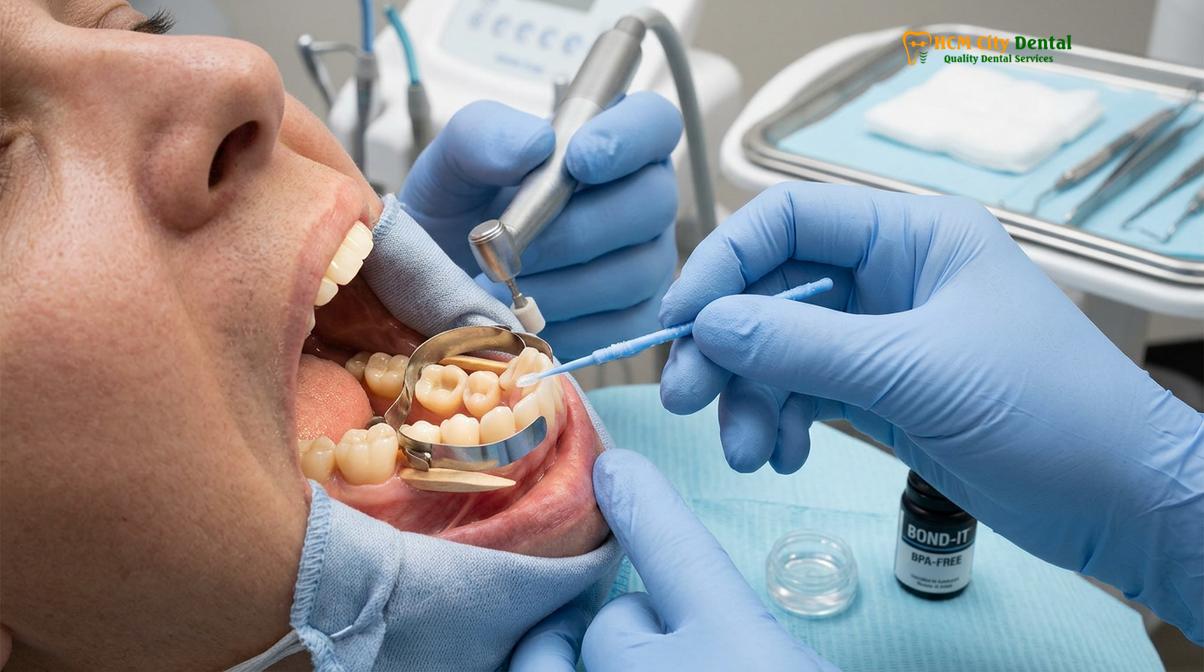
The application of these adhesives also requires precise clinical technique. Proper isolation of the tooth, meticulous moisture control, and precise light-curing protocols are essential to ensure complete polymerization of the bonding agent. Complete polymerization means that the adhesive hardens fully, leaving no unreacted chemicals that could potentially leach out over time. By combining safe, BPA-free materials with exacting clinical execution, we ensure that the bond securing your veneers is as biologically sound as it is mechanically strong.
Minimally Invasive Veneer Preparation: Protecting Natural Enamel
Preserving your natural tooth structure is a core biological principle, utilizing ultra-thin veneer preparations to maintain enamel integrity and protect tooth vitality.
One of the most critical aspects of placing non-toxic veneers is the preparation of the underlying tooth. Traditional veneer and crown preparations often involved aggressive reduction of the tooth structure, stripping away the protective enamel layer and exposing the sensitive dentin underneath. This aggressive approach not only weakens the structural integrity of the tooth but also places significant stress on the dental pulp, increasing the risk of post-operative sensitivity, pulpitis, and the eventual need for root canal therapy.
Biological dentistry strongly advocates for minimally invasive techniques. The goal is to preserve as much natural, healthy tooth structure as clinically possible. Enamel is the hardest substance in the human body and serves as the ultimate natural barrier against bacteria and thermal changes. By keeping the preparation strictly within the enamel layer, we maintain the tooth’s natural defenses and ensure a much stronger, more predictable bond for the veneer[4].
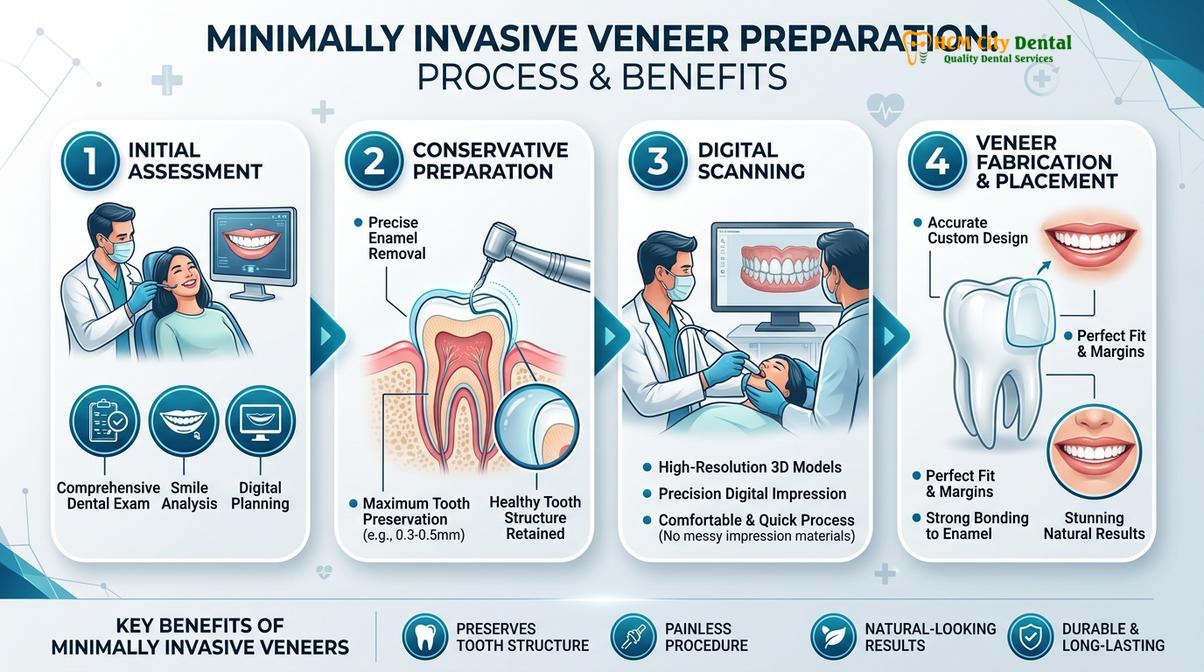
The workflow for minimally invasive preparation requires exceptional precision. Using specialized depth-cutting burs and high-magnification loupes or dental microscopes, the dentist carefully removes only a fraction of a millimeter of enamel. In some cases, minimal-prep veneers can be utilized, where the ceramic shell is bonded directly to the nearly unaltered tooth surface. This approach offers a dramatic aesthetic improvement with virtually zero biological cost to the natural tooth.
Preserving the enamel also plays a crucial role in the longevity of the restoration. Dental adhesives bond significantly better to the highly mineralized structure of enamel than they do to the more porous, organic structure of dentin. A veneer bonded entirely to enamel is far less likely to debond, leak, or fail over time. By prioritizing the conservation of your natural tooth structure, minimally invasive preparation techniques ensure that your new smile is structurally sound and built to last.
Managing Tooth Sensitivity Without Toxic Chemicals
By utilizing biocompatible materials and conservative preparation techniques, biological dentistry effectively manages and prevents tooth sensitivity without relying on harsh chemical desensitizers.
Tooth sensitivity is a common concern for patients undergoing cosmetic dental procedures. In traditional dentistry, aggressive enamel removal often leads to exposed dentinal tubules, which transmit temperature changes directly to the tooth’s nerve. To combat this, conventional practices sometimes rely on chemical desensitizing agents that may contain glutaraldehyde or other potentially toxic compounds. Biological dentistry takes a fundamentally different approach, focusing on prevention and natural tissue management rather than chemical suppression.
The primary defense against sensitivity is the minimally invasive preparation protocol discussed earlier. By keeping the preparation within the enamel layer, the underlying dentin remains protected, drastically reducing the likelihood of post-operative discomfort. Furthermore, the non-toxic ceramics used for the veneers, such as lithium disilicate, act as excellent thermal insulators. Once bonded, they provide a protective shield over the tooth, shielding the nerve from hot and cold stimuli.
Important Clinical Note: Patients experiencing severe, lingering tooth sensitivity or sharp pain prior to treatment should undergo a comprehensive vitality test. Masking underlying endodontic issues or active decay with veneers can lead to severe complications. A biological dentist will always address foundational health before proceeding with cosmetic enhancements.
In cases where minor sensitivity does occur during the provisional phase, biological dentists utilize natural, non-toxic alternatives to soothe the tooth. Ozone therapy, for instance, can be applied to the prepared tooth surface to naturally disinfect the area and promote remineralization without introducing harmful chemicals. Additionally, biocompatible sealants that do not contain BPA or HEMA can be used to temporarily occlude dentinal tubules, ensuring patient comfort while adhering strictly to holistic health principles.
When to Consult a Biological Dentist for Veneers
Understanding when to seek professional biological dental care is essential for patients who prioritize systemic health alongside aesthetic improvements.
Patients often wonder when it is appropriate to consult a biological dentist rather than a traditional cosmetic practitioner. If you have a history of chemical sensitivities, metal allergies, or autoimmune conditions, seeking a holistic professional is highly recommended. A biological dentist will take the time to review your full medical history and may suggest biocompatibility testing before any materials are placed in your mouth.
Furthermore, if you currently have older composite veneers that are staining, chipping, or causing chronic gum inflammation, it may be time for an evaluation. These symptoms can indicate that the materials are degrading or that the margins are harboring bacteria. Replacing these failing restorations with inert, non-toxic ceramics can resolve localized inflammation and improve your overall oral environment. This approach aligns with the recommendations from the Vietnam Odonto-Stomatology Association (VOSA) regarding the safe use of biocompatible materials in restorative dentistry[6].
“A beautiful smile should never come at the cost of your systemic health. By choosing inert, metal-free materials, we respect the body’s natural biological boundaries while achieving stunning aesthetic results.”
Clinical Case Review: A 34-year-old patient visited HCMC Dental Clinic in Ho Chi Minh City seeking to replace old, degrading composite veneers that were causing chronic sensitivity and gum irritation. By carefully removing the toxic composites, treating the underlying structure with ozone therapy, and bonding ultra-thin lithium disilicate veneers using BPA-free cements, the patient achieved a stunning, pain-free smile with excellent gingival health.
During your consultation, it is important to ask specific questions about the materials being used. Inquire whether the clinic uses metal-free ceramics and explicitly request confirmation that their bonding agents are BPA-free. A reputable biological clinic will be fully transparent about their material safety data sheets and clinical protocols.
Designing Your Gorgeous, Healthy Smile at HCMC Dental
Our comprehensive digital smile design process ensures that your non-toxic veneers perfectly complement your facial aesthetics while adhering to the highest biological safety standards.
Achieving a flawless smile requires more than just safe materials; it demands an artistic eye and precise digital planning. At our clinic, the journey to your new smile begins with a comprehensive digital smile design consultation. We utilize advanced 3D intraoral scanners to capture highly accurate digital impressions of your teeth, eliminating the need for uncomfortable traditional putty molds. These digital models allow us to analyze your bite, facial symmetry, and lip dynamics with incredible precision.
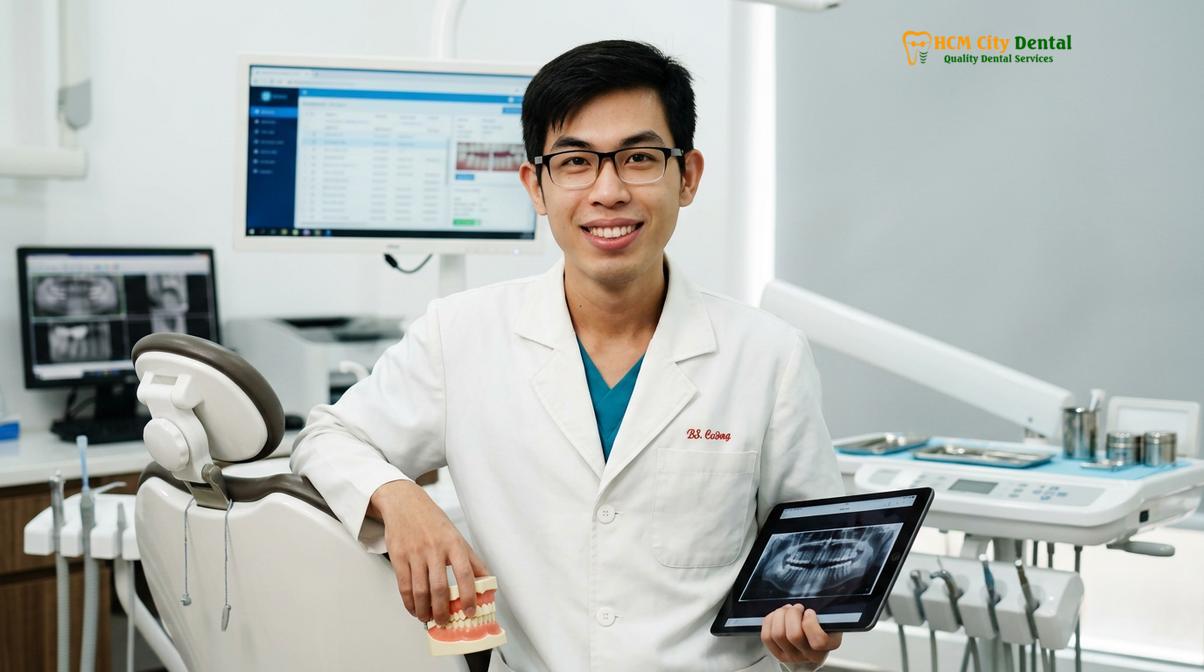
Using specialized software, we can design the exact shape, size, and shade of your new veneers to harmonize perfectly with your unique facial features. You will even have the opportunity to preview your new smile digitally before any physical preparation begins. This collaborative approach ensures that the final result meets your aesthetic goals while maintaining strict adherence to biological principles.
When considering Porcelain Veneers tại HCMC Dental Clinic, patients receive the highest standard of holistic care in Ho Chi Minh City. We are committed to providing restorations that are as healthy as they are beautiful. If you are ready to transform your smile safely, our dedicated team is here to guide you through every step of your biological aesthetic journey.
References
- Journal of Prosthetic Dentistry. Biocompatibility and clinical performance of lithium disilicate ceramics. (2021).
- Dental Materials. Elution of bisphenol A from dental composite resins and adhesives: A systematic review. (2020).
- International Journal of Periodontics & Restorative Dentistry. Gingival response to metal-free ceramic restorations. (2019).
- Journal of Esthetic and Restorative Dentistry. Minimally invasive veneer preparation techniques and enamel preservation. (2022).
- Clinical Oral Investigations. Cytotoxicity and biological evaluation of modern dental luting cements. (2018).
- Vietnam Odonto-Stomatology Association (VOSA). Guidelines on biocompatible materials in restorative dentistry. (2023).