General anesthesia dental procedures involve a medically induced state of unconsciousness, ensuring patients feel no pain or anxiety during complex oral surgeries. Administered by specialized anesthesiologists in a hospital setting, this approach is reserved for extensive treatments, severe phobias, or patients with specific medical and cognitive needs.
Clinical Summary:
General anesthesia in dentistry provides complete unconsciousness for patients undergoing extensive oral surgery or those with severe dental phobia. Unlike local anesthetics or conscious sedation, this modality requires a hospital environment equipped with advanced airway management and continuous vital sign monitoring by a board-certified anesthesiologist. While it ensures a completely pain-free experience, it carries higher clinical risks and necessitates a longer recovery period, making thorough pre-operative medical evaluation essential for patient safety.
Key Takeaways:
- General anesthesia induces complete unconsciousness, eliminating all pain and awareness during dental procedures.
- It is strictly performed in hospital settings with dedicated anesthesiology teams to ensure patient safety.
- Primary candidates include patients requiring complex maxillofacial surgeries, those with severe dentophobia, or individuals with special cognitive needs.
- The procedure requires strict pre-operative fasting and comprehensive medical history evaluations.
- Recovery involves a monitored wake-up phase, and patients must be escorted home by a responsible adult.
What is General Anesthesia in Dentistry?
General anesthesia in dentistry is a medically induced coma that suppresses central nervous system activity, resulting in complete unconsciousness and an absence of pain sensation during extensive oral treatments.
In the realm of modern dental medicine, managing patient comfort and pain is paramount. While most routine dental procedures can be comfortably completed using local anesthetics to numb a specific area, certain clinical scenarios demand a more profound intervention. General anesthesia represents the deepest level of pharmacological intervention available in dentistry. It is not merely a deep sleep; it is a carefully controlled, reversible state of unconsciousness induced by a combination of intravenous drugs and inhaled gases[1].
When a patient undergoes a general anesthesia dental procedure, their central nervous system is profoundly suppressed. This suppression achieves three critical clinical goals: amnesia (lack of memory of the event), analgesia (complete absence of pain), and akinesia (lack of movement). Because the medications used paralyze the body’s natural reflexes, including the drive to breathe independently, the patient requires mechanical ventilation. An anesthesiologist will typically place an endotracheal tube into the airway to deliver oxygen and anesthetic gases directly to the lungs while protecting the airway from oral secretions and dental debris.
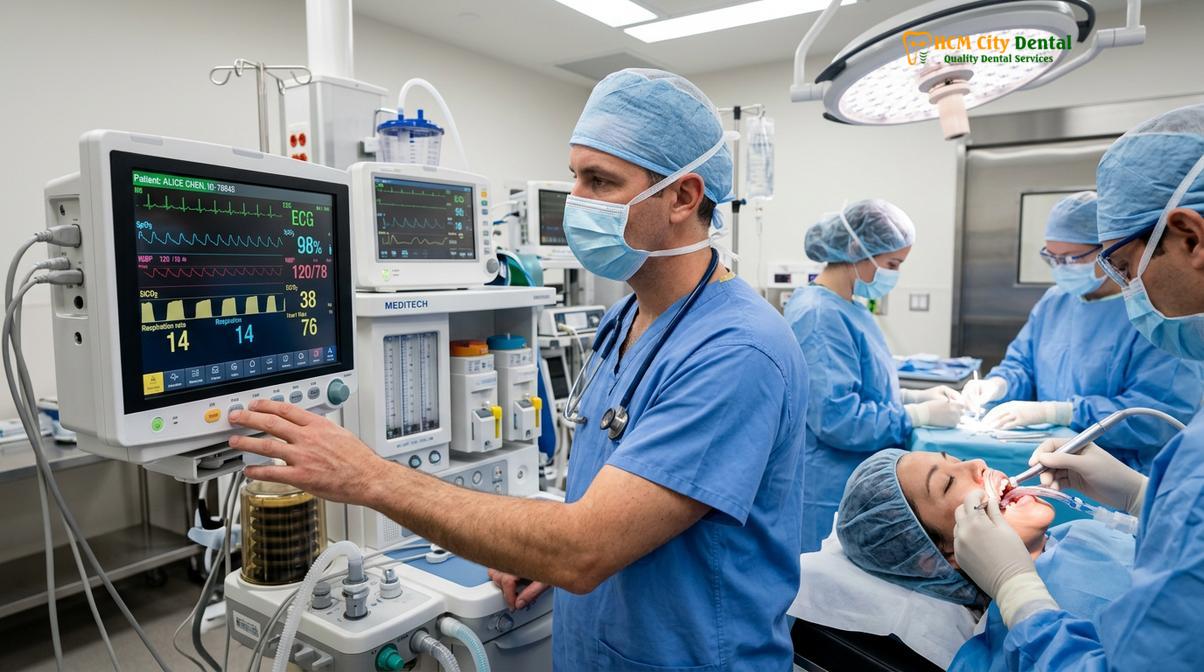
The pharmacological agents utilized during these procedures are highly potent. Induction is usually achieved rapidly via intravenous medications such as Propofol, which allows the patient to drift into unconsciousness within seconds. Once asleep, the state is maintained using volatile inhalation anesthetics like Sevoflurane or Isoflurane, often supplemented with intravenous narcotics for pain control. Throughout the entire duration of the surgery, the patient’s physiological parameters—including heart rate, blood pressure, oxygen saturation, and end-tidal carbon dioxide—are continuously monitored by a dedicated medical team. This rigorous oversight ensures that the delicate balance of anesthesia is maintained, keeping the patient safe while the dental surgeon focuses entirely on the complex oral rehabilitation.
Key Indications: Who Needs to be Completely Unconscious?
Complete unconsciousness is clinically indicated for patients undergoing highly invasive maxillofacial surgeries, individuals with severe cognitive impairments, or those suffering from unmanageable dental phobia.
The decision to utilize general anesthesia is never taken lightly. It is reserved for specific clinical indications where alternative forms of pain management and sedation are deemed insufficient or unsafe. One of the primary indications is the sheer complexity and duration of the surgical intervention. Procedures such as full-mouth orthognathic (jaw) surgery, the simultaneous extraction of multiple deeply impacted wisdom teeth, extensive bone grafting, or complex facial trauma reconstruction require the patient to remain absolutely immobile for several hours. In these cases, unconscious dental surgery provides the optimal environment for the surgeon to operate with precision without causing the patient undue physical or psychological trauma.
Another critical indication involves patients with profound psychological barriers to dental care. Individuals suffering from severe dental phobia may experience debilitating panic attacks, making it impossible for them to sit in a dental chair, let alone tolerate the sights, sounds, and sensations of a surgical procedure. For these patients, the promise of waking up with the treatment entirely completed is often the only way they can receive necessary oral healthcare. Similarly, patients with a hyperactive gag reflex that cannot be suppressed by local anesthetics or mild sedatives may require general anesthesia to prevent aspiration and allow the dentist to work safely in the posterior regions of the mouth.
Clinical Case Study: Managing Complex Needs
Dr. Nguyen Van Cuong recently evaluated a patient presenting with severe dental deterioration complicated by profound autism spectrum disorder. The patient was entirely uncooperative in a standard clinical setting, making routine examination impossible. Recognizing the risks, Dr. Cuong coordinated a comprehensive treatment plan involving full-mouth extractions and restorative care under general anesthesia in a hospital setting. This approach allowed the dental team to complete years of neglected dental work in a single, safe, two-hour session, drastically improving the patient’s quality of life without causing psychological distress.
Furthermore, pediatric patients or adults with special cognitive, physical, or developmental needs often benefit immensely from this approach. Conditions such as severe autism, cerebral palsy, or advanced Alzheimer’s disease can render a patient unable to understand instructions or cooperate during treatment. In such scenarios, attempting treatment under local anesthesia could result in sudden movements, leading to severe injury. By opting for a controlled hospital environment, the dental team ensures that the patient receives comprehensive care safely and humanely[2].
Clinical Setting: Why General Anesthesia Requires a Hospital Facility
Due to the profound suppression of cardiovascular and respiratory functions, general anesthesia must be administered in a fully equipped hospital operating room rather than a standard dental clinic.
A common misconception among patients is that all forms of sedation can be administered in a standard dental chair. While mild to moderate conscious sedation is routinely performed in outpatient dental clinics, true general anesthesia requires a vastly different infrastructure. The physiological changes that occur when a patient is placed into a medically induced coma necessitate the advanced life support capabilities found only in a hospital or a specialized, accredited ambulatory surgery center.
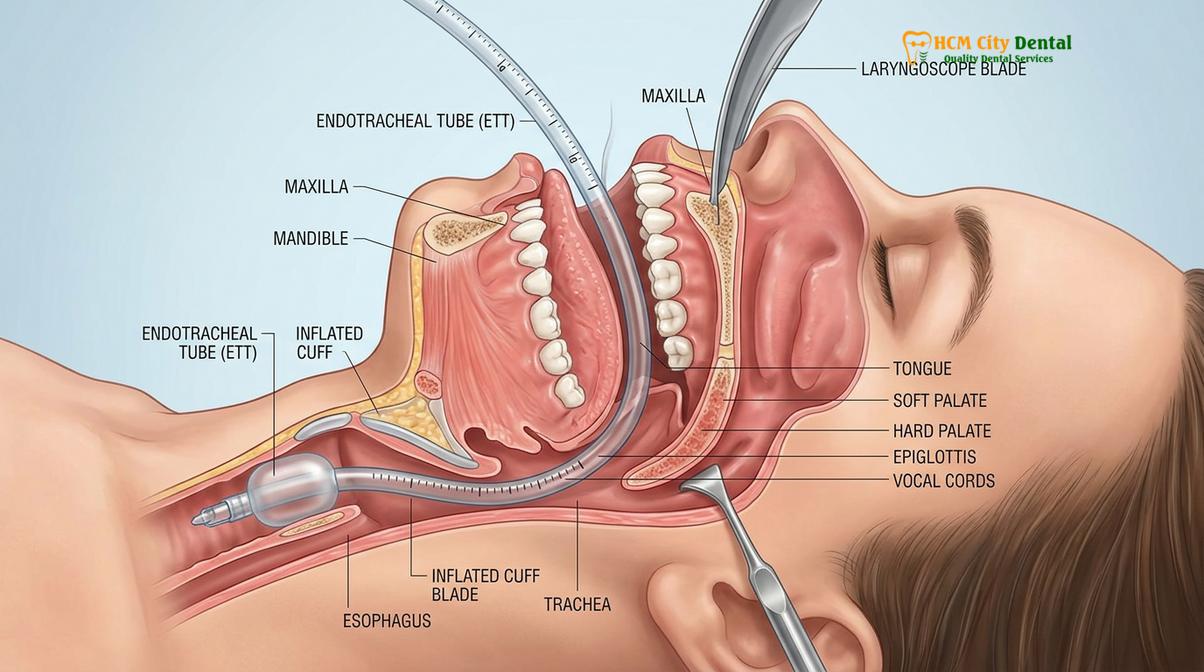
When seeking hospital dentistry saigon, patients are admitted to a facility equipped with comprehensive monitoring technology. This includes continuous electrocardiography (ECG) to monitor heart rhythm, pulse oximetry for blood oxygen levels, non-invasive blood pressure cuffs, and capnography to measure the carbon dioxide levels in the patient’s exhaled breath. Capnography is particularly crucial as it provides real-time data on the efficacy of the patient’s ventilation. Standard dental clinics simply do not possess this level of continuous, invasive monitoring equipment, nor do they have the necessary infrastructure to manage rare but severe anesthetic emergencies, such as malignant hyperthermia or sudden cardiac events.
Clinical Safety Warning: Never attempt to undergo deep general anesthesia in a standard outpatient dental chair without a board-certified anesthesiologist and hospital-grade life support equipment present. The inability to secure an airway or manage sudden cardiovascular depression in an unequipped setting can lead to catastrophic outcomes.
Moreover, the personnel required for general anesthesia extends beyond the dental team. In a hospital setting, the dental surgeon focuses exclusively on the oral procedure, while a separate, dedicated board-certified anesthesiologist manages the patient’s vital signs, fluid balance, and depth of anesthesia. This division of labor is a fundamental tenet of patient safety. The anesthesiologist is trained to instantly recognize and correct physiological deviations, ensuring the patient remains stable throughout the surgery. This collaborative approach between the dental surgeon and the medical anesthesiology team is what makes complex oral rehabilitations possible and safe[3].
Risks, Side Effects, and Recovery from General Anesthesia
While generally safe under expert care, general anesthesia carries risks such as postoperative nausea, sore throat, and rare cardiovascular complications, requiring a carefully monitored recovery phase.
Like any major medical intervention, general anesthesia carries inherent risks and potential side effects that must be carefully weighed against the benefits of the dental procedure. The most common side effects experienced by patients upon waking are postoperative nausea and vomiting (PONV). This is a reaction to the anesthetic gases and intravenous narcotics used during the procedure. To mitigate this, anesthesiologists routinely administer prophylactic antiemetic medications during the surgery. Additionally, because a breathing tube is placed in the trachea to secure the airway, patients frequently report a sore throat or mild hoarseness that can last for a few days following the surgery.
Other transient side effects include shivering, dizziness, and a feeling of cognitive grogginess or confusion as the medications slowly clear from the central nervous system. These symptoms are closely monitored in the Post-Anesthesia Care Unit (PACU). In the PACU, specialized recovery nurses track the patient’s vital signs and utilize scoring systems, such as the Aldrete score, to determine when the patient is physiologically stable enough to be discharged. It is a strict medical requirement that patients undergoing general anaesthetic teeth procedures be escorted home by a responsible adult, as their reflexes and judgment will be impaired for at least 24 hours.
“The administration of general anesthesia is a complex medical intervention that demands rigorous preoperative assessment to mitigate perioperative risks and ensure a smooth recovery trajectory.”
While severe complications are exceedingly rare in healthy individuals, they can occur. These include allergic reactions to anesthetic agents, respiratory depression, cardiovascular instability, or damage to the vocal cords during intubation. To minimize these risks, a thorough preoperative medical evaluation is mandatory. This evaluation assesses the patient’s ASA (American Society of Anesthesiologists) physical status classification, reviewing their complete medical history, current medications, allergies, and previous experiences with anesthesia. Patients with severe systemic diseases, such as uncontrolled hypertension, advanced heart disease, or severe chronic obstructive pulmonary disease (COPD), may require extensive medical optimization before they are cleared for surgery[4].
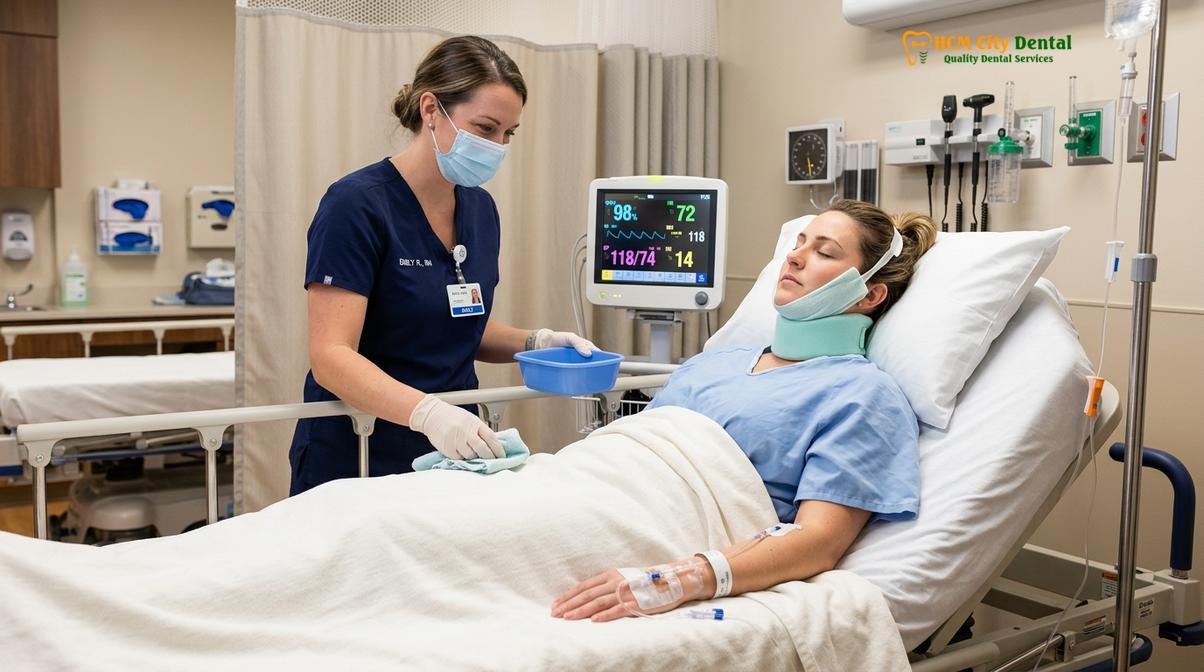
Recovery at home requires strict adherence to the dental surgeon’s postoperative instructions. Patients must rest, stay hydrated, and consume a soft diet to protect the surgical sites in the mouth. Pain management is typically transitioned from intravenous medications to oral analgesics prescribed by the dentist. If a patient experiences prolonged nausea, an inability to keep fluids down, or a sudden spike in temperature, they must contact their healthcare provider immediately.
How General Anesthesia Differs from Conscious IV Sedation
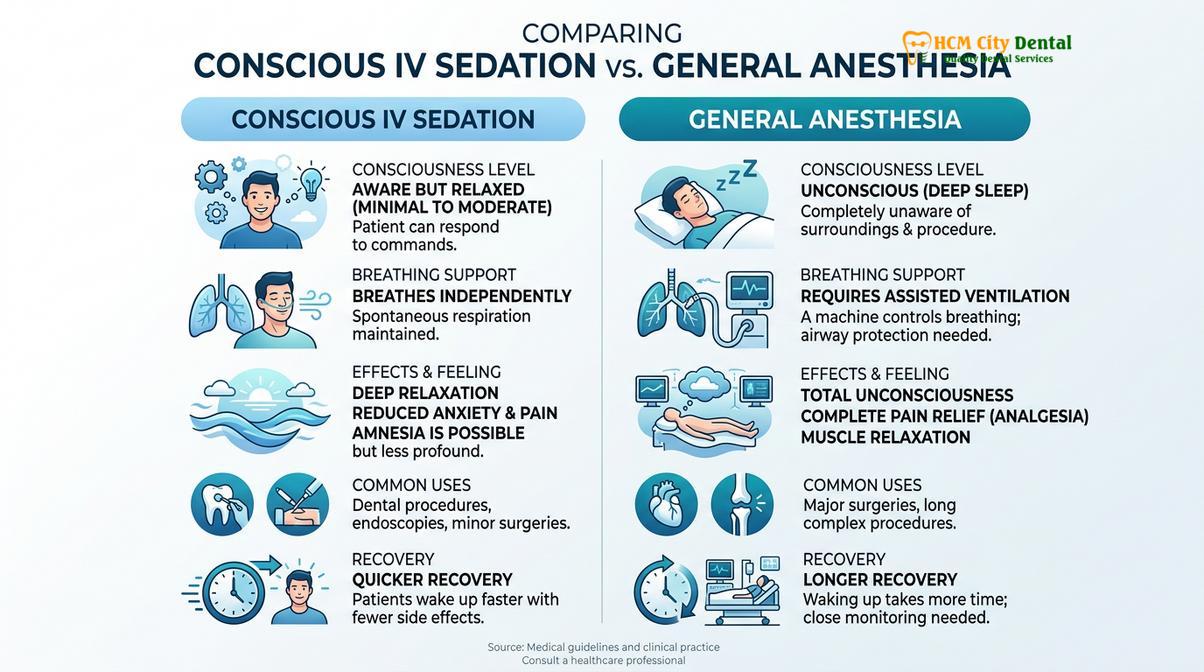
General anesthesia renders the patient completely unarousable and requires breathing support, whereas conscious IV sedation allows the patient to breathe independently and respond to verbal cues.
It is crucial for patients to understand the distinction between general anesthesia and conscious intravenous (IV) sedation, as the two modalities offer vastly different experiences and require different clinical setups. The spectrum of sedation in dentistry ranges from minimal sedation (anxiolysis) to moderate sedation, deep sedation, and finally, general anesthesia. Conscious IV sedation typically falls into the moderate category, though it can occasionally border on deep sedation depending on the dosage and the patient’s physiological response.
During conscious IV sedation, medications such as Midazolam or Fentanyl are administered through a vein to induce a state of deep relaxation. The defining characteristic of conscious sedation is that the patient maintains their own airway reflexes and breathes independently without the need for mechanical ventilation. Furthermore, while the patient may fall asleep, they remain arousable and can respond to purposeful physical stimulation or verbal commands from the dentist. This level of sedation is highly effective for managing anxiety and is routinely used in conjunction with oral sedation dentistry protocols for procedures like single implant placements or routine extractions.
In stark contrast, deep sleep dentistry surgery under general anesthesia completely abolishes the patient’s ability to respond to any stimulus, including severe pain. The patient cannot maintain their own airway, necessitating intubation and mechanical breathing support. Because of this profound physiological depression, general anesthesia requires the presence of an anesthesiologist and a hospital setting, whereas conscious IV sedation can often be safely administered in a properly equipped dental clinic by a dentist who holds advanced certification in sedation and airway management[5].
| Clinical Parameter | Conscious IV Sedation | General Anesthesia |
|---|---|---|
| Level of Consciousness | Deeply relaxed, but arousable to verbal or physical cues. | Completely unconscious, unarousable even to painful stimuli. |
| Breathing & Airway | Patient breathes independently; airway reflexes remain intact. | Requires mechanical ventilation and intubation (breathing tube). |
| Clinical Setting | Equipped dental clinic or outpatient surgical center. | Hospital operating room with advanced life support systems. |
| Memory of Procedure | Partial to complete amnesia; patient may remember brief moments. | Complete amnesia; patient has zero memory of the surgery. |
| Recovery Time | Relatively rapid; grogginess fades within a few hours. | Prolonged recovery in PACU; effects can last 24-48 hours. |
Consultation and Hospital Coordination Services in HCMC
HCMC Dental Clinic partners with accredited local hospitals to provide safe, seamlessly coordinated general anesthesia services for complex dental surgeries in Ho Chi Minh City.
Navigating the logistics of hospital-based dental surgery can be overwhelming for patients. Recognizing this, HCMC Dental Clinic offers comprehensive coordination services to ensure a seamless and stress-free experience. The process begins with an in-depth clinical consultation at our facility in Ho Chi Minh City. During this initial visit, our specialists conduct a thorough oral examination, utilize advanced 3D CBCT imaging to map the surgical sites, and discuss the patient’s medical history in detail.
If Dr. Nguyen Van Cuong and the clinical team determine that general anesthesia is the most appropriate and safest route, the clinic’s coordination team takes over the logistical planning. This involves scheduling preoperative medical clearance appointments, which may include blood tests, chest X-rays, and an ECG, depending on the patient’s age and health status. We work closely with highly accredited hospital partners in Saigon to secure operating room time and arrange for a dedicated anesthesiology team.
On the day of the surgery, the patient is admitted to the hospital where they are prepped by the medical staff. The dental surgical team from HCMC Dental Clinic then arrives to perform the planned comprehensive general dentistry procedures while the hospital’s anesthesiologist manages the patient’s systemic well-being. Following the surgery, the patient recovers in the hospital’s PACU until they are cleared for discharge. Our clinic maintains close follow-up communication during the critical first 48 hours to monitor healing and address any postoperative concerns, ensuring that the highest standards of international medical care are met right here in Vietnam.
When to See a Doctor
Understanding when to seek immediate medical attention is a critical component of patient safety, both before and after a procedure involving systemic anesthesia. Prior to surgery, you must consult with your primary care physician or a cardiologist if you have a history of severe asthma, chronic obstructive pulmonary disease, uncontrolled hypertension, or any recent cardiac events. Full medical disclosure is mandatory to prevent perioperative complications.
“Immediate medical evaluation is critical if a patient experiences prolonged respiratory distress or unmanageable pain following any procedure involving deep systemic anesthesia.”
Following discharge from the hospital, patients should be closely monitored by their designated caregiver. You should seek emergency medical care immediately if you experience any of the following red-flag symptoms: severe difficulty breathing or shortness of breath, chest pain, a high fever exceeding 38.5°C (101.3°F), uncontrollable bleeding from the surgical sites in the mouth, or severe nausea and vomiting that prevents you from keeping any fluids down for more than 12 hours. Additionally, if you notice clinical signs of dental anxiety manifesting as severe postoperative panic attacks or confusion that does not subside as the anesthesia wears off, contact your healthcare provider for guidance.
Frequently Asked Questions
When is general anesthesia needed for dental work?
General anesthesia is needed for highly complex oral surgeries, severe maxillofacial trauma, or patients with profound cognitive disabilities and unmanageable dentophobia. It ensures the patient remains completely unconscious, immobile, and pain-free during extensive procedures that cannot be managed with local anesthetics alone. This approach is also frequently utilized for pediatric patients who require extensive full-mouth restorations but lack the maturity to cooperate in a standard clinical setting. By utilizing advanced sedation dentistry, the surgical team can complete hours of intricate work safely in a single session.
Is general anesthesia safer than IV sedation for teeth?
General anesthesia is not inherently safer than IV sedation; it actually carries higher clinical risks due to the complete suppression of respiratory and cardiovascular reflexes. However, it is the safest and most effective option when a patient’s medical condition or the surgical complexity demands absolute immobility. IV sedation is generally preferred for moderate anxiety and less invasive procedures because the patient breathes on their own, resulting in a faster recovery and fewer systemic risks. The choice between the two depends entirely on a rigorous preoperative medical assessment.
Can I get general anesthesia at a standard dental clinic?
No, true general anesthesia cannot be safely administered in a standard dental clinic. It requires a fully equipped hospital operating room with advanced life support systems, continuous vital sign monitoring, and a board-certified anesthesiologist to manage the patient’s airway and physiological responses. Standard dental offices are equipped for local anesthesia and conscious sedation, but they lack the necessary infrastructure, such as mechanical ventilators and emergency crash carts, required to safely induce and maintain a medically induced coma.
What are the side effects of general anesthesia for teeth?
Common side effects include postoperative nausea, vomiting, a sore throat from the breathing tube, shivering, and temporary cognitive grogginess. These symptoms are generally mild and subside within 24 to 48 hours under proper medical supervision and supportive care. The anesthesiology team will often administer prophylactic medications during the surgery to minimize nausea. Patients are advised to rest, stay hydrated, and follow all postoperative instructions carefully to ensure a smooth and comfortable recovery process at home.
How much does hospital dental surgery cost in Vietnam?
The cost of hospital dental surgery in Vietnam varies widely based on the complexity of the dental procedure, hospital facility fees, and the anesthesiologist’s charges. Currently, patients can expect a comprehensive fee structure that includes both the specialized dental treatment and the mandatory hospital operating room expenses. While it represents a higher financial investment compared to standard clinic treatments, the coordination services provided by clinics in Ho Chi Minh City ensure transparent pricing and access to world-class medical facilities, making it a viable option for those requiring extensive care or strategies to overcome dental fear.
References
- Journal of Oral and Maxillofacial Surgery. Patient safety in dental sedation and anesthesia. (2021).
- International Journal of Oral and Maxillofacial Surgery. Intravenous conscious sedation protocols for complex oral surgery. (2020).
- British Dental Journal. Nitrous oxide inhalation sedation in dentistry: a review of safety. (2019).
- Journal of the American Dental Association. Patient satisfaction and anxiety levels under conscious sedation. (2022).
- Clinical Oral Investigations. Safety and recovery profiles of conscious sedation vs general anesthesia. (2018).
For pricing, booking, and a free clinical assessment, visit our Sedation Dentistry service page at HCMC Dental Clinic in Ho Chi Minh City.