A tooth infection spreading beyond the root can rapidly become a severe medical emergency. Key signs include facial swelling, persistent high fever, difficulty swallowing, and a rapid heart rate. Recognizing these symptoms early is critical to prevent life-threatening complications like systemic sepsis or airway obstruction.
Clinical Summary:
A localized dental abscess occurs when bacteria invade the dental pulp and multiply at the root apex. If left untreated, this localized infection can breach the surrounding bone and spread into the fascial spaces of the head and neck. The primary tooth infection spreading signs include severe facial cellulitis, trismus (inability to open the mouth), dysphagia (difficulty swallowing), and systemic symptoms such as fever and malaise. In advanced cases, the infection can lead to Ludwig’s Angina, which compromises the airway, or trigger a systemic inflammatory response known as sepsis. Emergency clinical intervention focuses on immediate source control—via root canal therapy, extraction, or surgical drainage—combined with targeted antibiotic therapy. Prompt recognition of red-flag symptoms and immediate referral to an emergency department or specialized dental clinic is essential for patient safety and successful resolution.
Key Takeaways:
- A spreading tooth infection is a medical emergency that requires immediate clinical evaluation.
- Facial swelling, difficulty swallowing, and restricted jaw movement are critical red flags.
- Systemic symptoms like high fever, chills, and confusion indicate the infection has entered the bloodstream.
- Antibiotics alone are insufficient; physical removal of the infection source is mandatory.
- Early intervention at a dental clinic prevents life-threatening complications such as airway obstruction.
How a Simple Tooth Infection Can Spread
A localized dental abscess can breach the tooth’s root apex, invading the surrounding jawbone and fascial spaces. From there, bacteria can rapidly travel through tissue planes into the neck, bloodstream, or even the brain.
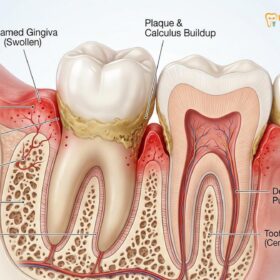
To understand the severity of tooth infection spreading signs, it is essential to first examine the anatomical and microbiological pathways that allow a seemingly minor dental issue to escalate into a systemic health crisis. The human tooth is a complex structure. Beneath the hard outer layers of enamel and dentin lies the dental pulp, a soft tissue core containing nerves, blood vessels, and connective tissue. When the protective enamel is compromised—most commonly by deep dental caries, traumatic injury, or a cracked tooth—oral bacteria gain access to this sterile environment[1].
Once bacteria infiltrate the pulp chamber, they initiate an inflammatory response known as pulpitis. If the bacterial invasion is not halted through restorative dentistry, the pulp tissue eventually undergoes necrosis (death). The necrotic tissue becomes a breeding ground for a mixed flora of anaerobic and aerobic bacteria, including species such as Streptococcus mutans, Prevotella, and Fusobacterium[3]. These pathogens multiply and migrate down the root canal system, eventually exiting through the apical foramen (the opening at the tip of the root) into the surrounding alveolar bone.
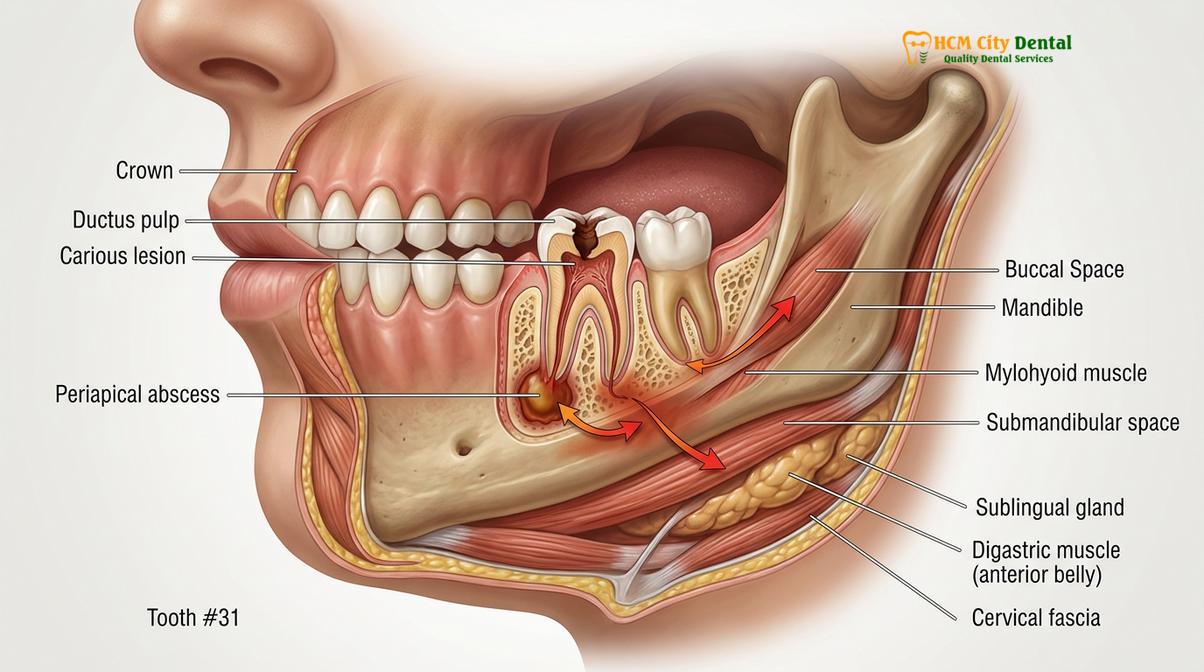
At this stage, the body’s immune system attempts to wall off the infection, creating a localized pocket of pus known as a periapical abscess. However, if the bacterial load is high, the strains are particularly virulent, or the patient’s immune system is compromised, the infection will not remain contained. The accumulated pus and inflammatory exudate create immense hydrostatic pressure within the rigid confines of the jawbone. Seeking the path of least resistance, the infection erodes the surrounding cortical bone and breaks out into the adjacent soft tissues[1].
The direction in which a tooth abscess spreading occurs is largely dictated by the anatomical position of the infected tooth’s root apex relative to the muscle attachments of the jaw. The head and neck region is divided into various “fascial spaces”—potential spaces between layers of connective tissue. When an infection enters these spaces, it can spread rapidly because there are few anatomical barriers to stop it. For example, an infection from a lower molar whose roots extend below the mylohyoid muscle attachment will typically spread into the submandibular space, whereas an infection above this muscle will enter the sublingual space[2]. Understanding these pathways is crucial for clinicians when predicting the trajectory of the disease and planning surgical interventions.
7 Crucial Warning Signs of a Spreading Infection
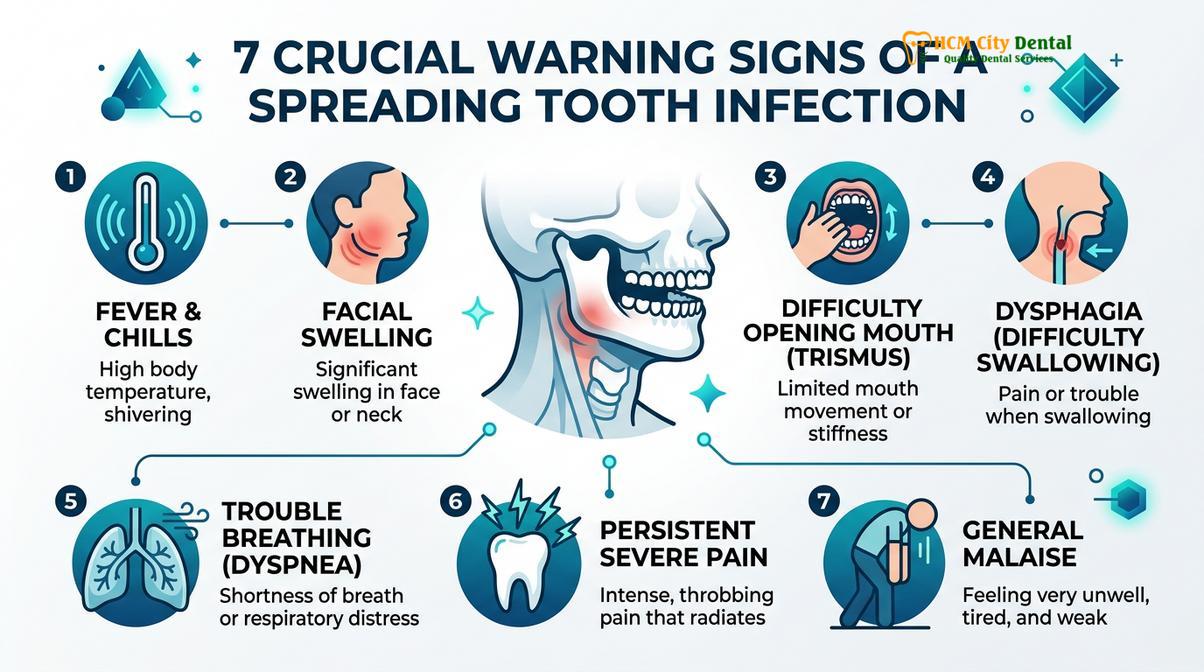
Recognizing the escalation from localized pain to systemic involvement is vital. Key indicators include severe facial swelling, trismus, dysphagia, high fever, swollen lymph nodes, extreme fatigue, and respiratory changes.
The transition from a localized dental problem to a spreading regional or systemic infection is marked by specific clinical signs. Patients and healthcare providers must remain vigilant for these symptoms, as their onset indicates that the infection has breached its initial boundaries and is actively invading adjacent tissues or the bloodstream.
1. Severe Facial and Neck Swelling (Cellulitis)
One of the most visible and alarming tooth infection spreading signs is the rapid onset of facial swelling. When bacteria and pus infiltrate the soft tissues of the face, they cause cellulitis from tooth origins. This presents as a diffuse, firm, red, and warm swelling of the cheek, jawline, or neck. Unlike a localized gum boil (parulis), cellulitis indicates that the infection is spreading through the fascial planes. The skin over the affected area may appear tight and glossy, and the swelling can distort facial symmetry significantly. If the swelling extends down the neck or approaches the eye, it is a sign of dangerous progression[2].
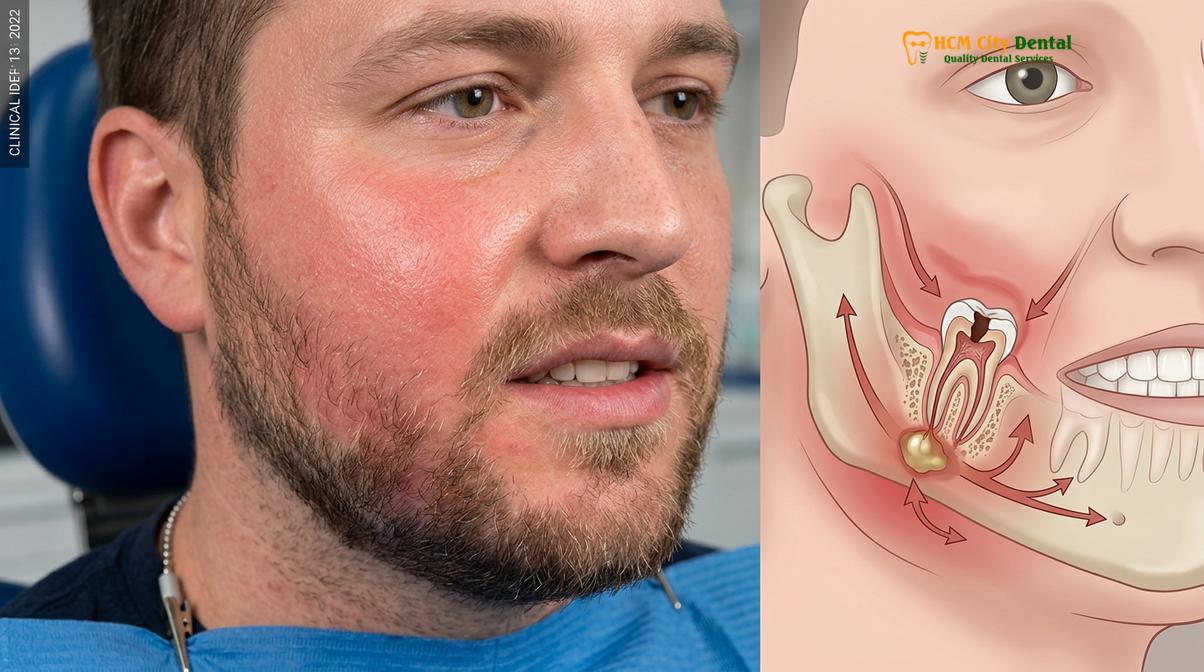
2. Trismus (Difficulty Opening the Mouth)
Trismus, commonly referred to as “lockjaw,” is a severe restriction in the normal range of mouth opening. This occurs when the spreading infection and associated inflammation irritate the muscles of mastication (chewing muscles), particularly the masseter or the medial pterygoid muscles. The body’s natural reflex is to spasm these muscles to splint the area and prevent pain. Clinically, an inability to open the mouth wider than two fingers’ breadth is a significant red flag. Trismus not only indicates deep space involvement but also complicates treatment, as it makes it difficult for a dentist or anesthesiologist to access the oral cavity or secure an airway[4].
3. Dysphagia (Difficulty Swallowing)
When an infection spreads from the lower teeth into the sublingual or submandibular spaces, it can cause severe swelling in the floor of the mouth and the base of the tongue. This swelling physically obstructs the oropharynx and makes swallowing painful or impossible (dysphagia). Patients may begin to drool because they cannot clear their own saliva. Dysphagia is a critical warning sign that the infection is encroaching on the airway, necessitating immediate emergency medical evaluation[4].
4. Systemic Fever and Chills
A localized toothache rarely causes a significant fever. However, when the infection spreads into the surrounding tissues or the bloodstream, the immune system mounts a systemic inflammatory response. The release of pyrogenic cytokines (such as Interleukin-1 and Tumor Necrosis Factor) resets the body’s thermostat in the hypothalamus, leading to a high fever (often above 101°F or 38.3°C). The presence of a high fever, especially when accompanied by severe chills or rigors (shivering), strongly suggests that the localized abscess has become a systemic issue[5].
5. Lymphadenopathy (Swollen Lymph Nodes)
The lymphatic system acts as the body’s drainage and filtration network. When a severe infection is present in the oral cavity, the regional lymph nodes in the neck and under the jaw (submandibular and cervical lymph nodes) become enlarged, tender, and palpable. This condition, known as reactive lymphadenopathy, is a clear sign that the immune system is actively fighting an infection that has spread beyond the immediate vicinity of the tooth[1].
6. Malaise and Altered Mental Status
A spreading infection places an immense metabolic burden on the body. Patients often experience profound malaise—a general feeling of extreme fatigue, weakness, and being unwell. In severe cases, particularly if the infection progresses to sepsis, the patient may exhibit an altered mental status. This can manifest as confusion, lethargy, dizziness, or unresponsiveness, resulting from decreased blood flow to the brain or the systemic effects of bacterial toxins. Any change in a patient’s cognitive baseline is a dire emergency[5].
7. Respiratory Distress
The most immediate life-threatening complication of a spreading dental infection is airway compromise. As swelling increases in the neck and the floor of the mouth, it can physically compress the trachea (windpipe). Patients may experience shortness of breath, a feeling of choking, or stridor (a high-pitched wheezing sound when breathing in). Respiratory distress indicates an impending airway obstruction and requires immediate, life-saving intervention in a hospital setting[4].
| Clinical Feature | Localized Dental Abscess | Spreading Infection (Emergency) |
|---|---|---|
| Pain Characteristics | Sharp, throbbing, localized to one tooth | Diffuse, radiating to ear, neck, or entire jaw |
| Swelling | Small bump on the gum (parulis) | Extensive facial, cheek, or neck swelling (cellulitis) |
| Mouth Opening | Normal range of motion | Restricted opening (Trismus / Lockjaw) |
| Systemic Signs | None or very mild low-grade fever | High fever, chills, rapid heart rate, malaise |
| Swallowing/Breathing | Normal | Painful swallowing, drooling, shortness of breath |
Systemic Complications: Sepsis and Ludwig’s Angina
When bacteria enter the bloodstream or deep neck spaces, they trigger severe systemic responses. Conditions like Ludwig’s Angina can compromise the airway, while sepsis can lead to multi-organ failure.
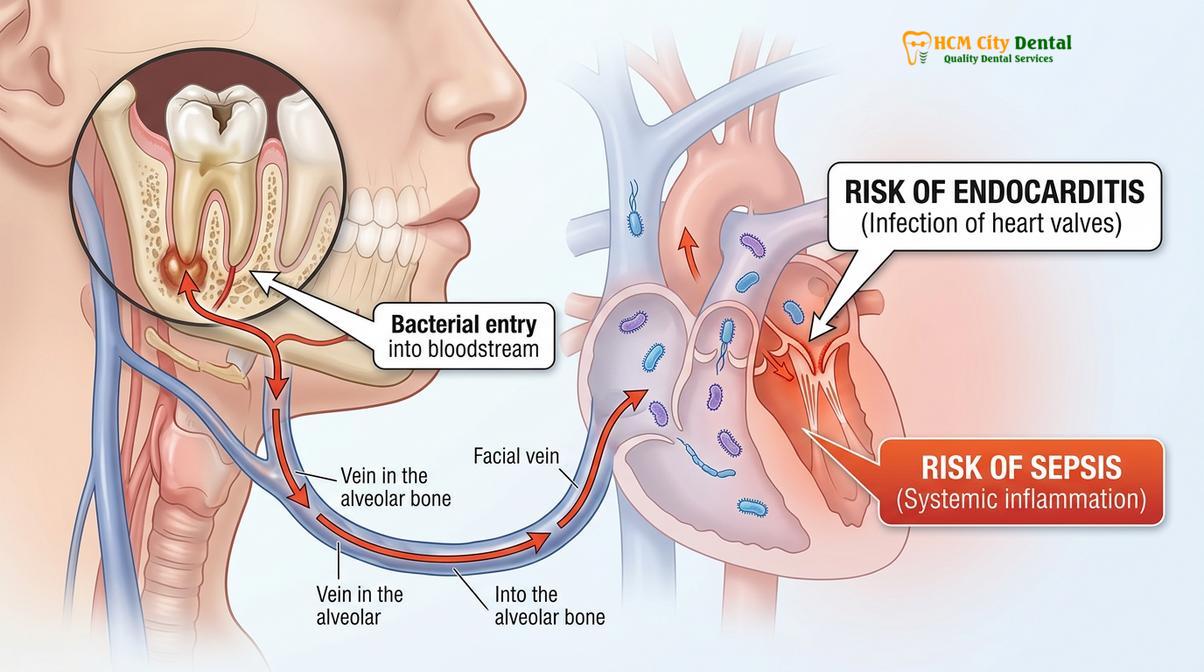
If the warning signs are ignored, a spreading tooth infection can culminate in catastrophic systemic complications. The oral cavity is highly vascularized, providing a direct conduit for bacteria to enter the systemic circulation. Furthermore, the fascial planes of the neck communicate directly with the mediastinum (the chest cavity containing the heart), allowing infections to descend rapidly.
Ludwig’s Angina
Ludwig’s Angina is a rare but historically fatal complication of dental infections, most commonly originating from the second or third mandibular (lower) molars. It is characterized by a rapidly progressive, bilateral cellulitis of the submandibular, sublingual, and submental spaces. As the infection fills these spaces with pus and inflammatory fluid, the floor of the mouth becomes rigid and “woody.” This forces the tongue upward and backward against the roof of the mouth and the posterior pharyngeal wall[4].
“The primary cause of mortality in Ludwig’s Angina is not systemic toxicity, but rather sudden and complete airway obstruction due to the rapid displacement of the tongue and severe edema of the glottis. Immediate airway management supersedes all other interventions.”[4]
Patients with Ludwig’s Angina typically present with a “bull neck” appearance, severe dysphagia, drooling, and a muffled “hot potato” voice. Because the swelling can progress to complete airway closure within hours, it is treated as a top-tier medical emergency requiring immediate securing of the airway, often via fiberoptic intubation or surgical tracheostomy, followed by aggressive surgical drainage and intravenous antibiotics.
Dental Infection Sepsis
When a large volume of bacteria or their toxins spills into the bloodstream, the body may mount an overwhelming and dysregulated immune response known as sepsis. Dental infection sepsis is a life threatening tooth infection complication that can rapidly progress to septic shock, characterized by a dangerous drop in blood pressure and subsequent multi-organ failure[5].
Clinicians monitor for sepsis using the Systemic Inflammatory Response Syndrome (SIRS) criteria. A patient is considered at high risk for sepsis if they exhibit two or more of the following signs in conjunction with a known infection source:
- Body temperature greater than 38°C (100.4°F) or less than 36°C (96.8°F).
- Heart rate greater than 90 beats per minute (tachycardia).
- Respiratory rate greater than 20 breaths per minute (tachypnea).
- Abnormal white blood cell count (leukocytosis or leukopenia)[5].
Other Severe Complications
Beyond sepsis and airway obstruction, spreading dental infections can lead to other severe localized and systemic issues. Cavernous Sinus Thrombosis can occur when an infection from the upper teeth (maxillary anterior teeth or premolars) travels through the valveless facial veins into the cavernous sinus at the base of the brain. This can cause blood clots, leading to vision loss, paralysis of eye muscles, and potentially fatal brain infections. Osteomyelitis is another complication where the infection deeply infiltrates the bone marrow of the jaw, causing bone death (necrosis) that requires extensive surgical debridement and long-term antibiotic therapy[2].
When to Seek Urgent Hospital Emergency Care
Distinguishing between a dental emergency that can be managed at a specialized clinic and a medical emergency requiring a hospital Emergency Department (ED) is crucial for patient safety. While severe toothaches and localized abscesses should be treated promptly by a dentist, certain symptoms indicate that the infection has compromised vital functions.
Immediate Emergency Room Criteria:
You must bypass the dental clinic and go directly to the nearest hospital Emergency Department if you experience any of the following symptoms associated with a tooth infection:
- Difficulty breathing, shortness of breath, or wheezing.
- Inability to swallow your own saliva (continuous drooling).
- Severe swelling that extends down the neck or up toward the eye.
- Inability to open your mouth more than a few millimeters.
- Confusion, delirium, extreme lethargy, or loss of consciousness.
- A persistent high fever (above 101°F / 38.3°C) accompanied by chills and a rapid heart rate.
Hospital emergency departments are equipped to handle the immediate life-threatening aspects of a spreading infection. They can secure a compromised airway, administer broad-spectrum intravenous (IV) antibiotics, provide fluid resuscitation for sepsis, and utilize advanced imaging (such as CT scans with contrast) to map the exact extent of the deep space infection. Once the patient is stabilized, an oral and maxillofacial surgeon is typically consulted to perform surgical drainage and remove the offending tooth.
If you are experiencing severe pain and localized swelling without the red-flag symptoms listed above, you should contact a specialized dental provider immediately. For instance, Emergency Dentistry services are designed to diagnose the source of the pain, provide immediate relief, and initiate definitive treatment to prevent the infection from reaching a critical stage.
How Medical and Dental Teams Treat Spreading Infections
Treatment requires a multidisciplinary approach, often combining emergency airway management, intravenous antibiotics, and surgical source control through tooth extraction or root canal therapy.
The management of a spreading tooth infection is guided by the principles of source control, microbial eradication, and physiological support. The specific workflow depends heavily on the severity of the presentation and the anatomical spaces involved.
1. Source Control (Surgical Intervention)
The cornerstone of treating any dental infection is source control. Antibiotics alone are fundamentally inadequate because they cannot penetrate the necrotic, avascular tissue inside an infected tooth, nor can they effectively clear a large, walled-off collection of pus[6]. The physical source of the bacteria must be eliminated.
Depending on the restorability of the tooth and the severity of the infection, source control is achieved through:
- Endodontic Therapy (Root Canal): If the tooth can be saved, the dentist accesses the pulp chamber, mechanically cleans and shapes the infected root canals, and flushes them with antimicrobial irrigants. This removes the necrotic tissue and allows the periapical abscess to drain through the tooth.
- Tooth Extraction: In cases where the tooth is severely decayed, fractured, or the infection is rapidly progressing, extracting the offending tooth is the fastest and most definitive way to achieve source control and establish drainage.
- Incision and Drainage (I&D): When the infection has spread into the soft tissues and formed a fluctuant (fluid-filled) abscess, a surgical incision is made to evacuate the pus. A small rubber drain may be sutured into place for several days to ensure continuous drainage and prevent the tissues from closing prematurely[2].
“In the management of severe odontogenic infections, early and aggressive surgical drainage combined with the removal of the primary dental cause remains the most critical factor in reducing morbidity and hospital length of stay.”[2]
2. Pharmacological Management
While source control is paramount, antibiotics play a vital supportive role in managing the systemic spread of the infection. For localized abscesses, oral antibiotics (such as Amoxicillin or Clindamycin) may be prescribed as an adjunct to dental treatment. However, for spreading infections involving fascial spaces or systemic signs, intravenous (IV) antibiotics are required to achieve rapid, high tissue concentrations[6].
Empiric antibiotic therapy is usually initiated with broad-spectrum agents that cover both aerobic and anaerobic oral flora. If pus is drained surgically, a sample is often sent to the laboratory for culture and sensitivity testing. This allows the medical team to tailor the antibiotic regimen specifically to the bacteria causing the infection, ensuring maximum efficacy and adhering to antibiotic stewardship principles.
Clinical Case Review: Managing a Spreading Infection
A 45-year-old patient presented to HCMC Dental Clinic in Ho Chi Minh City with severe, throbbing pain in the lower right jaw, accompanied by moderate facial swelling and a low-grade fever. The patient reported that a minor toothache had rapidly escalated over 48 hours. Clinical examination by Dr. Nguyen Van Cuong revealed a necrotic lower right first molar with swelling extending into the buccal space. Recognizing the early signs of a spreading infection, Dr. Cuong immediately performed an emergency extraction to remove the source of the bacteria, followed by an intraoral incision and drainage to decompress the fascial space. The patient was prescribed a targeted course of oral antibiotics and closely monitored. Within 72 hours, the swelling had completely resolved, preventing the need for hospital admission and demonstrating the critical importance of timely source control.

Prevention: Addressing Tooth Infections Early
The most effective strategy against severe dental complications is proactive intervention. Treating cavities and localized abscesses promptly prevents bacteria from invading deeper anatomical spaces.
The vast majority of severe, life-threatening dental infections are entirely preventable. They almost always begin as a simple, localized issue—such as a cavity or mild gum inflammation—that is ignored or left untreated due to dental anxiety, lack of awareness, or financial concerns. By the time tooth infection spreading signs appear, the treatment required is significantly more invasive, costly, and risky.
Preventive strategies focus on maintaining the integrity of the tooth enamel and the health of the supporting periodontal tissues. This requires a combination of diligent home care and professional oversight. Brushing twice daily with fluoride toothpaste and flossing regularly disrupts the bacterial biofilm (plaque) that causes tooth decay and gum disease. Limiting the frequency of sugary and acidic food consumption deprives oral bacteria of the fuel they need to produce enamel-destroying acids.
Equally important is adhering to a schedule of regular professional dental examinations and cleanings. Routine radiographic (X-ray) evaluations can detect dental caries in their earliest stages, long before they penetrate the pulp chamber and cause an infection. If a cavity is detected, prompt restorative treatment (such as a filling or crown) seals the tooth and protects the pulp.
If you experience any dental pain, sensitivity to hot or cold, or notice a small pimple on your gums, do not wait for the symptoms to worsen. These are early warning signs that require professional evaluation. Seeking care through comprehensive General Dentistry services ensures that minor issues are resolved quickly, safeguarding your oral health and preventing the dangerous systemic complications associated with spreading dental infections.
At HCMC Dental Clinic in Ho Chi Minh City, our clinical team, led by experts like Dr. Nguyen Van Cuong, is dedicated to providing thorough diagnostic evaluations and prompt interventions. Whether you require routine preventive care or urgent management of a dental infection, our goal is to ensure your safety, relieve your pain, and restore your oral health with the highest standard of clinical excellence.
Frequently Asked Questions
Can a tooth infection spread to your brain or heart?
Yes, a severe dental infection can spread to the brain or heart if left untreated. Bacteria can travel through the bloodstream to the heart valves, causing a life-threatening condition called endocarditis. Alternatively, infections from the upper teeth can travel through valveless facial veins into the cranial cavity, potentially leading to a brain abscess or cavernous sinus thrombosis. Both scenarios are critical medical emergencies requiring immediate hospitalization and intensive care.
How quickly can a tooth infection spread?
A tooth infection can spread rapidly, sometimes escalating from localized pain to a systemic emergency within 24 to 48 hours. The speed of progression depends heavily on the virulence of the specific bacterial strains involved, the anatomical location of the infected tooth, and the strength of the patient’s immune system. Because the deterioration can be so swift, immediate clinical evaluation is necessary at the very first sign of swelling or spreading pain.
What does sepsis from a tooth infection feel like?
Sepsis from a tooth infection typically presents with a high fever, extreme shivering, rapid heart rate, confusion, and shortness of breath. Patients often describe a sudden, overwhelming feeling of illness, extreme fatigue, or a sense of impending doom. This systemic inflammatory response means the infection has entered the bloodstream and is affecting multiple organ systems, requiring immediate emergency medical intervention and intravenous antibiotics.
Can antibiotics alone cure a spreading tooth infection?
No, antibiotics alone cannot cure a spreading tooth infection; they only manage the bacterial spread temporarily. Definitive treatment requires source control, which means physically removing the infected, necrotic tissue and draining the accumulated pus through root canal therapy, tooth extraction, or surgical incision. Relying solely on antibiotic medication without addressing the source often leads to a dangerous relapse once the medication is finished.
What are the first signs of a spreading dental abscess?
The earliest signs of a spreading dental abscess include swelling that extends beyond the gums into the cheek or jaw, a low-grade fever, and a general feeling of malaise. You may also notice that the initial localized, sharp toothache changes character, becoming a more diffuse, throbbing pain that radiates to the ear, neck, or across the jawline. Any swelling that alters your facial symmetry should be evaluated by a dentist immediately.
References
- Journal of Endodontics. Pathways of odontogenic infection spread. (2021).
- American Association of Oral and Maxillofacial Surgeons. Management of severe odontogenic infections. (2020).
- International Journal of Oral Science. Microbiology of acute dental abscesses. (2019).
- Journal of Emergency Medicine. Ludwig’s Angina and deep neck space infections. (2022).
- British Dental Journal. Systemic complications of odontogenic infections: Sepsis criteria. (2018).
- Clinical Infectious Diseases. Antibiotic stewardship in dental practice. (2023).