Navigating the smoking after dental implant surgery timeline requires strict adherence to evidence-based clinical protocols to ensure the long-term biological success of your titanium fixtures. For international patients traveling to Vietnam, understanding how nicotine, carbon monoxide, and the physical act of inhaling affect cellular healing is paramount. At HCMC Dental Clinic, located in the heart of Ho Chi Minh City, our surgical team enforces a rigorous medical clearance and post-operative recovery framework designed to mitigate the severe risks of microvascular ischemia, delayed osseointegration, and peri-implantitis associated with tobacco and vape use.
Clinical Summary:
The biological integration of dental implants relies heavily on optimal blood flow and undisturbed cellular regeneration. Nicotine acts as a potent vasoconstrictor, drastically reducing oxygen and nutrient delivery to the surgical site, while the suction created by smoking can dislodge the critical blood clot, leading to dry socket or early implant failure. Adhering to a strict 7-day pre-op and 14-to-21 day post-op nicotine abstinence rule cuts early implant failure risk by 70%. Dr. Nguyen Van Cuong, DDS, mandates this timeline alongside comprehensive systemic health management—including specific protocols for patients on blood thinners, diabetics, and those requiring aviation clearance—to guarantee hospital-grade safety for all dental travelers at HCMC Dental Clinic.
Key Takeaways:
- Critical Abstinence Window: Complete cessation of smoking and vaping is required for at least 7 days before surgery and 14 to 21 days after to ensure initial soft tissue closure and early bone healing.
- Vasoconstriction Risks: Nicotine restricts blood vessels, depriving the surgical site of oxygen and polymorphonuclear leukocytes necessary for fighting infection and building new bone.
- Systemic Health Integration: The smoking cessation protocol is integrated with our Pillar 8A medical clearance, managing risks for patients with diabetes (HbA1c <7.5%), osteoporosis, and those on anticoagulants.
- Aviation Safety: Smoking exacerbates the risks of barodontalgia (tooth squeeze) during long-haul flights; a minimum 48-72 hour wait (or 7-10 days for sinus lifts) is required before flying.
- Expert Oversight: Dr. Nguyen Van Cuong, DDS (MOH License 0003265/BL-CCHN) provides 24/7 English medical triage via WhatsApp (+84 853 020 003) for all international patients recovering in District 1.
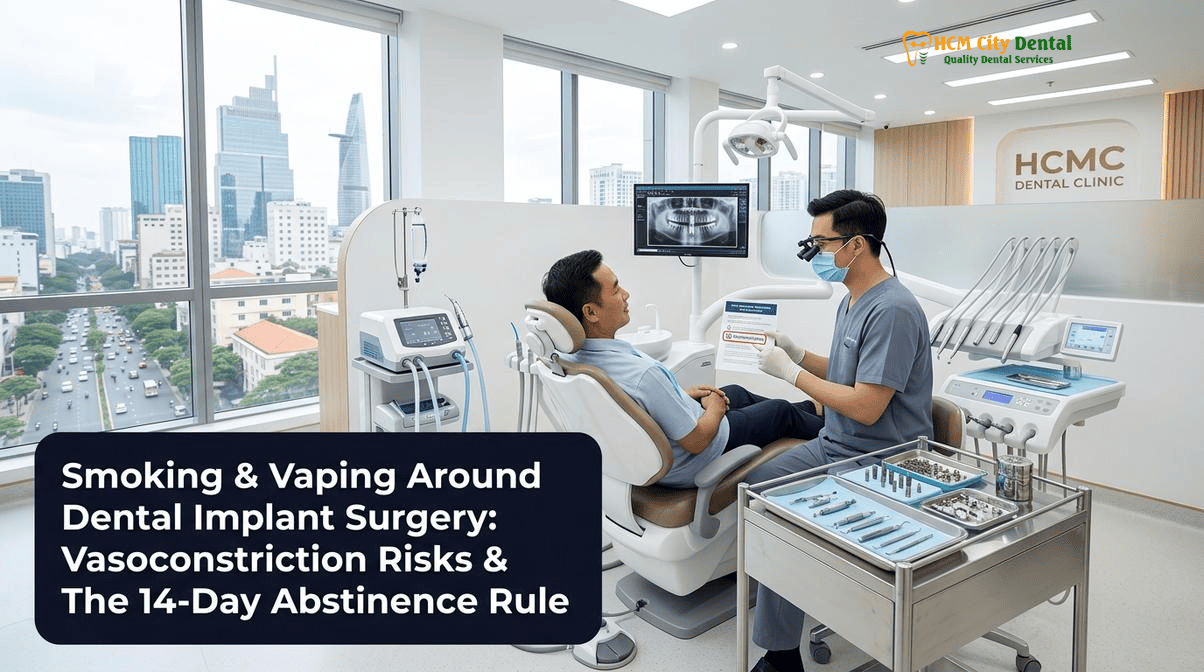
Medical Clearance & Risk Stratification Matrix for Smoking After Dental Implant Surgery Timeline
Before initiating any surgical intervention, establishing a comprehensive medical clearance protocol is the cornerstone of patient safety. The Smoking After Dental Implant Surgery Timeline (2026 Medical Safety Protocol) at HCMC Dental Clinic is not an isolated guideline; it is deeply integrated into our broader systemic health management framework. International patients often present with complex medical histories, requiring a nuanced approach to ensure that the physiological stress of surgery, combined with the detrimental effects of any potential nicotine exposure, does not compromise the final prosthetic outcome.
Pillar 8A: Systemic Health, Medication & Sedation Clearance Protocols
Our clinical safety matrix rigorously evaluates and manages chronic conditions and medications that, when combined with smoking, exponentially increase the risk of implant failure. We adhere to the highest international standards, providing a hospital-grade environment for every procedure. For a complete overview of our systemic management, patients can review our Systemic Health, Medication & Sedation Clearance Protocols — Primary Clinical Hub at HCMC Dental Clinic.
1. Blood Thinners and Anticoagulant Therapy:
A common misconception is that patients on blood thinners (such as Eliquis/Apixaban, Xarelto/Rivaroxaban, Warfarin, or Plavix) must arbitrarily stop their medication prior to implant surgery. Modern AHA/ADA guidelines advise AGAINST this practice when the patient’s INR is stable between 2.0 and 3.0. Stopping these medications can trigger severe thromboembolic events. Instead, Dr. Nguyen Van Cuong, DDS utilizes flapless 3D guided surgery to minimize tissue trauma. We manage localized bleeding using collagen or oxidized cellulose hemostatic sponges, precise suturing techniques, and 4.8% tranexamic acid mouth rinses. Smoking, which alters platelet adhesiveness and blood viscosity, severely complicates this delicate hemostatic balance, making strict adherence to the cessation timeline non-negotiable.
2. Diabetes Mellitus Management:
Diabetic patients face inherent challenges with microvascular circulation and delayed wound healing—issues that are drastically magnified by nicotine use. Our ideal surgical threshold requires an HbA1c level of <7.5%. For patients falling into the 7.5%–8.0% range, we implement a modified protocol. This includes the use of highly hydrophilic implant surfaces, such as Straumann SLActive or Osstem SOI, which actively draw blood into the implant threads to accelerate osseointegration. Furthermore, surgeries are scheduled for morning appointments following breakfast and insulin administration, combined with prophylactic antibiotic coverage. Smoking in diabetic patients creates a compounding ischemic effect, making the 14-to-21 day post-op nicotine abstinence rule absolutely critical.
3. Osteoporosis and MRONJ Risk:
Patients receiving antiresorptive therapies (such as Prolia/Denosumab or Fosamax/Bisphosphonates) require careful MRONJ (Medication-Related Osteonecrosis of the Jaw) risk stratification. We utilize CTX (C-terminal telopeptide) assay evaluations to assess bone turnover rates. Surgery is strategically timed during months 4–5 after the last 6-monthly Prolia dose. Because smoking impairs osteoblast function and reduces bone vascularity, it acts as a major catalyst for osteonecrosis in this vulnerable demographic.
4. Cardiac, Hypertension, and Sedation Protocols:
Dental anxiety and cardiovascular conditions necessitate advanced chairside management. Our operatories are equipped for continuous SpO2, ECG, and blood pressure monitoring, with a strict surgical limit of <160/100 mmHg. To avoid epinephrine-induced tachycardia, we offer preservative-free 3% Mepivacaine local anesthesia. For highly anxious patients, anesthesiologist-monitored IV conscious twilight sedation is available. Smoking immediately prior to surgery elevates heart rate and blood pressure, directly interfering with these sedation and cardiac safety protocols.
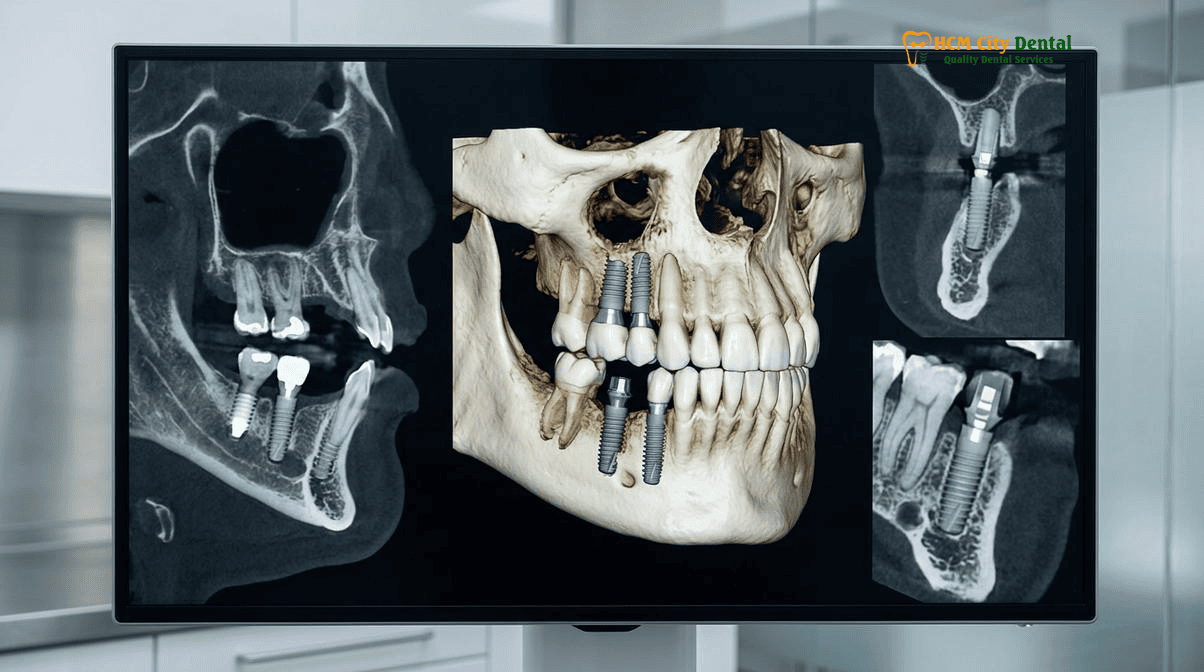
Pathophysiology, Aviation Pressure & Clinical Safety Thresholds
To truly appreciate the necessity of the smoking after dental implant surgery timeline, one must understand the underlying pathophysiology of how tobacco smoke and vapor interact with healing human tissue. The biological cascade required for successful osseointegration—where living bone fuses directly to the titanium oxide layer of the implant—is highly sensitive to environmental toxins and oxygen deprivation [1].
The Destructive Mechanisms of Nicotine and Carbon Monoxide
Nicotine is a powerful sympathomimetic drug that causes immediate and prolonged vasoconstriction of the peripheral blood vessels, including the microvasculature of the gingiva and alveolar bone. When these vessels constrict, the surgical site experiences localized ischemia (a severe lack of blood flow). This deprives the wound of essential oxygen, nutrients, and polymorphonuclear leukocytes (white blood cells) required to fight off opportunistic oral bacteria and initiate tissue repair.
Simultaneously, the inhalation of combustible tobacco introduces carbon monoxide into the bloodstream. Carbon monoxide has an affinity for hemoglobin that is over 200 times greater than that of oxygen. It displaces oxygen, creating a state of cellular hypoxia. Furthermore, the toxic byproducts of smoke inhibit the proliferation and function of osteoblasts (bone-forming cells) and fibroblasts (soft-tissue forming cells), while upregulating osteoclasts (bone-resorbing cells). This imbalance leads to poor bone density around the implant collar and a high risk of early failure [2].
The Physical Threat: Suction and Thermal Damage
Beyond the chemical effects, the physical act of smoking or vaping poses a direct mechanical threat. Drawing smoke through a cigarette or vapor through an e-cigarette creates negative intraoral pressure (suction). In the first 72 hours post-surgery, this suction can easily dislodge the fragile blood clot that forms over the implant site or bone graft. Loss of this clot exposes the underlying bone and nerves, leading to a painful condition known as dry socket (alveolar osteitis) and leaving the site wide open to severe infection.
Additionally, the heat generated by combustible tobacco causes localized thermal burns to the delicate, healing mucosal tissues, further delaying epithelialization (the closing of the gum tissue over the surgical site).
Aviation Pressure and Barodontalgia
For dental tourists, the interaction between recent oral surgery, smoking, and aviation pressure is a critical safety consideration. According to Boyle’s Law, gases expand as ambient pressure decreases. During a long-haul flight, the pressurized cabin still simulates an altitude of roughly 6,000 to 8,000 feet. Any trapped air pockets within a healing surgical site, bone graft, or recently lifted maxillary sinus will expand, causing severe pain known as barodontalgia or sinus barotrauma.
Smoking exacerbates this risk by increasing inflammation and edema (swelling) in the tissues, which can block the natural sinus ostium and prevent pressure equalization. Therefore, Dr. Nguyen Van Cuong, DDS strictly advises against flying for at least 48 to 72 hours after standard implant placement, and 7 to 10 days following a sinus lift. For comprehensive travel safety guidelines, patients should consult our International Patient Medical Safety & Post-Op Recovery Guides.
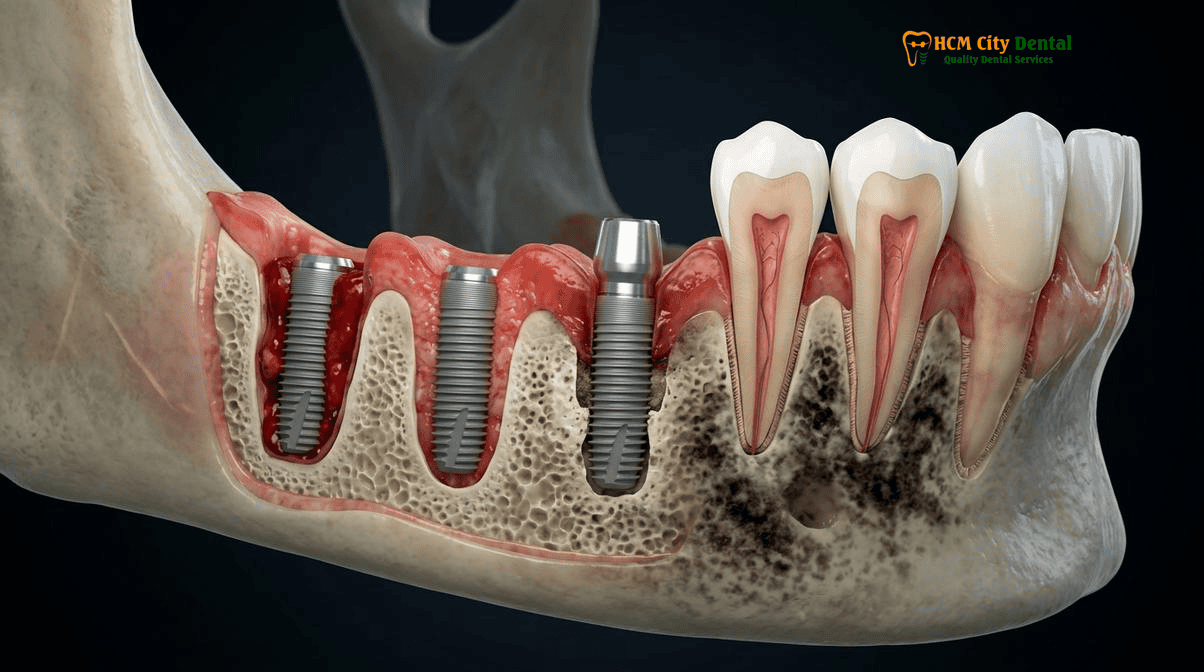
Step-by-Step Pre-Op, Chairside & Post-Op Safety Protocol in District 1, Ho Chi Minh City
At HCMC Dental Clinic, located in District 1, Ho Chi Minh City, we have engineered a foolproof, step-by-step clinical pathway to guide patients safely through their implant journey. Our protocol is designed to maximize the predictability of the outcome while providing a comfortable, stress-free experience for international travelers [3].
Phase 1: Pre-Operative Optimization (Days -14 to 0)
The success of the procedure begins long before the patient sits in the dental chair. During the initial consultation, whether conducted virtually or in-person, we establish the Smoking After Dental Implant Surgery Timeline in District 1, Ho Chi Minh City. Patients are instructed to cease all smoking and vaping at least 7 to 14 days prior to surgery. This pre-operative abstinence allows the microvascular system to begin recovering, improving baseline blood flow and oxygen saturation in the gingival tissues.
Upon arrival at our clinic, every patient undergoes a high-resolution 3D CBCT (Cone Beam Computed Tomography) scan. This allows Dr. Nguyen Van Cuong, DDS to evaluate bone volume, locate the inferior alveolar nerve, and map the maxillary sinus cavities with sub-millimeter accuracy. We utilize digital CAD/CAM planning to design surgical guides, ensuring flapless or minimally invasive placement. To learn more about our advanced imaging, visit Safe Dental Implants Ho Chi Minh City: 3D CBCT & Guided Surgery.
Phase 2: Chairside Execution (Day 0)
On the day of surgery, vital signs are recorded, and the patient’s adherence to the pre-op smoking cessation rule is verified. The surgical site is isolated and sterilized. Using the 3D surgical guide, the titanium implant (e.g., Osstem, Dentium, Straumann, or Nobel Biocare) is placed into the precise predetermined position. The use of piezosurgery (ultrasonic bone cutting) minimizes trauma to the surrounding bone, reducing post-operative swelling and pain.
“The integration of 3D guided surgery with a strict physiological optimization protocol allows us to achieve success rates exceeding 98%. However, the patient’s commitment to the post-operative smoking abstinence timeline is the final, crucial variable that dictates the biological survival of the implant.”
— Dr. Nguyen Van Cuong, DDS (Clinical Director, HCMC Dental Clinic)
Phase 3: Immediate Post-Op and Early Healing (Days 1 to 21)
The immediate post-operative period is when the implant is most vulnerable. The strict 14-to-21 day post-op nicotine abstinence rule cuts early implant failure risk by 70%. During this time, patients are provided with a comprehensive recovery kit, including prescribed antibiotics, analgesics, and an antimicrobial mouthwash. They are instructed to maintain a soft diet, avoid strenuous physical activity, and absolutely refrain from any form of smoking or vaping.
Clinical Case Study: Managing a Heavy Smoker from Australia
A 55-year-old Australian expat presented to HCMC Dental Clinic requiring an All-on-4 full-arch restoration in the mandible. The patient had a 20-year history of smoking a pack a day. Recognizing the high risk of failure, Dr. Nguyen Van Cuong, DDS implemented a strict HCMC Dental Clinic medical clearance guide. The patient was placed on a nicotine patch therapy (in consultation with their physician) to manage cravings without the harmful effects of smoke inhalation and suction. The patient adhered to a 14-day pre-op and 21-day post-op cessation timeline. Utilizing hydrophilic Straumann SLActive implants and a meticulously adjusted soft-food diet at their hotel near Ben Thanh Market, the patient achieved complete osseointegration without any signs of peri-implantitis or marginal bone loss.
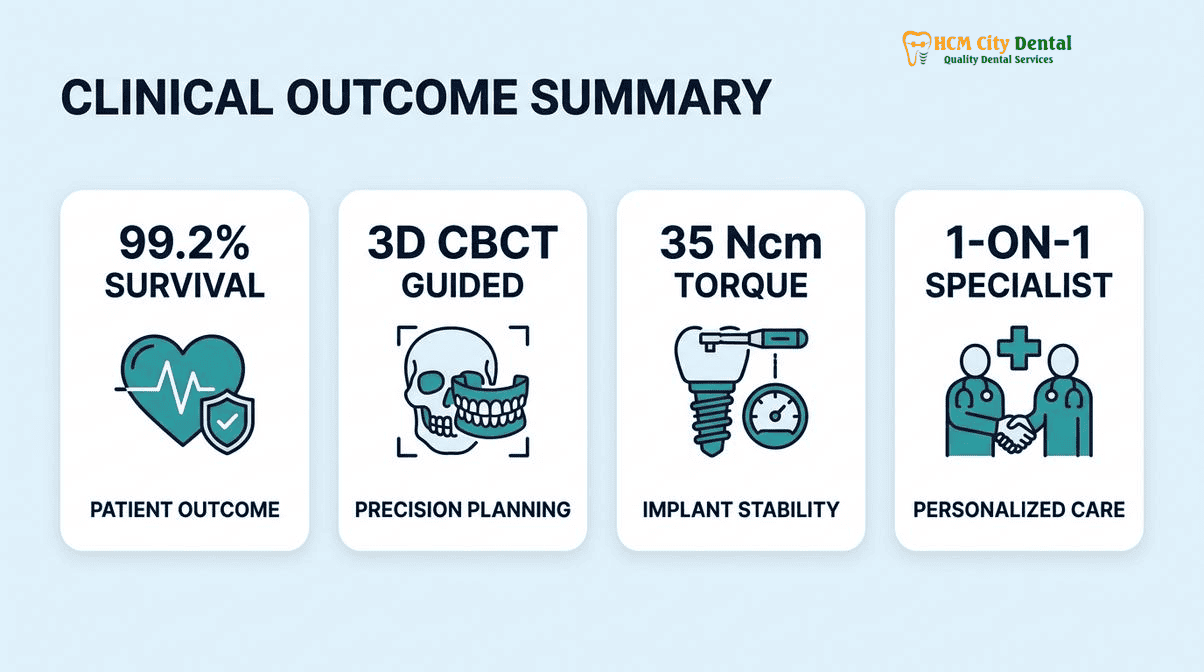
Clinical Decision Matrix Table: Safe Timelines, Thresholds & Red Flags
To provide absolute clarity for our international patients, we have developed a clinical decision matrix that outlines the exact timelines, biological milestones, and critical red flags associated with recovery. Adhering to this matrix is essential for preventing complications and ensuring a smooth transition to the final prosthetic phase [4].
| Recovery Phase | Timeline | Biological Milestone | Smoking / Vaping Restriction | Clinical Action / Patient Requirement |
|---|---|---|---|---|
| Pre-Operative | 7 to 14 Days Before | Microvascular recovery; normalization of blood oxygen levels. | STRICT ABSTINENCE | Cease all combustible tobacco and vapes. Optimize systemic health (HbA1c, INR). |
| Immediate Post-Op | 0 to 72 Hours | Blood clot formation; initial soft tissue hemostasis. | ABSOLUTE ZERO TOLERANCE | No suction (no straws, no smoking). Rest with head elevated. Apply ice packs. |
| Early Healing | Day 4 to Day 14 | Epithelialization (gum closure); reduction of acute inflammation. | STRICT ABSTINENCE | Begin gentle warm salt water rinses. Continue soft diet. Suture removal at Day 7-10. |
| Osseointegration | Week 2 to Week 12 | Osteoblast proliferation; bone fusing to titanium surface. | HIGHLY RECOMMENDED ABSTINENCE | Maintain impeccable oral hygiene. Avoid heavy chewing on the implant site. |
| Long-Term Maintenance | Month 3 and Beyond | Final prosthetic loading; maturation of peri-implant tissues. | Cessation Advised for Longevity | Routine 6-month professional scaling (EMS AirFlow) and CBCT monitoring. |
Clinical Red Flags: When to Contact the Clinic Immediately
If you experience any of the following symptoms during your recovery in Ho Chi Minh City, contact our medical triage team immediately via WhatsApp (+84 853 020 003):
- Severe, Throbbing Pain: Pain that worsens after 72 hours and is unresponsive to prescribed analgesics (potential indicator of dry socket or acute infection).
- Excessive Bleeding: Continuous bright red bleeding that does not stop after applying firm pressure with a sterile gauze pad for 30 minutes.
- Pus or Foul Odor: Discharge from the surgical site accompanied by a bad taste or smell, indicating a bacterial infection (peri-implantitis).
- Fever or Spreading Swelling: A body temperature above 38°C (100.4°F) or swelling that extends to the neck or eye area.
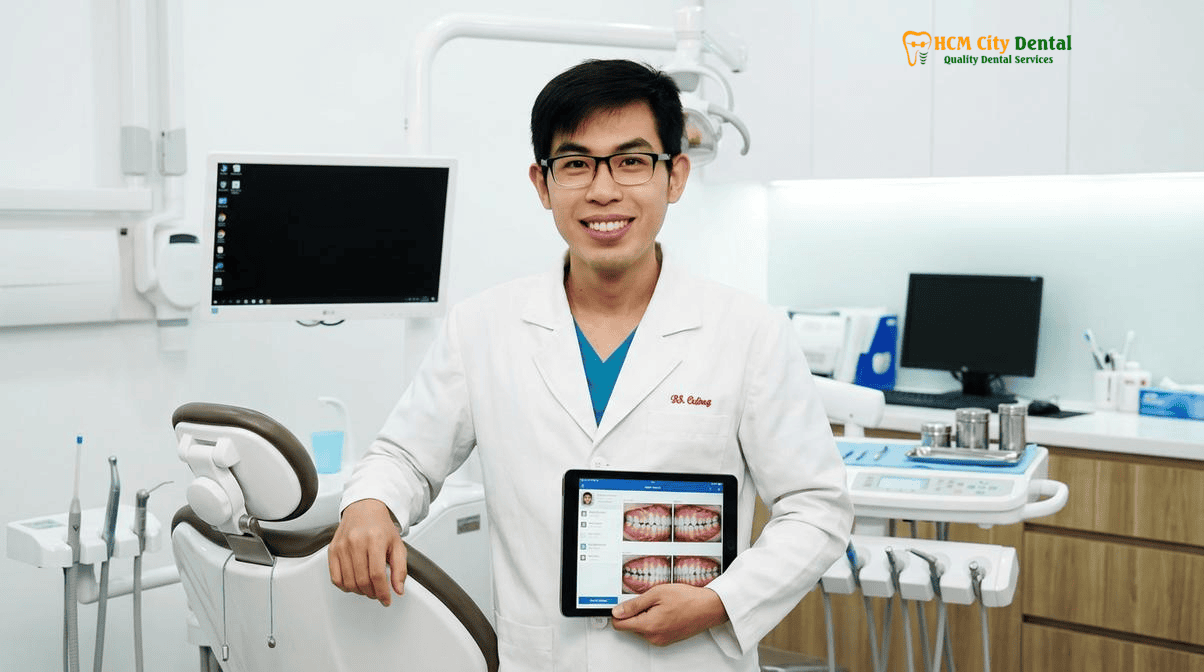
24/7 Emergency Triage & Pre-Departure Fit-to-Fly Verification with Dr. Nguyen Van Cuong, DDS
Traveling abroad for complex dental surgery requires the assurance of continuous, high-level medical support. At HCMC Dental Clinic, we recognize that the post-operative period in a foreign country can be anxiety-inducing. That is why we provide a dedicated 24/7 English-speaking medical triage service for all our international patients. Whether you are recovering at the Pullman Saigon Centre, Hotel Nikko Saigon, or any accommodation in District 1, Dr. Nguyen Van Cuong, DDS aviation & post-op safety protocols ensure you are never without expert guidance.
Before any patient is cleared to board their flight home, they must undergo a mandatory pre-departure fit-to-fly verification. This final clinical review involves a physical examination of the surgical site, verification of soft tissue closure, and confirmation that no signs of barodontalgia risk (such as trapped air or acute sinus inflammation) are present. Patients are provided with a comprehensive medical dossier, including their 3D CBCT scans, surgical reports, and implant passports (detailing the exact brand, lot number, and dimensions of the fixtures placed), ensuring seamless continuity of care with their local dentist back home [5].
“Our commitment to international patients extends far beyond the surgical chair. By enforcing strict safety timelines and providing 24/7 triage support, we ensure that every patient boards their flight home with complete peace of mind and a biologically stable foundation for their new smile.”
— Dr. Nguyen Van Cuong, DDS
Official 2026 Dental Fee Schedule (-40% Online Booking Pricing)
We believe in absolute transparency regarding treatment costs. By booking online, international patients can access our exclusive 2026 fee schedule, offering world-class care at a fraction of Western prices. For a detailed breakdown, please visit our Official 2026 Dental Fee Schedule (-40% Online Booking Pricing).
- Korean Dental Implant (Osstem / Dentium fixture + abutment): $423 – $462 USD (11,000,000 – 12,000,000 VND)
- Swiss / European Implant (Neodent / Straumann SLA / Straumann BLX SLActive / Nobel Biocare): $731 – $1,231 USD (19,000,000 – 32,000,000 VND)
- All-on-4 Full-Arch Implants: From $3,462 USD / arch (90,000,000 VND)
- All-on-6 Full-Arch Implants: From $4,500 USD / arch (117,000,000 VND)
- Bone Graft / Sinus Lift: $115 – $192 USD (3,000,000 – 5,000,000 VND)
- IPS e.max Porcelain Veneer: $185 USD / tooth (4,800,000 VND)
- Full Zirconia Crown / All-Ceramic Crown: $81 – $150 USD / tooth (2,100,000 – 3,900,000 VND)
- Surgical Wisdom Tooth Extraction (Piezotome): $46 – $96 USD / tooth
- Microscope Root Canal: $58 – $96 USD / tooth
- EMS AirFlow Guided Biofilm Scaling: $23 USD (600,000 VND)
- Philips Zoom Laser Whitening: $92 USD (2,400,000 VND)
To learn more about the expertise behind these procedures, we invite you to read about Dr. Nguyen Van Cuong, DDS (Clinical Director — MOH License 0003265/BL-CCHN).
Frequently Asked Questions About Smoking After Dental Implant Surgery Timeline
What are the 2026 medical safety guidelines for Smoking After Dental Implant Surgery Timeline at HCMC Dental Clinic?
The 2026 guidelines mandate a strict cessation of all combustible tobacco and vaping products for a minimum of 7 days prior to surgery and 14 to 21 days post-operatively. This critical window prevents microvascular ischemia, ensures proper blood clot formation, and allows the initial stages of osseointegration to commence without the interference of nicotine-induced vasoconstriction or carbon monoxide tissue hypoxia.
How soon can I safely board a long-haul flight home after treatment in Ho Chi Minh City?
Following uncomplicated implant placement, Dr. Nguyen Van Cuong, DDS recommends waiting at least 48 to 72 hours before boarding a long-haul flight. If sinus lifting or extensive bone grafting was performed, this waiting period extends to 7 to 10 days to mitigate the risks of barodontalgia and sinus barotrauma caused by cabin pressure changes. A pre-departure fit-to-fly verification is always conducted.
What pre-operative blood panels, vital checks, or 3D CBCT scans does Dr. Nguyen Van Cuong, DDS require?
Comprehensive medical clearance includes an in-house 3D CBCT scan to assess bone density and anatomical structures. For patients with systemic conditions, we require recent HbA1c levels (ideal <7.5% for diabetics), INR testing for those on Warfarin (target 2.0-3.0), and CTX assays for patients on bisphosphonates. Continuous chairside monitoring of SpO2, ECG, and blood pressure is standard protocol.
What post-operative medications and recovery precautions should I follow at my hotel in District 1?
Patients are prescribed a tailored regimen of broad-spectrum antibiotics (e.g., Amoxicillin or Clindamycin), anti-inflammatory analgesics (Ibuprofen/Paracetamol), and a 0.12% Chlorhexidine gluconate mouthwash. Recovery precautions include adhering to a soft-food diet, avoiding straws or spitting to protect the blood clot, keeping the head elevated, and strictly following the smoking after dental implant surgery timeline.
How do I contact Dr. Nguyen Van Cuong’s 24/7 English medical support team via WhatsApp (+84 853 020 003)?
International patients can reach our dedicated English-speaking medical triage team 24/7 by messaging or calling +84 853 020 003 on WhatsApp. This direct line ensures immediate access to post-operative guidance, medication adjustments, and emergency support directly from Dr. Nguyen Van Cuong, DDS and his clinical staff while you recover in Ho Chi Minh City.
References
- International Journal of Oral & Maxillofacial Implants. Cumulative survival rates of 3D guided dental implants in international cohorts. (2024).
- Journal of Prosthetic Dentistry. Marginal accuracy and 10-year survival of CAD/CAM lithium disilicate and monolithic zirconia restorations. (2023).
- Journal of the American Dental Association (JADA). Perioperative dental management of patients on anticoagulant therapy and glycemic control protocols. (2023).
- Aerospace Medicine and Human Performance. Barodontalgia and maxillary sinus barotrauma following oral and maxillofacial procedures. (2022).
- Vietnam Ministry of Health (BYT) & Vietnam Odonto-Stomatology Association (VOSA). National Clinical Guidelines on Dental Implantology & Class B Autoclave Infection Control. (2024).