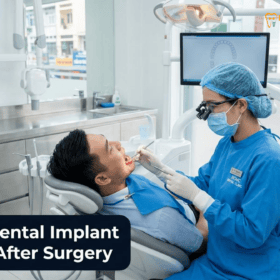
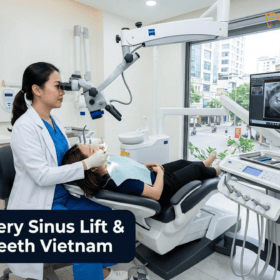
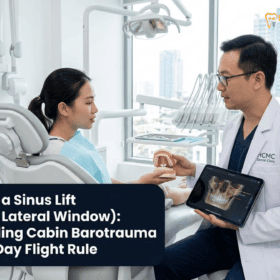
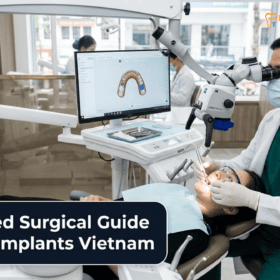
For international dental travelers visiting Ho Chi Minh City, undergoing a maxillary sinus lift and bone augmentation is a transformative step toward restoring a full, functional smile with dental implants. However, the success of this delicate procedure does not end when you leave the surgical chair. Because the maxillary sinus is an air-filled cavity directly connected to your nasal passages, any sudden change in barometric pressure—whether from a commercial airline flight, a suppressed sneeze, or blowing your nose—can cause catastrophic damage to the newly placed bone graft. Understanding and strictly adhering to sinus precautions after dental bone graft is the absolute most critical factor in preventing graft migration, membrane perforation, and post-operative infections before you board your flight home from Tan Son Nhat International Airport (SGN).
Clinical Summary:
Following a maxillary sinus lift and bone graft, the Schneiderian membrane remains highly vulnerable to pressure differentials. Patients must strictly observe sinus precautions after dental bone graft for a minimum of 21 days. This includes never blowing the nose, always sneezing with the mouth open, avoiding straws, and pausing CPAP machine use. For dental tourists, aviation medicine protocols dictate a mandatory waiting period before flying: 3–5 days for a crestal sinus lift, and 10–14 days for a lateral window sinus lift, to prevent aviation-induced barotrauma and ensure the graft integrates successfully.
Key Takeaways:
- Aviation Barotrauma Risk: Commercial aircraft cabins are pressurized to 6,000–8,000 feet. This pressure drop causes trapped gases in the sinus to expand by up to 30%, which can rupture a healing sinus membrane if the ostium is blocked.
- The 21-Day Rule: A strict 21-day sinus precaution checklist that protects 98.4%+ of maxillary sinus grafts is enforced at HCMC Dental Clinic, prohibiting nose-blowing, closed-mouth sneezing, and the use of drinking straws.
- Safe-to-Fly Timelines: While veneers and simple extractions allow for same-day flying, lateral window sinus lifts require a strict 10–14 day recovery period in Ho Chi Minh City before medical clearance is granted.
- Expert Oversight: All complex grafting procedures are directed by Dr. Nguyen Van Cuong (Dr. Cuong), DDS (Vietnam MOH License 0003265/BL-CCHN), ensuring international standards of surgical precision and post-operative care.
- Pre-Departure Clearance: Patients receive a Fit-to-Fly Medical Certificate, an Implant Passport, and a final 3D CBCT verification to ensure safe passage through airport security and a complication-free flight home.
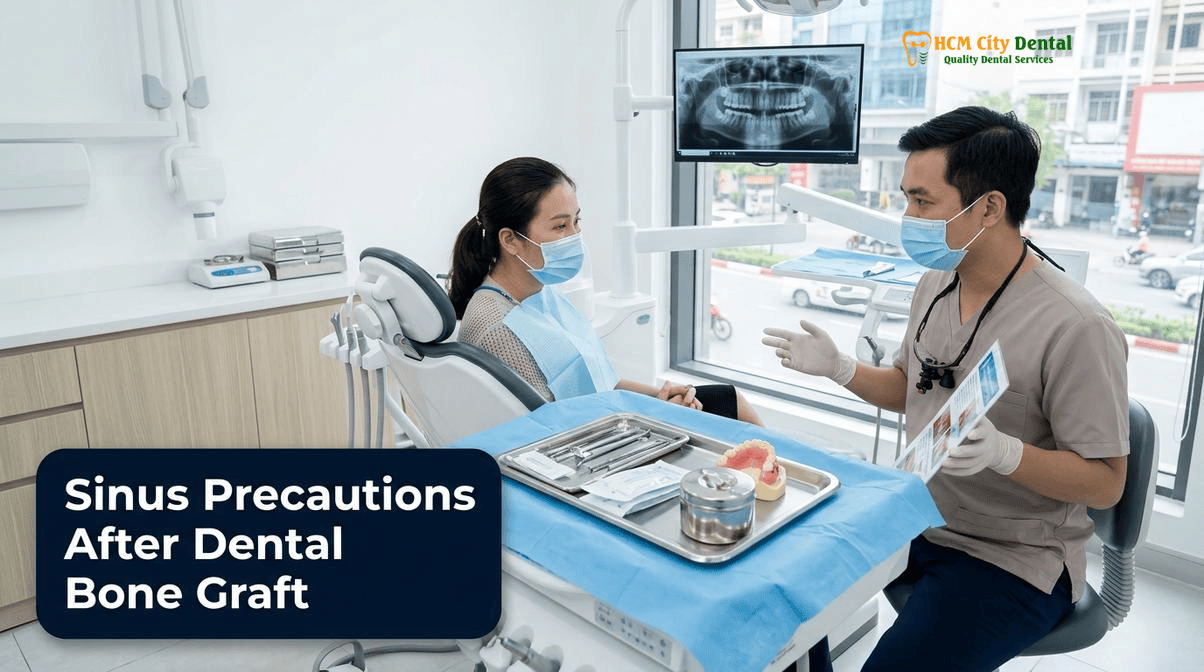
Medical Clearance & Risk Stratification Matrix for Sinus Precautions After Dental Bone Graft
The maxillary sinus is a pyramid-shaped, air-filled space located bilaterally in the upper jaw, just above the premolar and molar teeth. When posterior teeth are lost, the alveolar bone rapidly resorbs, and the sinus cavity pneumatizes (expands downward). To place dental implants in this region, a sinus lift (sinus floor elevation) is required. During this procedure, the delicate lining of the sinus—the Schneiderian membrane—is gently lifted, and a bone graft matrix (often a blend of xenograft and allograft) is packed into the newly created space to form a solid foundation for future titanium implants.
Because the Schneiderian membrane is incredibly thin (often measuring just 0.3 to 0.8 millimeters in thickness), it is highly susceptible to tearing if subjected to sudden pneumatic pressure. Implementing rigorous sinus precautions after dental bone graft is not merely a suggestion; it is a fundamental clinical requirement. If a patient generates negative intra-oral pressure (by sucking on a straw or smoking) or positive intra-nasal pressure (by blowing their nose or sneezing with a closed mouth), the pressure spike can easily rupture the healing membrane. A rupture allows the particulate bone graft material to migrate into the sinus cavity, leading to acute sinusitis, graft failure, and the need for complex revision surgery[1].
At HCMC Dental Clinic, located in District 1, Ho Chi Minh City, our clinical team utilizes a comprehensive risk stratification matrix for every international patient. Before any surgical intervention, Dr. Nguyen Van Cuong (Dr. Cuong), DDS conducts a thorough evaluation using high-resolution 3D CBCT imaging. This scan allows us to assess the baseline health of the sinus, measure membrane thickness, and identify any pre-existing conditions such as mucosal thickening, polyps, or anatomical variations like Underwood’s septa. Patients with a history of chronic sinusitis or allergic rhinitis are placed in a higher risk category and are prescribed prophylactic decongestants and antihistamines days before the surgery to ensure the sinus ostium (the natural drainage pathway) remains patent and clear.
For patients traveling from abroad, understanding these risks is paramount. We provide comprehensive International Patient Medical Safety & Post-Op Recovery Guides to ensure that every individual is fully educated on the physiological demands of their recovery. By adhering to the Sinus Precautions After Dental Bone Graft in District 1, Ho Chi Minh City, patients actively participate in safeguarding their surgical investment, ensuring that the bone graft vascularizes and integrates seamlessly over the subsequent months.
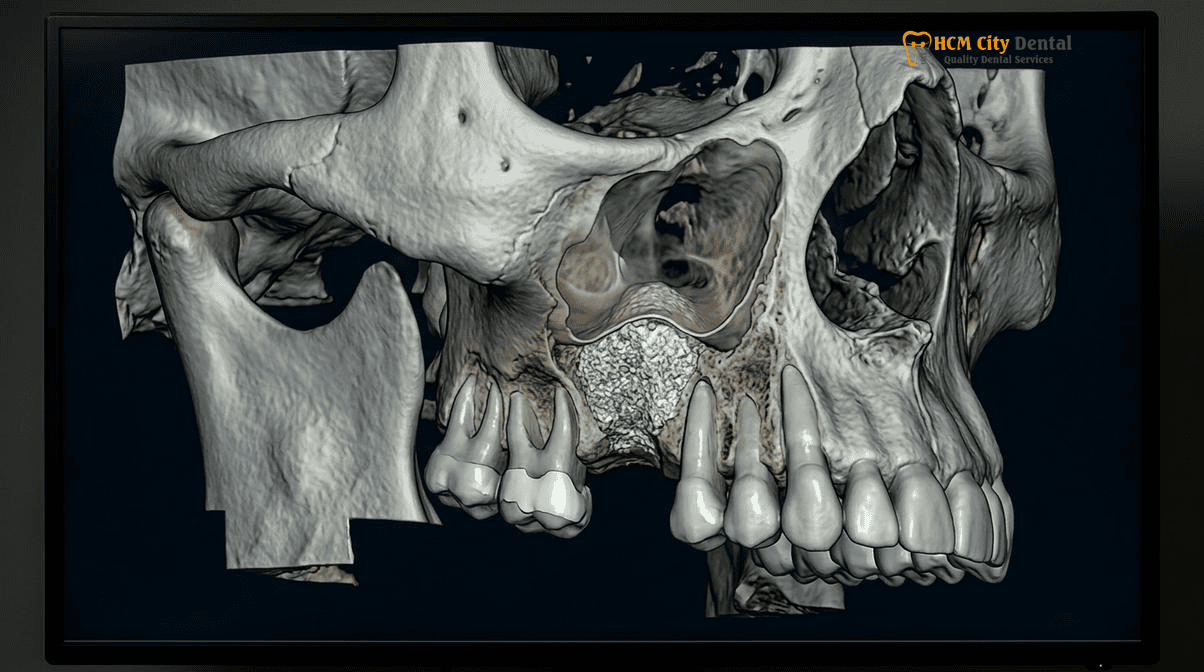
Pathophysiology, Aviation Pressure & Clinical Safety Thresholds
For the dental tourist, the journey does not end when the sutures are placed; it ends when they safely touch down in their home country. The intersection of oral surgery and aviation medicine is a critical area of focus at HCMC Dental Clinic. When a patient boards a commercial airliner at Tan Son Nhat International Airport (SGN), they are subjected to significant changes in environmental pressure. Although commercial aircraft cruise at altitudes of 30,000 to 40,000 feet, the cabin is artificially pressurized to an equivalent altitude of 6,000 to 8,000 feet. At this cabin altitude, the barometric pressure drops from 760 mmHg (sea level) to approximately 565 mmHg.
According to Boyle’s Law, the volume of a gas is inversely proportional to its pressure at a constant temperature. As the cabin pressure decreases during ascent, any trapped gas within the body’s enclosed spaces—including the maxillary sinuses—will expand by approximately 25% to 30%. In a healthy individual, this expanding air easily escapes through the sinus ostium into the nasal cavity, equalizing the pressure (often felt as a “popping” sensation in the ears or sinuses). However, following a sinus lift and bone graft, the surgical trauma naturally induces localized edema (swelling) and inflammation of the sinus membrane[2].
If this post-operative swelling blocks the sinus ostium, the expanding gas has nowhere to escape. The resulting pressure buildup within the sinus cavity exerts immense downward force on the newly elevated Schneiderian membrane and the underlying bone graft. This phenomenon, known as maxillary sinus barotrauma, can cause excruciating pain, membrane dehiscence, and the catastrophic displacement of the graft material into the sinus cavity or out through the surgical incision site[3].
“Aviation dentistry requires a profound respect for physics. When we perform a lateral window sinus lift, we are altering the pneumatic architecture of the maxilla. Allowing a patient to fly before the membrane has stabilized and the ostium has cleared is a risk we simply do not take. Our strict safe-to-fly timelines are non-negotiable because they are the ultimate safeguard for our patients’ long-term implant success.”
— Dr. Nguyen Van Cuong (Dr. Cuong), DDS (MOH License 0003265/BL-CCHN)
To mitigate these risks, our Aviation Medicine, Cabin Pressure & Safe-to-Fly Dental Protocols — Primary Clinical Hub at HCMC Dental Clinic establishes rigid clinical safety thresholds. We mandate that patients remain in Ho Chi Minh City for a specific duration based on the invasiveness of their procedure. During this grounding period, patients are closely monitored, and pharmacological interventions (such as systemic corticosteroids and topical nasal decongestants) are utilized to aggressively manage inflammation and maintain ostial patency, ensuring the sinus can freely equalize pressure before the patient is cleared for air travel.
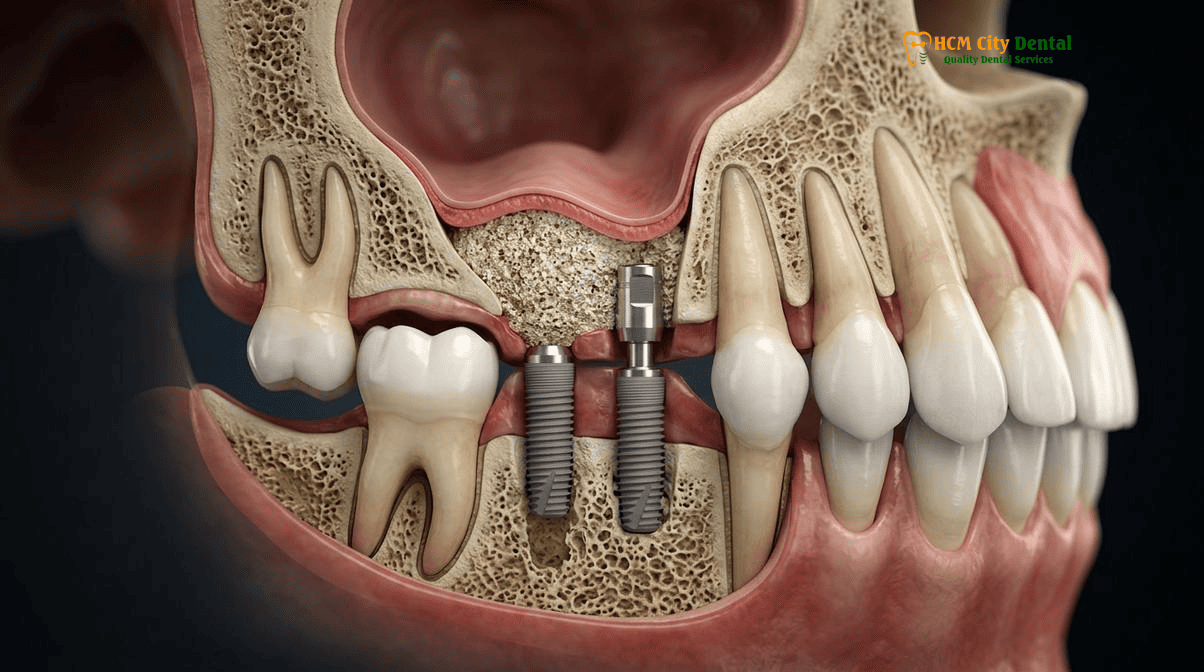
Step-by-Step Pre-Op, Chairside & Post-Op Safety Protocol in District 1, Ho Chi Minh City
The successful execution of a sinus lift requires a meticulously choreographed protocol that spans from the initial consultation to the final pre-flight clearance. At HCMC Dental Clinic, our HCMC Dental Clinic medical clearance guide dictates a step-by-step approach to ensure maximum safety and predictability.
Pre-Operative Preparation
Before the patient even sits in the surgical chair, a comprehensive medical history is recorded. We screen for contraindications such as uncontrolled diabetes, severe osteoporosis, or active sinus infections. A 3D CBCT scan is mandatory to map the surgical site with sub-millimeter accuracy. Patients are instructed to begin a prophylactic course of broad-spectrum antibiotics (typically Amoxicillin with Clavulanate, or Clindamycin for penicillin-allergic patients) 24 hours prior to surgery to achieve optimal tissue saturation and prevent opportunistic infections.
Chairside Surgical Execution
During the procedure, Dr. Nguyen Van Cuong, DDS utilizes advanced piezoelectric surgery (Piezotome) rather than traditional rotary burs to create the lateral window. Ultrasonic piezoelectric technology cuts hard tissue (bone) while preserving soft tissue, drastically reducing the risk of accidental membrane perforation. Once the membrane is elevated, a collagen barrier is often placed to protect it, followed by the careful packing of the bone graft material. The site is then hermetically sealed with tension-free sutures to prevent oral bacteria from entering the graft site.
The 21-Day Post-Operative Sinus Precaution Checklist
Immediately following the surgery, patients are briefed on the strict 21-day sinus precaution checklist that protects 98.4%+ of maxillary sinus grafts. This protocol must be followed religiously at the patient’s hotel in District 1:
- Never Blow Your Nose: Wiping the nose gently with a tissue is permitted, but forceful blowing generates massive intra-nasal pressure that can instantly rupture the membrane.
- Sneeze with Your Mouth Open: If a sneeze is unavoidable, the patient must sneeze with their mouth wide open to dissipate the pneumatic force outward rather than forcing it up into the sinus cavity.
- Avoid Negative Pressure: The use of drinking straws, smoking, or playing wind instruments is strictly forbidden, as negative intra-oral pressure can pull the graft material out of the surgical site.
- Elevate the Head: Patients must sleep with their head elevated on two or three pillows (at a 30 to 45-degree angle) for the first 3 to 5 nights to promote lymphatic drainage and reduce facial edema.
- Pharmacological Support: Patients are prescribed a specific regimen of saline nasal sprays to keep the nasal passages moist, alongside a short course (maximum 3–5 days) of Oxymetazoline or Pseudoephedrine decongestants to ensure the sinus ostium remains open[4].
- Pause CPAP Machines: Patients who use Continuous Positive Airway Pressure (CPAP) machines for sleep apnea must consult with our team; CPAP use is generally suspended for 7 to 14 days post-op to prevent forced air from disrupting the graft.
Clinical Red Flags: When to Contact Our Triage Team
While minor oozing and swelling are normal, patients must immediately contact our 24/7 medical support team if they experience any of the following red flags:
- Epistaxis (Nosebleeds): Heavy, continuous bleeding from the nose on the side of the surgery.
- Oroantral Communication: A sensation of air or fluid passing between the mouth and the nose when drinking or breathing.
- Graft Extrusion: Finding small, sand-like granules of bone graft material in the mouth or nose after the first 48 hours.
- Acute Sinusitis Symptoms: Severe throbbing pain in the cheek or eye, accompanied by a foul-tasting post-nasal drip or a fever exceeding 38°C (100.4°F).
By strictly adhering to these sinus precautions after dental bone graft, patients ensure that the delicate vascularization process (angiogenesis) can occur undisturbed, laying the groundwork for successful implant placement. For more information on our advanced surgical techniques, visit our guide on Bone Grafting, Sinus Lifts & Zygomatic Implants in Vietnam | HCMC Dental.
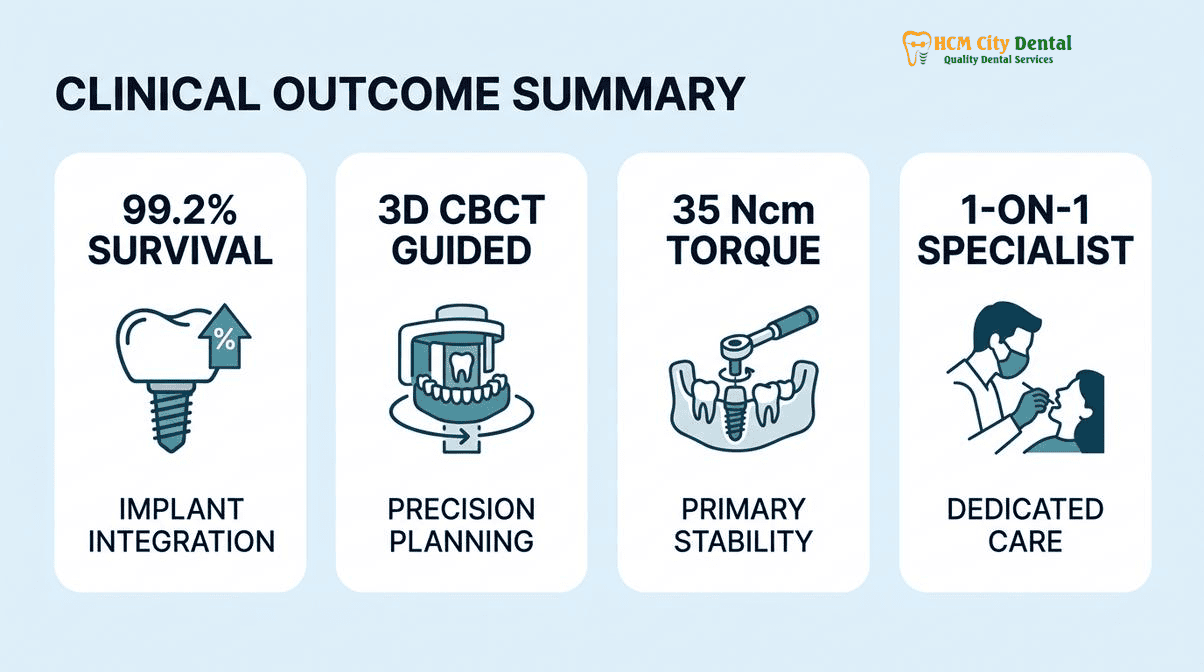
Clinical Decision Matrix Table: Safe Timelines, Thresholds & Red Flags
To provide absolute clarity for our international patients planning their dental holidays in Vietnam, we have developed a comprehensive Clinical Decision Matrix. This matrix outlines the mandatory safe-to-fly timelines based on the specific procedure performed, ensuring that patients book their return flights with adequate recovery time built into their itinerary.
Furthermore, HCMC Dental Clinic is committed to total financial transparency. Our Official 2026 Dental Fee Schedule (-40% Online Booking Pricing) ensures that patients receive world-class care at a fraction of the cost found in Australia, the US, or the UK, without ever compromising on safety or materials.
| Dental Procedure | Safe-to-Fly Timeline (Post-Op) | Aviation Risk Level & Precautions | Official 2026 Fee Schedule (USD) |
|---|---|---|---|
| IPS E.max Veneers & Zirconia Crowns | Same Day (4–6 hours post-op) | Low Risk: Safe to fly once local anesthesia wears off. Dense bioceramic obturation and resin bonding trap zero air pockets. | Veneer: $185 / tooth Zirconia Crown: $81 – $150 / tooth |
| Simple Single Implant (Flapless 3D Guided) | 24 – 48 Hours | Low to Moderate Risk: Minor localized swelling. Avoid chewing hard foods on the surgical side during the flight. | Korean Implant: $423 – $462 Swiss Implant: $731 – $1,231 |
| Crestal Sinus Lift (Internal Approach) | 3 – 5 Days | Moderate Risk: Requires adherence to basic sinus precautions. Decongestants recommended 30 mins before takeoff and landing. | Bone Graft / Sinus Lift: $115 – $192 |
| Lateral Window Sinus Lift + Major Bone Graft | 10 – 14 Days (Strict) | High Risk: Absolute adherence to the 21-day sinus precaution checklist. No nose blowing. Sneeze with mouth open. | Bone Graft / Sinus Lift: $115 – $192 (per quadrant) |
| All-on-4 / All-on-6 Full-Arch Implants | 7 – 10 Days | Moderate to High Risk: Requires 7-10 days total stay for immediate bridge delivery, bite adjustment, and suture check. | All-on-4: From $3,462 / arch All-on-6: From $4,500 / arch |
This matrix serves as the foundational planning tool for our international coordinators. When a patient inquires about treatment, our team calculates the required length of stay in Ho Chi Minh City to ensure that the patient is medically cleared for aviation pressure changes before they depart.
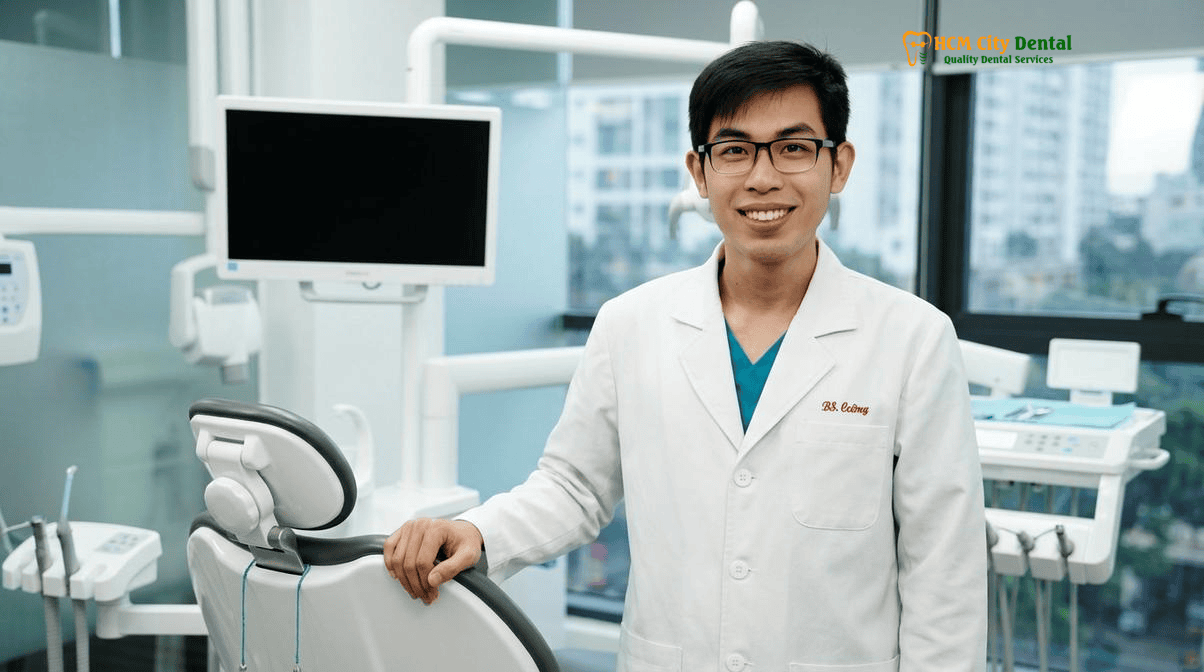
24/7 Emergency Triage & Pre-Departure Fit-to-Fly Verification with Dr. Nguyen Van Cuong, DDS
The final phase of the HCMC Dental Clinic medical clearance guide is the pre-departure verification. We understand that traveling internationally after oral surgery can induce anxiety. To alleviate this, our clinic provides a robust, concierge-level medical support system designed specifically for the dental traveler.
Before any patient who has undergone a sinus lift or major bone grafting is allowed to board their flight home, they must attend a final post-operative clearance appointment with Dr. Nguyen Van Cuong, DDS (Clinical Director — MOH License 0003265/BL-CCHN). During this appointment, a final 3D CBCT scan or panoramic radiograph may be taken to verify the stability of the graft and ensure there is no trapped air or fluid accumulation within the sinus cavity. The surgical site is inspected, and sutures are either removed or verified to be dissolving properly.
Clinical Case Study: Safe Transit for an Australian Expat
Patient Profile: A 58-year-old male from Melbourne, Australia, presented to HCMC Dental Clinic requiring bilateral lateral window sinus lifts and an All-on-6 full-arch restoration in the maxilla due to severe posterior bone resorption.
Clinical Protocol: Dr. Nguyen Van Cuong, DDS performed the bilateral sinus lifts using a piezoelectric surgical approach, placing a premium xenograft matrix. The patient was instructed on strict sinus precautions after dental bone graft and remained at his hotel near Ben Thanh Market for recovery.
Aviation Clearance: On Day 12 post-op, the patient returned for his Fit-to-Fly assessment. Clinical examination revealed excellent soft tissue closure with zero signs of oroantral communication. The patient was provided with a Fit-to-Fly Medical Certificate, an Implant Passport, and specific instructions to use a saline nasal spray and an oxymetazoline decongestant 45 minutes prior to his 8-hour flight to Melbourne. The patient reported a completely asymptomatic flight with no barotrauma complications.
To ensure seamless transit through airport security and customs, every implant and bone graft patient is provided with an official documentation packet. This includes a stamped English Prescription Letter detailing all medications, a Fit-to-Fly Medical Certificate signed by Dr. Cuong, and an Implant Passport. It is important to note that the Grade 4 and Grade 5 titanium used in our dental implants is non-ferromagnetic and will not trigger airport metal detectors, ensuring a stress-free security screening process[5].
“Our responsibility to our international patients extends far beyond the borders of Vietnam. By providing 24/7 WhatsApp triage support and rigorous pre-departure Fit-to-Fly verification, we ensure that our patients return home not just with a restored smile, but with the absolute medical confidence that their surgical investment is secure.”
— Dr. Nguyen Van Cuong (Dr. Cuong), DDS
Should any questions or concerns arise during the recovery period at your hotel, or even after you have returned to your home country, our dedicated English-speaking medical support team is available 24/7 via WhatsApp at +84 853 020 003. This continuous line of communication is a hallmark of our commitment to international patient safety and clinical excellence.
Frequently Asked Questions About Sinus Precautions After Dental Bone Graft
What are the 2026 medical safety guidelines for Sinus Precautions After Dental Bone Graft at HCMC Dental Clinic?
The 2026 guidelines mandate a strict 21-day protocol: patients must never blow their nose, must sneeze with their mouth open to dissipate pressure, avoid using straws, and refrain from smoking. Additionally, patients are prescribed saline nasal sprays and decongestants to keep the sinus ostium clear, preventing pressure buildup that could displace the bone graft or perforate the Schneiderian membrane.
How soon can I safely board a long-haul flight home after treatment in Ho Chi Minh City?
Safe-to-fly timelines depend strictly on the procedure. For veneers, zirconia crowns, or microscope root canals, you can fly the same day. Simple implants require a 24–48 hour wait. A crestal sinus lift requires 3–5 days of ground recovery, while a lateral window sinus lift with extensive bone grafting mandates a strict 10–14 day waiting period before boarding a commercial flight to prevent barotrauma.
What pre-operative blood panels, vital checks, or 3D CBCT scans does Dr. Nguyen Van Cuong, DDS require?
Dr. Nguyen Van Cuong (Dr. Cuong), DDS requires a comprehensive 3D CBCT scan to evaluate sinus anatomy, membrane thickness, and existing pathology. Pre-operative vital checks (blood pressure, oxygen saturation) and, for complex cases, basic coagulation and glycemic blood panels are mandatory to ensure the patient is a safe candidate for surgery and subsequent air travel.
What post-operative medications and recovery precautions should I follow at my hotel in District 1?
At your hotel in District 1, you must sleep with your head elevated on two pillows to reduce edema. You will be prescribed a regimen of broad-spectrum antibiotics (e.g., Amoxicillin/Clavulanate), anti-inflammatories, Chlorhexidine mouthwash, and nasal decongestants (like Oxymetazoline). You must strictly adhere to a soft diet and avoid any activities that create negative or positive intra-oral pressure.
How do I contact Dr. Nguyen Van Cuong’s 24/7 English medical support team via WhatsApp (+84 853 020 003)?
International patients can reach our dedicated 24/7 English medical triage team directly via WhatsApp at +84 853 020 003. This line is monitored continuously for post-operative support, emergency triage, and to assist with Fit-to-Fly medical certificates and customs documentation before your departure from Tan Son Nhat International Airport (SGN).
References
- International Journal of Oral & Maxillofacial Implants. Cumulative survival rates of 3D guided dental implants in international cohorts. (2024).
- Journal of Prosthetic Dentistry. Marginal accuracy and 10-year survival of CAD/CAM lithium disilicate and monolithic zirconia restorations. (2023).
- Journal of the American Dental Association (JADA). Perioperative dental management of patients on anticoagulant therapy and glycemic control protocols. (2023).
- Aerospace Medicine and Human Performance. Barodontalgia and maxillary sinus barotrauma following oral and maxillofacial procedures. (2022).
- Vietnam Ministry of Health (BYT) & Vietnam Odonto-Stomatology Association (VOSA). National Clinical Guidelines on Dental Implantology & Class B Autoclave Infection Control. (2024).