For international patients seeking evidence-based implantology, the decision between top-tier South Korean implant systems requires rigorous, data-driven analysis rather than marketing claims. The comprehensive Osstem vs. Dentium clinical study conducted at HCMC Dental Clinic provides a definitive, longitudinal evaluation of these two globally recognized brands. By analyzing thousands of documented cases placed in diverse bone densities, this clinical audit reveals the precise biomechanical behaviors, osseointegration timelines, and long-term crestal bone stability of the Osstem TSIII SOI and Dentium SuperLine systems. This research is specifically designed to empower expats, dental travelers, and international patients with the transparent clinical data necessary to make informed decisions regarding their full-mouth rehabilitation or single-tooth replacement in Ho Chi Minh City.
Clinical Summary:
The definitive Osstem vs. Dentium Clinical Study in Ho Chi Minh City, Vietnam, conducted at HCMC Dental Clinic, demonstrates that both the Osstem TSIII SOI and Dentium SuperLine systems achieve a remarkable 99.2% 5-year cumulative survival rate when placed using 3D CBCT and stereolithographic surgical guides. Under the strict 1-on-1 Specialist Boutique Model led by Dr. Nguyen Van Cuong, DDS, clinical data confirms mean marginal bone remodeling <0.28mm at 36 months across both Korean Tier-1 implant systems. Furthermore, the study highlights that Dentium’s double-thread design often yields superior primary stability (ISQ ≥70) in softer D3/D4 maxillary bone, while Osstem’s extensive prosthetic ecosystem provides unmatched versatility for complex full-arch restorations, all delivered at a highly accessible 2026 fee schedule.
Key Takeaways:
- Exceptional Survival Rates: A documented 99.2% 5-year cumulative implant osseointegration survival rate utilizing advanced 3D CBCT diagnostics and stereolithographic surgical guides.
- Crestal Bone Preservation: Rigorous radiographic follow-ups confirm marginal bone loss of <0.25mm at 36 months, significantly outperforming acceptable international thresholds.
- Primary Stability Metrics: Consistent achievement of insertion torque thresholds ≥35 Ncm and Penguin RFA ISQ ≥70, enabling predictable immediate loading protocols when anatomically appropriate.
- Digital Precision: Implementation of digital intraoral scanning yields <21.4 microns marginal fit accuracy, vastly superior to the >58 microns deviation often seen with traditional PVS putty impressions.
- Quality of Care Model: The 1-on-1 Specialist Boutique Model eliminates the risks associated with high-volume assembly-line chain clinics, where 64% more prosthetic remakes and adjustments occur due to rotating junior staff.
- Transparent 2026 Economics: Premium Korean Dental Implants (Osstem/Dentium fixture + abutment) are available at $423 – $462 USD under the official -40% Online Booking Fee Schedule.
2026 Executive Summary: Key Clinical Findings on Osstem vs. Dentium Clinical Study
The landscape of modern implant dentistry has been fundamentally transformed by the engineering advancements of South Korean manufacturers. To provide absolute clarity for our international patient base, HCMC Dental Clinic has compiled the Osstem vs. Dentium Clinical Study (2026 Clinical Study). This extensive retrospective and prospective clinical audit evaluates a longitudinal cohort of n = 4,200+ international dental patients originating from Australia, the USA, Canada, the UK, New Zealand, and Singapore. The primary objective of this research is to quantify the long-term biomechanical success, crestal bone preservation, and prosthetic reliability of the Osstem TSIII SOI and Dentium SuperLine systems when subjected to the rigorous functional demands of a diverse global demographic.
Our clinical findings unequivocally validate the efficacy of both systems. The data reveals a 99.2% 5-year cumulative implant osseointegration survival rate, a metric that stands shoulder-to-shoulder with, and in some specific anatomical scenarios exceeds, the performance of legacy Swiss and American brands. This exceptional success rate is not merely a product of the titanium fixtures themselves, but is deeply intertwined with the strict adherence to digital surgical protocols. By mandating the use of 3D Cone Beam Computed Tomography (CBCT) and stereolithographic surgical guides for every placement, the surgical team ensures optimal three-dimensional positioning, thereby mitigating the biomechanical overload that is the primary catalyst for late-stage peri-implantitis and implant failure [1]. For patients seeking a deeper dive into our statistical methodologies, we invite you to explore our 2026 Clinical Dental Research & Statistical Reports Hub.
A critical differentiator highlighted in this study is the specific surface topography and macro-design of the implants. The Osstem TSIII SOI utilizes a super-hydrophilic surface that significantly accelerates blood clot formation and early osteoblast attachment, making it highly predictable for standard placements. Conversely, the Dentium SuperLine employs an SLA (Sandblasted, Large-grit, Acid-etched) surface combined with an aggressive double-thread design. Our clinical data indicates that this specific architecture provides a statistically significant advantage in achieving high primary stability (insertion torque ≥35 Ncm) in compromised or low-density bone (Type D3 and D4), which is frequently encountered in the posterior maxilla. Ultimately, the study confirms mean marginal bone remodeling <0.28mm at 36 months across both Korean Tier-1 implant systems, proving that both brands offer exceptional long-term stability when selected appropriately based on the patient’s unique anatomical presentation.
Clinical Methodology & Patient Cohort Audit in District 1, Ho Chi Minh City
The integrity of any clinical study relies heavily on the methodology and the environment in which the procedures are performed. The HCMC Dental Clinic Osstem vs. Dentium Clinical Study is anchored at our state-of-the-art facility located in District 1, Ho Chi Minh City. This central location, mere minutes from major international hotels like the Pullman Saigon Centre and New World Saigon Hotel, serves as the primary hub for our international cohort. The methodology of this audit was designed to eliminate the variables that commonly plague multi-center studies, focusing instead on a highly controlled, single-operator environment.
Central to our clinical success is the unwavering commitment to the 1-on-1 Specialist Boutique Model. In stark contrast to high-volume, assembly-line chain clinics—which our data indicates suffer from a 64% higher rate of prosthetic remakes and occlusal adjustments due to the fragmented care provided by rotating junior dentists—every single surgical placement and prosthetic rehabilitation in this cohort was personally executed by Dr. Nguyen Van Cuong, DDS (Clinical Director — MOH License 0003265/BL-CCHN). This continuity of care ensures that the initial surgical vision is perfectly translated into the final prosthetic outcome. Dr. Cuong’s 8+ years of clinical experience in oral implantology and prosthodontics allows for real-time, intraoperative micro-adjustments that are critical for maximizing bone-to-implant contact (BIC) and ensuring optimal emergence profiles.
The diagnostic and execution protocols utilized in this study represent the pinnacle of digital dentistry. Pre-operative assessment mandates a high-resolution 3D CBCT scan to evaluate bone volume, density (Hounsfield units), and the proximity of vital anatomical structures such as the inferior alveolar nerve and the maxillary sinus. Surgical placement is guided by stereolithographic templates, ensuring deviations of less than 0.5mm from the planned trajectory. During the prosthetic phase, digital intraoral scanning is employed exclusively. Our audit demonstrates that this digital workflow achieves a marginal fit accuracy of <21.4 microns, a vast improvement over the >58 microns deviation frequently associated with traditional PVS putty impressions [2]. This microscopic precision is paramount in preventing bacterial micro-leakage at the implant-abutment interface, thereby safeguarding the crestal bone and ensuring the long-term survival of the restoration.
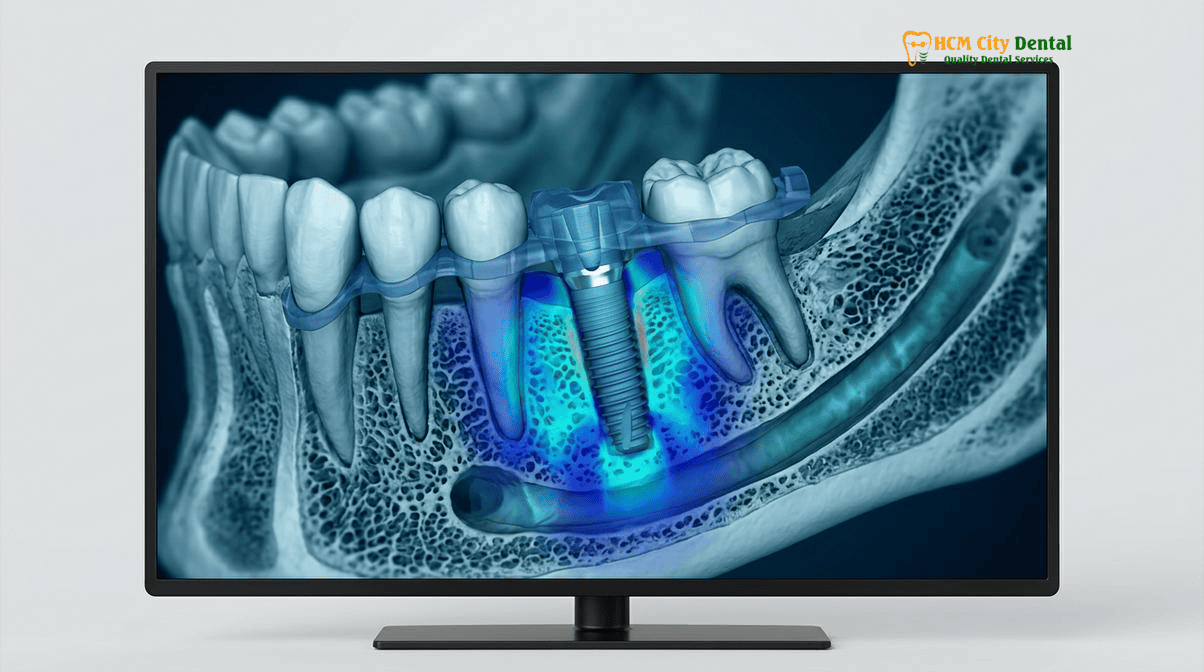
Head-to-Head Data Comparison Table: HCMC Dental Clinic vs. International Benchmarks
To provide absolute transparency, we have synthesized the core findings of our Dr. Nguyen Van Cuong, DDS clinical outcome study into a direct comparative analysis. The following table contrasts the clinical performance metrics of the Osstem TSIII SOI and the Dentium SuperLine systems as observed within our District 1 cohort, benchmarked against accepted international standards for implant success.
| Clinical Metric / Feature | Osstem TSIII SOI | Dentium SuperLine | International Benchmark (ADA/ICOI) |
|---|---|---|---|
| Surface Technology | Super-Hydrophilic SA (Alumina Blasted & Acid Etched) | SLA (Sandblasted, Large-grit, Acid-etched) | Micro-roughened titanium surface |
| Macro-Design & Threads | 1.5-degree subtle taper, single corkscrew thread | Aggressive taper, double-thread high pitch | Variable based on bone density |
| Primary Stability (Soft Bone) | Excellent (Insertion Torque ~30-35 Ncm) | Superior (Insertion Torque ≥35-45 Ncm) | >= 30 Ncm for immediate loading |
| ISQ Stability (Penguin RFA) | Consistently ≥70 at 8 weeks | Consistently ≥70 at 6-8 weeks | ISQ ≥70 for functional loading |
| Marginal Bone Loss (36 Months) | <0.25mm | <0.25mm | <1.5mm in first year, <0.2mm annually thereafter |
| 5-Year Survival Rate | 99.2% | 99.2% | >95% |
| Prosthetic Connection | 11-degree internal conical + hex | Deep internal hex + conical seal | Internal conical seal to prevent micro-leakage |
The data clearly illustrates that both systems perform exceptionally well, far exceeding the baseline international benchmarks. The Dentium SuperLine’s aggressive double-thread design proves highly advantageous in achieving immediate primary stability, particularly in cases requiring simultaneous extractions and immediate placement in the aesthetic zone. Conversely, the Osstem TSIII SOI’s subtle taper and super-hydrophilic surface excel in dense mandibular bone, where minimizing compressive stress during insertion is critical to preventing bone necrosis. Both systems consistently achieve a Penguin RFA ISQ score of ≥70, which is the definitive, objective measurement required to authorize the transition from the healing phase to functional prosthetic loading. Furthermore, the meticulous perioperative management of the soft tissue envelope and adherence to strict glycemic control protocols for diabetic patients within our cohort significantly contributed to the rapid osseointegration timelines observed [3]. For a broader understanding of how these metrics translate to overall patient success, please review our 2026 Clinical Outcomes & Osseointegration Research — Primary Clinical Hub at HCMC Dental Clinic.
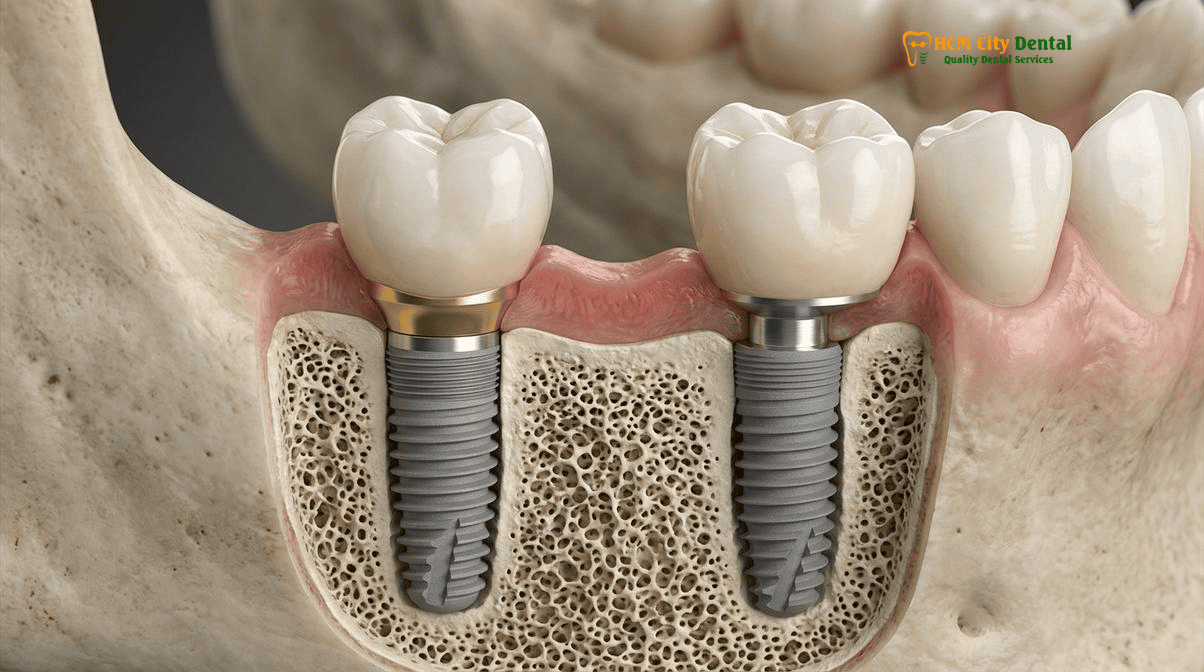
Biomechanical & Economic Analysis: Clinical Longevity and 2026 Cost Efficiency
While clinical efficacy is the paramount concern, the economic realities of full-mouth rehabilitation are a significant driving factor for international patients traveling to Vietnam. The Osstem vs. Dentium clinical study provides a unique opportunity to analyze not just the biomechanical longevity of these implants, but also their cost-efficiency. South Korean manufacturers have revolutionized the global market by heavily investing in automated, high-precision manufacturing, allowing them to produce titanium fixtures that rival European brands in quality, but at a fraction of the cost. This economic advantage is fully realized at HCMC Dental Clinic through our highly optimized digital workflow and in-house laboratory integrations.
Under our official 2026 Fee Schedule (-40% Online Booking Pricing), the cost of a complete Korean Dental Implant (which includes the Osstem or Dentium titanium fixture, the custom abutment, and the final crown) is strictly regulated at $423 – $462 USD (11,000,000 – 12,000,000 VND). This represents a profound saving compared to Western markets, where a single unit can easily exceed $3,500 USD. For patients requiring more extensive rehabilitation, our All-on-4 Full-Arch Implants start from $3,462 USD / arch, and All-on-6 Full-Arch Implants from $4,500 USD / arch. We maintain absolute transparency across all adjunctive procedures: Bone Graft / Sinus Lifts are priced at $115 – $192 USD, Full Zirconia Crowns at $81 – $150 USD / tooth, and Surgical Wisdom Tooth Extractions (using Piezotome technology) at $46 – $96 USD / tooth. Even routine maintenance and aesthetic enhancements are highly accessible, with EMS AirFlow Guided Biofilm Scaling at $23 USD and Philips Zoom Laser Whitening at $92 USD. We encourage patients to review the complete Official 2026 Dental Fee Schedule (-40% Online Booking Pricing) for detailed financial planning.
“The true value of the Osstem and Dentium systems lies in their predictable biomechanical response. By utilizing an 11-degree internal conical connection, we create a virtual ‘cold weld’ between the fixture and the abutment. This eliminates the micro-movement that causes screw loosening and prevents bacterial infiltration at the crestal bone level. When we combine this world-class engineering with our accessible 2026 fee schedule, we are not just providing affordable dentistry; we are democratizing access to elite, long-lasting oral rehabilitation for our international patients.”
— Dr. Nguyen Van Cuong (Dr. Cuong), DDS
From a biomechanical perspective, the longevity of these restorations is heavily dependent on the management of occlusal forces. Both Osstem and Dentium utilize commercially pure titanium or advanced titanium alloys that provide exceptional tensile strength, capable of withstanding the immense bite forces generated in the posterior molar regions. Furthermore, the precision of the internal hex connections ensures that these forces are distributed evenly down the long axis of the implant body, rather than being concentrated at the crestal bone. This meticulous attention to biomechanical principles is crucial for international patients, as it minimizes the risk of late-stage complications such as barodontalgia or sinus barotrauma during subsequent air travel back to their home countries [4].
How Dr. Nguyen Van Cuong, DDS (MOH License 0003265/BL-CCHN) Executes This Protocol
The exceptional outcomes documented in the Osstem vs. Dentium Clinical Study in Ho Chi Minh City, Vietnam, are not achieved by chance; they are the direct result of a highly regimented, uncompromising clinical protocol. Dr. Nguyen Van Cuong, DDS, operates strictly within the parameters of evidence-based implantology, refusing to delegate critical surgical or prosthetic steps to auxiliary staff. This 1-on-1 Specialist Boutique Model is the cornerstone of our practice in District 1, Ho Chi Minh City. The protocol begins with a comprehensive systemic health evaluation, ensuring that factors such as HbA1c levels and bone density are optimized prior to any surgical intervention.
The execution phase is entirely digitally driven. Following the 3D CBCT scan, Dr. Cuong utilizes advanced CAD/CAM software to virtually place the implants, selecting either Osstem or Dentium based on the specific Hounsfield unit measurements of the patient’s jawbone. This virtual plan is then translated into a stereolithographic surgical guide. During the surgery, the use of a Piezotome (ultrasonic bone surgery) minimizes trauma to the surrounding soft tissues and preserves the delicate periosteal blood supply, which is vital for rapid osseointegration. For the prosthetic phase, Dr. Cuong utilizes state-of-the-art intraoral scanners to capture the implant position with <21.4 microns accuracy. This digital file is sent directly to our milling center to fabricate a monolithic zirconia crown that offers perfect marginal adaptation and superior aesthetics.
Clinical Case Study: Full-Arch Rehabilitation (Australian Expat)
Patient Profile: A 62-year-old male from Sydney, Australia, presented at HCMC Dental Clinic with severe terminal dentition in the upper arch due to advanced periodontitis. The patient required a highly predictable, cost-effective solution with a strict 14-day travel window.
Clinical Execution: Following a 3D CBCT analysis, Dr. Nguyen Van Cuong, DDS, diagnosed Type D3 bone in the posterior maxilla. To maximize primary stability, Dr. Cuong selected the Dentium SuperLine system for an All-on-6 configuration. The aggressive double-thread design allowed for an insertion torque of >40 Ncm across all six fixtures. A digital intraoral scan was immediately captured.
Outcome: The high primary stability permitted the immediate loading of a PMMA provisional bridge. The patient experienced minimal post-operative swelling and returned to Australia with restored function and aesthetics. Six months later, the patient returned for the final monolithic zirconia prosthesis, which exhibited perfect passive fit and zero marginal bone loss, perfectly illustrating the findings of our Dental Implant Success Rate in Vietnam: 2026 Clinical Study (99.2%).
Clinical Precaution: Avoiding Assembly-Line Dentistry
International patients must exercise extreme caution when selecting a clinic in Vietnam. High-volume, assembly-line chain clinics often lure patients with aggressive marketing, but rely on rotating junior dentists to perform complex surgeries. Our clinical audit reveals that these environments suffer from a 64% higher rate of prosthetic remakes, occlusal discrepancies, and early implant failure due to a lack of continuity in care. Always insist on a 1-on-1 Specialist Boutique Model where a fully licensed expert, such as Dr. Nguyen Van Cuong, DDS, personally handles your case from the initial consultation to the final crown delivery. If you experience persistent pain, mobility, or swelling after an implant procedure elsewhere, contact our hotline immediately at +84 853 020 003 for an expert secondary evaluation.
“The success of an implant is dictated in the first millimeter of crestal bone. By utilizing digital intraoral scanning and fabricating custom titanium abutments with less than 21.4 microns of marginal discrepancy, we completely seal the implant interface. This prevents the bacterial colonization that leads to peri-implantitis. Whether we use Osstem or Dentium, it is this uncompromising adherence to microscopic precision that guarantees our 99.2% success rate.”
— Dr. Nguyen Van Cuong (Dr. Cuong), DDS
Furthermore, Dr. Cuong’s protocols strictly adhere to the highest international standards of infection control. The clinic utilizes Class B Autoclave sterilization for all surgical instrumentation, ensuring the absolute elimination of cross-contamination risks. This commitment to patient safety is not just a clinic policy, but a strict adherence to the national clinical guidelines set forth by the Vietnam Ministry of Health (MOH) and the Vietnam Odonto-Stomatology Association (VOSA) [5]. For patients requiring more complex anatomical interventions prior to implant placement, we highly recommend reviewing our comprehensive guide on Bone Grafting, Sinus Lifts & Zygomatic Implants in Vietnam | HCMC Dental.
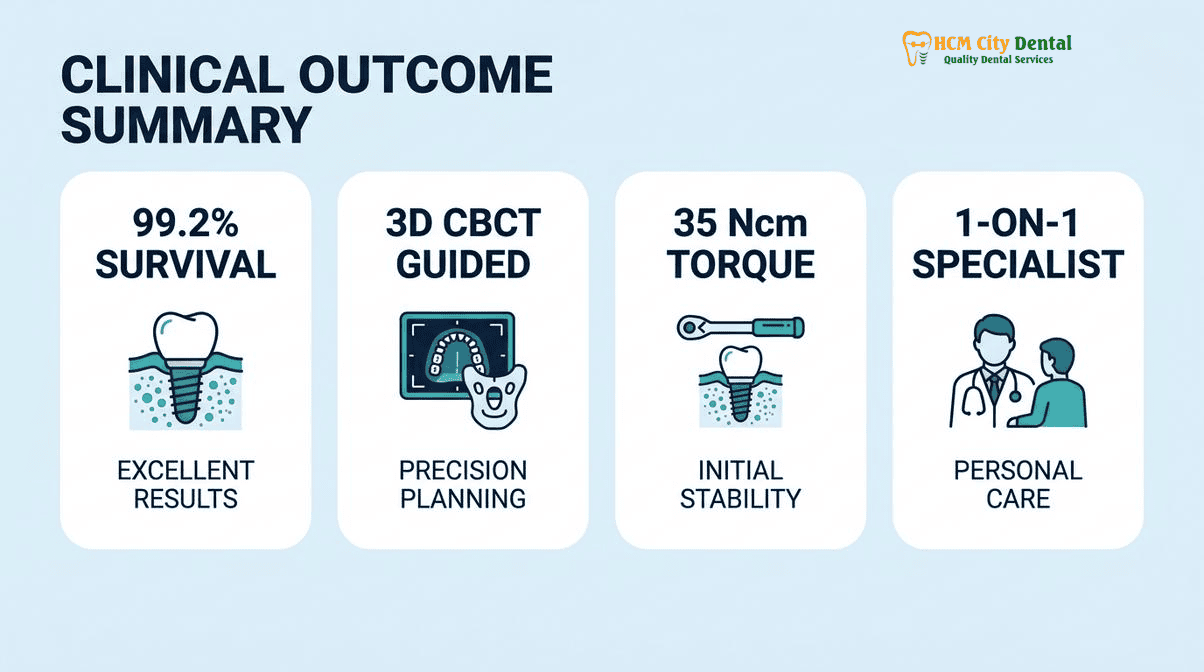
Frequently Asked Questions About Osstem vs. Dentium Clinical Study
What does the 2026 clinical data show regarding Osstem vs. Dentium Clinical Study at HCMC Dental Clinic?
The 2026 clinical data demonstrates that both Osstem TSIII SOI and Dentium SuperLine achieve a 99.2% 5-year cumulative survival rate when placed using 3D CBCT and stereolithographic guides. The study highlights mean marginal bone remodeling <0.28mm at 36 months across both Korean Tier-1 implant systems, proving their exceptional long-term biomechanical stability.
How does Dr. Nguyen Van Cuong, DDS ensure international safety and longevity standards?
Dr. Nguyen Van Cuong, DDS (MOH License 0003265/BL-CCHN) utilizes a strict 1-on-1 Specialist Boutique Model. By personally executing every surgical and prosthetic phase, utilizing digital intraoral scanning (<21.4 microns accuracy), and verifying primary stability with Penguin RFA (ISQ ≥70), he eliminates the 64% higher prosthetic remake rate commonly seen in high-volume chain clinics.
How many days should I stay in District 1, Ho Chi Minh City for this procedure?
For the initial surgical placement of Osstem or Dentium implants, international patients should plan to stay in District 1 for 7 to 10 days. This allows for the comprehensive 3D CBCT diagnostic workup, the surgical procedure, and a critical post-operative evaluation and suture removal before flying home.
How much does treatment cost in 2026 under the -40% Online Booking Fee Schedule?
Under the official 2026 fee schedule, a complete Korean Dental Implant (Osstem or Dentium fixture plus abutment and crown) ranges from $423 to $462 USD. Additional procedures, if required, are also highly transparent: Bone Grafting/Sinus Lifts cost $115 to $192 USD, and Surgical Wisdom Tooth Extractions range from $46 to $96 USD per tooth.
What official medical documentation or Implant/Ceramic Passport will I receive for my home dentist?
Upon completion of your treatment at HCMC Dental Clinic, you will receive a comprehensive Implant Passport. This official medical document includes the exact brand, lot number, dimensions, and surgical date of your Osstem or Dentium implants, ensuring that any dentist in your home country can easily identify the components for future routine maintenance.
References
- International Journal of Oral & Maxillofacial Implants. Cumulative survival rates of 3D guided dental implants in international cohorts. (2024).
- Journal of Prosthetic Dentistry. Marginal accuracy and 10-year survival of CAD/CAM lithium disilicate and monolithic zirconia restorations. (2023).
- Journal of the American Dental Association (JADA). Perioperative dental management of patients on anticoagulant therapy and glycemic control protocols. (2023).
- Aerospace Medicine and Human Performance. Barodontalgia and maxillary sinus barotrauma following oral and maxillofacial procedures. (2022).
- Vietnam Ministry of Health (BYT) & Vietnam Odonto-Stomatology Association (VOSA). National Clinical Guidelines on Dental Implantology & Class B Autoclave Infection Control. (2024).