How long does Invisalign take? For most adult patients, comprehensive clear aligner treatment takes between 6 and 18 months. Mild spacing or crowding issues may resolve in 3 to 6 months, while complex bite corrections can require up to 24 months of consistent aligner wear. Understanding the biological and clinical factors that influence this timeline is essential for setting realistic expectations.
Clinical Summary:
The duration of clear aligner therapy is highly individualized, depending primarily on the severity of the malocclusion and the patient’s biological response to orthodontic forces. While minor aesthetic adjustments can be completed rapidly, comprehensive bite correction requires a phased approach involving precise digital planning, consistent daily wear of 20 to 22 hours, and often a refinement stage. Advanced digital diagnostics, such as 3D intraoral scanning, have significantly improved the predictability of these timelines. Ultimately, strict patient compliance and excellent periodontal health are the most critical variables in ensuring the treatment progresses efficiently and concludes within the projected timeframe.
Key Takeaways:
- Average treatment timelines range from 6 to 18 months for most adult cases.
- Mild crowding or spacing can often be corrected in as little as 3 to 6 months.
- Strict compliance of wearing aligners 20-22 hours daily is mandatory for success.
- Digital 3D scanning allows for highly predictable, phased treatment planning.
- Refinement phases are a normal part of the process to perfect the final bite.
Invisalign Timeline Breakdown by Case Complexity
Treatment duration is directly proportional to the severity of malocclusion, ranging from a few months for minor aesthetic tweaks to over a year for comprehensive bite correction.
When patients ask how long does invisalign take, the most accurate clinical answer requires a thorough evaluation of their specific dental anatomy. Orthodontic tooth movement is a complex biological process that involves the remodeling of the alveolar bone. When continuous, controlled force is applied by the clear aligners, osteoclasts break down bone on the pressure side of the periodontal ligament, while osteoblasts build new bone on the tension side[1]. Because this cellular process operates at a specific physiological rate, the total treatment duration is dictated by the distance the teeth need to move and the complexity of the root movements required.
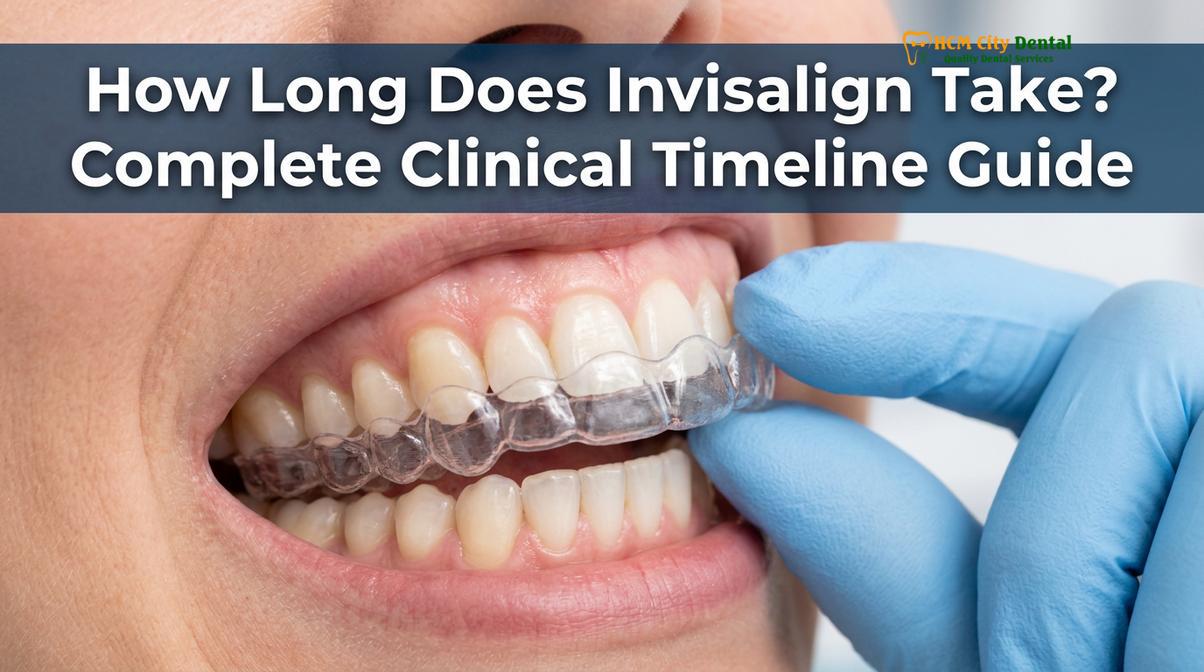
For patients presenting with mild malocclusion—such as minor anterior crowding, small diastemas (gaps), or slight orthodontic relapse from previous braces—treatment is highly efficient. These cases typically require only tipping movements of the crowns rather than complex bodily movements of the roots. Consequently, mild cases can often be resolved in 3 to 6 months. This rapid turnaround is highly appealing for adults seeking cosmetic improvements before major life events. In these scenarios, the digital treatment plan usually involves between 10 and 20 aligner trays, changed at weekly or bi-weekly intervals.
Moderate cases represent the majority of adult orthodontic patients. These individuals typically present with more pronounced crowding, moderate spacing, or mild vertical discrepancies such as a slight overbite. Correcting these issues requires more complex biomechanics, including the rotation of premolars or the intrusion/extrusion of anterior teeth. For moderate complexity, the timeline generally spans from 6 to 12 months. During this period, the use of composite attachments—small, tooth-colored bumps bonded to the enamel—becomes essential. These attachments act as anchors, allowing the aligners to grip the teeth and apply precise directional forces that would be impossible with smooth plastic alone.
Severe malocclusions demand the longest treatment durations, often ranging from 12 to 24 months or more. These cases involve comprehensive bite correction, such as severe overjets, anterior open bites, crossbites, or cases requiring the extraction of premolars to relieve extreme crowding. Moving teeth across large distances or correcting the transverse width of the dental arch requires meticulous, staged planning. In these complex scenarios, clear aligners are often supplemented with orthodontic elastics (rubber bands) to correct the anteroposterior relationship of the jaws. The biological limits of bone remodeling mean that these extensive movements cannot be rushed without risking root resorption or periodontal damage, necessitating a longer, more cautious clinical approach.
Factors That Speed Up Treatment
Strict adherence to the 22-hour daily wear protocol and maintaining excellent periodontal health are the primary catalysts for accelerating your orthodontic timeline.
While the biological rate of tooth movement has a physiological speed limit, patients often wonder how fast does invisalign work under optimal conditions. The most significant variable entirely within the patient’s control is compliance. Clear aligners are removable, which is their greatest advantage but also their biggest vulnerability. For the biomechanical forces to be effective, the aligners must be worn for a minimum of 20 to 22 hours every single day. Removing the trays for extended periods allows the periodontal ligament to relax, causing the teeth to begin shifting back to their original positions. This phenomenon, known as relapse, not only halts progress but can actively reverse it, significantly extending the overall treatment time[2].
“Orthodontic success with removable appliances is fundamentally a partnership between the clinician’s digital planning and the patient’s daily discipline. A lack of compliance is the leading cause of extended treatment timelines and tracking failures.”
Periodontal health is another critical factor influencing the speed of tooth movement. The cellular mechanisms responsible for bone remodeling operate most efficiently in a healthy, inflammation-free environment. If a patient develops gingivitis or periodontitis due to poor oral hygiene during treatment, the inflammatory mediators in the gum tissue can disrupt normal osteoclastic activity[4]. This not only slows down tooth movement but also increases the risk of permanent bone loss. Therefore, maintaining a rigorous routine of brushing and flossing after every meal before reinserting the aligners is essential for keeping the treatment on schedule.
Biological factors, such as age and individual bone density, also play a role. Teenagers and young adults generally experience slightly faster tooth movement because their alveolar bone is less dense and more metabolically active. However, this does not mean older adults cannot achieve excellent results. Adult bone simply requires a more sustained, gentle force to remodel safely. Additionally, the specific type of tooth movement required affects the timeline. Simple tipping of a tooth crown is relatively fast, whereas bodily movement (moving the crown and root simultaneously) or rotating a cylindrical tooth like a lower canine takes considerably more time and specialized biomechanical planning.
The Month-by-Month Clinical Workflow
The orthodontic journey progresses through distinct phases, beginning with precise digital diagnostics and culminating in the refinement stage to perfect the final bite.
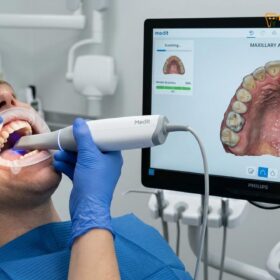
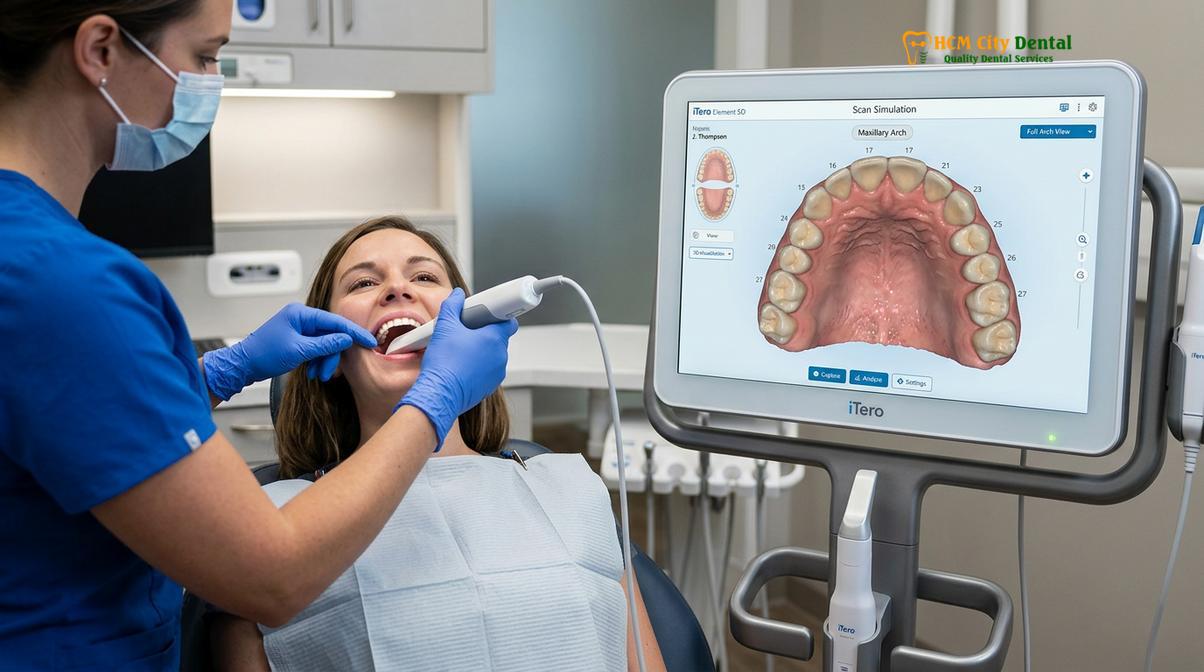
Understanding the month-by-month progression helps set realistic clinical expectations. The journey begins at Month 0 with comprehensive diagnostics. Modern clinics have largely abandoned messy traditional putty impressions in favor of advanced digital technology. Using devices like the iTero Element 5D or Medit i700, the dentist captures a highly accurate 3D topographical map of the patient’s oral cavity[3]. This digital scan is combined with panoramic X-rays and clinical photographs to create a customized, computer-simulated treatment plan. Patients can actually view a time-lapse animation of their projected tooth movement before committing to the procedure, providing a clear visual understanding of the expected outcome.
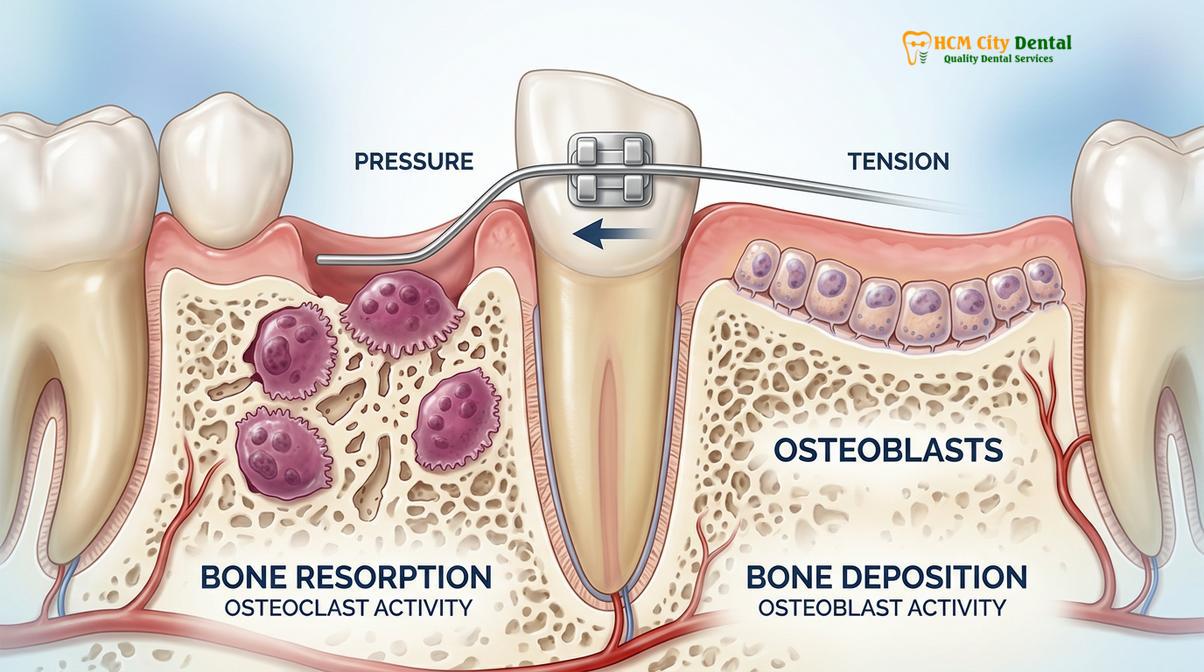
Months 1 to 3 represent the acclimation and initial movement phase. When the first set of aligners is delivered, the dentist may bond composite attachments to specific teeth and perform Interproximal Reduction (IPR) if necessary—a procedure where microscopic amounts of enamel are polished away between crowded teeth to create space. During the first few weeks, patients typically experience mild pressure, increased salivation, and a slight lisp as the tongue adapts to the plastic trays. Biologically, the periodontal ligament is being stretched and compressed for the first time, initiating the inflammatory cascade that triggers bone remodeling. Visible aesthetic changes are usually minimal during this early stage, as the initial aligners often focus on expanding the posterior arch to create room for the front teeth to align.
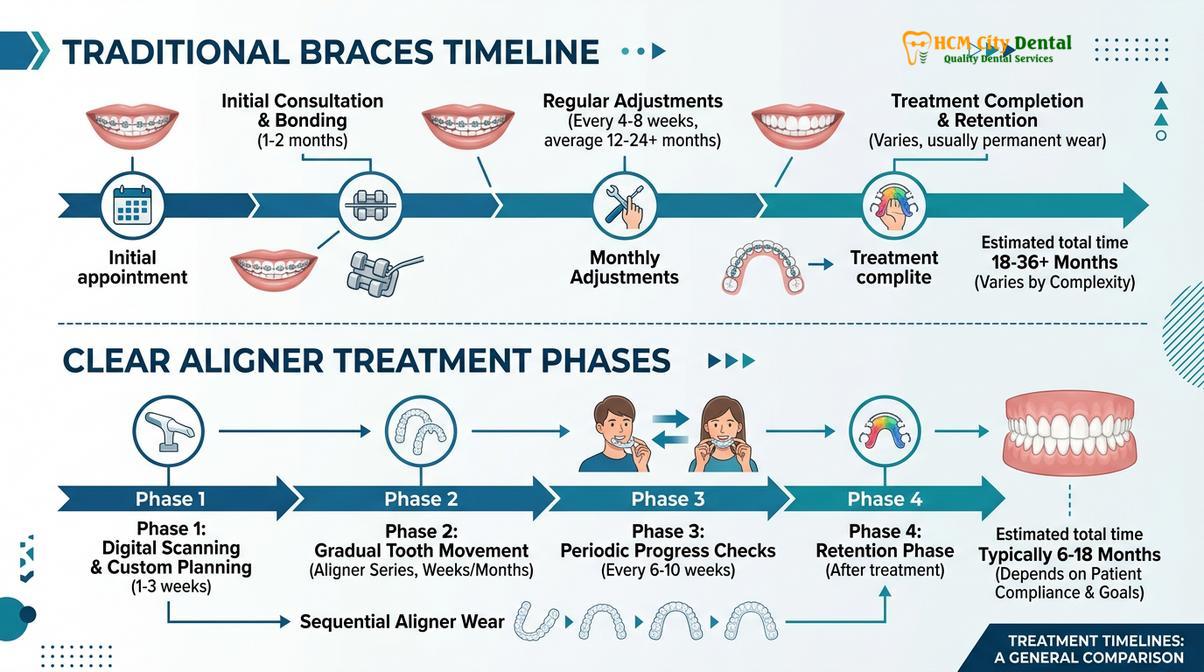
By Months 4 to 6, the aesthetic improvements become highly visible. As the anterior teeth begin to untwist and align, patients often report a significant boost in confidence. The routine of removing aligners for meals and cleaning becomes second nature. Clinical checkups are typically scheduled every 6 to 8 weeks to monitor tracking—ensuring the teeth are moving exactly as prescribed by the digital model. If a tooth is lagging behind, the dentist may adjust the wear schedule or utilize “chewies” (small silicone cylinders) to help seat the aligner more firmly against the teeth.
| Clinical Feature | Clear Orthodontic Aligners | Traditional Fixed Braces |
|---|---|---|
| Average Duration | 6 to 18 months | 18 to 24+ months |
| Biomechanical Force | Pushing force via plastic trays | Pulling force via wires and brackets |
| Hygiene Maintenance | Excellent (Removable for brushing) | Challenging (Requires special tools) |
| Dietary Restrictions | None (Removed during meals) | High (Avoid hard/sticky foods) |
| Aesthetic Impact | Virtually invisible | Highly visible metal or ceramic |
For moderate to severe cases, Months 7 and beyond focus on complex bite settling and root paralleling. Once the initial series of aligners is completed, the patient enters the refinement phase. It is crucial to understand that refinements are not a sign of failure; they are a standard clinical protocol. Because the human body is not a computer, teeth rarely move with 100% predictability. A new digital scan is taken, and a short series of refinement aligners is ordered to close microscopic gaps, perfect the occlusion (bite), and ensure long-term stability before transitioning to nighttime retainers.
Expat Dental Care and Orthodontic Aligners in Vietnam
International patients in Ho Chi Minh City benefit from European CE standards, multilingual specialists, and seamless insurance integration for their orthodontic and preventive care.
For the growing expat community residing in or traveling to Southeast Asia, accessing high-quality, predictable dental care is a primary concern. Navigating healthcare in a foreign country can be daunting, but modern facilities have tailored their workflows specifically to meet international expectations. At HCMC Dental Clinic, the integration of advanced digital dentistry with stringent European CE sterilization protocols ensures that patients receive care on par with, or exceeding, standards found in North America or Europe. This commitment to clinical excellence makes Ho Chi Minh City a premier destination for both resident expats and those engaging in dental tourism.
A critical component of expat dental care is seamless communication and administrative support. The clinical team prioritizes clear, multilingual communication, ensuring that complex orthodontic treatment plans, biomechanical limitations, and expected timelines are thoroughly understood by the patient. Furthermore, the administrative burden is significantly reduced through direct billing insurance partnerships. HCMC Dental Clinic collaborates with major international insurers, allowing expat families to enjoy cashless checkups, routine teeth cleaning, and comprehensive orthodontic care without the hassle of out-of-pocket reimbursement claims[5].
Clinical Case Review: Expat Orthodontic Management
A 34-year-old expatriate professional presented to HCMC Dental Clinic in Ho Chi Minh City with moderate lower anterior crowding and a mild class II malocclusion. Due to her frequent international travel schedule, traditional fixed braces were contraindicated. The clinical team utilized the iTero Element 5D scanner to design a clear aligner treatment plan requiring 24 stages. By utilizing remote monitoring software and providing multiple aligner sets in advance, the patient maintained her treatment progress while traveling. The crowding was fully resolved, and the bite stabilized within 11 months, demonstrating the flexibility of digital orthodontics for highly mobile expat patients.
Beyond adult orthodontics, the clinic serves as a comprehensive family dentist, placing a strong emphasis on General & Preventive Dentistry tại HCMC Dental Clinic. Expat children require a gentle, welcoming environment to foster positive lifelong dental habits. The clinical team is highly trained in pediatric behavior management, offering preventive services such as dental sealants, fluoride varnishes, and pulpotomy procedures. By integrating adult orthodontic checkups with routine pediatric exams, families can efficiently manage their oral healthcare needs in a single, convenient location.
When to Consult a Dentist & Important Clinical Notes
Recognizing the signs of poor aligner tracking or underlying dental issues is crucial for preventing treatment delays and ensuring a healthy orthodontic outcome.
While clear aligner therapy is generally smooth and predictable, there are specific clinical scenarios where immediate professional intervention is required. Patients should consult their dentist if they notice that their aligners are no longer seating fully on the teeth, creating visible air gaps between the plastic and the incisal edges. This phenomenon, known as “poor tracking,” indicates that the teeth are not moving as prescribed by the digital plan. Continuing to wear ill-fitting aligners can apply incorrect biomechanical forces, potentially worsening the malocclusion or causing unnecessary discomfort.
“Early detection of tracking issues allows the clinician to intervene with minor adjustments, such as modifying the wear schedule or adding new composite attachments, preventing the need for a complete mid-course correction.”
Additionally, any signs of acute periodontal distress must be addressed promptly. If a patient experiences persistent bleeding gums, severe localized pain, or increased tooth mobility beyond the expected mild looseness associated with orthodontic movement, they should schedule an evaluation. The Vietnam Ministry of Health (MoH) emphasizes the importance of maintaining strict periodontal health during any orthodontic intervention to prevent irreversible alveolar bone loss[6]. Regular professional cleanings every 3 to 6 months are highly recommended throughout the duration of the aligner therapy to mitigate these risks.
Patients should also be mindful of their temporomandibular joint (TMJ) health. While mild muscle fatigue is normal during the first few days of a new aligner tray, severe jaw pain, clicking, or difficulty opening the mouth warrants a clinical review. In some cases, the shifting occlusion can temporarily alter the bite relationship, placing stress on the TMJ. A qualified dentist can assess whether these symptoms are transient or require a modification to the digital treatment plan to ensure the final bite is functionally harmonious.
Comprehensive Dental Services and Pricing Structure
Transparent pricing, exclusive pre-arrival booking discounts, and comprehensive warranties ensure that international families receive world-class restorative and preventive care affordably.
A major advantage of seeking dental care in Vietnam is the highly competitive pricing structure, which does not compromise on clinical quality or material integrity. For patients considering orthodontic aligners or comprehensive restorative work, understanding the financial investment is crucial. HCMC Dental Clinic offers a transparent fee schedule, significantly enhanced by a 40% pre-arrival discount for patients who book their consultations via WhatsApp. This initiative is particularly beneficial for dental tourists and new expats looking to establish a relationship with a trusted dental clinic.
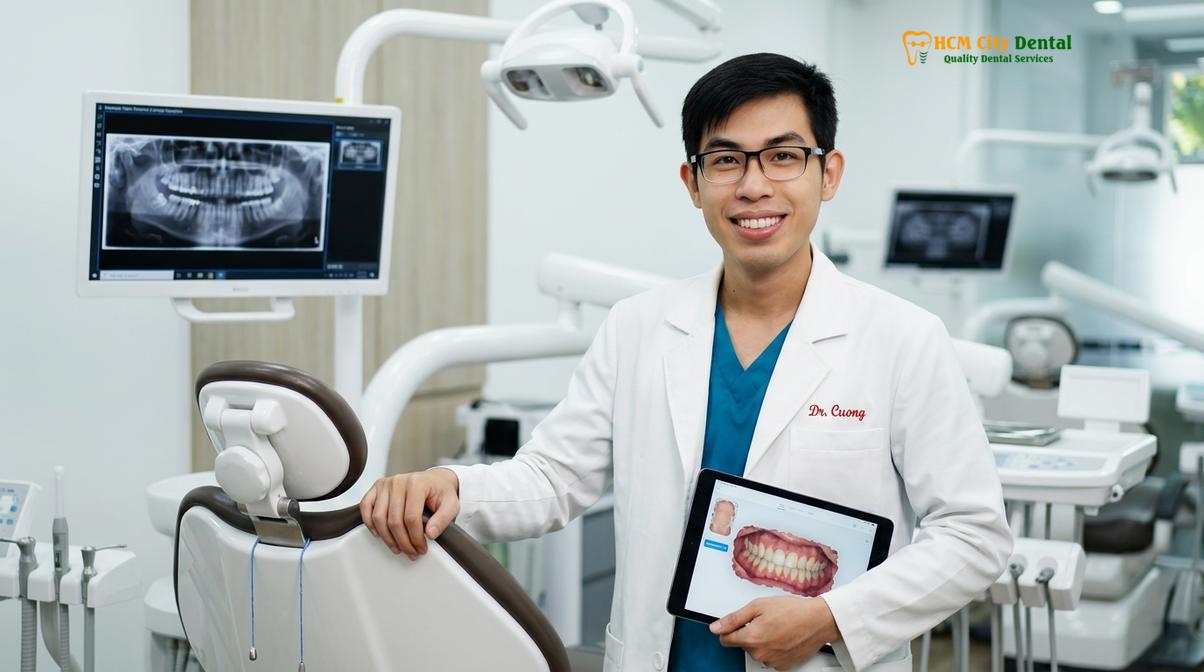
Dr. Nguyen Van Cuong is a leading specialist in digital orthodontics and restorative dentistry at HCMC Dental Clinic. With extensive clinical experience managing complex malocclusions, Dr. Cuong ensures that every patient receives a highly customized, biologically sound treatment plan. His commitment to utilizing advanced 3D scanning technology allows for precise, predictable outcomes for both local residents and international visitors seeking top-tier dental care.
According to the latest clinic fee schedule, routine preventive and diagnostic care is highly accessible. A comprehensive Family or Pediatric Dental Exam & Consultation, which includes a thorough assessment by an English-speaking dentist, is priced at approximately $30 (750k VND) for walk-ins, but reduces to from $18 (450k VND) with the WhatsApp discount. Similarly, professional Scaling & Polishing (Deep Teeth Cleaning)—a vital prerequisite before beginning any orthodontic treatment to ensure gingival health—is available from $24 (600k VND), down from the standard $40 (1.0M VND). Maintaining this level of periodontal hygiene is essential for keeping the treatment duration on track.
For patients requiring restorative or cosmetic enhancements following their orthodontic alignment, the clinic provides premium solutions. Those interested in exploring restorative options can review the Dental Crown Zirconia Cost & Clinical Guide in HCMC for detailed insights into post-orthodontic cosmetic finishing. Furthermore, international visitors planning their treatment journey can benefit from reading the Comprehensive Dental Tourism Vietnam Guide: Clinical Workflows & Itineraries to seamlessly integrate their dental care with their travel plans.
Frequently Asked Questions
What is the average time for clear aligner treatment?
The average time for clear aligner treatment is between 6 and 18 months for most adult patients. Mild spacing or crowding issues may resolve in as little as 3 to 6 months, while complex bite corrections, such as severe overbites or crossbites, can require up to 24 months of consistent aligner wear. Your specific timeline depends heavily on the biological response of your teeth and strict adherence to wearing the trays for 20 to 22 hours daily.
Can I speed up my orthodontic treatment duration?
Yes, you can optimize your treatment speed by strictly wearing your aligners for 22 hours a day and maintaining excellent oral hygiene. While you cannot force teeth to move faster than biology allows, preventing delays caused by lost aligners, poor tracking, or gingival inflammation ensures your treatment stays exactly on schedule. Some clinics also offer high-frequency vibration devices that may stimulate bone remodeling, though compliance remains the most critical factor.
Does age affect how fast clear aligners work?
Age is not a primary barrier, but bone density does influence how fast teeth move. Teenagers often experience slightly faster tooth movement because their alveolar bone is still developing and more pliable. However, healthy adults of any age can achieve excellent, predictable results. The health of your gums and underlying bone is far more important than your chronological age when determining orthodontic timelines.
What happens if I lose an aligner tray?
If you lose an aligner tray, you should immediately contact your dentist for clinical guidance. In most cases, your dentist will advise you to either wear the previous tray to prevent your teeth from shifting back or move forward to the next tray if you were already close to your transition day. Never leave your teeth without an aligner for an extended period, as this can cause relapse and extend your overall timeline.
Are refinements always necessary at the end of treatment?
Refinements are highly common and should be expected in about 70% to 80% of comprehensive cases. Because tooth movement is a biological process, teeth do not always track exactly as the digital simulation predicts. Refinement aligners are simply a continuation of your treatment designed to perfect the final bite, close microscopic gaps, and ensure long-term occlusal stability before you transition to retainers.
References
- American Journal of Orthodontics and Dentofacial Orthopedics. Biomechanics of clear aligner therapy.
- Journal of Clinical Orthodontics. Patient compliance and treatment duration in removable orthodontics.
- International Dental Journal. Digital intraoral scanning accuracy in modern orthodontics.
- Journal of Periodontology. The impact of gingival inflammation on orthodontic tooth movement.
- Clinical Oral Investigations. Expat dental service expectations and direct billing models in SE Asia.
- Vietnam Ministry of Health (MoH). National Guidelines on Orthodontic and Preventive Dental Care Standards.
Ready to start your journey to a perfectly aligned smile? Contact HCMC Dental Clinic in Ho Chi Minh City today to schedule your comprehensive digital orthodontic consultation. For more information on navigating local dental care, read our guide on How to Find a Dentist in Ho Chi Minh City: Clinical Guide & Costs.