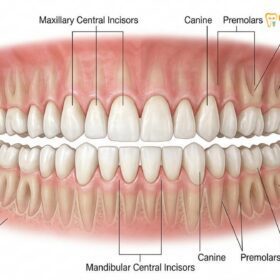
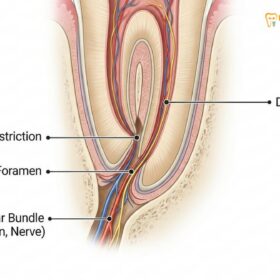
Deciding between a wisdom teeth removal hospital or dentist depends entirely on the anatomical complexity of the impaction and your systemic health. While routine and mildly impacted extractions are safely performed in a dental clinic, severe bony impactions or patients with underlying medical conditions require a hospital setting.
Clinical Summary:
Wisdom tooth extraction is a common surgical procedure, but the choice of venue—dental clinic versus hospital—is a critical clinical decision. General dentists and specialized oral surgeons in private clinics efficiently manage most simple to moderate impactions using local anesthesia or conscious sedation. However, complex full-bony impactions, proximity to the inferior alveolar nerve, or patients with significant comorbidities (such as bleeding disorders or severe cardiovascular disease) necessitate the advanced monitoring, general anesthesia capabilities, and multidisciplinary support available only in a hospital environment. A thorough radiographic assessment, typically via CBCT, dictates the safest referral pathway.
Key Takeaways:
- Routine and partial bony impactions are highly suitable for private dental clinics.
- Hospitals are required for deep impactions, high nerve-damage risks, and general anesthesia needs.
- Patients with severe systemic health conditions must undergo extraction in a hospital setting.
- 3D CBCT imaging is the gold standard for determining surgical complexity and venue.
- Post-operative recovery timelines are similar, but hospital procedures often involve longer initial observation.
Assessing Surgical Complexity: The Foundation of Your Choice
The position, angle, and root anatomy of your third molars directly dictate whether a clinical or hospital setting is the safest environment for extraction.
The human dentition typically includes four third molars, commonly known as wisdom teeth, which are the last to erupt. Because they emerge late in dental development, the jaw often lacks sufficient space to accommodate them, leading to various degrees of impaction. Understanding the nature of this impaction is the first step in determining whether you need a wisdom teeth removal hospital or dentist. Clinical diagnostics rely heavily on advanced imaging to classify the position of the tooth relative to the surrounding bone and vital anatomical structures.
Impactions are generally categorized into three primary types: soft tissue impaction, partial bony impaction, and full bony impaction. A soft tissue impaction occurs when the crown of the tooth has penetrated the bone but remains covered by gingival tissue. These are typically straightforward to manage. A partial bony impaction means the tooth is partially encased in the jawbone, requiring minor bone removal. A full bony impaction is the most complex, where the tooth is entirely encased in the jawbone, often lying horizontally or at a severe angle[1]. The deeper the impaction, the more surgical intervention is required to section the tooth and remove surrounding bone.
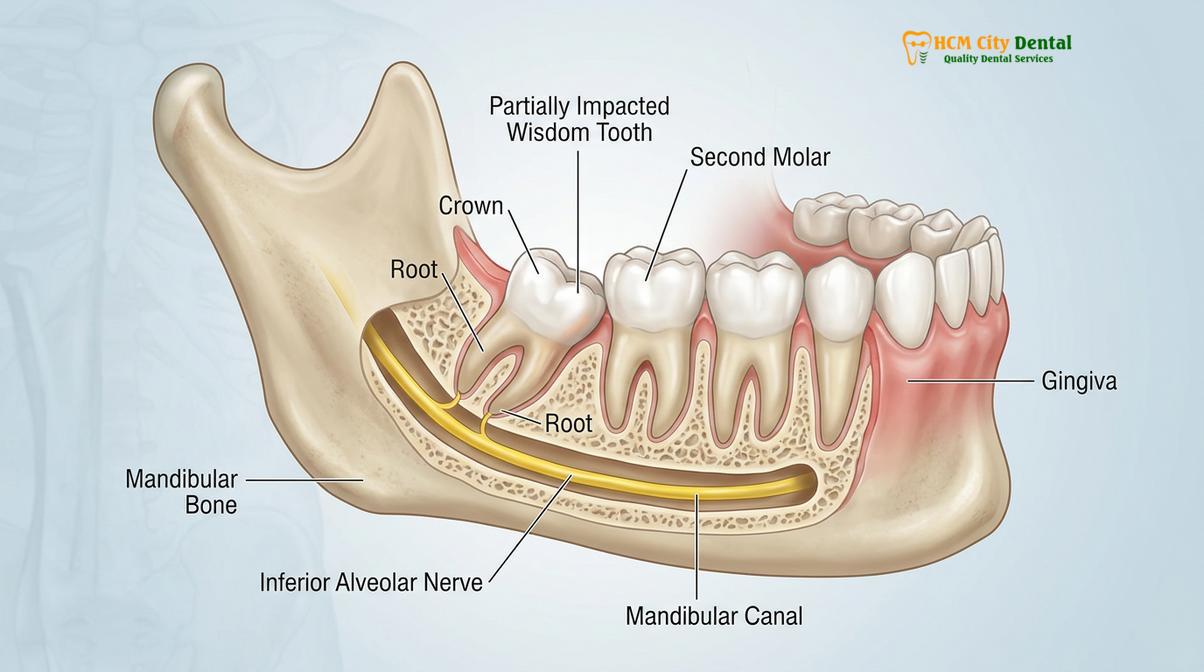
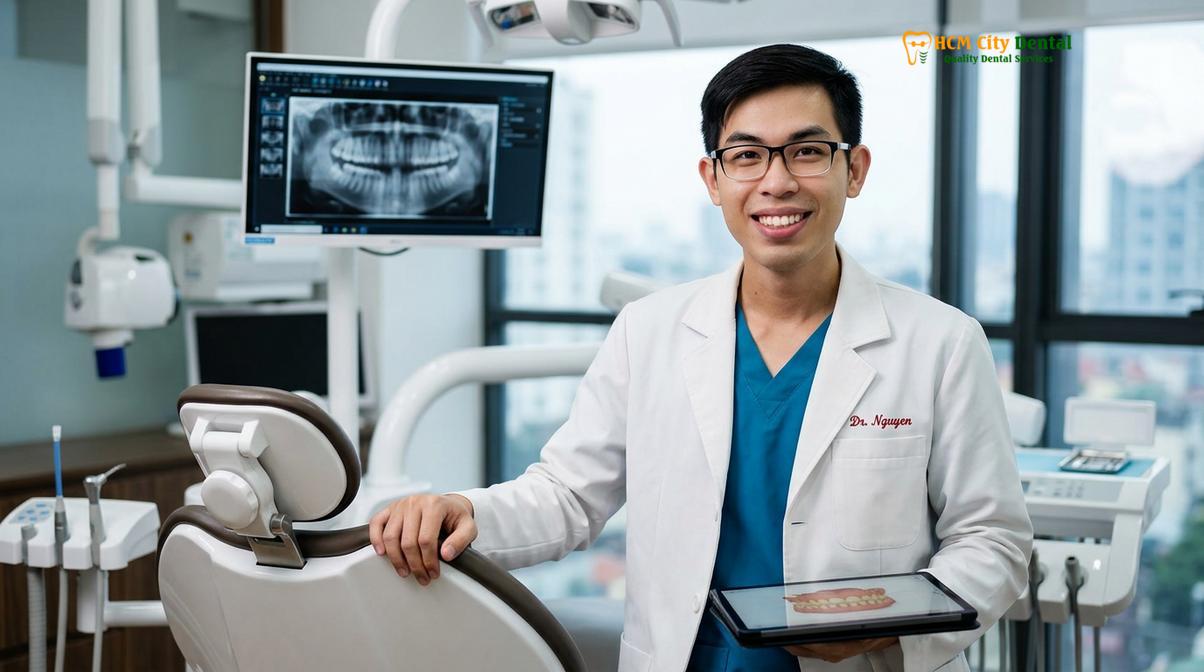
According to Dr. Nguyen Van Cuong, a comprehensive 3D radiographic assessment is non-negotiable before deciding the surgical venue. Traditional 2D panoramic X-rays provide a broad overview, but Cone Beam Computed Tomography (CBCT) is the gold standard for high-risk cases. CBCT provides a three-dimensional view of the tooth’s roots in relation to the inferior alveolar nerve (IAN) in the lower jaw and the maxillary sinus in the upper jaw. If the roots are wrapped around the IAN, the risk of temporary or permanent paresthesia (numbness) increases significantly, which may prompt a referral to a specialized hospital setting.
Furthermore, the angulation of the tooth—whether it is mesioangular (tilted forward), distoangular (tilted backward), vertical, or horizontal—plays a crucial role in surgical planning. Mesioangular impactions are the most common and generally the easiest to extract in a standard clinic, whereas distoangular impactions in the mandible often require extensive bone removal and are technically demanding. Patients wondering what age do wisdom teeth grow should note that early evaluation (typically between ages 17 and 25) allows for easier extraction before the roots are fully formed and the surrounding bone becomes highly dense.
When to Choose a Dental Clinic for Wisdom Teeth Removal
Private dental clinics are ideal for straightforward extractions, offering a comfortable environment, lower costs, and efficient scheduling under local anesthesia or mild sedation.
For the vast majority of patients, a private dental clinic is the most appropriate and convenient setting for wisdom tooth extraction. General dentists with surgical experience, as well as in-house oral and maxillofacial surgeons, routinely perform these procedures with high success rates. The clinical environment is designed to be efficient, minimizing patient anxiety while delivering precise surgical care.
Choosing a dental clinic is highly recommended when the impaction is classified as soft tissue or partial bony, and when the patient is in good systemic health. In these scenarios, the surgical workflow is streamlined. The clinician will administer local anesthesia (such as lidocaine or articaine with epinephrine) to profoundly numb the surgical site. Because the patient remains conscious, the procedure requires less intensive physiological monitoring compared to general anesthesia. Many modern clinics also utilize advanced tools like piezosurgery—an ultrasonic device that cuts bone with micro-vibrations while preserving soft tissue—which significantly reduces surgical trauma and post-operative swelling.
“The modern dental clinic is equipped to handle the majority of third molar extractions safely and efficiently. By utilizing advanced local anesthetics and minimally invasive surgical techniques, we can achieve excellent clinical outcomes without the need for hospital admission.”
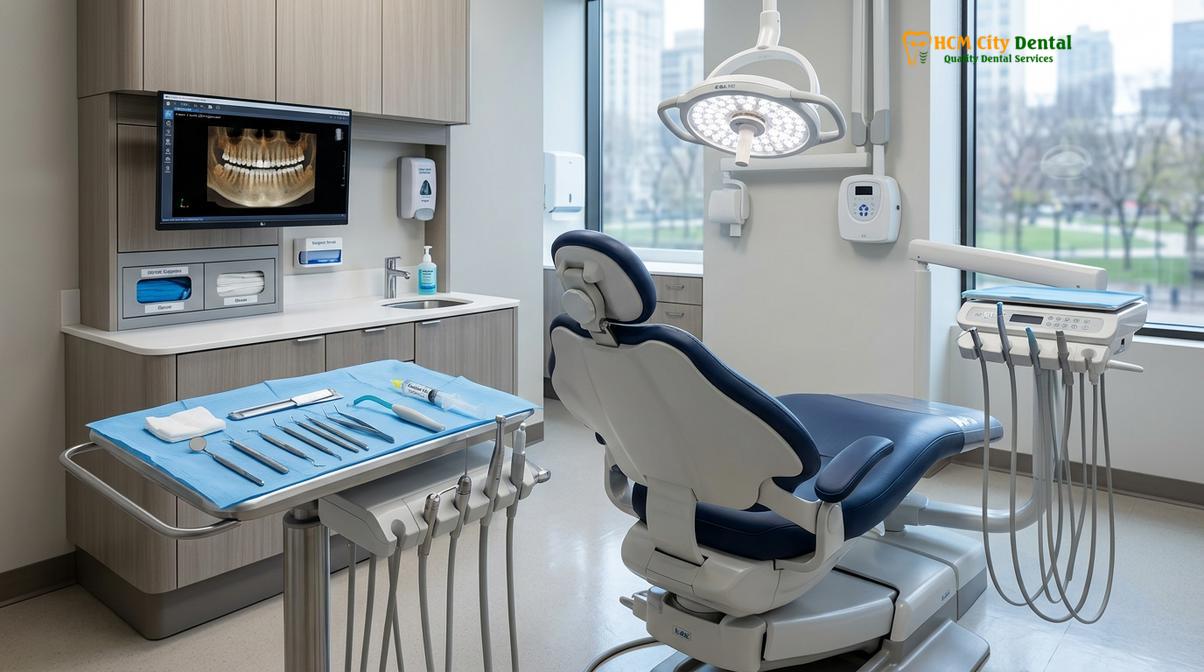
At facilities like HCMC Dental Clinic in Ho Chi Minh City, the focus is on patient comfort and rapid recovery. Patients can often have their consultation, radiographic imaging, and extraction completed in a single, well-coordinated visit. This outpatient model is not only time-efficient but also significantly more cost-effective than a hospital visit, as it eliminates facility fees and the high costs associated with anesthesiologists and operating room time.
Additionally, the post-operative care in a clinic setting is highly personalized. Patients receive detailed instructions on managing the extraction site, controlling inflammation, and maintaining oral hygiene to prevent complications such as alveolar osteitis (dry socket). For those preparing for their procedure, reviewing essential tips for a smooth recovery can greatly enhance the healing experience and minimize downtime.
When a Hospital Setting is Medically Necessary
A hospital environment provides critical infrastructure for high-risk surgical extractions, general anesthesia administration, and the management of complex systemic health conditions.
While dental clinics are suitable for most cases, there are specific clinical indications where a hospital setting becomes an absolute medical necessity. The decision to transition from a clinic to a hospital is driven by two primary factors: the anatomical complexity of the surgery and the systemic health profile of the patient. In a hospital, oral and maxillofacial surgeons work alongside anesthesiologists and medical specialists to ensure the highest level of patient safety during invasive procedures.
Anatomically, severe full bony impactions, especially those located deep within the mandible or maxilla, pose significant surgical challenges. If a lower wisdom tooth’s roots are intimately intertwined with the inferior alveolar nerve, the extraction carries a high risk of nerve injury[2]. In a hospital operating room, surgeons have access to advanced intraoperative imaging, specialized surgical instrumentation, and the ability to perform complex procedures like a coronectomy (removing the crown while leaving the roots intact) under optimal conditions. Similarly, upper wisdom teeth that are displaced high into the maxillary sinus may require a hospital setting to manage potential oroantral communications (a hole between the mouth and the sinus cavity).
Clinical Warning: Patients with severe bleeding disorders, uncontrolled cardiovascular disease, or compromised airways should never undergo complex oral surgery in a standard dental clinic. A hospital setting is mandatory to manage potential intraoperative medical emergencies.
Systemic health is equally critical in this decision-making process. Patients with significant medical comorbidities must be managed in a hospital. This includes individuals with coagulopathies (bleeding disorders like hemophilia or those on strong anticoagulant therapy), severe cardiovascular disease, uncontrolled diabetes, or compromised immune systems. The hospital environment provides immediate access to emergency medical interventions, blood products, and advanced life support systems if a complication arises during surgery.
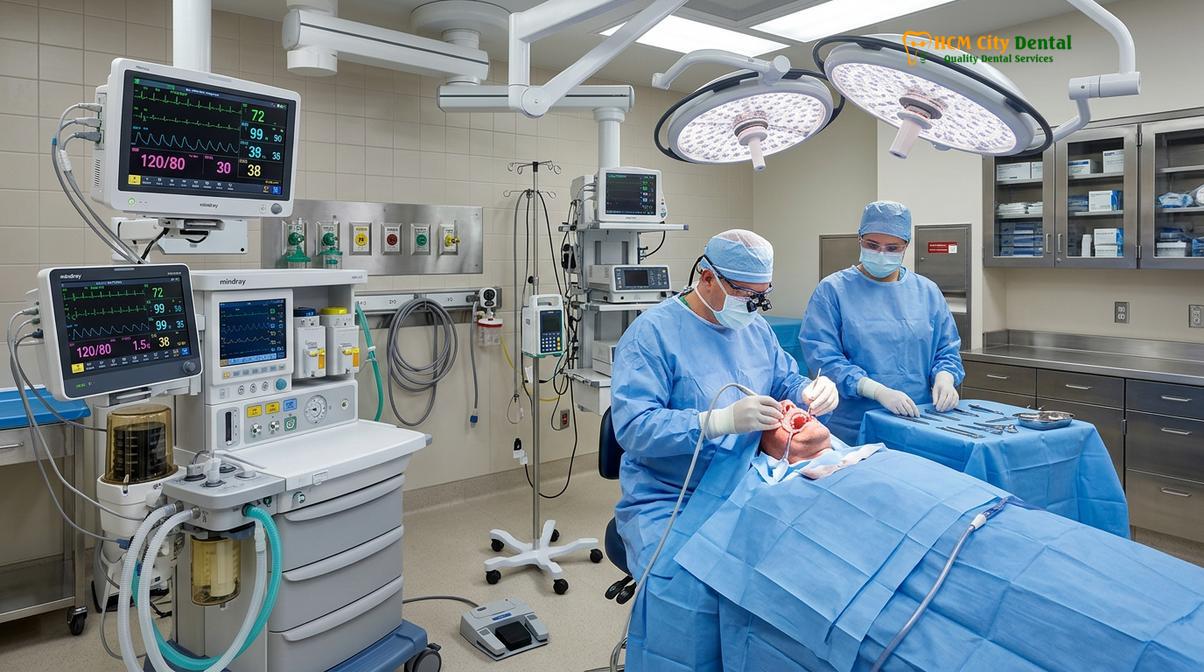
Furthermore, patients with severe developmental disabilities, extreme dental phobia, or physical conditions that prevent them from cooperating in a dental chair often require general anesthesia. General anesthesia induces a state of controlled unconsciousness, ensuring the patient is completely still and pain-free. This level of sedation requires intubation to protect the airway and continuous monitoring of vital signs (ECG, capnography, blood pressure, and oxygen saturation) by a board-certified anesthesiologist. For individuals who discover they have no wisdom teeth, this entire surgical evaluation process is naturally bypassed, but for those with complex impactions, the hospital provides an indispensable safety net.
Comparing Clinical Workflows and Anesthesia Options
The primary procedural difference between a clinic and a hospital lies in the depth of anesthesia available and the extent of intraoperative medical monitoring.
Understanding the workflow and anesthesia modalities is crucial when evaluating a wisdom teeth removal hospital or dentist. The pharmacological approach to pain management and anxiety control varies significantly between these two environments, directly impacting the patient experience, the surgical timeline, and the overall cost.
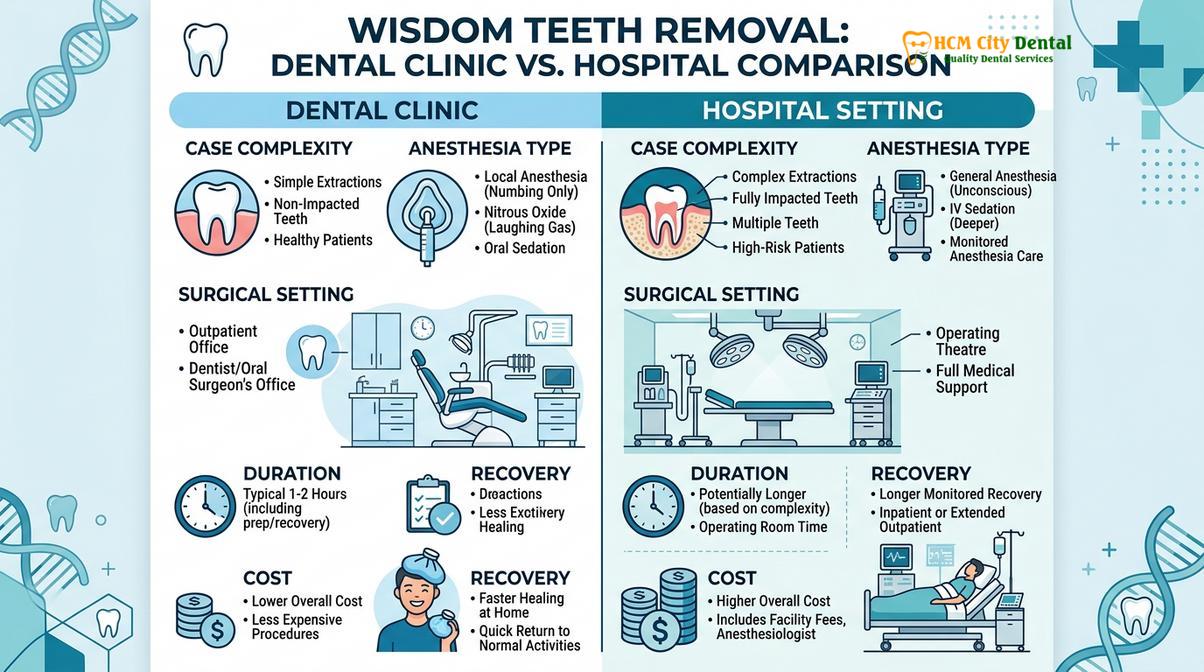
In a dental clinic, the standard of care revolves around local anesthesia. Agents like lidocaine or bupivacaine are injected directly into the surgical site to block nerve transmission, ensuring the patient feels no sharp pain, only pressure. For patients with mild to moderate anxiety, clinics often offer conscious sedation. This can be administered orally (e.g., diazepam or triazolam) or via inhalation (nitrous oxide, commonly known as laughing gas). Some advanced clinics also provide intravenous (IV) sedation, where medications like midazolam and fentanyl are administered to induce a state of deep relaxation and partial amnesia. Under IV sedation, the patient breathes on their own and can respond to verbal commands, but they will likely have little memory of the procedure[3].
Conversely, the hospital workflow is designed around general anesthesia. This involves the administration of potent intravenous anesthetics (like propofol) and inhalational gases (like sevoflurane) to render the patient completely unconscious. Because the patient’s protective airway reflexes are suppressed, an endotracheal tube is placed to manage breathing. This requires a highly orchestrated team, including the oral surgeon, an anesthesiologist, and specialized surgical nurses. The monitoring is exhaustive, tracking every physiological parameter to ensure stability throughout the surgery.
| Feature | Dental Clinic | Hospital Setting |
|---|---|---|
| Ideal Candidate | Healthy patients, simple to moderate impactions | Complex impactions, severe medical comorbidities |
| Anesthesia Options | Local, Nitrous Oxide, Oral Sedation, IV Sedation | General Anesthesia, Deep IV Sedation |
| Monitoring Level | Standard (Pulse oximetry, blood pressure) | Advanced (ECG, capnography, continuous vitals) |
| Cost Profile | Lower (bundled surgical and anesthesia fees) | Higher (includes facility and anesthesiologist fees) |
| Discharge Time | Immediate to 1 hour post-op | 2 to 4 hours post-op (recovery room monitoring) |
The choice of anesthesia also influences post-operative symptoms. Patients who undergo general anesthesia in a hospital often experience a “hangover” effect, characterized by grogginess, nausea, and fatigue that can last for 24 hours. In contrast, patients receiving local anesthesia or light sedation in a clinic typically recover their baseline cognitive function much faster. Regardless of the setting, the physical trauma of the extraction can sometimes lead to referred pain; if you are wondering can wisdom teeth cause headaches, the answer is yes, as muscle tension and inflammation from the surgical site can radiate to the temporomandibular joint and surrounding cranial musculature.
“The selection of anesthesia is a delicate balance between patient comfort, surgical requirements, and physiological safety. While general anesthesia offers complete unawareness, the targeted use of local anesthetics combined with IV sedation in a clinical setting provides an exceptionally safe and effective alternative for the vast majority of patients.”
Cost, Recovery, and Post-Operative Care
While hospital extractions incur higher facility and anesthesia fees, the post-operative healing protocols and recovery timelines remain largely identical across both settings.
The financial implications of choosing between a hospital and a dental clinic are substantial. Dental clinics operate on an outpatient model with lower overhead, allowing them to offer more accessible pricing. The cost typically includes the surgical extraction fee, the cost of local anesthesia or IV sedation, and post-operative imaging. In contrast, a hospital extraction involves multiple separate billing entities: the oral surgeon’s fee, the anesthesiologist’s fee, and the hospital’s facility fee for the use of the operating room and recovery ward. For patients without comprehensive medical insurance, the out-of-pocket expenses for a hospital procedure can be significantly higher.
Despite the differences in cost and surgical environment, the biological process of healing remains the same. The initial recovery phase lasts approximately three to five days. During this time, patients will experience the peak of the inflammatory response, which manifests as swelling (edema), localized discomfort, and minor bleeding. The body forms a crucial fibrin clot within the empty socket, which serves as the foundation for new bone and tissue regeneration[4]. Protecting this clot is paramount; dislodging it can lead to alveolar osteitis, a painful condition that delays healing.
Clinical Case Study: A 22-year-old patient presented to HCMC Dental Clinic in Ho Chi Minh City with bilateral partial bony impacted lower wisdom teeth. Despite initial anxiety and a request for a hospital referral for general anesthesia, Dr. Cuong conducted a thorough CBCT evaluation and determined the teeth were safely distanced from the mandibular nerve. The patient opted for IV sedation in the clinic. The procedure was completed in under 45 minutes, and the patient reported a smooth, pain-free experience with a rapid return to normal activities, avoiding the high costs and extended grogginess associated with a hospital stay.
Post-operative care instructions are universally applied regardless of where the surgery took place. Patients are advised to maintain a soft diet, avoid using straws (to prevent negative pressure in the mouth), and apply ice packs to the face to mitigate swelling. Pharmacological management typically involves non-steroidal anti-inflammatory drugs (NSAIDs) like ibuprofen to manage pain and reduce inflammation, sometimes supplemented with acetaminophen. Antibiotics are only prescribed if there is an active infection or a high risk of surgical site contamination.
Physical activity must also be carefully managed. Increased heart rate and blood pressure can exacerbate bleeding and throbbing at the surgical site. Patients frequently ask how long after wisdom teeth removal can I work out; clinical guidelines generally recommend resting for at least 72 hours before gradually reintroducing light cardiovascular exercise, avoiding heavy lifting for at least a week. Ultimately, whether you undergo Tooth Extraction in a clinic or a hospital, strict adherence to your surgeon’s post-operative protocols is the most critical factor in ensuring a smooth and complication-free recovery.
When to See a Doctor
Regardless of whether your wisdom teeth were removed in a hospital or a dental clinic, vigilant monitoring of the surgical site during the recovery phase is essential. While minor swelling, mild oozing of blood, and moderate discomfort are expected physiological responses to surgery, certain symptoms indicate a deviation from normal healing and require immediate clinical evaluation.
You should contact your oral surgeon or dentist immediately if you experience severe, throbbing pain that radiates to the ear or neck and is not relieved by prescribed analgesic medications. This is a hallmark symptom of a dry socket, which requires professional intervention to clean the site and place a medicated dressing. Additionally, if you develop a fever, notice foul-tasting purulent discharge (pus) from the extraction site, or experience swelling that worsens after the third day, these are strong indicators of a post-operative infection[5].
Furthermore, any prolonged numbness, tingling, or altered sensation (paresthesia) in your lips, tongue, or chin that persists beyond the expected duration of the local anesthetic (typically 6-8 hours) must be reported. While often temporary due to surgical inflammation near the nerve, prompt evaluation is necessary to assess nerve function and determine if further medical management is required. Difficulty swallowing, restricted airway, or uncontrolled bleeding that does not stop with firm gauze pressure are medical emergencies that warrant an immediate visit to the nearest hospital emergency department.
Frequently Asked Questions
Is it safer to have wisdom teeth removed in a hospital or by a dentist?
Both settings are highly safe when chosen correctly based on your clinical needs. A dental clinic is perfectly safe for routine and moderately impacted teeth, whereas a hospital is safer for severe impactions, high nerve-damage risks, or patients with complex systemic health conditions. Your surgeon will recommend the appropriate venue after reviewing your 3D imaging and medical history.
Will a hospital extraction cost more than a dental clinic?
Yes, hospital extractions generally incur significantly higher costs. This is due to additional facility fees, operating room charges, and the cost of an anesthesiologist administering general anesthesia, whereas dental clinics typically bundle the surgical and local anesthesia fees. It is advisable to check with your medical and dental insurance providers to understand your coverage for hospital-based oral surgery.
Can a regular dentist remove impacted wisdom teeth?
Yes, many general dentists with advanced surgical training can remove impacted wisdom teeth. However, if the impaction is fully bony or dangerously close to the inferior alveolar nerve, they will typically refer you to an oral and maxillofacial surgeon. The decision is based on the dentist’s clinical experience and the specific anatomical challenges presented in your X-rays.
Do I have to be put to sleep for wisdom teeth removal?
No, being put to sleep is not strictly necessary for most extractions. Many wisdom teeth are successfully and comfortably removed using only local anesthesia to numb the area, sometimes combined with mild oral or intravenous sedation to reduce anxiety. General anesthesia is usually reserved for highly complex cases, severe dental phobia, or specific medical requirements.
How long does it take to recover from a hospital wisdom tooth extraction?
The initial recovery takes about three to five days, regardless of the surgical setting. However, if you undergo general anesthesia in a hospital, you may experience grogginess and fatigue for an additional 24 hours compared to local anesthesia in a clinic. Complete soft tissue healing takes a few weeks, and bone regeneration takes several months.
References
- Journal of Oral and Maxillofacial Surgery. Indications for hospital-based third molar surgery and complication rates. (2021).
- American Association of Oral and Maxillofacial Surgeons (AAOMS). Parameters of Care: Third Molar Extractions. (2020).
- International Journal of Oral and Maxillofacial Surgery. Cone-beam computed tomography in the assessment of third molar impactions. (2019).
- British Journal of Oral and Maxillofacial Surgery. Anesthesia modalities in third molar surgery: A comparative clinical review. (2022).
- Journal of the American Dental Association. Management of systemic comorbidities during oral surgery procedures. (2018).