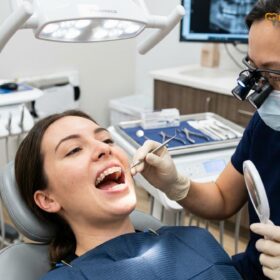
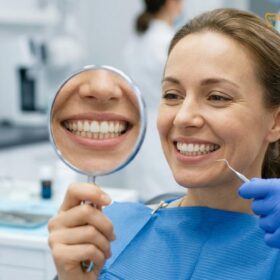
For those considering braces in Vietnam, how to choose the right orthodontist for expats is a critical decision that impacts both oral health and long-term facial aesthetics. Selecting a highly qualified specialist aims to ensure predictable tooth movement, proper bite alignment, and a seamless clinical experience throughout your residency abroad.
Clinical Summary:
Orthodontic treatment for expatriates in Vietnam offers a compelling combination of advanced clinical expertise, modern digital diagnostics, and highly accessible care. However, achieving optimal functional and aesthetic results requires meticulous practitioner selection. Patients must prioritize specialists with verified Ministry of Health licensing, postgraduate orthodontic training, and a proven track record of managing complex malocclusions. The clinical workflow typically involves comprehensive 3D cephalometric analysis, personalized biomechanical planning, and a choice between traditional fixed appliances or advanced clear aligner systems. By understanding the nuances of cross-border dental care—including continuity of treatment, structured financial planning, and rigorous sterilization standards—expats can confidently navigate their orthodontic journey. Ultimately, partnering with a reputable, English-speaking clinical team helps ensure that every phase of tooth movement is monitored with precision, safeguarding both periodontal health and long-term occlusal stability.
Key Takeaways:
- Verify that the practitioner holds a specific orthodontic practicing certificate from the Vietnamese Ministry of Health, not just a general dental license.
- Advanced diagnostic tools, such as CBCT imaging and intraoral 3D scanners, are essential for accurate biomechanical treatment planning.
- Both fixed brackets and clear aligners are widely available, but the choice must be dictated by the specific skeletal and dental diagnosis.
- Reputable clinics offer transparent, phase-based financial structures that align payments with clinical milestones.
- Continuity of care is paramount; ensure your chosen clinic provides comprehensive transfer records should you need to relocate before treatment concludes.
Why Expats Choose Orthodontic Care in Vietnam
Expatriates increasingly select Vietnam for orthodontic treatment due to the combination of internationally trained specialists, advanced digital diagnostic tools, and highly competitive clinical fees without compromising medical standards.
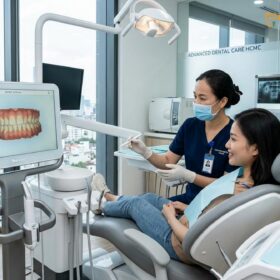
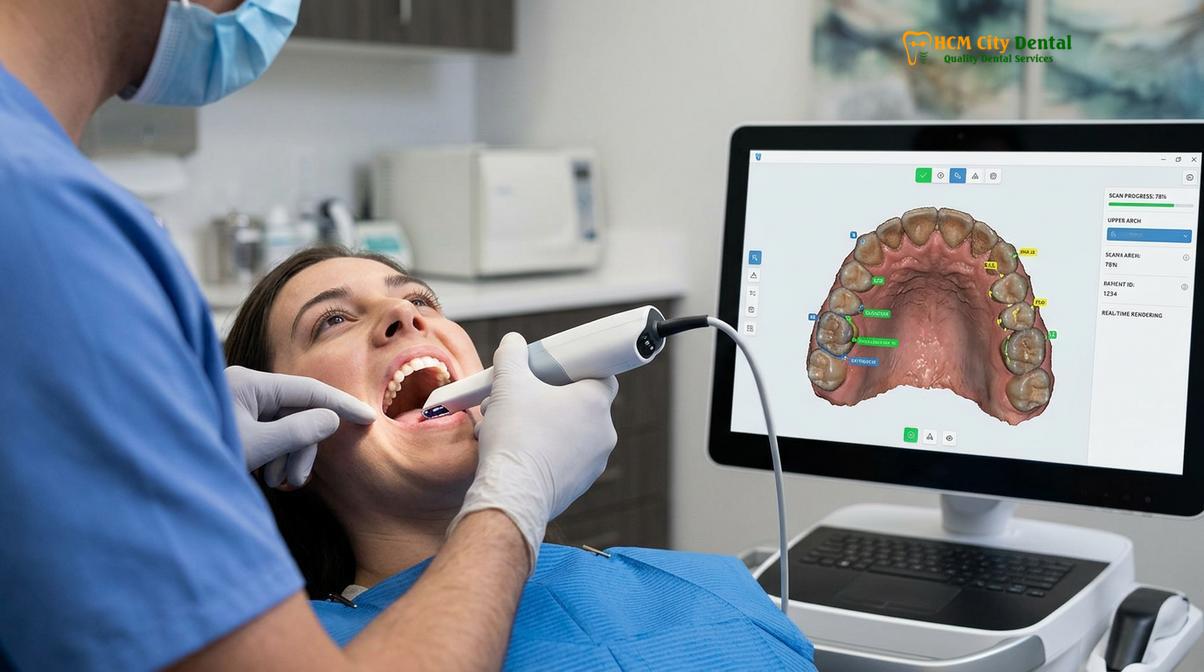
The landscape of dental care in Southeast Asia has evolved dramatically, transitioning from a focus on basic restorative work to highly specialized, multidisciplinary treatments. For expatriates, the decision to undergo orthodontic therapy while living abroad is often driven by the availability of world-class clinical infrastructure. Modern dental facilities in major urban centers are now equipped with the same advanced diagnostic technologies found in North America, Europe, and Australia. This includes Cone Beam Computed Tomography (CBCT) for three-dimensional skeletal analysis, digital intraoral scanners that eliminate the need for traditional alginate impressions, and sophisticated software for predictive tooth movement modeling[1].
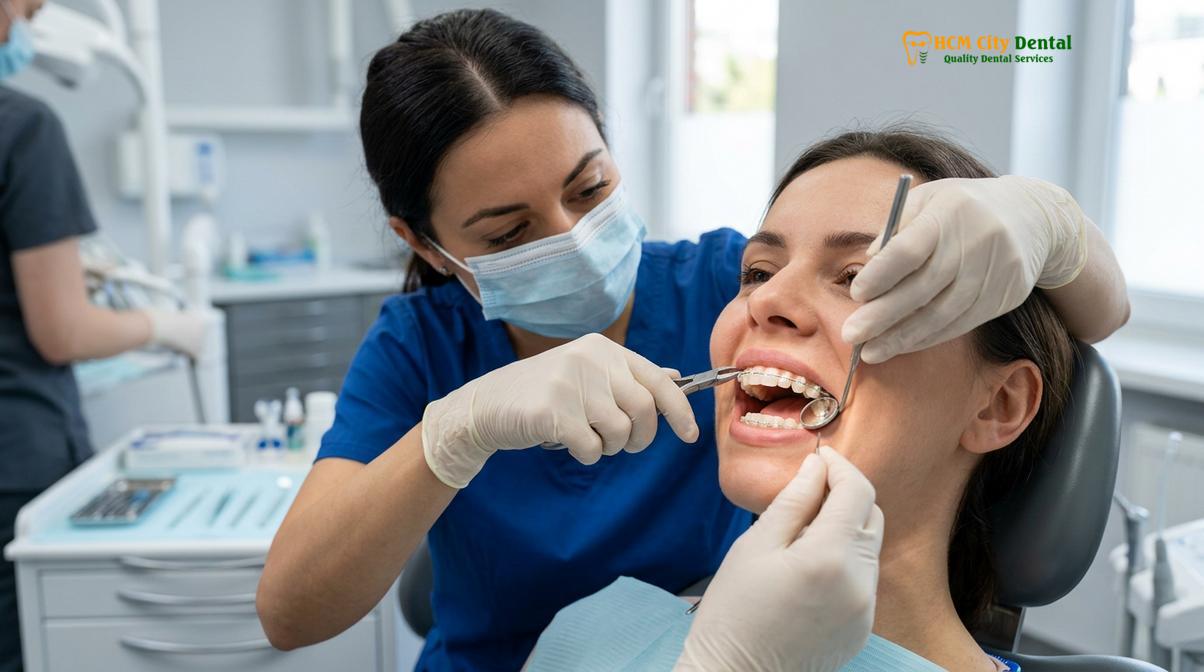
Beyond technology, the clinical expertise available is a primary draw. Many practitioners leading the field of comprehensive orthodontic solutions have completed rigorous postgraduate residencies internationally. This cross-pollination of medical education ensures that the treatment protocols utilized adhere to the highest global standards. When evaluating the overall orthodontic treatment cost Vietnam offers, expats find that the financial accessibility does not stem from a reduction in material quality or clinical safety, but rather from lower operational overhead and a highly competitive healthcare market. This robust regulatory environment forms the foundation of a safe clinical experience for expatriates[3].
Furthermore, the duration of orthodontic treatment—often spanning 18 to 24 months—aligns well with the typical expat assignment. Establishing a long-term clinical relationship with a local specialist allows for consistent monitoring of biomechanical progress. The biological process of orthodontics relies on the delicate balance of osteoclastic bone resorption and osteoblastic bone formation. Regular, uninterrupted adjustments are crucial to maintaining the optimal force levels required for safe and efficient tooth movement. By choosing to undergo treatment locally, expats avoid the clinical risks associated with prolonged intervals between adjustments, which can lead to root resorption or stalled progress.
Key Qualifications to Look for in a Vietnamese Orthodontist
A qualified orthodontist should possess specialized postgraduate training, active memberships in international orthodontic societies, and a proven portfolio of successfully managed complex skeletal and dental malocclusions.
The distinction between a general dentist who provides basic alignment services and a certified orthodontic specialist is profound. Orthodontics is a highly complex dental specialty that requires an deep understanding of craniofacial growth, biomechanics, and periodontal responses to sustained forces. When choosing orthodontist Vietnam options, expatriates must look beyond marketing materials and critically evaluate the practitioner’s academic and clinical pedigree.
A foundational requirement is the completion of a formal postgraduate residency in orthodontics, typically lasting two to three years beyond a standard Doctor of Dental Surgery (DDS) degree. During this intensive training, specialists master the diagnosis, prevention, and treatment of dental and facial irregularities. They are trained to manage severe skeletal discrepancies, impacted teeth, and complex interdisciplinary cases that require coordination with oral surgeons or periodontists.
“The success of orthodontic treatment is not merely in straightening teeth, but in achieving a harmonious, functional occlusion that respects the patient’s unique temporomandibular joint anatomy and periodontal limits. This requires rigorous specialized training and a commitment to evidence-based biomechanics.”
Dr. Nguyen Van Cuong, a leading specialist at HCMC Dental Clinic, emphasizes the importance of continuous clinical education for managing complex cases. He notes that orthodontic technology and biomechanical theories are constantly advancing to provide safer, more predictable outcomes. A practitioner’s dedication to ongoing education is a strong indicator of their clinical competence and commitment to patient care.
Furthermore, prospective patients should request to see a portfolio of completed cases. A competent specialist will readily provide anonymized clinical photographs and cephalometric radiographs demonstrating their ability to treat malocclusions similar to your own. This transparency is a hallmark of ethical medical practice and provides tangible proof of the practitioner’s clinical acumen.
Verifying Dentist Credentials & Licensing (Ministry of Health)
Patients must verify that their chosen practitioner holds a valid practicing certificate issued by the Vietnamese Ministry of Health, specifically authorizing the provision of complex orthodontic procedures.
Navigating the regulatory landscape of healthcare in a foreign country can be daunting, but it is a non-negotiable step in ensuring patient safety. In Vietnam, the Ministry of Health (MOH) is the governing body responsible for issuing medical and dental licenses. It is imperative to understand that a general dental license does not automatically qualify a practitioner to perform complex orthodontic movements, particularly those involving skeletal anchorage or surgical interventions. Furthermore, active involvement with the Vietnam Association of Orthodontists (VAO) demonstrates a practitioner’s commitment to local and international clinical standards.
When seeking an English speaking orthodontist HCMC, expatriates should explicitly ask to verify the practitioner’s “Chứng chỉ hành nghề” (Practicing Certificate). This document outlines the specific scope of practice the dentist is legally permitted to perform. Reputable clinics will display these credentials prominently or provide them without hesitation upon request. The credentialing process in Vietnam has become increasingly stringent, aligning closer with international standards for medical governance and postgraduate credentialing[5].
Clinical Warning: Undergoing orthodontic treatment with an unlicensed or under-qualified practitioner carries significant risks, including irreversible root resorption, severe periodontal attachment loss, temporomandibular joint (TMJ) dysfunction, and permanent occlusal instability. Always verify credentials before consenting to treatment.
In addition to individual practitioner licensing, the facility itself must hold an operating license from the Department of Health. This ensures that the clinic adheres to strict protocols regarding infection control, radiation safety for X-ray equipment, and emergency medical preparedness. Cross-border dental care requires a heightened level of due diligence; ensuring that both the doctor and the facility are fully compliant with national health regulations is the foundation of a safe clinical experience.
Comparing Orthodontic Options: Metal Braces vs. Invisalign
While traditional metal brackets offer superior biomechanical control for severe skeletal discrepancies, clear aligners provide aesthetic advantages and improved periodontal hygiene for compliant patients.
The selection of an orthodontic appliance is a clinical decision that must be based on a comprehensive diagnostic evaluation, including cephalometric analysis, periodontal assessment, and the specific biomechanical requirements of the malocclusion. Expatriates evaluating braces Saigon expats options will generally choose between fixed appliances (traditional or self-ligating braces) and removable clear aligner therapy.
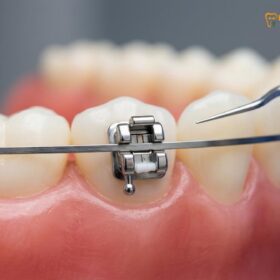
Traditional fixed appliances utilize brackets bonded to the enamel and archwires that deliver continuous, controlled forces. They are highly effective for complex root movements, severe rotations, and significant vertical discrepancies. Modern advancements include self-ligating brackets, which utilize a specialized door mechanism rather than elastic ligatures to hold the archwire. This reduces friction, potentially accelerating certain phases of tooth movement and making it easier for patients to maintain oral hygiene, thereby preventing enamel decalcification during treatment[4].
“Clear aligner therapy represents a paradigm shift in orthodontic biomechanics, offering highly predictable tipping and rotational movements when paired with strict patient compliance and precise digital planning.”
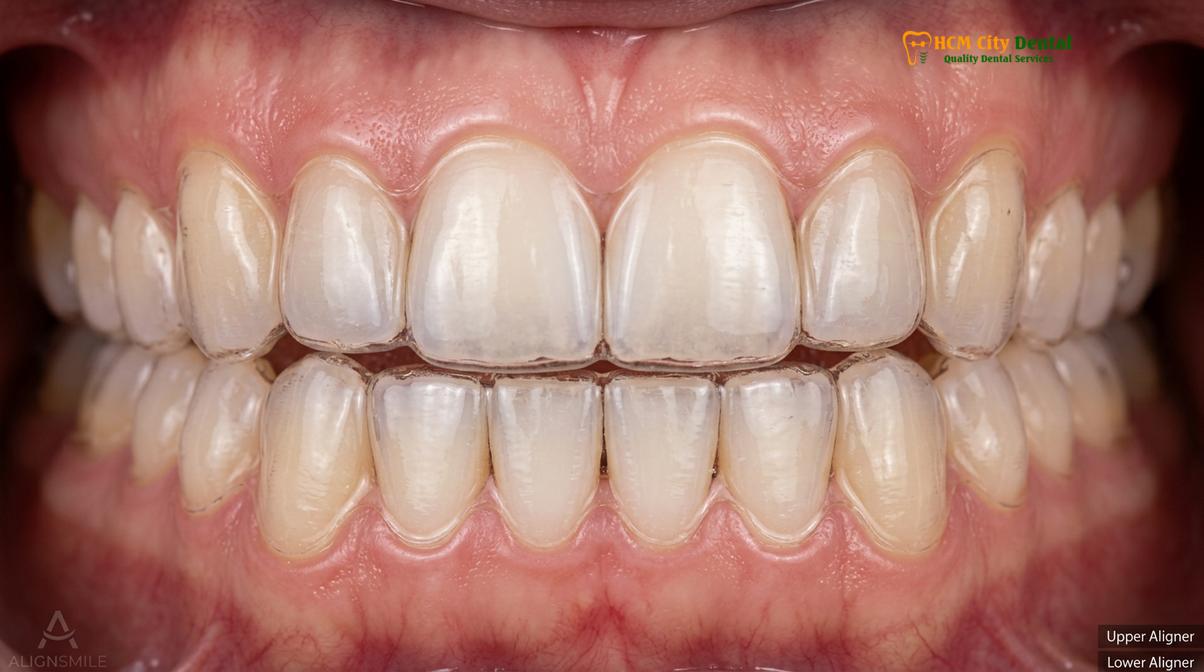
Conversely, clear aligner systems, such as Invisalign, utilize a series of custom-fabricated, transparent thermoplastic trays. These systems rely on sophisticated digital planning to stage tooth movements incrementally. Aligners offer unparalleled aesthetics and the significant advantage of being removable, allowing for unimpeded brushing and flossing. However, their efficacy is heavily dependent on strict patient compliance—aligners must be worn for 20 to 22 hours per day. For expats seeking top-tier Invisalign providers Ho Chi Minh City, it is crucial to select a provider with extensive experience in clear aligner biomechanics, as the force delivery mechanisms differ significantly from fixed braces[2]. Should an issue arise while traveling, knowing what to do if you lose an aligner abroad is also an important part of the treatment discussion.
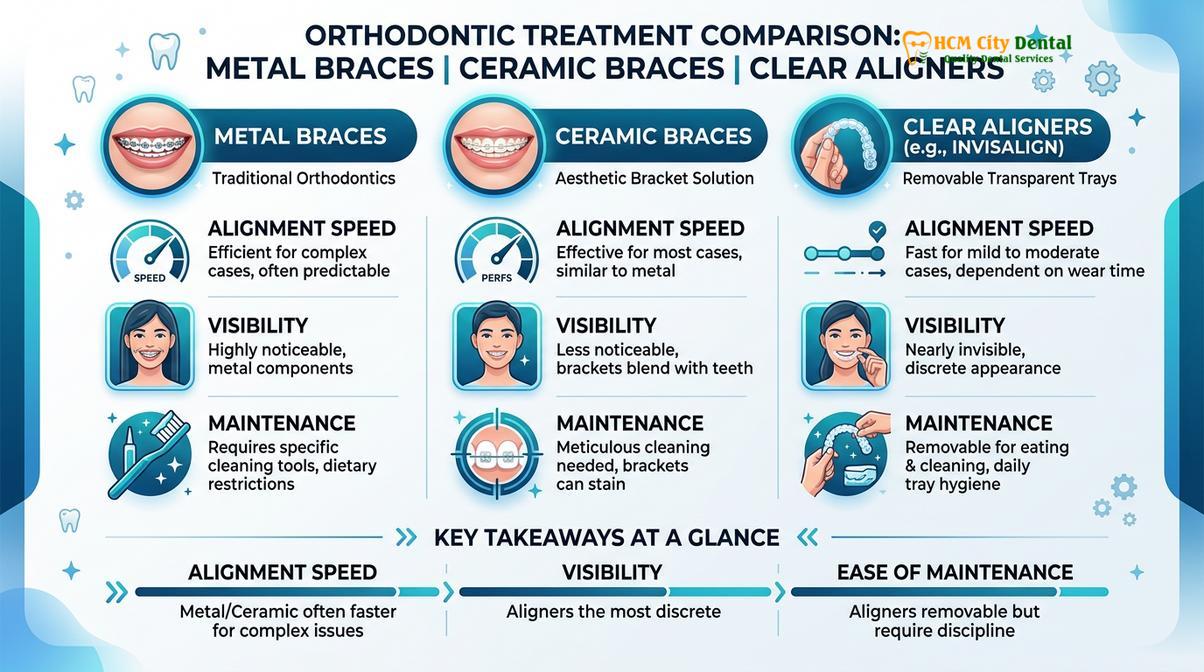
| Clinical Parameter | Fixed Braces (Metal/Ceramic) | Clear Aligners (Invisalign) |
|---|---|---|
| Biomechanical Control | Superior for complex root torquing, severe rotations, and significant vertical movements. | Excellent for tipping and mild to moderate crowding; requires attachments for complex movements. |
| Patient Compliance | Passive compliance; the appliance is fixed and continuously active. | High compliance required; must be worn 20-22 hours daily to achieve predicted outcomes. |
| Periodontal Hygiene | Requires meticulous interdental cleaning; higher risk of plaque accumulation around brackets. | Removable nature allows for normal brushing and flossing, reducing gingival inflammation risk. |
| Aesthetic Impact | Highly visible (metal) or moderately visible (ceramic). | Virtually invisible; highly preferred by adult professionals. |
| Emergency Management | Risk of broken brackets or poking wires requiring immediate clinical attention. | Minimal emergency risks; if an aligner is lost, patients can often advance to the next tray. |
Regardless of the modality chosen, the retention phase is critical. Following the active movement phase, patients must wear retainers to allow the periodontal ligaments and alveolar bone to reorganize and stabilize the teeth in their new positions. Understanding the protocols for maintaining fixed retainers or removable Essix retainers is essential for long-term success. Many patients also inquire about the timeline for teeth whitening after braces removal to complete their aesthetic transformation.
Flexible Payment Plans and Installments for Expat Families
Reputable clinics offer structured, phase-based payment plans that align financial commitments with clinical milestones, making comprehensive orthodontic care highly accessible for expatriate families.
Orthodontic treatment represents a significant investment in oral health. Recognizing the financial considerations of expatriate families, many top-tier dental facilities in Vietnam have implemented transparent, structured payment methodologies. Unlike standard restorative procedures that are billed upon completion, orthodontics is typically financed over the duration of the active treatment phase.
Clinical Case Example: An expatriate family residing in Ho Chi Minh City sought orthodontic care for their two teenagers at HCMC Dental Clinic. By utilizing a phased payment structure, the family was able to manage the financial commitment without a massive upfront burden. The clinic provided a detailed contract outlining the exact costs for diagnostics, active treatment, and the final retention phase, ensuring complete financial transparency and allowing the family to budget effectively over the treatment timeline.
The financial structure usually begins with a diagnostic and records fee, covering the CBCT scans, digital impressions, and the orthodontist’s time in developing the comprehensive treatment plan. Once the plan is accepted, an initial deposit is required. This deposit covers the laboratory costs associated with fabricating the appliances—whether that involves ordering customized self-ligating brackets or manufacturing the initial series of clear aligners. The remaining balance is then divided into structured monthly payment plans, payable at each adjustment visit.
For those opting for clear aligner therapy, clinics often provide specific clear aligner financing structures. It is important for patients to clarify exactly what is included in the total fee. A comprehensive quote should encompass all adjustment visits, emergency appointments for broken appliances, and the initial set of post-treatment retainers. Hidden fees for mid-treatment radiographs or unexpected laboratory charges should be explicitly ruled out in the initial financial agreement.
When to See an Orthodontist & Important Clinical Considerations
Early evaluation and timely intervention are crucial for addressing functional malocclusions, preventing excessive enamel wear, and ensuring optimal periodontal health throughout the patient’s lifetime.
While many patients seek orthodontic care for aesthetic improvements, the primary medical indication for treatment is the correction of functional malocclusions that threaten long-term oral health. Expatriates should schedule a comprehensive orthodontic evaluation if they experience any clinical signs of bite instability or dental crowding.
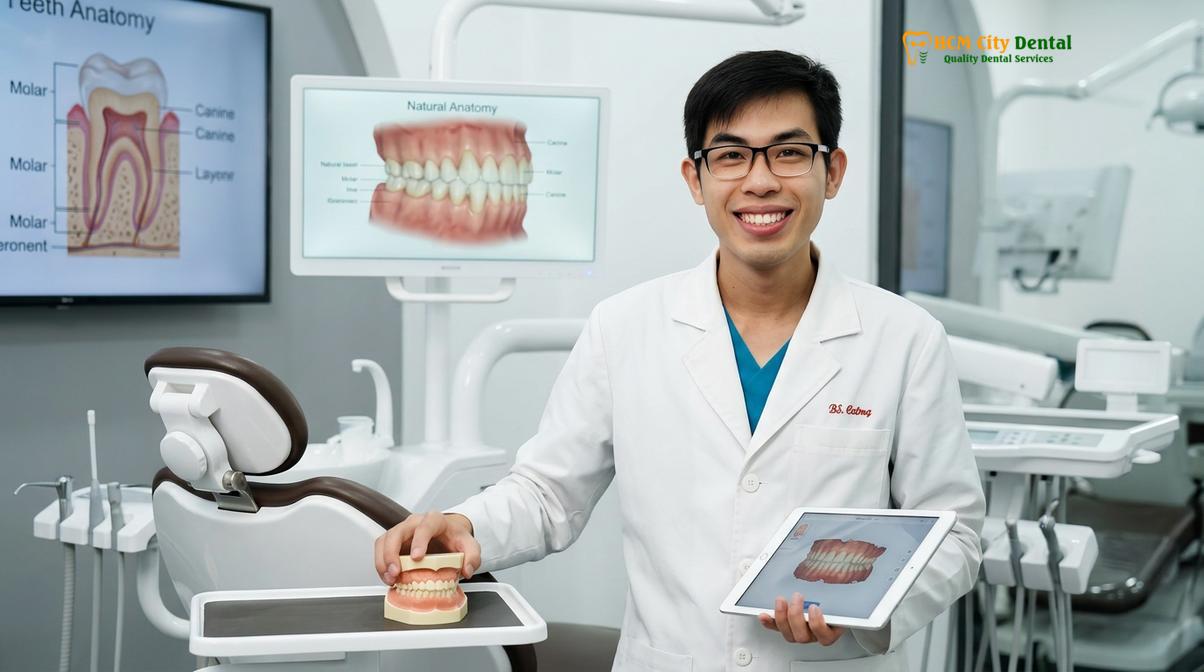
Severe crowding or overlapping of teeth is a primary concern, as it creates inaccessible areas for oral hygiene, significantly increasing the risk of localized periodontal disease and interproximal caries. Additionally, functional issues such as difficulty chewing, chronic mouth breathing, or speech impediments often have underlying orthodontic or skeletal causes. Expatriates should also be vigilant about temporomandibular joint (TMJ) discomfort, which can be exacerbated by a misaligned bite. If you experience any of these symptoms, or if you simply wish to improve your dental aesthetics, scheduling a consultation is the first step toward a healthier smile.
If you are an expatriate seeking expert orthodontic care, our team is ready to assist you. Contact HCMC Dental Clinic in Ho Chi Minh City today to schedule your comprehensive evaluation and explore our orthodontic and bite protection solutions.
References
- American Journal of Orthodontics and Dentofacial Orthopedics. Biomechanical principles of tooth movement and alveolar bone remodeling. (2021).
- Journal of Clinical Orthodontics. Efficacy of clear aligner therapy versus conventional fixed appliances in complex malocclusions. (2020).
- International Dental Journal. Cross-border dental care: Quality assurance and patient safety in dental tourism. (2019).
- Angle Orthodontist. Periodontal health during orthodontic treatment with self-ligating brackets. (2022).
- Journal of the World Federation of Orthodontists. Standards for postgraduate orthodontic education and clinical credentialing. (2018).
For pricing, booking, and a free clinical assessment, visit our Dental Braces & Orthodontics service page at HCMC Dental Clinic.