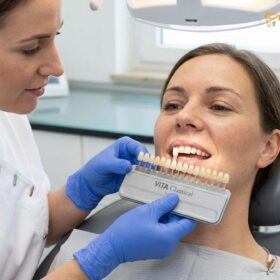
Whitening for smokers and coffee stains requires professional-grade oxidation to break down deeply embedded chromogens and tar. While surface stains can be managed with routine hygiene, chronic discoloration demands advanced LED-activated peroxide systems to penetrate the enamel safely and restore a bright, natural smile without compromising tooth structure.
Clinical Summary:
Addressing severe dental discoloration caused by tobacco, coffee, and tea necessitates a comprehensive clinical approach rather than over-the-counter remedies. Professional teeth whitening protocols utilize high-concentration hydrogen peroxide and carbamide peroxide to initiate an active oxidation reaction within the tooth structure. For optimal results, modern dentistry employs advanced systems that combine blue LED acceleration with Amorphous Calcium Phosphate (ACP) to protect enamel and reduce sensitivity. For heavy stainers, this in-office procedure is often paired with custom-fabricated take-home trays to ensure long-term shade stability. Proper treatment sequencing, adherence to a strict post-treatment white diet, and routine professional cleanings are critical for maintaining a luminous smile against continuous lifestyle staining factors.
Key Takeaways:
- Professional oxidation is required to break the complex molecular bonds of tar, nicotine, and tannin stains embedded deep within the enamel.
- Advanced LED technology utilizes blue light and ACP to rapidly whiten teeth while actively rebuilding enamel and minimizing transient sensitivity.
- Custom take-home trays with professional-grade gel are essential for maintaining results in patients with ongoing staining habits.
- Whitening must be completed and stabilized for two weeks prior to color-matching any new dental restorations like veneers or crowns.
- A strict 48-hour “white diet” is mandatory post-treatment to prevent immediate re-staining while the protective salivary pellicle reforms.
The Impact of Nicotine, Coffee, and Tea on Enamel
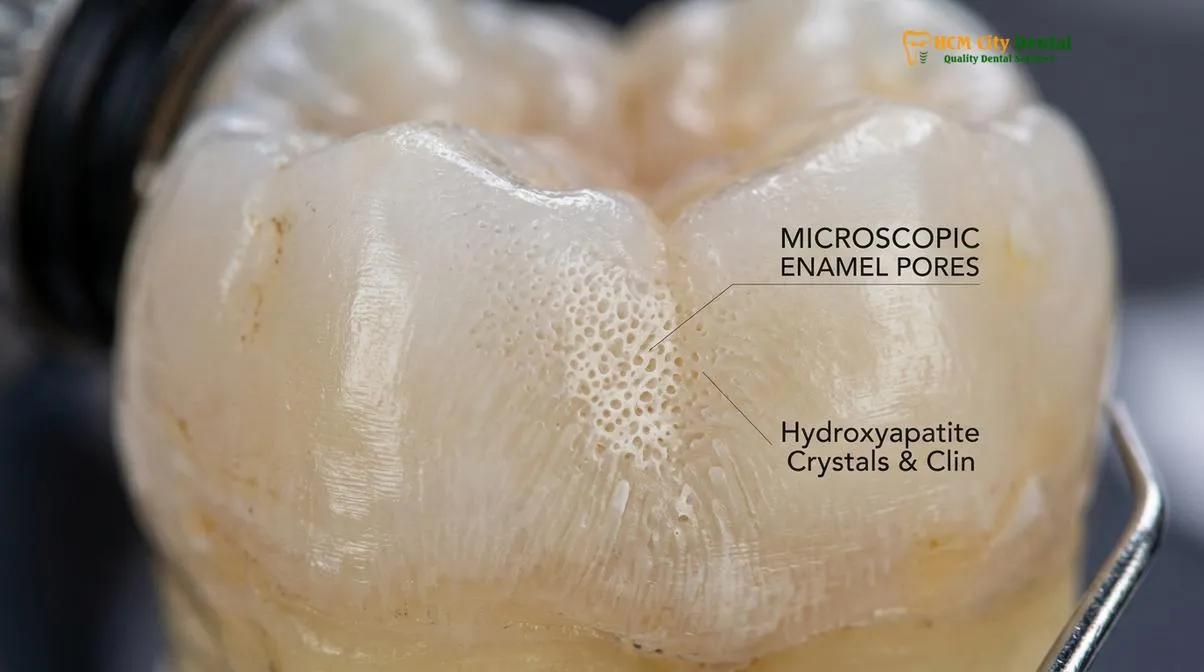
Nicotine, tar, and tannins aggressively bind to the enamel pellicle, gradually penetrating the microscopic pores of the teeth to cause stubborn, dark discoloration that resists standard brushing.
To understand why certain lifestyle habits wreak havoc on the color of your smile, it is essential to examine the microscopic anatomy of a human tooth. The outermost layer, the enamel, appears smooth to the naked eye but is actually composed of tightly packed hydroxyapatite crystals forming microscopic hexagonal rods. Between these rods are minute pores and organic matrices. When you consume dark beverages or use tobacco products, the staining agents do not merely sit on the surface; they infiltrate these microscopic spaces, leading to progressive and stubborn discoloration[1].
Coffee and tea are notorious for their staining capabilities due to their specific chemical compositions. Coffee contains high levels of chromogens—intensely pigmented molecules that readily adhere to dental surfaces. Furthermore, coffee is rich in tannins, which are acidic compounds that temporarily soften the enamel, making it easier for chromogens to penetrate. Tea, particularly black tea, is often even more staining than coffee because it contains a higher concentration of dark polyphenol pigments. When these polyphenol pigments interact with the natural proteins in your saliva, they form a yellowish-brown film that tightly binds to the tooth structure, requiring more than just a toothbrush to dislodge.
Tobacco use introduces an entirely different and more aggressive class of staining agents. The primary culprits in smoking-related discoloration are tar and nicotine. Tar is a naturally dark, sticky, and resinous substance that adheres fiercely to the enamel pellicle. Nicotine, on the other hand, is colorless in its natural state. However, when nicotine is exposed to oxygen in the air and the oral environment, it undergoes a chemical reaction that turns it into a yellowish-brown compound. Over extended periods of smoking, these tar and nicotine stains layer upon each other, migrating deeper into the tooth structure.
Why Stubborn Organic Stains Require Professional Oxidation
Professional whitening utilizes high-concentration hydrogen peroxide to trigger an active oxidation reaction, breaking the double carbon bonds of deep intrinsic stains that over-the-counter products cannot reach.
When dealing with accumulated coffee, tea, and tobacco stains, mechanical abrasion is insufficient. Whitening toothpastes and over-the-counter strips primarily target extrinsic (surface) stains using mild abrasives like silica or low-concentration bleaching agents. However, they cannot reach the chromogens trapped deep within the dentinal tubules. Attempting to scrub away these deep stains with DIY kitchen remedies, such as baking soda mixed with lemon juice, is highly dangerous. These acidic and abrasive mixtures cause irreversible enamel erosion, stripping away the protective layer of the tooth and paradoxically making the teeth appear more yellow as the underlying dentin is exposed.
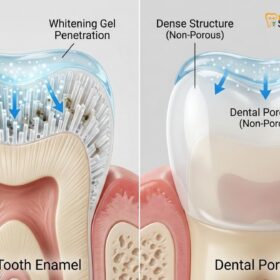
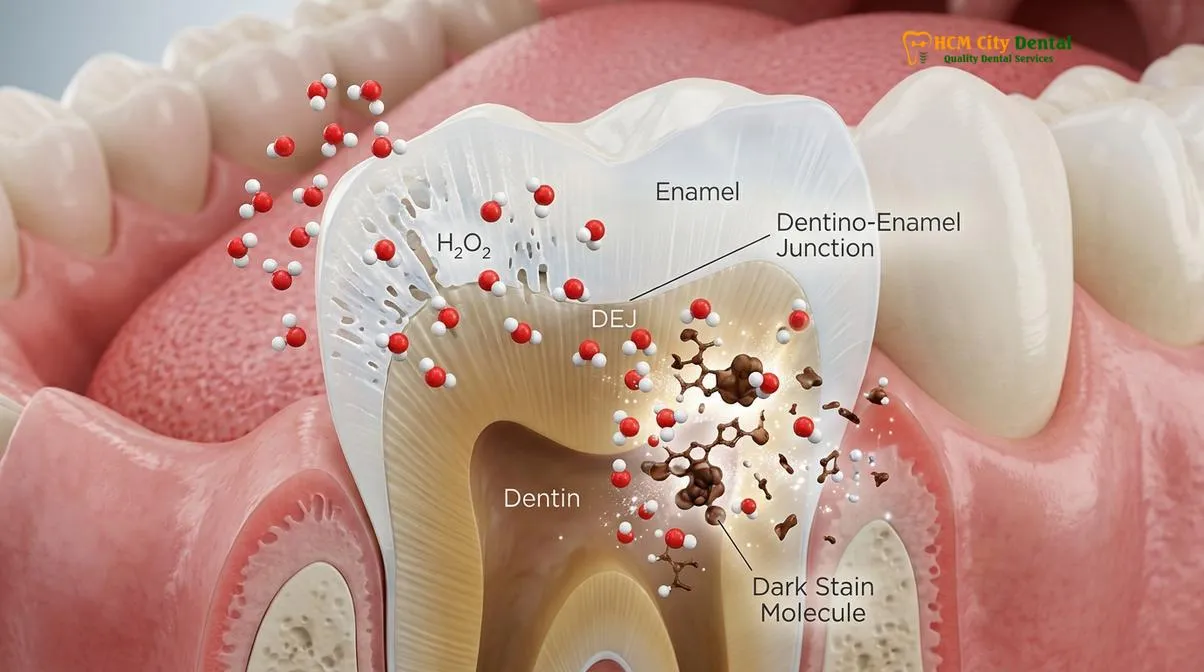
To safely and effectively eliminate deep intrinsic staining, dental professionals employ advanced chemical bleaching agents—specifically hydrogen peroxide and carbamide peroxide. When these professional-grade gels are applied to the teeth, they penetrate the porous enamel and reach the dentino-enamel junction (DEJ). Here, the peroxide molecules break down into highly reactive perhydroxyl free radicals. These free radicals initiate an active oxidation reaction, aggressively targeting the complex, long-chain organic stain molecules[2].
“The efficacy of professional tooth bleaching lies in the ability of peroxide-derived free radicals to cleave the double carbon bonds of complex stain molecules, reducing them to smaller, colorless hydrophilic structures that reflect light more efficiently.”
By breaking the double carbon bonds of the stain molecules, the oxidation process alters their optical properties. The large, dark molecules are fragmented into smaller, lighter, and less pigmented molecules. As this process continues, the stains are essentially dissolved from the inside out, restoring the natural whiteness and translucency of the enamel. Because tobacco and heavy coffee stains involve dense molecular structures, a high concentration of peroxide—safely administered under the strict isolation protocols of a dental clinic—is absolutely necessary to achieve a meaningful and lasting shade improvement.
The Zoom! WhiteSpeed Solution for Chronic Discoloration
The Philips Zoom! WhiteSpeed system combines blue LED acceleration with Amorphous Calcium Phosphate (ACP) to rapidly lift chronic stains while simultaneously rebuilding enamel and minimizing transient sensitivity.
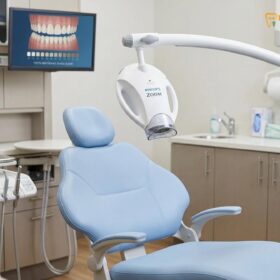
For patients presenting with severe lifestyle-induced discoloration, the technology standard at our clinic involves the original Philips Zoom! WhiteSpeed blue LED technology. This in-office system represents the pinnacle of cosmetic dental science, designed to deliver maximum shade improvement in a single, controlled clinical session.
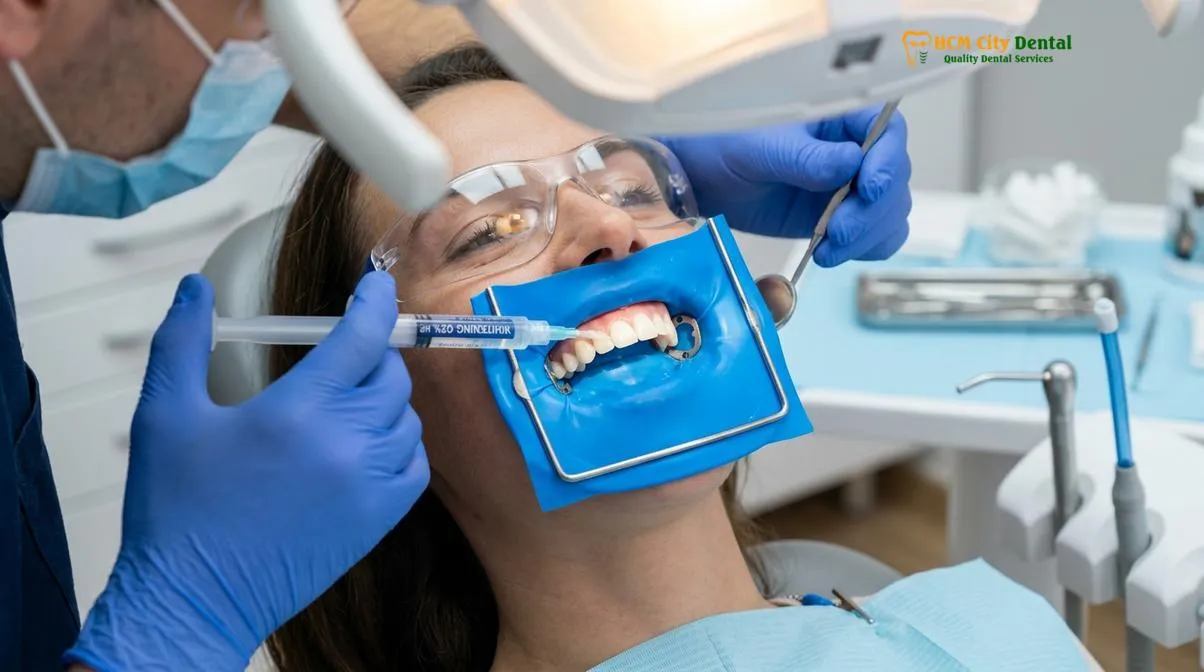
The procedure begins with meticulous isolation. The dentist applies a protective liquid rubber dam to the gingival tissues (gums) to prevent any chemical irritation from the high-concentration hydrogen peroxide gel. Once the soft tissues are secured, the proprietary whitening gel is applied to the labial surfaces of the teeth. The magic of this system lies in its light-activated chemistry. The lamp emits a specific wavelength of blue LED light that acts as a catalyst, accelerating the breakdown of hydrogen peroxide into its active stain-fighting free radicals. This light activation allows the gel to penetrate the enamel faster and more deeply than non-activated systems[3].
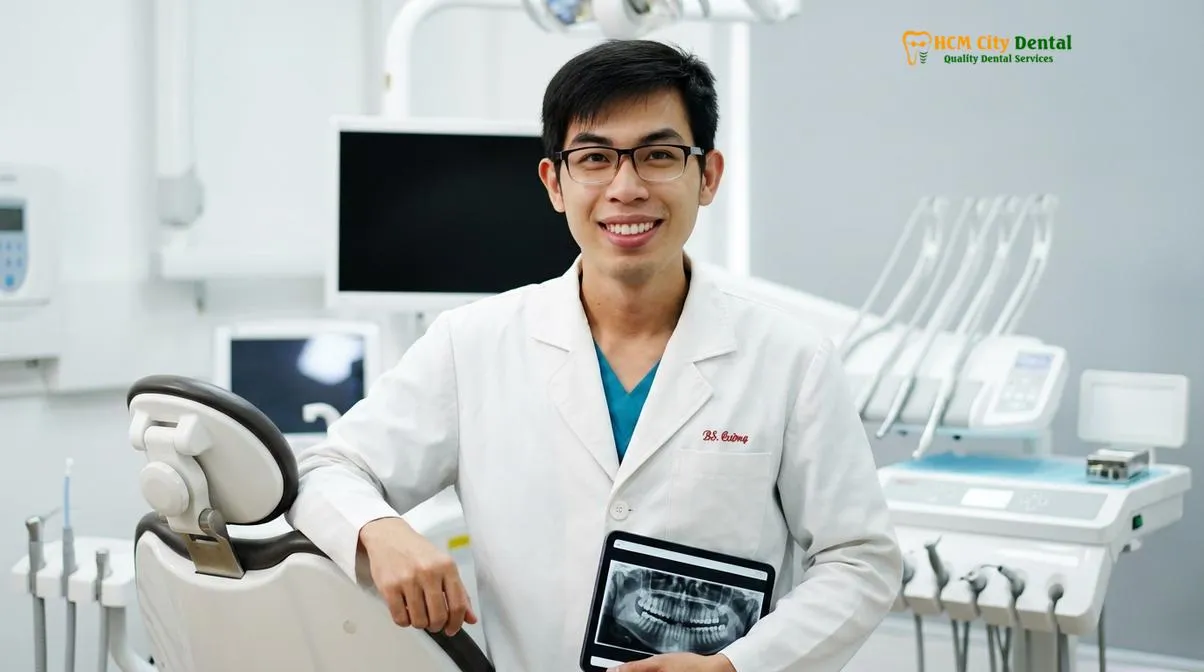
Dr. Nguyen Van Cuong, a leading expert in cosmetic dentistry, emphasizes the importance of this protective mechanism. He notes that when treating patients with chronic tobacco and coffee stains, the primary goal is to achieve a dramatic aesthetic transformation without compromising the structural integrity of the tooth. His clinical approach ensures that the enamel is actively remineralized during the bleaching process, providing patients with a comfortable experience and a resilient, high-gloss finish.
| Treatment Option | Standard Walk-in Price | WhatsApp Booking Discount (-40%) |
|---|---|---|
| In-office Zoom Whitening | 4,666,667 VND (~$180) | 2,800,000 VND ($108) |
| Take-home Whitening Kit | 2,500,000 VND (~$96) | 1,500,000 VND ($58) |
| Bright Smile Combo (Clean + Zoom) | 5,333,333 VND (~$206) | 3,200,000 VND ($123) |
| Perfect Smile Combo (In-office + Take-home) | 7,166,667 VND (~$276) | 4,300,000 VND ($166) |
Take-Home Trays: An Essential Maintenance Tool for Heavy Stained Teeth
Custom-fabricated bleaching trays loaded with professional gel provide sustained peroxide exposure, making them a crucial maintenance strategy for patients who continue to smoke or consume dark beverages.
While an in-office session provides immediate and dramatic results, it is rarely a permanent standalone solution for individuals who continue to expose their teeth to heavy chromogens. For smokers and daily coffee consumers, the continuous influx of tar and tannins means that stains will inevitably begin to re-accumulate. To combat this, a robust custom trays maintenance program is absolutely essential.
The take-home phase involves the fabrication of custom dental trays. Unlike generic, over-the-counter boil-and-bite trays or whitening strips that fit poorly and allow saliva to wash away the active ingredients, custom trays are vacuum-formed over precise digital or physical impressions of the patient’s unique dental anatomy. This precision fit ensures that the bleaching gel is held tightly against the enamel surfaces and prevents the peroxide from leaking onto the sensitive gingival tissues, thereby avoiding chemical burns and maximizing the efficacy of the treatment.
We provide our patients with premium take-home bleaching gels that utilize carbamide peroxide. This compound breaks down into hydrogen peroxide and urea, providing a slower, more sustained release of the active oxidizing agent. This sustained release is particularly effective at lifting the deep, residual pigments that may remain after an in-office session. Furthermore, these professional gels often feature a proprietary formula containing potassium nitrate and sodium fluoride. Potassium nitrate works by traveling through the dentinal tubules to the dental pulp, where it prevents the nerve from depolarizing, effectively stopping pain signals. Sodium fluoride acts to strengthen the enamel and increase its resistance to acid attacks[4].
Realistic Results and Expectations for Deep Stain Cases
Managing patient expectations is critical, as the degree of whitening achieved depends heavily on the initial severity of the stains, the natural opacity of the enamel, and the patient’s adherence to post-treatment protocols.
It is important to understand that teeth whitening is not a one-size-fits-all procedure. Patients with mild to moderate coffee stains often see a dramatic shift of several shades in a single session. However, those with decades of heavy tobacco use may require a more phased approach. Deeply embedded tar stains can be highly resistant to initial oxidation, sometimes appearing slightly uneven immediately after the first treatment as different areas of the enamel respond at varying rates.
Clinical Note: Dental restorations such as crowns, veneers, and composite fillings do not respond to bleaching agents. If you have existing restorations in your smile line, they will remain their original color while your natural teeth lighten. You may need to have these restorations replaced to match your newly whitened smile.
For the most stubborn cases, a combination therapy—starting with an in-office LED session followed by two to four weeks of diligent take-home tray usage—is generally the most effective strategy. This dual approach ensures that the initial bulk of the discoloration is rapidly oxidized, while the sustained at-home treatment gently lifts the remaining deep-seated pigments.
Preventative Tips: Rinsing Protocols and Dental Hygiene
Maintaining a bright smile requires strict adherence to a 48-hour white diet post-treatment, followed by consistent rinsing protocols and optimized professional cleaning intervals.
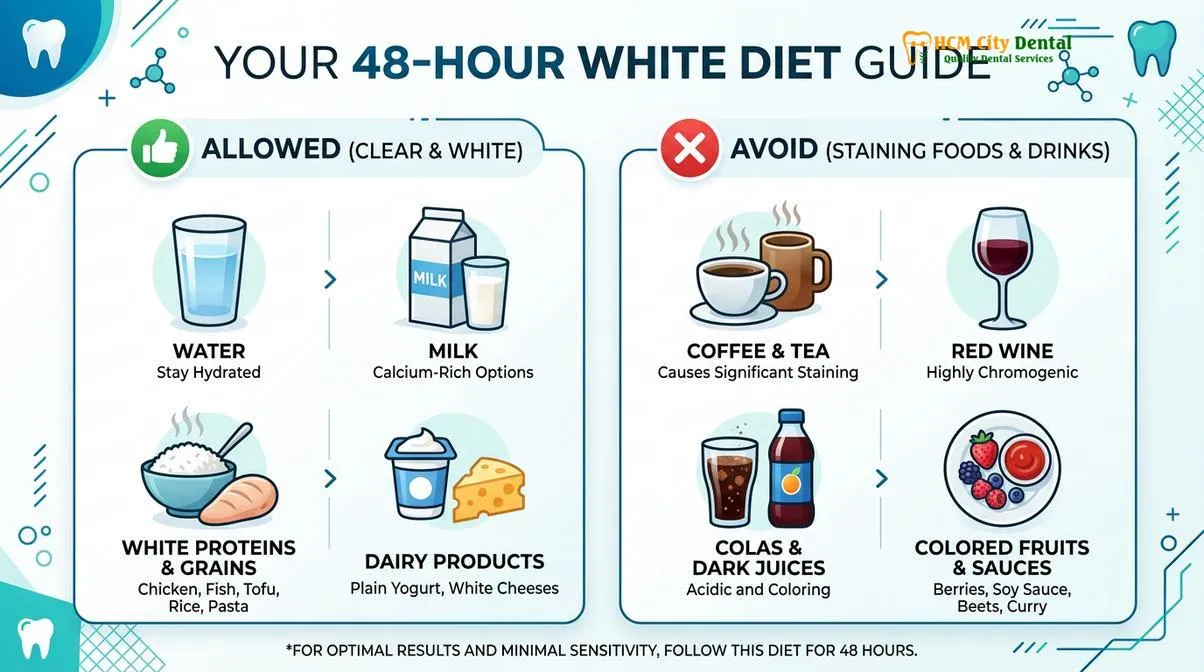
The immediate post-treatment period is the most critical phase for ensuring the longevity of your whitening results. During the bleaching process, the peroxide agents temporarily dissolve the acquired pellicle—a microscopic layer of salivary proteins that coats the teeth. While the removal of this pellicle is necessary for the peroxide to access the enamel pores, it leaves the teeth highly susceptible to absorbing new pigments. It takes approximately 48 hours for the salivary pellicle to fully reform and re-establish its protective barrier.
Therefore, patients must strictly adhere to a “White Diet” during this crucial 48-hour recovery window. This means absolutely avoiding any staining pigments, chromogens, and tannins. Foods and beverages to eliminate include coffee, black tea, red wine, dark sodas, soy sauce, berries, tomato-based sauces, and, most importantly, all tobacco products. A helpful rule of thumb is: if it would stain a white cotton shirt, it will stain your freshly whitened teeth.
“The 48-hour post-bleaching window is characterized by heightened enamel porosity. Strict avoidance of chromogenic substances during this pellicle reformation phase is non-negotiable for preventing rapid pigment relapse and ensuring shade stability.”
Once the 48-hour window has passed, patients can resume their normal dietary habits, but they should adopt defensive hygiene strategies to minimize future stain accumulation. If drinking coffee, tea, or dark sodas is necessary, using a straw can help bypass the anterior teeth, directing the liquid straight to the back of the mouth. Immediately after consuming staining beverages or smoking, vigorously rinse the mouth with plain water. This simple action dilutes the chromogens and neutralizes the acidic environment before the pigments have a chance to bind to the enamel, reducing the susceptibility of bleached enamel to secondary staining[5].
Case Study: Transforming a Smoker’s Smile in Ho Chi Minh City
A combined clinical approach utilizing in-office LED whitening and custom take-home trays can successfully reverse decades of severe tobacco and coffee discoloration.
Patient Profile: A 45-year-old expatriate visiting HCMC Dental Clinic in Ho Chi Minh City.
Chief Complaint: Severe, dark brown intrinsic staining resulting from 20 years of heavy smoking and daily espresso consumption. The patient reported that over-the-counter whitening strips had failed to produce any noticeable improvement.
Clinical Protocol: The clinical team initiated a dual-action treatment plan. The patient first underwent a comprehensive scaling and air-flow polishing session to remove all extrinsic calculus and surface tar. This was immediately followed by a 45-minute in-office Zoom LED whitening session. To ensure the deep intrinsic stains were fully eradicated, the patient was provided with custom-fitted take-home trays and instructed to use a 16% carbamide peroxide gel for two weeks.
Outcome: The final result was a dramatic, multi-shade improvement that restored the natural luminosity of the patient’s smile, demonstrating the power of a structured, professionally supervised whitening protocol.
When to Consult a Dental Professional
Before attempting any whitening regimen, especially for severe stains, a comprehensive dental examination is necessary to rule out underlying pathologies and ensure the teeth are healthy enough for bleaching.
Not all discoloration is caused by lifestyle habits. Sometimes, a dark tooth can indicate internal trauma, pulpal necrosis (a dead nerve), or decay. Applying bleaching agents to a tooth with active decay or exposed roots can cause severe pain and exacerbate the underlying dental issue. According to the Vietnam Ministry of Health (MOH) guidelines on preventive oral healthcare, seeking professional assessment before initiating any bleaching protocol is crucial to ensure the safety of the gingival tissues and enamel structure[6].
If you experience sharp, lingering pain when consuming hot or cold beverages, or if you notice a single tooth that is significantly darker than the rest, you should consult a dentist immediately. A professional evaluation will determine the true cause of the discoloration and allow the dentist to recommend the safest and most effective treatment plan tailored to your specific clinical needs.
If you are struggling with stubborn tobacco or coffee stains and want to safely restore the brilliance of your smile, contact HCMC Dental Clinic in Ho Chi Minh City today to schedule a comprehensive cosmetic consultation.
References
- Journal of Clinical Periodontology. Tooth bleaching safety and enamel micro-hardness. (2021).
- Journal of Esthetic and Restorative Dentistry. Carbamide vs Hydrogen Peroxide sensitivity. (2020).
- American Dental Association. Clinical guidelines for professional teeth whitening. (2019).
- Journal of Dentistry. Amorphous calcium phosphate re-mineralization. (2022).
- Operative Dentistry. Staining susceptibility of bleached enamel. (2018).
- Vietnam Ministry of Health (MOH). National guidelines on preventive oral healthcare and cosmetic dentistry standards. (2023).