Can you whiten fillings, crowns, or veneers? The short answer is no. Traditional teeth whitening gels containing hydrogen or carbamide peroxide only oxidize stains within natural porous enamel. Artificial dental restorations are non-porous and will not change color, requiring strategic replacement to match a newly brightened smile.
Clinical Summary:
Teeth whitening treatments are highly effective for natural tooth structure but have zero lightening effect on inorganic dental materials such as porcelain crowns, ceramic veneers, or composite resin fillings. When a patient with existing dental work undergoes a bleaching procedure, the natural teeth will brighten while the restorations remain their original fabricated shade, often resulting in a mismatched, uneven smile. To achieve a cohesive aesthetic result, cosmetic dentists employ a strict sequencing protocol: natural teeth are whitened first to the desired target shade, followed by a mandatory two-week stabilization period. Only after the enamel color has fully settled and oxygen has dissipated from the tooth structure are the old, darker restorations replaced with new materials custom-matched to the upgraded smile. Professional supervision is essential to manage this transition, protect enamel integrity, and ensure seamless integration of natural and artificial teeth.
Key Takeaways:
- Bleaching agents only oxidize stains in natural enamel; they cannot change the color of dental restorations.
- Whitening teeth with existing visible dental work will create a noticeable color mismatch.
- The correct clinical sequence is to whiten natural teeth first, wait two weeks, then replace old restorations.
- Professional systems use advanced remineralization technology to protect enamel and reduce sensitivity.
- Surface stains on veneers or crowns can often be polished away by a dentist without needing full replacement.
The Chemical Boundary of Teeth Whitening
Teeth whitening relies on a chemical oxidation process that penetrates natural enamel rods, a mechanism entirely ineffective on inorganic, non-porous dental prosthetics.
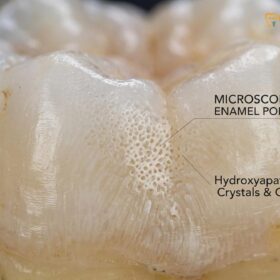
To understand why dental restorations do not respond to bleaching, one must first examine the fundamental biochemistry of teeth whitening. Natural human tooth enamel is not a solid, impenetrable sheet of tissue. Instead, it is composed of millions of microscopic, tightly packed hydroxyapatite crystals arranged in hexagonal rods. Between these rods are microscopic pores and organic matrices. Over time, consuming chromogen-rich foods and beverages causes pigmented molecules to seep into these pores and become trapped within the tooth structure, causing intrinsic discoloration[1].
Professional whitening agents, primarily formulated with hydrogen peroxide or carbamide peroxide, are designed to exploit this porous anatomy. When the bleaching gel is applied to the tooth surface, it breaks down into water and highly reactive oxygen free radicals. These oxygen molecules penetrate the enamel pores and initiate an oxidation reaction. They actively seek out the complex, heavily pigmented organic molecules trapped inside the tooth and break their double carbon bonds. As these molecular bonds are severed, the chromogens are fractured into smaller, less pigmented fragments, resulting in a visibly brighter tooth.
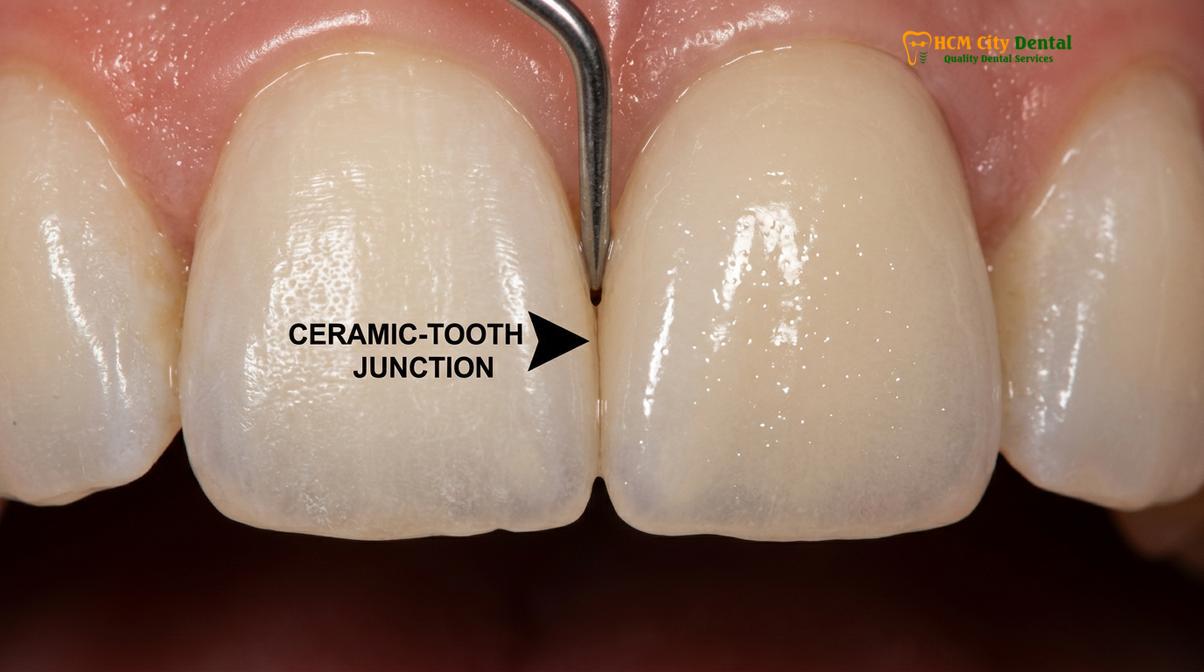
However, this entire chemical process is strictly dependent on the presence of organic, porous tissue. Dental restorations—whether they are composite resins, porcelains, or ceramics—are manufactured from inorganic, synthetic materials. They lack the microscopic tubular structure of natural enamel. Consequently, there is zero peroxide absorption into these materials. When bleaching gel is applied to a crown or veneer, the oxygen free radicals simply bounce off the impenetrable surface, leaving the restoration’s color permanently unchanged[2].
How Peroxide Gels Interact with Ceramic and Resin Materials
While natural teeth brighten under bleaching agents, materials like porcelain and composite resin remain chemically inert, maintaining their original fabricated shade permanently.
The interaction between whitening gels and specific dental materials dictates the boundaries of cosmetic dentistry. Different restorative materials behave uniquely when exposed to the oral environment and to professional bleaching agents.
“The fundamental limitation of cosmetic bleaching lies in material science; oxygen free radicals require organic carbon bonds to break down stains, rendering them completely powerless against the dense, inorganic lattice of dental ceramics and synthetic resins.”
A composite resin restoration is commonly used for cavity fillings and cosmetic dental bonding. It is a mixture of plastic and powdered glass filler. While composite is highly versatile, it is slightly porous over time, allowing it to absorb water and dietary stains from the oral cavity. However, it does not absorb peroxide in a way that allows for oxidation. Exposing older composite fillings to strong bleaching agents can sometimes degrade the bond margin slightly, making the edges more susceptible to future micro-leakage if not monitored by a professional[4].
Dental porcelain, used for veneers and traditional crowns, is fired in a kiln at extremely high temperatures, creating a glass-like, non-porous surface. It does not absorb dietary pigments, nor does it absorb whitening gels. The color of a porcelain veneer is permanently baked into the material during fabrication. Applying hydrogen peroxide to porcelain is entirely ineffective at altering its intrinsic shade.
The Dilemma of the ‘Mismatched Smile’
Whitening natural teeth around existing restorations creates a stark color contrast, highlighting the darker, unchanged artificial materials and disrupting facial aesthetics.
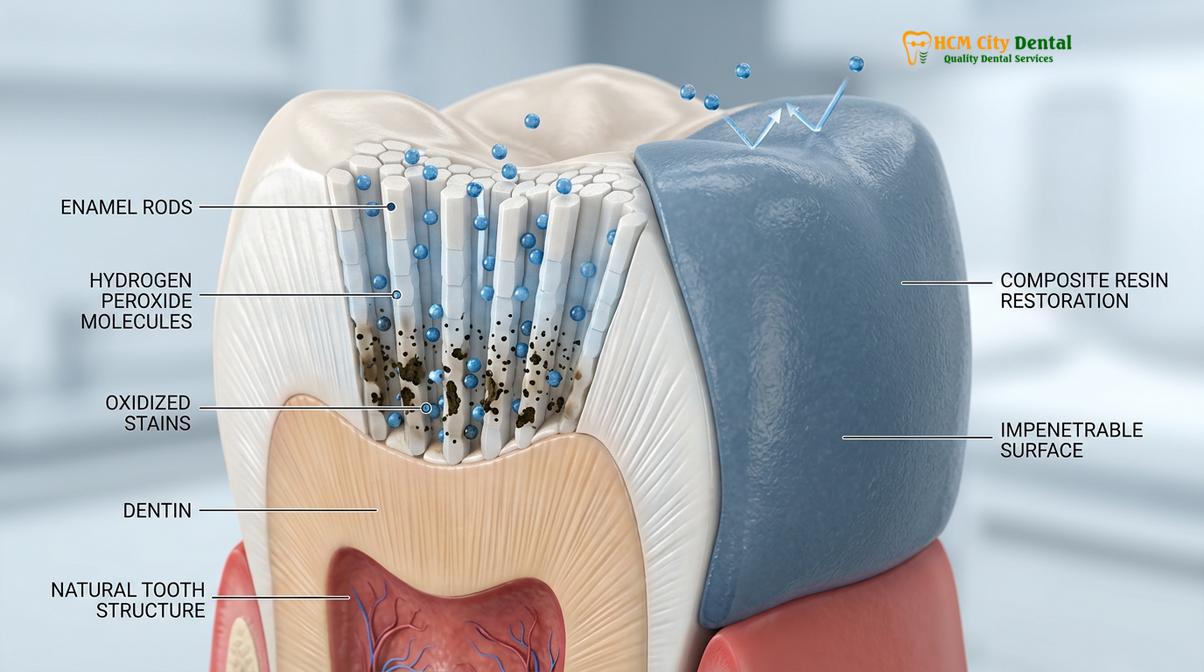
The most significant clinical complication of whitening teeth with existing dental work is the creation of a mismatched smile. When a patient undergoes a professional whitening session, their natural enamel will predictably lift several shades lighter. However, because the restorations remain static, a stark visual contrast emerges.
For example, if a patient has a single porcelain crown on an upper front incisor that was perfectly color-matched to their slightly yellowed natural teeth previously, whitening the smile today will turn the natural teeth bright white, leaving the single crown looking noticeably yellow and artificial. The aesthetic disruption can be severe, drawing unwanted attention to the dental work rather than the overall smile.
| Material Type | Response to Peroxide Gel | Stain Accumulation Over Time | Clinical Solution for Whiter Shade |
|---|---|---|---|
| Natural Enamel | Excellent (Oxidizes intrinsic stains) | High (Absorbs dietary chromogens) | Professional In-Office or Take-Home Bleaching |
| Composite Resin | None (Remains original shade) | Moderate (Surface and margin staining) | Complete replacement of the filling/bonding |
| Porcelain Veneers | None (Remains original shade) | Low (Highly stain resistant) | Complete replacement of the veneer |
| Zirconia Crowns | None (Remains original shade) | Very Low (Impervious to stains) | Complete replacement of the crown |
This dilemma requires careful cosmetic mapping. A skilled dentist must evaluate the smile line to determine which restorations will become aesthetic liabilities post-whitening. Fillings on the back molars are generally of little concern, as they are hidden from view. However, any composite bonding, veneers, or crowns on the anterior teeth must be factored into the comprehensive treatment plan before a single drop of bleaching gel is applied.
Solutions: Replacing Old Fillings and Crowns Post-Whitening
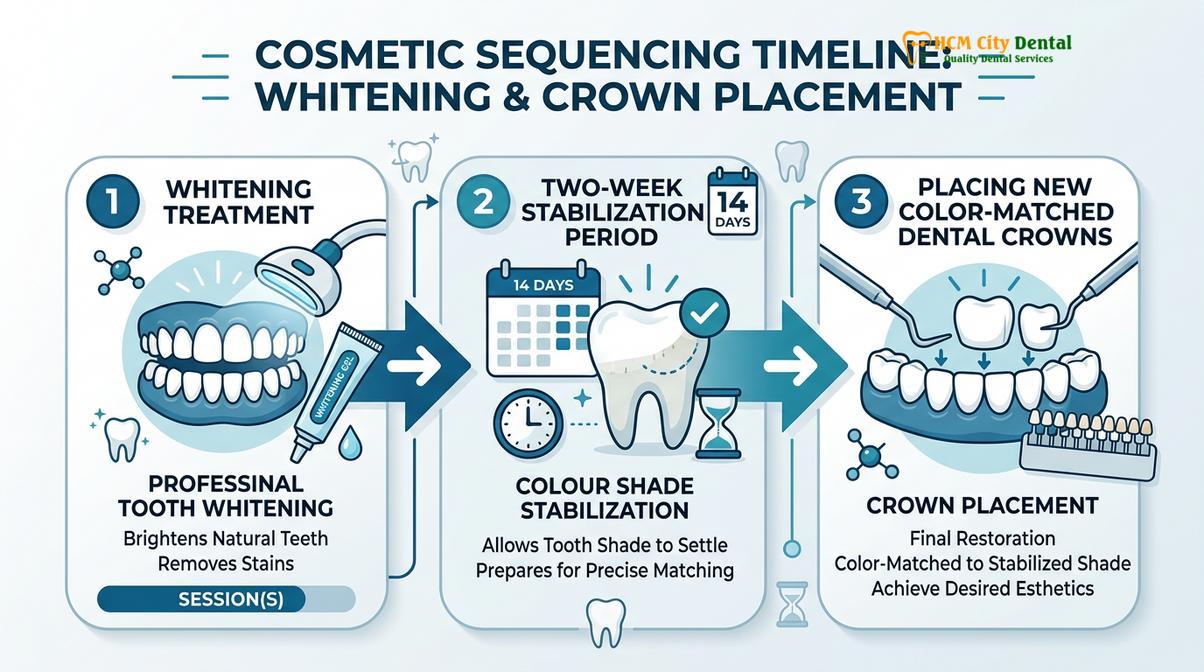
The gold standard clinical protocol is to whiten natural teeth first, allow the shade to stabilize for two weeks, and then replace old restorations.
To resolve the dilemma of the mismatched smile, cosmetic dentists follow a strict, universally accepted treatment sequence. The golden rule of aesthetic dentistry is: always whiten first, restore second. Attempting to match a new crown to unwhitened teeth, and then hoping the natural teeth will eventually bleach to match the new crown, is a highly unpredictable and flawed approach.
The correct clinical workflow involves several distinct phases. First, the patient undergoes the whitening process to achieve their maximum natural brightness. Modern professional systems incorporate Amorphous Calcium Phosphate (ACP), which actively fills dentinal tubules in real-time, rebuilding enamel and significantly reducing transient sensitivity[3].
Once the desired shade is reached, the patient enters the stabilization phase. Patients must wait exactly two weeks after their final whitening session before any new restorations are fabricated. Immediately after bleaching, teeth are dehydrated and appear artificially chalky. Over the next 14 days, the teeth rehydrate from saliva, and the shade settles into its final, permanent color. Furthermore, the oxidation process leaves residual oxygen trapped within the enamel rods, which severely inhibits the polymerization of dental adhesives. Attempting to bond a new composite filling immediately after whitening will result in a weak bond.
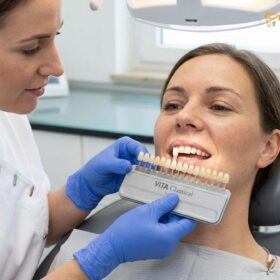
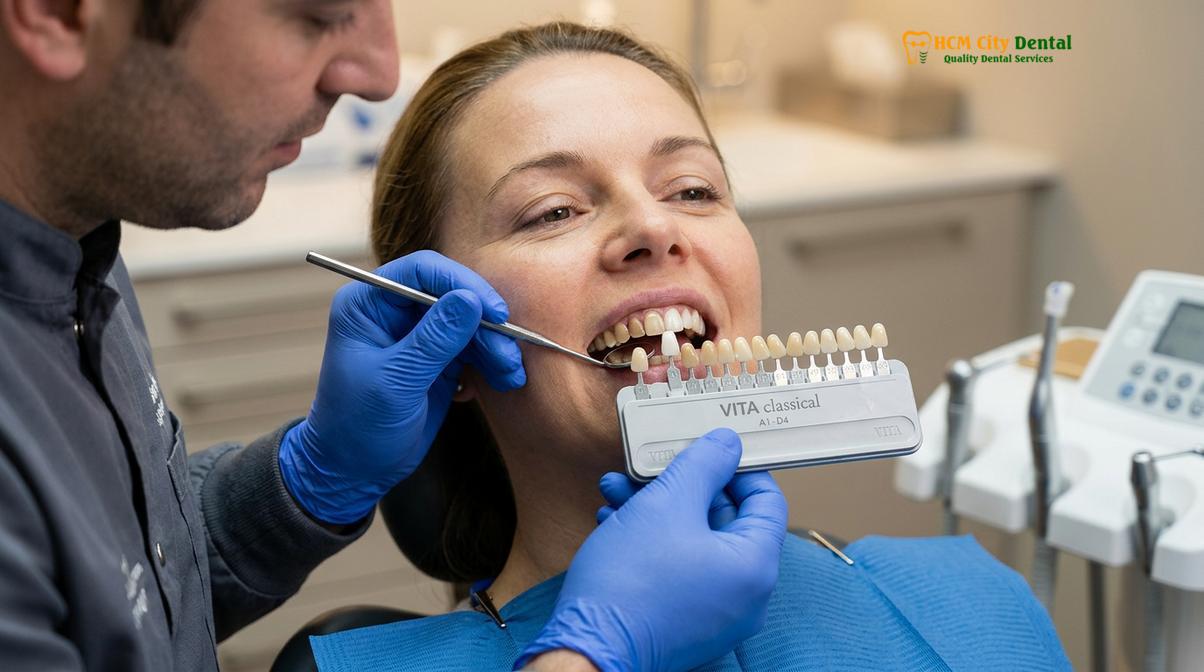
After the two-week stabilization period, the patient returns to the clinic. The dentist will perform precise shade matching protocols using a standardized VITA Classical shade guide to select the exact hue, chroma, and value of the newly stabilized natural teeth. The old, darker restorations are then safely removed, and new prosthetics are meticulously crafted to blend flawlessly with the upgraded smile.
Managing Stains on Existing Veneers and Bonding
Although veneers cannot be bleached, surface stains accumulated over time can often be removed through professional polishing without requiring full replacement.
A common question among patients is whether whitening works on veneers if they have started to look dull or discolored. While the intrinsic color of the porcelain cannot be altered by peroxide, veneers can still accumulate extrinsic surface stains over time. The sticky biofilm in the mouth can adhere to the margins where the veneer meets the natural tooth, trapping pigments from coffee, tea, and tobacco.
Clinical Case Example
A 34-year-old patient visited HCMC Dental Clinic in Ho Chi Minh City complaining that her four anterior porcelain veneers had turned yellow over the past three years. Upon clinical examination, the dentist determined the porcelain itself was intact, but heavy tannin stains from daily black tea consumption had accumulated along the gingival margins. Instead of replacing the veneers, the clinical team performed a specialized ceramic polishing procedure and provided a custom take-home kit to brighten the adjacent natural teeth. The result was a fully restored, brilliant smile achieved conservatively and cost-effectively.
In many cases, what appears to be a darkened veneer is simply a buildup of surface stains. Before assuming that costly replacement is necessary, patients should undergo a professional dental prophylaxis. A hygienist or dentist can use specialized, non-abrasive polishing pastes designed specifically for ceramics to gently buff away these surface stains, restoring the original luster and brightness of the porcelain without damaging the glaze[5].
When to Consult a Dentist: Important Clinical Notes
Whitening teeth with existing restorations requires professional oversight to prevent structural damage and severe tooth sensitivity.
Patients with existing dental work should strictly avoid DIY kitchen remedies like baking soda, activated charcoal, or lemon juice. These substances are highly abrasive and acidic. They do not chemically whiten teeth; instead, they aggressively scrub away the protective glaze on porcelain crowns and permanently scratch composite resins, leaving the restorations dull, rough, and highly susceptible to rapid, irreversible staining.
“Applying high-concentration peroxide over compromised restorations can lead to severe pulpal irritation. A thorough clinical examination is mandatory to ensure all filling margins are sealed before initiating any bleaching protocol.”
Furthermore, it is crucial to have a dentist evaluate the integrity of all existing fillings and crowns before applying whitening gel. If a filling is old and has begun to leak, or if a crown margin is open, the peroxide gel can seep past the restoration and directly into the inner dentin or nerve chamber of the tooth. This can cause excruciating pain and potentially lead to the need for a root canal. Always seek professional guidance to ensure your teeth are healthy enough for cosmetic enhancements.
Consulting with Dr. Cuong for a Consistent Shade
Achieving a seamless, uniformly white smile requires precise clinical planning, shade mapping, and expert guidance from an experienced cosmetic dentist.
Navigating the complexities of teeth whitening with existing dental work is not a process that should be attempted with over-the-counter products. Dr. Nguyen Van Cuong is a highly regarded specialist in aesthetic dentistry who emphasizes that comprehensive treatment planning is the foundation of aesthetic success. Dr. Cuong meticulously evaluates each patient’s existing restorations to ensure that any whitening treatment harmonizes perfectly with future restorative work. His comprehensive approach prevents the common pitfall of mismatched dental work and ensures optimal oral health.
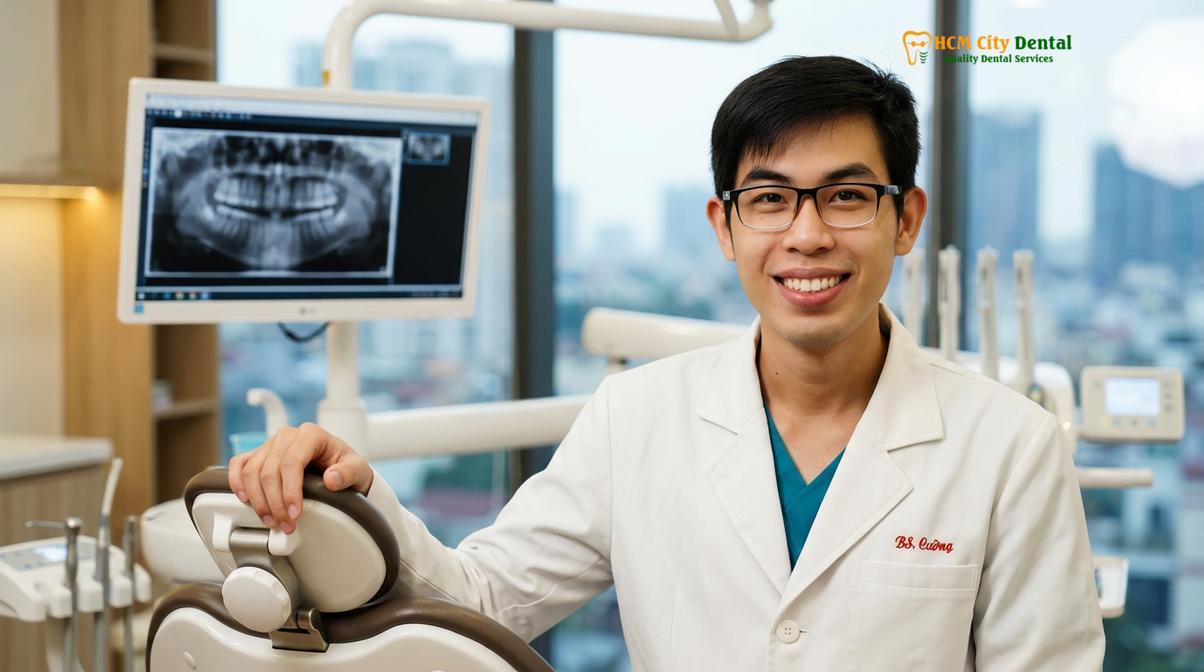
If you are looking to upgrade your smile safely and effectively, visit HCMC Dental Clinic in Ho Chi Minh City. Our clinical team will map out a customized sequence to brighten your natural enamel and replace any outdated restorations. Learn more about our Dental Crowns & Bridges to seamlessly match your newly whitened teeth and achieve the flawless aesthetic you deserve.
Frequently Asked Questions
Can a dentist whiten my yellow composite filling?
No, composite resin cannot be whitened. Bleaching agents only affect natural tooth enamel. If your composite filling has yellowed or no longer matches your newly whitened teeth, the only clinical solution is for your dentist to remove the old material and place a new filling color-matched to your brighter smile.
Will bleaching gel damage my porcelain crown?
No, professional bleaching gels will not damage or degrade porcelain crowns. The ceramic material is highly resistant to hydrogen and carbamide peroxide. However, while the crown will not be harmed, it will also not change color, which may result in a noticeable shade mismatch with your surrounding natural teeth.
How do I match my teeth to my veneers?
You must whiten your natural teeth to match the existing shade of your veneers. Because veneers cannot be bleached, your dentist will use a professional whitening system to carefully lift the shade of your adjacent natural teeth until they blend seamlessly with the color of your porcelain restorations.
Is it safe to whiten teeth around fillings?
Yes, it is safe to whiten teeth around intact fillings under professional supervision. However, if a filling is leaking or compromised, the peroxide gel can penetrate the tooth and cause severe sensitivity or nerve irritation. A thorough dental exam is required before initiating any whitening treatment.
How long should I wait after whitening to get new crowns?
You should wait exactly two weeks after completing your whitening treatment before getting new crowns. This crucial stabilization period allows the oxygen to dissipate from the enamel, ensuring the final tooth shade is locked in and that the dental cement will bond properly to the tooth structure.
References
- Journal of Esthetic and Restorative Dentistry. Effects of bleaching agents on dental restorative materials. (2021).
- American Dental Association (ADA). Clinical guidelines for professional teeth whitening and material interactions. (2020).
- Journal of Dentistry. Amorphous calcium phosphate re-mineralization and transient sensitivity management. (2022).
- Operative Dentistry. Staining susceptibility of bleached enamel and pellicle reformation timelines. (2019).
- Vietnam Odonto-Stomatology Association (VOSA). Guidelines on aesthetic restorations and bleaching protocols. (2023).