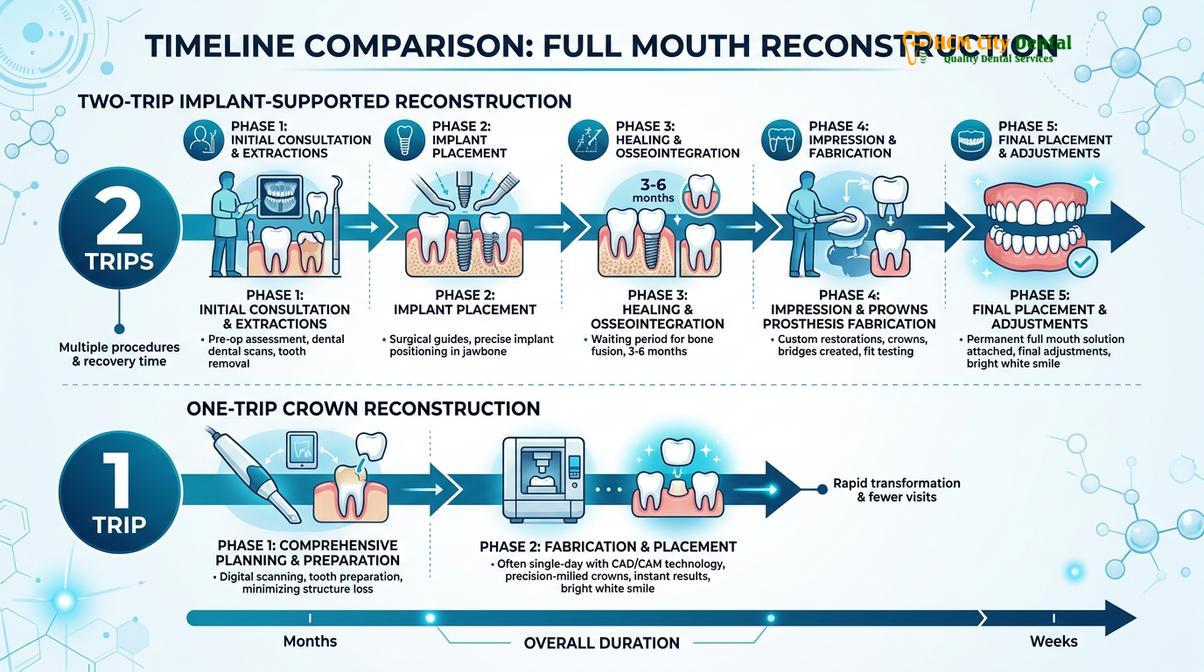
A full mouth reconstruction timeline typically spans 4 to 8 months, divided into two primary trips of 7 to 10 days each. The exact duration depends on the need for bone grafting, implant osseointegration, and the complexity of restoring the vertical dimension of occlusion.
Clinical Summary:
The full mouth reconstruction timeline is a highly structured clinical process designed to restore oral function, aesthetics, and structural biomechanics. For implant-supported cases, the protocol is divided into two distinct phases separated by a healing period. The initial phase involves comprehensive 3D diagnostics, extractions, guided bone regeneration, and the surgical placement of titanium fixtures under IV conscious sedation, followed by the delivery of temporary prosthetics. After a 3 to 6-month osseointegration period, the restorative phase commences, utilizing Digital Smile Design (DSD) to fabricate biocompatible monolithic zirconia restorations. This phased approach ensures optimal margin fit, soft tissue healing, and the precise correction of bite collapse.
Key Takeaways:
- Implant-supported reconstructions require two trips to Vietnam, spaced 3 to 6 months apart for bone healing.
- Non-implant full mouth crown restorations can be completed in a single 7-day express trip.
- IV conscious sedation ensures a completely pain-free and anxiety-free surgical experience.
- Pre-booking via WhatsApp unlocks a 40% discount, bringing premium implant fixtures down to $1,080.
- All treatments include a global warranty passport and remote post-op aftercare support.
The Preparation Phase: Sending CBCT Scans and Photos Pre-Travel
Remote diagnostics allow our clinical team to evaluate your bone density and bite collapse before you travel, ensuring a precise, predictable, and financially transparent treatment plan.
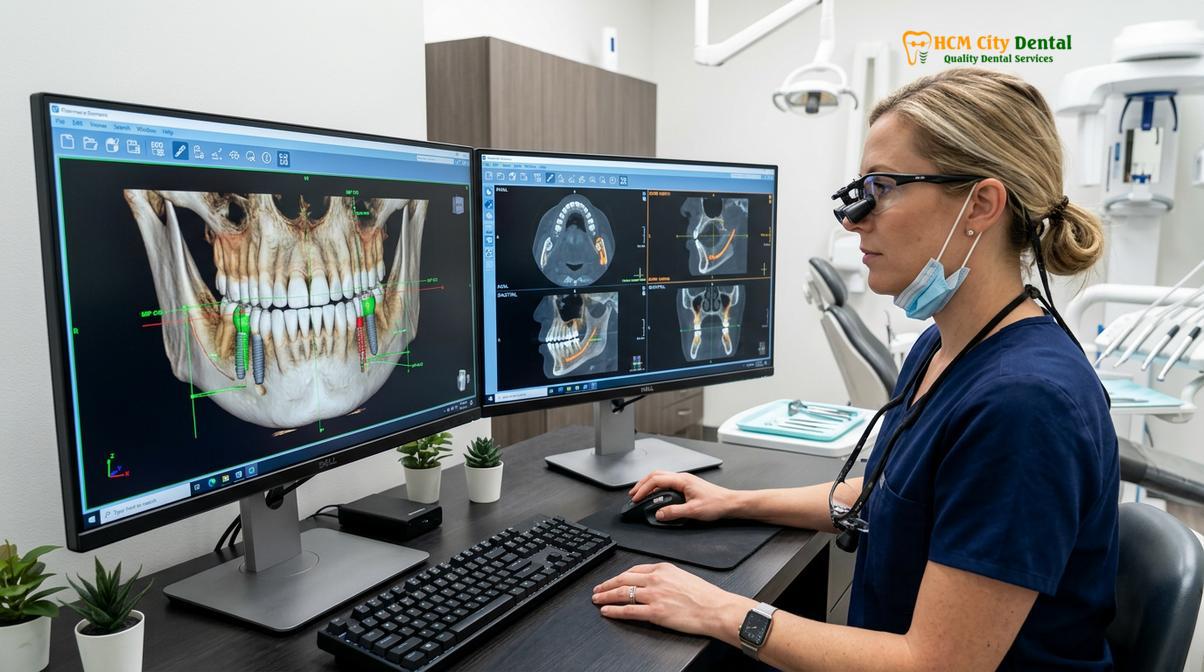
The foundation of a successful full mouth reconstruction timeline begins long before you arrive at the clinic. Through a systematic remote pre-travel triage process, international patients can initiate their consultation from the comfort of their home country. By securely transmitting recent panoramic X-rays, 3D CBCT bone diagnostics, and intraoral photographs, our specialists can conduct a preliminary assessment of your anatomical structures. This initial evaluation focuses on identifying areas of severe bone resorption, assessing the physiologic rest jaw position, and determining the feasibility of immediate implant placement versus the need for extensive guided bone regeneration.
Once the clinical data is reviewed, a customized treatment protocol is developed. This plan outlines the precise number of implants required, the structural biomechanics of proposed All-on-4 or All-on-6 restorations, and a detailed timeline. Financial transparency is a cornerstone of this phase. Patients who utilize our WhatsApp pre-booking system benefit from a substantial 40% discount on standard walk-in rates. Furthermore, our international billing department assists expatriates and dental tourists with direct billing partners (such as Allianz, Bupa, and Cigna) and provides necessary documentation for tax offsets, including NMETO or IRS medical deductions.
To ensure a seamless experience for patients traveling to Ho Chi Minh City, our concierge team assists with logistical planning. This includes arranging a Tan Son SGN airport fast track service to bypass immigration queues, providing a comprehensive Grab travel guide for safe local transportation, and recommending premium District 1 hotels saigon that offer proximity to the clinic and a comfortable environment for post-surgical recovery. This meticulous preparation minimizes travel-related stress, allowing the patient to focus entirely on their clinical care.
Trip 1: Diagnostics, Extractions, implant Surgical Placements, and Temporaries (7–10 Days)
The initial surgical phase involves comprehensive diagnostics, necessary extractions, precise implant placement, and the immediate delivery of temporary restorations to maintain function and aesthetics.
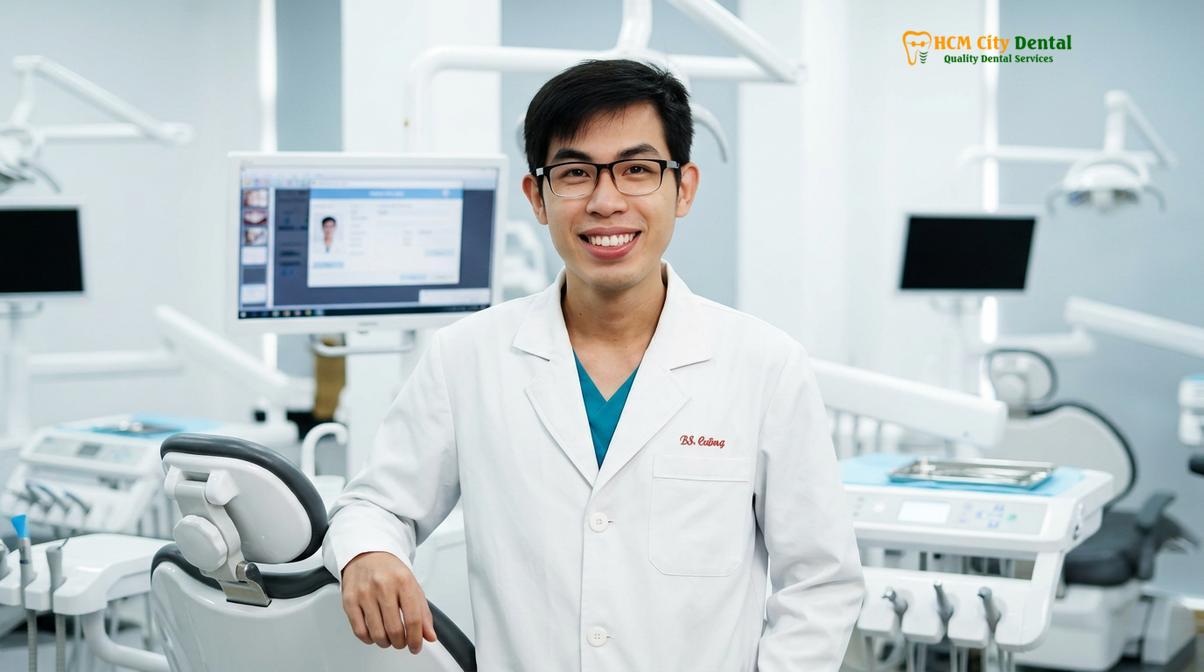
Upon arrival at HCMC Dental Clinic, the first trip commences with an exhaustive clinical examination. High-resolution CBCT scans are taken to map the exact trajectory of the mandibular and maxillary nerves, measure biological width, and evaluate sinus cavity proximity. This data is integrated into advanced surgical planning software to create precise surgical guides. Dr. Nguyen Van Cuong emphasizes that the success of an implant surgical trip relies heavily on this digital precision, ensuring that each titanium fixture is placed at the optimal angle to maximize load distribution and primary stability[1].
Patient comfort and safety are paramount during the surgical intervention. To manage anxiety and ensure a pain-free experience, procedures are performed under IV conscious sedation. Administered and monitored by a board-certified anesthesiologist, this protocol utilizes a combination of Midazolam and Propofol, accompanied by continuous EKG and pulse oximetry monitoring. Patients remain in a state of deep relaxation, entirely unaware of the surgical stimuli, yet capable of responding to verbal cues if necessary.
“The integration of IV conscious sedation in full arch rehabilitation not only eliminates patient trauma but also allows the surgical team to work with maximum efficiency, reducing overall operative time and minimizing post-operative swelling.”
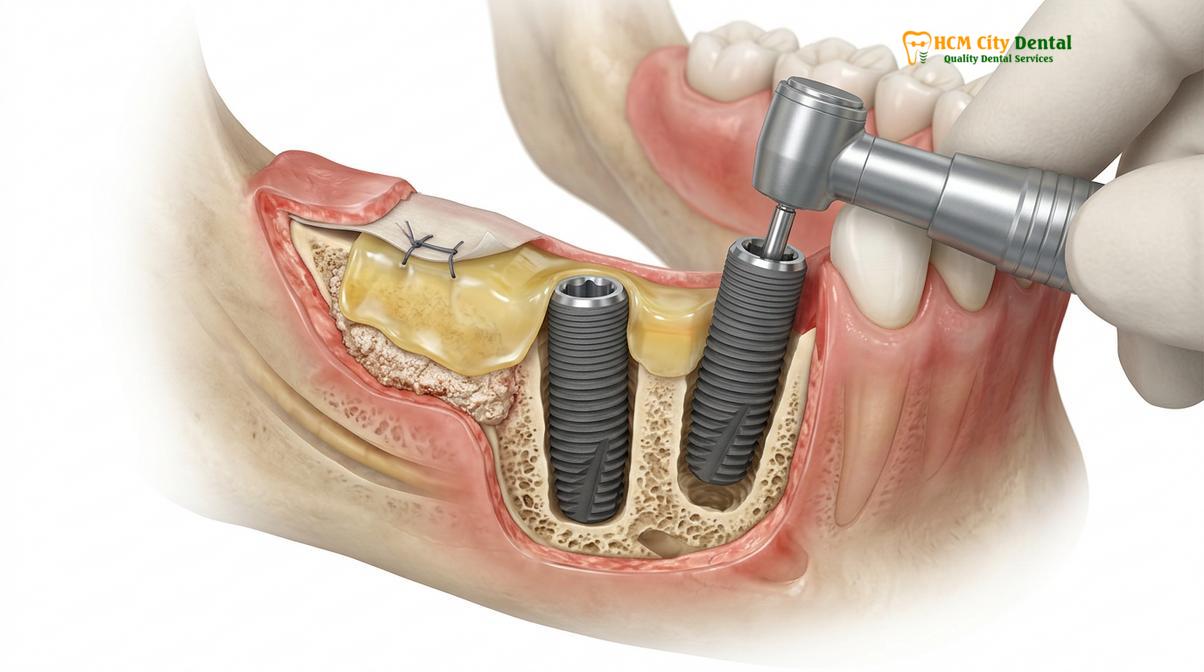
During the surgery, any compromised teeth are meticulously extracted. If bone volume is insufficient, guided bone regeneration is performed. Our clinic utilizes Platelet-Rich Fibrin (PRF) therapy, which involves drawing a small amount of the patient’s autologous blood, centrifuging it to isolate growth factors, and applying it to the surgical site. This advanced biological technique significantly accelerates soft tissue healing and enhances bone graft integration[2]. Following the placement of the implants, temporary diagnostic splints or immediate load acrylic bridges are affixed. These temporaries are crucial for protecting the surgical sites, restoring immediate aesthetics, and beginning the process of neuromuscular adaptation to the new bite.
The Osseointegration Period: Healing for 3 to 6 Months in Your Home Country
During this 3 to 6-month interval, the titanium implants biologically fuse with the jawbone, creating a stable foundation for your permanent restorations while you recover at home.
Following the completion of Trip 1, patients return to their home country to undergo the critical bone healing interval known as osseointegration. This biological process involves the direct structural and functional connection between living bone and the surface of a load-bearing artificial implant. The duration of this phase typically ranges from 3 to 6 months, depending on the patient’s natural healing capacity, bone density, and whether adjunctive procedures like sinus lifts or extensive ridge augmentations were performed.
During this period, patients wear their temporary restorations, which are specifically designed to minimize occlusal stress on the integrating implants. Adhering to strict post-op aftercare protocols is essential. Patients are advised to maintain a soft-food diet, practice meticulous oral hygiene using prescribed antimicrobial rinses, and avoid habits that compromise healing, such as smoking. The temporary prosthetics also serve a diagnostic purpose, allowing the patient’s facial muscles and temporomandibular joints (TMJ) to adapt to the newly established vertical dimension.
Clinical Warning: Prematurely subjecting integrating implants to heavy chewing forces (such as eating hard nuts or tough meats) during the osseointegration period can lead to micro-movement, fibrous encapsulation, and ultimate implant failure. Strict adherence to a soft diet is mandatory.
To ensure continuous monitoring despite geographical distances, our clinic provides robust remote support. Patients are scheduled for virtual check-ups via WhatsApp, allowing our clinical team to assess soft tissue healing and address any concerns promptly. Furthermore, every implant placed is accompanied by a global warranty passport. This documentation guarantees the integrity of the titanium fixtures (ranging from 10 years to a lifetime, depending on the brand) and facilitates international support if an unexpected complication arises while the patient is abroad[3].
Trip 2: Final Scans, Lab Fabrication, Try-ins, and Cementation (7–10 Days)
The restorative phase focuses on capturing final digital impressions, fabricating biocompatible monolithic zirconia prosthetics, and permanently cementing the final restorations.
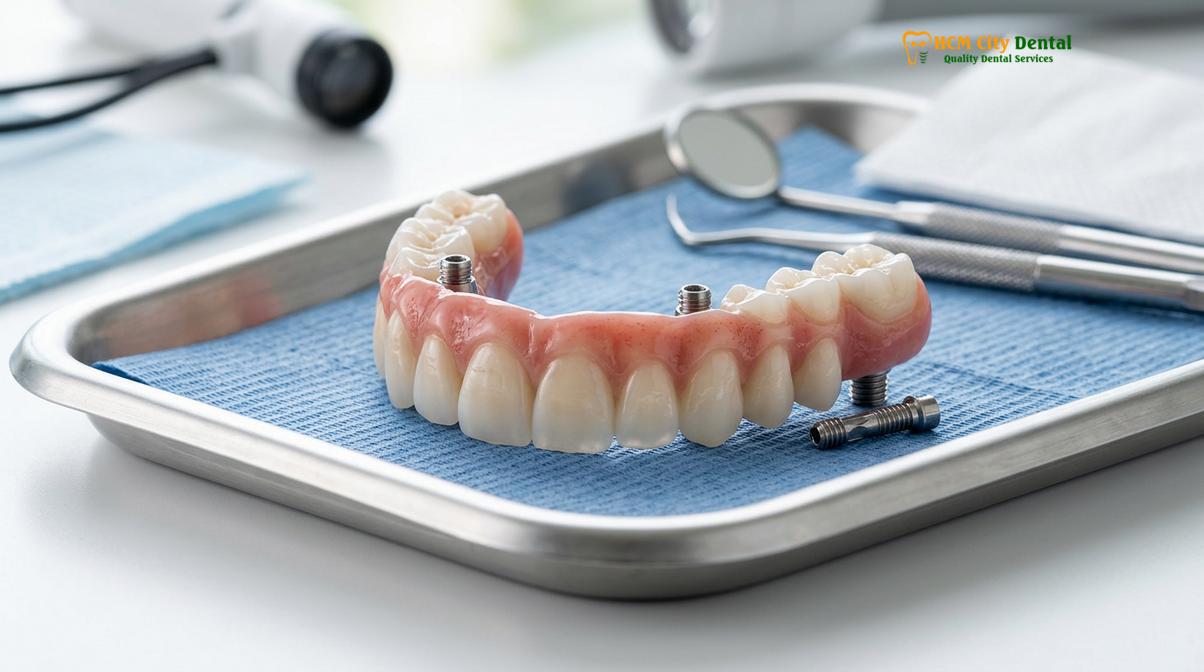
The culmination of the full mouth reconstruction timeline occurs during the second trip to Ho Chi Minh City. Once clinical diagnostics confirm that complete osseointegration has been achieved, the temporary restorations are removed. The restorative phase begins with highly accurate digital intraoral scanning to capture the healed gingival contours and the exact position of the implant abutments. This digital workflow eliminates the discomfort of traditional messy impressions and ensures a margin fit of under 50 micrometers, which is critical for preventing bacterial microleakage and ensuring long-term periodontal health.
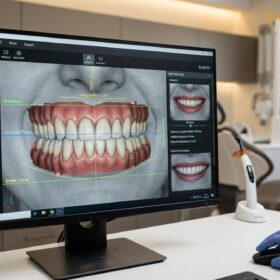
A pivotal component of this phase is the application of Digital Smile Design (DSD). By integrating 3D facial scans with digital tooth wax-ups, our prosthodontists can meticulously plan the aesthetics and function of the final teeth. This technology allows for the precise calculation of the Vertical Dimension of Occlusion (VDO), correcting years of bite collapse and alleviating muscle fatigue associated with neuromuscular imbalances. Patients are provided with a physical try-in of the proposed design, allowing them to evaluate phonetic compatibility, lip support, and chewing guidance before the final prosthetics are milled[4].
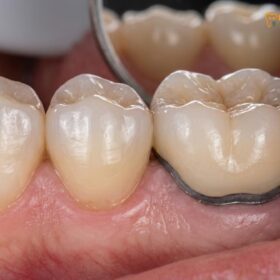
For the final restorations, Dr. Nguyen Van Cuong strongly advocates for the use of biocompatible monolithic zirconia. Sourced from premium Swiss and German manufacturers, this metal-free material offers unparalleled flexural strength and lifelike translucency. Whether the treatment plan calls for a full arch zirconia bridge on implants or individual crowns, the monolithic crown cementation process is executed with meticulous isolation techniques to ensure a durable, bio-inert bond.
Comprehensive Pricing Structure
Understanding the financial investment is a critical aspect of planning your comprehensive full arch rehabilitation. By utilizing our WhatsApp pre-booking system, patients can access a 40% discount on our standard clinical fees. Below is the current fee schedule for implant fixtures and full mouth packages, reflecting both walk-in rates and pre-booked savings.
| Treatment / Implant Brand | Standard Walk-in Rate | WhatsApp Pre-Booking (-40%) |
|---|---|---|
| Economy (Dentis/Neo Biotech) | ~$770 (20M VND) | From $460 (12M VND) |
| Economy Plus (Dentium Hàn) | ~$900 (23.3M VND) | From $540 (14M VND) |
| Standard (Dentium Superline Mỹ / IBS) | ~$1,090 (28.3M VND) | From $655 (17M VND) |
| Premium (Ritter Đức / B&B Ý) | ~$1,600 (41.6M VND) | From $965 (25M VND) |
| Premium Plus (Straumann BLT-SLA) | ~$1,795 (46.6M VND) | From $1,080 (28.0M VND) |
| High-End (Straumann Active) | ~$2,250 (58.3M VND) | From $1,350 (35M VND) |
| Crown on Implant (Per Tooth) | ~$260 – $385 | From $155 – $230 |
| All-on-4 / All-on-6 Zirconia Bridge (Per Arch) | ~$12,000 – $22,000 | From $7,200 – $13,200 |
| Snap-On Overdenture (Per Arch) | ~$5,000 – $8,000 | From $3,000 – $4,800 |
Express Options: 1-Trip Full Mouth Crown Reconstructions (7 Days)
For patients not requiring dental implants, a full mouth reconstruction using only crowns and veneers can be completed in a single 7-day trip.
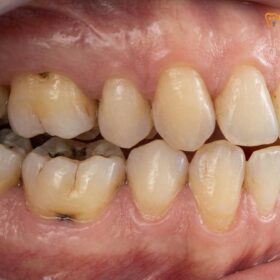
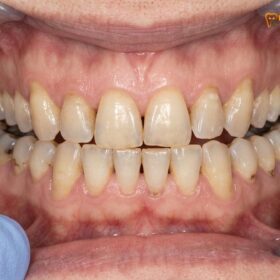
Not all full mouth reconstructions require surgical implant placement. For patients presenting with severe enamel erosion, generalized attrition (wear), or extensive decay—but who still possess structurally sound tooth roots—an express 1-trip protocol is highly effective. This approach focuses on restoring the dentition using full mouth crowns and veneers, effectively rehabilitating the bite and aesthetics without the need for a prolonged bone healing interval.
This express workflow leverages in-house CAD/CAM milling technology to achieve a rapid 3-5 day turnaround. The process begins with conservative tooth preparation, prioritizing the preservation of healthy dentin. In cases where decay approaches the nerve, vital pulp capping using advanced bioceramic materials like MTA or Biodentine is employed to prevent the need for root canal therapy. Digital impressions are then taken, and the final Zirconia HT crowns are fabricated and cemented within the same week[5].
Clinical Case Example: A 55-year-old expatriate visited HCMC Dental Clinic presenting with severe acid erosion and a collapsed bite. Because his natural roots were healthy, implant surgery was contraindicated. Utilizing the express 1-trip protocol, the clinical team restored his entire upper and lower arches with 28 Zirconia HT crowns. The pre-booked cost was from $2,184 per arch (based on $156 per crown), and the entire functional and aesthetic rehabilitation was completed in just 6 days.
When to See a Doctor
While the full mouth reconstruction timeline is carefully managed to minimize complications, patients must remain vigilant during the healing phases. It is crucial to seek immediate clinical evaluation if you experience any of the following symptoms during your osseointegration period or after final cementation:
- Severe, Throbbing Pain: While mild discomfort is normal for a few days post-surgery, escalating pain that does not respond to prescribed analgesics may indicate an infection or graft failure.
- Implant Mobility: If a temporary crown or the underlying implant fixture feels loose, it requires immediate assessment to prevent fibrous encapsulation.
- Prolonged Numbness: Paresthesia (numbness or tingling) in the lips, chin, or tongue lasting more than 48 hours after surgery warrants an urgent CBCT scan to evaluate nerve proximity.
- Occlusal Discrepancies: If your final zirconia restorations feel “high” when biting down, or if you experience sudden TMJ pain or muscle spasms, the bite must be clinically adjusted to prevent porcelain fracture.
Frequently Asked Questions
How many trips to Vietnam are required for full mouth rehabilitation?
Most full mouth implant rehabilitations require exactly two trips to Vietnam, spaced 3 to 6 months apart. The first trip focuses on surgical placement and temporaries, while the second trip is dedicated to final prosthetic fabrication and cementation. This phased approach ensures that the titanium implants have fully integrated with the jawbone before bearing the heavy occlusal loads of permanent zirconia teeth.
Can I combine all treatments into a single trip?
Yes, but only if your reconstruction does not involve dental implants. Cases utilizing only dental crowns, veneers, or bridges can be completed in a single 7-to-10-day trip using express digital dentistry workflows. However, if bone grafting or implant placement is required, biological healing times cannot be bypassed, making a two-trip protocol mandatory for long-term success.
How long do I wear temporary teeth?
Patients typically wear temporary acrylic or composite teeth for 3 to 6 months. This duration allows the underlying jawbone to fully heal and osseointegrate with the titanium implants before supporting the permanent zirconia restorations. These temporaries also serve a vital diagnostic role, allowing your facial muscles to adapt to the newly restored vertical dimension of occlusion.
What is the cost difference between walk-in and pre-booking?
Pre-booking your treatment via WhatsApp secures a 40% discount compared to standard walk-in rates. For example, an economy implant fixture drops from $770 to $460, significantly reducing the overall financial burden of full mouth care. This transparent pricing structure applies to all tiers, from standard Dentium implants to high-end Straumann Active fixtures.
Is IV conscious sedation safe for extensive dental surgery?
Yes, IV conscious sedation is highly safe when administered by a board-certified anesthesiologist. It utilizes precise protocols with continuous EKG monitoring to ensure a pain-free, anxiety-free experience during complex surgical procedures. Patients remain breathing on their own and can respond to verbal commands, yet typically have no memory of the surgical intervention.
References
- The Journal of Prosthetic Dentistry. Vertical dimension of occlusion restoration parameters. (2021).
- International Journal of Prosthodontics. Biomechanical load distribution in All-on-4 restorations. (2020).
- Journal of Clinical Periodontology. Biocompatible dental materials and soft tissue response. (2019).
- Clinical Oral Implants Research. Platelet-rich fibrin in guided bone regeneration. (2022).
- Journal of Esthetic and Restorative Dentistry. Digital smile design functional protocols. (2018).
For customized treatment planning, transparent cost estimates, and direct consultation with Dr. Cuong, visit our comprehensive Full Mouth Rehabilitation service page or message our team directly via WhatsApp to receive an instant assessment.