Traveling with a temporary dental crown requires careful dietary choices and modified oral hygiene to prevent dislodgement. Because temporary cement is designed to be easily removed, patients must avoid sticky or hard foods and utilize specialized flossing techniques to protect the prepared tooth while awaiting their permanent restoration.
Clinical Summary:
A temporary crown serves as a crucial interim prosthesis that protects the prepared dentin, maintains the biologic width, and prevents adjacent teeth from shifting. When traveling, patients must manage chewing forces and oral hygiene meticulously to maintain the integrity of the temporary cement seal. Should the temporary prosthesis fail, over-the-counter dental adhesives can provide a short-term fix until professional recementation is possible. Modern digital workflows, utilizing advanced intraoral scanners, significantly reduce the time patients spend in temporaries by accelerating the fabrication of the final ceramic restoration.
Key Takeaways:
- Temporary crowns protect exposed dentin and prevent tooth shifting during the fabrication of the final restoration.
- Avoid sticky, chewy, and hard foods to prevent accidental dislodgement of the temporary prosthesis.
- Modify flossing habits by pulling the floss out horizontally rather than snapping it upward.
- Mild thermal sensitivity is a normal clinical response after tooth preparation and can be managed with over-the-counter analgesics.
- If a temporary crown falls off while traveling, clean it and reapply using temporary dental cement from a pharmacy.
The Purpose of a Temporary Crown
A temporary crown acts as a protective barrier for the prepared tooth, preventing bacterial ingress, managing thermal sensitivity, and maintaining precise gingival margins for the final restoration.
When a tooth is prepared for a permanent restoration, the outer enamel is reduced to create space for the new ceramic material. This process exposes the underlying dentin, which contains microscopic tubules leading directly to the dental pulp. A temporary crown seals these tubules, preventing bacterial contamination and shielding the nerve from painful thermal stimuli. Furthermore, the temporary prosthesis plays a vital role in maintaining the spatial relationship of the dentition; without it, adjacent teeth could drift, and opposing teeth could super-erupt, compromising the fit of the final crown [1].
The design of the tooth preparation margin—whether a chamfer or a shoulder—dictates how the temporary crown interacts with the gingival tissues. Proper contouring of the temporary crown ensures that the biologic width is respected, preventing gingival inflammation that could interfere with the final cementation process. At HCMC Dental Clinic in Ho Chi Minh City, Dr. Nguyen Van Cuong emphasizes that the temporary phase is critical for tissue healing, especially in cases requiring functional or esthetic crown lengthening prior to final impressions.
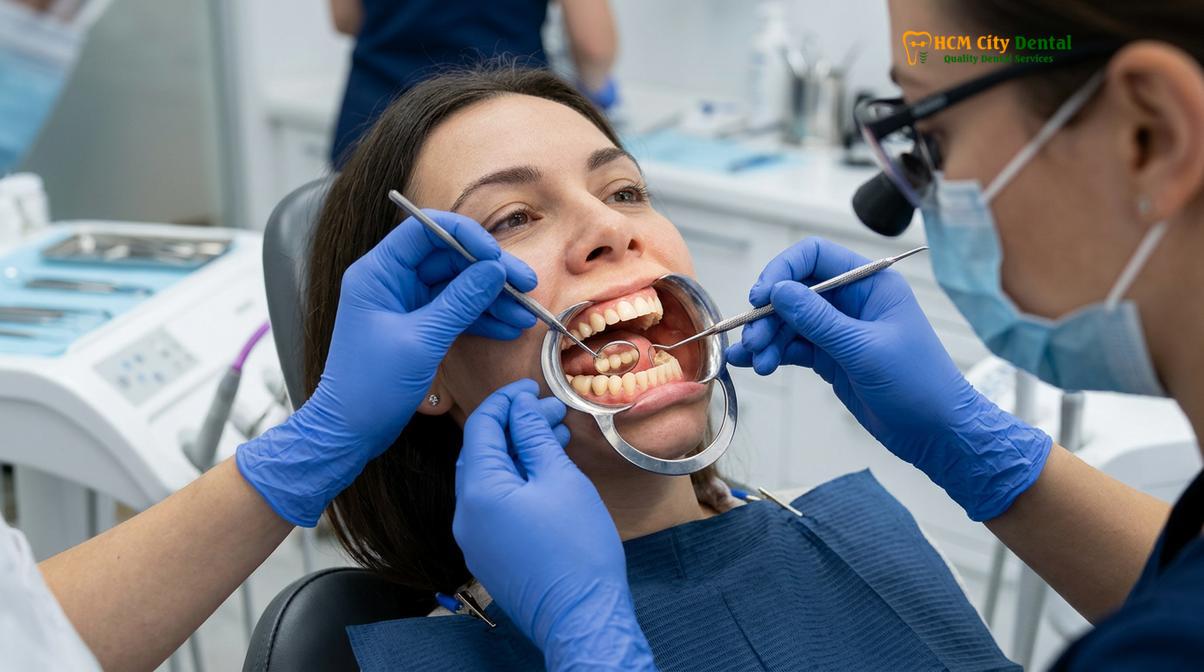
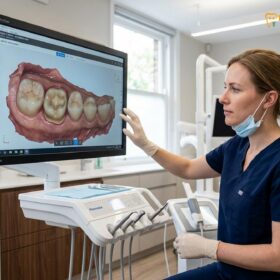
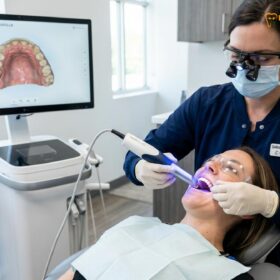
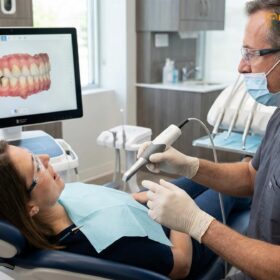
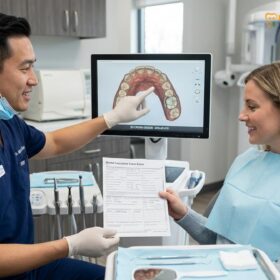
Historically, creating temporary crowns and taking impressions involved messy traditional silicone materials that were uncomfortable for patients. Today, state-of-the-art digital scanning technology, such as the iTero and Medit i700 Intraoral Scanners, eliminates this discomfort. These devices capture highly accurate 3D representations of the prepared tooth, providing maximum comfort and precision for the crown design. This digital workflow ensures that the transition from the temporary phase to the final Dental Crowns & Bridges is virtually seamless.
“The provisional restoration is not merely a placeholder; it is a diagnostic blueprint that guides the final esthetics, occlusal function, and periodontal health of the permanent ceramic crown.”
What to Eat and Avoid on a Temporary Crown
Patients must adopt a soft-food diet and avoid sticky, hard, or excessively crunchy items to ensure the temporary cement remains intact during travel.
The biomechanics of temporary dental cement differ significantly from the permanent resin or glass ionomer cements used for final restorations. Temporary cements, often zinc oxide-eugenol or non-eugenol based, are formulated to have low shear and tensile strength. This intentional design allows the dentist to remove the temporary crown easily without damaging the underlying tooth structure. However, this also means that the temporary crown is highly susceptible to dislodgement from heavy occlusal forces.
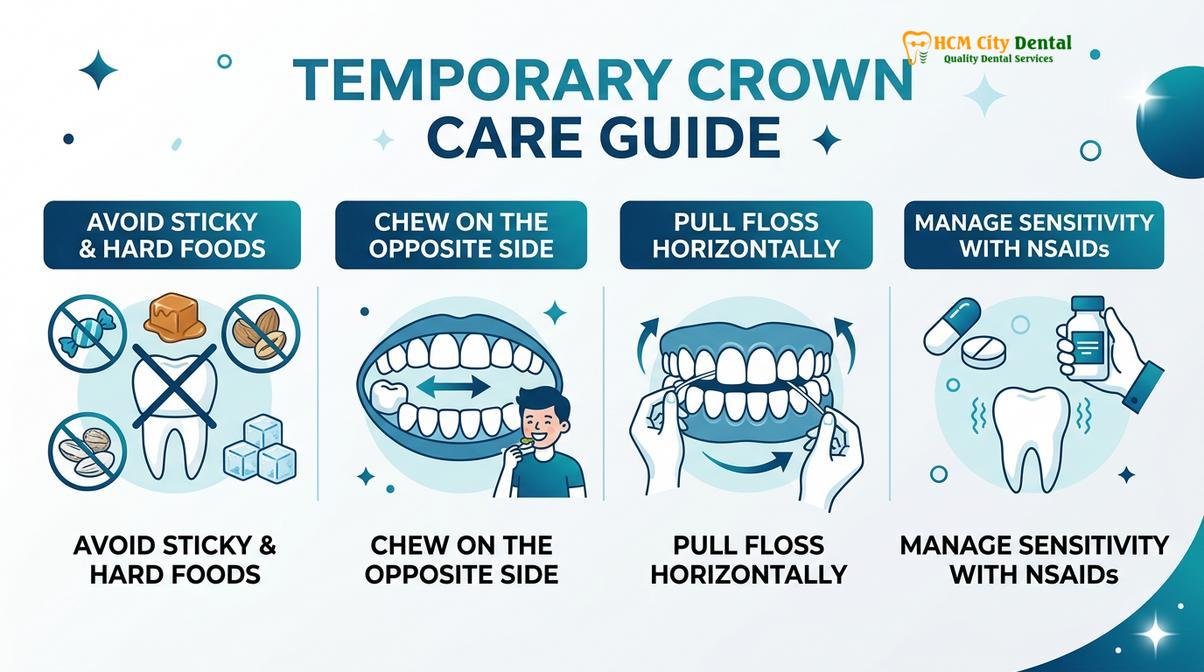
When eating with temporary crown restorations, patients must be highly selective about their diet. Sticky foods such as caramel, chewing gum, taffy, and gummy candies can adhere to the acrylic or composite resin of the temporary crown, exerting a pulling force that easily breaks the temporary cement seal. Similarly, hard foods like nuts, ice, hard crusty bread, and raw carrots can fracture the temporary material or cause it to unseat [2].
To minimize risks while traveling, patients should adopt a soft-food diet consisting of pasta, eggs, yogurt, cooked vegetables, and tender meats. It is also clinically advisable to chew predominantly on the opposite side of the mouth. This unilateral chewing strategy reduces the direct mechanical stress on the temporary prosthesis, ensuring it remains stable until the permanent crown is ready for cementation.
Oral Hygiene Tips with Temporary Cement
Maintaining optimal gingival health around a temporary crown requires gentle brushing and a modified horizontal flossing technique to prevent accidental dislodgement.
Plaque accumulation around a temporary crown can lead to rapid gingival inflammation (gingivitis). Inflamed, bleeding gums complicate the final cementation appointment, as moisture control is critical for the adhesive bonding of permanent ceramic materials. Therefore, meticulous oral hygiene is non-negotiable, even while traveling.
Patients should continue to brush their teeth twice daily using a soft-bristled toothbrush and non-abrasive fluoride toothpaste. The brushing motion around the temporary crown should be gentle, focusing on sweeping plaque away from the gingival margin without applying excessive lateral pressure. Aggressive brushing can wear down the temporary material or irritate the healing gums.
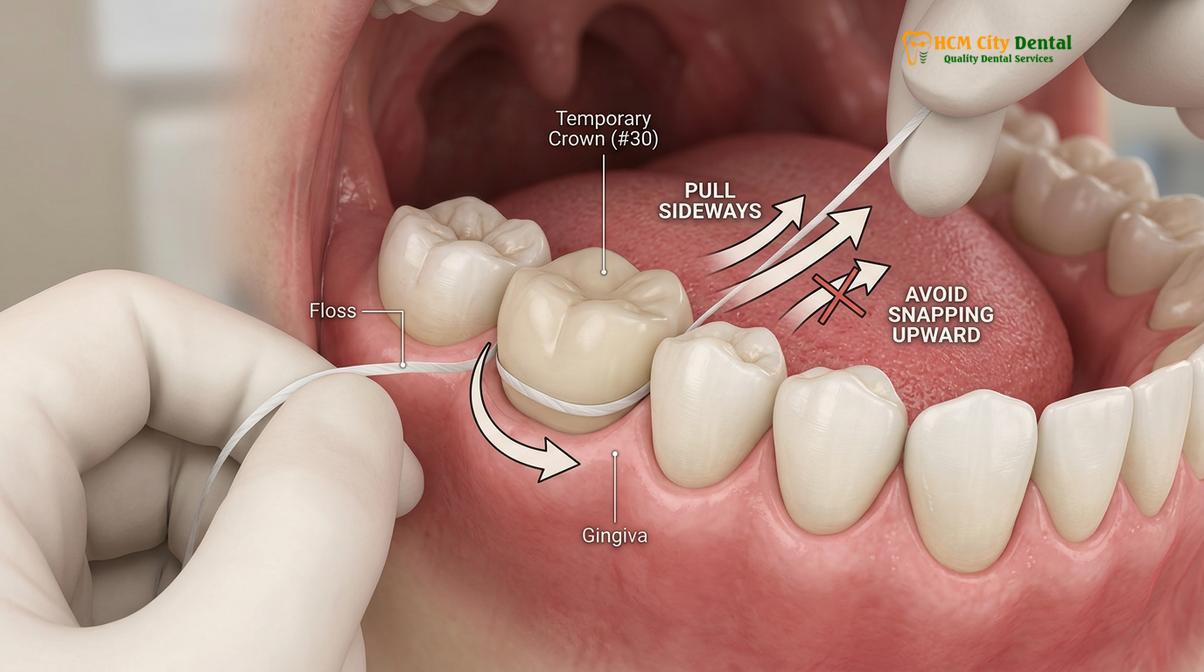
Flossing requires a specific modification. Standard flossing involves snapping the floss down between the teeth and pulling it back up. If this upward snapping motion is used around a temporary crown, the floss can catch on the margin of the prosthesis and pull it off. Instead, patients must slide the floss gently between the teeth, clean the interproximal surfaces, and then pull the floss out horizontally through the side. This technique effectively removes interdental plaque without exerting upward dislodging forces on the temporary crown [3].
What to Do If a Temporary Crown Comes Off
If a temporary crown dislodges during travel, patients should gently clean the prosthesis and use over-the-counter temporary dental adhesive to reseat it until they can visit a dentist.
Experiencing a dental emergency while traveling can be stressful, but a dislodged temporary crown is a manageable situation. If the temporary crown cement fell off, the primary goal is to protect the exposed tooth structure and prevent adjacent teeth from shifting. Leaving the prepared tooth exposed for an extended period can lead to severe thermal sensitivity and compromise the fit of the final restoration.
First, retrieve the temporary crown and inspect it to ensure it is not fractured. Rinse it gently with warm water to remove any residual temporary cement or food debris. Next, gently brush the prepared tooth to ensure the surface is clean. Do not attempt to force the crown back onto the tooth if it does not seat easily, as this could damage the preparation.
Clinical Warning: Never use household glues, superglue (cyanoacrylate), or industrial adhesives to reattach a dental crown. These substances are highly toxic, can cause irreversible damage to the dental pulp, and will destroy the tooth preparation, potentially necessitating a root canal or extraction.
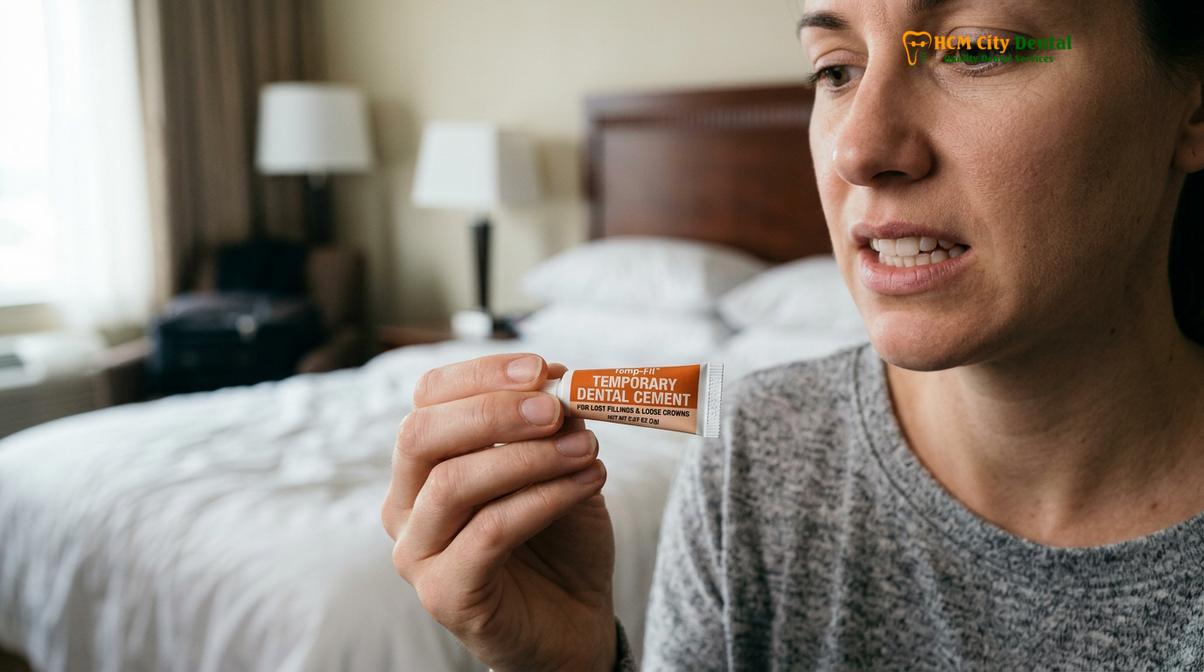
Visit a local pharmacy and purchase an over-the-counter temporary dental cement or denture adhesive. Apply a small amount of the adhesive to the inside of the temporary crown and firmly seat it back onto the tooth. Bite down gently on a piece of gauze or a clean tissue to ensure it is fully seated and to wipe away any excess cement. This is strictly a short-term measure. You must contact your dental provider to arrange for professional emergency loose crown recementation or replacement as soon as possible [4].
Managing Sensitivity and Discomfort
Post-preparation thermal sensitivity and mild gingival soreness are expected clinical outcomes that can be effectively managed with NSAIDs and warm saline rinses.
Managing dental prep discomfort is a common concern for patients transitioning to a permanent crown. The process of reducing the tooth structure inevitably causes some localized trauma to the dental pulp and surrounding periodontal tissues. According to the hydrodynamic theory of tooth sensitivity, fluid movement within the exposed dentinal tubules triggers nerve endings, resulting in sharp, transient pain when exposed to hot, cold, or sweet stimuli.
Temporary crown sensitivity is generally mild to moderate and should progressively improve over a few days. To manage this discomfort while traveling, patients can utilize over-the-counter non-steroidal anti-inflammatory drugs (NSAIDs) such as Ibuprofen, provided there are no medical contraindications. These medications help reduce pulpal inflammation and alleviate pain more effectively than standard analgesics.
Additionally, the gingival tissues may be tender, especially if retraction cord was used during the digital scanning process or if minor crown lengthening was performed. Rinsing with a warm saline solution (one teaspoon of salt dissolved in a cup of warm water) two to three times a day can soothe irritated gums, reduce bacterial load, and promote faster tissue healing [5].
“Transient thermal sensitivity following tooth preparation is a normal physiological response; however, spontaneous, throbbing pain that awakens a patient at night indicates irreversible pulpal inflammation requiring immediate clinical intervention.”
The HCMC Dental Clinic Advantage: Express Turnaround & Pricing
By leveraging a direct lab partnership and advanced CAD/CAM milling, international patients can receive premium, certified ceramic crowns in just three to five days.
For dental tourists and expatriates, minimizing the time spent wearing a temporary crown is a primary objective. Extended travel schedules often do not align with the traditional two-to-three-week waiting period for dental lab work. Recognizing this, HCMC Dental Clinic offers an Express 3-5 Day Turnaround tailored specifically for international patients.
This rapid fabrication is made possible through a Direct Lab Partnership with a leading dental laboratory in Ho Chi Minh City. This close collaboration enables complete quality control and direct communication between the prosthodontist and the master ceramist. By utilizing advanced CAD/CAM milling technology, the clinic ensures that every restoration meets stringent international standards for marginal adaptation and occlusal precision.
Material selection is paramount for long-term clinical success. The clinic strictly utilizes authentic, Material Certification-backed ceramics. For posterior teeth requiring ultimate strength to withstand heavy masticatory forces, Zirconia HT (Cercon HT, Germany) is the material of choice. For anterior teeth where lifelike aesthetics and high translucency are critical, E.max (Ivoclar, Liechtenstein) lithium disilicate provides outstanding cosmetic results.
To provide transparent financial planning for international patients, the clinic offers a highly competitive pricing structure, augmented by a 40% pre-arrival discount for WhatsApp bookings. Furthermore, 0% interest monthly credit card installment plans are available to facilitate comprehensive smile makeovers.
| Restoration Type & Material | Standard Walk-in Price | WhatsApp Pre-Booking (-40%) |
|---|---|---|
| PFM Crown (Porcelain Fused to Metal) | ~$140 (3.5M VND) | From $84 (2.1M VND) |
| Zirconia Crown (Cercon, Germany) | ~$200 (5.0M VND) | From $120 (3.0M VND) |
| Zirconia HT Crown (Cercon HT, Germany) | ~$260 (6.5M VND) | From $156 (3.9M VND) |
| E.max Crown (Ivoclar, Liechtenstein) | ~$280 (7.0M VND) | From $168 (4.2M VND) |
| 3-Unit Bridge (Zirconia HT) | ~$480 (12.0M VND) | From $288 (7.2M VND) |
| 4-Unit Bridge (Zirconia HT) | ~$640 (16.0M VND) | From $384 (9.6M VND) |
| Inlay / Onlay (Sứ Lab) | ~$180 (4.5M VND) | From $108 (2.7M VND) |
Understanding the financial benefits of seeking treatment abroad is crucial. For a detailed comparative analysis of international treatment expenses, patients can review the Dental Crown Cost: Vietnam vs USA & Canada Savings Guide.
Global Warranty and Remote Support for Dental Tourists
Comprehensive international care includes a global warranty policy, remote WhatsApp follow-up assessments, and streamlined direct billing for major global insurance providers.
Traveling abroad for dental care requires assurance that post-operative support is available once the patient returns home. Dr. Nguyen Van Cuong and the prosthodontic team at HCMC Dental Clinic have established a robust global warranty policy to protect the patient’s investment. This policy covers the structural integrity of the ceramic materials, ensuring peace of mind for international travelers.
A cornerstone of this international care model is the remote follow-up support system. Patients can easily connect with the clinical team via WhatsApp for photo and video assessment protocols. If a patient experiences an issue with a temporary crown while traveling to Vietnam, or has questions about their permanent crown after returning home, expert clinical advice is immediately accessible.
Clinical Case Study: Managing a Travel Emergency
An expatriate patient traveling from Australia to Ho Chi Minh City experienced a dislodged temporary crown during transit. Utilizing the clinic’s WhatsApp remote support, the patient was guided on how to safely secure the tooth using over-the-counter temporary cement purchased at an airport pharmacy. Upon arrival at HCMC Dental Clinic, the tooth preparation was evaluated, found to be perfectly intact, and the final highly translucent E.max crown was successfully cemented the following day without any complications.
For expatriates and international school staff residing in Vietnam, the clinic simplifies the financial process through direct billing partnerships with major global insurance providers, including Allianz, Bupa, and Cigna. This administrative support allows patients to focus entirely on their clinical care rather than navigating complex reimbursement claims. For further details on international coverage, patients can consult the Dental Crown Warranty in Vietnam: Overseas Claims & Remote Support guide.
When to See a Doctor
While mild sensitivity and minor gingival irritation are normal during the temporary crown phase, certain symptoms require immediate clinical evaluation. Patients should seek prompt dental care if they experience severe, spontaneous, or throbbing pain that is not relieved by over-the-counter analgesics, as this may indicate irreversible pulpitis requiring root canal therapy. Additionally, significant facial swelling, localized purulent discharge (pus) around the gingival margin, or a systemic fever are signs of an acute bacterial infection. If the temporary crown is repeatedly falling off despite the use of temporary adhesives, or if the underlying tooth structure feels mobile or fractured, an immediate professional assessment is necessary to prevent permanent damage to the abutment tooth.
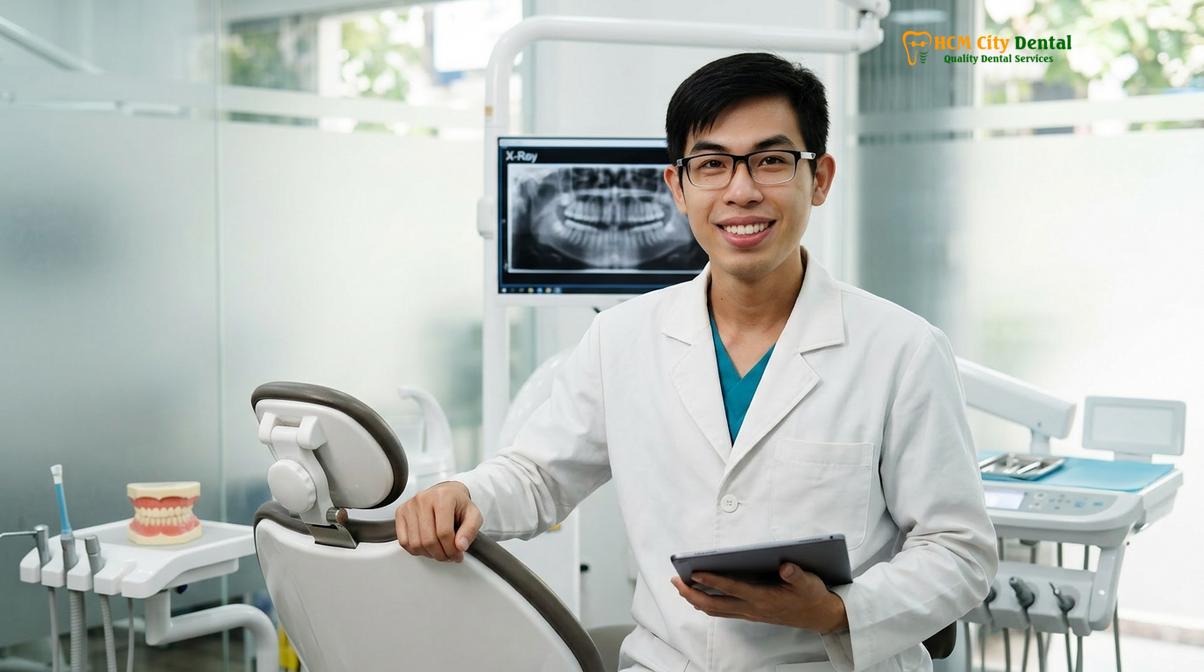
If you are planning a dental trip and need guidance on managing your treatment timeline, our clinical team is ready to assist. Review our comprehensive guide on How to Prepare for Dental Crowns Travel: A Clinical Guide to ensure a smooth and successful smile makeover journey.
Frequently Asked Questions
Can I eat normally with a temporary crown?
No, you must modify your diet by avoiding sticky, hard, or excessively chewy foods to prevent dislodging the temporary crown. Because temporary cement is designed for easy removal, heavy chewing forces can break the seal. Stick to a soft-food diet and chew on the opposite side of your mouth until your permanent restoration is placed.
What happens if my temporary crown falls off while traveling?
If your temporary crown falls off, you should gently clean the inside of the crown and reattach it using over-the-counter temporary dental cement or denture adhesive. Do not leave the prepared tooth exposed, as it can cause severe sensitivity and allow adjacent teeth to shift, which may compromise the fit of your final permanent crown.
Is sensitivity normal with a temporary crown?
Yes, mild to moderate thermal sensitivity is a normal clinical response after tooth preparation due to the proximity of the dentinal tubules to the nerve. This discomfort typically subsides within a few days. You can manage it using over-the-counter anti-inflammatory medications and by avoiding extreme hot or cold beverages.
How long can I safely wear a temporary crown?
A temporary crown is typically designed to be worn for one to three weeks while the dental laboratory fabricates your permanent ceramic restoration. Wearing it for extended periods beyond the recommended timeframe increases the risk of cement washout, bacterial microleakage, decay, and shifting of the underlying prepared tooth.
Can I use regular toothpaste on my temporary crown?
Yes, you can use regular, non-abrasive fluoride toothpaste to gently brush your temporary crown. However, you should avoid highly abrasive whitening toothpastes, as they can scratch the acrylic or composite resin material of the temporary prosthesis, leading to increased plaque accumulation and potential gingival inflammation.
References
- Journal of Prosthetic Dentistry. Retention and microleakage of temporary dental cements. (2021).
- International Journal of Prosthodontics. Management of dentinal hypersensitivity post-preparation. (2020).
- American Dental Association. Clinical guidelines for interim fixed prosthodontics. (2019).
- Journal of Esthetic and Restorative Dentistry. Gingival health and provisional restorations. (2022).
- Journal of Dentistry. Accuracy of digital impressions vs conventional silicone. (2023).